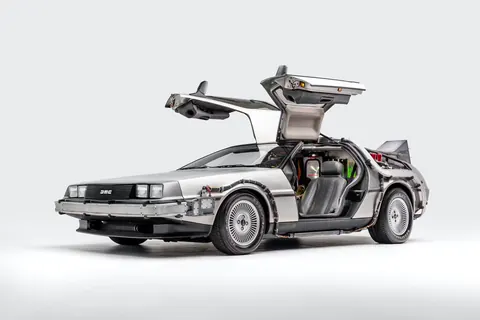
From the 1939 red comic sedan in Detective Comics #27 to Robert Pattinson's brutalist muscle-car Batmobile and the 2026 official Wayne Enterprises Tumbler replica, the Batman car has been reinvented across comics, live-action films, animated series and video games for over 85 years. This is the complete Batmobile list — every Batman car in order, with designers, base vehicles, in-game specs, auction prices and the production facts behind each build.
On This Page
- Complete Batman Car List (Chronology)
- How Many Batmobiles Are There?
- 1939–1965 Comic-Book Batmobiles
- 1966 Lincoln Futura (Adam West)
- 1989 Tim Burton Batmobile
- 1995 Batman Forever
- The Tumbler (Nolan Trilogy)
- The Batpod
- 2016 BvS Batmobile
- 2022 The Batman Batmobile
- All Batman Vehicles (Batwing, Batboat, Batcycle)
- Animated Series Batmobiles
- Video Game Batmobiles
- Bruce Wayne's Personal Cars
- 2026 Wayne Enterprises Tumbler
- Auction Prices & Records
- Comparison Table (Burton vs Tumbler vs Pattinson)
- FAQ
The list covers seven live-action Batman cars — the 1966 Lincoln Futura Batmobile, the 1989 Tim Burton / Anton Furst Batmobile, the 1995 Barbara Ling design from Batman Forever, the Nolan-era Tumbler and Batpod, the 2016 BvS Batmobile by Patrick Tatopoulos, and the 2022 Matt Reeves muscle car — plus the supporting Batwing, Batboat, The Bat and Batcycle film vehicles. Fans of other cinematic vehicle collections may also enjoy our companion guide to every James Bond car.
Complete Batman Car List — Chronology from 1939 Comics to 2026
| Year | Vehicle | Designer | Real-World Base |
|---|---|---|---|
| 1966 | Lincoln Futura Batmobile | George Barris | 1955 Lincoln Futura concept |
| 1989 | Burton Batmobile | Anton Furst | 1967 Chevrolet Impala chassis |
| 1995 | Batman Forever Batmobile | Barbara Ling | Custom tube-frame, Chevrolet 350 V8 |
| 2005–2012 | Tumbler | Nathan Crowley | Original military-spec design |
| 2008 | Batpod | Nathan Crowley | Honda CRF450R engine |
| 2016 | BvS Batmobile | Patrick Tatopoulos | Dodge Ram chassis (stunt proxy) |
| 2022 | The Batman Batmobile | Ash Thorp | 1968–70 Dodge Charger silhouette |
| 1966–2022 | Companion vehicles | Various | Batwing, Batboat, The Bat, Batcycle |
How Many Batmobiles Have There Been? Every Live-Action Batman Car
The short answer: there have been seven distinct live-action Batmobiles across theatrical Batman films from 1966 to 2022, plus dozens more in comics, animated series and video games since Detective Comics #27 debuted the character in May 1939. The full Batmobile list looks like this:
- 1966 Lincoln Futura Batmobile — George Barris, Batman: The Movie (Adam West)
- 1989 Tim Burton Batmobile — Anton Furst / Julian Caldow, Batman & Batman Returns
- 1995 Batman Forever Batmobile — Barbara Ling, Batman Forever (also modified for Batman & Robin, 1997)
- The Tumbler — Nathan Crowley / Chris Corbould, Nolan trilogy (2005–2012)
- 2008 Batpod — Chris Corbould motorcycle, The Dark Knight & The Dark Knight Rises
- 2016 BvS Batmobile — Patrick Tatopoulos / Dennis McCarthy, Batman v Superman & the Snyderverse
- 2022 The Batman Batmobile — Ash Thorp / James Chinlund, The Batman (Robert Pattinson)
Beyond live action, the Batmobile has appeared in dozens of comic redesigns, five major animated series (BTAS, Batman Beyond, The Brave and the Bold, Batwheels, Caped Crusader) and the Rocksteady Batman: Arkham video-game series — each with its own distinctive design language. All of them are catalogued below in chronological order.
1939–1965: The Original Comic-Book Batmobile
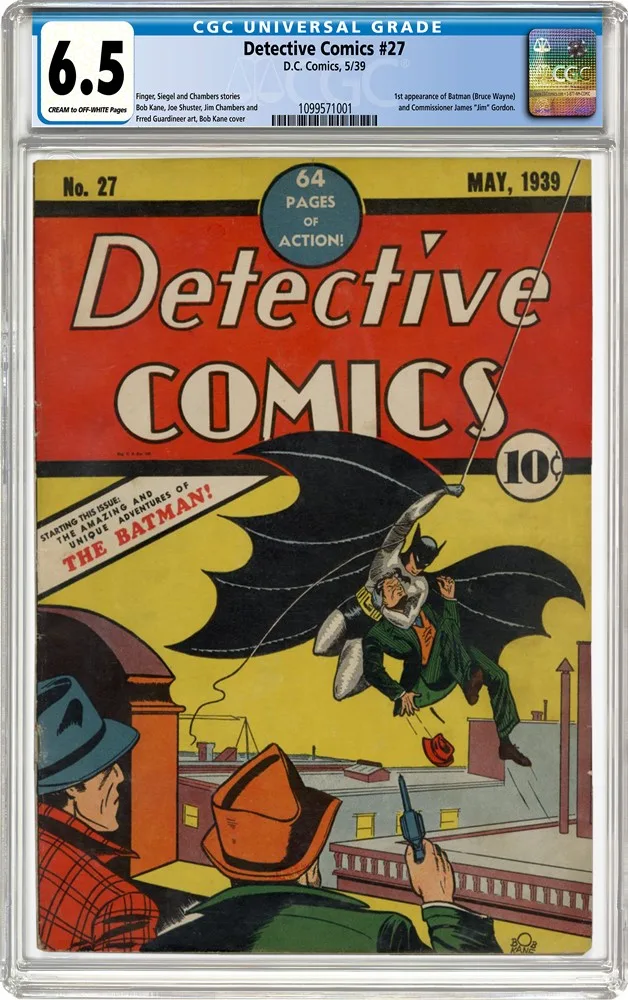
Before George Barris rebuilt a Lincoln Futura for TV in 1966, the Batmobile already had 27 years of comic-book history. It started as an unnamed red sedan and evolved into the streamlined bubble-top mobile crime lab that defined Batman's Silver Age.
1939–1940: The Unnamed Red Car and the Bat-Gyro
In Detective Comics #27 (cover-dated May 1939), Batman drives an unnamed red car that resembles a 1937 Ford Coupe (CBR). Bruce Wayne’s first purpose-built bat-themed vehicle is actually not a car at all: the Bat-Gyro, an autogyro-style aircraft, debuts in Detective Comics #31 (September 1939) alongside the first Batarang, according to DC.com. By Detective Comics #30 the road car is described as a “specially built high-powered auto” (Wikipedia).
February 1941: Detective Comics #48 — The Name “Batmobile” Is Born
The name “Batmobile” is coined in Detective Comics #48 (February 1941) (Wikipedia; issue index at Heritage Auctions). In this issue the Batmobile is a red convertible with a bat insignia on the door and a supercharger, visually close to a 1936 Cord 810 Roadster (CBR). The credited creative team behind these early appearances is Bob Kane, Bill Finger and Jerry Robinson.
1941: Batman #5 — The First Bat-Styled Design
Batman #5 (1941) gave the car its first definitive bat-styled design: a dark body, a bat-head battering ram / hood ornament, scalloped fenders and a tall roof fin, credited to Jerry Robinson (Superworld Comics). The first cover appearance of the Batmobile is Batman #20 (1943), drawn by Dick Sprang.
February 1950: Detective Comics #156 — The Bubble-Top Batmobile
Detective Comics #156 (February 1950) carried the landmark story “The Batmobile of 1950”, introducing the plastic bubble-top, streamlined mobile crime lab Batmobile, with interior story art by Dick Sprang and a cover by Jim Mooney (Heritage Auctions). Batman producer and historian Michael Uslan singles out the #156 bubble-top Batmobile as one of Batman’s defining moments (Columbus Dispatch). In Batman #73 (1952) the car was recoloured dark blue and gained the Batman logo on the tail fin.
May 1964: Detective Comics #327 — The “New Look” Batmobile
Detective Comics #327 (May 1964), released on 26 March 1964, launched Batman’s “New Look” under editor Julius Schwartz with artist Carmine Infantino — the reboot that also modernised the Batmobile (13th Dimension). Batman #164 (June 1964) explicitly retired the bubble-top car and replaced it with a sleek convertible sports-car Batmobile. This is the Silver-Age Batmobile that inspired both the 1966 TV Futura design and the 2008–2011 Brave and the Bold animated Batmobile.
Batmobile Comparison Table — Burton vs Tumbler vs Pattinson vs BvS
Three of the most-discussed live-action Batman cars represent three distinct design philosophies: the 1989 Tim Burton Batmobile (Gothic art-deco silhouette), the Nolan-era Tumbler (military brutalist tank), and the 2022 Pattinson-era muscle car (DIY garage build). The table below compares the headline specifications side by side.
| Spec | 1989 Burton | 2005 Tumbler | 2022 Pattinson |
|---|---|---|---|
| Designer | Anton Furst | Nathan Crowley | Ash Thorp |
| Engine | Chevy small-block V8 | GM 5.7L V8 ~500 hp | Mopar Hemi V8 ~750 hp |
| Top speed | ~130 mph (210 km/h) | ~100 mph (160 km/h) | 150+ mph (240+ km/h) |
| 0–60 mph | ~7 s (est.) | ~5.6 s | ~4 s (est.) |
| Length | 5.79 m (228 in) | 4.57 m (15 ft) | ~5.5 m (est.) |
| Weight | ~1,900 kg (est.) | 2,500 kg (5,500 lb) | ~2,200 kg (est.) |
| Units built | 2 functional + 3 shells | 6 fully drivable | 4 (2 hero, 2 stunt) |
| Base | 1967 Chevy Impala chassis | Original tube-frame | Custom (Charger silhouette) |
1966 Lincoln Futura Batmobile (Adam West — Batman: The Movie)
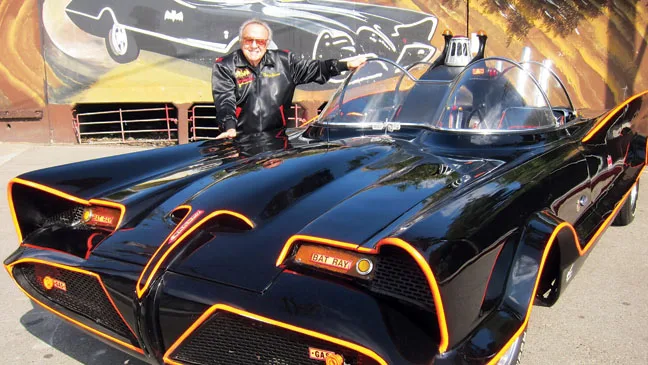
| Year | 1966–1968 |
|---|---|
| Source | Batman TV series (ABC, 1966–1968) and Batman: The Movie (1966) |
| Designer | George Barris (Barris Kustom City), built in 15 days for $15,000 |
| Base vehicle | 1955 Lincoln Futura concept car (originally hand-built in Turin, Italy by Ghia for $250,000) |
| Engine | 428 cubic inch Lincoln V8 (originally), later upgraded with a Ford 390 V8 |
| Top speed | Approximately 90 mph (145 km/h) |
- George Barris bought the abandoned Lincoln Futura prototype from Ford for $1 in 1965.
- The original #1 Batmobile sold at Barrett-Jackson Scottsdale 2013 for $4.62 million — the most ever paid at the time for a movie car.
- Three additional fiberglass replicas were built for the TV series and promotional tours.
- Featured working “Bat-features”: parachute braking system, smoke emitter, bat-ray projector, mobile crime computer.
- Detroit Steel Wheel Company built the wheels — the car runs on bias-ply tires throughout the original episodes.
1989 Tim Burton Batmobile (Anton Furst — Julian Caldow Design)
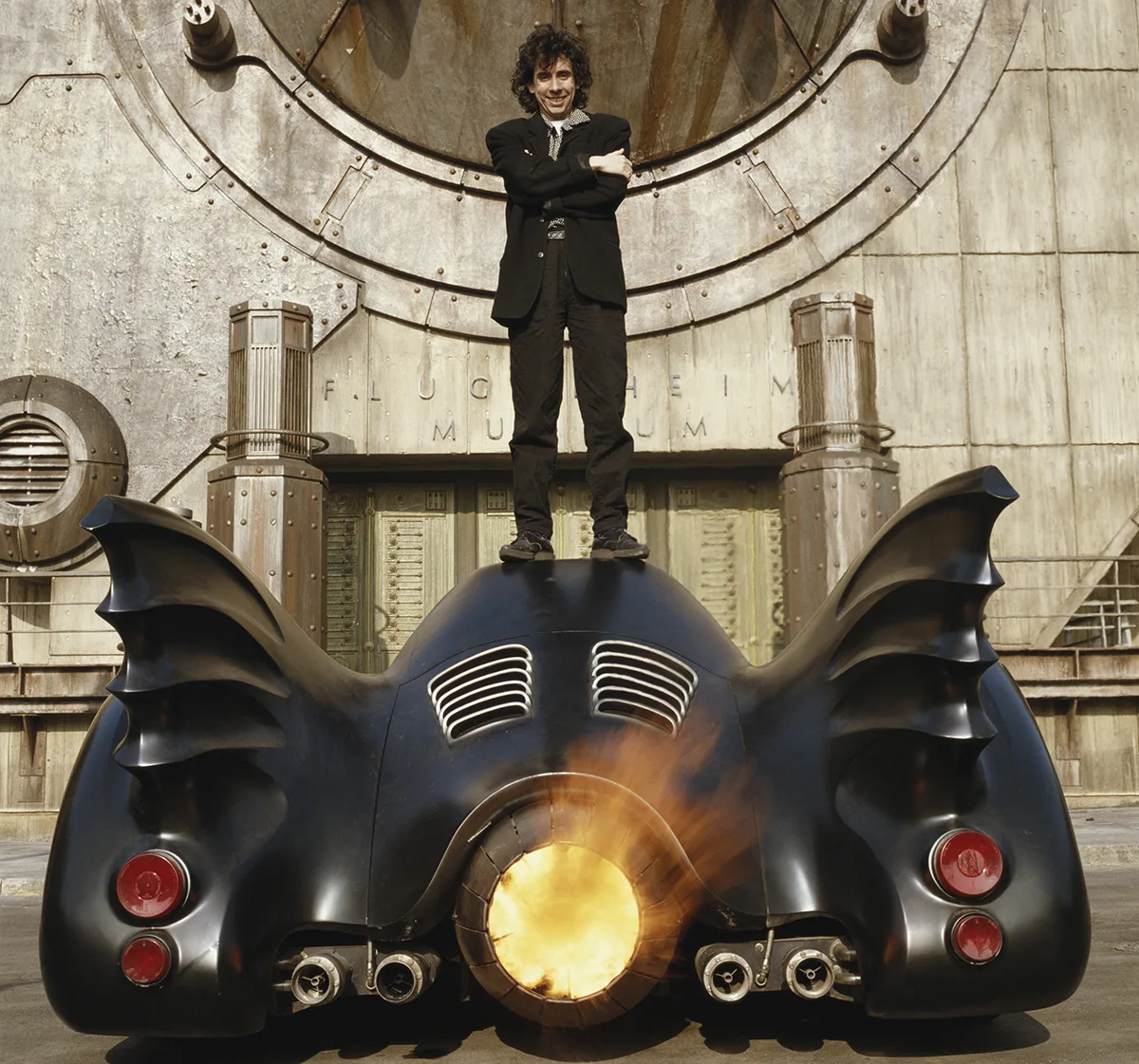
| Year | 1989, reused in Batman Returns (1992) |
|---|---|
| Source | Batman (Warner Bros., 1989) and Batman Returns (Warner Bros., 1992) |
| Designer | Anton Furst (production designer, won Academy Award for the film) with Julian Caldow (concept artist) and Keith Short (sculptor) |
| Base vehicle | Stretched 1967 Chevrolet Impala chassis, custom steel & fiberglass body |
| Engine | Chevrolet small-block V8, automatic transmission |
| Top speed | Approximately 130 mph (210 km/h) |
- Two functional cars and three additional shells were built at Pinewood Studios; one road-going chassis was used for stunt work.
- Overall length 5,791 mm (228 in), width 2,438 mm (96 in), height 1,219 mm (48 in) — a full meter longer than a Cadillac Sedan DeVille of the same era.
- Twin Browning machine guns mounted behind front-fender panels (purely cosmetic on the screen cars).
- Side-mounted “Cocoon Shield” armor plating — metal louvers actually deployed in Batman Returns.
- Bruce Wayne's preferred mode: turbine intake on the nose, bat-fin tail, finned wheel covers.
1995 Batman Forever Batmobile (Barbara Ling)
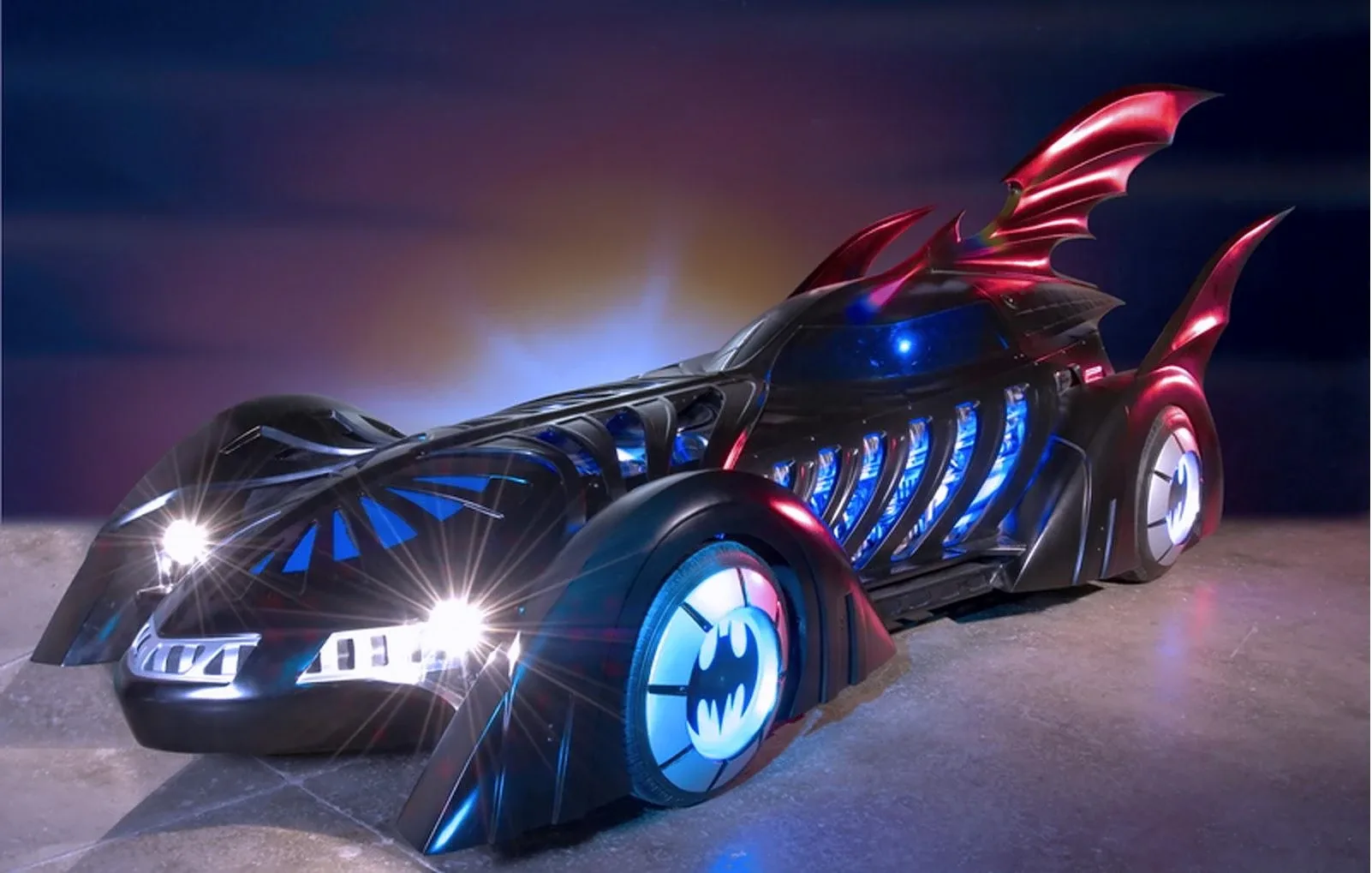
| Year | 1995 |
|---|---|
| Source | Batman Forever (Warner Bros., 1995) |
| Designer | Barbara Ling (production designer), with H.R. Giger contributing an early rejected concept |
| Base vehicle | Custom chassis with Chevrolet 350 V8 and tube-frame construction |
| Engine | Chevrolet 350 small-block V8, automatic transmission |
| Top speed | Estimated 120 mph (193 km/h) limit on functional units |
- Two functional vehicles built; two static shells used for studio shots.
- Glowing UV-reactive internal lighting visible through ribbed bodywork — one of the first Batmobiles to use practical neon lighting.
- Exposed central turbine engine in the rear (cosmetic, not the actual powerplant).
- Could grapple onto buildings and climb vertical walls in the film (visual effect, not functional).
- Often regarded as the most controversial Batmobile design — Barbara Ling called it “a piece of Gothic sculpture, not a car.”
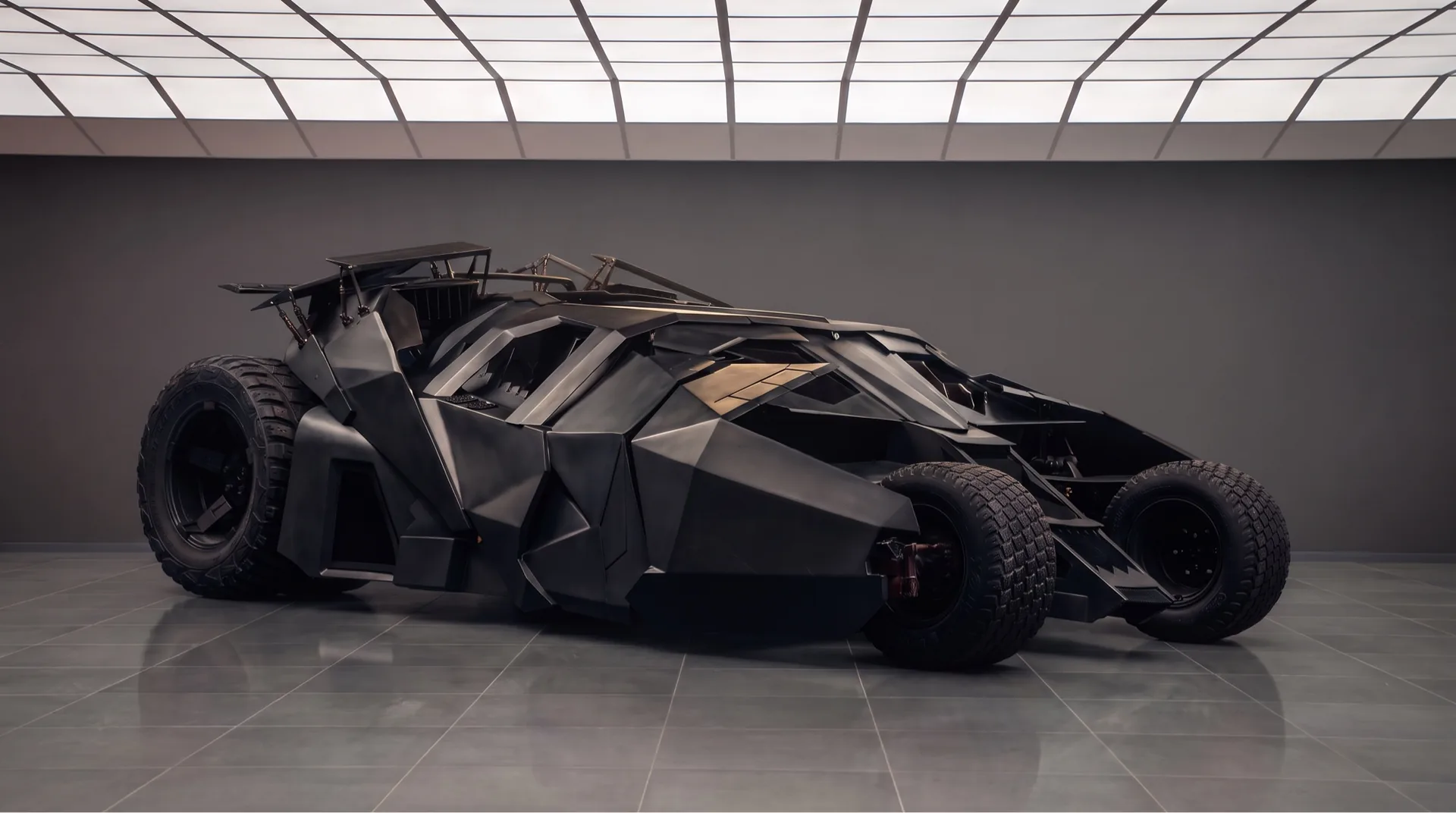
The Tumbler (2005–2012) — Nolan Dark Knight Trilogy
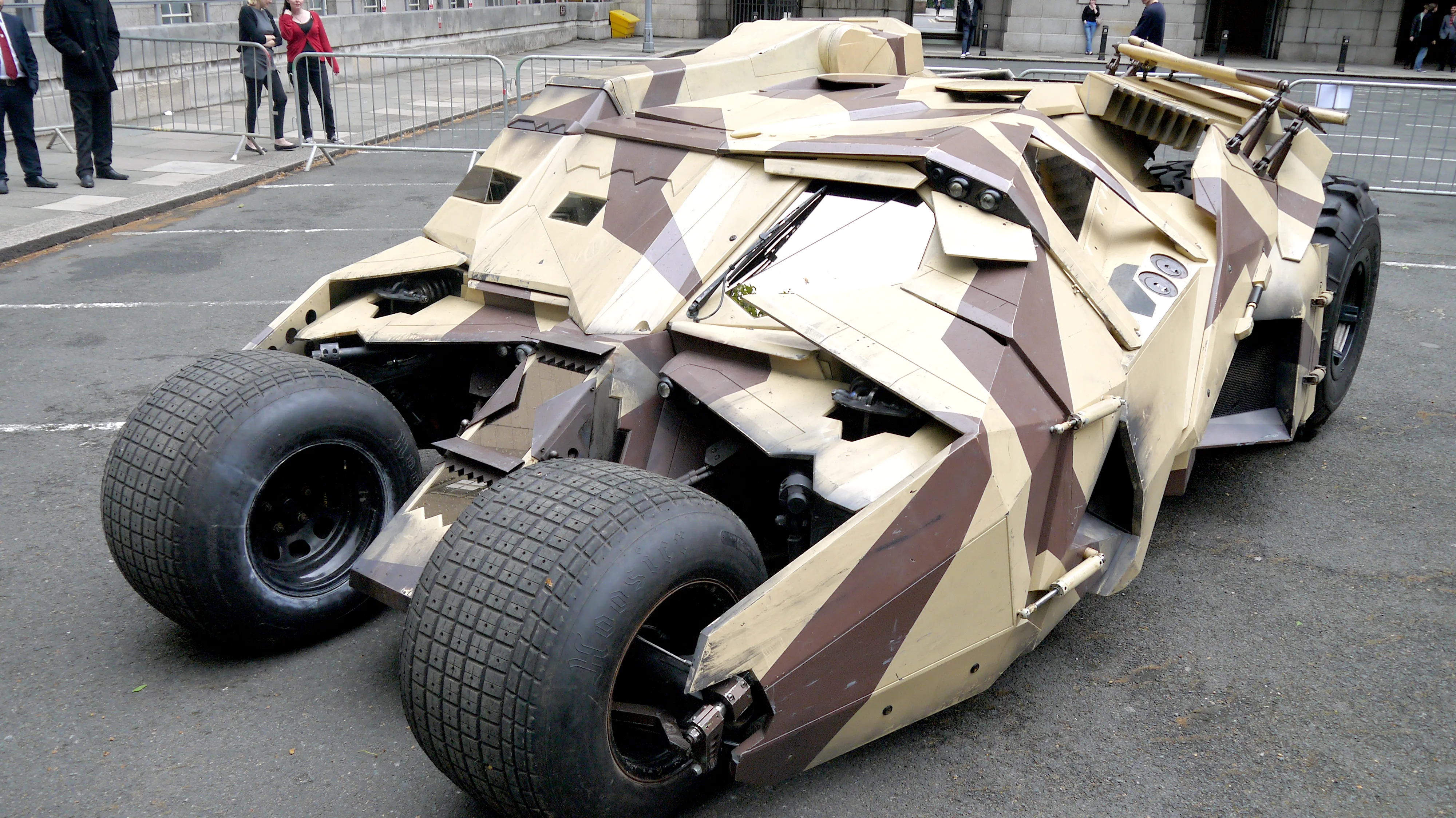
| Year | 2005, 2008, 2012 |
|---|---|
| Source | Batman Begins (2005), The Dark Knight (2008), The Dark Knight Rises (2012) |
| Designer | Nathan Crowley (production designer) with Christopher Nolan; built by Chris Corbould (SFX supervisor) at Shepperton Studios |
| Base vehicle | Original design, no production base. Drivetrain uses a GM Chevrolet 5.7-litre V8 with rear-wheel drive and a 4-speed automatic. |
| Engine | GM Chevrolet 5.7L V8, ~500 hp, 4-speed automatic, rear-wheel drive |
| Top speed | Demonstrated approximately 100 mph (160 km/h) on test track |
- Six fully drivable Tumblers built, each costing approximately $250,000 to construct.
- 0–60 mph in approximately 5.6 seconds as tested by Chris Corbould's team.
- Length 4,572 mm (15 ft), width 2,896 mm (9.5 ft), weight 2,500 kg (5,500 lb).
- Rear wheels 44 inches diameter (Super Swamper TSL Bogger tires); front wheels are cantilevered with no steering column — the entire front swings for direction changes.
- One Tumbler sold at RM Sotheby's in 2024 for $3 million, setting a record for a Nolan-era prop car.
- Drivers used a custom cockpit with a single forward-facing seat, prone position; visibility through bunker-style slits and external cameras.
2008 Batpod — The Dark Knight Motorcycle
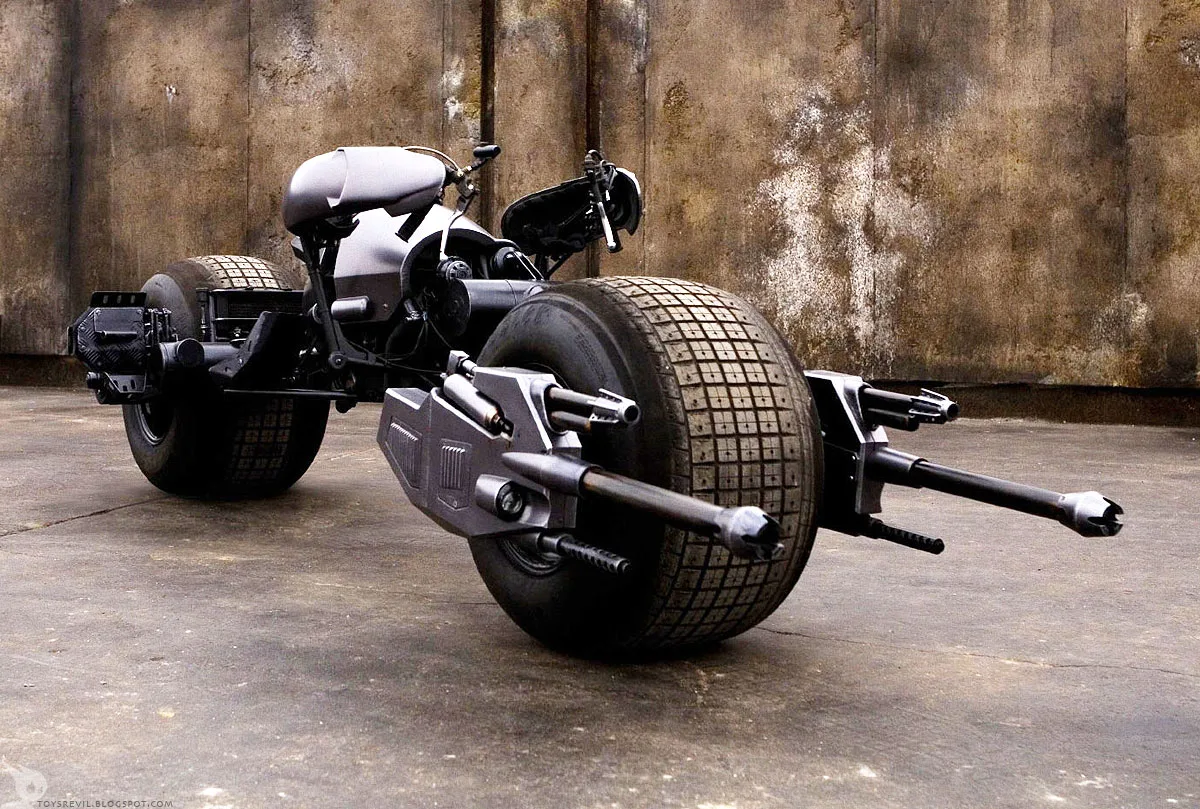
| Year | 2008, reused in The Dark Knight Rises (2012) |
|---|---|
| Source | The Dark Knight (2008) and The Dark Knight Rises (2012) |
| Designer | Nathan Crowley and Christopher Nolan; engineering by Chris Corbould |
| Base vehicle | Honda CRF450R single-cylinder 450cc dirt-bike engine with custom hub-centre steering chassis |
| Engine | Honda CRF450R 449cc liquid-cooled single-cylinder, 5-speed sequential, chain drive |
| Top speed | Approximately 120 mph (193 km/h) |
- Six functional Batpods built; only one stuntman (Jean-Pierre Goy) was trained to ride it.
- Rider controls steering with their shoulders, not their hands — the “handlebars” are stationary grips for stability.
- Wheels are 31 inches (788 mm) in diameter — oversized for stability and screen presence.
- Twin grappling-hook cannons on the front forks (cosmetic on the working bikes).
- Released as an emergency-eject system from the destroyed Tumbler in The Dark Knight.
- Sold at Propstore Auction in 2024 for approximately $300,000.
2016 Batman v Superman Batmobile (Patrick Tatopoulos)
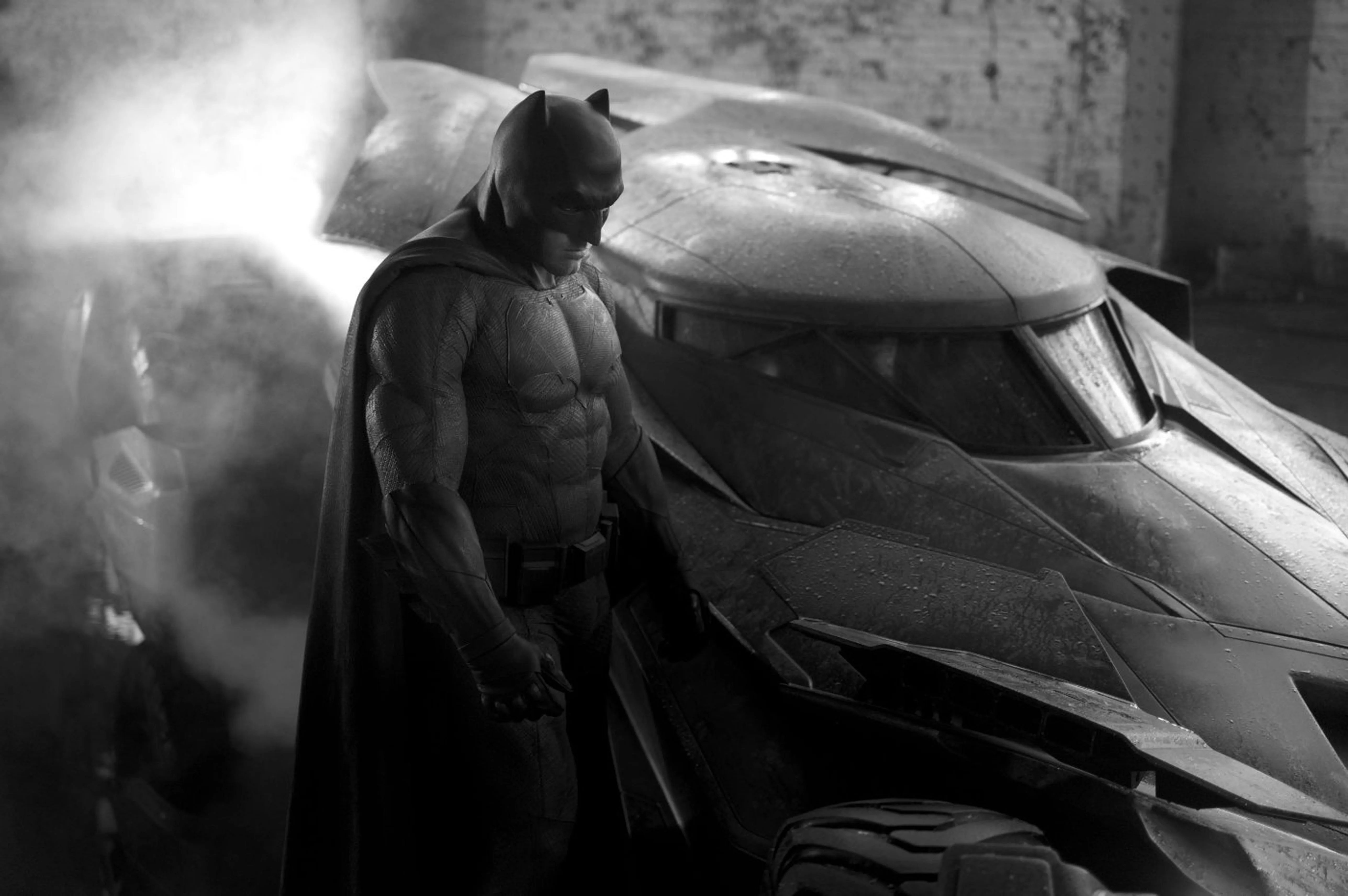
| Year | 2016 |
|---|---|
| Source | Batman v Superman: Dawn of Justice (Warner Bros., 2016) |
| Designer | Patrick Tatopoulos (production designer), Dennis McCarthy (vehicle builder — same shop as Fast & Furious) |
| Base vehicle | Dodge Ram dually pickup chassis as stunt proxy; hero car on Israeli farm tires and a custom tube-frame chassis |
| Engine | GM LS-series V8 with automatic transmission |
| Top speed | Demonstrated approximately 100 mph (160 km/h) |
- Length 6.1 m (20 ft), width 3.4 m (11.2 ft) — the largest live-action Batmobile ever built.
- Six functional vehicles built across the BvS and Justice League productions.
- Hood-mounted twin .50-caliber-style cannons; rear-mounted grenade launchers (cosmetic).
- Side “sponsons” designed to look like external armor pods.
- Used the same drivetrain platform later refined for the 2017 Justice League and 2021 Snyder Cut.
- Tatopoulos described the design as “the love child of the Anton Furst car and a military APC.”
2022 The Batman Batmobile (Ash Thorp — Matt Reeves)
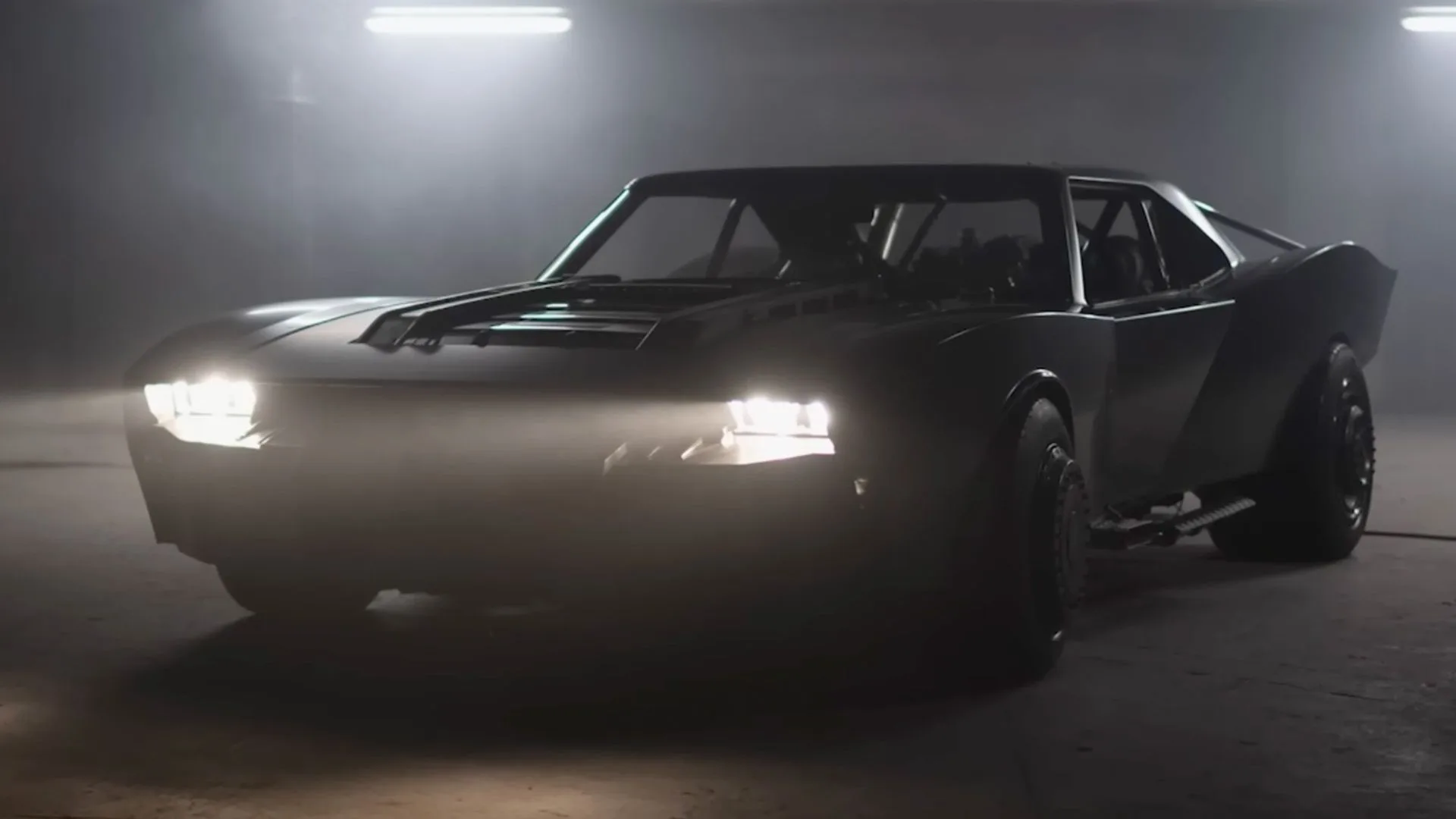
| Year | 2022 |
|---|---|
| Source | The Batman (Warner Bros., 2022) |
| Designer | Ash Thorp (concept), James Chinlund (production designer), Dennis McCarthy (vehicle builder) |
| Base vehicle | Custom chassis with 1968–1970 Dodge Charger / Plymouth Barracuda silhouette inspiration; one variant built on a Tesla chassis for stunt work |
| Engine | Modified Mopar Hemi V8 (estimated 750+ hp in the hero unit), automatic transmission, rear-wheel drive |
| Top speed | Reported test top speed of 150+ mph (240+ km/h) |
- Four production vehicles built — two hero cars, two stunt cars.
- Massive rear-mounted jet engine actually fired functional flame for camera; produced ~5,000 lb (22 kN) of thrust on test runs.
- Designed as a “DIY garage-built muscle car” — intentionally rough-edged to suggest a young Batman who built it himself.
- Internal Hemi V8 visible through a rear “cage” window section.
- Inspired demand spikes for 1968–1970 Dodge Chargers and Plymouth Barracudas — Hagerty reported a 22% price jump on 1970 Chargers in the year after release.
- Director Matt Reeves: “It's a car you'd be terrified to find in your rear-view mirror.”
All Batman Vehicles Beyond the Batmobile — Batwing, Batboat, The Bat & Batcycle
| Year | 1966–2022 |
|---|---|
| Source | Multiple live-action Batman films |
| Designer | Various — see individual vehicles below |
| Base vehicle | See per-vehicle notes |
| Engine | Various |
| Top speed | Various |
- 1966 Batboat (Batman: The Movie): Glastron V-174 fiberglass hull with MerCruiser V6, 45 mph (72 km/h). Built in Austin, Texas.
- 1989 Batwing (Batman): 35-foot (10.7 m) wingspan stealth-jet design by Anton Furst. Five filming models built — one full-size, four miniatures.
- The Bat (The Dark Knight Rises, 2012): Tilt-rotor VTOL aircraft designed by Nathan Crowley. Two functional shells built for the film.
- 2022 Batcycle (The Batman): Custom Ducati Monster frame stacked with twin BMW boxer motors — designed by Ash Thorp.
- BvS Batwing (Batman v Superman, 2016): Stealth-mode VTOL fighter armed with Wayne Tech weaponry; CGI-only, no functional build.
Animated Series Batmobiles — From BTAS to Caped Crusader
The animated Batmobiles are as varied as the live-action ones — and for a whole generation of viewers, Bruce Timm's Batman: The Animated Series car is the definitive Batmobile design.
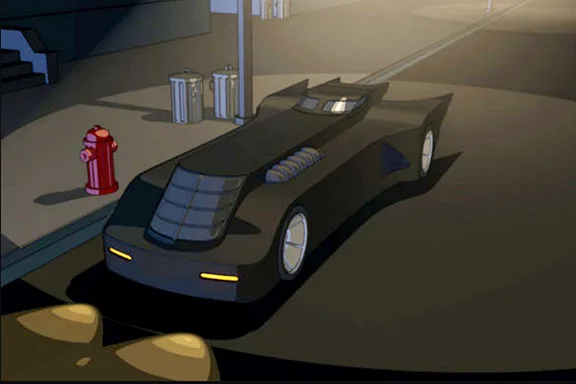
Batman: The Animated Series (1992–1995) — The Dark Deco Batmobile
Batman: The Animated Series originally aired on Fox Kids from 5 September 1992 to 15 September 1995, 85 episodes, developed by Bruce Timm and Eric Radomski for Warner Bros. Animation (Wikipedia). The Batmobile designers were Bruce Timm and Shayne Poindexter, and the car first appeared in the episode “On Leather Wings” (Screen Rant, Car and Driver).
Signature traits: an ultra-long, ground-hugging body, monolithic black-and-grey styling and a huge rear jet exhaust that vents from a low-slung tail. The design language — a mix of Art Deco and film-noir that the show’s producers dubbed “Dark Deco” — combined elements from various decades to produce a car that could have come from any time between the 1930s and the 1990s (Wikipedia). In-universe, the vehicle is built by out-of-work automotive designer Earl Cooper, introduced in the episode “The Mechanic”.
Note: no official horsepower, top-speed or dimension figures exist for the BTAS Batmobile — any such number circulating online is fan speculation. What’s canonical are its in-universe features: jet exhaust, grappling hook, ejection seats, oil slick, wheel-slasher hubs, autopilot and an armoured “shield mode”.
Batman Beyond (1999–2001) — The Flying Batmobile
Batman Beyond aired on Kids' WB from 10 January 1999 to 18 December 2001, 52 episodes over three seasons, created by Paul Dini, Bruce Timm and Alan Burnett (Wikipedia). Terry McGinnis’s flying Batmobile debuted in the episode “Black Out” (30 January 1999). In-universe it’s capable of Mach 3, with cloaking / active camouflage, hull magnetisation, both top and bottom entry hatches, and a direct link with the Batsuit (CBR).
Notably, elderly Bruce Wayne’s personal limousine in Batman Beyond was described by the show’s producers as “an upside-down Batmobile” (Wikipedia) — a subtle callback to Terry’s Batmobile’s inverted teardrop silhouette.
Batman: The Brave and the Bold (2008–2011) — Retro Silver Age
Batman: The Brave and the Bold aired from 13 November 2008 to 5 December 2011 (epguides). Its Batmobile is an unapologetically retro Silver-Age design in red-and-black, borrowing Studebaker styling cues with twin bubble domes, a six-speed turbocharged drivetrain, armour plating and gel-filled Kevlar-reinforced tires. (These are in-universe specifications, not measured real-world values.)
Batwheels (2022–) and Batman: Caped Crusader (2024–)
Warner Bros. Animation’s Batwheels premiered on 17 September 2022 on HBO Max, with a linear premiere on 17 October 2022 on Cartoon Network’s Cartoonito. The Batmobile is a lead character named “Bam”, whose appearance is mostly based on the 1989 Batman Batmobile (Wikipedia).
Batman: Caped Crusader premiered on Prime Video on 1 August 2024, and features a noir hot-rod Batmobile with dashboard functions labelled Smoke, Thrust and Chute. Warner Bros. promotional material describes the car being driven at 100 mph on the streets of Gotham City (CBR).
Also on Batman Garage: Every Live-Action Batman Car in One Feature
For a deep-dive on the seven cinema Batmobiles with detailed spec tables and comparison photos, see our companion feature: Every James Bond Car — From the DB5 to No Time to Die.
Video Game Batmobiles — From Arkham Asylum to Suicide Squad
Batman: Arkham Asylum, City & Origins (2009–2013) — Cutscene Batmobiles
The first three Rocksteady Arkham games featured Batmobiles only in cutscenes and as static props, never drivable. The Arkham Asylum (2009) Batmobile was designed by comics artist Carlos D’Anda, who blended the 1989 film Batmobile with the BTAS design. It appears at the start of the game before being vandalised and destroyed by Harley Quinn (Wikipedia). In Arkham Origins (2013), a prototype “Urban Assault Vehicle” is parked in the Batcave — described in-game as armoured, 1,200 bhp, 7 mpg — and is destroyed when Bane attacks the Batcave.
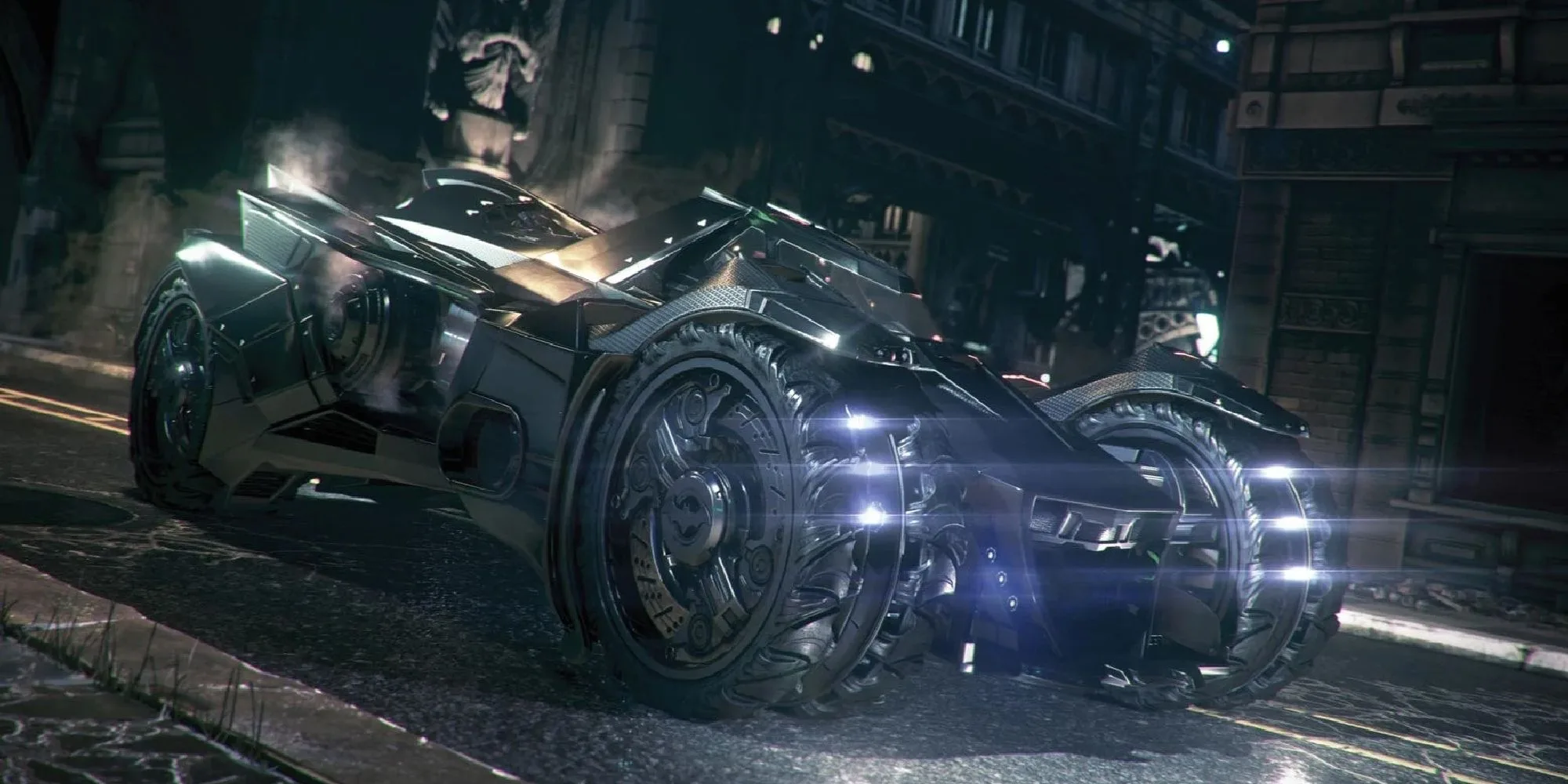
Batman: Arkham Knight (2015) — The First Fully Drivable Batmobile
Rocksteady’s Arkham Knight (2015) introduced the first fully drivable Batmobile in the series, and remains the definitive video-game Batmobile. In-universe it’s a WayneTech “Urban Assault Vehicle”. Key in-game specifications (Wikipedia, Arkham Wiki):
| Length | 4.62 m (182 in) |
|---|---|
| Width (Battle Mode) | 3.7 m (150 in) |
| Height | 1.2 m |
| Curb weight | 2.5 short tons |
| Power | 1,200 bhp hybrid (8.0 L quad-turbo + jet turbine) |
| Top speed | 209.1 mph / 336.5 km/h (+30% with afterburner) |
| 0–60 mph | 2.7 seconds |
| Armour | 120 mm carbon-nanotube aggregate |
| Vulcan gun | M61 Vulcan 25 mm six-barrel rotary, 6,000 rpm |
| Main cannon | 60 mm, muzzle velocity 1,680 m/s, penetrates ~820 mm steel |
The Batmobile’s signature move is “Battle Mode”: the car rotates its wheels and rears back into a strafing tank configuration, deploying the 60 mm cannon, Vulcan gun, missile barrage and non-lethal riot suppressor (GameRevolution). The design is credited collectively to Rocksteady Studios’ art team; no individual designer is officially named.
Batman: Arkham Shadow (2024) & Suicide Squad: Kill the Justice League (2024)
Batman: Arkham Shadow is a Meta Quest 3 / Quest 3S exclusive developed by Camouflaj, released on 22 October 2024 (Meta official store). It’s the sixth main Arkham game and is set in Blackgate Prison — a Batmobile appearance in this title is not officially documented.
In Suicide Squad: Kill the Justice League, released on 2 February 2024, Rocksteady included Arkham Knight Batmobile holograms in the Batcave, plus new Batmobile-design promotional footage; but the Batmobile is not a player-drivable vehicle (Screen Rant).
Bruce Wayne’s Personal Cars — The Wayne Manor Collection
The Batmobile gets most of the attention, but Bruce Wayne’s civilian daily drivers are almost as iconic. Here’s what Bruce parks in his Wayne Manor garage in each Batman film.
Batman Begins (2005) — Lamborghini Murciélago Roadster
In Christopher Nolan’s Batman Begins, Bruce Wayne drives a Lamborghini Murciélago Roadster, identified as a 2004 model year — one of only four Roadsters built that year, later held in Audi’s collection (IMCDb, MotorTrend).
The Dark Knight (2008) — Lamborghini Murciélago LP640
Bruce upgrades to a Lamborghini Murciélago LP640, model year 2006, in The Dark Knight (IMCDb, TopSpeed). The LP640 upgrade delivers 6.5 L V12 power at 631 hp — the same platform Nolan would return to for the trilogy’s finale.
The Dark Knight Rises (2012) — Lamborghini Aventador LP 700-4
In The Dark Knight Rises, Bruce drives a silver / Grigio Lamborghini Aventador LP 700-4 (IMCDb). Manufacturer specifications: 6.5-litre V12, 700 hp (metric), 0–100 km/h in 2.9 s, top speed 350 km/h (217 mph), 1,575 kg dry (Lamborghini press kit). Two Aventador units were used during filming (Jerry Garrett); one of them later surfaced for sale in Australia (Drive.com.au).
Batman v Superman (2016) — 1957 Aston Martin DB Mk III
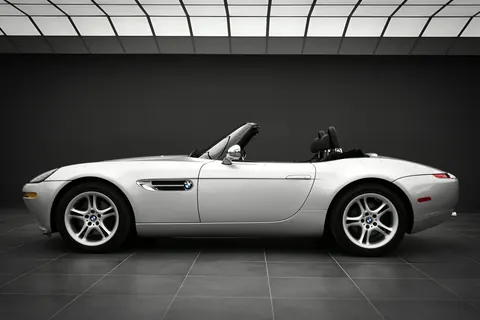
In Batman v Superman: Dawn of Justice, Bruce Wayne arrives at Lex Luthor’s gala in a green 1957 Aston Martin DB Mk III — the car is director Zack Snyder’s own vehicle, first reported by Bloomberg Pursuits and confirmed by Snyder himself on Instagram: “My 1957 Aston Martin, DB mk3 in its natural habitat” (Business Insider). The same car reappears in Zack Snyder’s Justice League, where Alfred is shown working on it (ComicBookMovie). Notably, the DB Mk III is the Aston Martin Ian Fleming gave James Bond in the novel Goldfinger — a deliberate hat-tip. Bruce also drives a Jeep Renegade in the film’s opening Metropolis sequence.
Justice League (2017) — Mercedes-AMG Vision Gran Turismo
In Zack Snyder’s theatrical Justice League, Bruce Wayne’s hero car is the Mercedes-AMG Vision Gran Turismo concept, a one-off design commissioned specifically for the film (Carscoops).
The Batman (2022) — No Confirmed Wayne-Family Car
In Matt Reeves’s The Batman (2022), no vehicle is explicitly identified as belonging to the Wayne family. Bruce Wayne is on foot for most of the film, and the vehicle index shows no Cadillac and no named Wayne car (IMCDb). What’s prominent instead is the Batmobile itself — described in the story as a car Bruce built himself (SlashFilm).
2026 Wayne Enterprises Tumbler — The First Officially Licensed, Drivable Batmobile
In 2024, Warner Bros. Discovery’s Wayne Enterprises luxury brand launched an official programme to build 10 fully drivable Tumblers at US$2,990,000 each, with a stated 15-month build time and invitation-only sales (BruceWayneX official site, Drive.com.au, New Atlas). It is the first officially licensed, drivable, homologated Batmobile ever offered to private customers.
Wayne Enterprises has also partnered with Automobili Pininfarina for two bespoke hypercars: the B95 “Gotham” and the Battista “Dark Knight”, each with a 120 kWh battery, four motors, 1,900 hp, 2,340 Nm of torque and 0–100 km/h in under two seconds (Automobili Pininfarina press release).
Batmobile Auction Prices — The Most Expensive Batman Cars Ever Sold
1966 Barris Batmobile — US$4,620,000 (Barrett-Jackson, 2013)
The most expensive Batmobile ever sold at auction is the original 1966 George Barris Batmobile: US$4,620,000 including fees (a US$4.2 million hammer price plus roughly $420,000 buyer’s premium) at Barrett-Jackson Scottsdale on 19 January 2013 — a world record for a TV or movie car (Barrett-Jackson official press release). The record is logged by Guinness World Records as the most expensive Batman memorabilia sold at auction.
It beat the Goldfinger Aston Martin DB5 (US$4,608,500 in 2010) by US$11,500. The buyer was Rick Champagne, a Phoenix-area logistics executive (LA Times).
Origin story: George Barris bought the 1955 Lincoln Futura concept from Ford for $1 and rebuilt it into the Batmobile in 15 days for about $15,000. The car is 19 ft long and was the first of six built for the TV series.
1989 Tim Burton Batmobile — US$1.5M Asking Price
A screen-used 1989 Batmobile was listed for sale at US$1.5 million by Classic Auto Mall in Morgantown, Pennsylvania in November 2022. It is a 48-volt electric prop with a top speed of roughly 25–30 mph, whose batteries had not been charged since about 1993, and which previously served as a display prop at Six Flags Great Adventure (Hypebeast, Artnet News).
Note: US$1.5M is an asking price, not a confirmed realised sale. An officially licensed Six Flags stunt/exhibition 1989 car with a 350 cu in Chevrolet V8 was offered at Mecum Indy 2025 with a guide starting at US$240,000.
Batman Forever Batmobile — US$297,000 (2007)
The 1995 Batman Forever Batmobile designed by Barbara Ling sold for US$297,000 in 2007 (Paul Fraser Collectibles).
Frequently Asked Questions — Batman Cars, Batmobiles & Bruce Wayne's Collection
What car does Batman drive?
Batman drives the Batmobile, which is a purpose-built vehicle rather than a production model — every screen version is bespoke. The 1966 car was rebuilt by George Barris from a 1955 Lincoln Futura concept, the 1989 Burton Batmobile used a Chevrolet Impala chassis, the Tumbler is a bespoke chassis with a 5.7-litre GM V8, and the 2022 The Batman Batmobile is a bespoke build with a Chevrolet V8 and the roof of a 1969 Dodge Charger worked into the bodywork. Out of costume, Bruce Wayne drives road cars: Lamborghini Murciélago and Aventador in Nolan's trilogy, and a 1957 Aston Martin DB Mk III in Batman v Superman.
How many vehicles does Batman have?
Across the theatrical live-action films Batman uses seven vehicles: six Batmobiles — the 1966 Lincoln Futura, 1989 Burton, 1995 Batman Forever, the Tumbler, the 2016 BvS car and the 2022 The Batman Batmobile — plus the 2008 Batpod motorcycle. Counting the companion craft as well (Batwing, Batboat, the Bat and the Batcycle) takes the live-action fleet to eleven, before the comic-book, animated-series and video-game designs catalogued below.
What is Batman's car called?
Batman's car is called the Batmobile. The name was first used in Detective Comics #48 (February 1941), though Batman had driven an unnamed red sedan since Detective Comics #27 in May 1939 (Wikipedia).
How many Batmobiles have there been?
There have been seven distinct live-action Batmobiles across theatrical Batman films from 1966 to 2022, plus dozens more in comic-book redesigns, five major animated series, and video-game entries. The seven are: 1966 Lincoln Futura (Adam West), 1989 Burton, 1995 Batman Forever, the Tumbler (Nolan trilogy 2005–2012), 2016 BvS, and 2022 The Batman.
What is the most expensive Batmobile ever sold?
The original 1966 Batmobile #1, built by George Barris on a 1955 Lincoln Futura concept, sold for US$4,620,000 including fees at Barrett-Jackson Scottsdale on 19 January 2013, setting a Guinness World Record for the most expensive Batman memorabilia ever sold at auction (Barrett-Jackson).
How fast is the Tumbler Batmobile?
The Tumbler's officially quoted top speed is 160 mph (260 km/h), though SFX supervisor Chris Corbould stated in his own words that the real-world capability was closer to ~100 mph, with 0–60 mph in five or six seconds and a longest jump of roughly 70 ft at 60 mph (Chris Corbould interview).
How much did the Tumbler cost to build?
Each drivable Tumbler cost approximately US$250,000 and used 65 carbon-fibre panels (Wikipedia). Between four and seven Tumblers were built across the Nolan trilogy, depending on the count used (some sources count only fully drivable cars, others include jet-exhaust and stunt units). The complete design and development programme reportedly cost several million dollars over nine months.
What is the Tumbler based on?
The Tumbler is a bespoke chassis using a truck rear axle and Baja racing-truck suspension, powered by a 5.7-litre GM V8 producing between roughly 400 and 500 hp depending on source (Wikipedia, Fraser Engines). The commonly repeated "Peterbilt chassis" claim is not supported by any verified source. Rear tyres are 4× Interco Super Swamper TSL 44/18.5-16.5.
What car is the 2022 The Batman Batmobile based on?
The 2022 The Batman Batmobile is a bespoke build, with a Chevrolet V8 powertrain (roughly 630–700 hp depending on source) and the roof of a 1969 Dodge Charger incorporated into the bodywork — but calling the car a "Dodge Charger" would be inaccurate. Four units were built by production designer James Chinlund from concept designs by Ash Thorp: a ramming car, a lightweight jump car, a pod car with roof-mounted stunt-driver controls, and an all-electric hero car (Wikipedia, CarBuzz).
Who designed the 1989 Tim Burton Batmobile?
Production designer Anton Furst designed the 1989 Batmobile and won an Academy Award for Best Art Direction for his work on Batman. The vehicle was illustrated by Julian Caldow and built by John Evans' special-effects team at Pinewood Studios. It measured 260.7 in long, 94.4 in wide, was built on a Chevrolet Impala chassis, and two cars were built for the film (Wikipedia).
What car does Bruce Wayne drive in the Nolan Dark Knight trilogy?
Bruce Wayne drives three Lamborghinis across Nolan's trilogy: a 2004 Murciélago Roadster in Batman Begins, a 2006 Murciélago LP640 in The Dark Knight, and a silver Aventador LP 700-4 in The Dark Knight Rises (IMCDb).
What Aston Martin does Bruce Wayne drive in Batman v Superman?
Bruce Wayne drives a green 1957 Aston Martin DB Mk III in Batman v Superman: Dawn of Justice. The car is director Zack Snyder's own personal vehicle and is the same Aston Martin model Ian Fleming gave James Bond in the Goldfinger novel (Business Insider).
Can you buy a real Batmobile?
Yes — since 2024, Warner Bros. Discovery's Wayne Enterprises luxury brand has offered a limited run of 10 fully drivable Tumbler Batmobiles at US$2,990,000 each, with a 15-month build time and invitation-only sales (BruceWayneX official site, New Atlas).
What is the largest Batmobile ever built?
The 2016 Batman v Superman Batmobile is the largest live-action Batmobile: approximately 20 ft long, 12 ft wide, and weighing around 7,000–8,800 lb depending on the source. It was designed by Patrick Tatopoulos with vehicle builder Dennis McCarthy, and had an estimated top speed of 205 mph (Screen Rant).
Which Batmobile is considered the best?
There's no consensus, but the two most-cited "best" Batmobiles are the 1989 Anton Furst design (its Art Deco / Gothic silhouette is often called the most iconic version ever) and the Tumbler (which redefined the Batmobile as a military vehicle rather than a hot rod). The Bruce Timm BTAS Batmobile from Batman: The Animated Series is regularly named the best animated Batmobile.
What is the Batpod based on?
The Batpod is a purpose-built motorcycle designed and constructed by SFX supervisor Chris Corbould and his team for The Dark Knight (2008). It uses a 750 cc single-cylinder engine, has massive 20-inch front and 31-inch rear tyres, and was designed to eject from the front of the Tumbler when the main vehicle takes catastrophic damage.
What is Batman’s car called?
Batman’s car is called the Batmobile. The name was first used in Detective Comics #48 (February 1941), though Batman had driven an unnamed red sedan since Detective Comics #27 in May 1939 (Wikipedia).
How many Batmobiles have there been?
There have been seven distinct live-action Batmobiles across theatrical Batman films from 1966 to 2022, plus dozens more in comic-book redesigns, five major animated series, and video-game entries. The seven are: 1966 Lincoln Futura (Adam West), 1989 Burton, 1995 Batman Forever, the Tumbler (Nolan trilogy 2005–2012), 2016 BvS, and 2022 The Batman.
What is the most expensive Batmobile ever sold?
The original 1966 Batmobile #1, built by George Barris on a 1955 Lincoln Futura concept, sold for US$4,620,000 including fees at Barrett-Jackson Scottsdale on 19 January 2013, setting a Guinness World Record for the most expensive Batman memorabilia ever sold at auction (Barrett-Jackson).
How fast is the Tumbler Batmobile?
The Tumbler’s officially quoted top speed is 160 mph (260 km/h), though SFX supervisor Chris Corbould stated in his own words that the real-world capability was closer to ~100 mph, with 0–60 mph in five or six seconds and a longest jump of roughly 70 ft at 60 mph (Chris Corbould interview).
How much did the Tumbler cost to build?
Each drivable Tumbler cost approximately US$250,000 and used 65 carbon-fibre panels (Wikipedia). Between four and seven Tumblers were built across the Nolan trilogy, depending on the count used (some sources count only fully drivable cars, others include jet-exhaust and stunt units). The complete design and development programme reportedly cost several million dollars over nine months.
What is the Tumbler based on?
The Tumbler is a bespoke chassis using a truck rear axle and Baja racing-truck suspension, powered by a 5.7-litre GM V8 producing between roughly 400 and 500 hp depending on source (Wikipedia, Fraser Engines). The commonly repeated “Peterbilt chassis” claim is not supported by any verified source. Rear tyres are 4× Interco Super Swamper TSL 44/18.5-16.5.
What car is the 2022 The Batman Batmobile based on?
The 2022 The Batman Batmobile is a bespoke build, with a Chevrolet V8 powertrain (roughly 630–700 hp depending on source) and the roof of a 1969 Dodge Charger incorporated into the bodywork — but calling the car a “Dodge Charger” would be inaccurate. Four units were built by production designer James Chinlund from concept designs by Ash Thorp: a ramming car, a lightweight jump car, a pod car with roof-mounted stunt-driver controls, and an all-electric hero car (Wikipedia, CarBuzz).
Who designed the 1989 Tim Burton Batmobile?
Production designer Anton Furst designed the 1989 Batmobile and won an Academy Award for Best Art Direction for his work on Batman. The vehicle was illustrated by Julian Caldow and built by John Evans’ special-effects team at Pinewood Studios. It measured 260.7 in long, 94.4 in wide, was built on a Chevrolet Impala chassis, and two cars were built for the film (Wikipedia).
What car does Bruce Wayne drive in the Nolan Dark Knight trilogy?
Bruce Wayne drives three Lamborghinis across Nolan’s trilogy: a 2004 Murciélago Roadster in Batman Begins, a 2006 Murciélago LP640 in The Dark Knight, and a silver Aventador LP 700-4 in The Dark Knight Rises (IMCDb).
What Aston Martin does Bruce Wayne drive in Batman v Superman?
Bruce Wayne drives a green 1957 Aston Martin DB Mk III in Batman v Superman: Dawn of Justice. The car is director Zack Snyder’s own personal vehicle and is the same Aston Martin model Ian Fleming gave James Bond in the Goldfinger novel (Business Insider).
Can you buy a real Batmobile?
Yes — since 2024, Warner Bros. Discovery’s Wayne Enterprises luxury brand has offered a limited run of 10 fully drivable Tumbler Batmobiles at US$2,990,000 each, with a 15-month build time and invitation-only sales (BruceWayneX official site, New Atlas).
What is the largest Batmobile ever built?
The 2016 Batman v Superman Batmobile is the largest live-action Batmobile: approximately 20 ft long, 12 ft wide, and weighing around 7,000–8,800 lb depending on the source. It was designed by Patrick Tatopoulos with vehicle builder Dennis McCarthy, and had an estimated top speed of 205 mph (Screen Rant).
Which Batmobile is considered the best?
There’s no consensus, but the two most-cited “best” Batmobiles are the 1989 Anton Furst design (its Art Deco / Gothic silhouette is often called the most iconic version ever) and the Tumbler (which redefined the Batmobile as a military vehicle rather than a hot rod). The Bruce Timm BTAS Batmobile from Batman: The Animated Series is regularly named the best animated Batmobile.
What is the Batpod based on?
The Batpod is a purpose-built motorcycle designed and constructed by SFX supervisor Chris Corbould and his team for The Dark Knight (2008). It uses a 750 cc single-cylinder engine, has massive 20-inch front and 31-inch rear tyres, and was designed to eject from the front of the Tumbler when the main vehicle takes catastrophic damage.
Beyond the screen cars, the Legendary Cars archive collects technical guides to the road cars that defined the supercar era, including the Ferrari F40 and the Lamborghini Aventador.
Sources
- Barrett-Jackson auction archive — 1966 Batmobile Sale, Scottsdale 2013 ($4.62M): barrett-jackson.com
- Variety — BvS production designer Patrick Tatopoulos interview: variety.com
- Fraser Engineering — The Tumbler Batmobile Fast Facts: fraserengineco.com
- Return of the Cafe Racers — Batpod motorcycle build details: returnofthecaferacers.com
- Hagerty — 1970 Dodge Charger price spike post-The Batman: hagerty.com
- BatmobileHistory.com — comprehensive Batmobile chronology: batmobilehistory.com