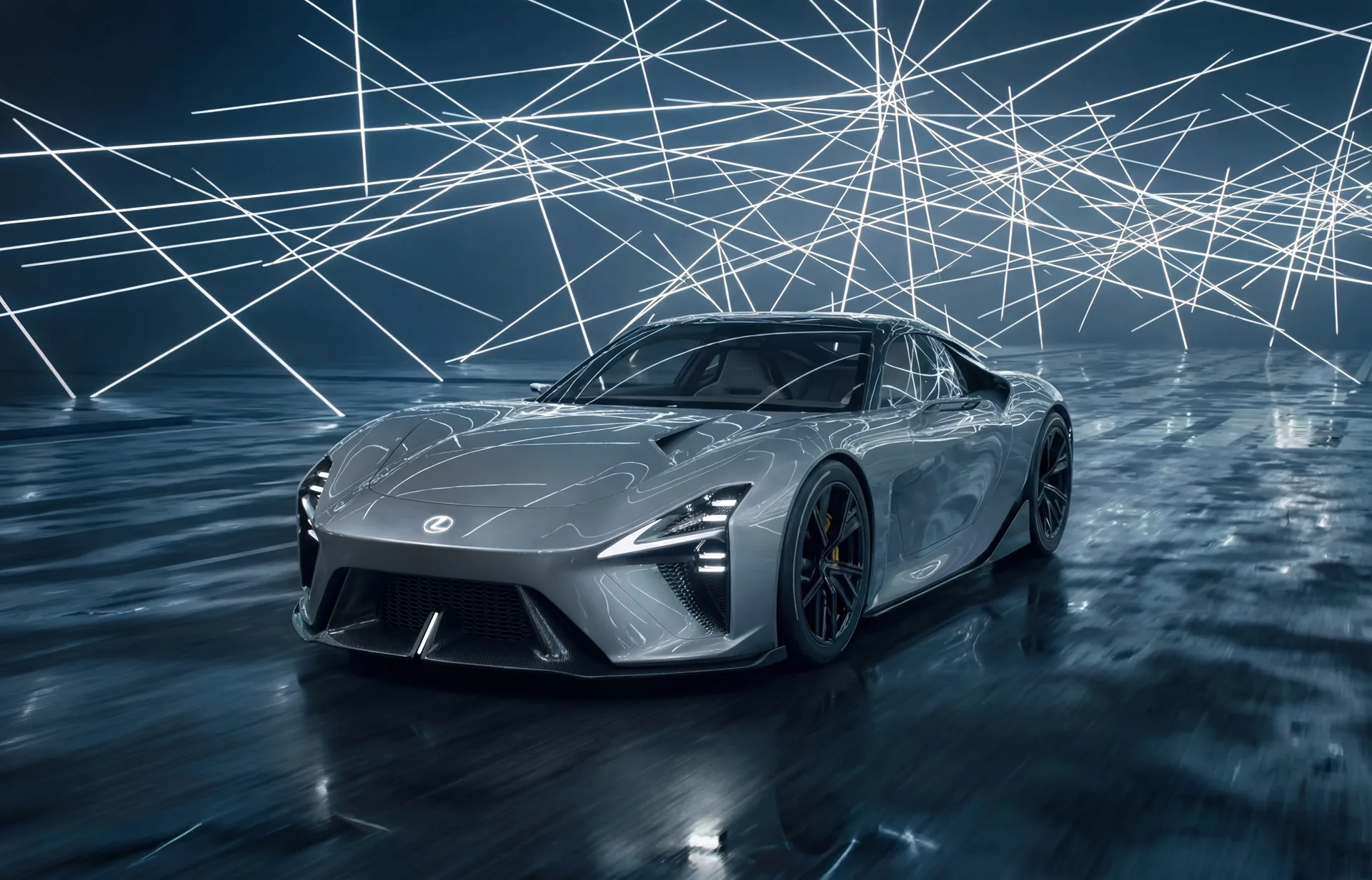
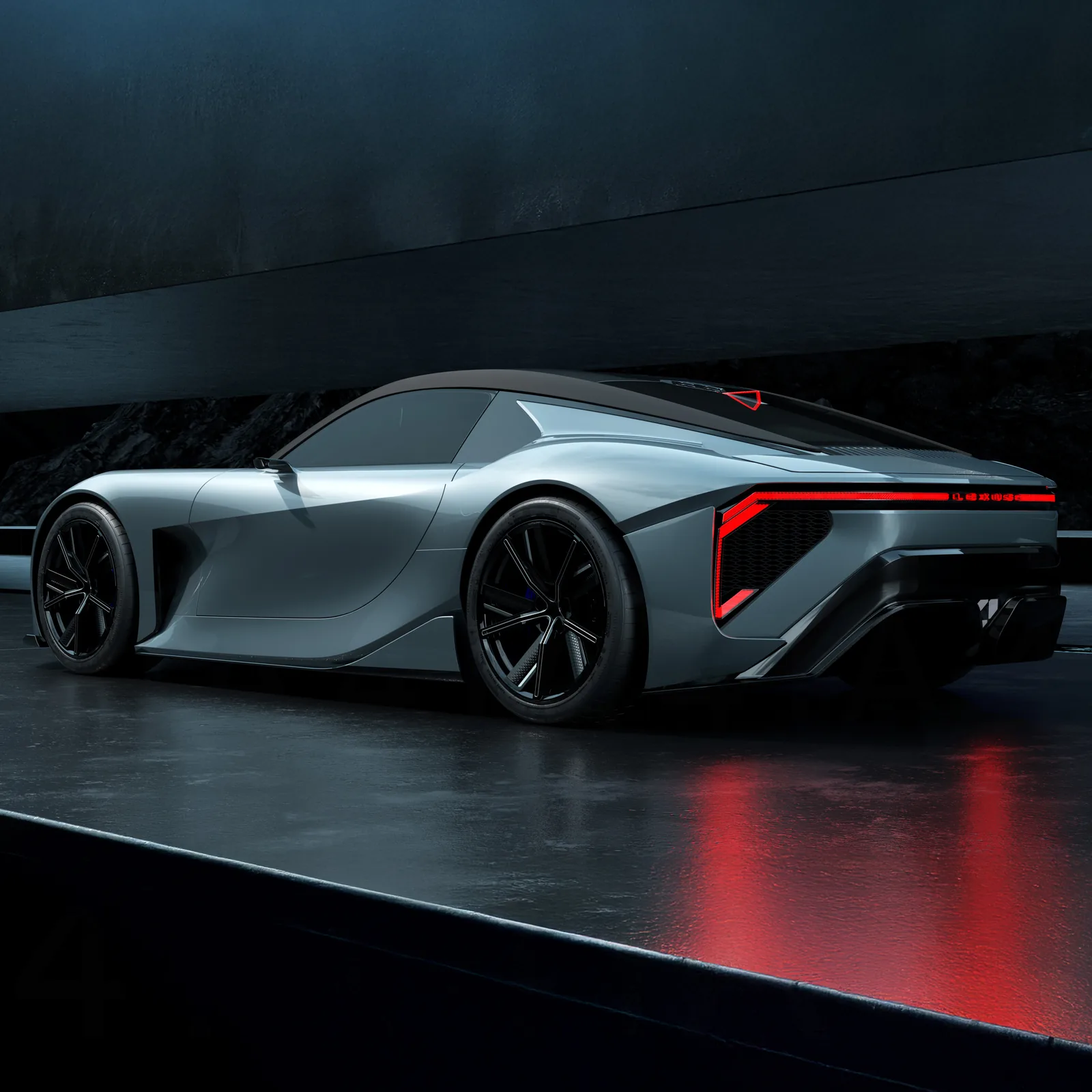
Lexus makes its Lexus LFA Concept publicly available for the first time at the 2026 Goodwood Festival of Speed, held 9–12 July at Goodwood in West Sussex, United Kingdom. The all-electric two-seat sports car, first shown to media at Woven City in Japan on 5 December 2025, occupies the Supercar Paddock next to the Toyota GAZOO Racing GR GT and GR GT3. The car itself is static — no timed run, no hillclimb pass — but this is the first time general audiences can walk around the production-intent BEV successor to the V10 LFA of 2010–2012.
From Sport Concept to LFA Concept: The Name Returns After 14 Years
The car currently displayed at Goodwood first appeared publicly at Monterey Car Week 2025 as the "Lexus Sport Concept" and was subsequently shown at the Japan Mobility Show 2025 in the same design study form. Lexus renamed it to LFA Concept and released partial technical data at its world premiere in Woven City on 5 December 2025, jointly with the Toyota GR GT road car and the GR GT3 race car. All three vehicles are built on a shared aluminum architecture; the LFA Concept differs by using an all-electric powertrain rather than the twin-turbocharged V8 hybrid found in the two Toyota siblings.
The LFA name last appeared on a production Lexus in 2012, when the 500-unit V10 model completed its 24-month manufacturing run at Motomachi in Aichi. According to Lexus, "LFA is not bound to vehicles powered by internal combustion engines — it is a model name that symbolizes a vehicle that embodies the technologies engineers of its time should preserve and pass on to the next generation." That framing lets the badge migrate to a battery-electric platform without breaking continuity with the original.
Discover Immersion: The Design Theme Explained
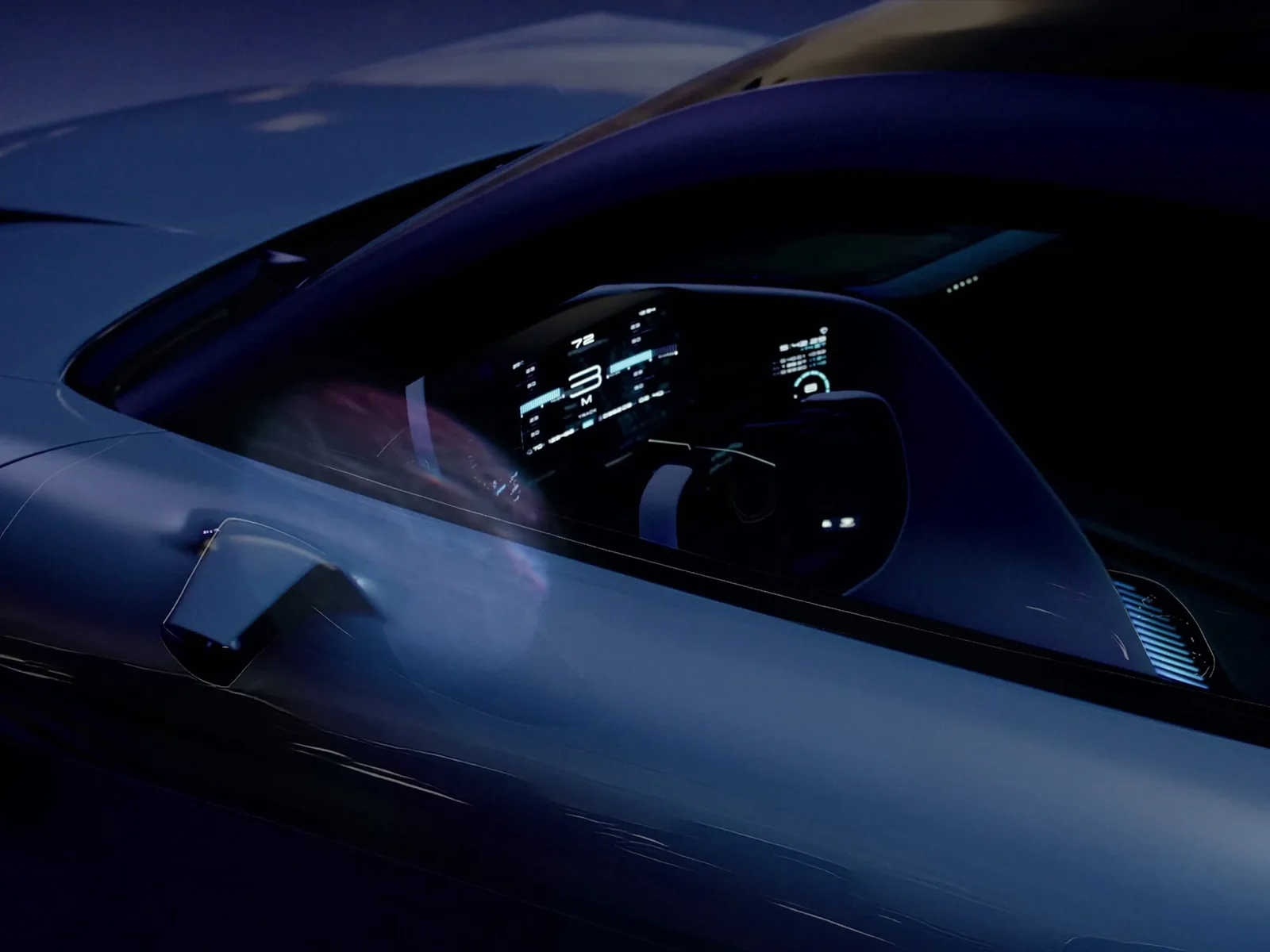
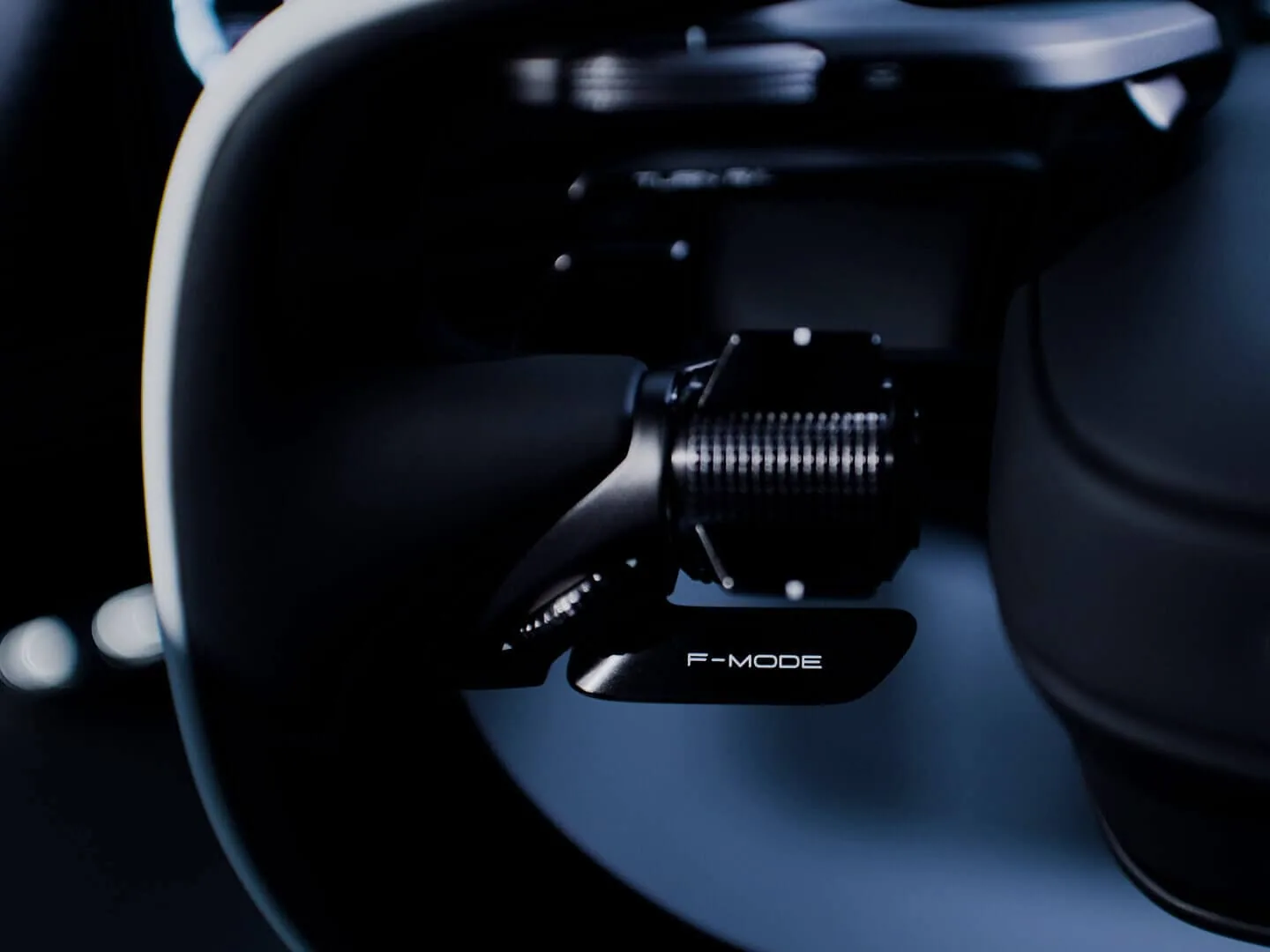
Every technical decision on the LFA Concept is framed against a design theme Lexus calls "Discover Immersion." The stated goal is to keep the driver's hands and eyes on the primary controls at all times, with no requirement to reach for physical switches or consult analog gauges during dynamic driving. The steering wheel — shown in close-up during the Woven City reveal — carries Boost Mode inputs, drive-mode selectors and haptic feedback, and is shaped so the driver never has to re-grip through a full lock-to-lock steering event.
Lexus has not confirmed steer-by-wire on the concept but the packaging and control layout are consistent with the yoke-style architecture the company has trademarked under the "One Motion Grip" designation elsewhere in its lineup. The cabin uses digital displays only — no analog dials, no mechanical rev counter — and the entire habitable volume sits low in the body between two large structural aluminum members that form the passenger cell.
Confirmed Specifications: What Lexus Has Released
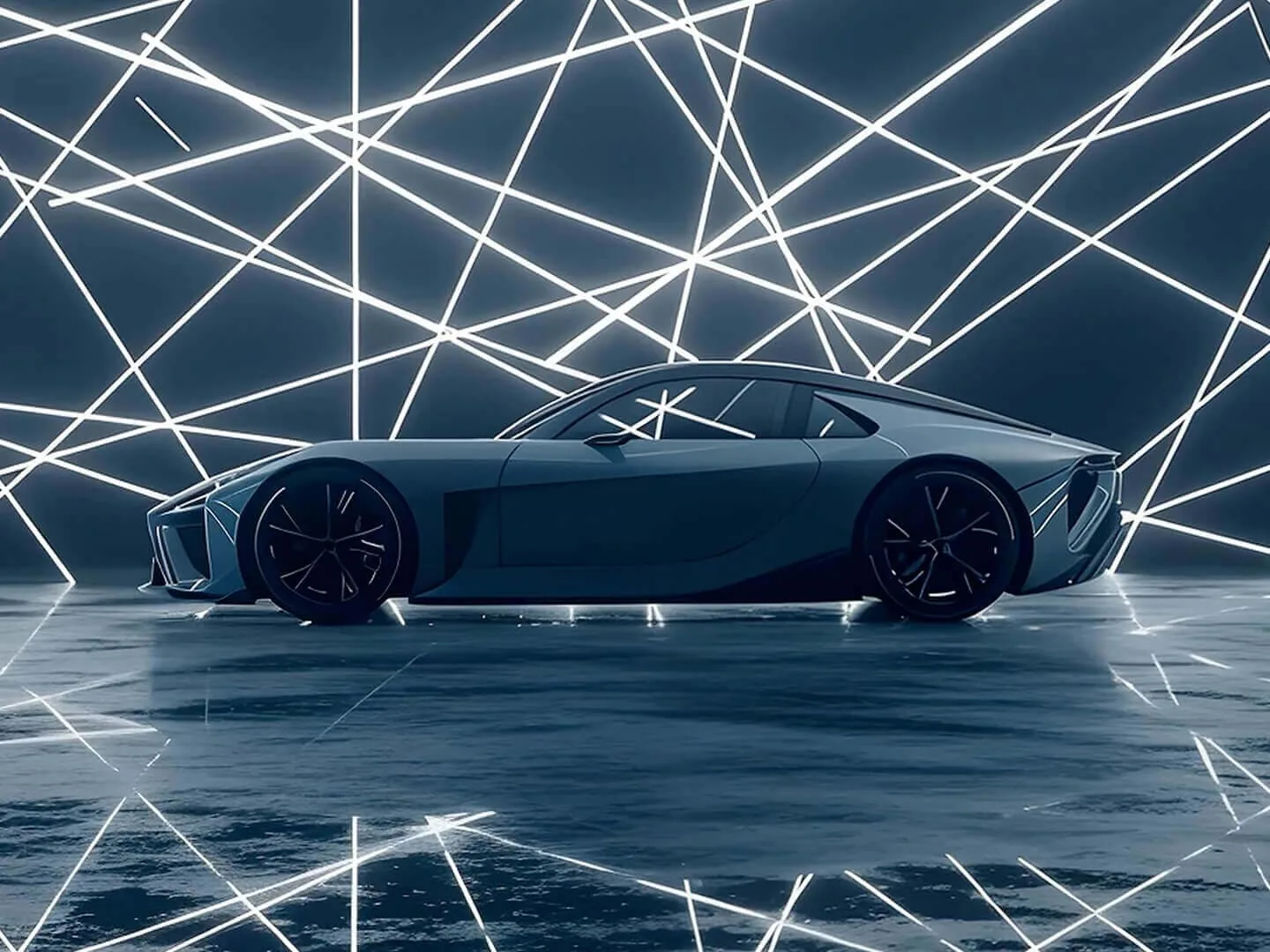
Lexus has published a partial specification sheet for the LFA Concept. Full performance figures — power, torque, battery capacity, range, 0–100 km/h time, top speed — are still withheld. The table below covers everything the manufacturer has confirmed as of the Goodwood display.
| Parameter | Lexus LFA Concept | Original Lexus LFA (2010–2012) |
|---|---|---|
| Powertrain | All-electric (BEV) | 4.8-liter naturally aspirated V10 (1LR-GUE) |
| Power | Not disclosed | 552 hp (412 kW) at 8,700 rpm |
| Length | 4,690 mm | 4,505 mm |
| Width | 2,040 mm | 1,895 mm |
| Height | 1,195 mm | 1,220 mm |
| Wheelbase | 2,725 mm | 2,605 mm |
| Seating | 2 | 2 |
| Body | All-aluminum sports architecture | Carbon fiber reinforced plastic (CFRP) monocoque |
| Assembly | Not disclosed (production not confirmed) | Motomachi, Aichi, Japan |
| Total production | Not confirmed | 500 units |
Compared with the original LFA, the concept is 185 mm longer, 145 mm wider and 25 mm lower, with a wheelbase extended by 120 mm. That growth follows a category-wide trend but also reflects the packaging demand of an underfloor battery pack. Body construction has switched from CFRP monocoque to a full aluminum architecture, shared with the Toyota GR GT road car and the GR GT3 competition variant.
Powertrain: BEV Confirmed, Numbers Withheld
Lexus has published no power output, motor count, battery chemistry, capacity, driving range, charging speed, acceleration time or top-speed target for the LFA Concept. Industry reporting during the Woven City premiere pointed to a prismatic lithium-ion battery, 10–80% DC fast charging in approximately 20 minutes, and a WLTP range claim near 800 km. None of these figures are on any Lexus specification sheet and Lexus has not confirmed them for the Goodwood display.
What is confirmed is that the LFA Concept, the GR GT and the GR GT3 share the same aluminum sports architecture and were developed in parallel by TOYOTA GAZOO Racing engineers. Toyota Chairman Akio Toyoda — who developed the original LFA under his "Master Driver Morizo" persona — has publicly endorsed the LFA nameplate returning on an electric platform, arguing that the badge represents preservation of automotive knowledge rather than a specific powertrain.
Design Cues That Reference the V10 LFA
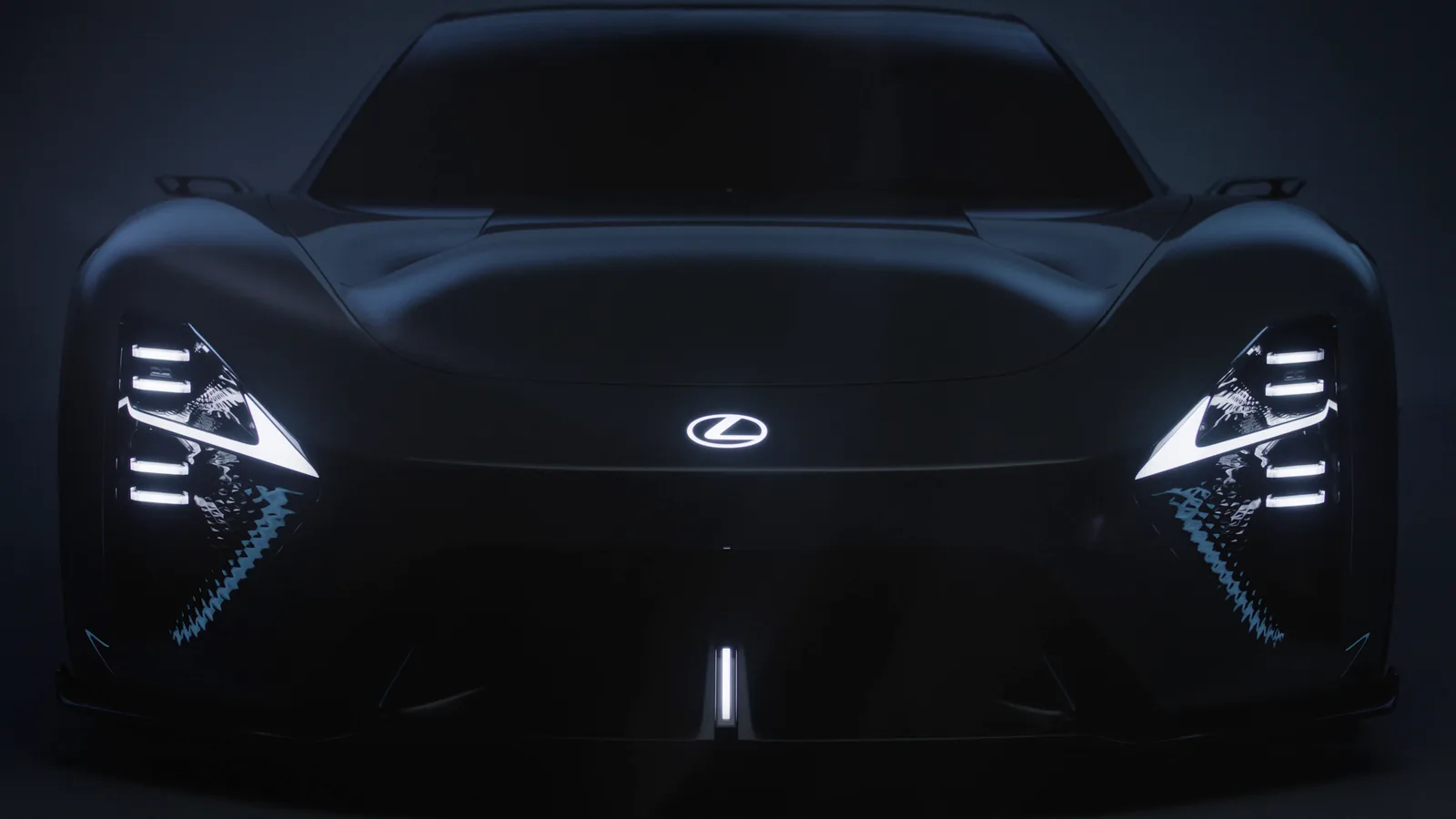
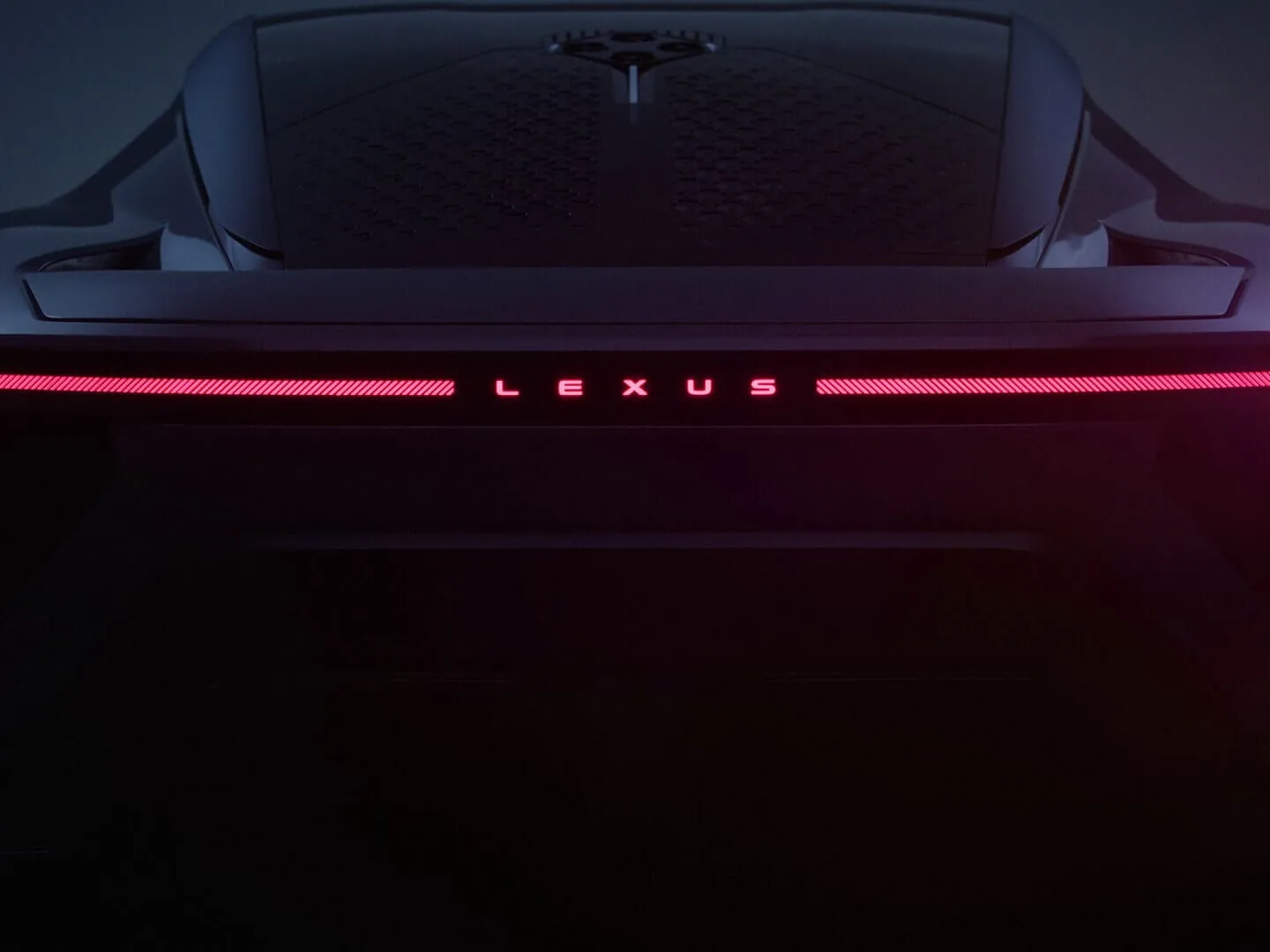
The LFA Concept borrows two specific styling elements from the 2010 car: the centrally mounted third brake light between the rear lamps, and the top-of-taillight cluster L-shaped signature. The Concept updates both with active LED matrices and integrates them into a full-width light bar that spans the rear deck. The front end has replaced the original triangular grille with a closed, aerodynamic panel typical of a battery-electric front end, retaining L-shaped headlight signatures at the outboard edges.
The cab-rearward silhouette is the third heritage cue. The passenger cell sits close to the rear axle, leaving a long front deck. In the original V10 LFA that geometry accommodated a front-mid-mounted engine and rear-transaxle gearbox; on the concept the same shape now packages front cooling, electronics and structural aluminum members, with battery volume distributed under the cabin floor.
The Original Lexus LFA: 500 Units of V10 Legend (2010–2012)
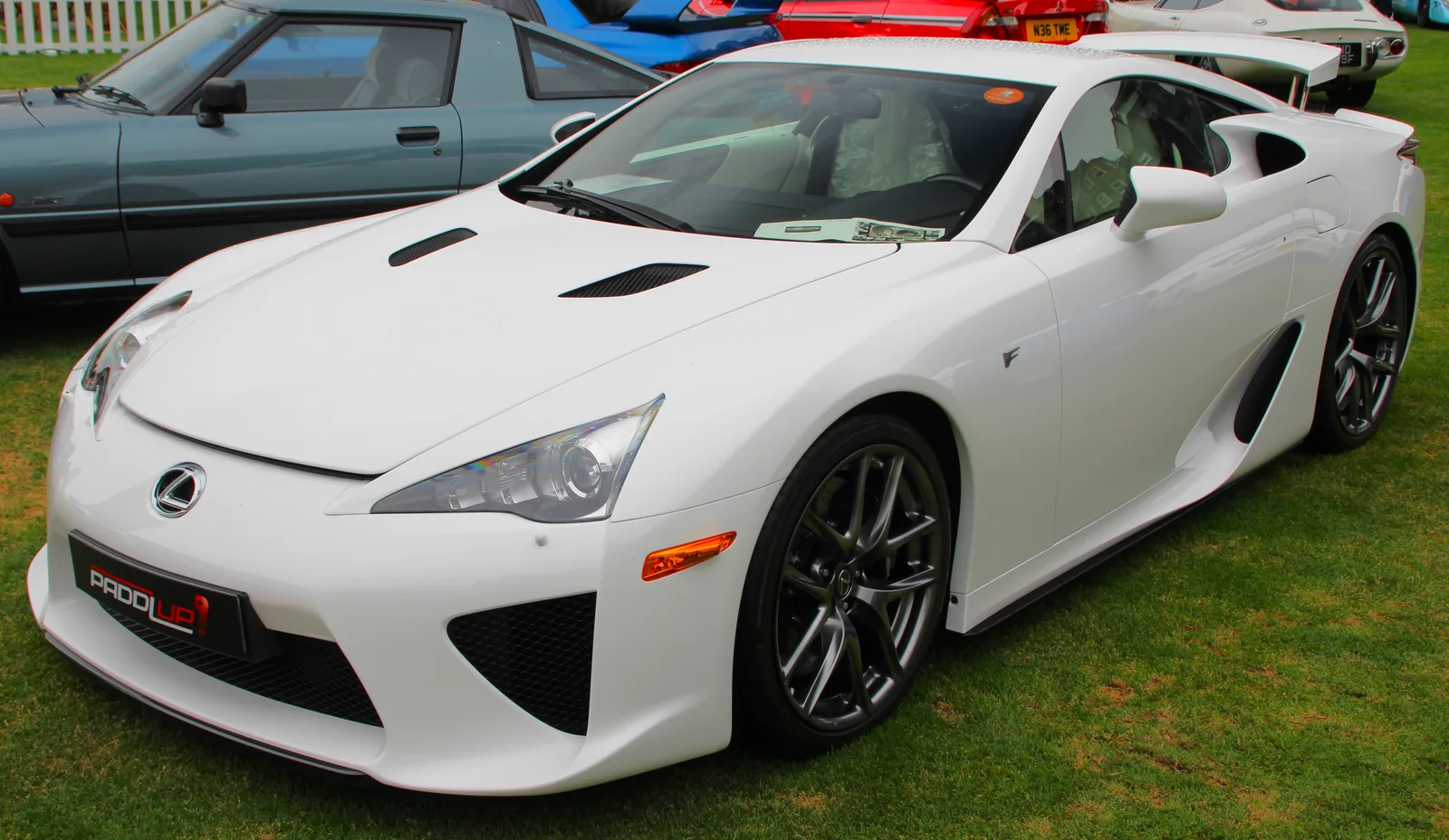
Before the LFA nameplate returned on a battery-electric platform, it belonged to one of the most obsessively engineered supercars ever built in Japan. Development began in 2000 under Haruhiko Tanahashi, the LFA chief engineer, and stretched nearly a decade before the production version finally debuted at the 41st Tokyo Motor Show in October 2009. Only 500 units were manufactured between 15 December 2010 and 14 December 2012 at the dedicated Motomachi plant in Aichi, Japan — roughly two cars per day, each assembled by a team of technicians whose names were engraved on the engine block plaque.
Engineering: The Yamaha-Developed 4.8-Liter V10
The heart of the original LFA is the 1LR-GUE, a 4.8-liter (4,805 cc) 72-degree V10 developed by Toyota in collaboration with Yamaha Motor. The engine produces 553 hp (412 kW) at 8,700 rpm and 354 lb-ft (480 Nm) at 6,800 rpm, revs to a 9,000 rpm redline, and reaches specific output of 114.9 hp per liter — extraordinary for a naturally aspirated production engine. Each V10 was hand-assembled and signed off by a single Yamaha engineer. The car reaches 100 km/h in 3.6 seconds and tops out at 325 km/h (202 mph).
Carbon Fiber Monocoque: 100 kg Lighter Than Planned Aluminum
Lexus originally planned an all-aluminum chassis for the LFA. Roughly halfway through development the program was restarted with a carbon fiber reinforced plastic (CFRP) monocoque instead. The switch cut approximately 100 kg of weight and forced Lexus to install its own CFRP weaving loom — the only manufacturer-owned circular-weave carbon loom in the world at the time. About 65% of the LFA's body-in-white is CFRP, with the remaining 35% aluminum for the front and rear subframes. The finished car weighs 1,480 kg dry, giving a power-to-weight ratio of 373 hp per tonne.
Production, Price and Allocation
Total production was capped at 500 units. Of those, 190 were allocated to the United States, 165 to Japan, and the remaining 145 distributed across 54 other markets. US MSRP was USD 375,000 (Japan JPY 37.5 million). Every car left the factory with a personalized production plaque numbered from 001 to 500. The final car, chassis #500, was a Whitest White Nürburgring Package that rolled off the Motomachi line on 14 December 2012.
Nürburgring Package: The 50-Unit Track Variant
Announced in March 2010 and shown publicly at the 2011 Geneva Motor Show, the LFA Nürburgring Package was a track-focused variant limited to 50 units. It added 10 hp for a total of 563 hp, revised transmission mapping with faster shift times, stiffer suspension, larger front splitter, fixed rear wing, and lightweight BBS forged wheels. The Nürburgring-tuned LFA set a production-car lap record of 7:14.64 at the Nordschleife in August 2011 with driver Akira Iida behind the wheel.
Legacy and Current Market Value
At launch the LFA was considered a commercial failure — Toyota reportedly lost around USD 300 million across the program, and unsold new cars remained on Lexus dealer floors as late as 2018. That perception has since reversed. Auction records for well-preserved LFAs now cluster between USD 1.0 million and 1.8 million, with Nürburgring Package cars pushing above USD 2 million. The car is now widely regarded as the definitive Japanese analog supercar, and its 9,000 rpm V10 has become a reference point for how internal-combustion sports cars should sound. That legacy is precisely what the LFA Concept needs to preserve when it eventually reaches production — on a different powertrain, but under the same nameplate.
Interior: Two Seats, Digital-Only, No Analog Gauges
The LFA Concept cabin is a strict two-seater with a fixed driver-focused layout. All instrumentation is digital, integrated into a wide central binnacle behind the steering wheel and a secondary console screen on the transmission tunnel. Physical switches are limited to the steering wheel itself and a small cluster on the center console handling drive modes, launch control and camera views.
Lexus has not announced whether the concept-form cabin will translate to any production vehicle. The company describes the interior as a technology study and specifically calls out the "Discover Immersion" theme — the objective being to keep the driver's cognitive load focused on the road, without breaking hand contact with the primary controls to reach for switches or check gauges.
Where the LFA Concept Sits in the Toyota Group Sports Car Plan
Toyota and Lexus announced three sports cars at the Woven City premiere: the LFA Concept (Lexus, BEV), the GR GT (Toyota, hybrid V8) and the GR GT3 (Toyota, race-ready customer competition car derived from the GR GT). All three share the same aluminum architecture but split into separate powertrain approaches. The GR GT reaches customers first, expected in late 2026 with a projected price around USD 500,000. The GR GT3 will follow as a customer racing car built for GT3-class regulations. The LFA Concept has no confirmed production date.
The messaging at Goodwood makes clear that Lexus and Toyota are pursuing parallel high-performance philosophies: combustion-electrified for GR, fully electric for Lexus. Both routes serve the "Shikinen Sengu" concept that Akio Toyoda has adopted from Japanese Shinto shrine renewal — the idea that knowledge and craftsmanship must be periodically transferred to the next generation of engineers.
Compared With Rival Electric Supercars
If the LFA Concept enters production in a form close to what is shown, it lands in a category increasingly populated by battery-electric flagships. The table below places the LFA Concept alongside the two most recent BEV supercar debuts — the Rimac Nevera and the Pininfarina Battista — on the parameters Lexus has published.
| Parameter | Lexus LFA Concept | Rimac Nevera R | Pininfarina Battista |
|---|---|---|---|
| Powertrain | All-electric (BEV) | 4x electric motor AWD | 4x electric motor AWD |
| Power | Not disclosed | 2,107 hp | 1,900 hp |
| Length | 4,690 mm | 4,750 mm | 4,780 mm |
| Width | 2,040 mm | 1,986 mm | 2,015 mm |
| Height | 1,195 mm | 1,208 mm | 1,214 mm |
| Wheelbase | 2,725 mm | 2,745 mm | 2,745 mm |
| Seats | 2 | 2 | 2 |
| Status | Concept, production TBC | In production | In production |
Dimensionally the LFA Concept sits alongside the two established rivals but is 60 mm shorter than the Nevera and lower than both. Power and range comparisons cannot yet be made because Lexus has not disclosed the numbers.
Release Date and Production Status
Lexus has not confirmed whether the LFA Concept will reach production, or when. At the Woven City premiere Akio Toyoda described it as a technology study rather than a preview of an announced production car. The Goodwood display in July 2026 is the first time the vehicle has been shown to public visitors outside a manufacturer-controlled media event; there is no timed track appearance and no order book.
Industry sources place a potential production date in the 2027–2028 window, with the Toyota GR GT arriving first as a hybrid halo model. Projected pricing, if the LFA Concept transitions to production close to its current form, is expected to land near USD 500,000, matching the GR GT. All of these figures should be treated as third-party estimates until Lexus confirms a program.
What Happens After Goodwood
The LFA Concept remains on display in the Supercar Paddock until the end of the 2026 Goodwood Festival of Speed on 12 July. Lexus has not announced a subsequent public appearance or an official launch timeline. The company describes the Goodwood presentation as "a further step in the introduction of Lexus's future sports models" — language that stops short of confirming production intent.
For the community following the LFA nameplate, the immediate question is whether the badge remains attached to the finished production vehicle when that program is announced, or whether Lexus reserves LFA for a separate flagship and renames the Concept program. Trademark filings for "LFR" made by Toyota in Japan (application 2022-140089, filed December 2022) suggest the company is keeping both options open.