No tuning house divides opinion quite like Liberty Walk. The Japanese firm, run by the charismatic Wataru Kato, takes million-dollar supercars and cuts into their bodywork to bolt on riveted fender flares, slam them to the ground and crown them with towering GT wings. Purists wince; everyone else stares. Either way, Liberty Walk has become the most recognizable name in wide-body conversions on the planet.
Who Is Behind Liberty Walk?
Liberty Walk is the creation of Wataru Kato, a self-taught car obsessive from Aichi Prefecture in Japan. Kato started out dealing and customizing cars before turning his personal styling language into a global brand in the mid-2000s. The Liberty Walk group today spans the body-kit arm (LB-Works / LB Holdings), a complete-car customization shop, and a hugely popular apparel and merchandise line that has made the logo a streetwear staple.
Kato is the public face of the brand and owns a personal collection of roughly 20 cars — from a Ferrari F40 and 458 to a Lamborghini Murcielago and Aventador, plus a fleet of retro Japanese machines — almost all wearing the Liberty Walk treatment.
The Liberty Walk Philosophy: Cut, Rivet, Slam
The signature look draws on Japan's 1980s kyusha and "Super Silhouette" Group 5 race cars — fat box flares, deep front spoilers and big rear wings. Liberty Walk's modern interpretation has three pillars: pump the bodywork dramatically wider with bolt-on or riveted over-fenders, drop the car onto air suspension for an impossibly low stance, and finish with an aggressive GT-style wing.
The most divisive part is the install: many LB-Works kits require cutting into the original fenders to fit. Asking an owner to take an angle grinder to a Ferrari or Lamborghini is exactly the kind of provocation that made the brand famous. The kits are sold in FRP (fiberglass) and increasingly in dry carbon fiber, with prices that run from roughly $30,000 for a complete Aventador kit to well over $100,000 for a full Silhouette dry-carbon conversion.
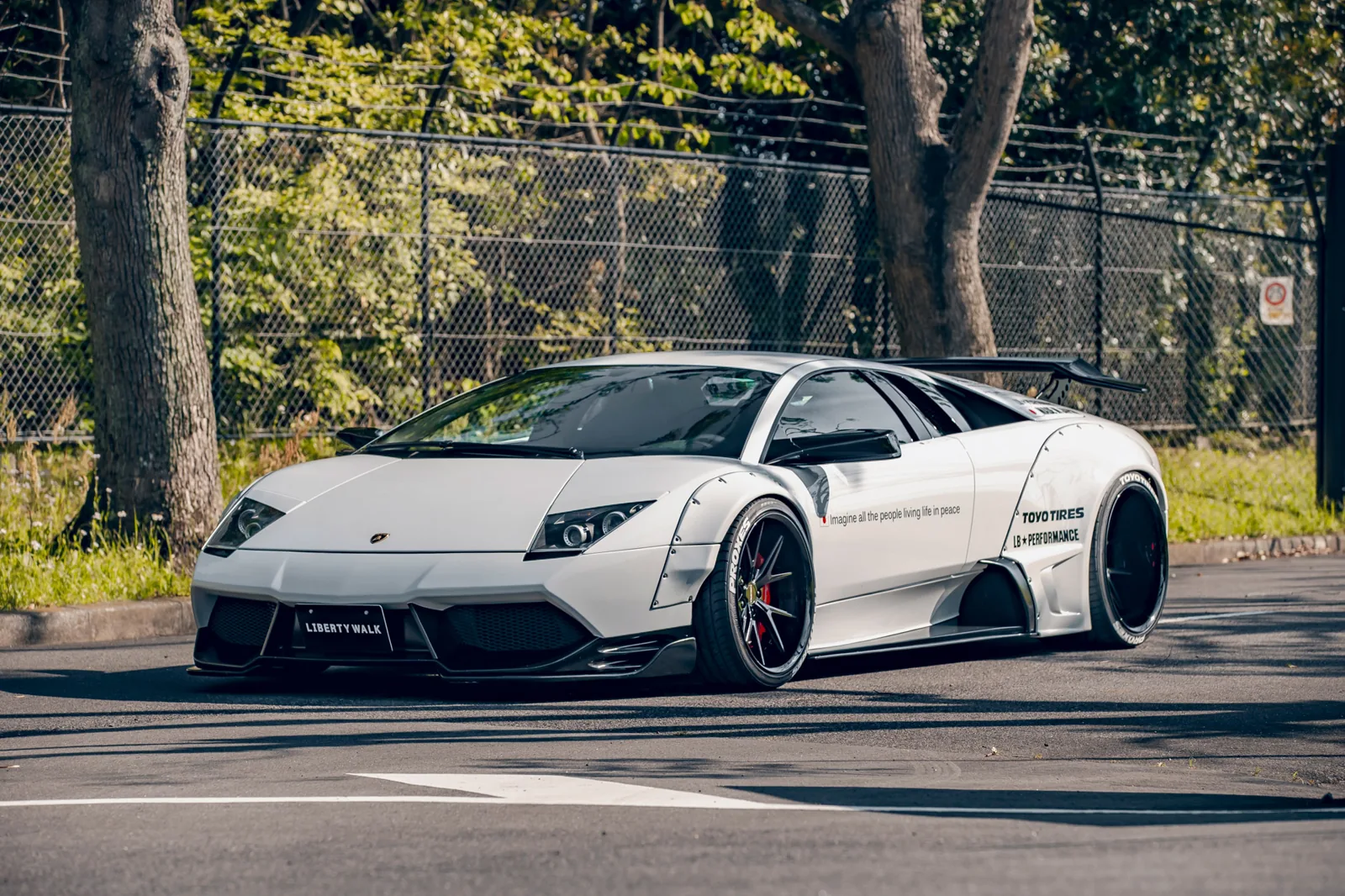
1. Lamborghini Murcielago — The Original (2012)
This is the car that started it all. In 2012, Liberty Walk took an angle grinder to a Lamborghini Murcielago and fitted the first full LB-Works wide-body kit, introducing the riveted-flare style to the world. It was sacrilege to some and a revelation to others — and it put a small Japanese shop on the global map almost overnight. Every Liberty Walk build since traces its DNA back to this Murcielago.
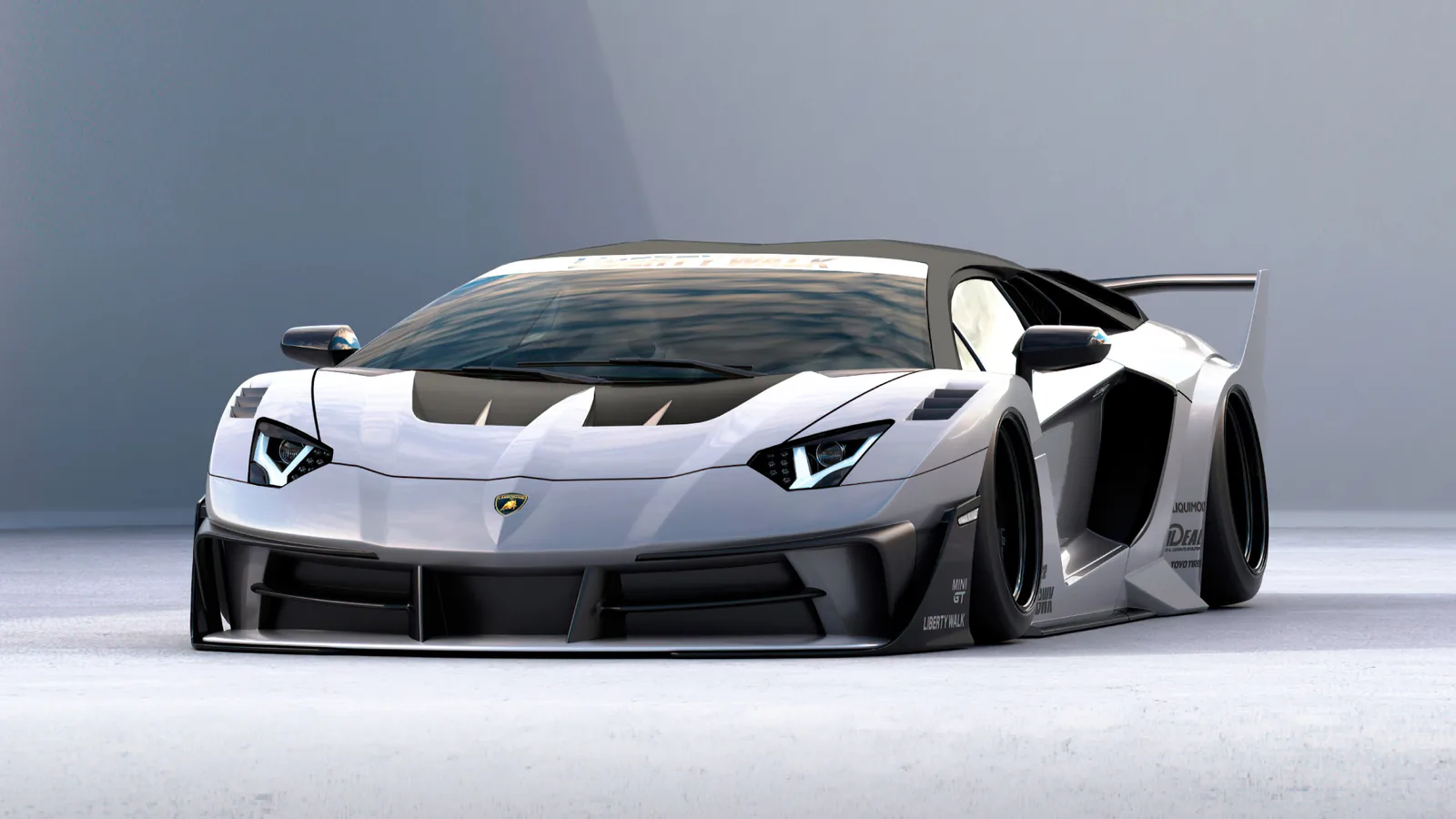
2. Lamborghini Aventador — The Icon
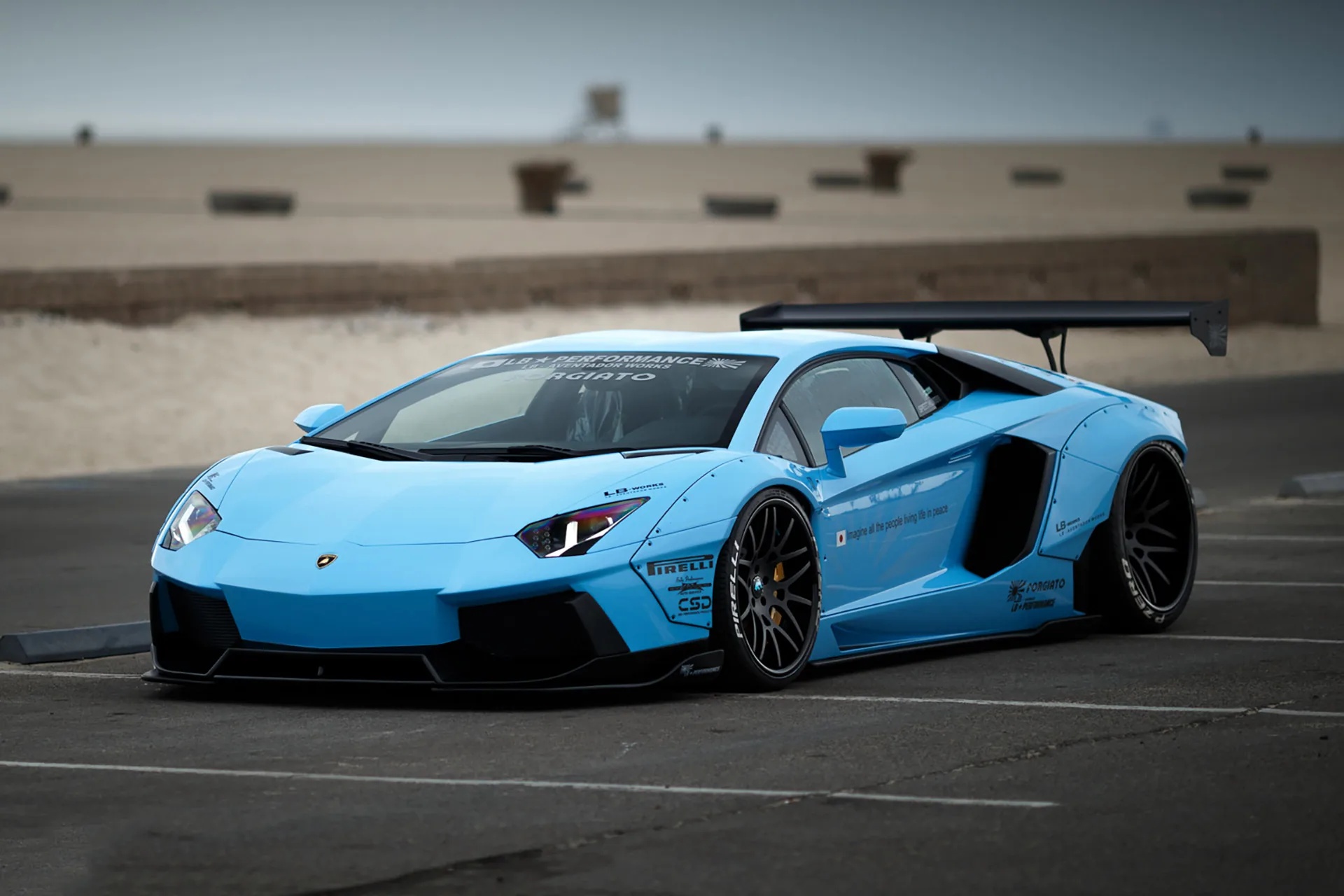
If one car defines Liberty Walk, it is the Aventador. The LB-Works Aventador kit — wide over-fenders, deep front bumper, swan-neck GT wing and air suspension — became the brand's signature build and a fixture at SEMA and Tokyo Auto Salon. It later evolved into the wild LB-Silhouette Works GT Evo, a near-full carbon conversion that replaces almost every body panel and costs up to around $190,000 for the dry-carbon version. It is Liberty Walk at its most extreme.
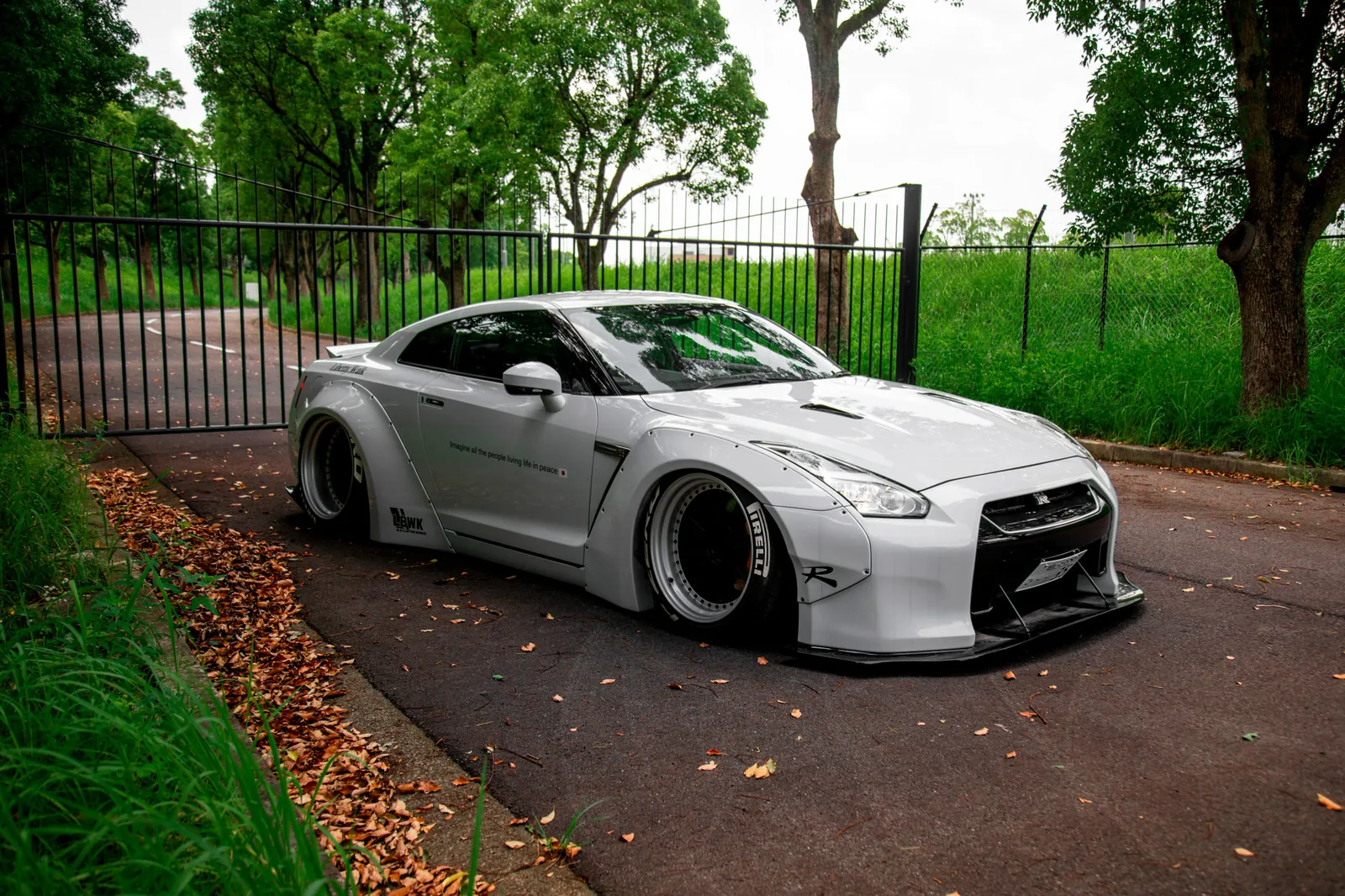
3. Nissan GT-R R35 — The JDM Hero
The R35 GT-R is one of Liberty Walk's most worked-on cars, and the brand offers no fewer than three kits for it — Type 1, Type 1.5 and Type 2 — ranging from roughly $12,500 to $17,600. It is the LB build that best bridges Kato's JDM roots with the supercar crowd. At the top sits the LB-Silhouette Works GT 35GT-RR, a full race-car-style conversion that turns Godzilla into a road-going Super GT tribute.

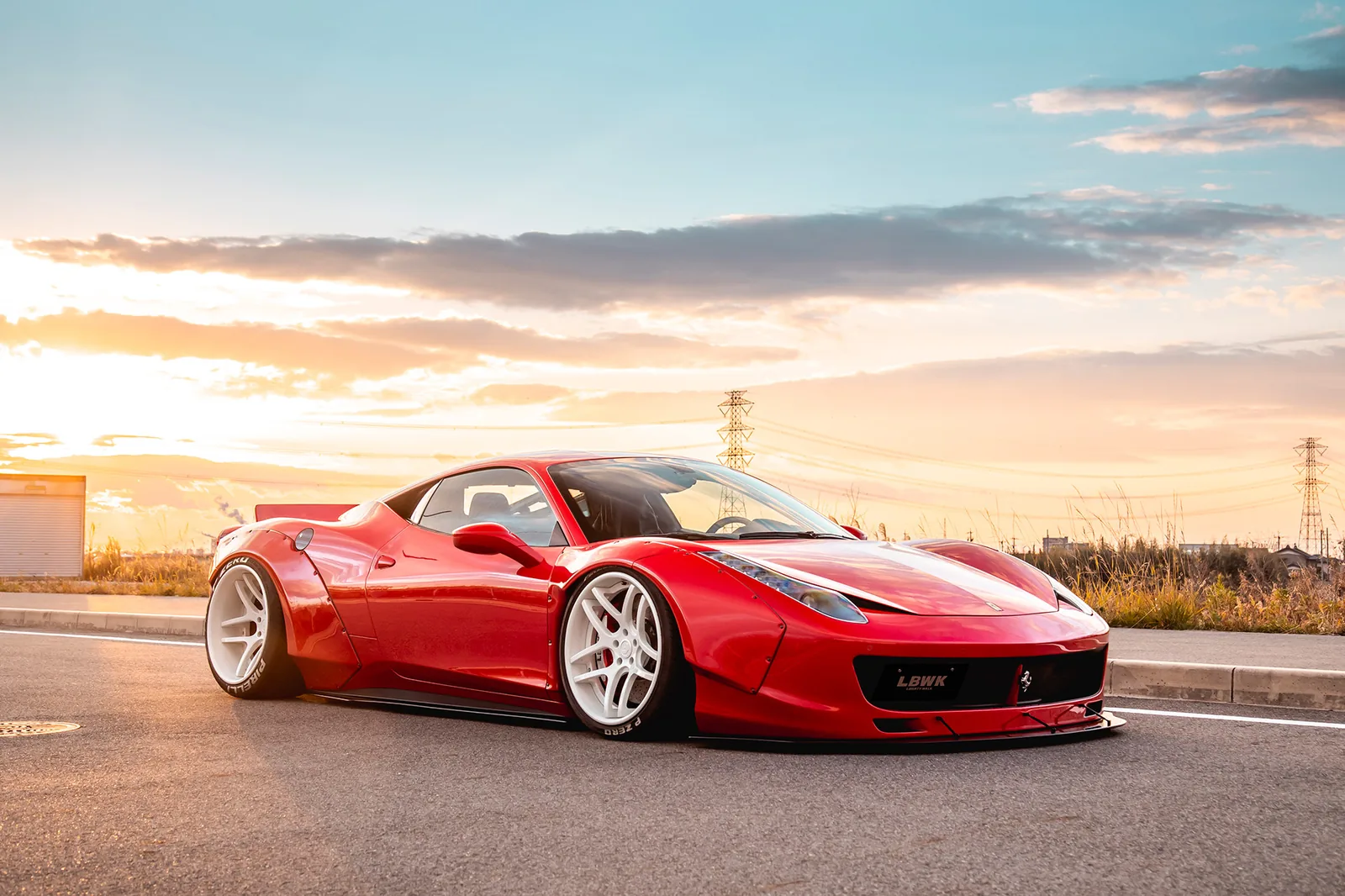
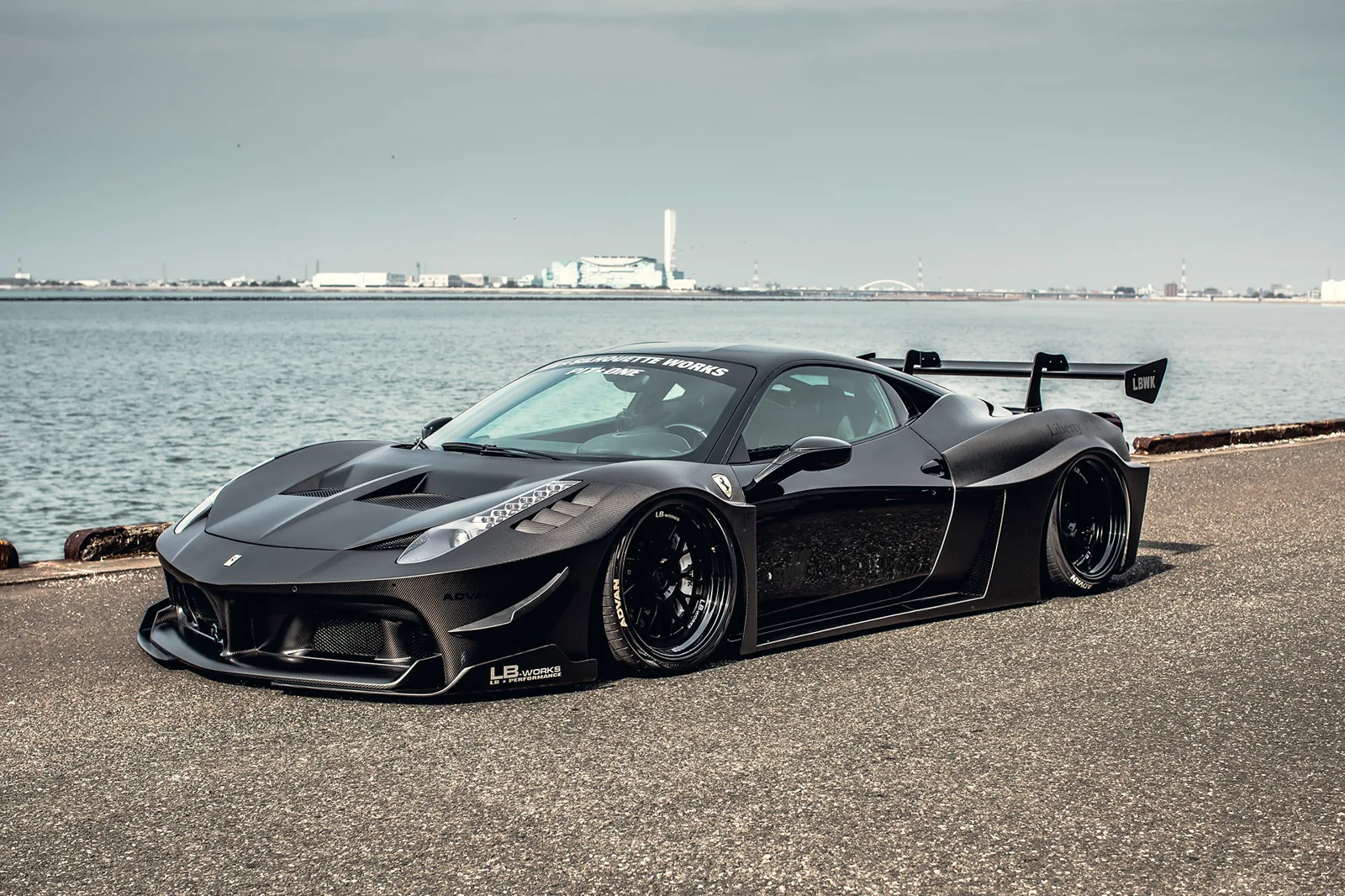
4. Ferrari 458 — Wide-Body Art
Putting riveted flares on a Ferrari is the ultimate Liberty Walk statement, and the 458 is arguably its cleanest execution. The standard LB-Works 458 adds around 60mm of width per side at the rear over the stock arches. The flagship LB-Silhouette Works GT 458 goes much further, replacing everything except the doors and roof with a GT-car body — front and rear bumpers, wide fenders, bonnet and a swan-neck wing — available all the way up to a full dry-carbon build that pushes past $70,000.
5. Ferrari 488 — Turbo-Era Aggression
Liberty Walk didn't spare the turbocharged 488. The LB-Works 488 kit fits oversized front and rear fenders, a full aero suite of diffusers and the choice of a GT-style or low-profile ducktail wing, all available in FRP or carbon. Paired with deep-dish forged wheels and air suspension, the LB 488 has become one of the most photographed wide-body Ferraris in the world — a turbo-era counterpart to the naturally aspirated 458.
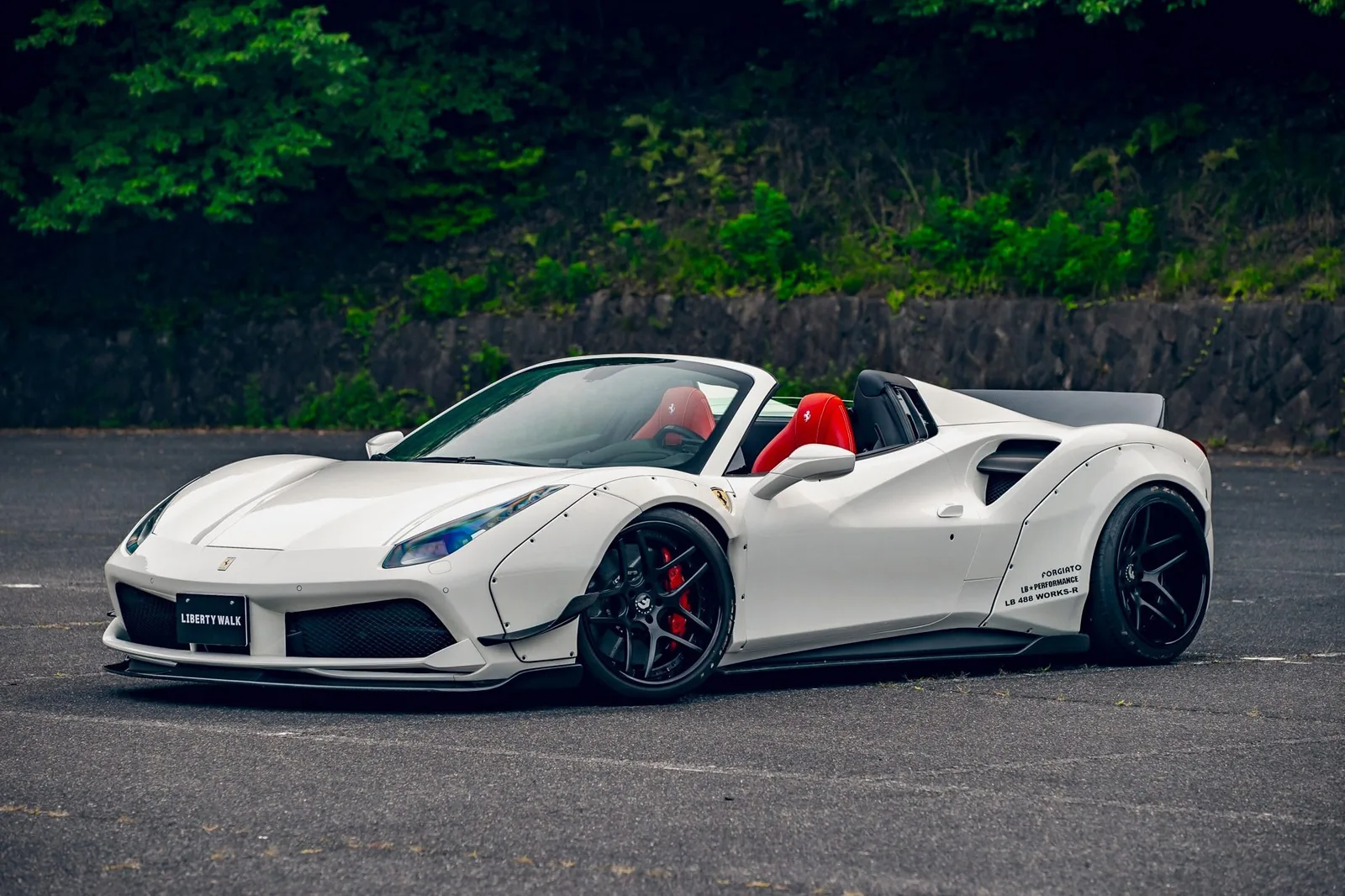
6. Ferrari F8 & 488 Spider — The Modern Era
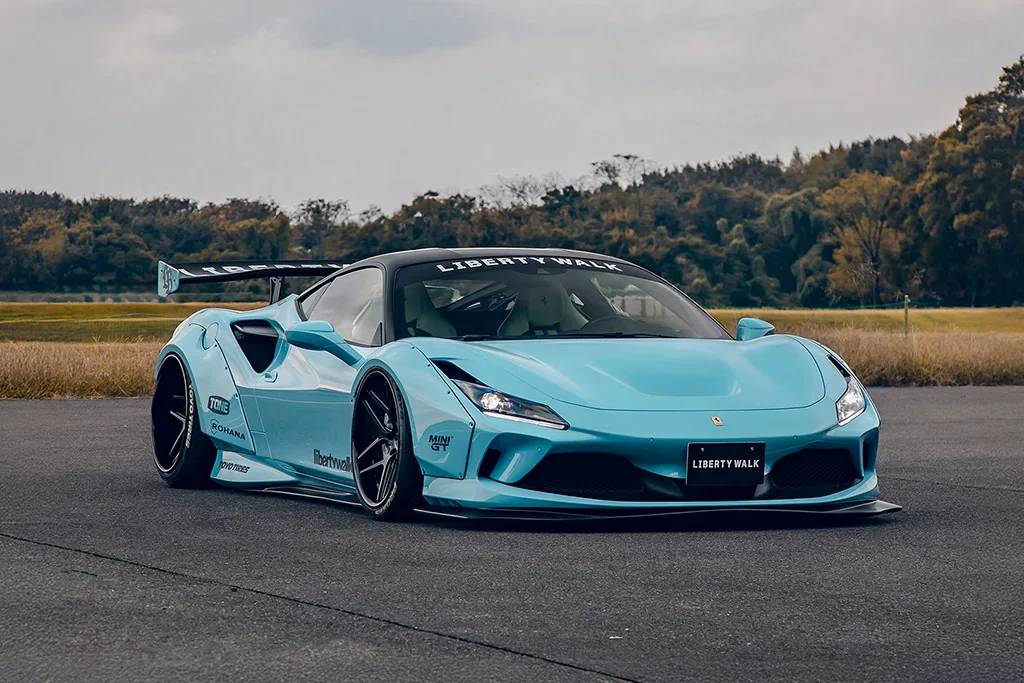
The most recent Ferrari additions show how the formula keeps evolving. The LB-Works Ferrari F8 Tributo kit brings oversized fenders, a full aero set and a choice of GT or ducktail wing to Ferrari's last V8 flagship before electrification, while the 488 Spider version proves the wide-body look works just as well with the roof down. Both keep the OEM-grade fitment that has helped Liberty Walk move from "ruined supercar" infamy toward genuine aftermarket respect.
Liberty Walk's Best-Known Builds at a Glance
| Build | Highlight |
|---|---|
| Lamborghini Murcielago | The first LB-Works wide-body (2012) |
| Lamborghini Aventador | Signature build; GT Evo up to ~$190k (carbon) |
| Nissan GT-R R35 | Three kits (Type 1 / 1.5 / 2); Silhouette 35GT-RR |
| Ferrari 458 | +60mm rear width; LB-Silhouette GT to ~$70k+ |
| Ferrari 488 | Full aero suite; GT or ducktail wing |
| Ferrari F8 / 488 Spider | Latest evolution; OEM-grade fitment |
| Bonus: Ferrari F40 "Bosozoku" | Kato's own wild personal build |
Love It or Hate It, Liberty Walk Changed the Game
Two decades on, Liberty Walk has done something rare: it turned a polarizing, rule-breaking aesthetic into a globally respected brand. Its kits now ship worldwide from Aichi, its apparel sells out, and the cars it builds headline shows from Tokyo to Las Vegas. You may think slicing into a Ferrari is madness — but there is no denying that Wataru Kato created one of the most influential car-culture movements of the last 20 years.
For enthusiasts who love the craft of wheels and stance as much as the cars themselves,crafts wall clocks from real forged car wheels — a fitting piece for any wide-body fan's wall.