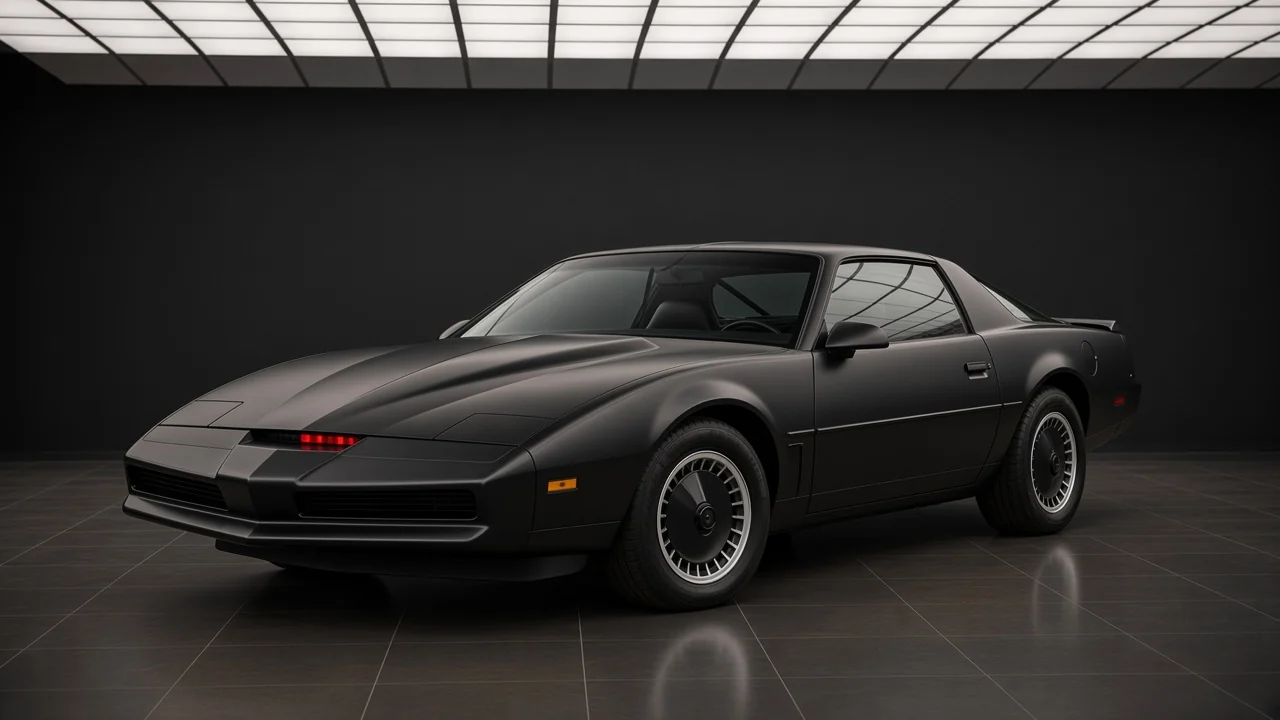
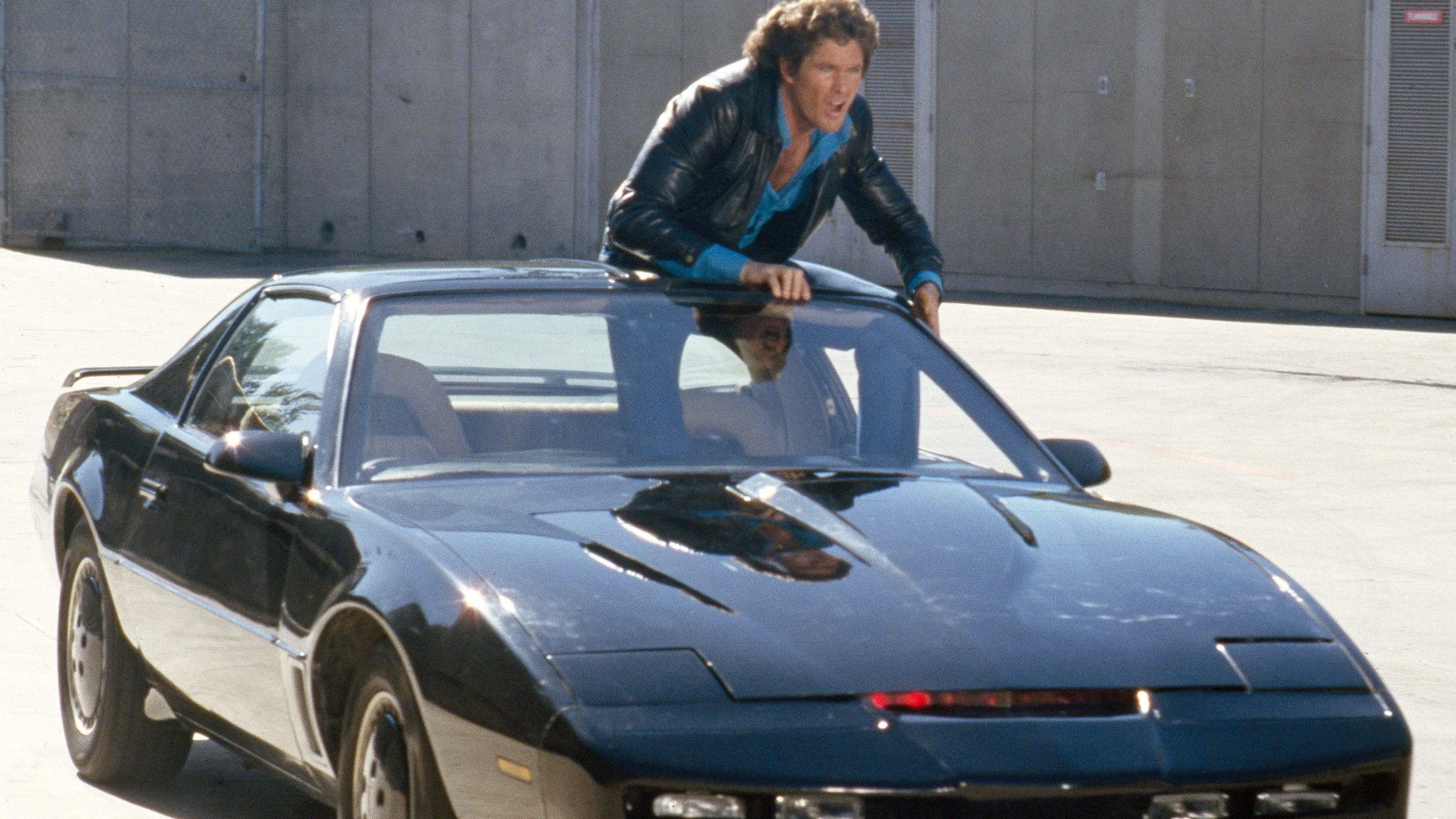
The original KITT is a modified 1982 Pontiac Firebird Trans Am. The name is Knight Industries Two Thousand. Knight Rider, created by Glen A. Larson, premiered on NBC on 26 September 1982 and ran until 4 April 1986. David Hasselhoff played Michael Knight. William Daniels voiced the car and asked not to be credited. The red light in the nose is a scanner. The armour, the guns and the jump are the script.
A Ford Mustang with a scanner is a different car. The 2008 reboot calls its Shelby GT500KR the Knight Industries Three Thousand. The 1991 film Knight Rider 2000 moved the processor into a Knight 4000 built on a Dodge Stealth. This page is the 1982 Trans Am. The same model year, without the scanner, is the car in Smokey and the Bandit III.
1982 Trans Am Under the Scanner
The table is the production car Pontiac actually sold in 1982, plus the few modifications that are documented on the picture cars. Anything the episode treats as a weapon belongs in the fiction column, not in the spec sheet.
| Specification | Original series KITT |
|---|---|
| Series | Knight Rider, NBC, 26 September 1982 – 4 April 1986 |
| Character | Knight Industries Two Thousand |
| Screen car | Modified 1982 Pontiac Firebird Trans Am |
| Voice | William Daniels, uncredited at his request |
| Nose and dash | Michael Scheffe |
| Scanner | Front only. Larson asked for a Cylon-style beam. The show calls it an Anamorphic Equalizer |
| Stock V8, carburettor | LG4 5.0 L (305 cu in), 145 hp (108 kW), 240 lb-ft |
| Stock V8, injection | LU5 Cross-Fire Injection, 165 hp (123 kW) |
| Layout | Front engine, rear-wheel drive, automatic |
| Ride height | Stunt driver Jack Gill: about 1.5 in (4 cm) lower than stock |
| Build cost, as published | Wikipedia: US$100,000 in 1982 dollars. Hasselhoff’s autobiography, via a later interview recap: US$18,000 of General Motors work. Both figures are in print. They are not the same job |
| Not this car | 2008 Ford Shelby GT500KR (Knight Industries Three Thousand); 1991 Dodge Stealth (Knight 4000) |
The Scanner Is a Light, Not a Weapon
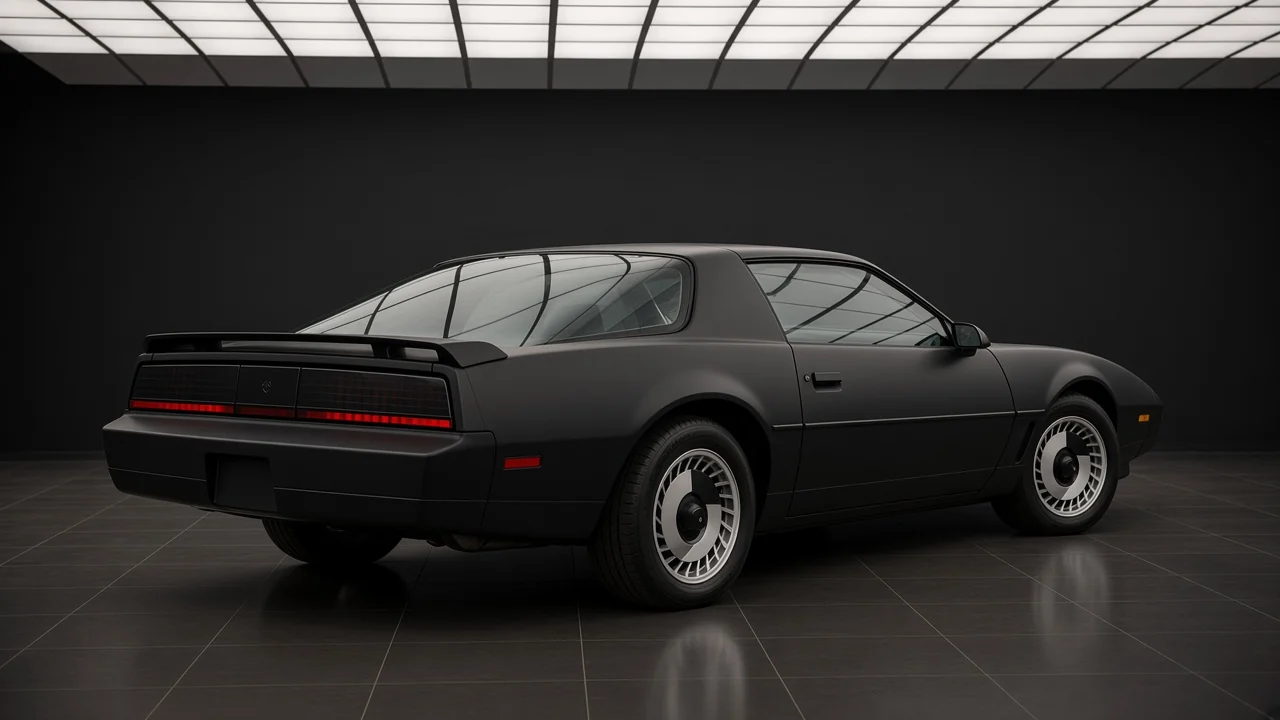
Larson wanted the car to have a heartbeat. He had already put a sweeping red eye on the Cylons in Battlestar Galactica, and he asked Scheffe for the same idea on the nose of a Trans Am. The show’s name for the bar is the Anamorphic Equalizer. In the fiction it sees infrared and X-ray and tracks a car for ten miles. On the stage it is a lamp that sweeps, and it re-uses the Cylon scanner sound.
The Pontiac nose was lengthened a little so the bar would sit in it. The pilot and the first-season titles still contain brief shots of the earlier nose, before that extension. The scanner does not run along the sill. A light bar down the rocker is a later costume, not the 1982 car.
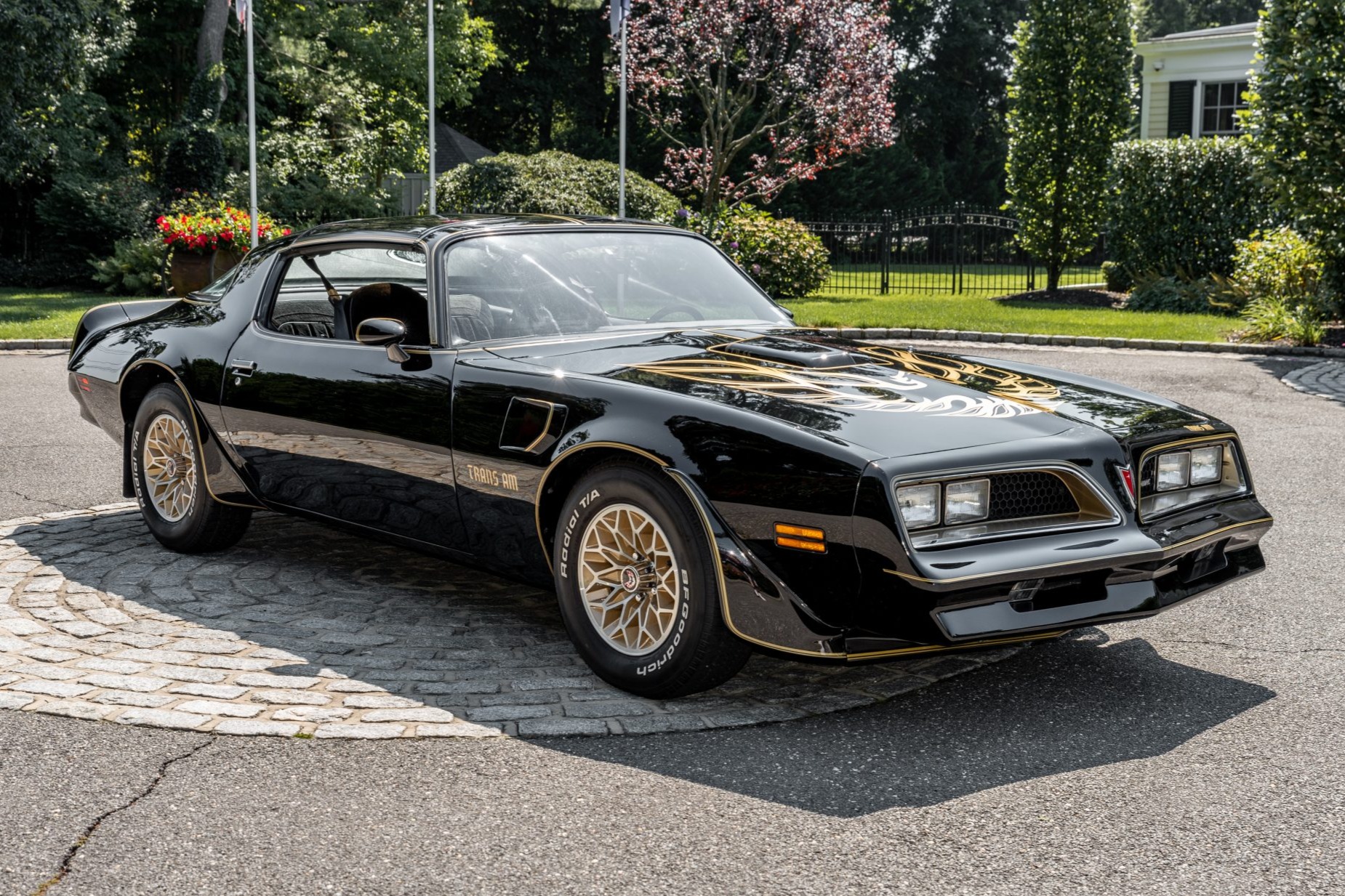
Scheffe also built the dashboard. Only the principal studio car had a working version of it. Close-ups of the voice box were shot on a sound stage with a mock-up. Some stunt cars carried a dummy dash so a wide shot would not show an empty cockpit. Universal took over the later modifications. Pontiac design chief John Schinella’s side of the job was to keep the car recognisable as a Trans Am. A black Trans Am was already a star. Bandit had made sure of that.
What the Episodes Invented
The shell is called Tri-Helical Plasteel 1000, or a Molecular Bonded Shell, and the script gives it a frame tolerance of 223,000 lb. Turbo boost is a pair of rockets behind the front wheels that, in the story, throw the car over a truck at more than 200 mph. None of that is on a 1982 order form. The cars that jumped were stunt cars. When Hasselhoff appears to be driving and the car is in motion, it was usually being towed, with Daniels’ lines played to him through the stereo. Daniels recorded after the picture was cut. He has said an episode of dialogue took him about fifty minutes.
The voice credit is the cleanest fact in the whole build. Daniels was on St. Elsewhere. He asked not to be listed. The episodes still carry his performance.
How Many Cars, and Who Built Them
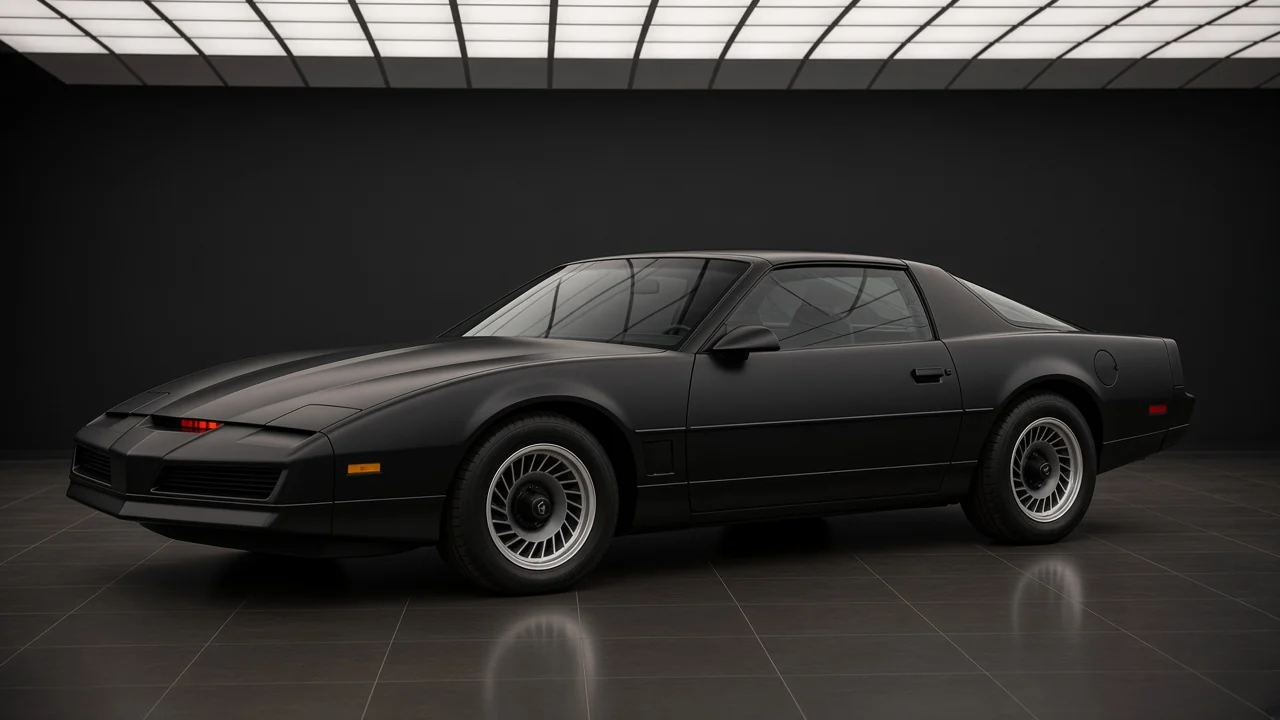
Count the fleet the way the paperwork counts it, in layers.
Hagerty’s account of the Pontiac placement says the first order was three loaded black 1982 Trans Ams, signed through Bill Hoglund after the sales side had already started the work. A separate production description, the one repeated from Newsweek’s set reporting, splits the early cars into four jobs: a hero car for close work, a jump car, a car with a driver hidden so the cockpit could look empty, and a car for ground stunts. More Trans Ams were bought later, some of them for a dollar once the show was using them up.
The figure that floats free of those early memos is 23 cars built for filming, with a guess of 25, and five said to have survived: a hero and a stunt car kept for a time by Universal, a stunt car that went to World Expo ’88 in Brisbane, a convertible that passed through the Cars of the Stars museum and on to the Dezer Collection, and a fifth believed to be in a private collection in Britain. That is one published inventory. It is not a factory serial list. A right-hand-drive car built later for Hasselhoff’s “Jump in My Car” video is a different object again.
George Barris did not shape the original nose. That is Scheffe. Barris did build the convertible and the Super Pursuit Mode cars that arrived once the series needed a new silhouette. Hasselhoff’s autobiography, as quoted in later anniversary pieces, puts Barris on the first bodywork and prices General Motors’ modification at $18,000. Wikipedia’s series page prices the customised car at $100,000 in 1982 dollars. Publish both, and say which sentence they come from. They are not two ways of writing the same invoice.
The 2008 Mustang Is Not This Car
Knight Industries Three Thousand is a 2008–2009 Ford Shelby GT500KR. The reboot gives it a shell that changes colour and Attack Mode. Knight Industries Four Thousand, in the 1991 film, is a customised 1991 Dodge Stealth, because the studio could not use Pontiac’s Banshee IV concept. Carmen Argenziano voiced that car’s first computer. Daniels returned, still uncredited, once the old processor was in it. If a listing says “original KITT” and the photograph is a Mustang or a Stealth, it is one of those later shells.
Batman Garage Verdict
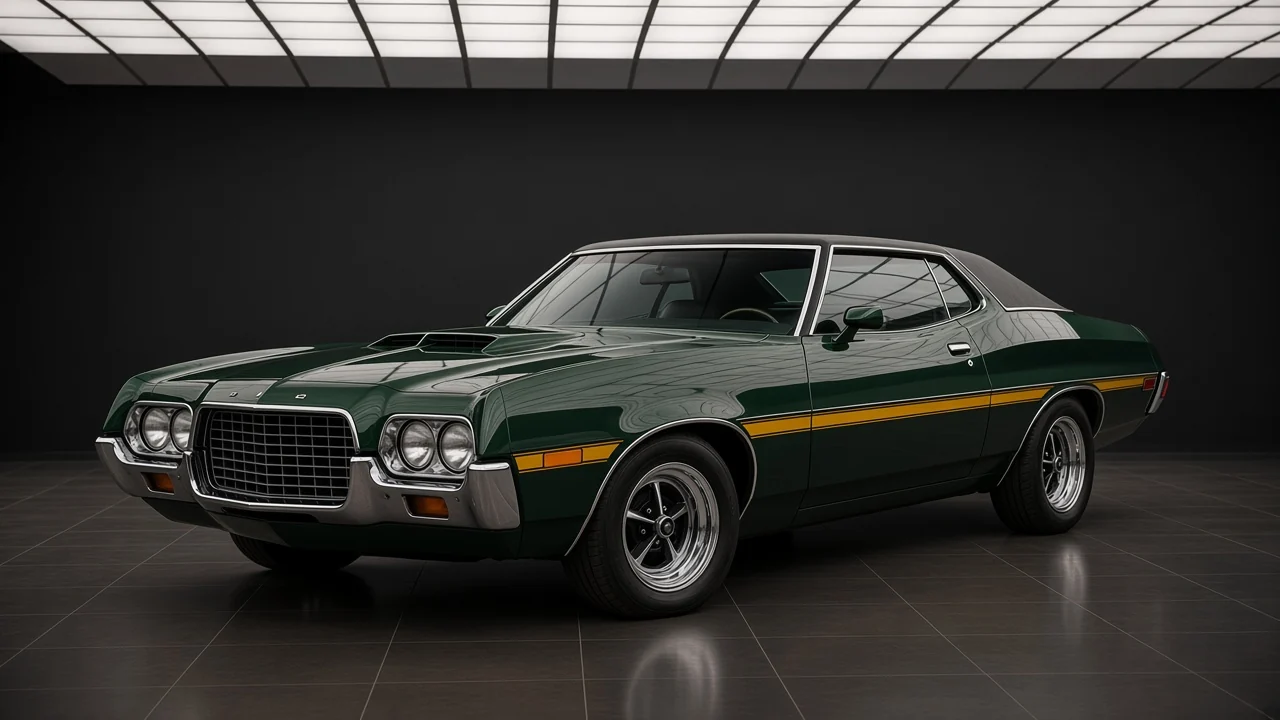
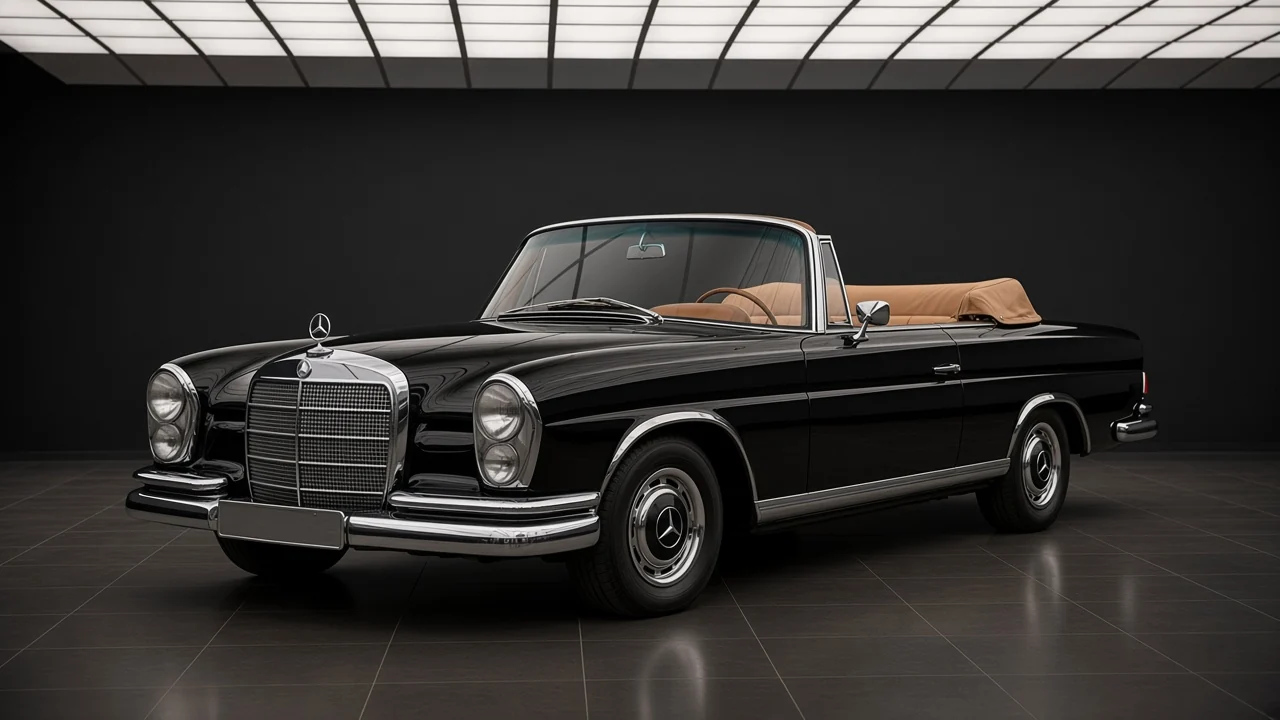
The car people mean is a black 1982 Firebird Trans Am with the scanner in the nose, a quiet voice, and a stock 305 underneath. Ask which of the picture cars a replica claims to be, and do not pay a Molecular Bonded Shell price for a lamp and a dash. The same third-generation Trans Am, in a different film, is the Bandit car. The other film cars in this set are the 1972 Gran Torino Sport and the Hangover 220SE, which is not a 600 Pullman.
Sources
- Knight Rider (1982), Wikipedia — premiere 26 September 1982, Daniels uncredited, Scheffe nose and dash, US$100,000 build, Jack Gill ride height
- KITT, Wikipedia — 1982 Trans Am versus 2008 GT500KR and 1991 Stealth; Barris on the convertible and Super Pursuit; the 23-car inventory
- Hagerty — Pontiac’s first order for three loaded black 1982 Trans Ams
- HotCars — period still of Hasselhoff with the 1982 Trans Am
- Pontiac Trans Am — Smokey and the Bandit — the same 1982 model, without the scanner
Frequently Asked Questions
What car is KITT in the original Knight Rider?
Knight Industries Two Thousand is a modified 1982 Pontiac Firebird Trans Am. Knight Rider premiered on NBC on 26 September 1982. David Hasselhoff played Michael Knight. The red scanner sits in the nose. The shell, the weapons and the turbo boost are the show’s fiction, not Pontiac engineering.
Is KITT a Ford Mustang?
Not the original. The 2008 Knight Rider reboot uses a Ford Shelby GT500KR and calls that car Knight Industries Three Thousand. The 1991 television film Knight Rider 2000 put the old processor into a Knight 4000 built from a Dodge Stealth. If the car is a third-generation black Trans Am with the scanner in the nose, it is the 1982 KITT.
Who voiced KITT?
William Daniels. He was starring in St. Elsewhere at the same time and asked not to be credited. He recorded the lines after the episode was filmed. On set, Hasselhoff heard the replies from an assistant, or through the car stereo when the car was moving.
What engine is in the 1982 Trans Am used as KITT?
A stock 1982 Trans Am V8 was a 5.0-litre (305 cubic inch) engine. The carburetted LG4 was rated at 145 hp (108 kW) and 240 lb-ft. The LU5 Cross-Fire Injection engine was rated at 165 hp (123 kW). Do not assign either rating to one hero VIN. The show’s turbo boost and Molecular Bonded Shell are script, not a factory option.
How many KITT cars were built for the series?
There is no single agreed fleet total. Early Pontiac paperwork describes an order for three loaded black 1982 Trans Ams. A later production account describes four early cars: a hero, a jump car, a car with a hidden driver, and a ground-stunt car. The KITT production note that is widely repeated says 23 cars were made, with speculation of as many as 25, and that five survived. Quote the source with the number. Do not collapse them into one fact.
Did George Barris build the original KITT?
The original series nose and dashboard are credited to design consultant Michael Scheffe. George Barris built the later convertible and the Super Pursuit Mode versions. A line in David Hasselhoff’s autobiography gives Barris the early bodywork. The production record for the first cars does not.