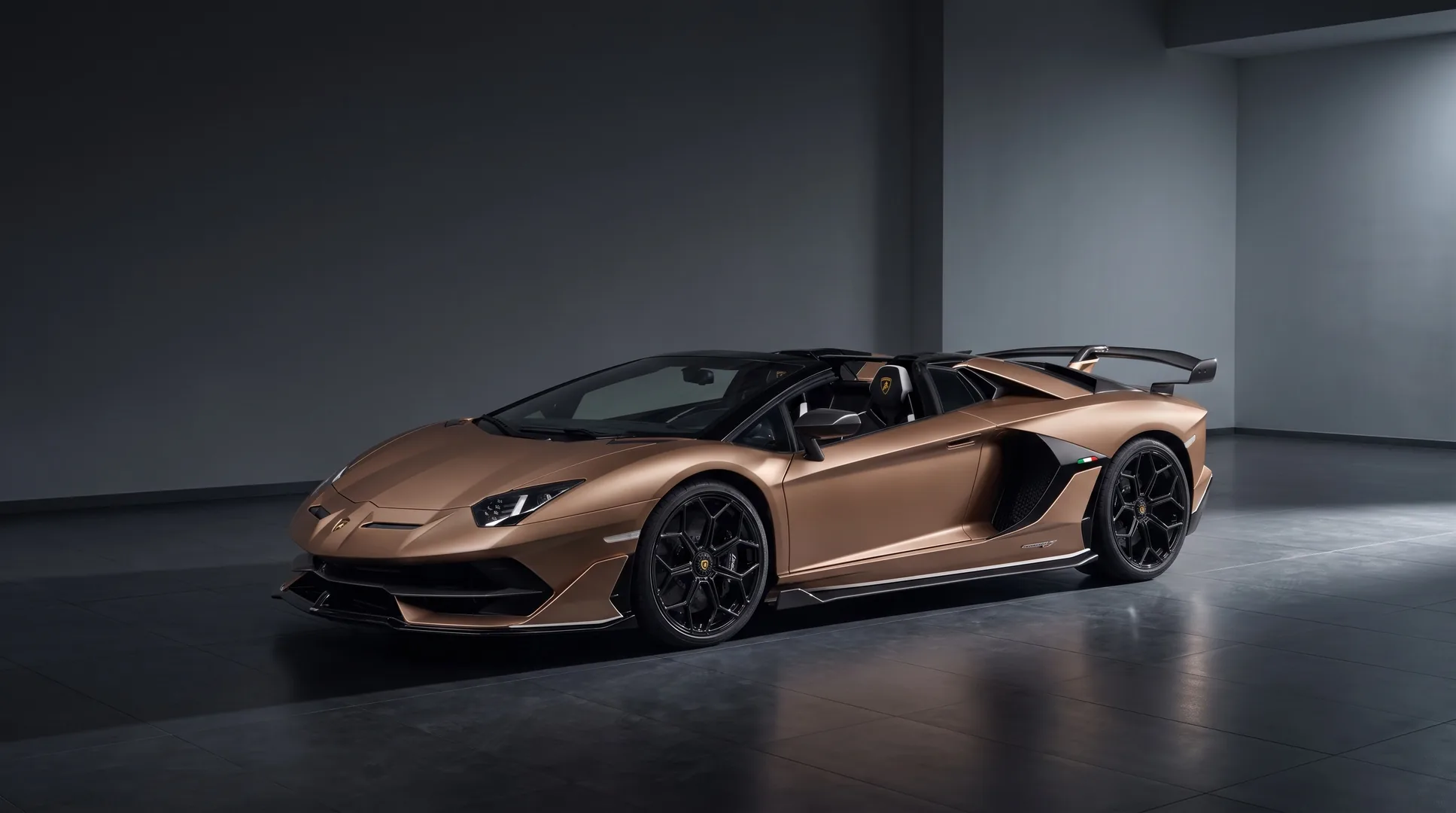
The Lamborghini Aventador closed a chapter that cannot be reopened. Built from 2011 to 2022 in 11,465 cars, it was the last Lamborghini V12 road-car line sold without any form of electrification, and the last naturally aspirated production V12 the factory in Sant'Agata Bolognese put into series manufacture. No turbochargers, no supercharger, no electric motor: 6,498 cm³ of 60-degree V12 with multi-point injection, revving to 8,700 rpm in its final specification. The Batman Garage Legendary Cars collection covers the full model line below, one side profile per version, from the LP 700-4 to the LP 780-4 Ultimae.
Why the Aventador Is the Last of Its Kind
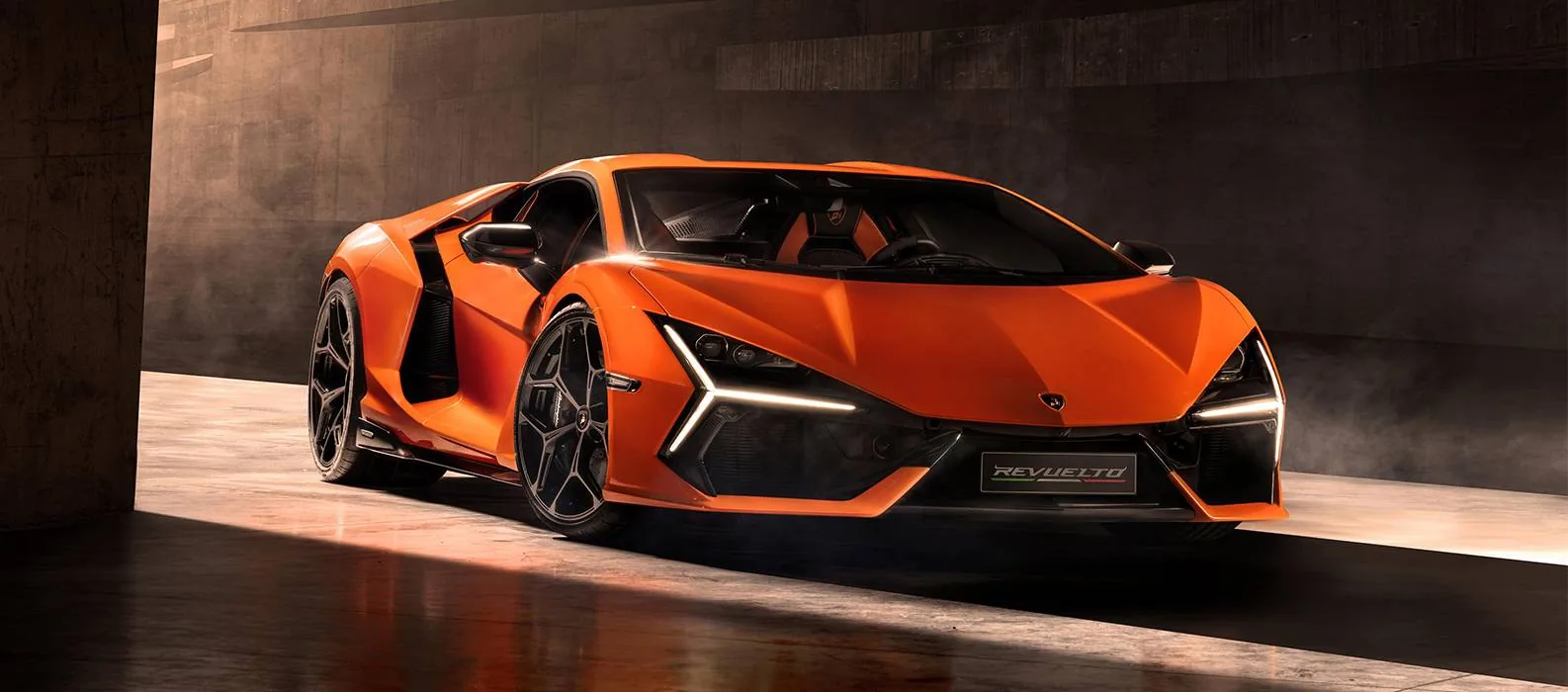
Lamborghini said it plainly. The final Aventador — an LP 780-4 Ultimae Roadster — was described by the factory as the last pure naturally aspirated V12 Lamborghini to be produced in Sant'Agata Bolognese before the company entered full hybridisation. Its successor, the Revuelto, is a plug-in hybrid V12 with three electric motors.
Two qualifications belong to the record, and they are worth stating precisely rather than glossing over. First, the Aventador-derived Sián FKP 37, Sián Roadster and Countach LPI 800-4 used the same L539 V12 combined with a 48-volt mild-hybrid supercapacitor system — they are electrified, but they are not Aventador-badged production variants. Second, the track-only Essenza SCV12 carried an unelectrified 830 CV version of the engine. Within the Aventador model line itself, however, every single variant is naturally aspirated and unelectrified.
Lamborghini framed natural aspiration as a philosophy rather than a constraint: the only real choice for the brand was a high-revving naturally aspirated engine, because the immediate reaction to the smallest movement of the driver's right foot is part of what defines a super sports car. That response — a linear climb to 8,250 rpm and later 8,500 rpm with no boost threshold anywhere in it — is the single characteristic the Aventador will be remembered for.
The L539 V12: A Clean-Sheet Engine
The Aventador's V12 is not a development of the Bizzarrini-derived unit that powered Lamborghini's twelve-cylinder cars for decades. It is an all-new in-house design, internally L539, weighing 235 kg and running a dry-sump lubrication system with eight scavenger pumps that let the engine sit 60 mm lower in the chassis than the Murciélago V12. Bore and stroke are 95 × 76.4 mm with an 11.8:1 compression ratio.
Power went through a seven-speed Independent Shifting Rod (ISR) automated manual with shifts in as little as 50 milliseconds and a dry double-plate clutch, then to a Haldex generation IV four-wheel-drive system able to send between zero and 60 per cent of torque to the front axle. The tub is a carbon-fibre monocoque with aluminium front and rear subframes, and the suspension uses horizontal mono-tube dampers with pushrod actuation — magneto-rheological from the Superveloce onwards.

Lamborghini Aventador Versions and Specifications
Sixteen Aventador production variants were offered between 2011 and 2022, counting limited and special editions. All figures below are the manufacturer's published values; where Lamborghini never published a figure for a specific variant, the cell reads n.a. rather than an estimate. Torque is 690 N·m at 5,500 rpm on every variant up to the Aventador S and 720 N·m at 6,750 rpm on the SVJ and Ultimae.
| Version | Years | Power | Dry weight | 0–100 km/h | Top speed | Units |
|---|---|---|---|---|---|---|
| Aventador LP 700-4 Coupé | 2011–2016 | 700 CV (515 kW) | 1,575 kg | 2.9 s | 350 km/h | series |
| Aventador LP 700-4 Roadster | 2012–2016 | 700 CV (515 kW) | 1,625 kg | 3.0 s | 350 km/h | series |
| Aventador LP 720-4 50° Anniversario | 2013 | 720 CV (530 kW) | n.a. | 2.9 s | 350 km/h | 100 + 100 |
| Aventador LP 700-4 Pirelli Edition | 2014–2015 | 700 CV (515 kW) | n.a. | 2.9 s | 350 km/h | n.a. |
| Aventador LP 700-4 Miura Homage | 2016 | 700 CV (515 kW) | n.a. | n.a. | n.a. | 50 |
| Aventador LP 750-4 Superveloce | 2015–2016 | 750 CV (552 kW) | 1,525 kg | 2.8 s | > 350 km/h | 600 |
| Aventador LP 750-4 SV Roadster | 2015–2016 | 750 CV (552 kW) | 1,575 kg | 2.9 s | > 350 km/h | 500 |
| Aventador S (LP 740-4) Coupé | 2016–2021 | 740 CV (544 kW) | 1,575 kg | 2.9 s | 350 km/h | series |
| Aventador S Roadster | 2017–2021 | 740 CV (544 kW) | 1,625 kg | 3.0 s | 350 km/h | series |
| Aventador SVJ (LP 770-4) | 2018–2021 | 770 CV (566 kW) | 1,525 kg | 2.8 s | > 350 km/h | 900 |
| Aventador SVJ 63 | 2018–2021 | 770 CV (566 kW) | 1,525 kg | 2.8 s | > 350 km/h | 63 |
| Aventador SVJ Roadster | 2019–2021 | 770 CV (566 kW) | n.a. | 2.9 s | > 350 km/h | 800 |
| Aventador SVJ 63 Roadster | 2019–2021 | 770 CV (566 kW) | n.a. | 2.9 s | > 350 km/h | 63 |
| Aventador SVJ Roadster Xago Edition | 2020 | 770 CV (566 kW) | n.a. | n.a. | n.a. | 10 |
| Aventador LP 780-4 Ultimae Coupé | 2021–2022 | 780 CV (574 kW) | 1,550 kg | 2.8 s | 355 km/h | 350 |
| Aventador LP 780-4 Ultimae Roadster | 2021–2022 | 780 CV (574 kW) | n.a. | 2.9 s | 355 km/h | 250 |
Every Aventador Version in Profile
Aventador LP 700-4
The car that replaced the Murciélago arrived with 700 CV (515 kW) at 8,250 rpm, 690 N·m at 5,500 rpm, a 1,575 kg dry weight, 2.9 seconds to 100 km/h and 350 km/h. It introduced the carbon monocoque, the ISR gearbox and the scissor doors that became the model's signature.
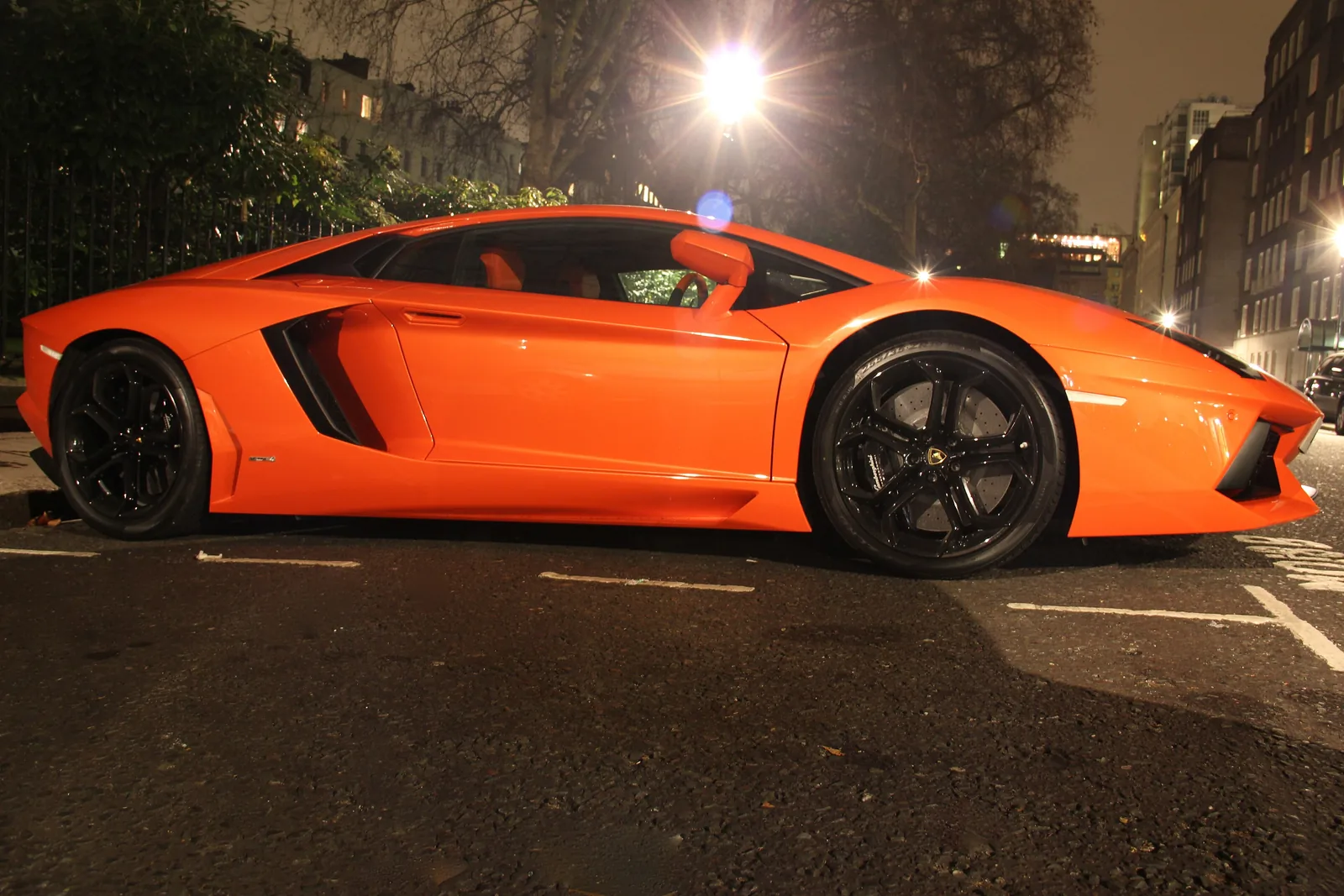
Aventador LP 700-4 Roadster
The open version kept the full 700 CV and the 350 km/h top speed, adding 50 kg for a 1,625 kg dry weight and 0–100 km/h in 3.0 seconds. Its two carbon-fibre roof panels weigh under 6 kg each and stow in the front luggage compartment.
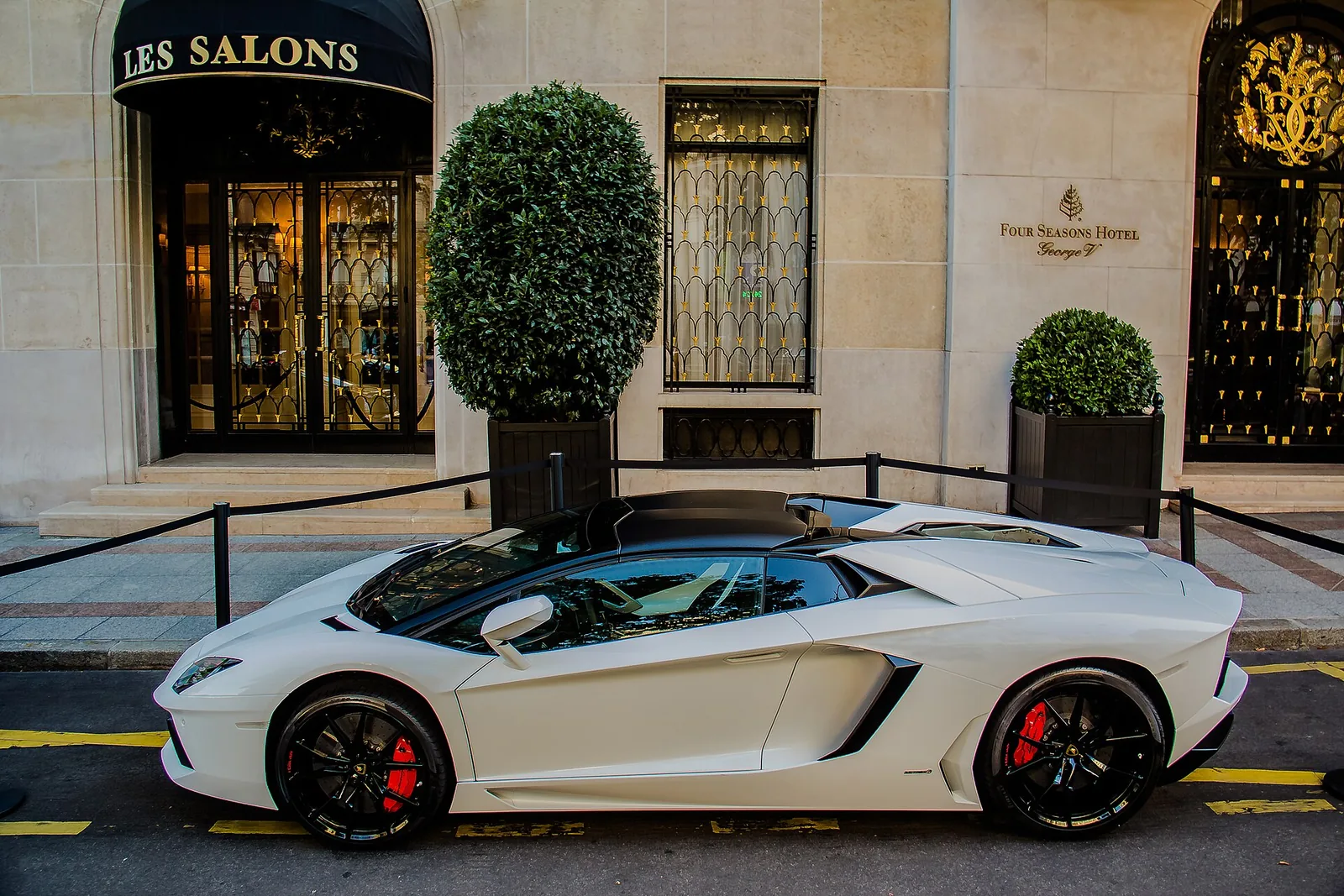
Aventador LP 720-4 50° Anniversario
Built for the company's fiftieth anniversary with 720 CV, 2.9 seconds to 100 km/h and 350 km/h. Production was split evenly: 100 coupés and 100 roadsters, each with unique front-splitter and rear-diffuser geometry.
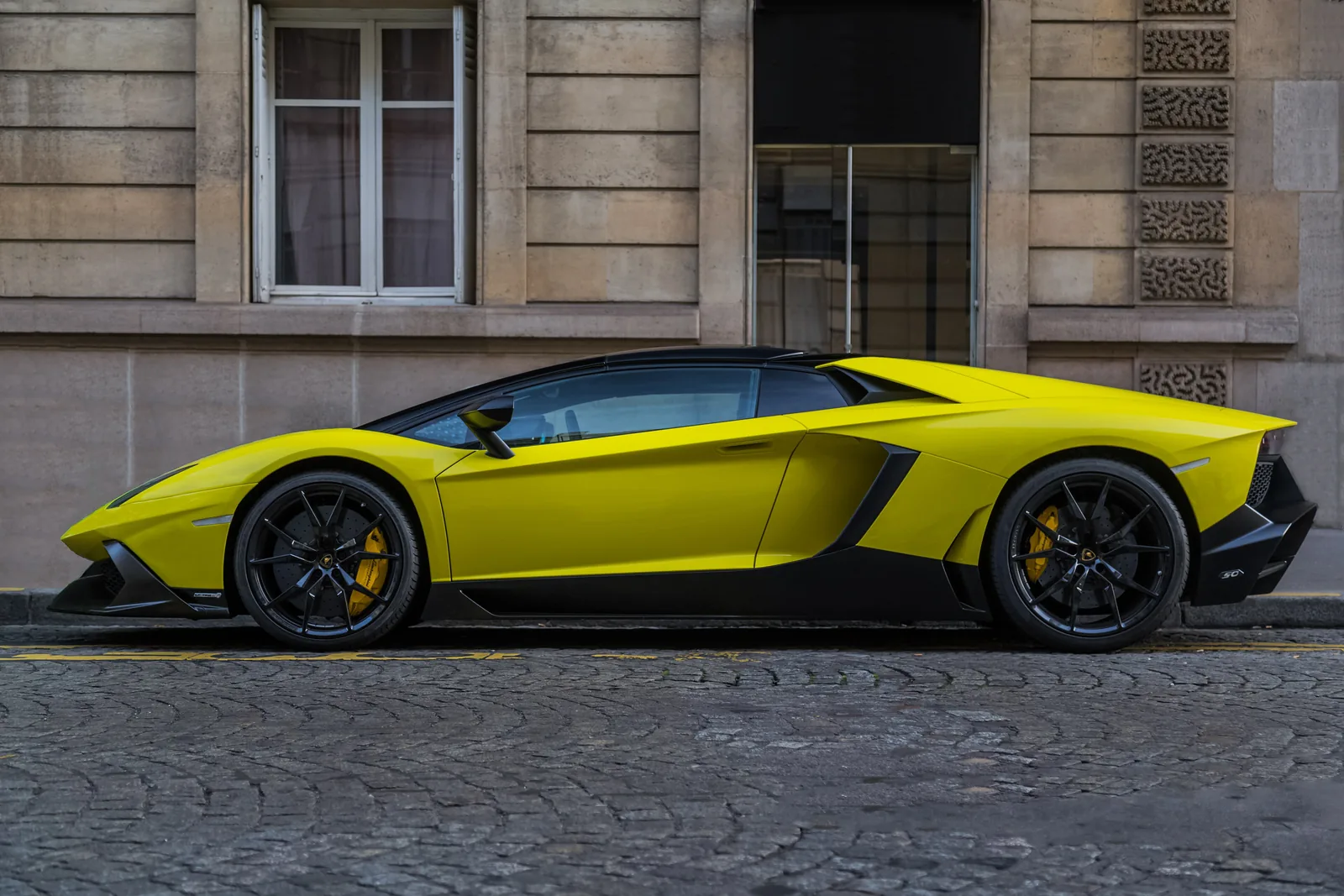
Aventador LP 700-4 Pirelli Edition
A cosmetic special edition celebrating the Pirelli partnership, based on the LP 700-4 with the standard 700 CV, 2.9 seconds and 350 km/h. It is defined by contrasting roof and mirror finishes, a body stripe echoing the tyre sidewall marking and Pirelli-branded interior detailing. Lamborghini never published a production total for this edition. The white-and-red example photographed in the Batman Garage collection is a Pirelli Edition Roadster — the full gallery is on the Lamborghini Aventador collection page.
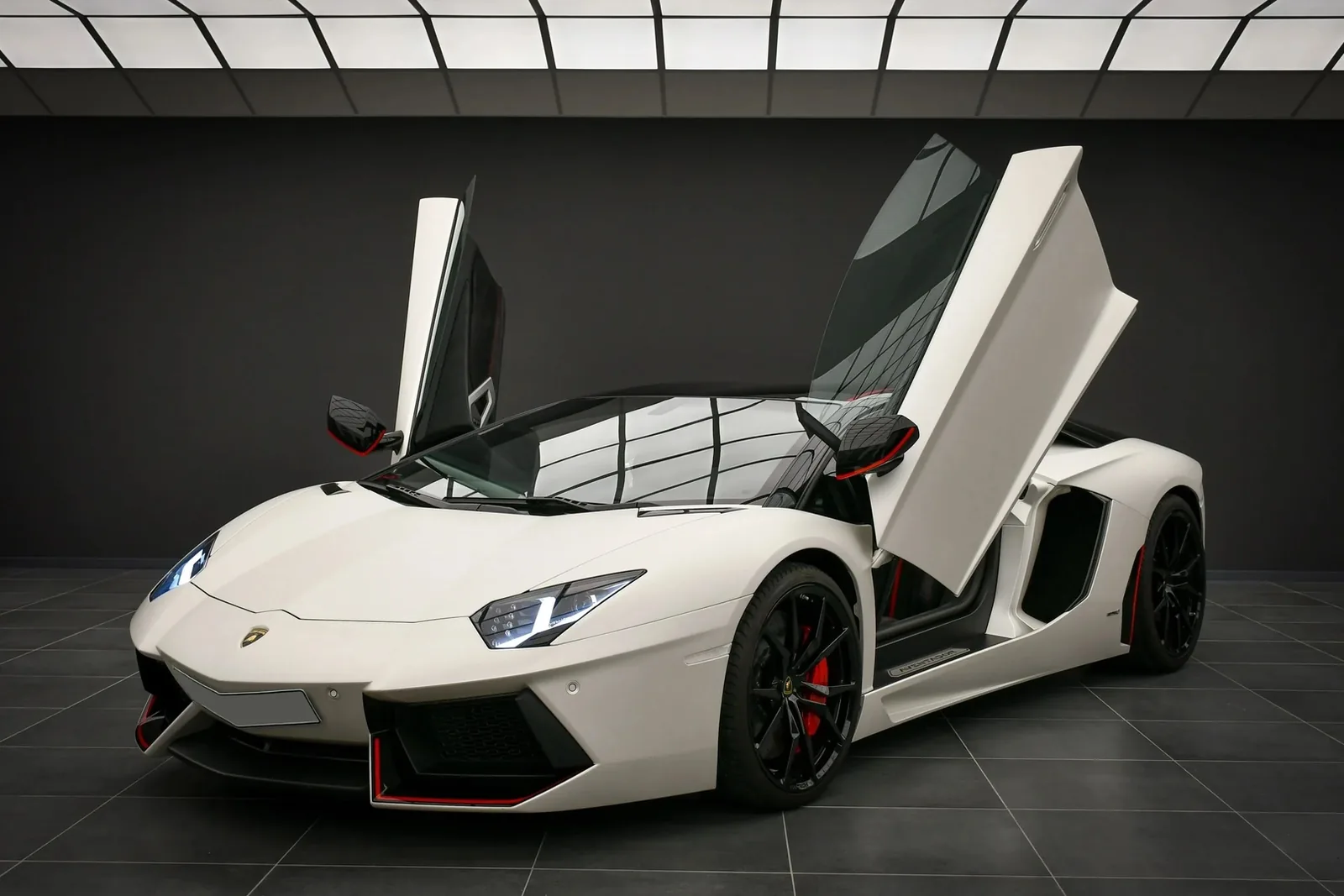
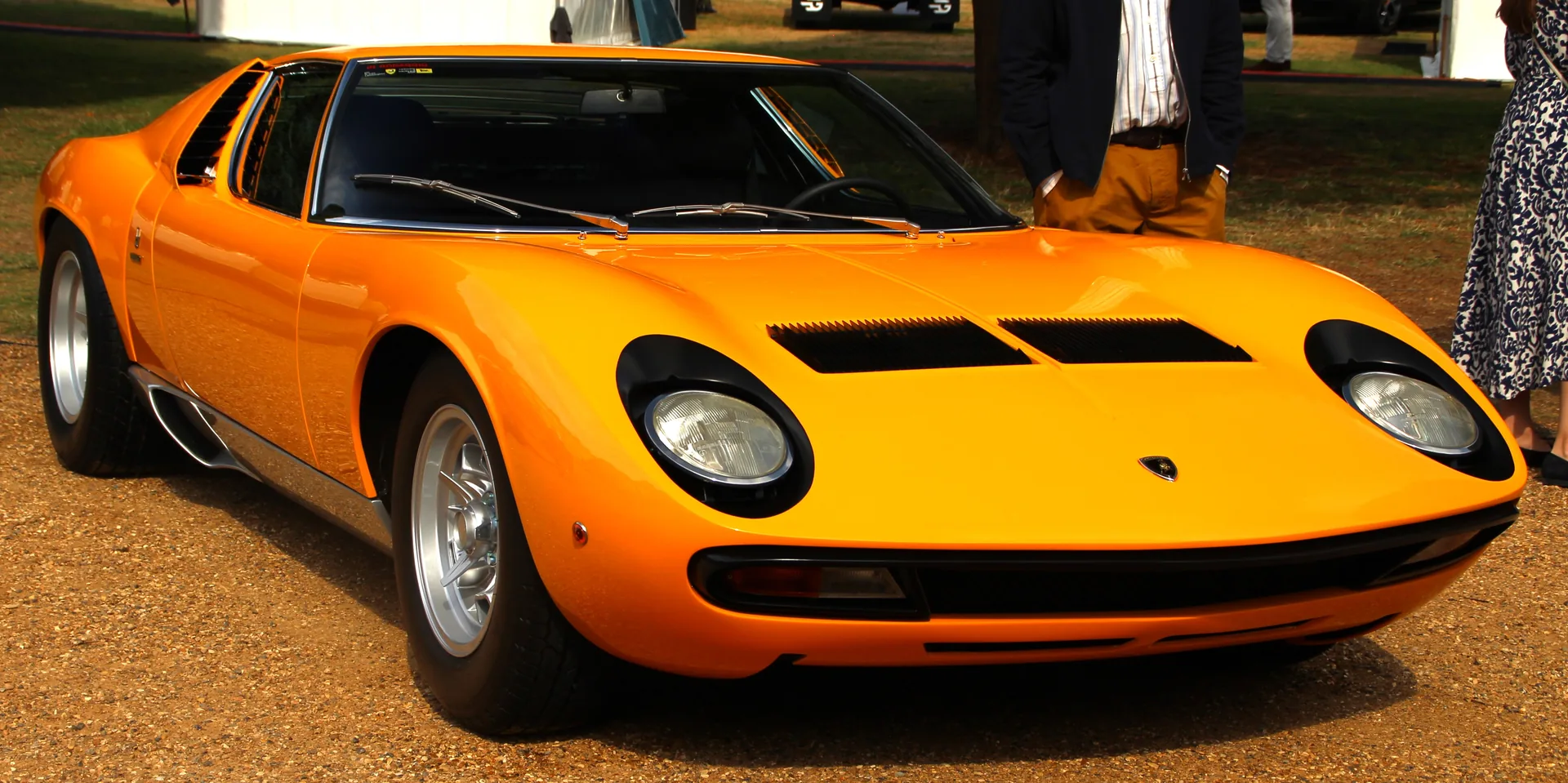
Aventador LP 700-4 Miura Homage
Fifty coupés built on the LP 700-4 to mark the Miura's fiftieth anniversary, with six two-tone liveries including Rosso Arancio Miura and 20/21-inch Dione wheels. All 50 sold. A separate, unrelated one-off Miura tribute was later built in 2022 on an Ultimae Roadster.
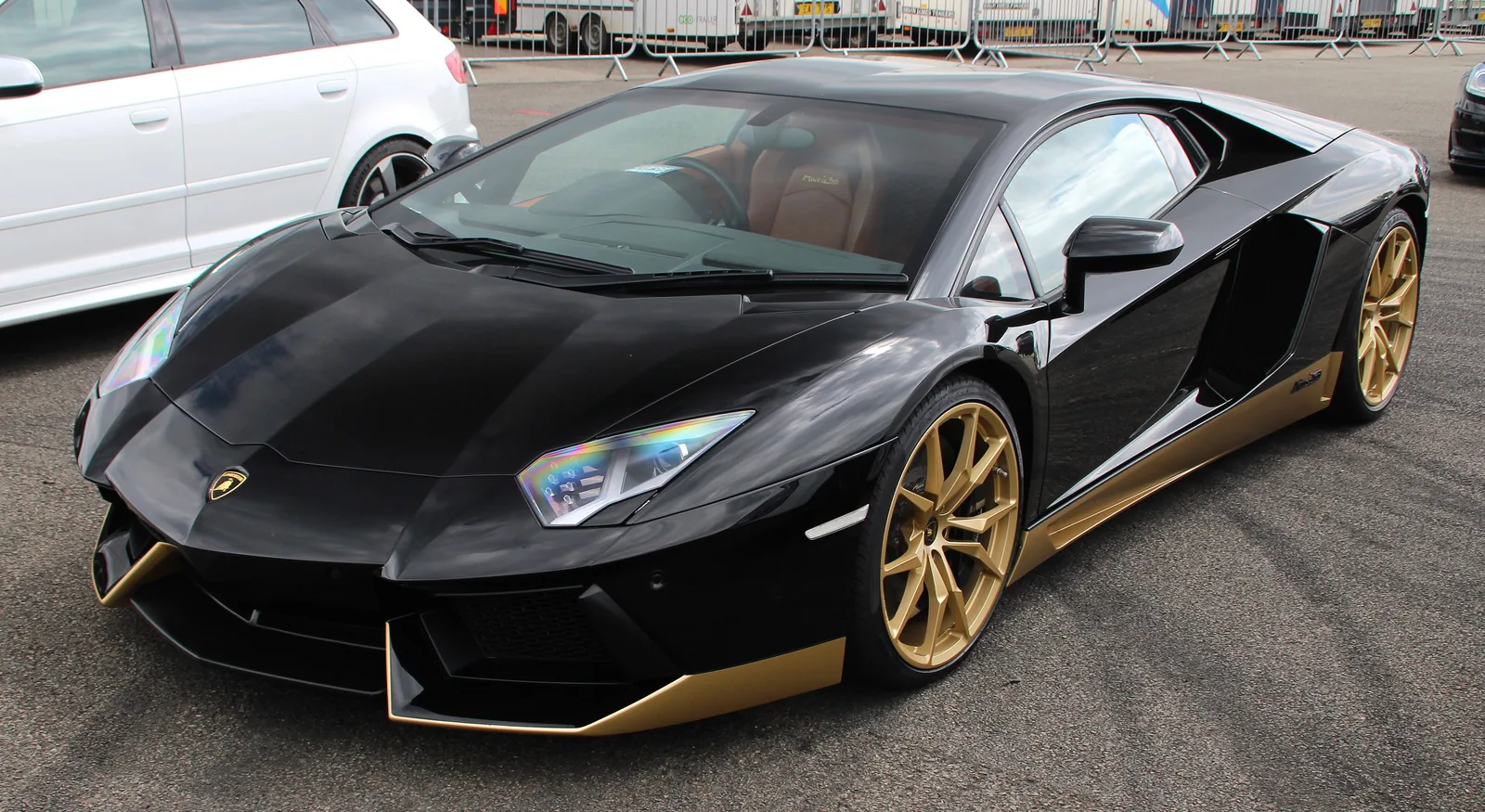
Aventador LP 750-4 Superveloce
The Superveloce raised output to 750 CV (552 kW) at 8,400 rpm and cut dry weight to 1,525 kg, reaching 100 km/h in 2.8 seconds and beyond 350 km/h. Magneto-rheological pushrod dampers arrived here, along with Lamborghini Dynamic Steering, a visible bare-carbon cabin structure and 600 units of production.
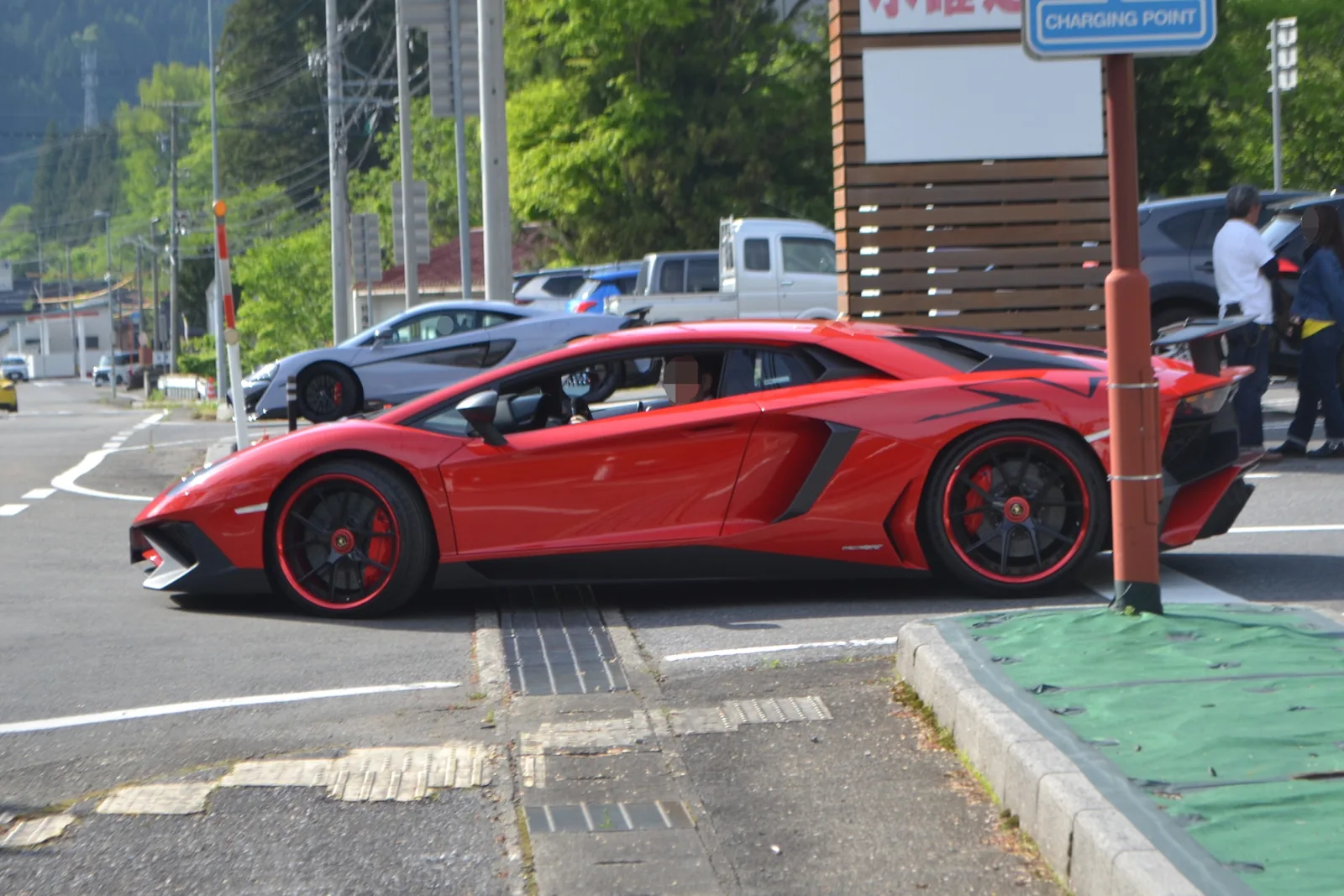
Aventador LP 750-4 SV Roadster
The open Superveloce kept 750 CV with a 1,575 kg dry weight, 2.9 seconds to 100 km/h and a top speed above 350 km/h. Production was capped at 500 cars.
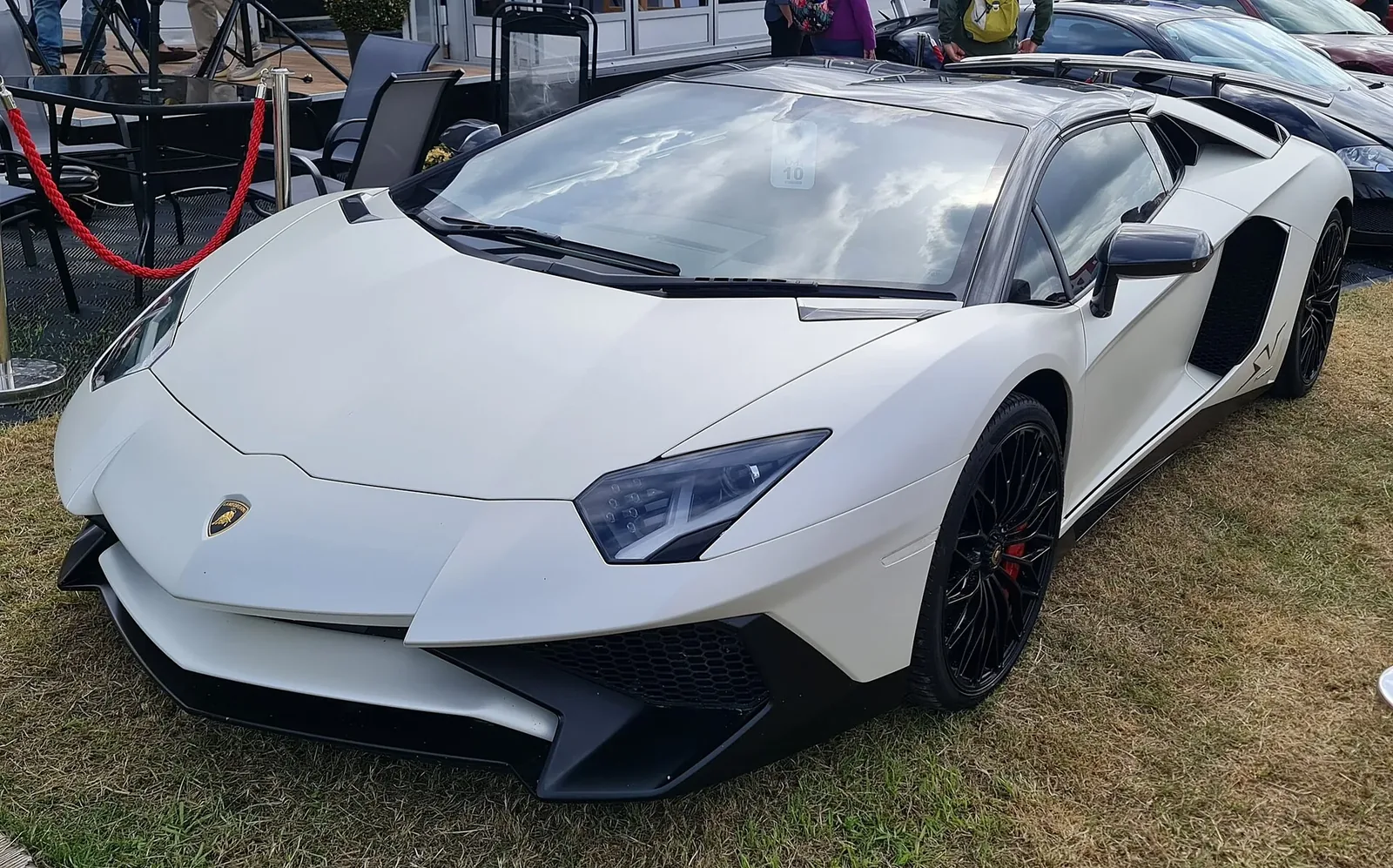
Aventador S (LP 740-4)
The mid-life S brought 740 CV (544 kW) at 8,400 rpm and the model line's most significant chassis change: four-wheel steering, pairing Lamborghini Dynamic Steering on the front axle with Lamborghini Rear-wheel Steering driven by two electromechanical actuators. A fourth EGO drive mode let the driver configure steering, suspension and powertrain independently. Dry weight 1,575 kg, 2.9 seconds, 350 km/h. The S Roadster followed in 2017 with 1,625 kg and 3.0 seconds.
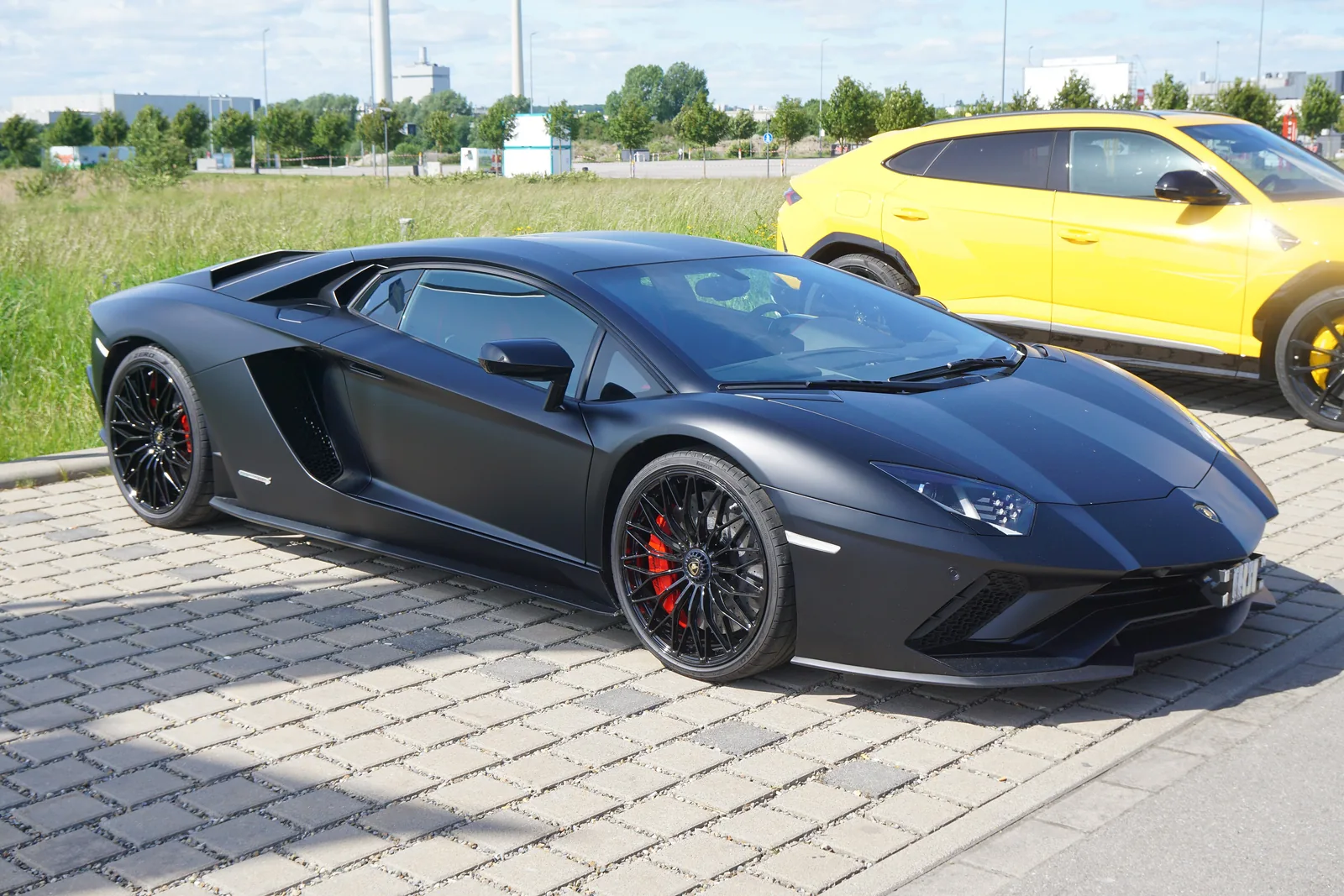
Aventador SVJ (LP 770-4)
The SVJ is the sharpest Aventador: 770 CV (566 kW) at 8,500 rpm, 720 N·m at 6,750 rpm, 1,525 kg dry for a 1.98 kg/CV ratio, 2.8 seconds to 100 km/h and beyond 350 km/h. It added Aerodinamica Lamborghini Attiva 2.0 with aero vectoring, LDVA 2.0 vehicle dynamics control, and a 3 per cent rearward torque-split shift versus the SV. On 26 July 2018 Lamborghini announced a 6:44.97 lap of the 20.6 km Nürburgring Nordschleife by official driver Marco Mapelli in a camouflaged pre-production car, run on the optional Pirelli P Zero Trofeo R tyre. Nine hundred coupés were built, plus 63 SVJ 63 cars.
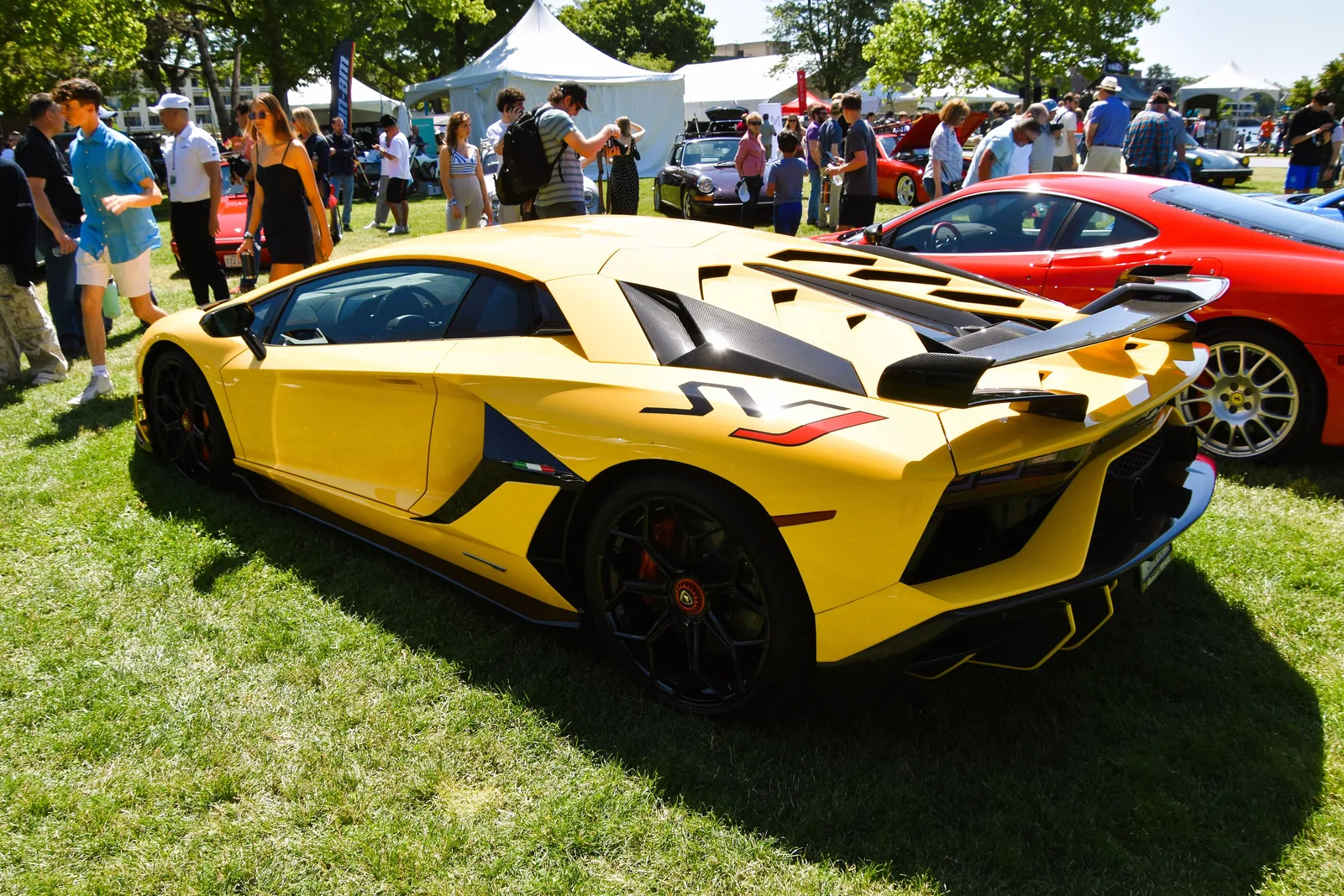
Aventador SVJ Roadster
Eight hundred open SVJs were produced, keeping 770 CV, 2.9 seconds to 100 km/h and the 8,700 rpm maximum engine speed that marks the final development stage of the L539 V12.
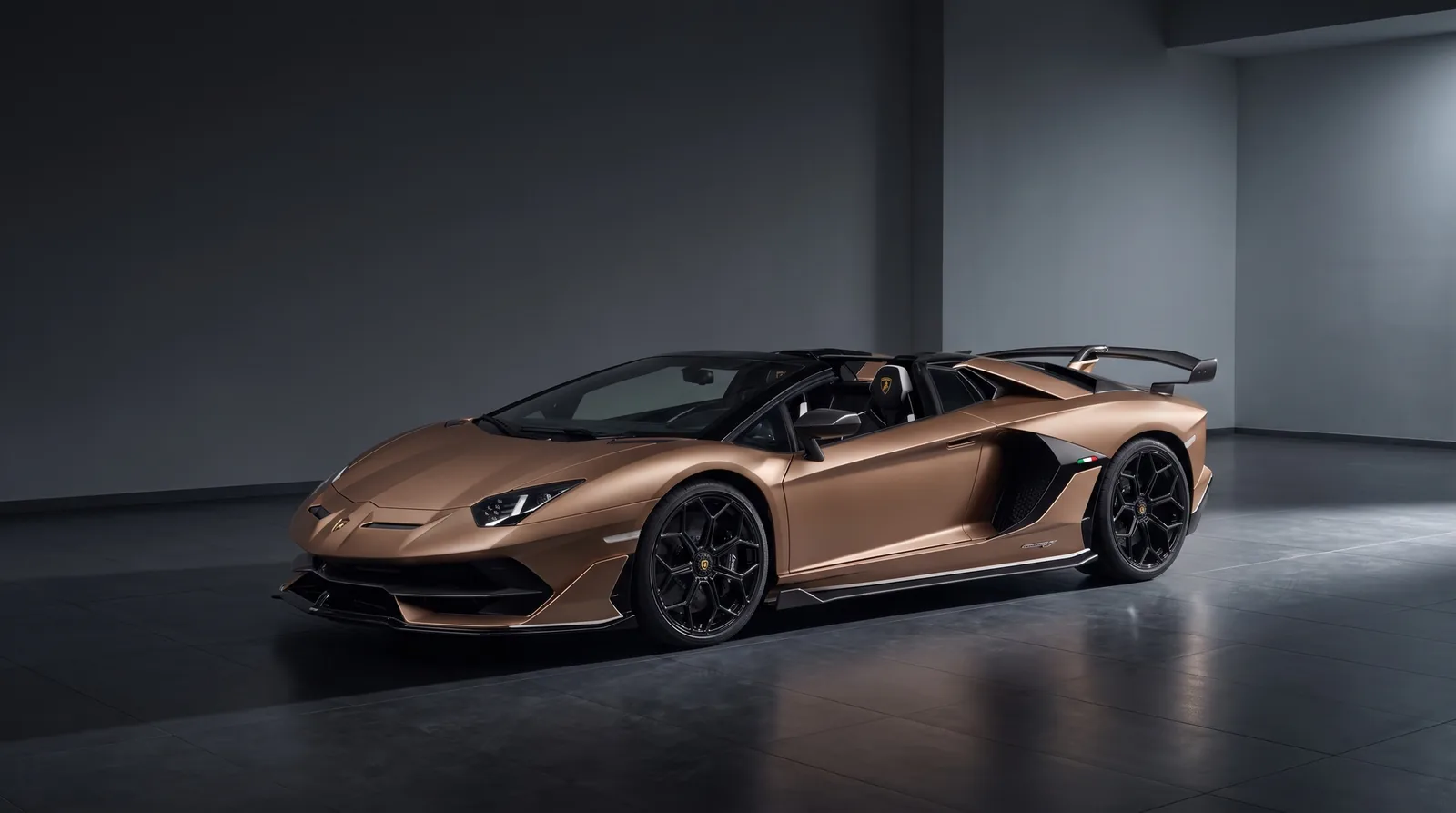
Aventador SVJ 63 Roadster
Sixty-three cars, with extensive exposed carbon bodywork and a dedicated Ad Personam specification. A further 10 SVJ Roadster Xago Edition cars followed in 2020 with a hexagon-motif livery.
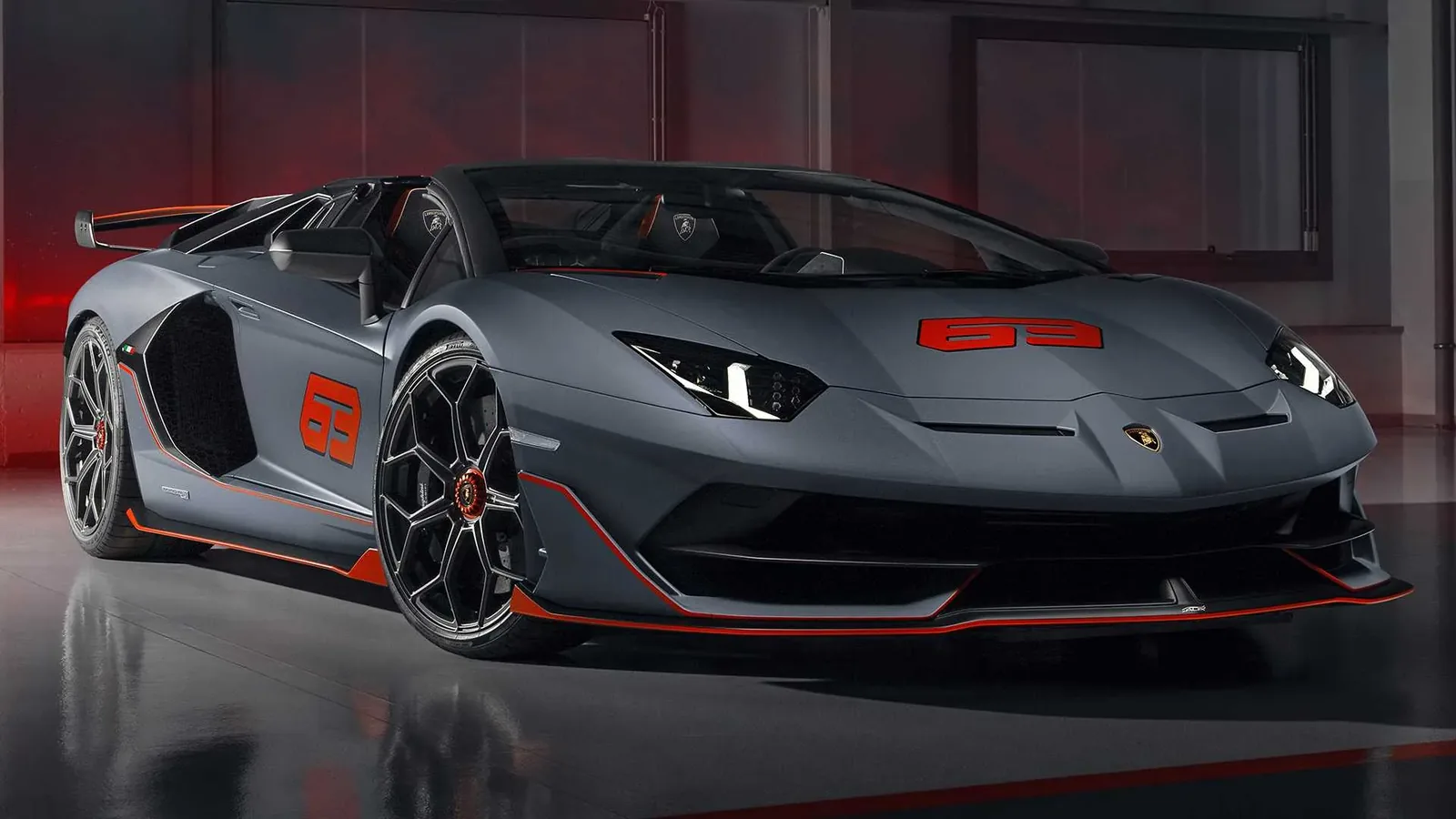
Aventador LP 780-4 Ultimae
The Ultimae closed the line with 780 CV (574 kW) at 8,500 rpm — 40 CV more than the S and 10 CV more than the SVJ — 720 N·m, a 1,550 kg dry weight, 2.8 seconds to 100 km/h and 355 km/h. Lamborghini calls it the highest-performing standard-production naturally aspirated V12 engine in the company's history. Three hundred and fifty coupés were built.
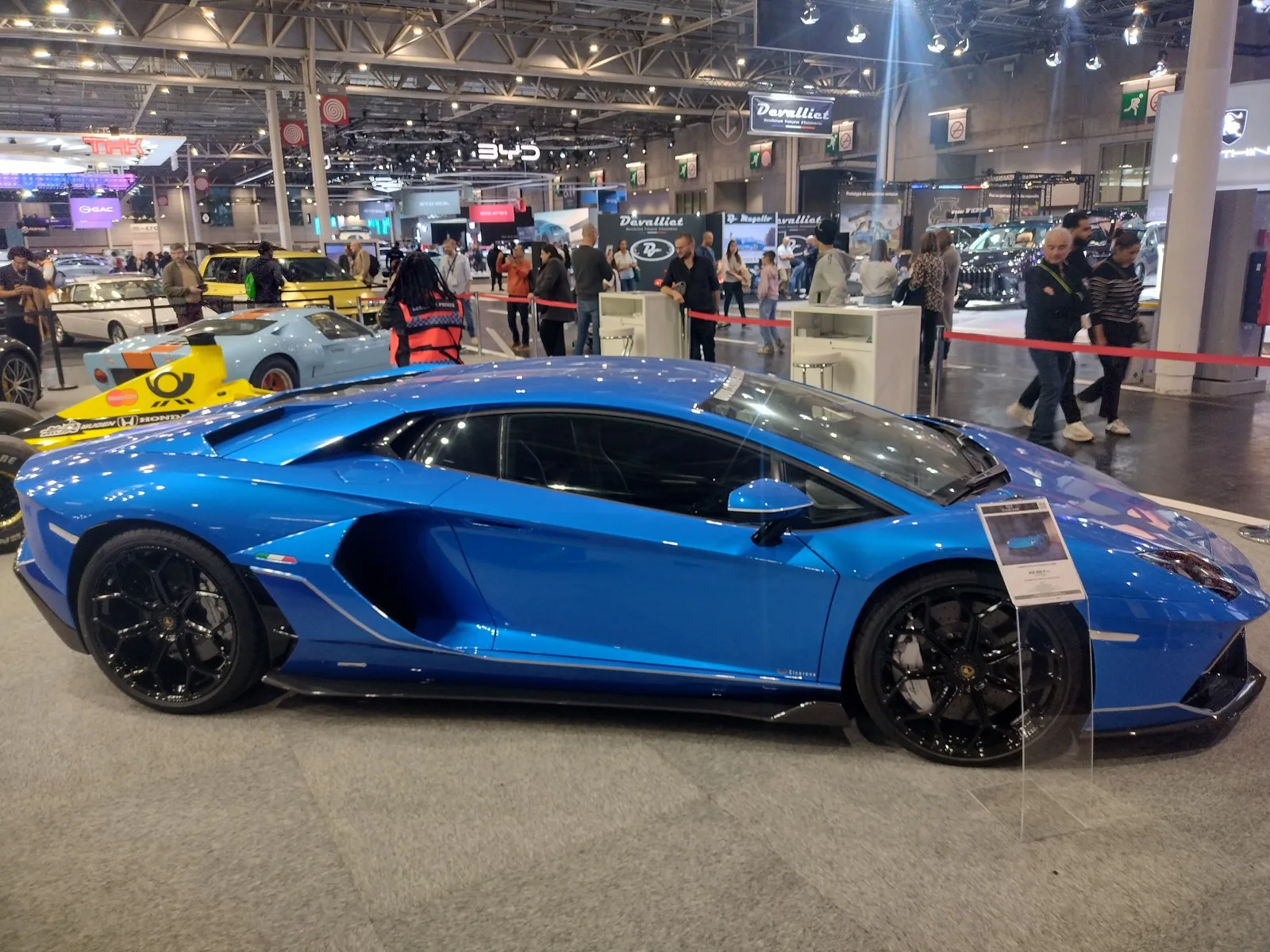
Aventador LP 780-4 Ultimae Roadster
Two hundred and fifty Ultimae Roadsters brought the edition to 600 cars and the model line to its end in September 2022. Lamborghini publishes 780 CV, 2.9 seconds and 355 km/h for the open car; a dry weight is quoted for the coupé only.
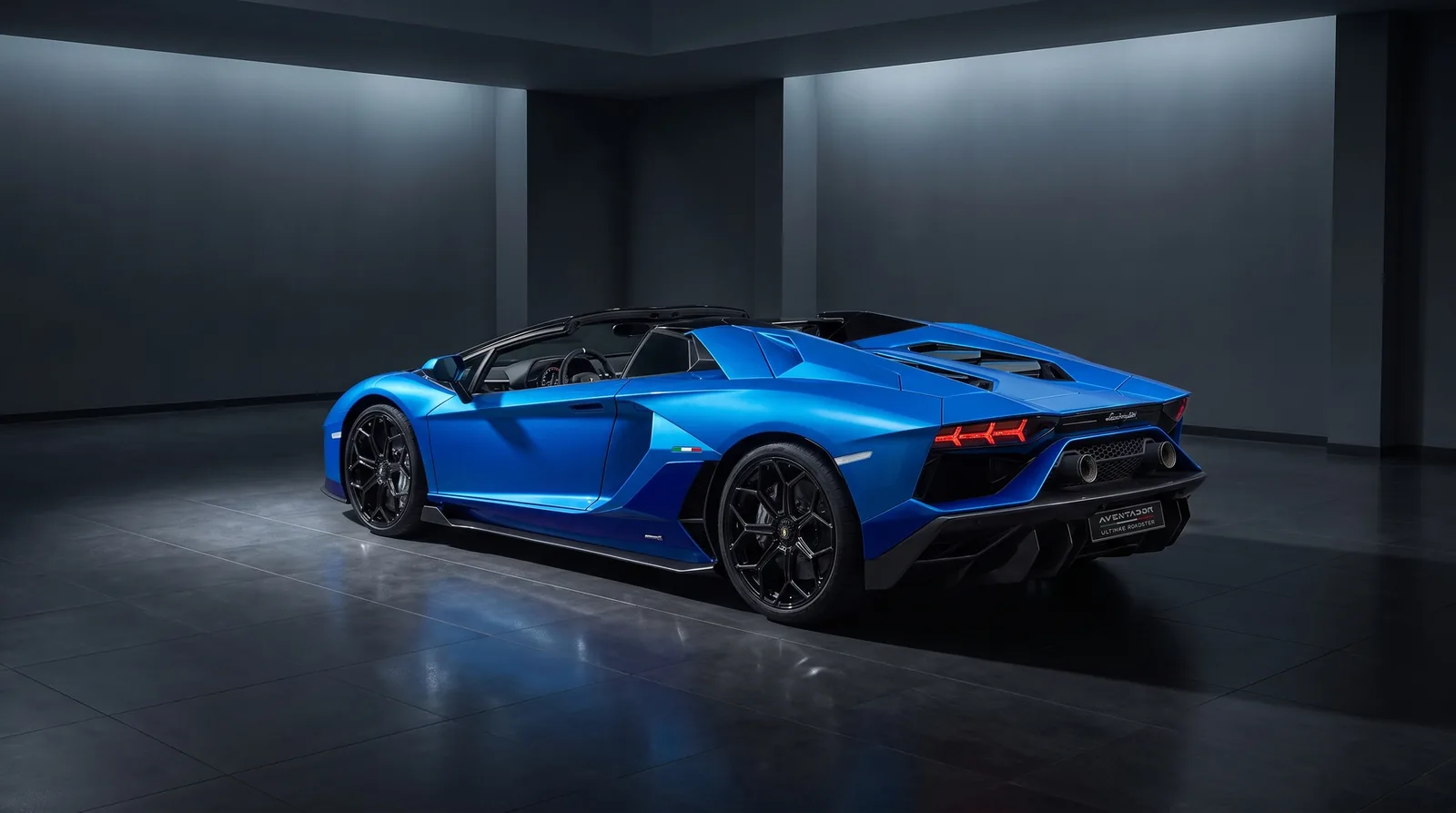
The Pirelli Edition in the Batman Garage Collection
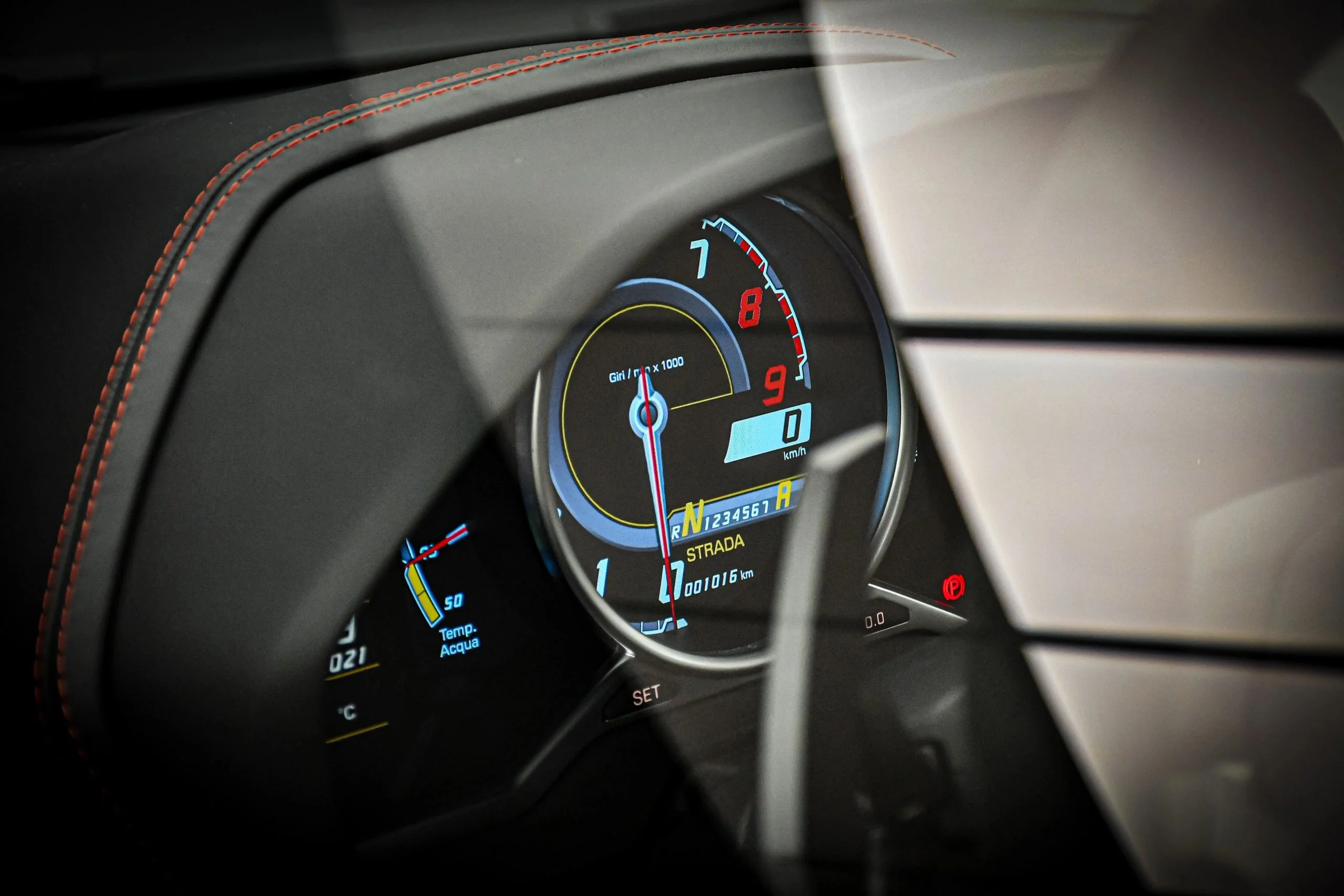
The Aventador photographed here is an LP 700-4 Pirelli Edition Roadster in white with a red centre stripe, shot alongside a Ducati in the collection garage. The complete image set, including interior, instrument cluster and rear detail, is on the Lamborghini Aventador collection page.
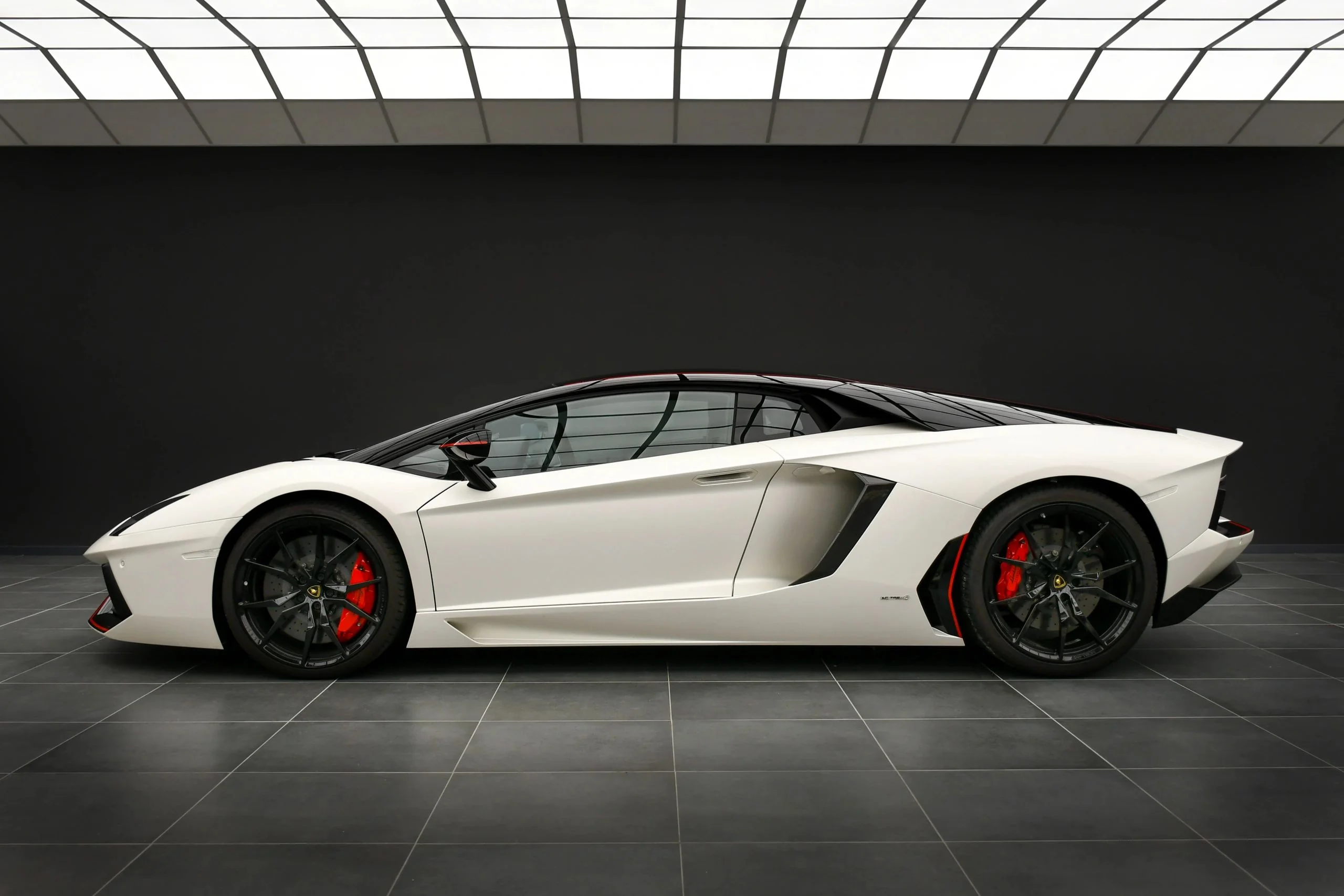


Aventador Production Numbers in Context
Lamborghini delivered 11,465 Aventadors over eleven years. The preceding Murciélago managed 4,099 cars, so the Aventador nearly tripled the volume of the V12 model before it while remaining a low-production car by any normal measure. That combination — high enough volume to build a real owner community, low enough to stay scarce, and a powertrain configuration that will never be repeated — is what shapes its long-term standing.
Among the Aventador-derived one-offs and micro-series, the Aventador J, Veneno, Veneno Roadster, Centenario, SC18 Alston and SC20 all used the same V12 architecture in single-digit or double-digit runs.
Batman Garage Collector Verdict
The Aventador's place in the collection is not built on outright pace. Later hybrid V12s are faster in every measurable way. Its value is that it is the terminal point of a specific engineering idea: twelve cylinders, no forced induction, no electrical assistance, a mechanical response curve that ends at 8,700 rpm. Every Lamborghini V12 sold after it carries batteries.
Within the model line, the SVJ and the Ultimae concentrate the most collector attention — the first for the Nürburgring record and the ALA aerodynamics, the second for closing the era at peak output. The limited editions below 100 units are scarcer still. As with every car in the Legendary Cars collection, provenance, condition, originality and jurisdiction-specific documentation must be verified independently before any purchase.
Frequently Asked Questions
Was the Lamborghini Aventador the last Lamborghini V12 without electrification?
The Aventador was the last Lamborghini V12 road-car line offered without any form of electrification, and the last naturally aspirated production V12 Lamborghini. Lamborghini described the final Ultimae Roadster as the last pure naturally aspirated V12 built in Sant'Agata Bolognese before the company entered full hybridisation. Two qualifications belong to the record: the Aventador-derived Sián FKP 37, Sián Roadster and Countach LPI 800-4 used the same V12 with a 48-volt mild-hybrid supercapacitor system, and the successor Revuelto is a plug-in hybrid V12.
Is the Aventador V12 turbocharged?
No. Every Aventador variant uses the same naturally aspirated 6,498 cc 60-degree V12 with multi-point injection. No Lamborghini specification sheet for any Aventador lists forced induction. Lamborghini stated that a high-revving naturally aspirated engine was the only real choice for the car, because throttle response is part of the character of a super sports car.
How much power does the Lamborghini Aventador have?
Output rose across the model line: 700 CV (515 kW) in the LP 700-4, 720 CV in the 50° Anniversario, 750 CV in the Superveloce, 740 CV in the Aventador S, 770 CV in the SVJ and 780 CV (574 kW) in the LP 780-4 Ultimae, which Lamborghini calls the highest-performing standard-production naturally aspirated V12 in its history.
How many Lamborghini Aventadors were built?
Lamborghini delivered 11,465 Aventadors between 2011 and 2022. For comparison, the preceding Murciélago V12 totalled 4,099 cars.
What is the Aventador SVJ Nürburgring lap record?
6:44.97 minutes over the 20.6 km Nordschleife, set by official Lamborghini driver Marco Mapelli in a camouflaged pre-production SVJ and announced on 26 July 2018. Lamborghini noted the lap was run on the optional Pirelli P Zero Trofeo R tyre rather than the standard P Zero Corsa.
Which Aventador version is the most collectible?
The limited editions concentrate collector interest: 50 Miura Homage coupés, 63 SVJ 63 coupés, 63 SVJ 63 Roadsters, 10 SVJ Roadster Xago Edition cars and the 600-car Ultimae run that closed the line. Provenance, condition, originality and market documentation should always be verified independently before any purchase.
Sources
- Lamborghini Aventador LP 700-4 press kit (2011)
- Lamborghini Aventador LP 700-4 Roadster specification sheet
- Lamborghini Aventador LP 750-4 Superveloce press kit
- Lamborghini Aventador S press kit
- Lamborghini Aventador SVJ Roadster press kit
- Lamborghini Aventador LP 780-4 Ultimae press kit
- Lamborghini — Aventador SVJ Nürburgring lap record, 6:44.97
- Lamborghini — End of an era with the last Lamborghini Aventador
- Lamborghini — The Lamborghini Aventador: end of an era (production figures)
- Lamborghini — Aventador LP 780-4 Ultimae
- Lamborghini — Aventador Pirelli Edition
- Lamborghini — Aventador Miura Homage
- Lamborghini — Revuelto, the first super sports V12 hybrid HPEV