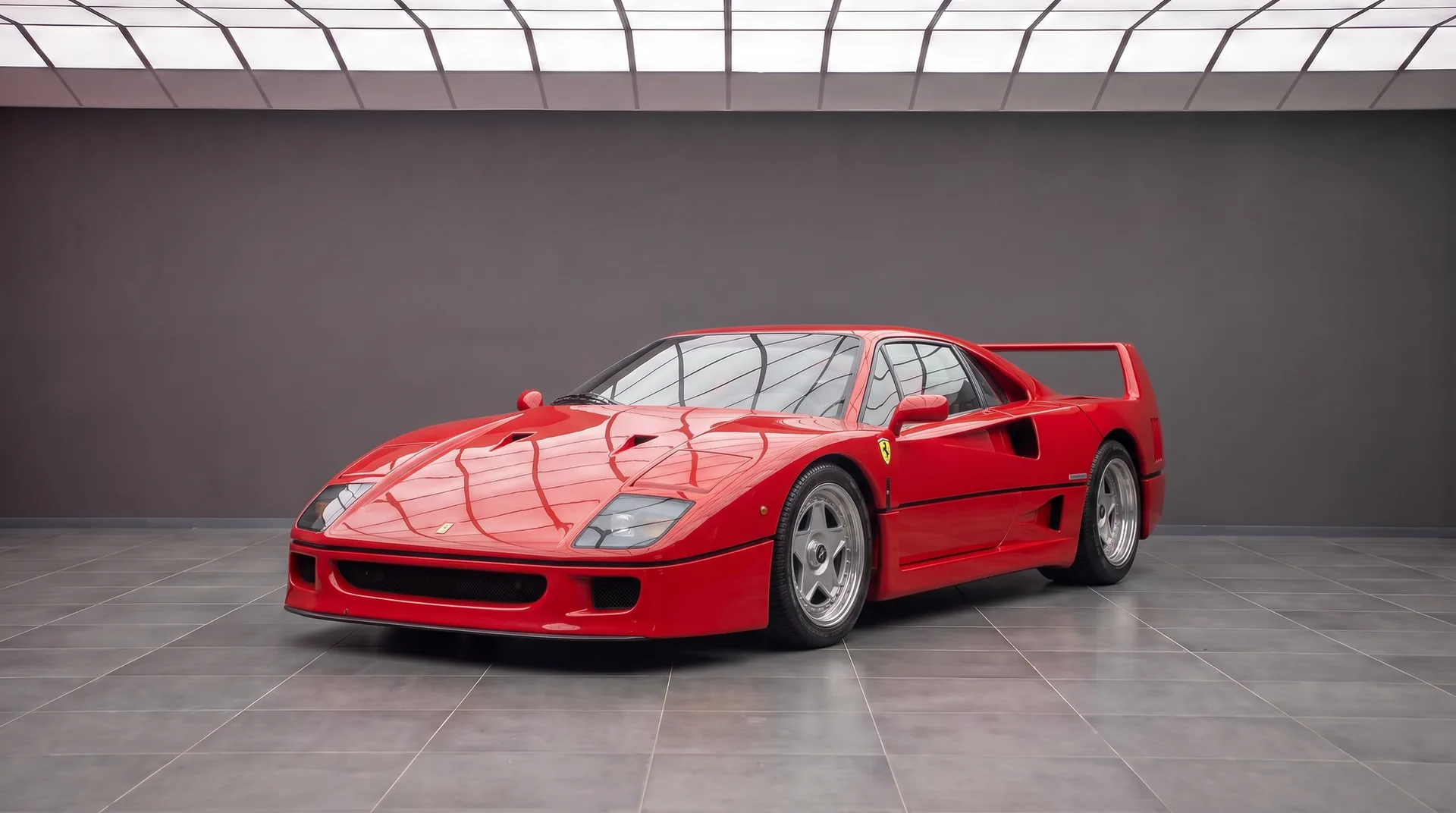
The Ferrari F40 was the last car developed with Enzo Ferrari still at the company, and it remains the purest expression of the late-eighties supercar. Built between 1987 and 1992 to mark Ferrari's 40th anniversary, it combines a 2,936 cc twin-turbo V8, a gated five-speed manual gearbox, composite bodywork and almost no insulation between the driver and the machinery. It joins the Batman Garage Legendary Cars collection as the reference point for what a supercar is supposed to feel like.
Ferrari F40 Specifications
The F40 is a mid-engine, rear-wheel-drive berlinetta with two turbochargers, no power steering, no ABS and no electronic driver aids. The headline figures are 478 hp, 577 N·m of torque, a quoted 324 km/h top speed and roughly 4.1 seconds from rest to 100 km/h at a dry weight of about 1,100 kg.
| Specification | Ferrari F40 |
|---|---|
| Model | Ferrari F40 |
| Production | 1987–1992 |
| Engine | 2,936 cc twin-turbocharged 90° V8 |
| Power | 478 hp at 7,000 rpm |
| Torque | 577 N·m at 4,000 rpm |
| Transmission | 5-speed manual |
| Layout | Mid-engine, rear-wheel drive |
| Weight | approx. 1,100 kg (dry) |
| Top speed | 324 km/h |
| 0–100 km/h | approx. 4.1 s |
| Production total | 1,315 cars (sources also list 1,311) |
The Story: From 288 GTO Evoluzione to Anniversary Car
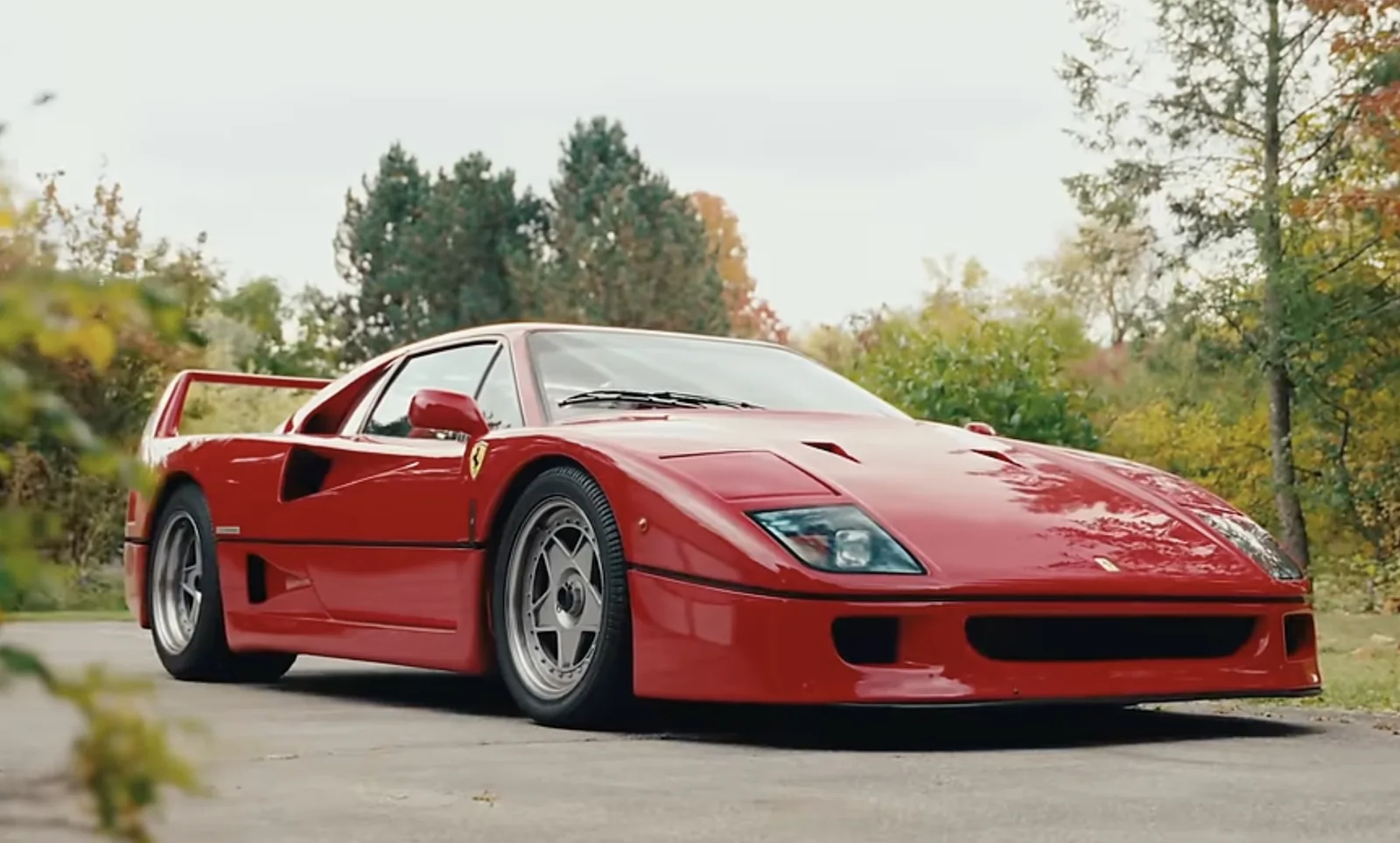
The F40 grew out of the 288 GTO Evoluzione programme, a Group B project that lost its racing purpose when the category collapsed. Ferrari redirected the engineering into a road car for its 40th anniversary, and development moved quickly because most of the hard work already existed in prototype form.
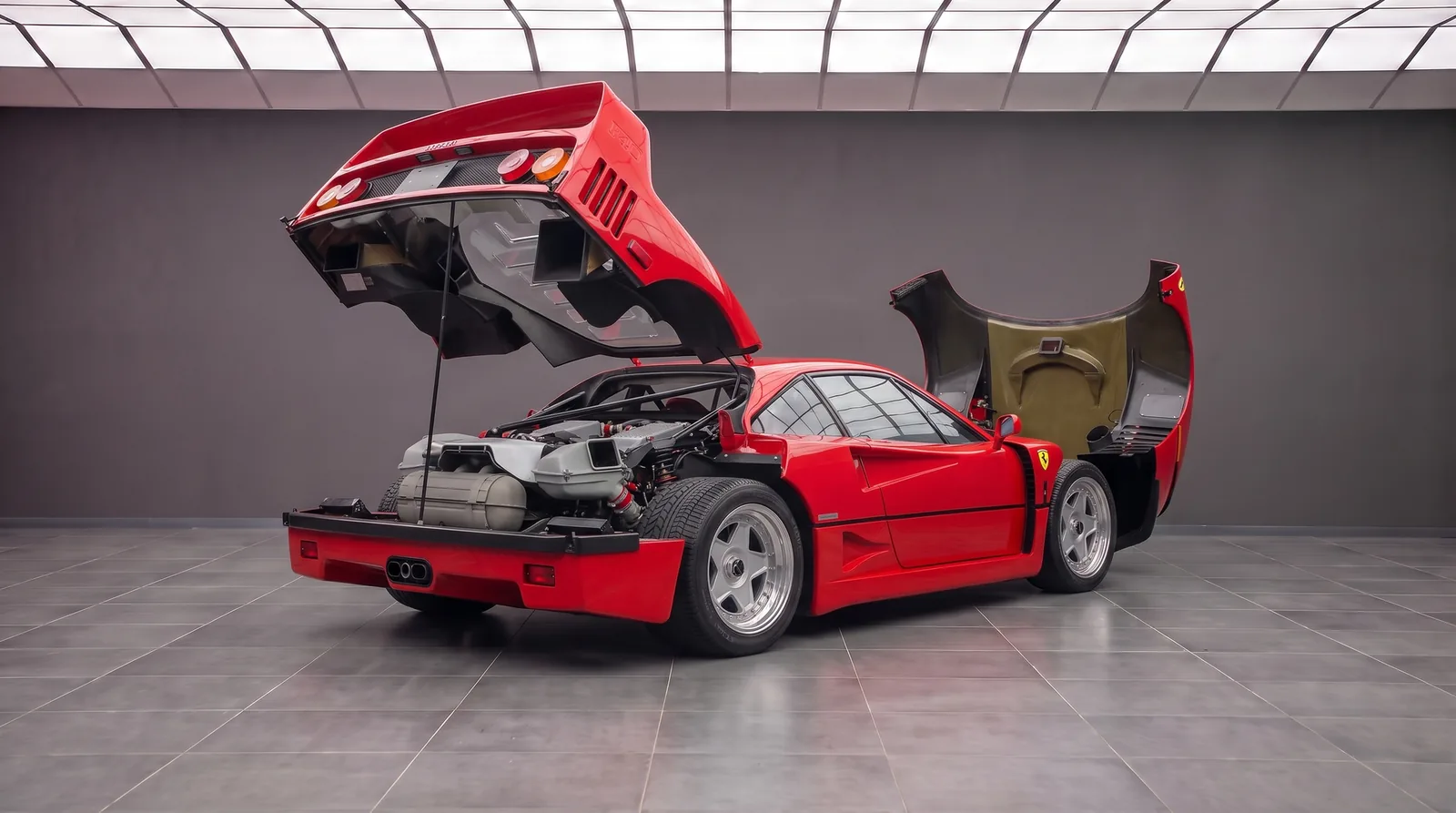
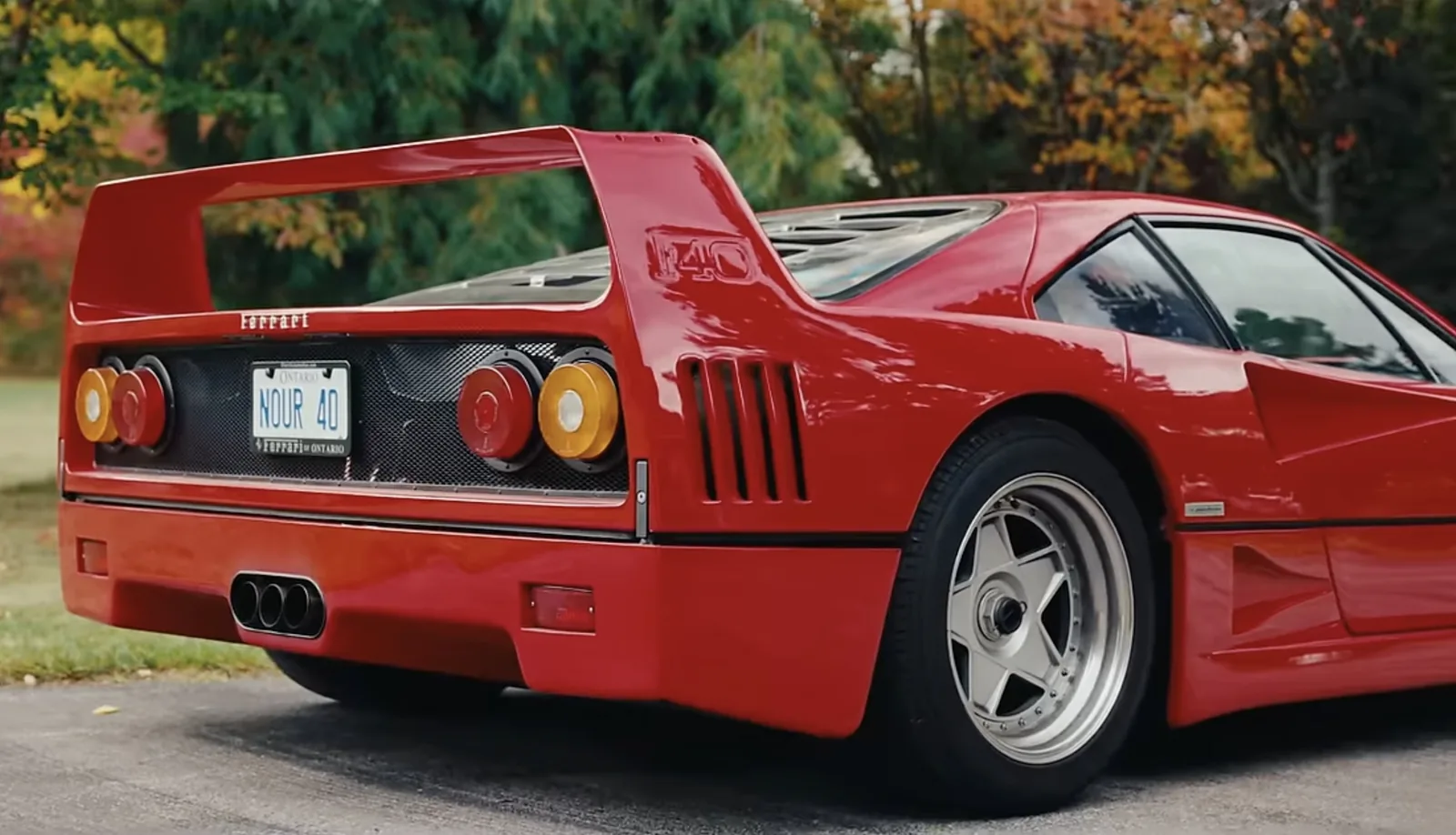
Pininfarina, with Leonardo Fioravanti leading the design, shaped a body around function rather than decoration: NACA ducts feeding the radiators and brakes, a fixed rear wing instead of active aerodynamics, and lightweight composite panels in place of steel. Comfort was never the objective. Ferrari originally planned around 400 cars; demand pushed the run to 1,315 by 1992.
Engineering and Performance: 2.9-Litre Twin-Turbo V8
The Tipo F120A V8 is an enlarged, higher-boost development of the 288 GTO unit, taken from 2,855 cc to 2,936 cc and running around 1.1 bar through twin IHI turbochargers with intercoolers. Output is 478 hp at 7,000 rpm and 577 N·m at 4,000 rpm, with US-specification cars quoted marginally higher.
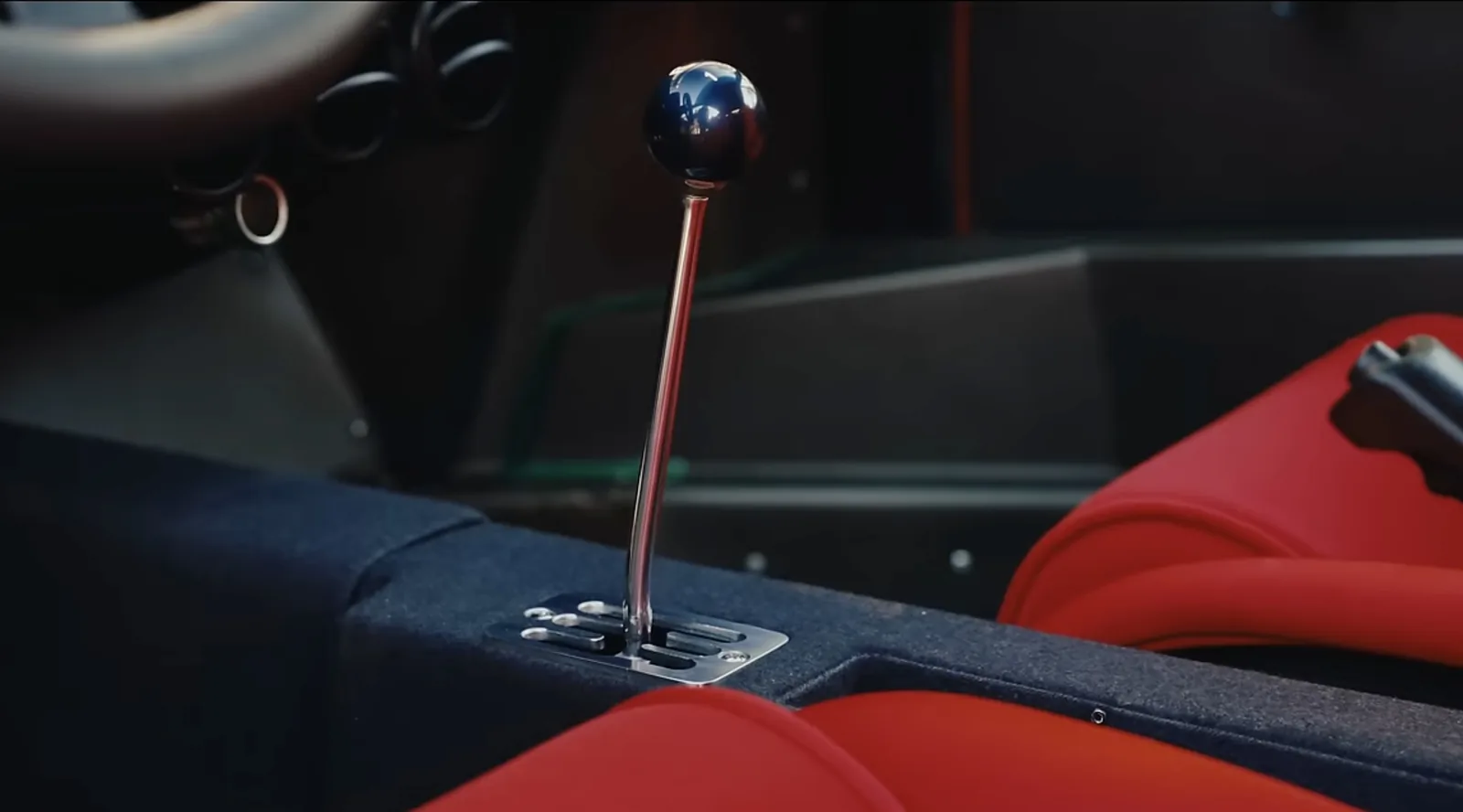
In period the F40 was among the first production cars credited with crossing the 200 mph threshold, but the number is not the point. The character is: sharp boost response arriving in one distinct step, a chassis with no electronic filtering, unassisted steering and a gearbox that has to be placed deliberately in its gate. Later Ferrari flagships such as the Ferrari F80 are far faster, and far more insulated.
Ferrari F40 vs Its Contemporaries
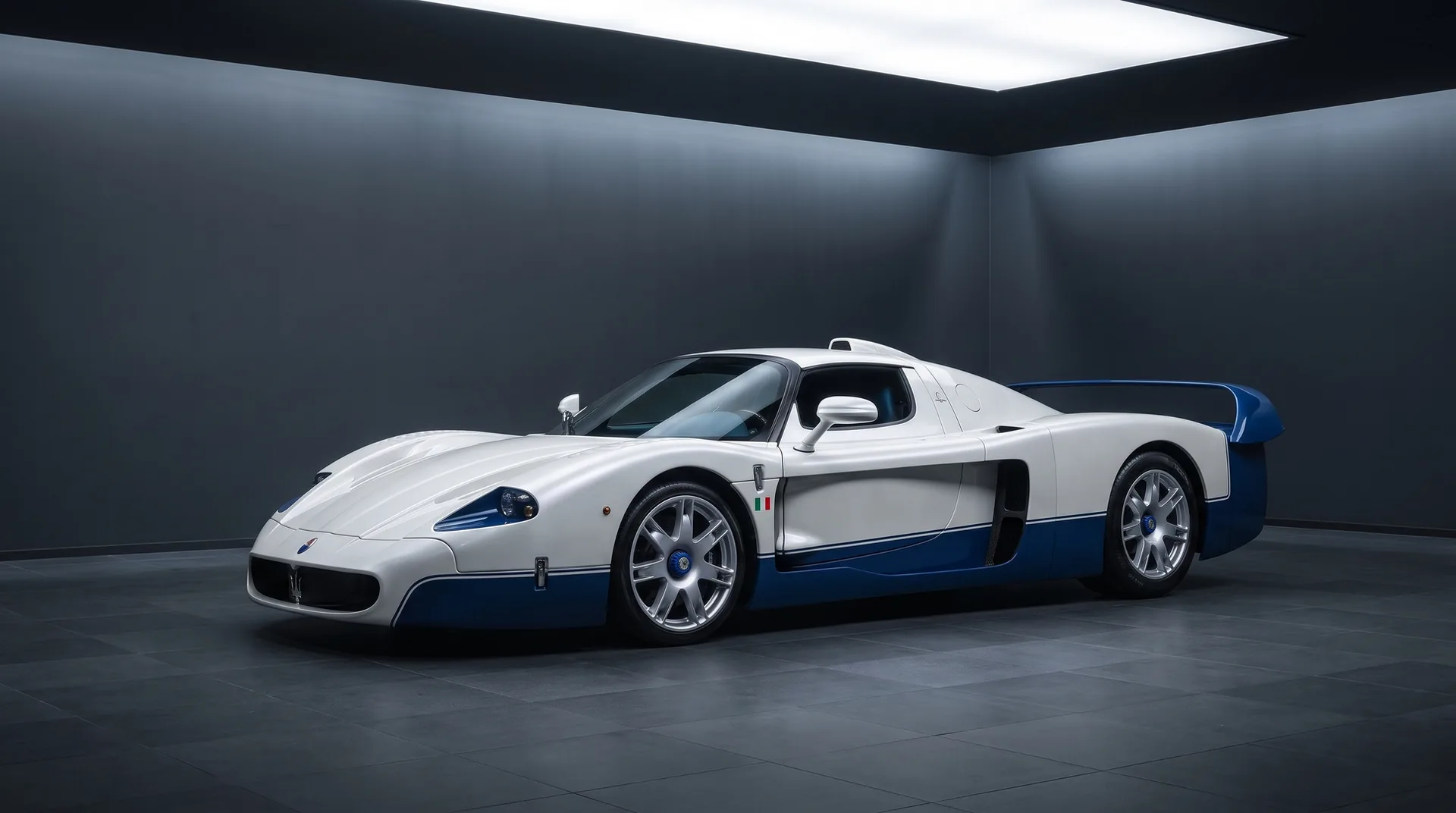
The obvious rival was the Porsche 959, a technically complex all-wheel-drive car with adjustable ride height and sequential turbocharging. Ferrari answered with subtraction: rear-wheel drive, a manual gearbox, composite panels, pull-cord door releases and sliding plastic side windows on early cars. Against the Maserati MC12 and other later homologation specials, the F40 stands out for being built to a philosophy rather than to a rulebook.
Why the Ferrari F40 Became a Legend
The F40 created the modern collector supercar template: limited enough to feel special, dramatic enough to dominate a bedroom wall, and technically advanced without filtering out the driver. It remains the benchmark for a Ferrari that behaves more like a competition car with number plates than a luxury product.
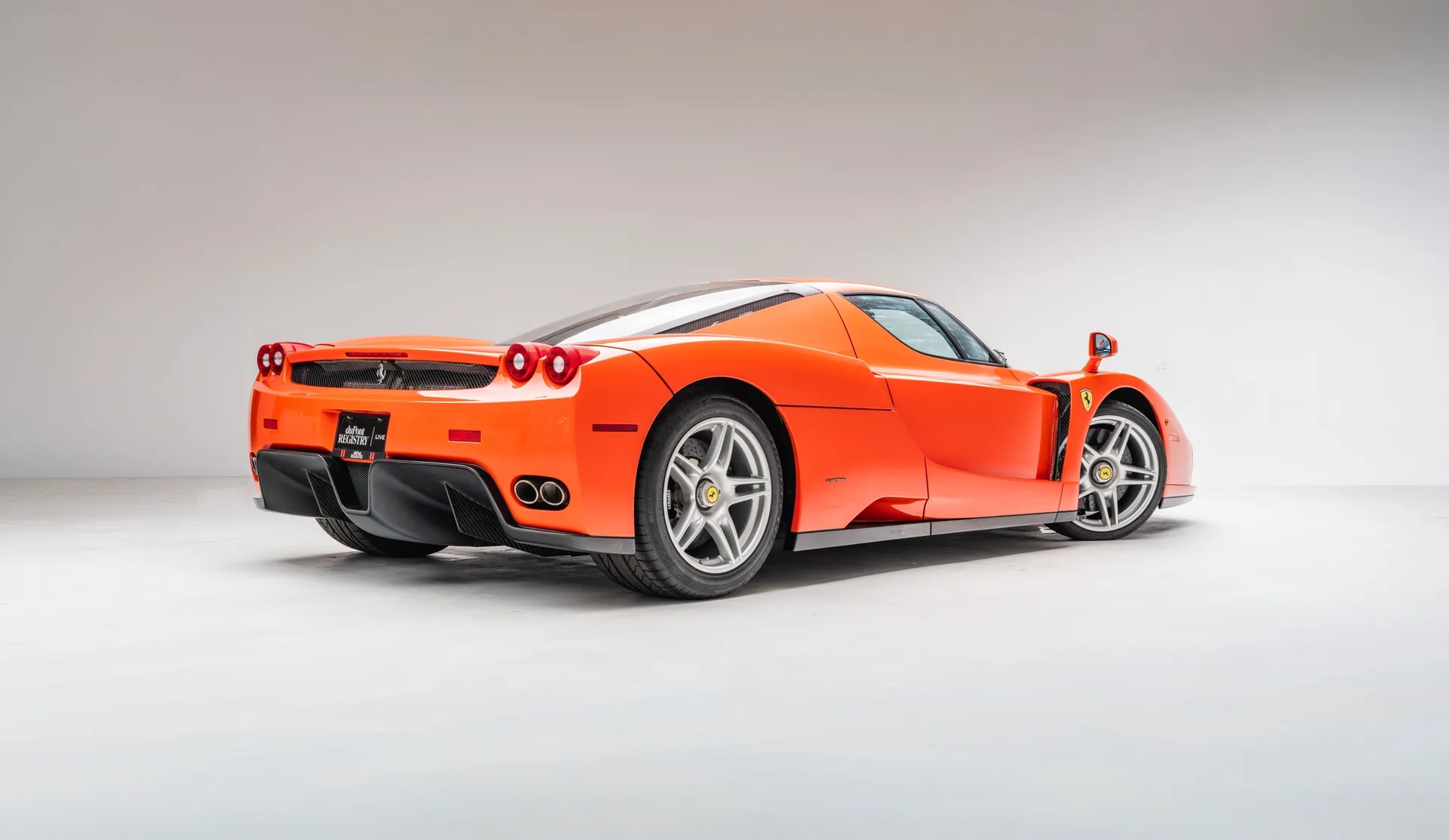
That reputation also shaped the cars that followed. The F50, Enzo, LaFerrari and F80 each answered the same question with the technology of their decade, and each is measured against the F40. The Ferrari Enzo and the Ferrari 512 M in the Batman Garage collection trace the same Maranello line from different directions.
Batman Garage Collector Verdict
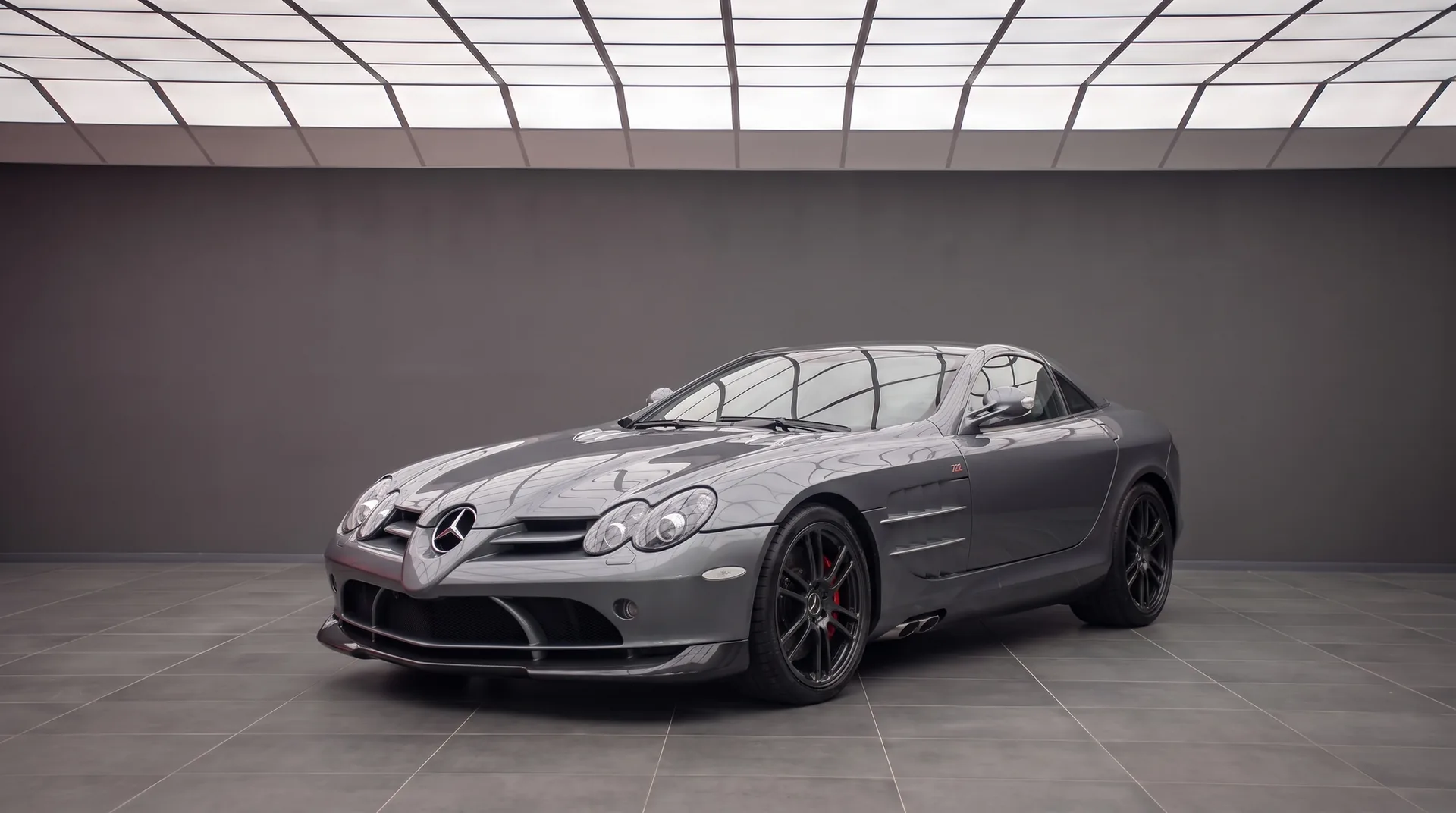
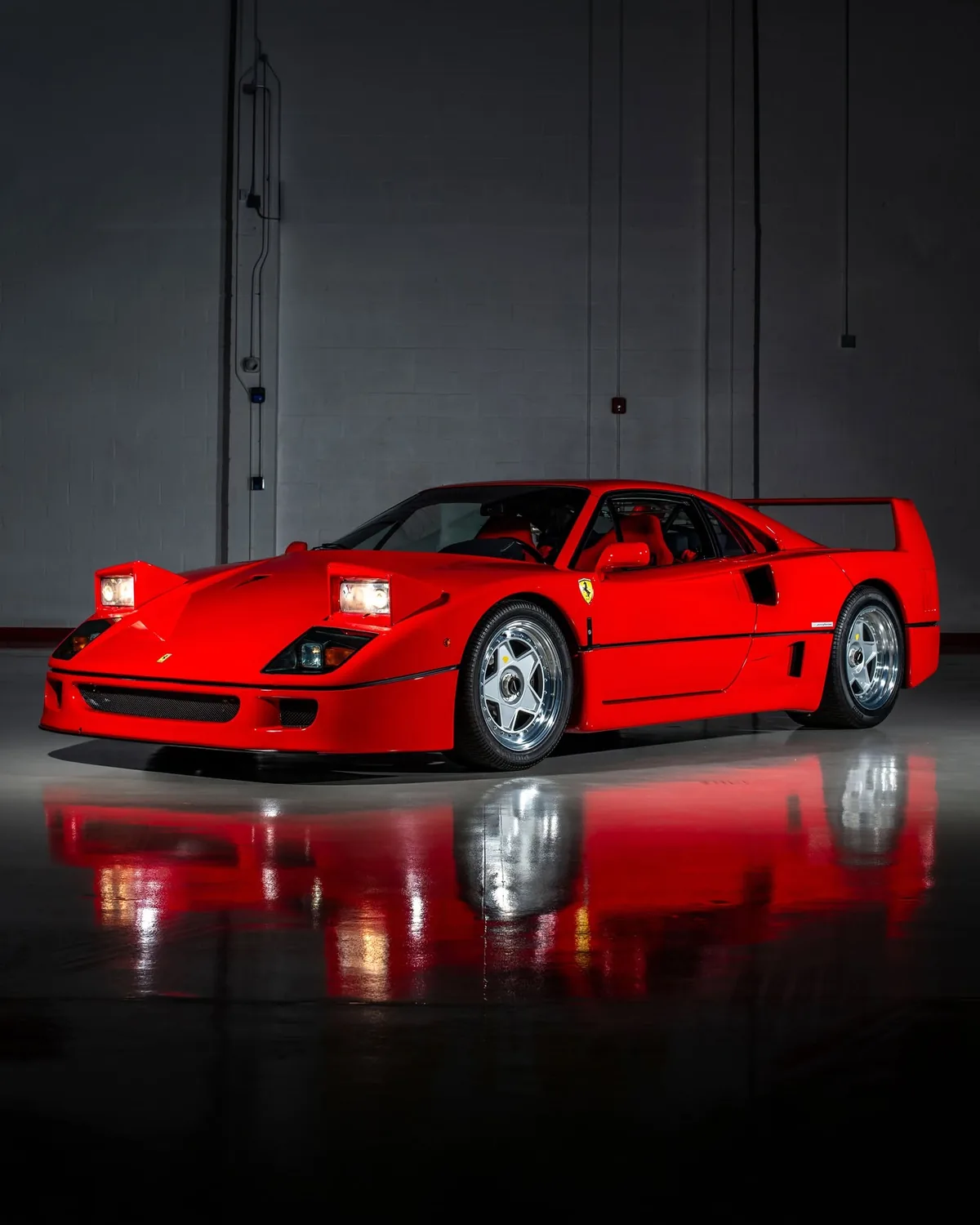
The Ferrari F40 earns its place in the Batman Garage Legendary Cars collection because it has a complete identity. Its performance figures remain part of the story, but its real value is the way the design, engineering and era align. This is not merely a fast car from 1987 to 1992; it is a machine that changed how enthusiasts define a supercar. Values sit firmly in seven figures for well-documented examples, and provenance, chassis history, service records and originality should always be verified before any purchase. A different interpretation of the same collector logic sits alongside it in the Mercedes-Benz SLR McLaren 722 Edition.
Frequently Asked Questions
What makes the Ferrari F40 special?
The F40 was the final Ferrari developed while Enzo Ferrari was still at the company, and it is the purest expression of the late-eighties supercar: a 2,936 cc twin-turbo V8, a gated five-speed manual gearbox, composite bodywork and almost no insulation between the driver and the machinery.
How much power does the Ferrari F40 have?
478 hp at 7,000 rpm and 577 N·m of torque from a 2,936 cc twin-turbocharged 90-degree V8, driving the rear wheels through a five-speed manual gearbox. US-market cars are quoted slightly higher at 484 PS.
How fast is the Ferrari F40?
Ferrari quoted a top speed of 324 km/h and 0–100 km/h in approximately 4.1 seconds, with a dry weight of around 1,100 kg. In period the F40 was among the first production cars credited with crossing the 200 mph mark.
How many Ferrari F40s were built?
Production ran from 1987 to 1992 and the widely cited total is 1,315 cars, with some sources listing 1,311 and 213 units built to US specification. The original plan was for only 400 cars.
Does the Ferrari F40 have a manual gearbox?
Yes. Every F40 uses an exposed gated five-speed manual, without power steering, ABS or driver aids. That mechanical directness is central to the car's reputation.
Is the Ferrari F40 a collector car?
Yes. Its historical relevance, production story and unmistakable character make it an established enthusiast and collector reference. Individual provenance, condition, originality and jurisdiction-specific documentation must always be checked separately.