Ferrari 512 M: The Last Testarossa, and Why You Have to Drive It
This 512 M belongs to a friend, the same friend who owns the SLS AMG. The Testarossa is a legend of the 1980s.
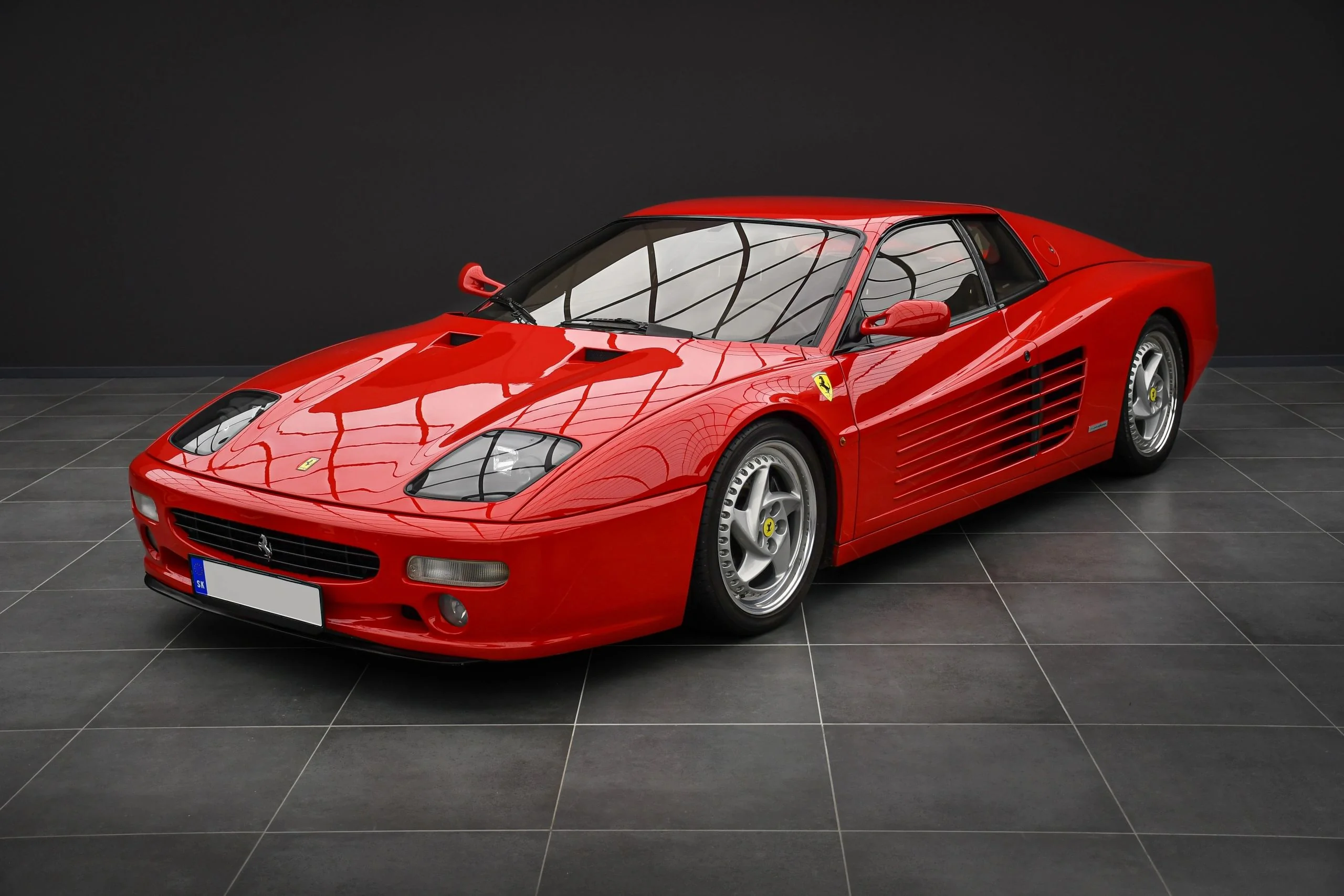
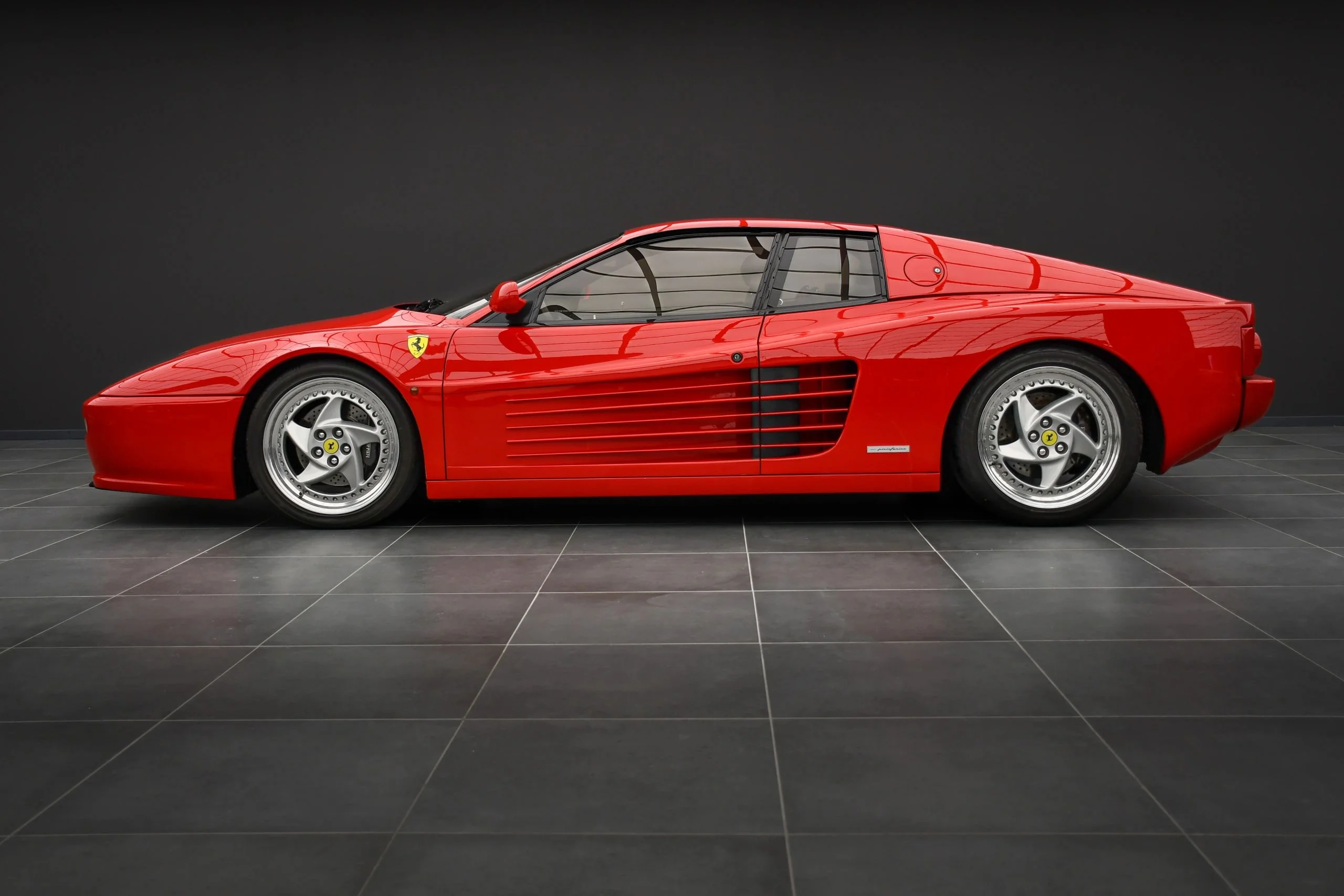
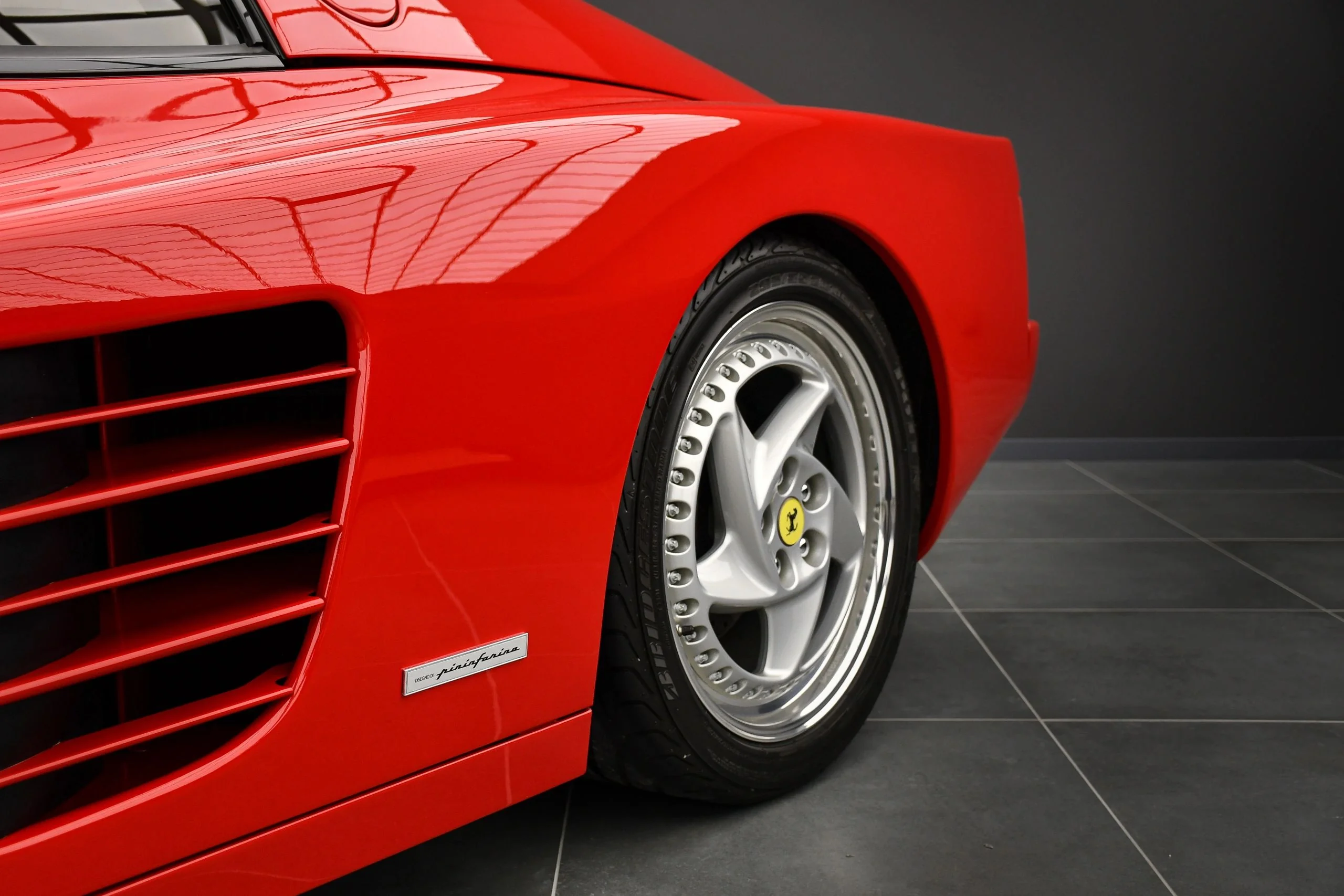
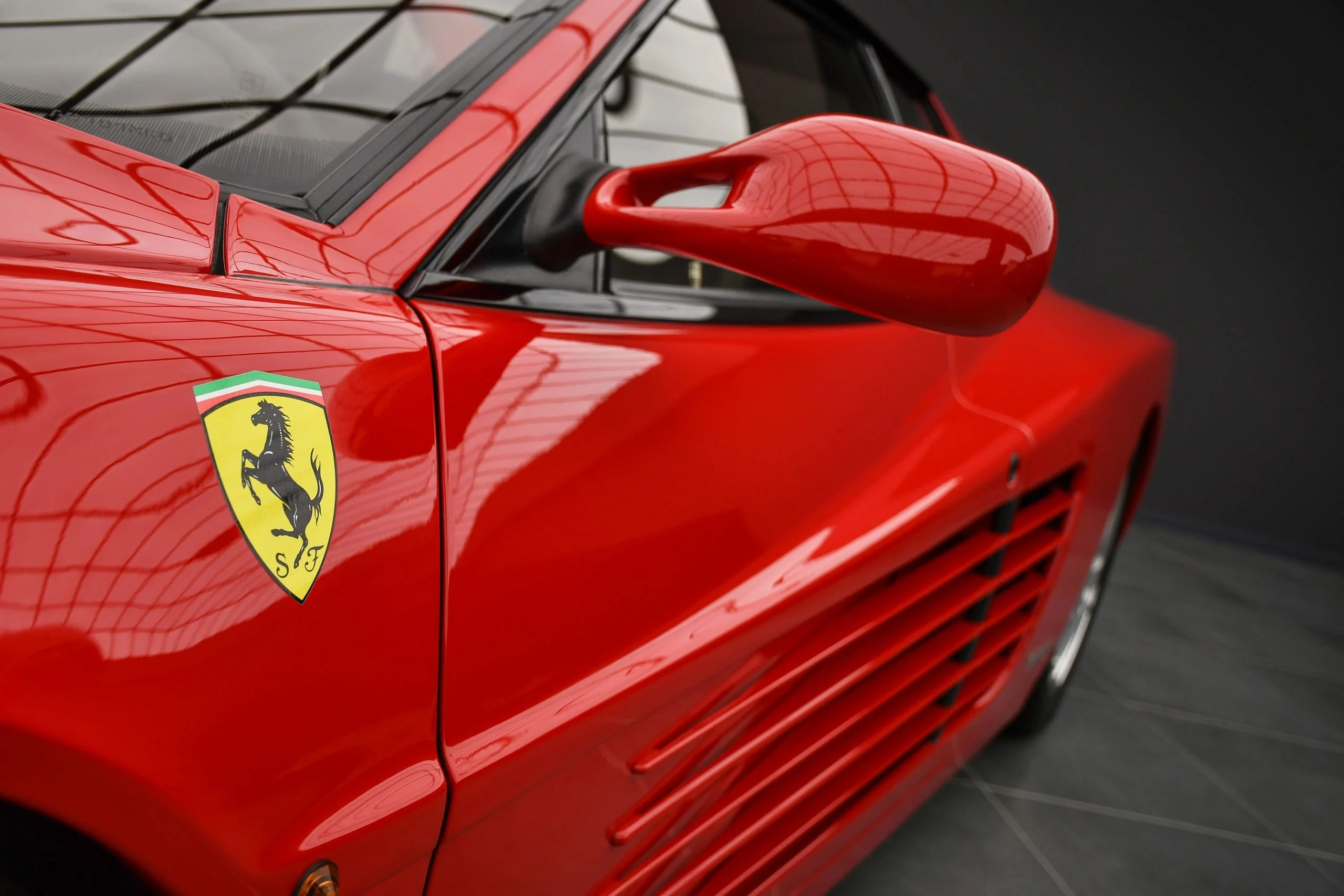
The design is perfect. It is a beautiful design, and the strakes along the doors are legendary. The car uses a tubular frame, something no one uses today, but at the time it was normal.
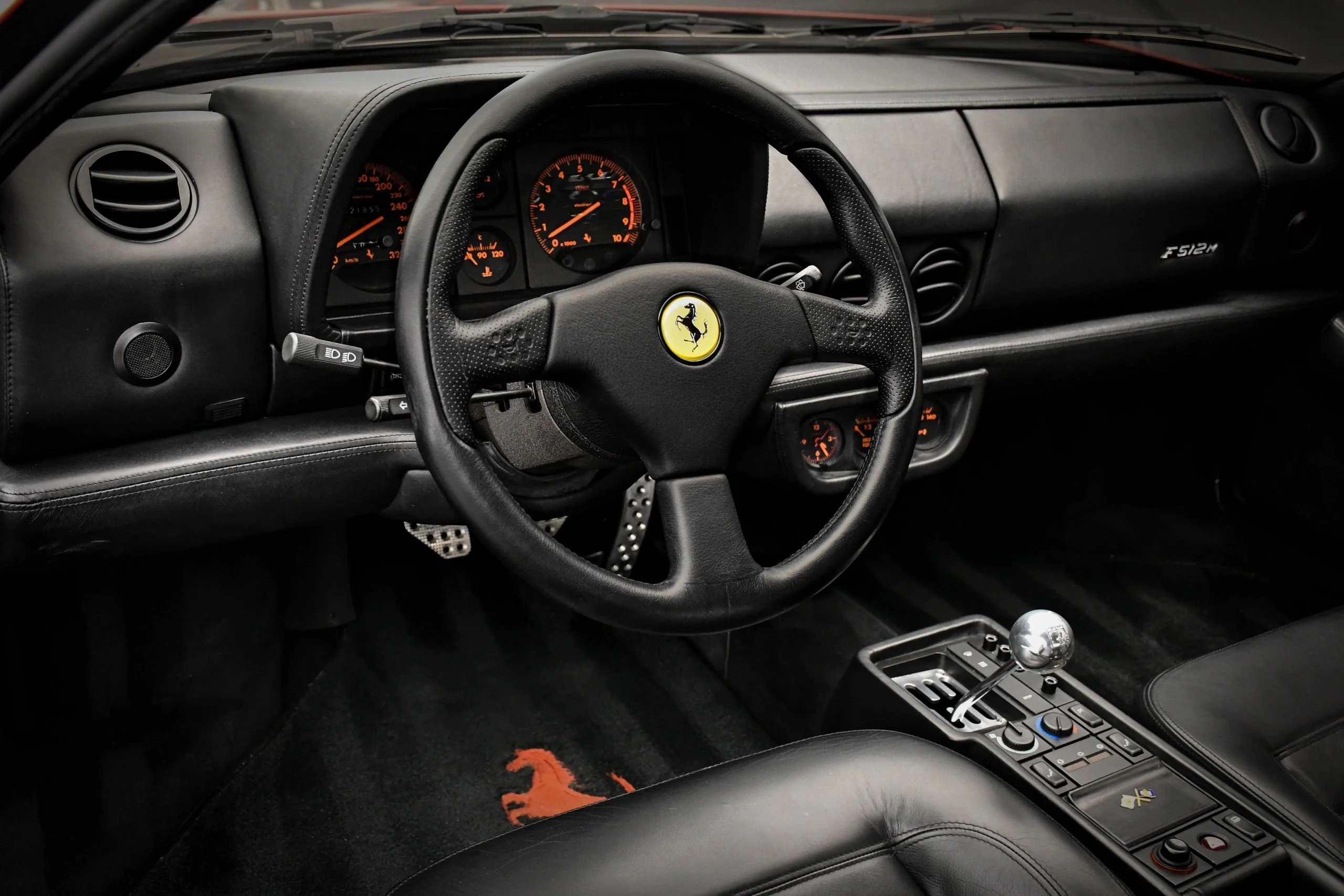
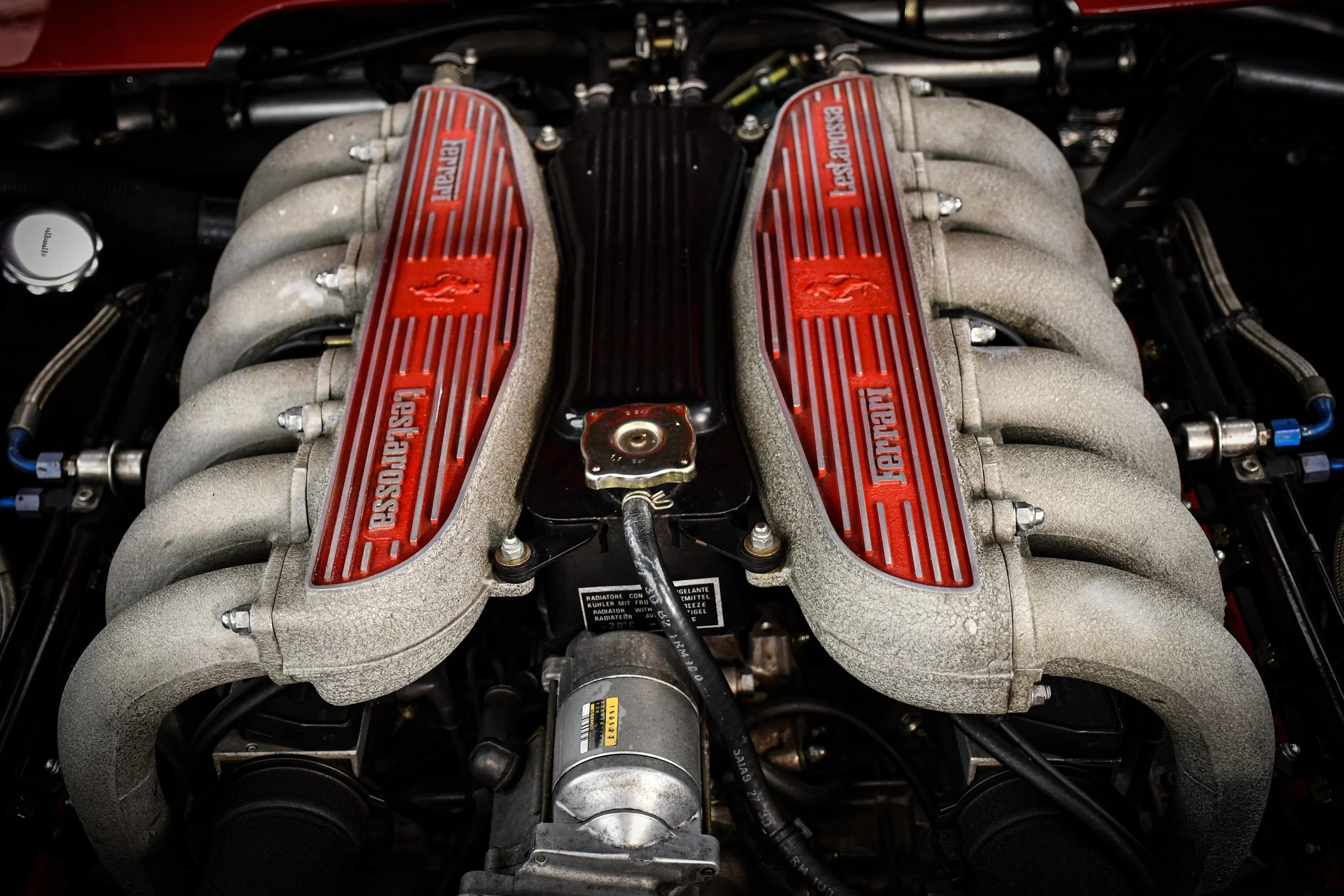
An engine with emotion. The flat-12 is excellent and sounds beautiful. The car is a little harder to drive, and its handling is only average by today's standards. But it has an emotion that cannot be described. You have to try it.
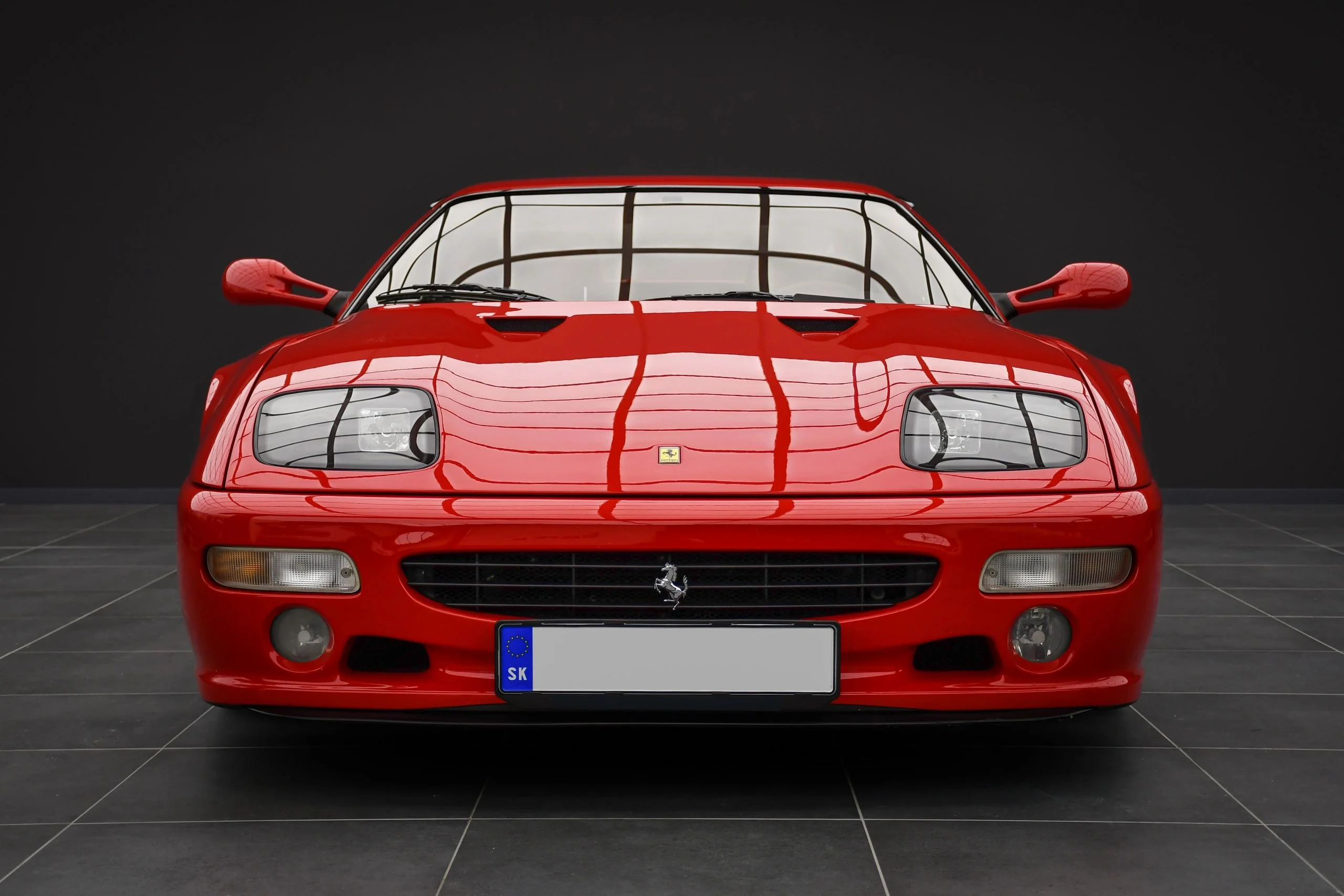
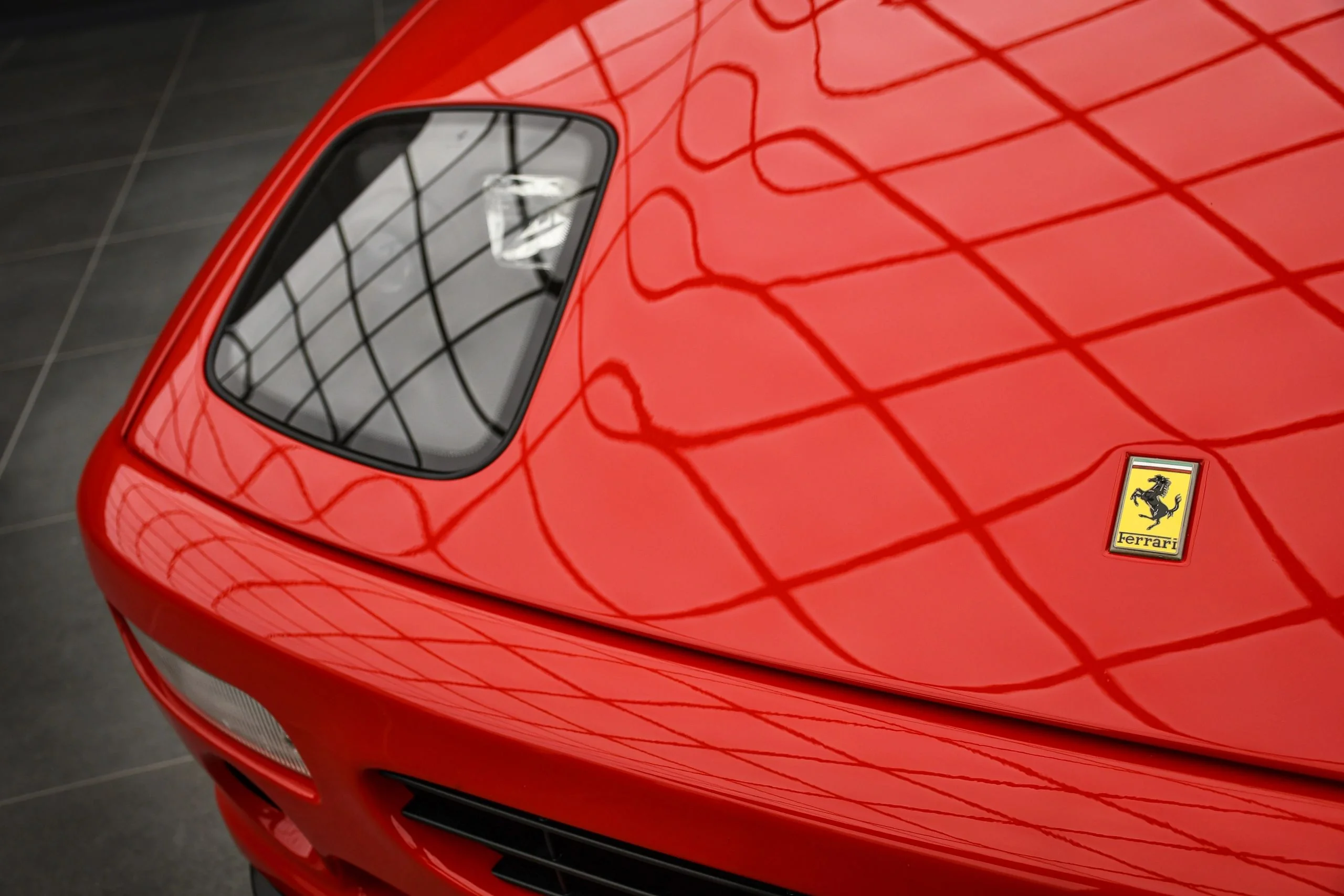
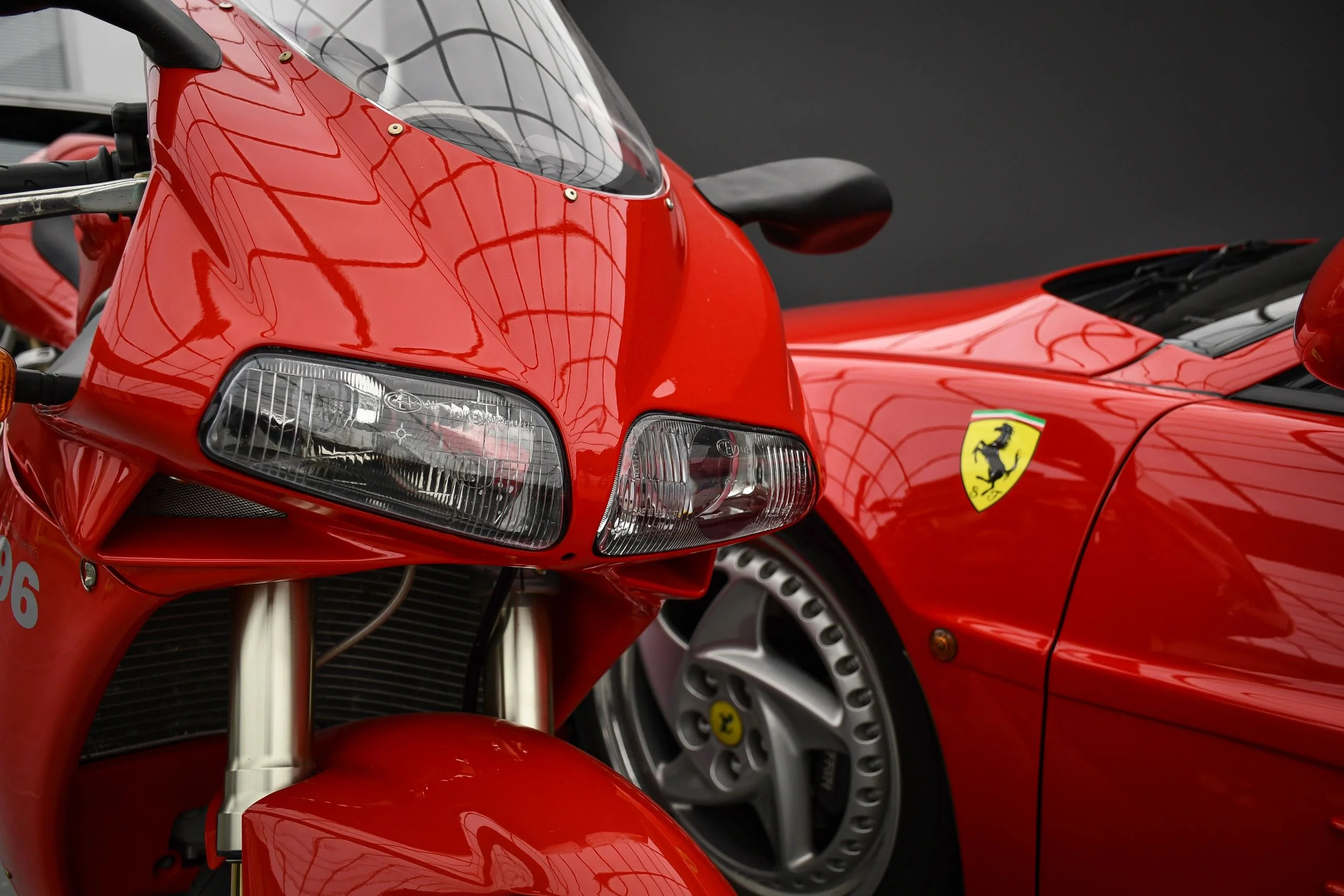
Why the 512 M is the one to have. The 512 M of 1994–1996 was the final evolution of the Testarossa line. It is the most powerful version, with 440 PS from the 4.9-litre flat-12, and it is easy to recognise by its fixed headlights, which replaced the famous pop-ups. As the last and rarest of the line, it is the Testarossa collectors look for most.
Ferrari 512 M Testarossa — Owner FAQ
Is the Ferrari 512 M hard to drive?
It is a little harder to drive than a modern Ferrari, and its handling is average by today's standards. The engine and the design make up for it.
What makes the Testarossa design special?
The side strakes on the doors, which feed air to the side-mounted radiators, made the Testarossa one of the most recognisable cars of the 1980s.
What is the difference between the Testarossa and the 512 M?
The 512 M is the last and most powerful version, with 440 PS, fixed headlights instead of pop-ups and a series of weight-saving changes.
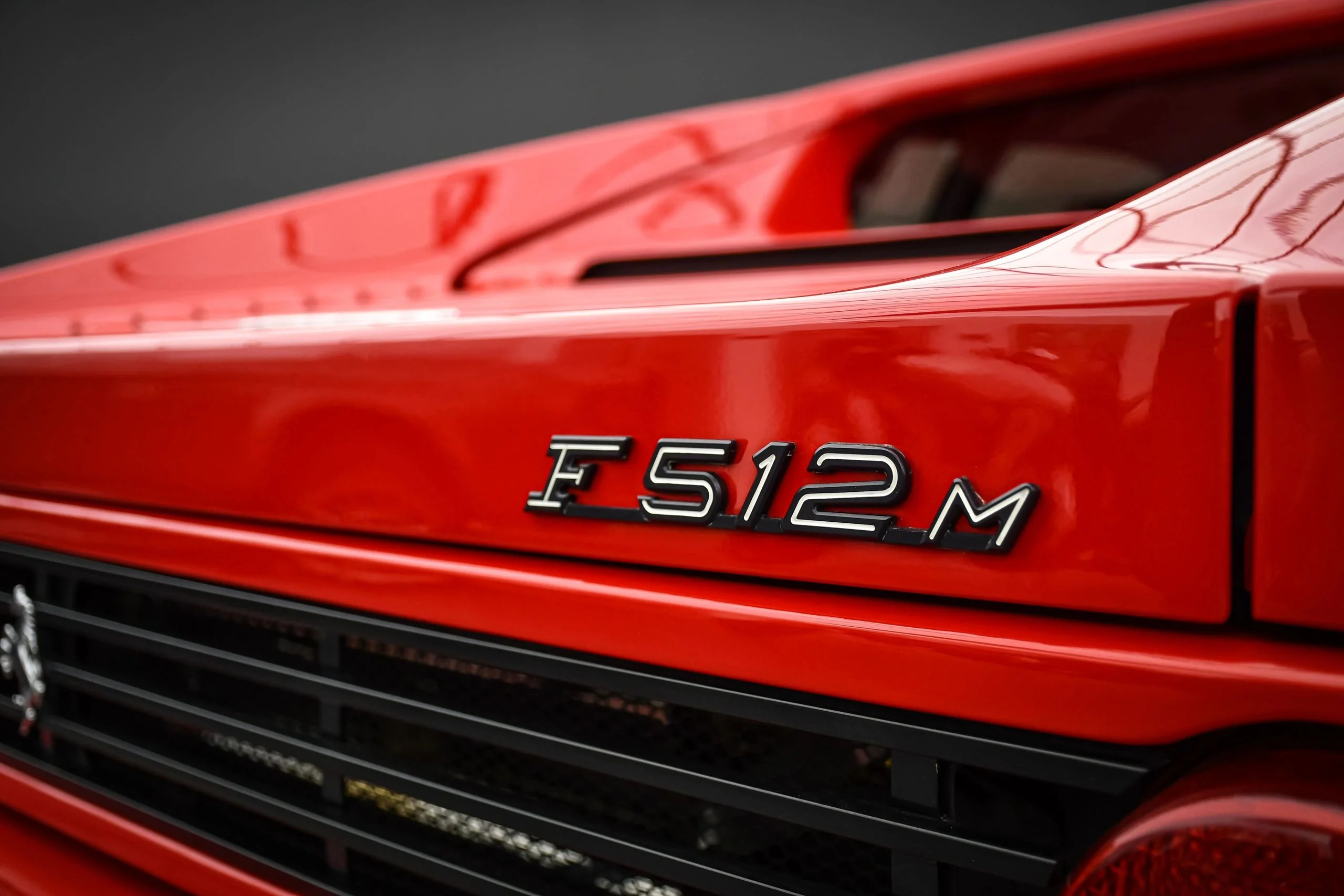
The 512 M, properly the F512 M, is the last of the Testarossa family. Ferrari built the Testarossa from 1984, revised it as the 512 TR in 1991 and closed the line with this car in 1994. The flat-12 is not a true boxer but a 180-degree V12 of 4.9 litres, mounted behind the seats, and in F512 M form it is quoted at 440 hp thanks to titanium connecting rods, a lighter crankshaft and reworked intake and exhaust.
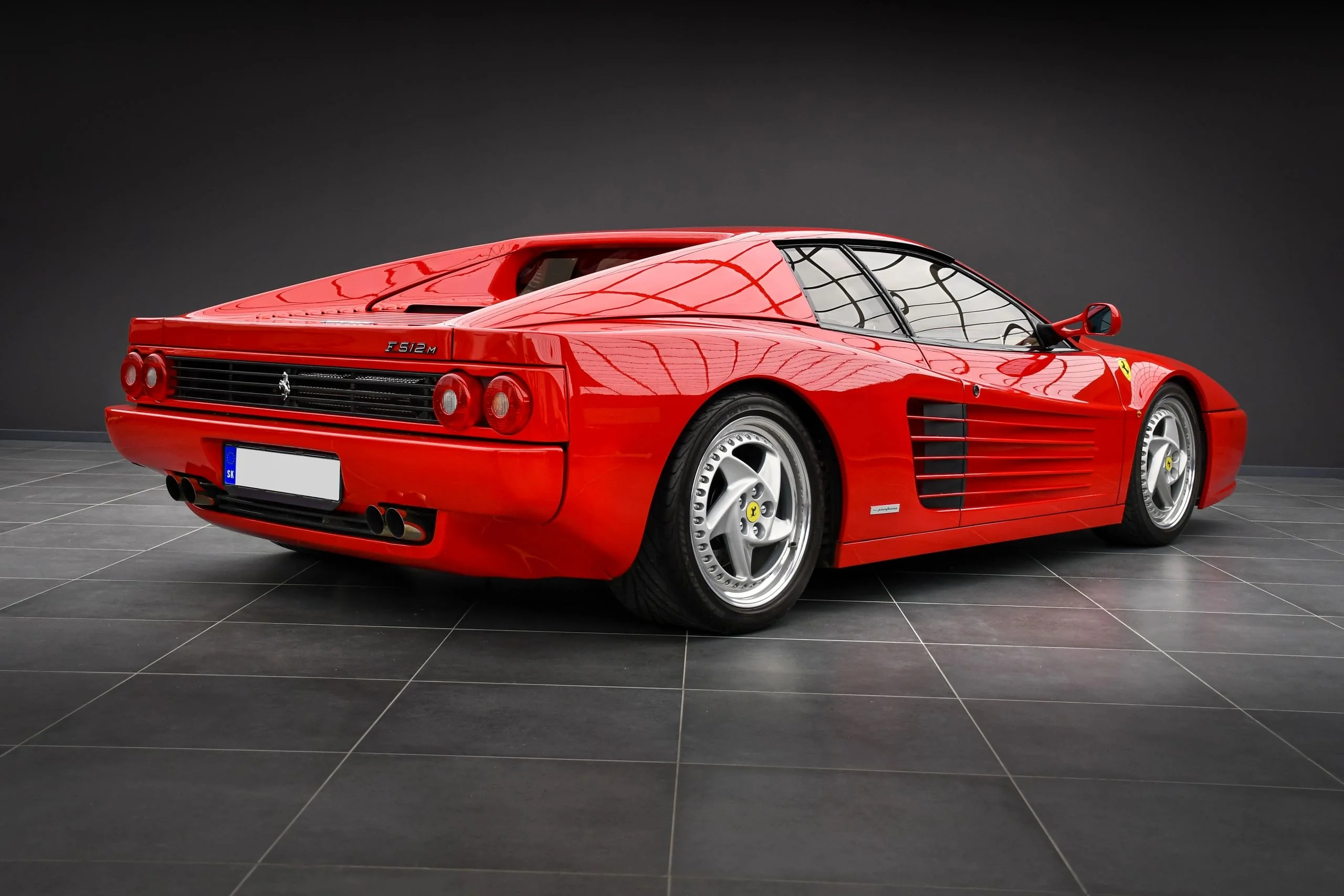
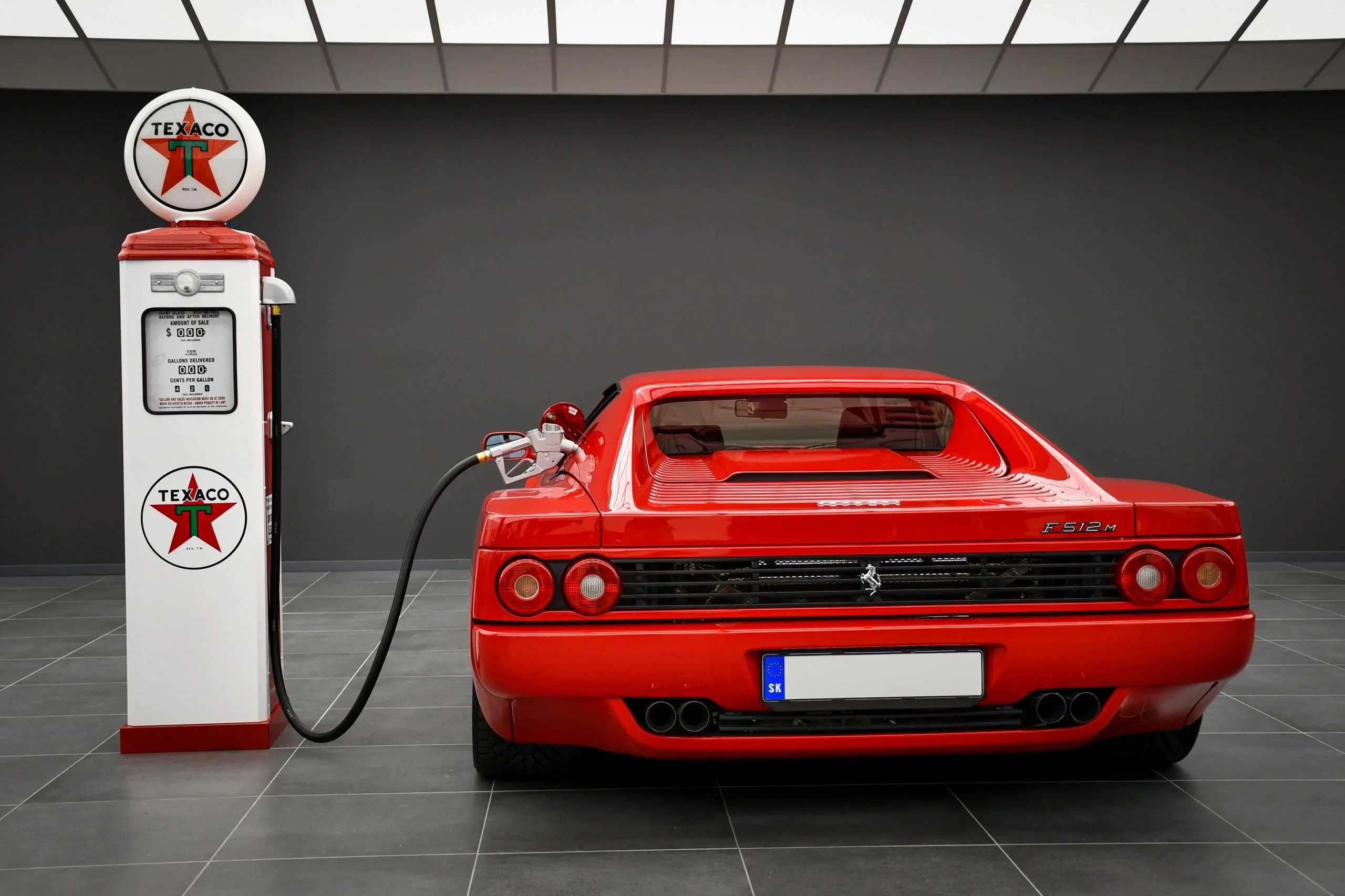
The visual changes are easy to read once you know them. The pop-up headlights of the earlier cars gave way to fixed units behind clear covers, and four round tail lights returned in place of the grille panel across the tail. The side strakes everyone remembers were never decoration: they feed the radiators Ferrari moved from the nose to the flanks, which is also why the car is so wide at the rear. Production ran to a little over five hundred cars in two years, which makes the F512 M the rarest of the Testarossas and the one that ended a twenty-year run of flat-12 Ferrari road cars that had started with the Berlinetta Boxer.
Why the Flat-12 Testarossa Is the One to Keep
Values have followed that engine. Nothing Ferrari has built since uses the layout, and the character it produces, wide, low, torquey and slightly unhurried, belongs to no other era. In period the Testarossa was measured against the Ferrari F40 and the Lamborghini Countach 5000 QV, and the gap in character is still the interesting part: the F40 is a stripped twin-turbo racer for the road, the Countach a wedge with a V12 and no manners, the Testarossa a genuine grand tourer that happens to carry twelve cylinders.
The name has since come back on a very different car, which we set against Lamborghini's V12 in Revuelto vs 849 Testarossa. In the Batman Garage collection this is the oldest Ferrari, photographed alongside the modern GTC4 Lusso, and auction context for classic Ferrari twelves is in our report on the Enzo Rosso Dino record.
Specifications
| Make | Ferrari |
| Model | 512 M Testarossa |
| Engine | 4.9L Flat-12 |
| Power | 440 hp |
| Type | Classic Supercar |