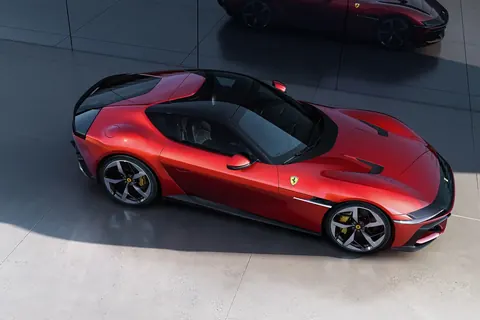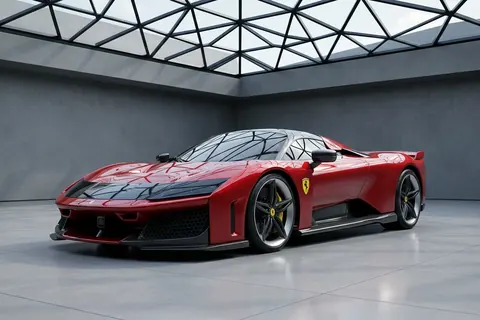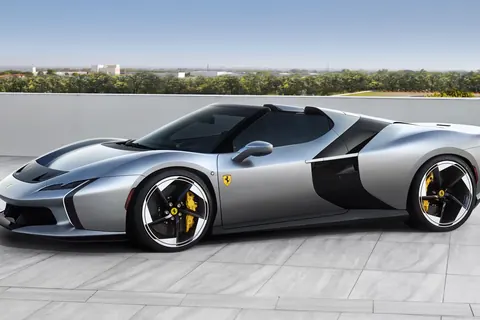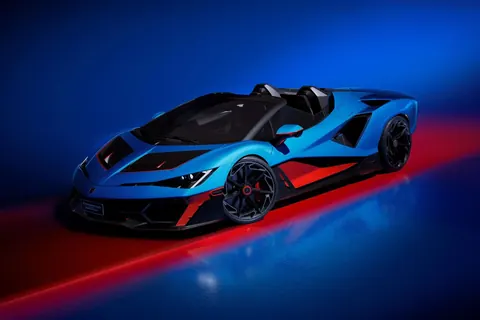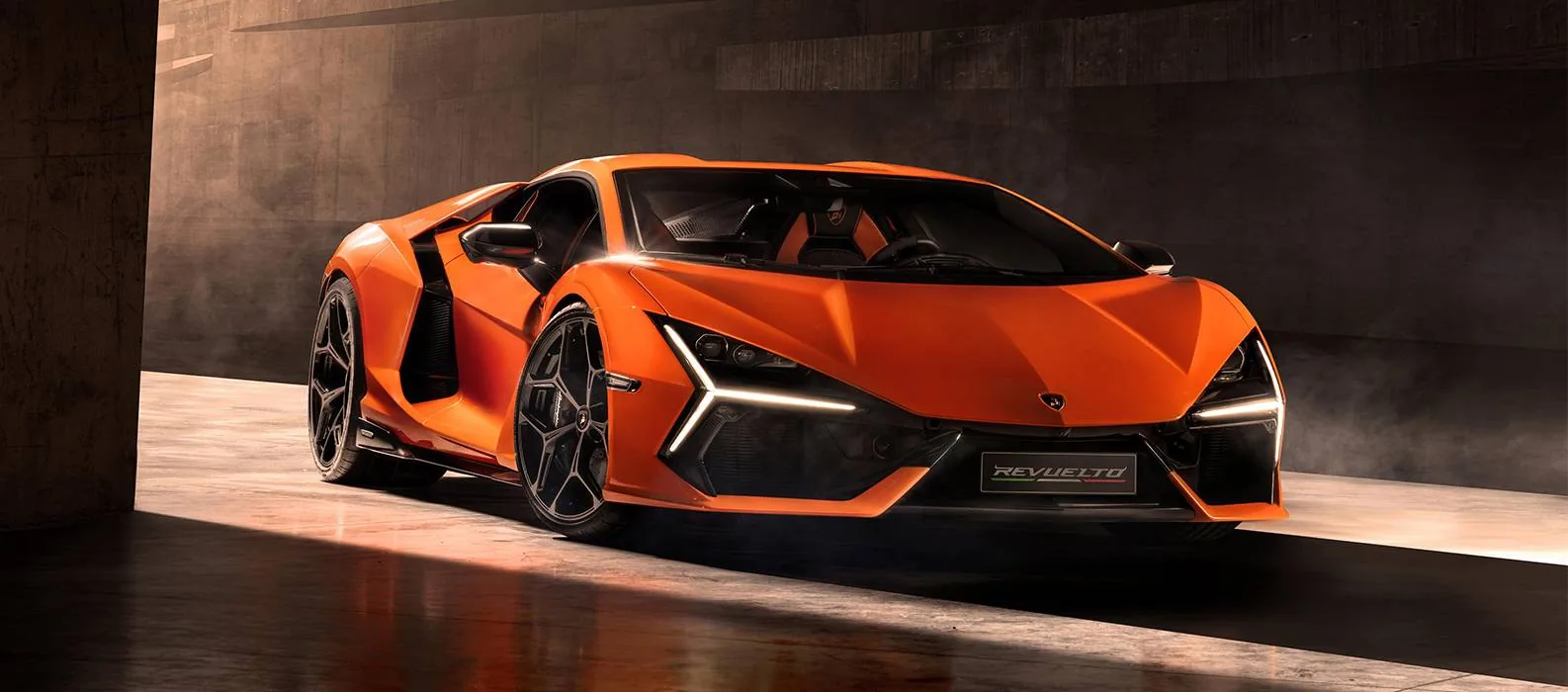
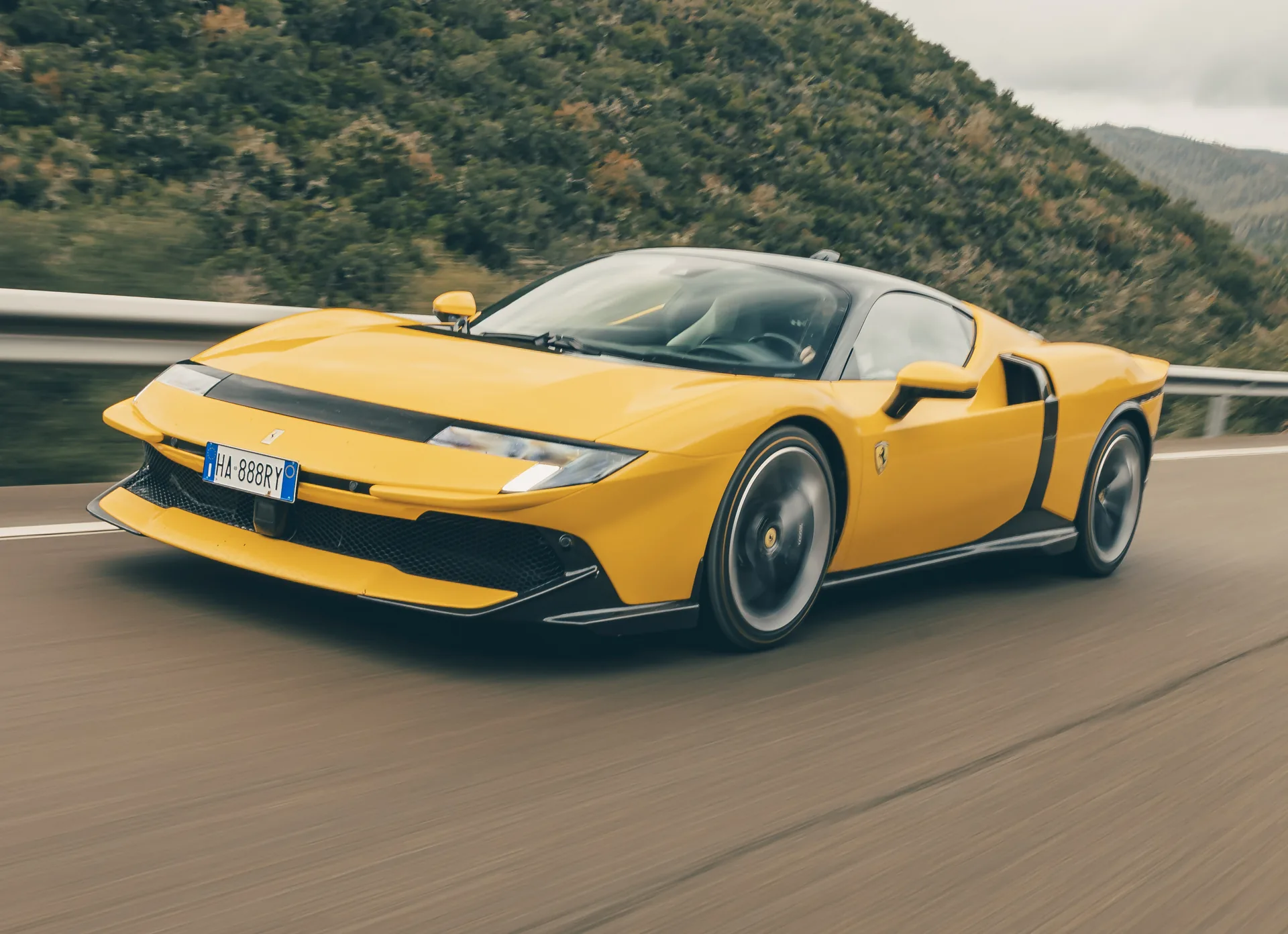
Two Italian flagships now define the top of the plug-in hybrid supercar segment. The Lamborghini Revuelto, unveiled in March 2023 as the first super sports V12 HPEV from Sant’Agata, delivers 1,015 CV from a 6.5-litre naturally aspirated V12 plus three electric motors. The Ferrari 849 Testarossa, revealed in Milan on 9 September 2025 as the successor to the SF90 Stradale, counters with 1,050 cv from a 3.99-litre twin-turbo V8 and three electric motors — a record for a production Ferrari. This head-to-head compares specifications, performance, weight, price and design philosophy of both cars.
Lamborghini Revuelto
- 6,498.5 cc naturally aspirated V12 (L545)
- 3 electric motors — HPEV plug-in hybrid
- 1,015 CV total system output
- 2.5 s 0–100 km/h, >350 km/h top speed
- Debut: 2023, deliveries from 2024
- Base price ~€502,585
Ferrari 849 Testarossa
- 3,990 cc twin-turbo V8 (F154FC)
- 3 electric motors + 7.45 kWh battery
- 1,050 cv total system output
- <2.3 s 0–100 km/h, >330 km/h top speed
- Debut: 9 Sept 2025, deliveries Q2–Q3 2026
- Base price €460,000 (coupe)
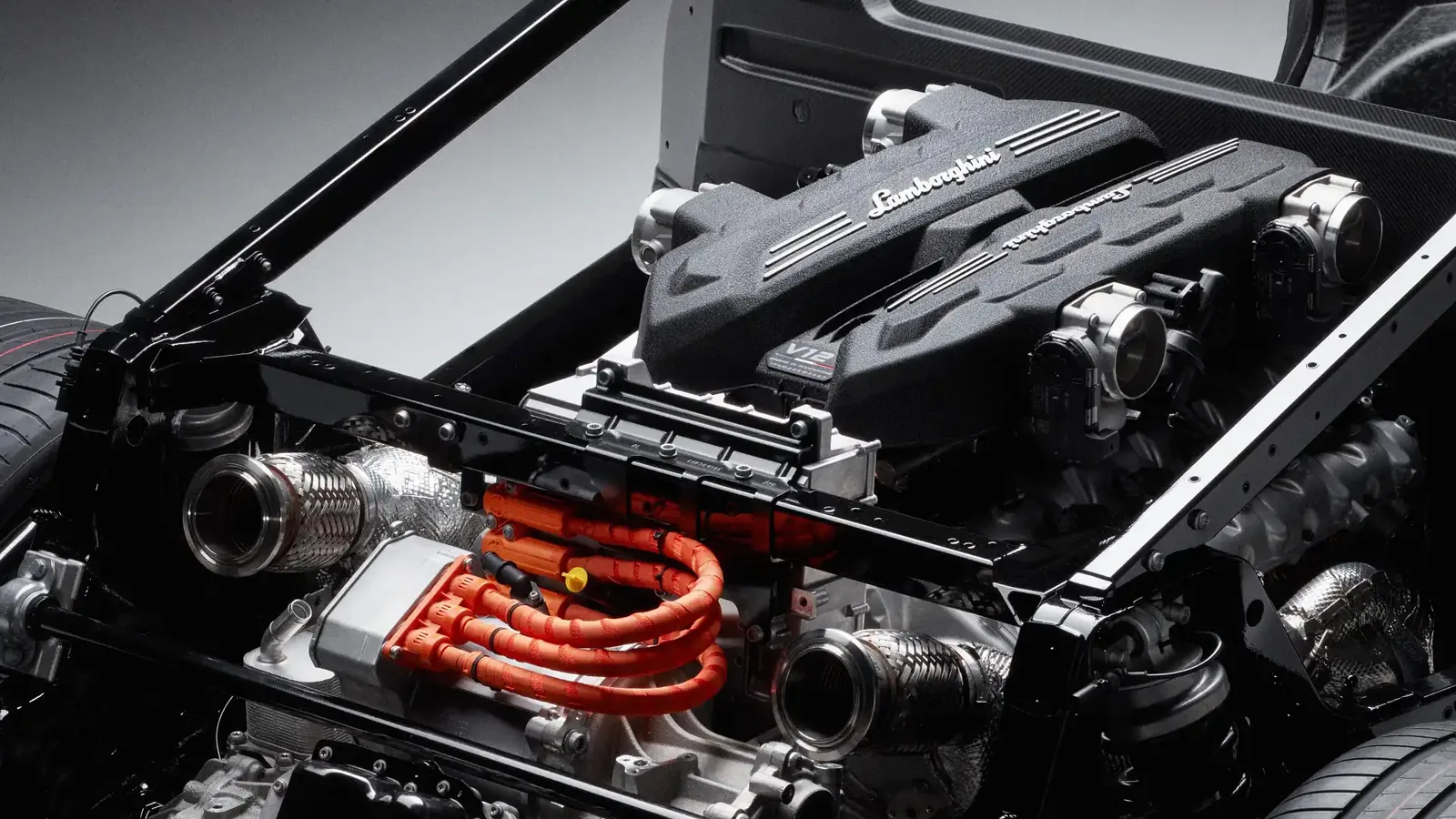
Powertrain Philosophy: Naturally Aspirated V12 vs Twin-Turbo V8
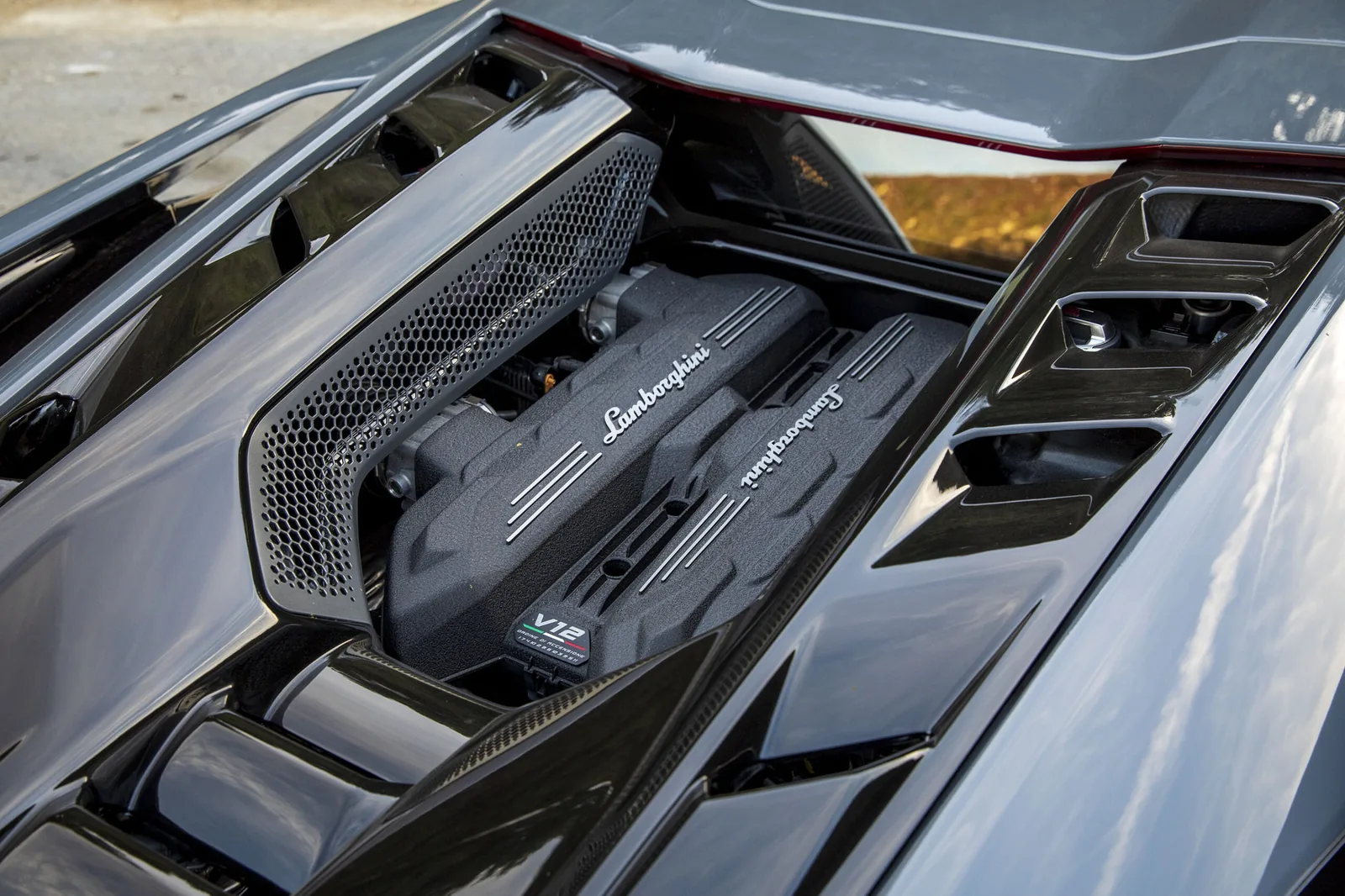
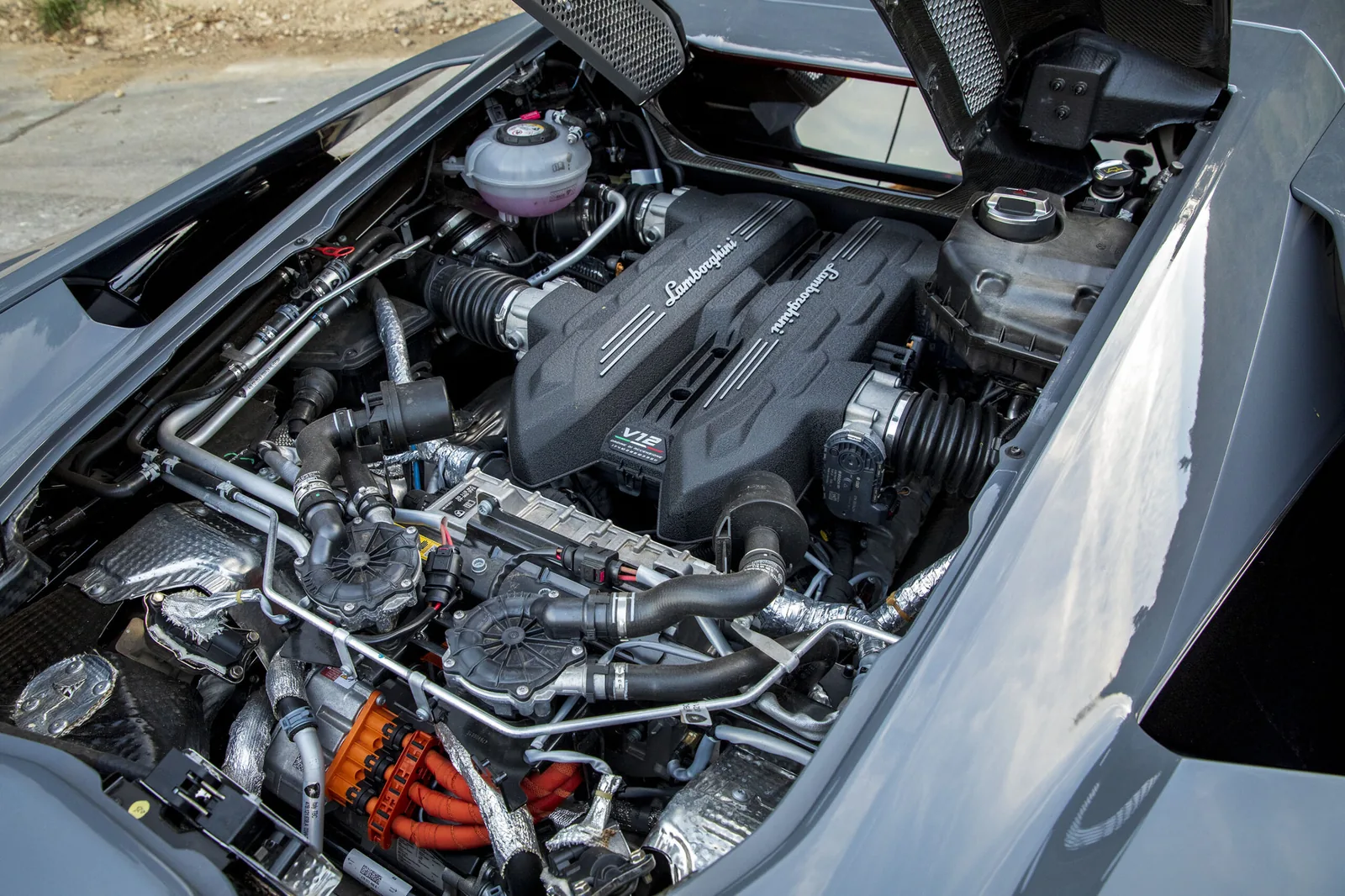
The most immediate difference between the two cars is the internal-combustion architecture. The Revuelto retains a large-displacement, high-revving 6,498.5 cc naturally aspirated 65-degree V12 (codename L545) developed at Sant’Agata. It produces 825 PS at 9,250 rpm and revs to a 9,500 rpm redline, with peak torque of 725 N·m at 6,750 rpm.
The 849 Testarossa replaces the SF90’s 4.0-litre V8 with a revised 3,990 cc twin-turbo 90-degree V8 (F154FC) that generates 830 cv at 7,500 rpm — giving it the highest specific output of any road-car V8 at 208 cv per litre. Peak torque is 842 N·m at 6,500 rpm, redline 8,300 rpm. Ferrari has focused on turbo-response mapping and lower-end tractability rather than absolute rev range.
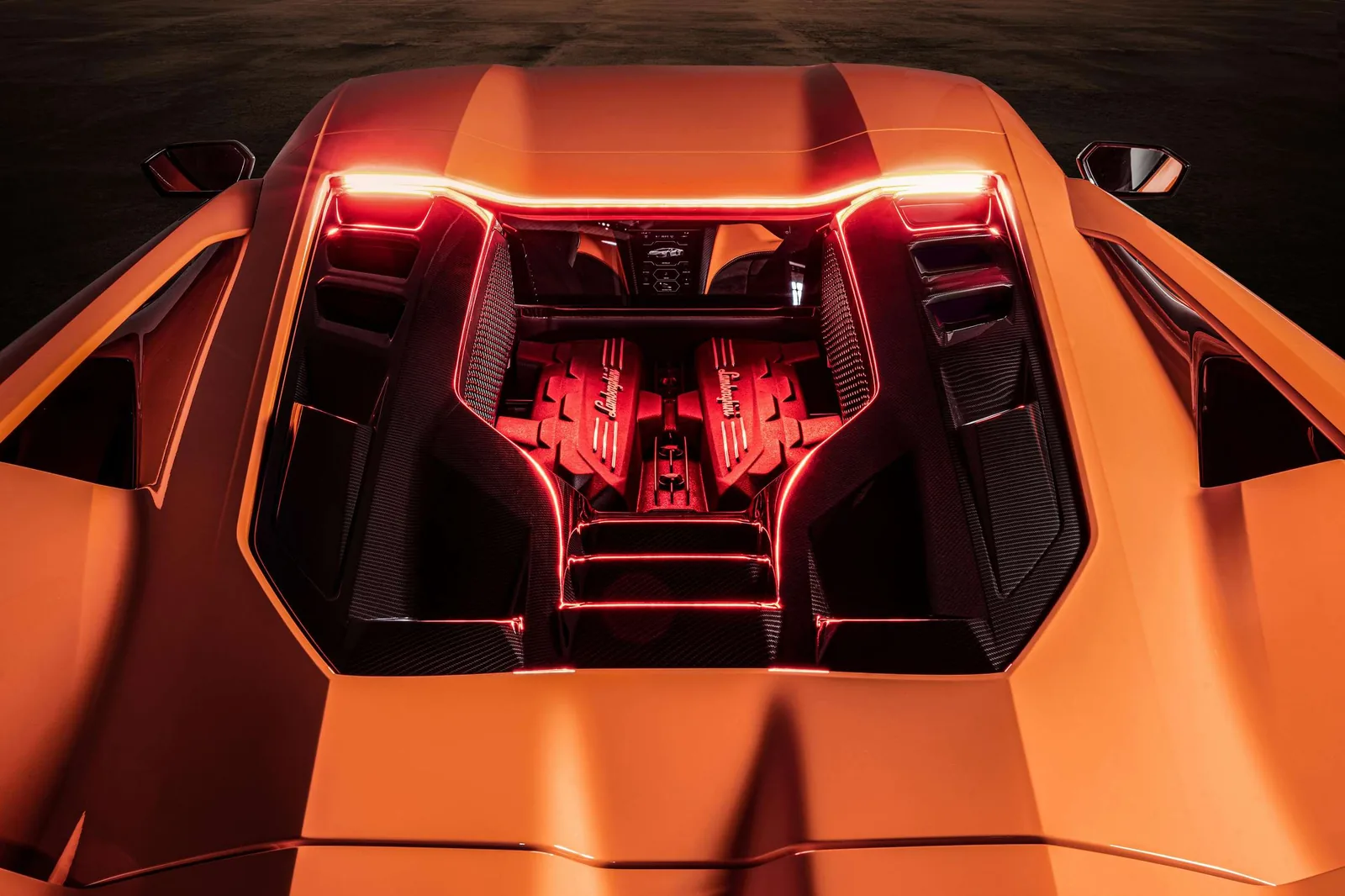
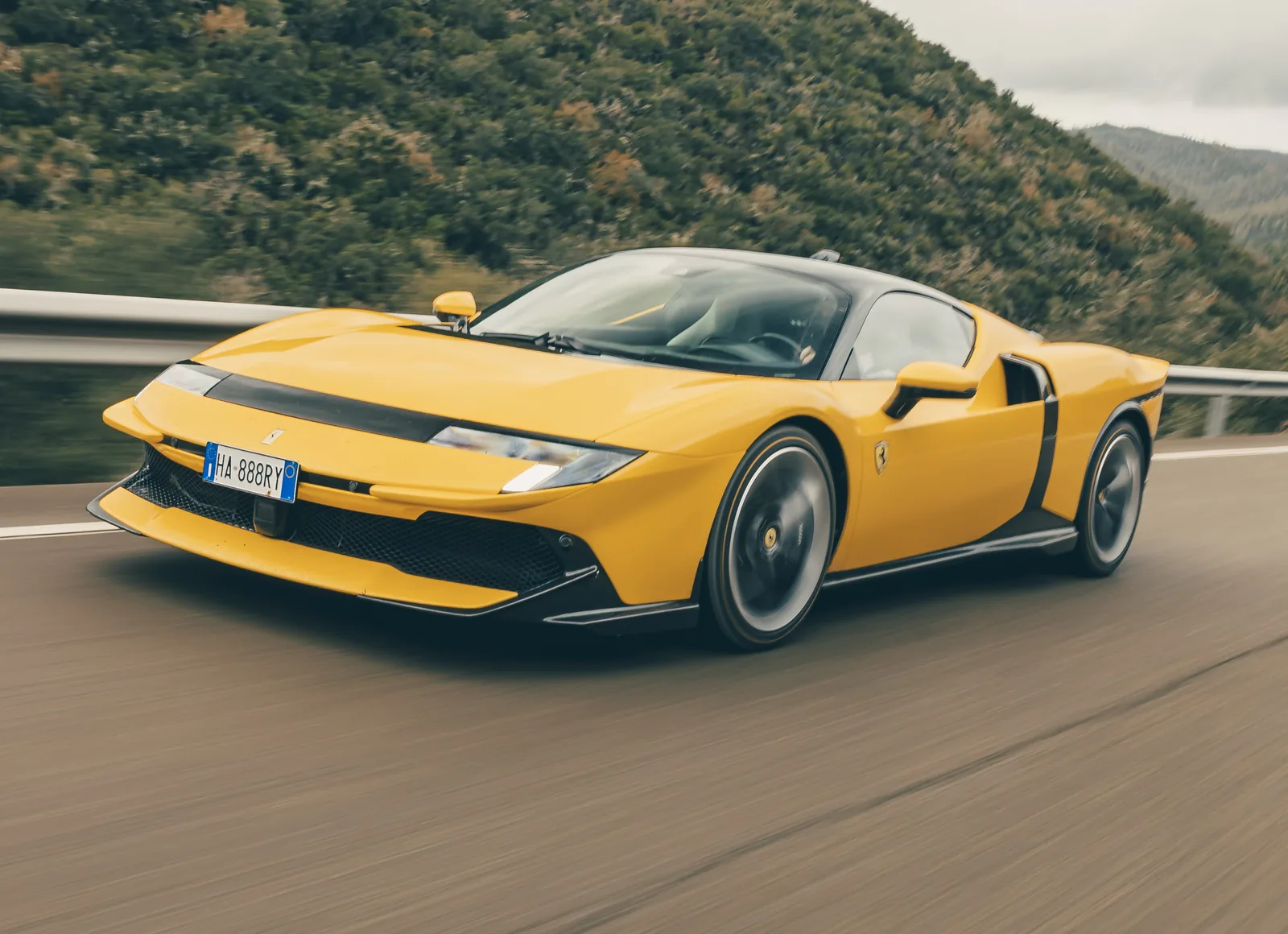
Both cars use three electric motors. In the Revuelto, two axial-flux units drive the front wheels (150 PS each) and a third is integrated with the gearbox at the rear (150 PS), producing 190 PS combined electric output and 807 N·m of system torque. The Testarossa uses two front-axle motors and a rear-mounted MGU-K, together delivering 220 cv of electric output.
Total System Power — Ferrari Sets the Record
Combined system output favours the Ferrari: 1,050 cv (772 kW) versus 1,015 CV (747 kW) for the Lamborghini — a 35 cv margin. In Ferrari’s history the 849 Testarossa is the most powerful road car the marque has produced, exceeding the LaFerrari, SF90 Stradale and 12Cilindri. For Lamborghini, the Revuelto is the most powerful series-production model in the company’s history.
Battery capacity is another point of separation. The Revuelto carries a 3.8 kWh lithium-ion pack in the central tunnel, sized for launch performance and short EV bursts rather than commuting; WLTP-quoted pure-electric range is 10 km. The 849 Testarossa uses a 7.45 kWh battery and can travel up to 25 km on electricity alone under its own eDrive mode.
Performance — 0–100, 0–200 and Top Speed
Ferrari’s official 0–100 km/h figure is under 2.3 seconds, with 0–200 km/h in 6.35 seconds. Lamborghini quotes 2.5 seconds for 0–100 km/h and 6.6 seconds for 0–200 km/h. The Revuelto reclaims the advantage on top speed with over 350 km/h (217 mph), compared with the Testarossa’s over 330 km/h (205 mph) peak.
On the Fiorano test circuit the 849 Testarossa clocked 1’17.500, 1.2 seconds quicker than the SF90 Stradale. Lamborghini does not release Fiorano times — Revuelto development is centred on Nardò and Vallelunga — but the two cars sit in the same overall dynamic envelope.

Weight & Power-to-Weight — Ferrari’s Structural Advantage
The 849 Testarossa is notably lighter. Ferrari quotes a dry weight of 1,570 kg and a 45/55 weight distribution — giving a power-to-weight ratio of 1.5 kg/cv. The Revuelto’s dry weight is 1,772 kg (kerb 1,880 kg), producing a ratio of 1.75 kg/CV. The difference of roughly 200 kg reflects the Lamborghini’s larger displacement V12, its longitudinal packaging and its heavier structural aluminium sub-frames.
Both cars use carbon-fibre monocoques. The Revuelto tub is forged-carbon over aluminium sub-frames, while the Testarossa uses a full carbon architecture evolved from the SF90 platform. Braking figures are unusually explicit for the Ferrari: 100–0 km/h in 28.5 m and 200–0 km/h in 108.0 m, aided by the new ABS Evo control system and Ferrari’s FIVE grip estimator.
Design & Heritage
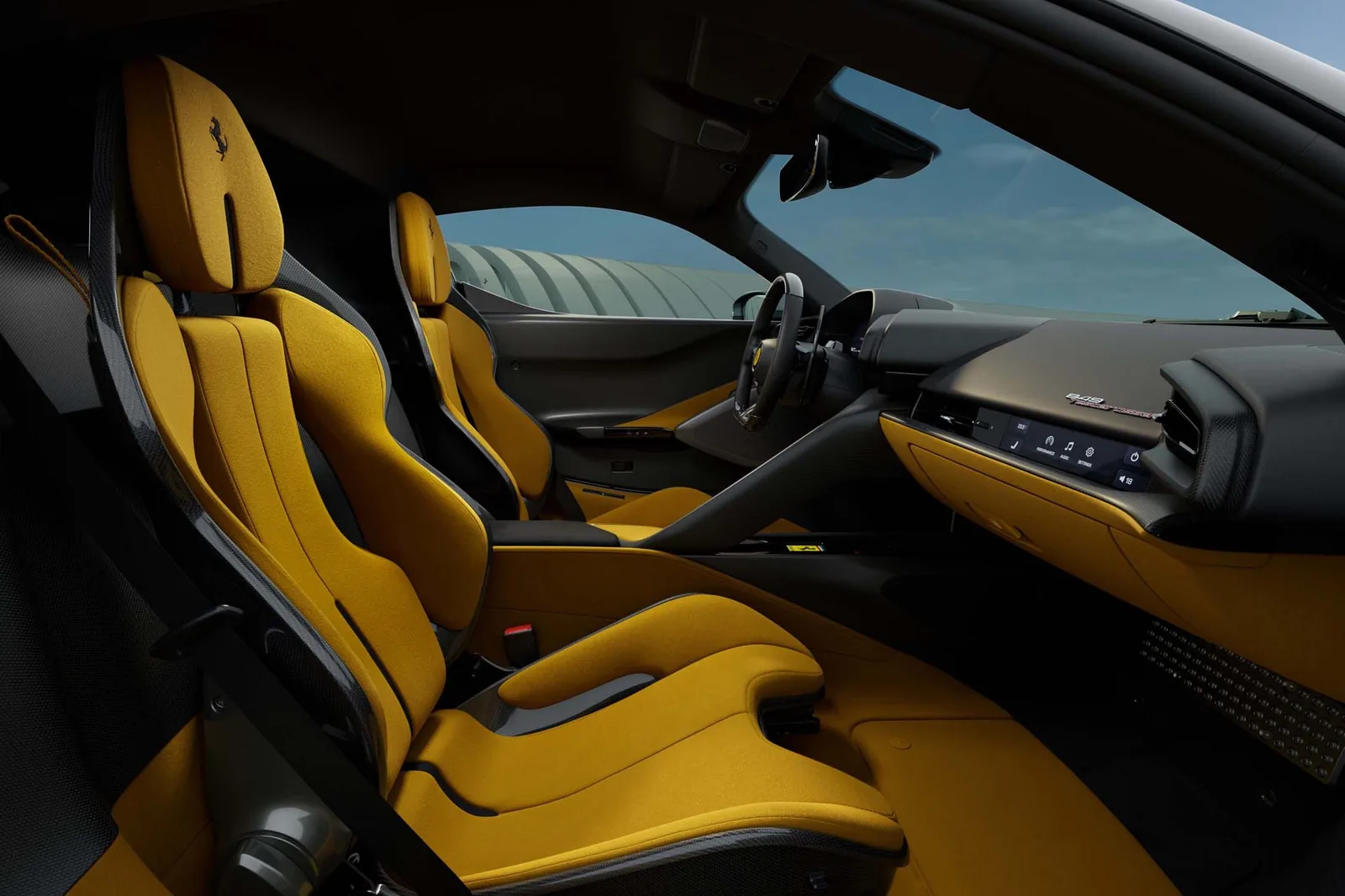
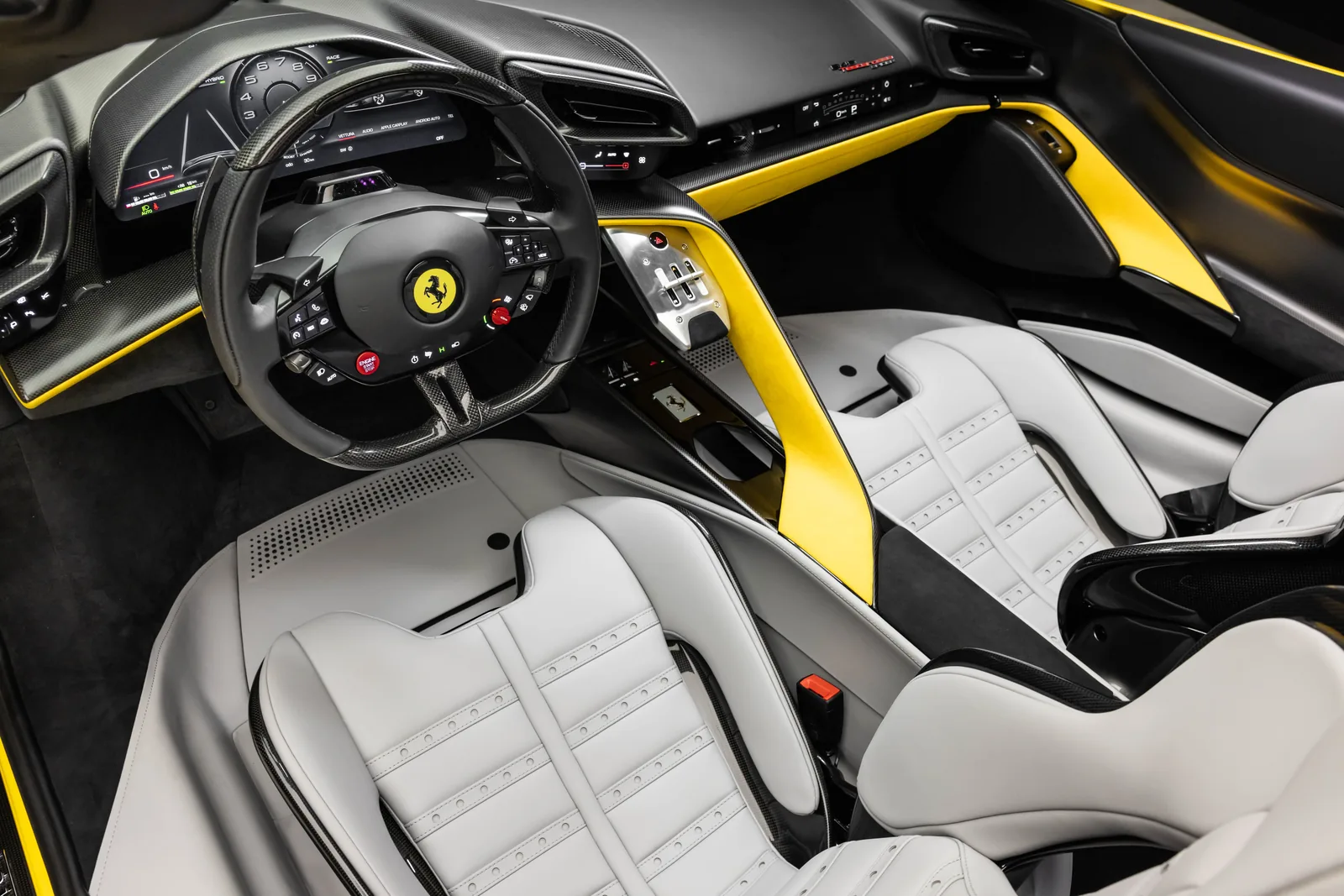
Naming and design language separate the two flagships as clearly as their engines do. The 849 Testarossa is a direct nameplate revival — the numbers refer to the 849 cv per litre concept — and its bodywork echoes Ferrari’s 1970s sports prototypes (the 512 S and 512 M), the 1984 Testarossa and the FXX-K. New colours introduced for launch include Rosso Fiammante and Giallo Ambra, with a Giallo Siena Alcantara interior available for the first time on a Ferrari flagship.
The Revuelto’s design brief was to preserve the exposed V12 as a visual centrepiece under a transparent engine cover, while integrating the electrified architecture without concealing it. Scissor doors, hexagonal graphics, forged-carbon interior structure and a Y-motif on the front and rear signatures continue the marque’s established design language.
Price & Availability
The base-price gap favours Ferrari at debut. The 849 Testarossa opens at €460,000 (VAT excluded) for the berlinetta and €500,000 for the Spider in Italy, with the Assetto Fiorano performance pack adding €42,400 (coupe) or €52,500 (Spider). UK pricing sits near £398,000, and US deliveries are expected roughly three months after European launch.
The Revuelto starts at approximately €502,585 in Europe (VAT included on most markets), with a US price band of $608,358–$729,458 depending on Ad Personam options. UK pricing runs from £452,040 to £533,532. Both cars have long order books; Ferrari has confirmed European deliveries in Q2–Q3 2026, and Lamborghini has been building the Revuelto since 2024.
Full Specification Comparison Table
| Specification | Lamborghini Revuelto | Ferrari 849 Testarossa |
|---|---|---|
| Debut / on sale | March 2023 (deliveries 2024) | September 2025 (deliveries Q2–Q3 2026 EU) |
| Body style | Coupe (Spider planned) | Berlinetta + Spider |
| Layout | Mid-rear V12, AWD (electric front axle) | Mid-rear V8, e-AWD (electric front axle) |
| Engine | 6,498.5 cc naturally aspirated 65° V12 (L545) | 3,990 cc twin-turbo 90° V8 (F154FC) |
| ICE power | 825 PS (814 hp) @ 9,250 rpm | 830 cv (818 hp) @ 7,500 rpm |
| ICE torque | 725 N·m @ 6,750 rpm | 842 N·m @ 6,500 rpm |
| Redline | 9,500 rpm | 8,300 rpm |
| Specific output | 127 PS/l | 208 cv/l |
| Electric motors | 3 — 2 front axle (150 PS each), 1 rear integrated | 3 — 2 front axle, 1 rear MGU-K |
| Combined electric power | 190 PS (140 kW) | 220 cv (162 kW) |
| Battery | 3.8 kWh lithium-ion (central tunnel) | 7.45 kWh lithium-ion |
| Total system power | 1,015 CV (1,001 hp / 747 kW) | 1,050 cv (1,036 hp / 772 kW) |
| Transmission | 8-speed dual-clutch transverse e-gearbox | 8-speed dual-clutch (F1 DCT) |
| Reverse gear | Electric motors (no mechanical reverse) | Electric motors + DCT |
| 0–100 km/h | 2.5 s | <2.3 s |
| 0–200 km/h | 6.6 s | 6.35 s |
| 0–300 km/h | 15.3 s | not quoted |
| Top speed | >350 km/h (217 mph) | >330 km/h (205 mph) |
| Max EV-only speed | 140 km/h | not quoted |
| Pure-electric range | 10 km WLTP | 25 km eDrive |
| Dry weight | 1,772 kg | 1,570 kg |
| Kerb weight | 1,880 kg | not quoted |
| Power-to-weight (dry) | 1.75 kg/CV | 1.5 kg/cv |
| Weight distribution | not quoted | 45% front / 55% rear |
| Max downforce | not quoted (aero package with active flaps) | 415 kg @ 250 km/h (+25 kg vs SF90) |
| Braking 100–0 km/h | not quoted | 28.5 m |
| Braking 200–0 km/h | not quoted | 108.0 m |
| Brakes | Carbon-ceramic 410×38 mm front (10-piston), 390×32 mm rear (4-piston) | Carbon-ceramic with ABS Evo |
| Front tyres | 265/35 R20 | 265/35 R20 |
| Rear tyres | not quoted (20"/21" setup) | 325/30 R20 |
| Fiorano lap time | n/a (Sant’Agata develops on Nardò) | 1’17.500 (−1.2 s vs SF90) |
| Chassis | Forged carbon monocoque + aluminium sub-frames | Full carbon-fibre chassis (evolved SF90 architecture) |
| Notable features | Exposed V12 engine bay; scissor doors | Active rear spoiler; ABS Evo; FIVE grip estimator |
| Base price (EU, VAT excl.) | ~€502,585 | €460,000 coupe / €500,000 Spider |
| Optional pack surcharge | Ad Personam bespoke | Assetto Fiorano +€42,400 (coupe) / +€52,500 (Spider) |
| Price (UK, indicative) | ~£452,040–£533,532 | ~£398,000 |
| Price (US, indicative) | $608,358–$729,458 | not confirmed at debut |
| Heritage | First super sports V12 hybrid HPEV; ahead of 60th anniversary | Name from 500 TR (1956) and Testarossa (1984); SF90 replacement |
Verdict — Two Different Answers to the Same Question
The Revuelto and the 849 Testarossa answer the same brief — a plug-in hybrid front-engine-electric, rear-mid-ICE flagship — with two opposing engineering doctrines. Lamborghini prioritises emotion, rev-range and the survival of the naturally aspirated V12, accepting a weight penalty and a smaller battery in exchange for the acoustic and mechanical character of a large-displacement engine. Ferrari prioritises outright performance and thermal efficiency, extracting more power from less displacement through turbocharging while carrying a larger battery, more usable EV range and a lighter chassis.
On paper the 849 Testarossa is faster to 100 and 200 km/h, lighter, more efficient in electric mode and cheaper at base price. The Revuelto is faster in absolute top speed, retains a bespoke naturally aspirated V12, and has been on sale for two years already — giving customers immediate delivery. Choosing between them ultimately depends on the buyer’s preference between two increasingly separate philosophies of what a flagship hybrid supercar should sound like and how it should perform.
Sources & Verification
Technical figures verified against the following primary and secondary sources: Ferrari 849 Testarossa (Ferrari.com official page), Ferrari corporate press release (9 September 2025), Lamborghini Revuelto (Lamborghini.com official page), Lamborghini Revuelto (Wikipedia specification summary), Motor1 — Ferrari 849 Testarossa debut breakdown, Motor1 press photo gallery, Autocar 849 Testarossa first review, Ars Technica — Revuelto first drive and CAR Magazine — Ferrari 849 Testarossa first pictures. All figures are manufacturer-quoted at time of publication.
The Revuelto replaced the Lamborghini Aventador, the last Lamborghini V12 built without turbocharging or hybrid assistance, produced in 11,465 units between 2011 and 2022. Every Aventador version and its specifications are covered in the Legendary Cars archive.