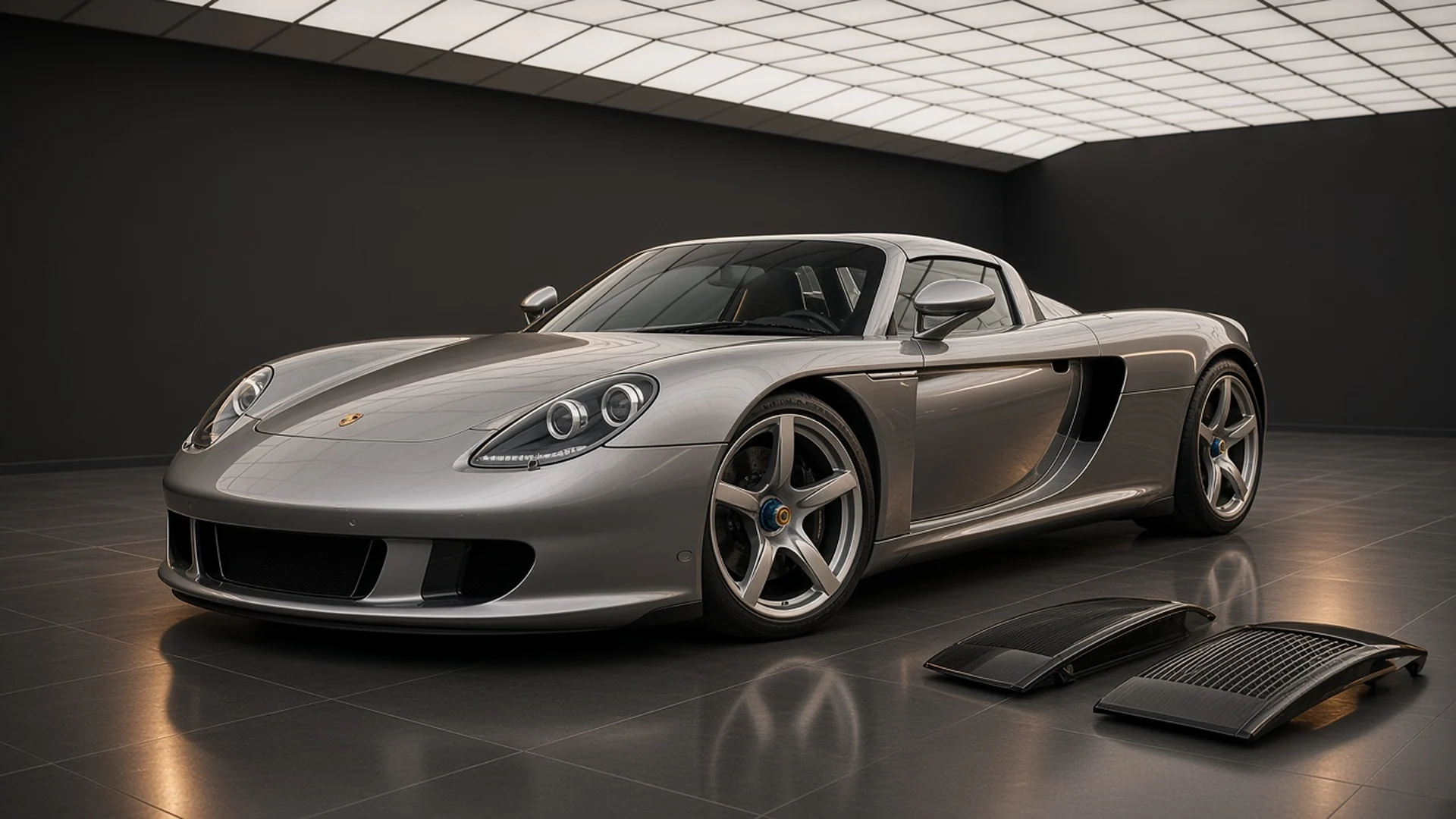
The Porsche Carrera GT history and specifications read like a racing programme that refused to stay in the museum. Porsche showed the concept in 2000 and put the series car into production from 2003 to 2006. A 5,733 cc naturally aspirated V10, a carbon-fibre monocoque and a six-speed manual with a ceramic clutch made it one of the most advanced road cars of its decade — and one of the last to ask the driver to participate at every speed. It joins the Batman Garage Legendary Cars collection as the analogue high-water mark of the 2000s supercar.
Porsche Carrera GT Specifications
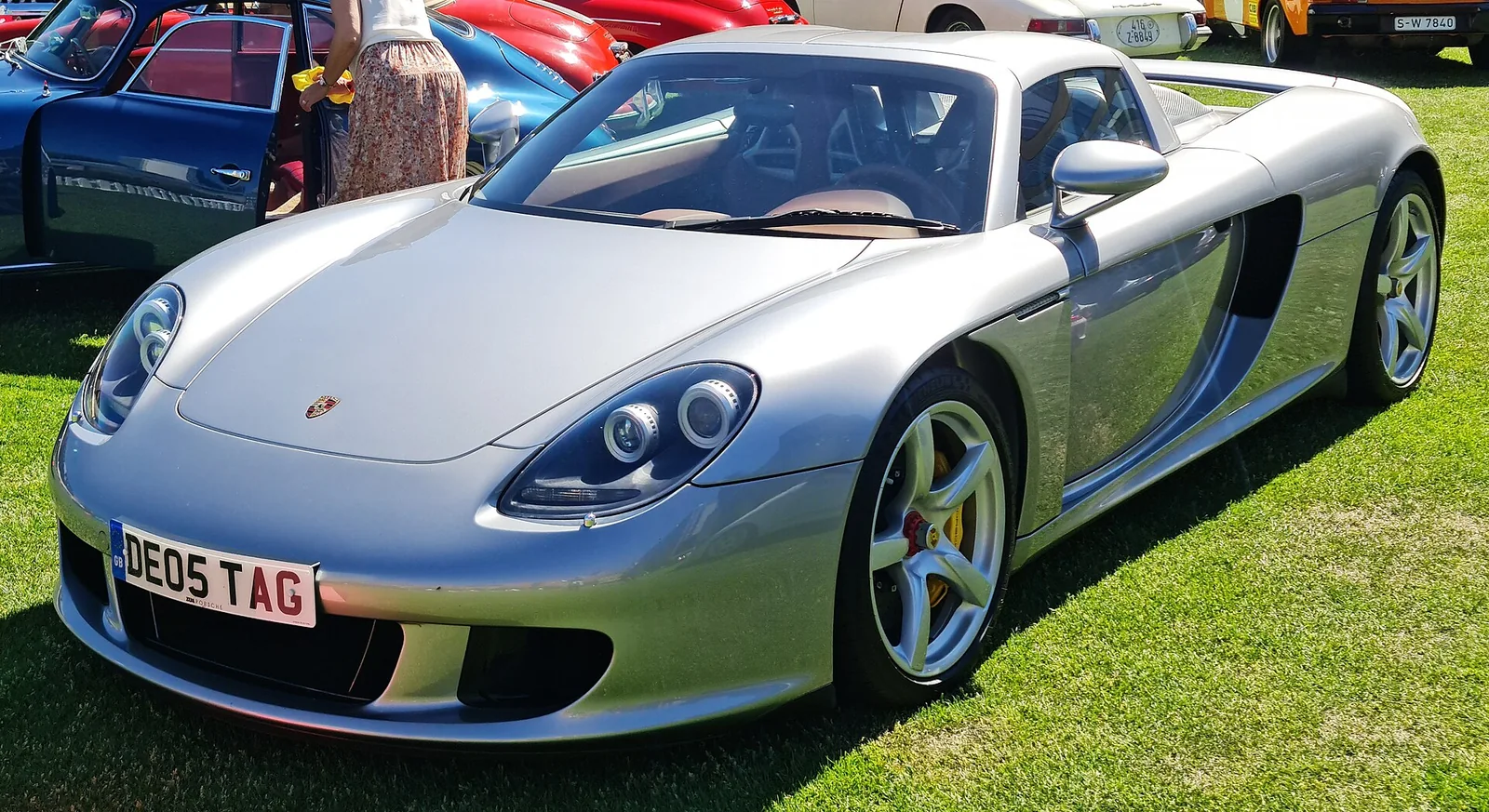
The Carrera GT is a mid-engine, rear-wheel-drive two-seater with removable carbon roof panels. The headline Porsche Carrera GT specs are 612 PS, 590 Nm, 3.9 seconds to 100 km/h, a 330 km/h top speed and a DIN weight of 1,380 kg. Porsche built 1,270 cars.
| Specification | Details |
|---|---|
| Model | Porsche Carrera GT (Type 980) |
| Production | 2003–2006 |
| Engine | 5,733 cc naturally aspirated 68° V10 |
| Power | 612 PS (450 kW / ~605 hp) at 8,000 rpm |
| Torque | 590 Nm at 5,750 rpm |
| Transmission | 6-speed manual with ceramic clutch |
| Layout | Mid-engine, rear-wheel drive |
| Weight | 1,380 kg (DIN) |
| Top speed | 330 km/h |
| 0–100 km/h | 3.9 s |
| Production total | 1,270 |
Porsche Carrera GT History: From a Cancelled Le Mans V10
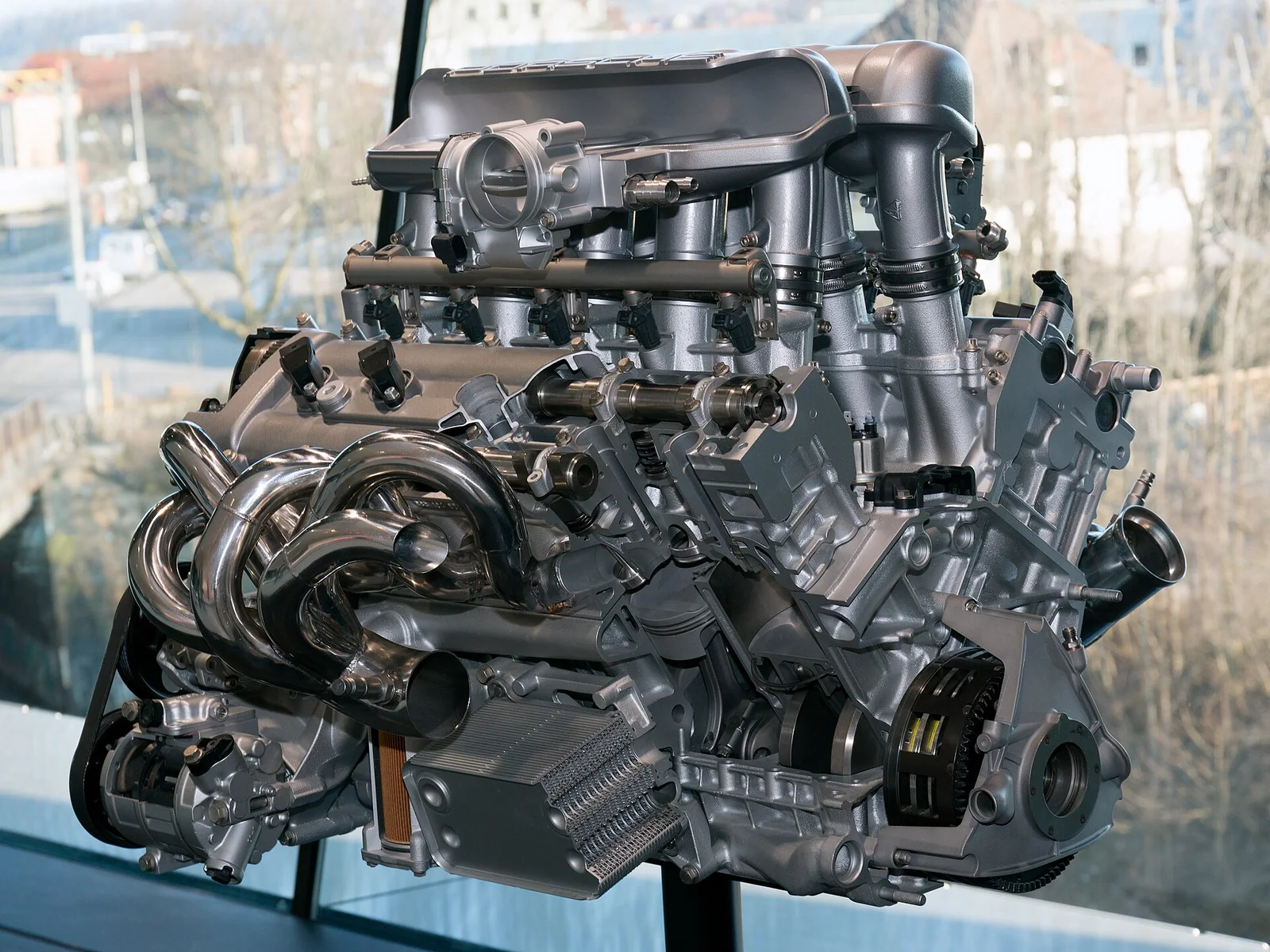
The V10 did not start life as a road-car engine. It was developed for a Porsche Le Mans prototype programme that never reached the 24 Hours. When the racing project was cancelled, the 5.5-litre racing unit — itself related to Porsche's earlier Formula One work — was enlarged to 5.7 litres and retuned for a street car rather than thrown away.
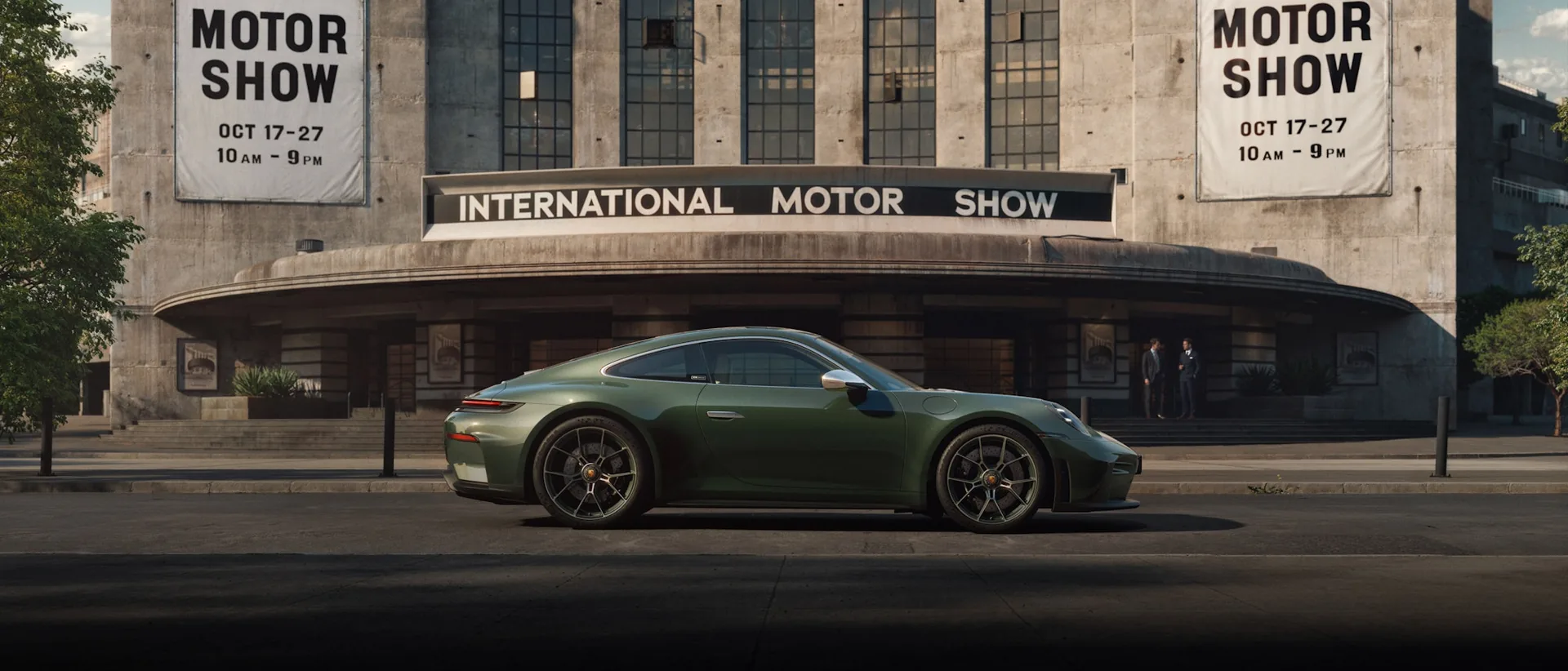
Porsche introduced the Carrera GT concept at the 2000 Paris Motor Show and committed to production at Leipzig. The series car kept the competition-first brief: a carbon-fibre monocoque with a carbon crash structure, inboard pushrod suspension, ceramic composite brakes, magnesium centre-lock wheels and an exposed six-speed manual. Comfort was never the objective. The planned run was 1,500 cars; production stopped at 1,270 in 2006.
Porsche Carrera GT Engine and Performance
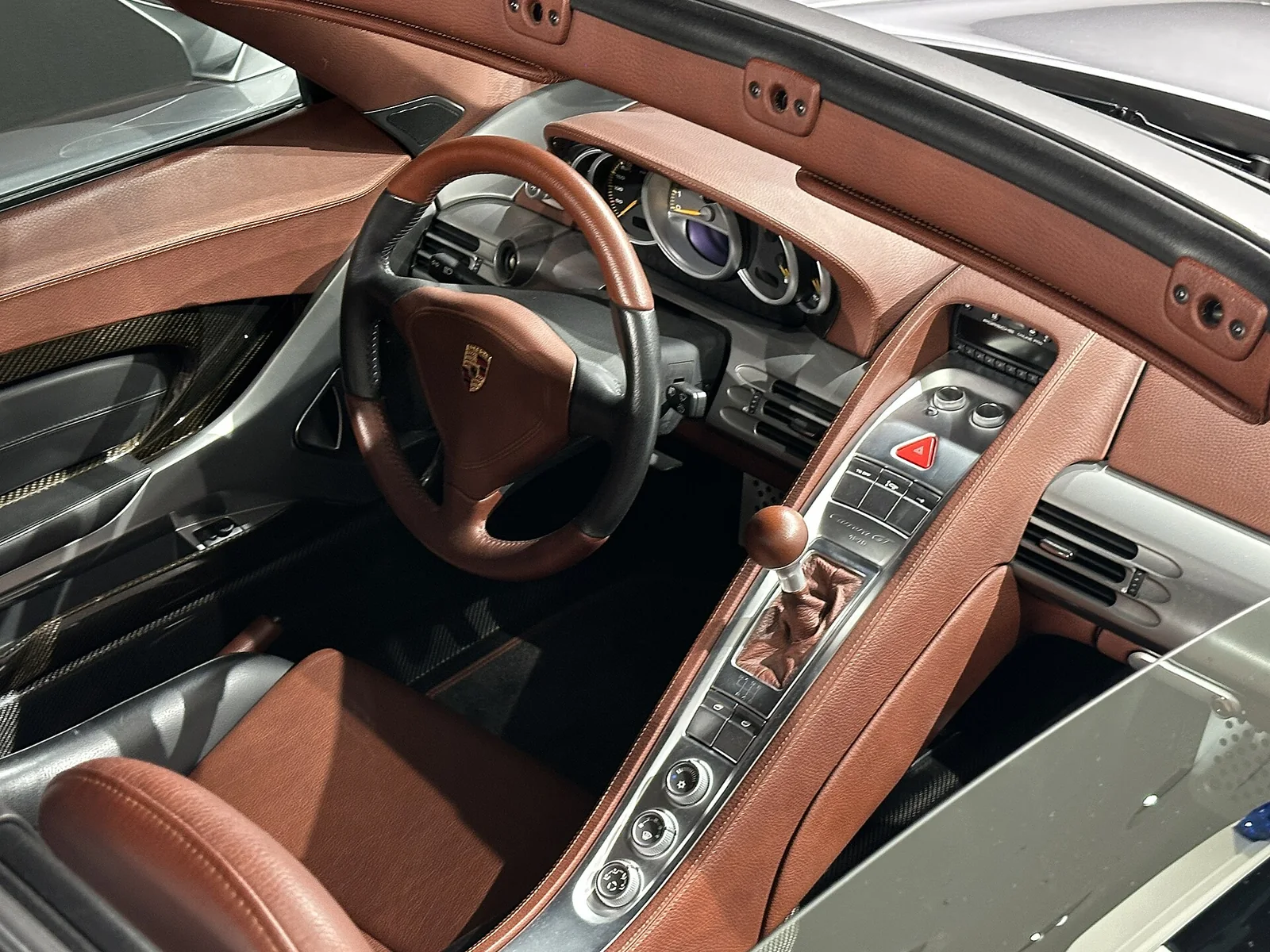
The production engine is a 5,733 cc 68-degree V10 with dry-sump lubrication, producing 612 PS at 8,000 rpm and 590 Nm at 5,750 rpm. There are no turbos and no hybrid assistance. Drive goes to the rear wheels through a six-speed manual transaxle and a two-plate ceramic composite clutch that is abrupt at walking pace and precise once it is hot. That clutch is part of the car's point: the Carrera GT asks for accurate inputs, then rewards them with a mechanical clarity that dual-clutch supercars rarely match.
Porsche quoted 3.9 seconds to 100 km/h and a Porsche Carrera GT top speed of 330 km/h. Independent tests of the period sat in the same band. The chassis uses a carbon monocoque, stainless-steel subframes and inboard dampers actuated by pushrods — race-car architecture on a road car with two removable roof panels. Later Porsche flagships such as the 911 GT3 RS are faster around a circuit in the right hands, and far more electronically supervised.
Why the Porsche Carrera GT Became a Legend
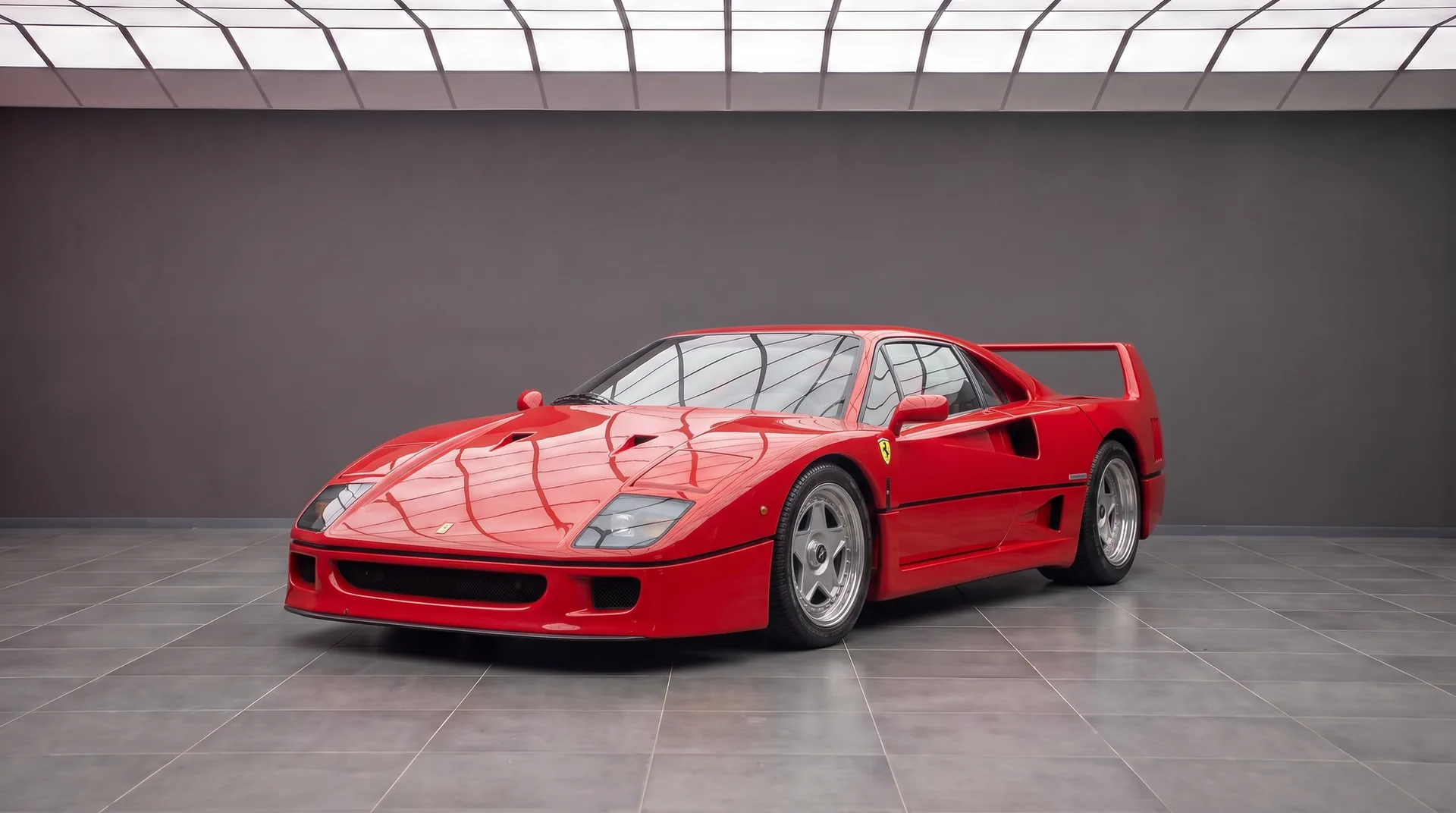
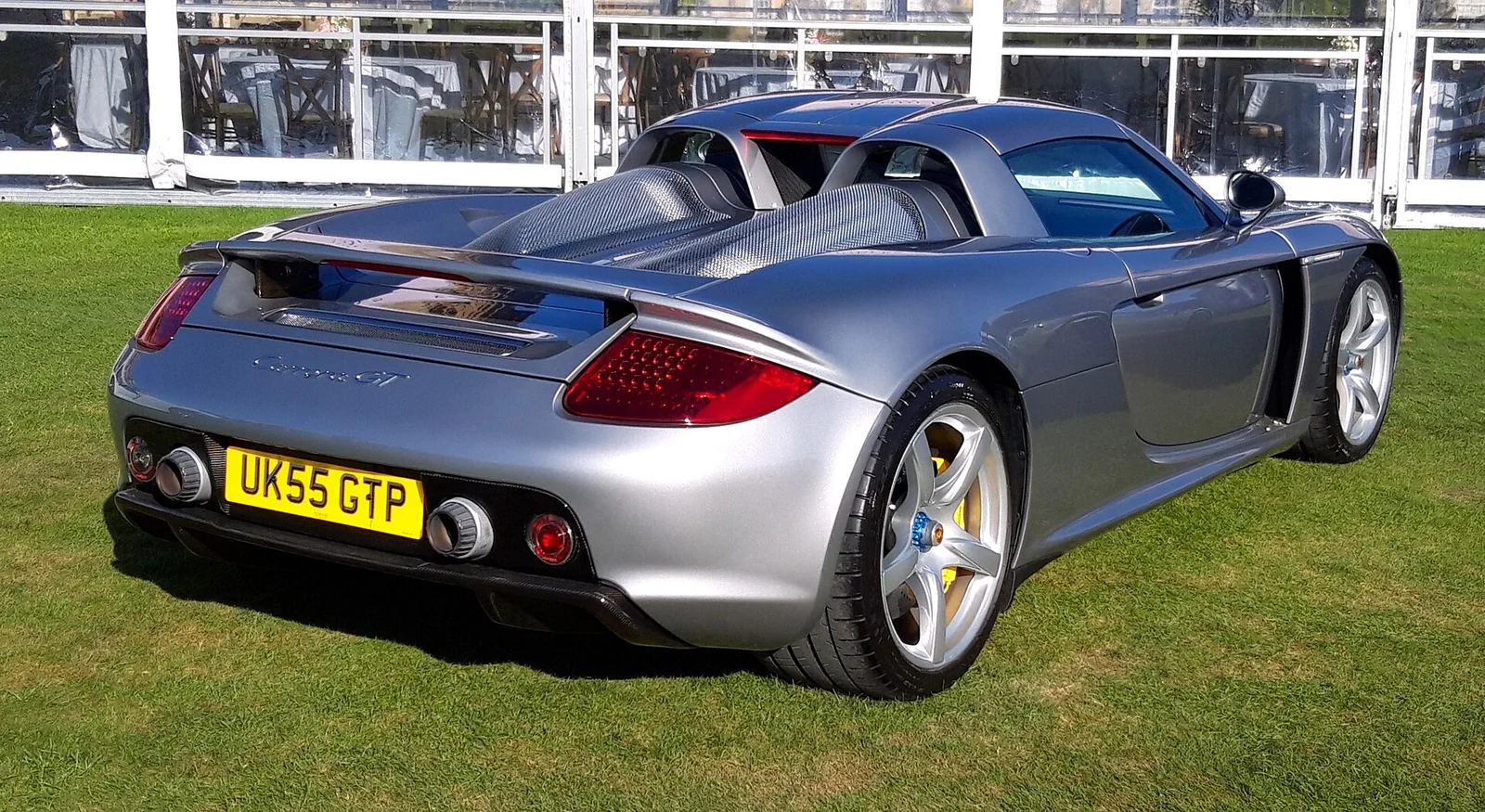
Porsche built 1,270 examples before production ended in 2006. The car now represents a high-water mark for the analogue hypercar: a lightweight, naturally aspirated, manual-transmission machine with technology taken directly from endurance-racing development. It arrived in the same era as the Ferrari F40's spiritual successors and the homologation-special Maserati MC12, but it answered a different question — how little of a Le Mans prototype you could give away and still sell a road car.
That reputation has only sharpened as dual-clutch gearboxes and hybrid V8s became the default. The Carrera GT is the last Porsche supercar that feels like a racing engine with number plates rather than a software product. Values for well-documented, recall-completed cars sit in seven figures, and originality of the ceramic clutch, suspension and roof panels moves the number as much as mileage.
Batman Garage Collector Verdict
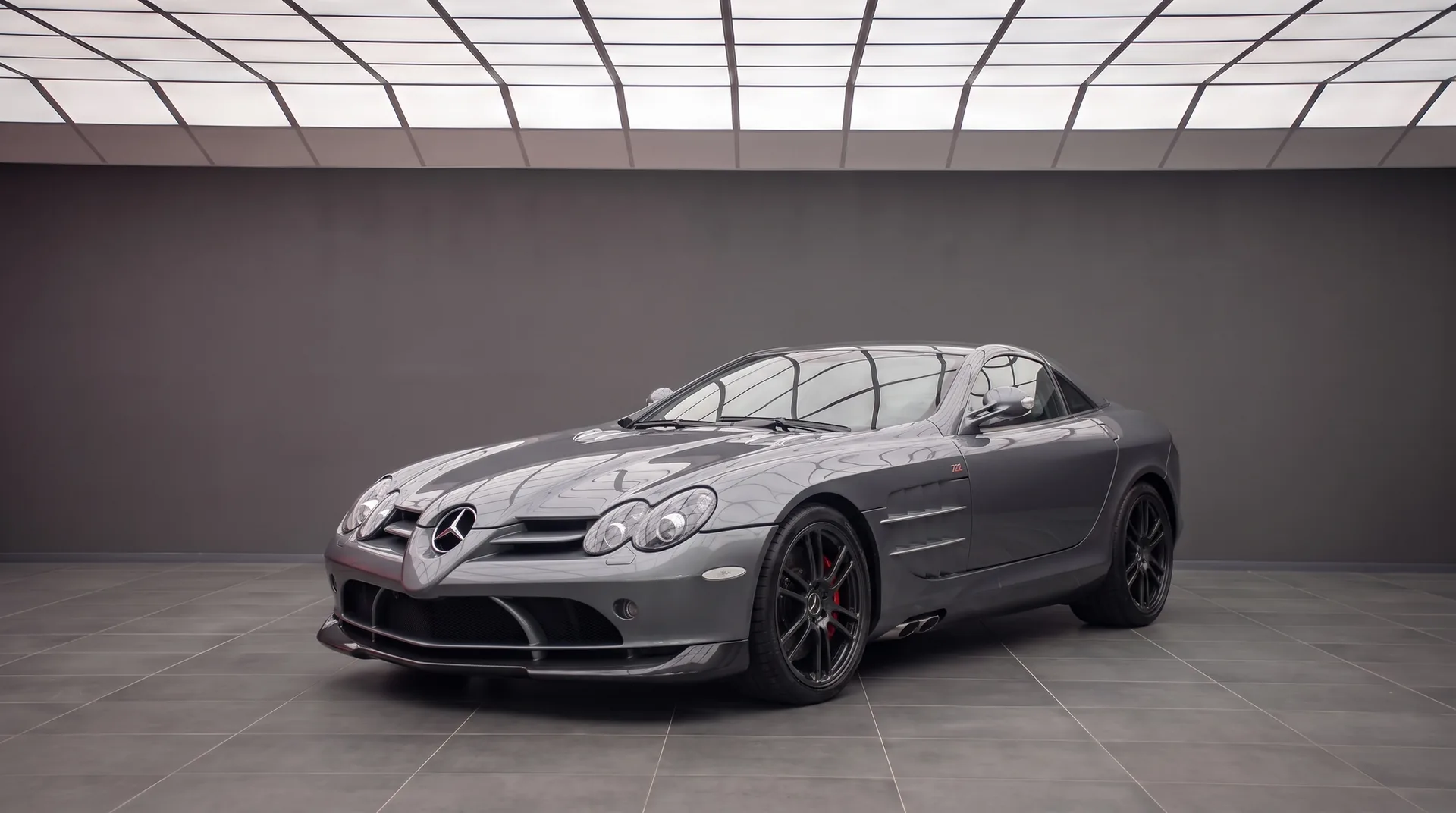
The Porsche Carrera GT earns its place in the Batman Garage Legendary Cars collection because it has a complete identity. Its performance figures remain part of the story, but its real value is the way the design, engineering and era align. This is not merely a fast car from 2003 to 2006; it is a machine that changed how enthusiasts define a supercar. Provenance, service history, the factory suspension retrofit and jurisdiction-specific documentation should always be verified before any purchase. A different 2000s reading of the same collector logic sits alongside it in the Mercedes-Benz SLR McLaren 722 Edition.
Frequently Asked Questions
What makes the Porsche Carrera GT special?
The Porsche Carrera GT arrived as a production car from a project that could easily have remained a museum piece. Its V10 began life for Porsche's cancelled Le Mans prototype programme, and the road car preserved that competition-first mentality with remarkably little dilution: a carbon-fibre monocoque, a ceramic clutch and an exposed six-speed manual.
What are the Porsche Carrera GT specs?
The 5,733 cc naturally aspirated 68-degree V10 produces 612 PS at 8,000 rpm and 590 Nm, sent to the rear wheels through a six-speed manual with a ceramic clutch. Porsche quoted 0–100 km/h in 3.9 seconds, a 330 km/h top speed and a DIN weight of 1,380 kg.
How fast is the Porsche Carrera GT?
Porsche quoted a top speed of 330 km/h and 0–100 km/h in 3.9 seconds. US-market figures are typically listed as about 605 hp and 0–60 mph in the mid-3-second range.
How many Porsche Carrera GTs were built?
Production ran from 2003 to 2006. Porsche built 1,270 cars against an original plan of 1,500. Around 644 examples were specified for the United States.
Does the Porsche Carrera GT have a manual gearbox?
Yes. Every Carrera GT uses a six-speed manual transaxle with a two-plate ceramic composite clutch and a beechwood-topped shift knob, a detail carried over from the Porsche 917 racing cars.
Is the Porsche Carrera GT a collector car?
Yes. Its historical relevance, production story and unmistakable character make it an established enthusiast and collector reference. Individual provenance, condition, originality and jurisdiction-specific documentation must always be checked separately.
Sources
- Porsche — manufacturer specifications for the Carrera GT (Type 980)
- Porsche Museum engine display, Stuttgart — V10 architecture
- Period instrumented tests reporting 0–100 km/h and top speed in line with factory claims