The Ford Mustang Eleanor is one of the most searched movie cars in the world, and one of the most expensive Mustangs at collector auction. The pepper-grey 1967 Fastback with black Le Mans stripes and pin-locked hood scoops is not a factory Ford — it is a customised build that appeared in two films three decades apart, and today it exists as a small population of screen-used originals plus a growing catalogue of officially licensed continuation cars.
Since a May 2025 US federal court ruling that Eleanor is a prop rather than a copyrightable character, the market has moved fast: screen-used cars now trade between US$850,000 and US$1,000,000, licensed tribute editions from Fusion Motor Company list at $189,000 to nearly $399,000, and a new 25-car anniversary run from Cinema Muscle Recreations — built by the original 2000-remake team — starts at $500,000. Below is what actually happened, what the cars now sell for, and where the Batman Garage collection fits in.
Where Eleanor began — the 1974 original
Eleanor first appeared on screen in H. B. "Toby" Halicki's independent 1974 film Gone in 60 Seconds. In the film, Eleanor is the last of 48 cars a thief must steal in three days. The role was played by a 1971 Ford Mustang SportsRoof modified to look like a 1973 Mach 1, painted yellow with black stripes. Two cars were used: one hero and one stunt car, both destroyed or heavily damaged in a single continuous 40-minute chase sequence that ended with a jump measured at 128 feet in the final cut (Wikipedia).
The 1974 Eleanor established two things that carry over into every later version. First, the name — Halicki gave every car in the script a female code name, and Eleanor was the one that mattered. Second, the myth of a stubborn car that would not be stolen: in the 1974 film Eleanor deliberately evades capture, and in the 2000 remake the fictional Memphis Raines describes it as the car that broke his career.
The 2000 remake created the icon
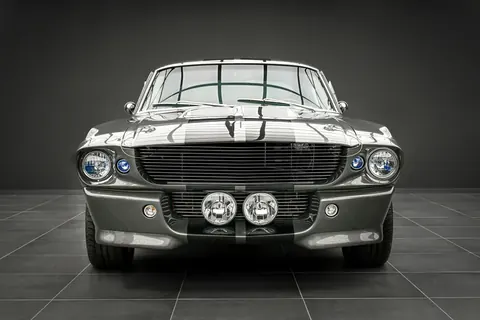
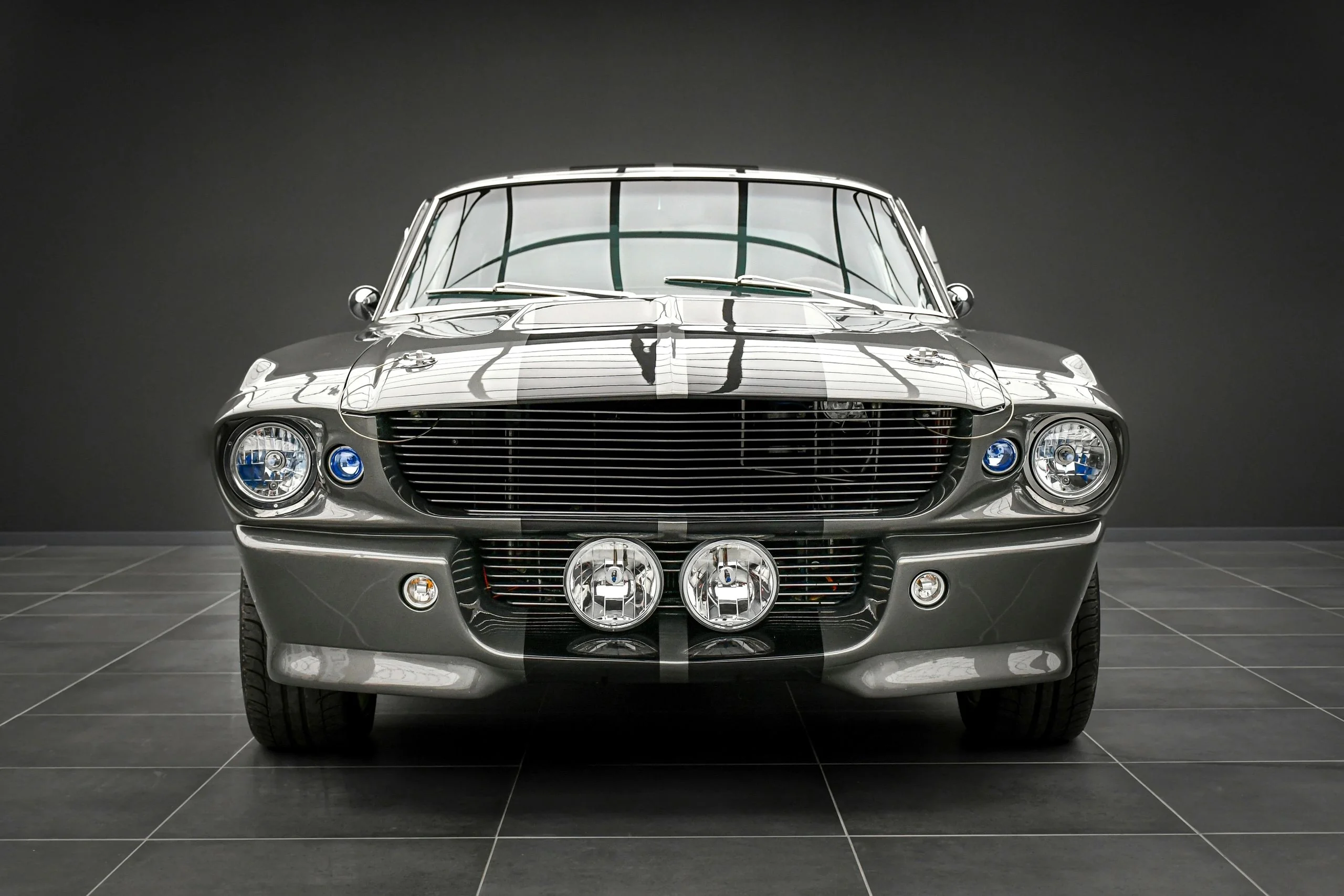
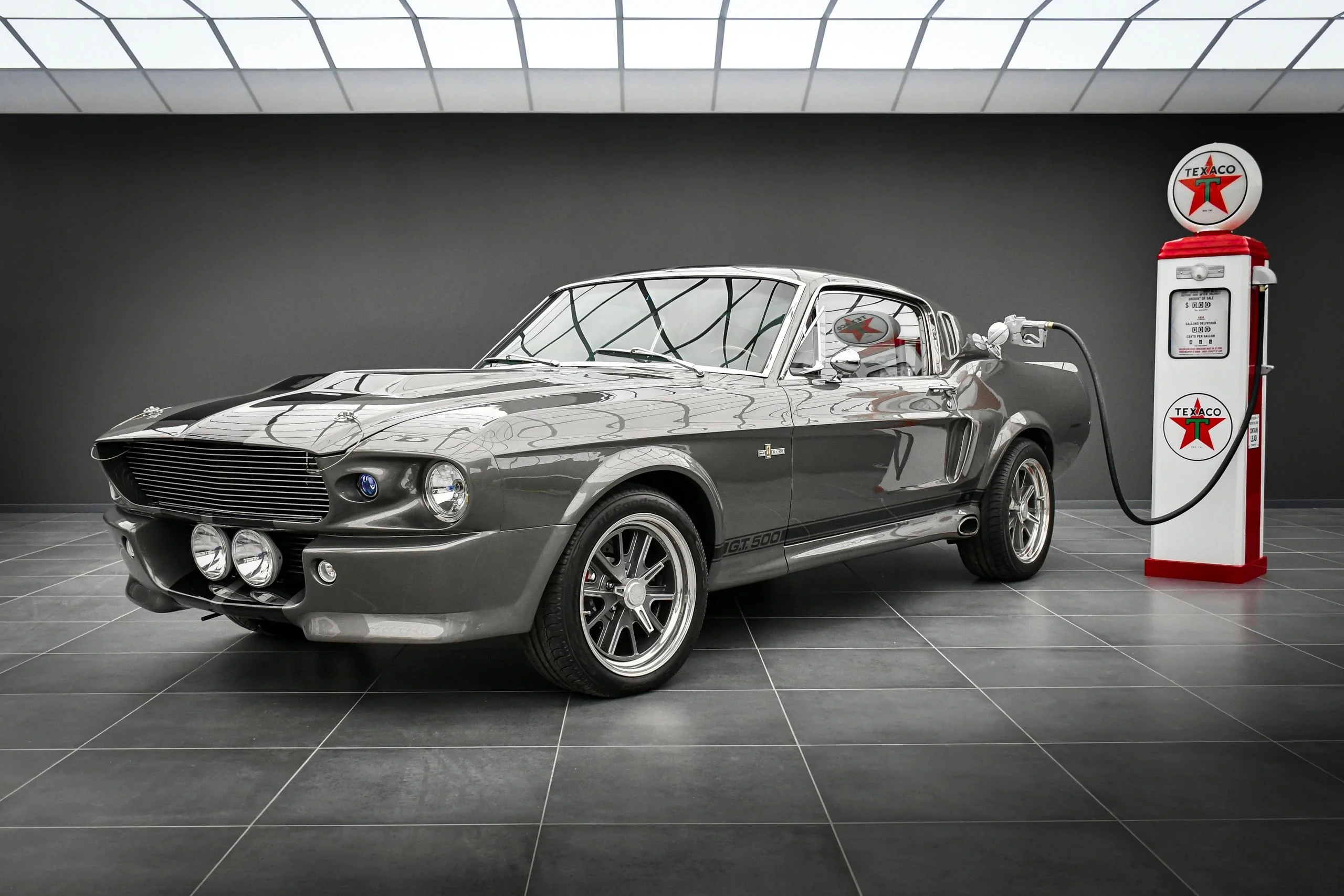
The Eleanor most people picture today was built for the 2000 Jerry Bruckheimer remake starring Nicolas Cage. The car is a 1967 Ford Mustang Fastback, refinished in a colour usually referred to as pepper-grey or Dupont Silver Metallic, with wide black racing stripes running the full length of the car, a Shaker-style hood with pin locks, deep hood scoops, side-exit exhausts, and PT bumper protrusions at each corner.
The design was drawn by Californian custom-car illustrator Steve Stanford, and the physical builds were led by Chip Foose together with Ray Claridge's team at Cinema Vehicle Services in North Hollywood — the same shop that had supplied movie fleets for four decades (Silodrome).
Cinema Vehicle Services built eleven Eleanors for the production: three fully drivable hero cars used for close-ups and driving footage, and eight lightweight or partially-completed shells used for stunts and background. Seven cars are documented to have survived filming. An additional twelfth car was built to order for producer Jerry Bruckheimer with a real Ford 428 big-block engine — the only Eleanor built with a period-correct big-block V8 (Wikipedia).
Eleanor on screen — the film that made the myth
The Eleanor of the 2000 remake is inseparable from the four scenes that turned a movie prop into a globally recognised silhouette: the reveal in the garage, the golden-hour night drive, the Long Beach Vincent Thomas Bridge chase, and the final jump. Every later replica, from Fusion Motor Company builds to the Cinema Muscle Recreations "Gone Again" run, references the exact look established in these frames.
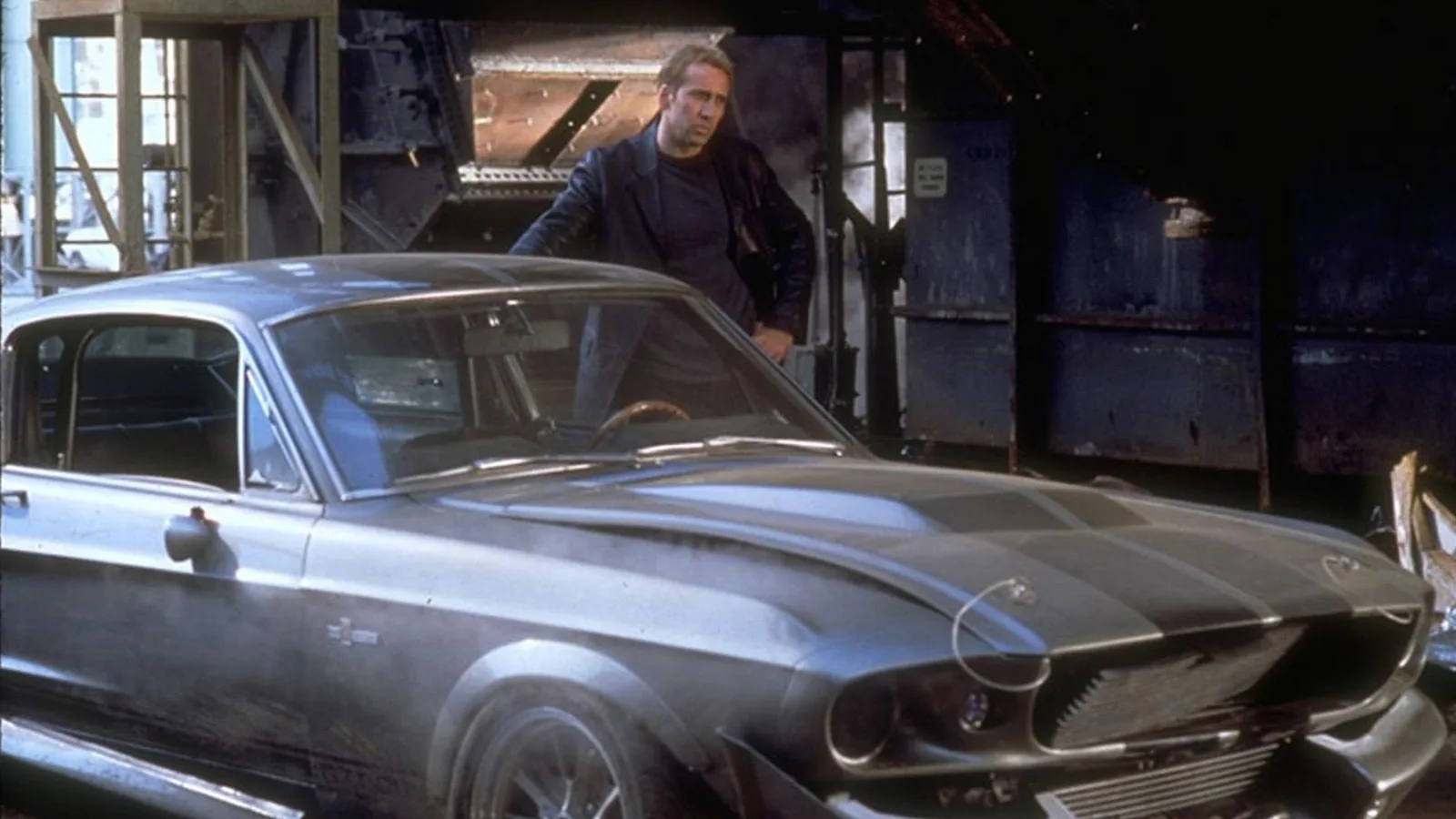
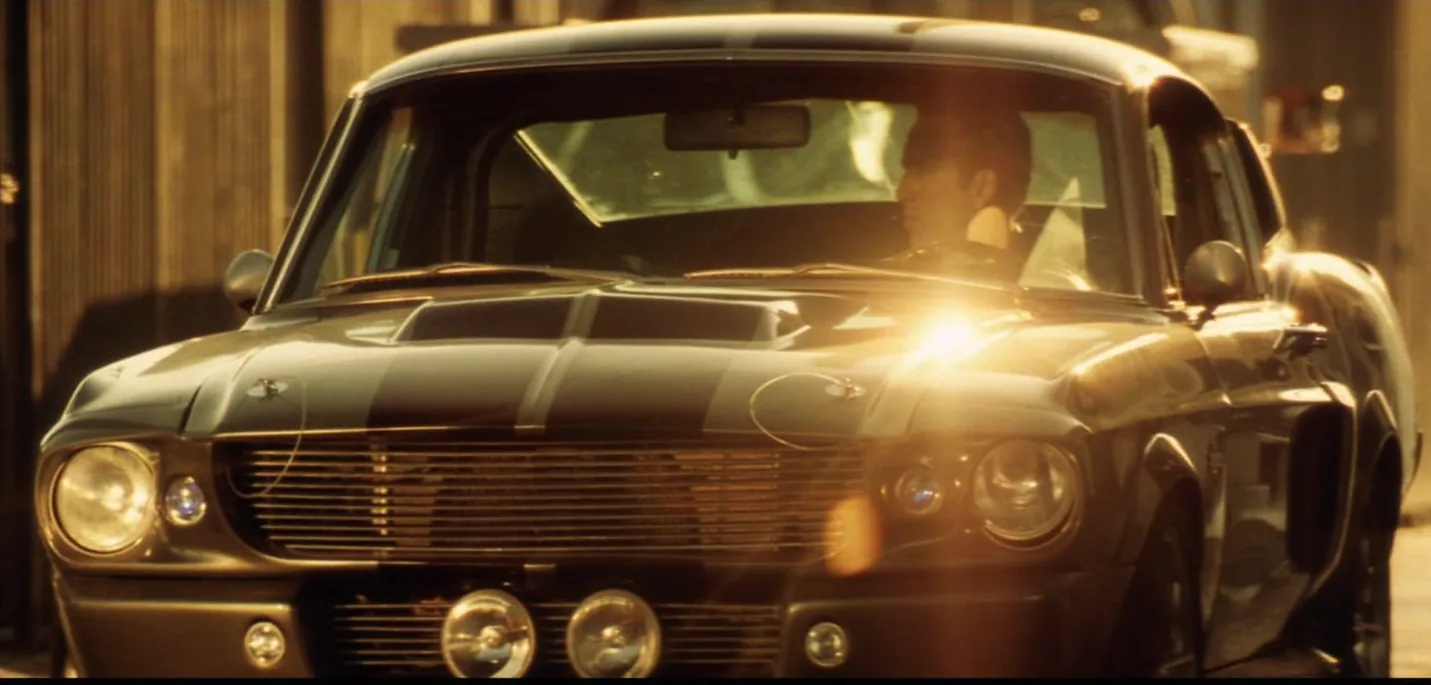
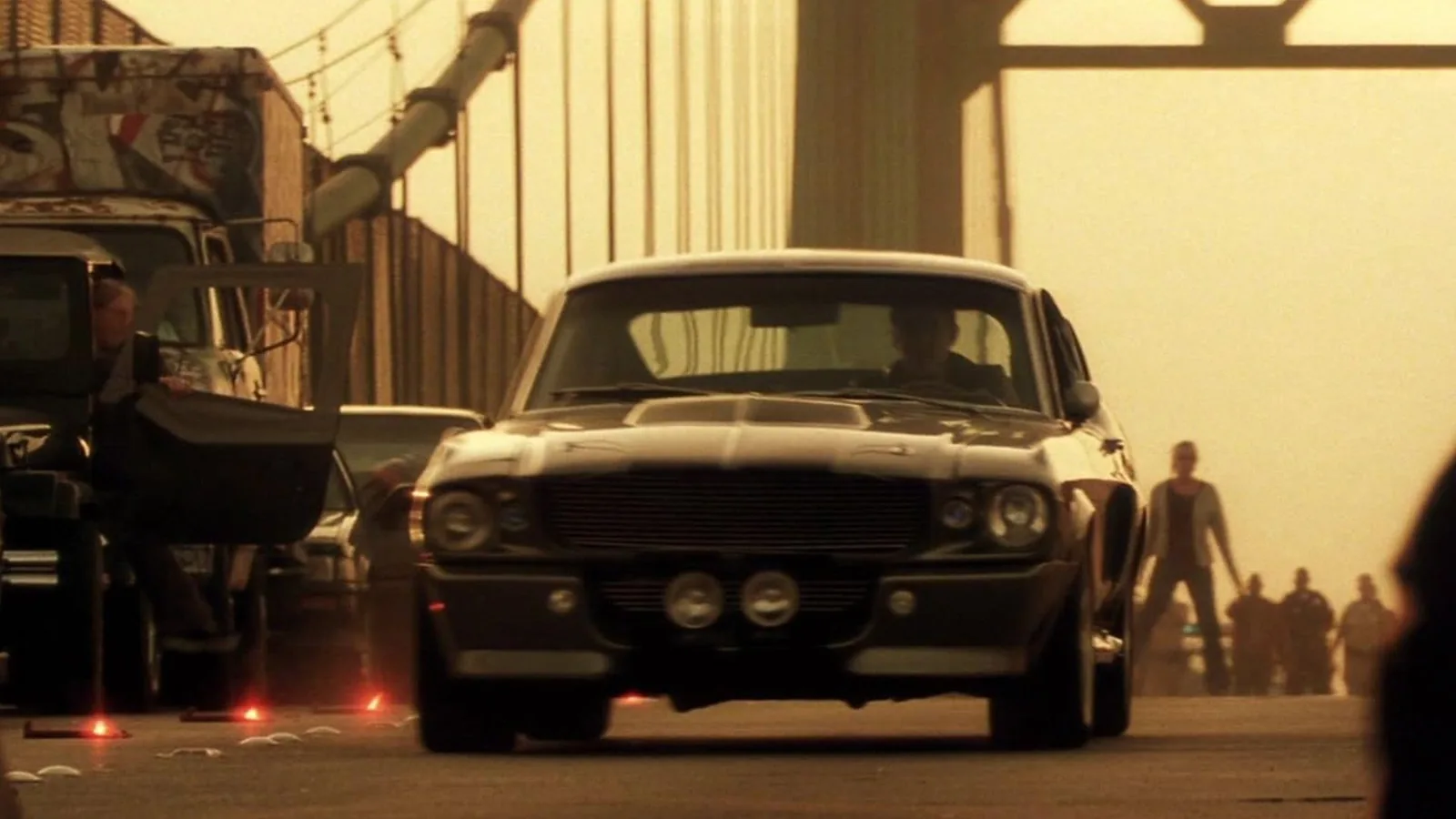
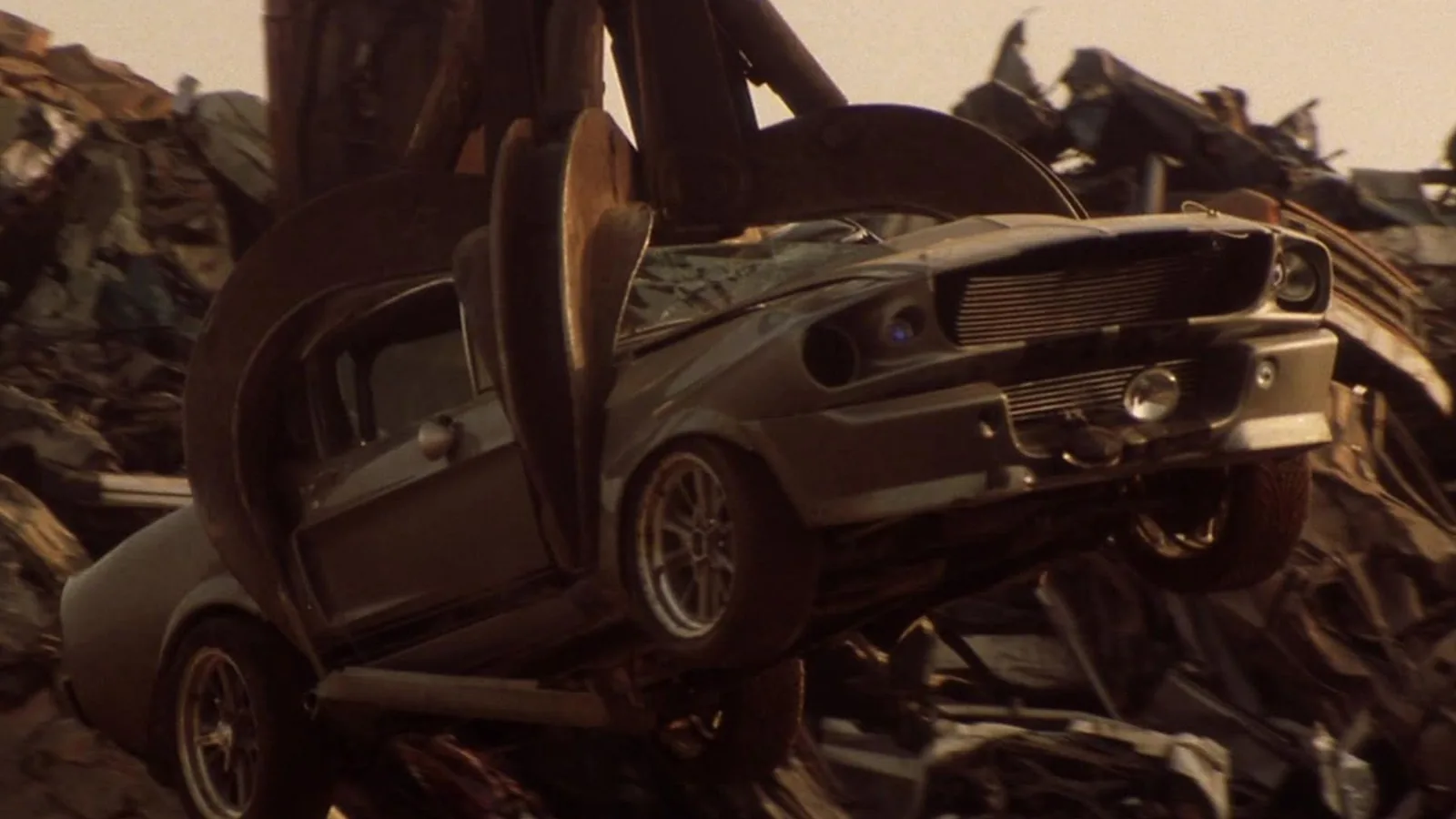
These stills are not marketing photography — they are frames from the finished film. The condition of the car in each shot is important context for anyone valuing a real ex-CVS survivor today: authentic 2000-film cars carry documented scars from filming, and provenance for those scars is what separates a $200k Eleanor from a $1M Eleanor at Mecum.
Where the originals are now
The population of authentic 2000-remake Eleanors is small and well-documented. Three cars have set the reference prices at public auction, and several others are held by private collectors and appear occasionally at SEMA or dealership showcases.
| Auction event | Car / VIN | Result |
|---|---|---|
| Barrett-Jackson Scottsdale, January 2009 | CVS car, VIN 7R02S211287 | $216,700 |
| COYS Autosport Birmingham UK, January 2012 | Cinema Vehicle Services car #7 | £95,000 |
| Mecum Indianapolis, May 2013 | Hero car #9, VIN 7R02C179710 | $1,000,000 |
| Mecum Austin, December 2014 | Cinema Vehicle Services car #7 (re-offer) | No-sale ($380,000 high bid) |
| Mecum Kissimmee, January 2020 | Lot F/S135 — hero car | $852,500 |
| Barrett-Jackson Scottsdale, 2021 | Barrett-Jackson 2009 car (re-offer) | $385,000 |
| Hampson Auctions Bolesworth Castle UK, March 2025 | Officially licensed Eleanor, ex-Thierry Henry | £140,625 |
The most important number in that table is the Mecum 2013 result. That was hero car #9, VIN 7R02C179710 — the primary driving car for Nicolas Cage in the final act — and it hit exactly $1,000,000 including fees. The 2020 sale at $852,500 confirmed the seven-figure valuation of documented hero cars, and cemented Mecum's role as the reference venue for Eleanor provenance sales (Ford Authority).
Who builds Eleanor cars today
Two companies build officially licensed Eleanors, plus a widening list of smaller shops that build Eleanor-style tributes without a Denice Halicki licence.
Fusion Motor Company in Chatsworth, California is the longest-running licensed builder. Fusion took the licence in 2018 and started tribute Eleanors at $189,000; current listings on the fusionmotorco.com inventory show tribute editions up to $398,950, and Fusion's own build sheet places a 2025 base price at $425,000 for a full Coyote 5.0 build. Powertrain options include a 460 hp naturally aspirated Coyote, a 560 hp Roush 427 8-stack, and a supercharged 750 hp or 1000 hp variant (Fusion Motor Co.).
Cinema Muscle Recreations, run by Ray Claridge — founder of the original Cinema Vehicle Services that built the 2000 fleet — announced Eleanor: Gone Again in July 2025 to mark the film's 25th anniversary. The programme is capped at 25 anniversary cars, each individually numbered, badged and certified. The base car starts at $500,000 with a Ford GEN IV Coyote 480 hp V8; the top-spec build with an Aluminator V8 and a Whipple 3.0 supercharger produces 875 hp and pushes the delivered price close to $550,000 (Hagerty).
Below the licensed market, smaller shops build Eleanor-style tributes. Brand New Muscle Car in Tulsa, Oklahoma has offered restored fastbacks with Eleanor body kits from around $200,000. In Europe, Iconic Auctioneers sold an unlicensed "Eleanor recreation" at its Sywell sale in May 2025 for £86,625 — a useful floor reference for the replica market (Iconic Auctioneers).
How much an Eleanor costs now
The price ladder splits cleanly into four tiers.
- Screen-used originals from the 2000 remake: $852,500-$1,000,000 at public auction. Only a handful of documented hero cars exist.
- Cinema Muscle Recreations Gone Again anniversary cars: $500,000-$550,000, capped at 25 units.
- Fusion Motor Company licensed tributes: $189,000-$425,000 depending on powertrain and options.
- Unlicensed European Eleanor-style replicas: £80,000-£150,000 at UK auctions.
Why Eleanor still matters — the 2025 court ruling
On 27 May 2025 the US Court of Appeals for the Ninth Circuit ruled in Halicki v. Carroll Shelby Licensing (Case No. 23-3731) that the Eleanor Mustang is a mere prop and not a copyrightable character. The court applied the three-part Towle test — consistent physical appearance, consistent identifiable traits and attributes, and being especially distinctive — and found Eleanor fails all three. On 10 November 2025 the Supreme Court of the United States denied certiorari, so the Ninth Circuit's ruling stands (IPWatchdog).
The practical effect is significant. Third-party builders no longer need a Denice Halicki licence to build and sell Mustangs that visually match Eleanor's pepper-grey livery, Shaker hood and PT bumpers. The Halicki estate's trademark on the "Eleanor" name is a separate matter and has not been invalidated, but for the visual bodykit alone, the replica market is now open (National Law Review).
Eleanor in the Batman Garage collection
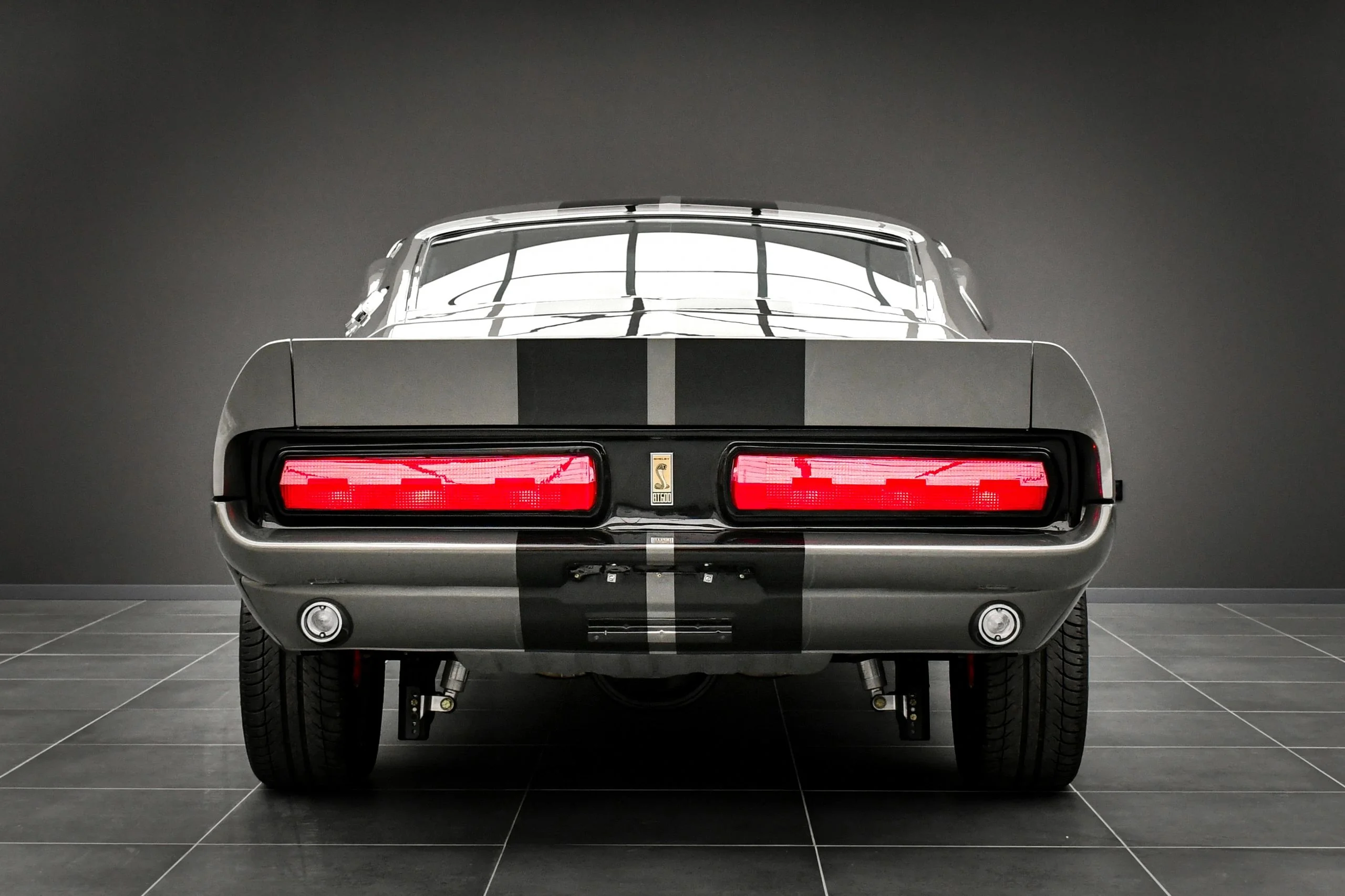
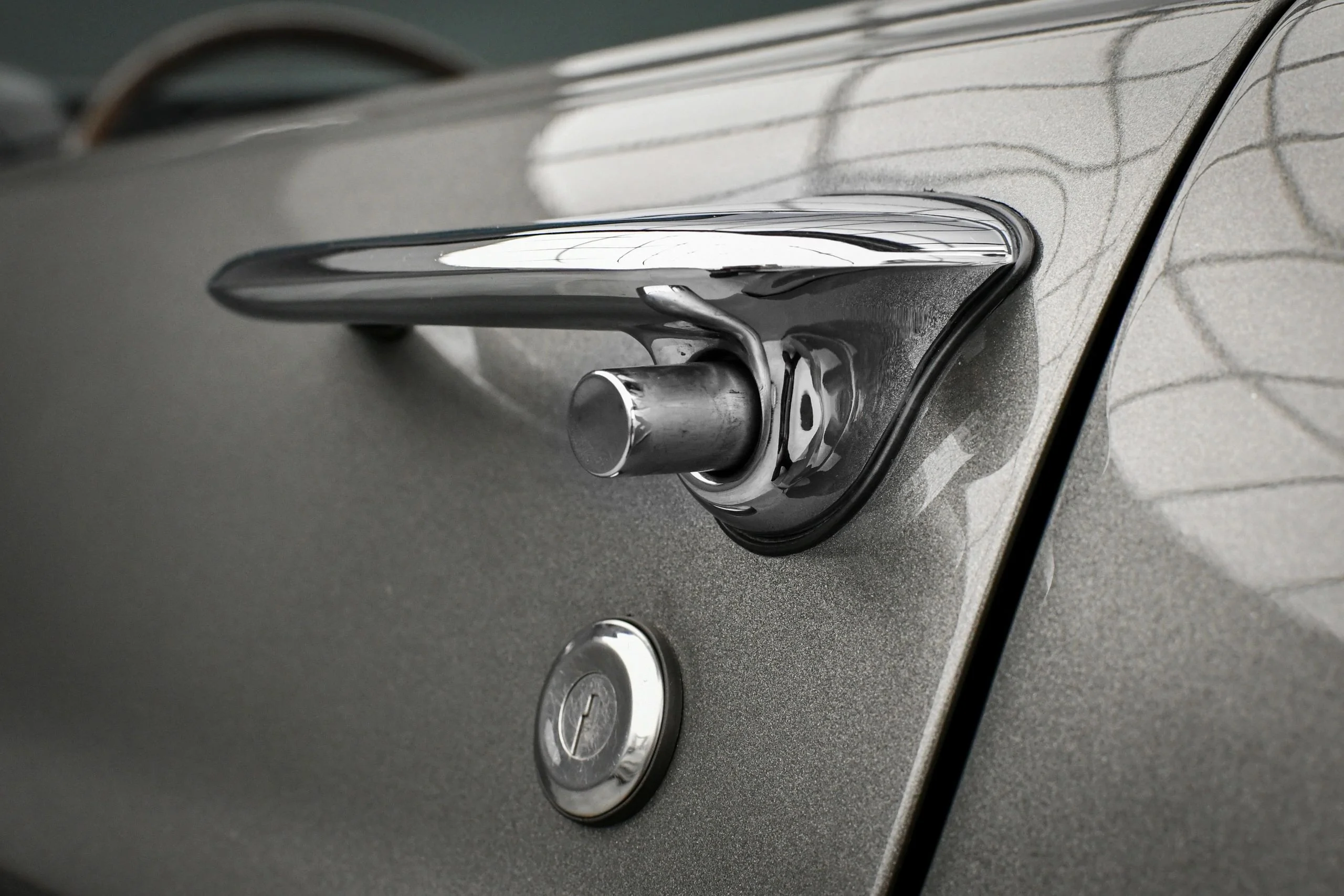
The Batman Garage collection includes a documented 1967 Ford Mustang Fastback Eleanor build, photographed across a full studio gallery of twelve images. The photographs cover the front three-quarter, side profile, rear three-quarter, cabin, Shaker hood detail, wheel and stripe details — the same reference angles used to authenticate Fusion Motor and Cinema Muscle Recreations builds.
Inside the Batman Garage collection
See the Ford Mustang Eleanor
A full studio gallery of the 1967 Fastback Eleanor build — twelve photographs covering the exterior, cabin, Shaker hood detail and stripes.
Open Eleanor in the GarageWhat comes next for the Eleanor market
Three signals point to the direction of the Eleanor market between now and 2027. First, the Cinema Muscle Recreations Gone Again cars are being delivered from January 2026 onwards — the first customer car was announced in January 2026 (PR Newswire). Second, Fusion Motor Company continues to list build slots with a six-month lead time and has quietly raised base pricing to $425,000. Third, the appellate ruling opens the door to lower-cost European and North American replicas that will pressure the entry-level licensed segment.
What that means for a screen-used original: scarcity, court-validated authenticity, and documented CVS provenance keep the top end firmly above the $850,000 mark seen at Mecum in 2020, with the potential to break the $1M ceiling again if a well-documented hero car comes to auction with detailed CVS records.
For collectors who want the look without the seven-figure price, the 2025 legal decision has cracked the market open. For collectors who want the film-verified article, the number of cars that qualify remains in the single digits.