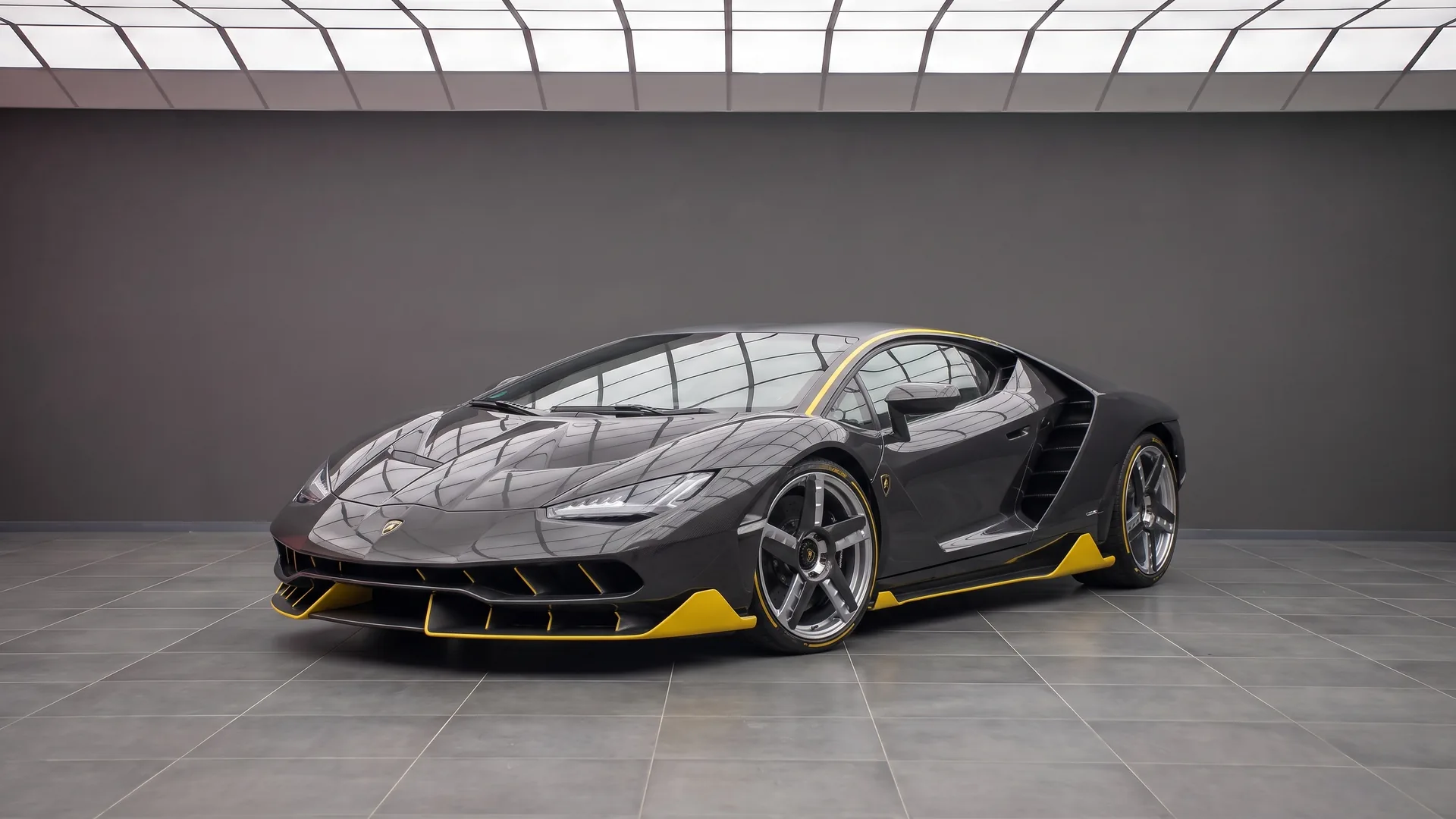
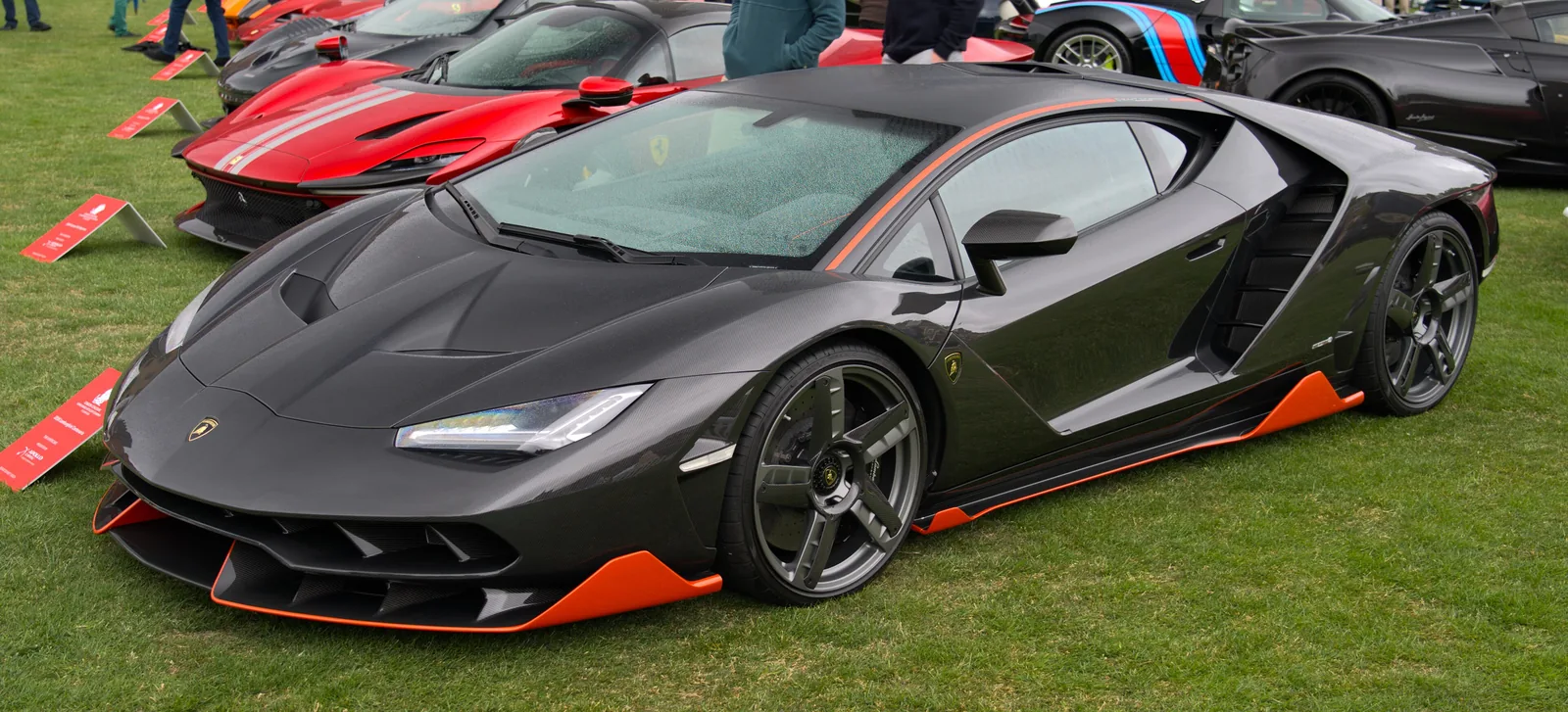
The Lamborghini Centenario LP 770-4 was unveiled by Automobili Lamborghini at the Geneva Motor Show on March 1, 2016 to mark the 100th anniversary of founder Ferruccio Lamborghini's birth. Only 40 cars were built — 20 coupes and 20 roadsters, all sold before the public debut — each powered by a 6.5-litre naturally aspirated V12 producing 770 PS, and each the first Lamborghini fitted with rear-wheel steering.
Lamborghini Centenario Specs: 770 PS From a Naturally Aspirated V12
The Centenario uses the L539 6,498 cc naturally aspirated 60-degree V12 in its highest state of tune at the time of launch: 770 PS (566 kW / 759 hp) at 8,500 rpm and 690 N·m at 5,500 rpm. Drive goes to all four wheels through a seven-speed ISR automated manual gearbox. With a dry weight of 1,520 kg for the coupe, the power-to-weight ratio is 2.21 kg per horsepower, which translates into 0–100 km/h in 2.9 seconds, 0–300 km/h in 23.5 seconds and a top speed of 350 km/h (217 mph).
| Engine | 6,498 cc naturally aspirated 60° V12 (L539) |
|---|---|
| Power | 770 PS / 566 kW / 759 hp at 8,500 rpm |
| Torque | 690 N·m at 5,500 rpm |
| Transmission | 7-speed ISR automated manual, permanent four-wheel drive |
| 0–100 km/h | 2.9 s (0–60 mph 2.8 s) |
| 0–300 km/h | 23.5 s |
| Top speed | 350 km/h (217 mph) |
| Dry weight | 1,520 kg coupe / 1,570 kg roadster (2.21 kg per hp) |
| Chassis | Carbon fibre monocoque (Aventador SV derived), aluminium subframes |
| Aerodynamics | Twin-deck front splitter, active rear wing, 227 kg of downforce at 280 km/h |
| Steering | Lamborghini Dynamic Steering plus rear-wheel steering (a first for the brand) |
| Production | 40 cars — 20 coupes (2016–2017) and 20 roadsters (2016–2018) |
| List price | EUR 1,750,000 coupe / about EUR 2,000,000 roadster, before taxes |
What Separates the Centenario From the Aventador SV
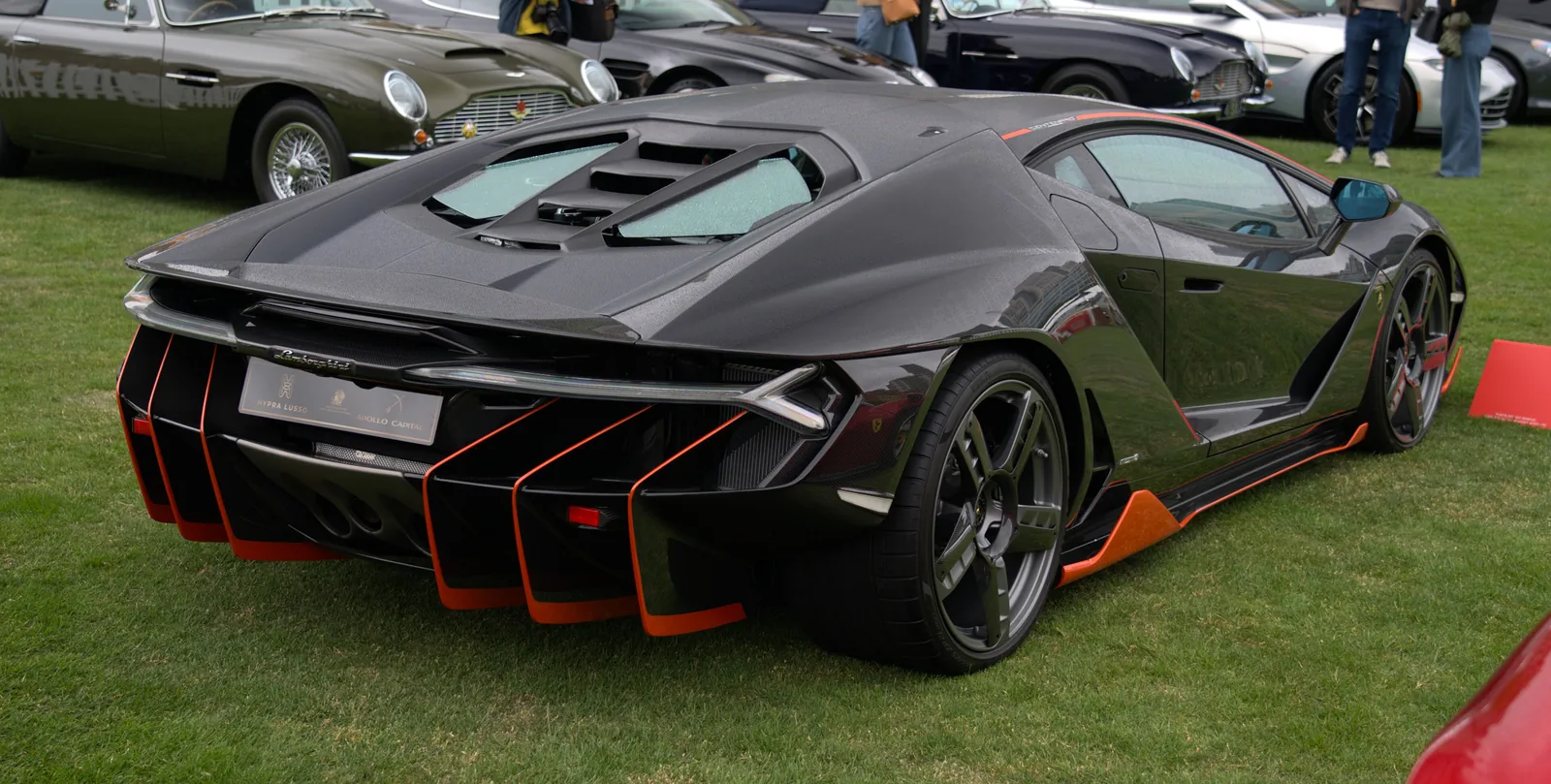
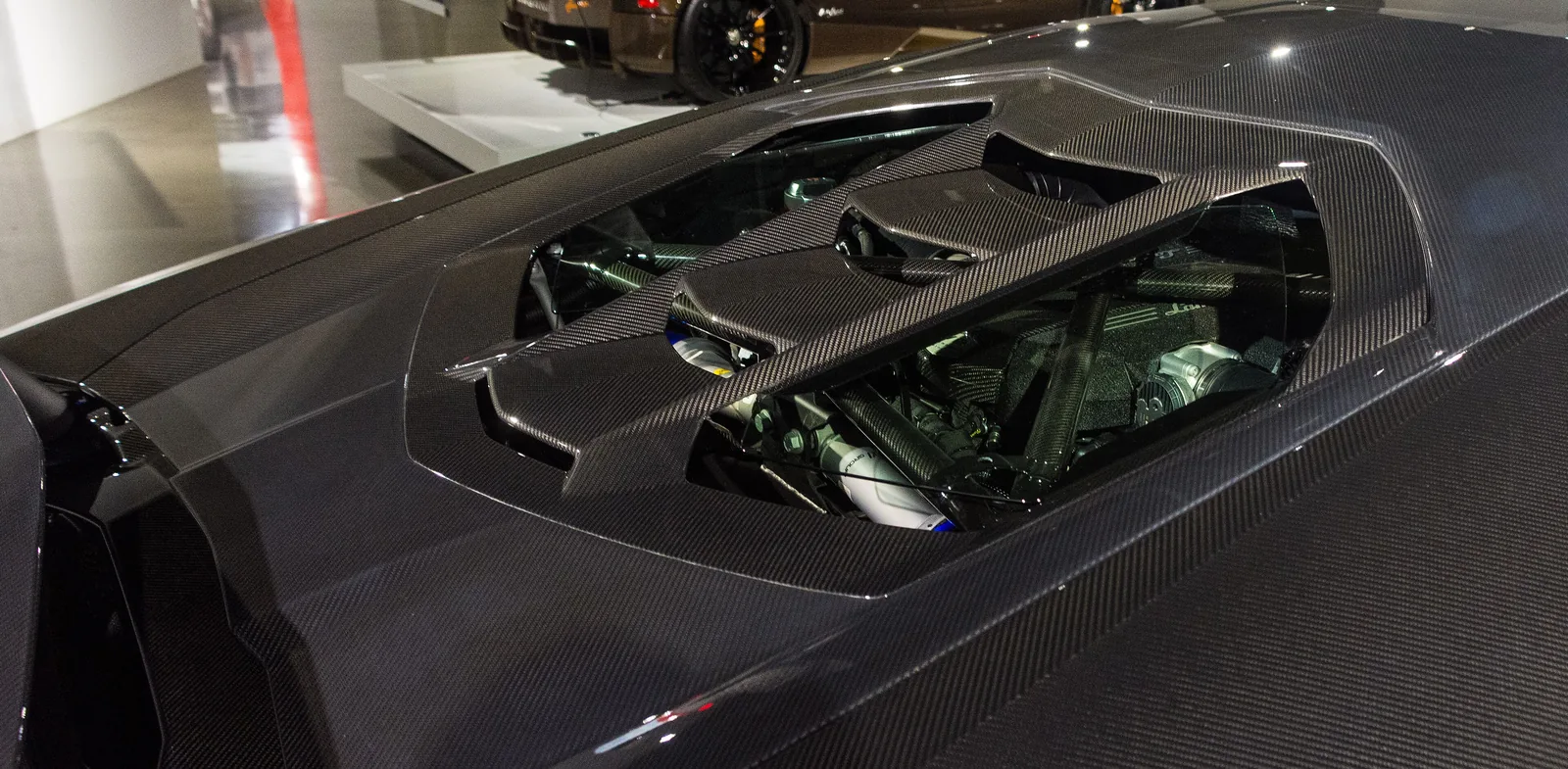
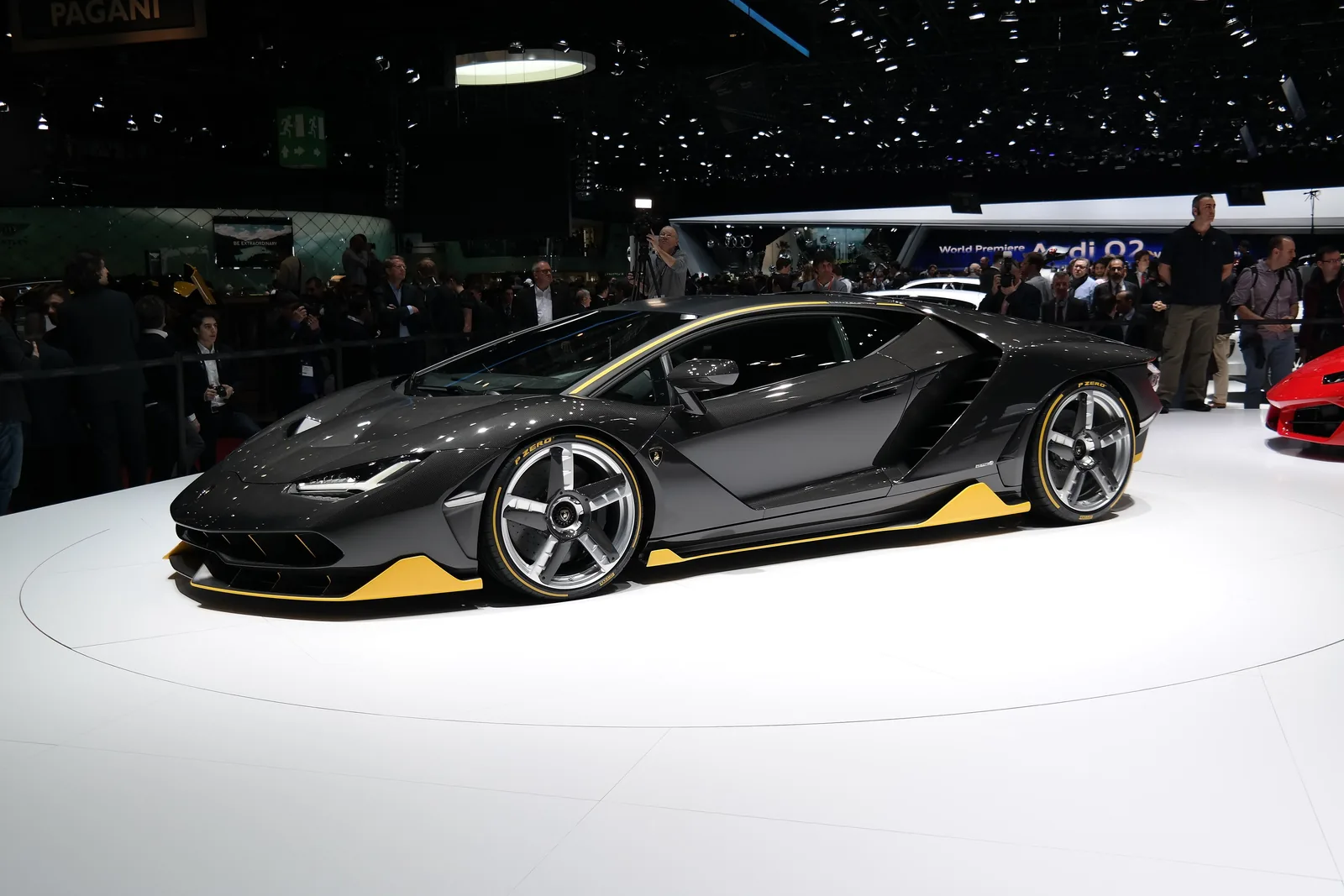
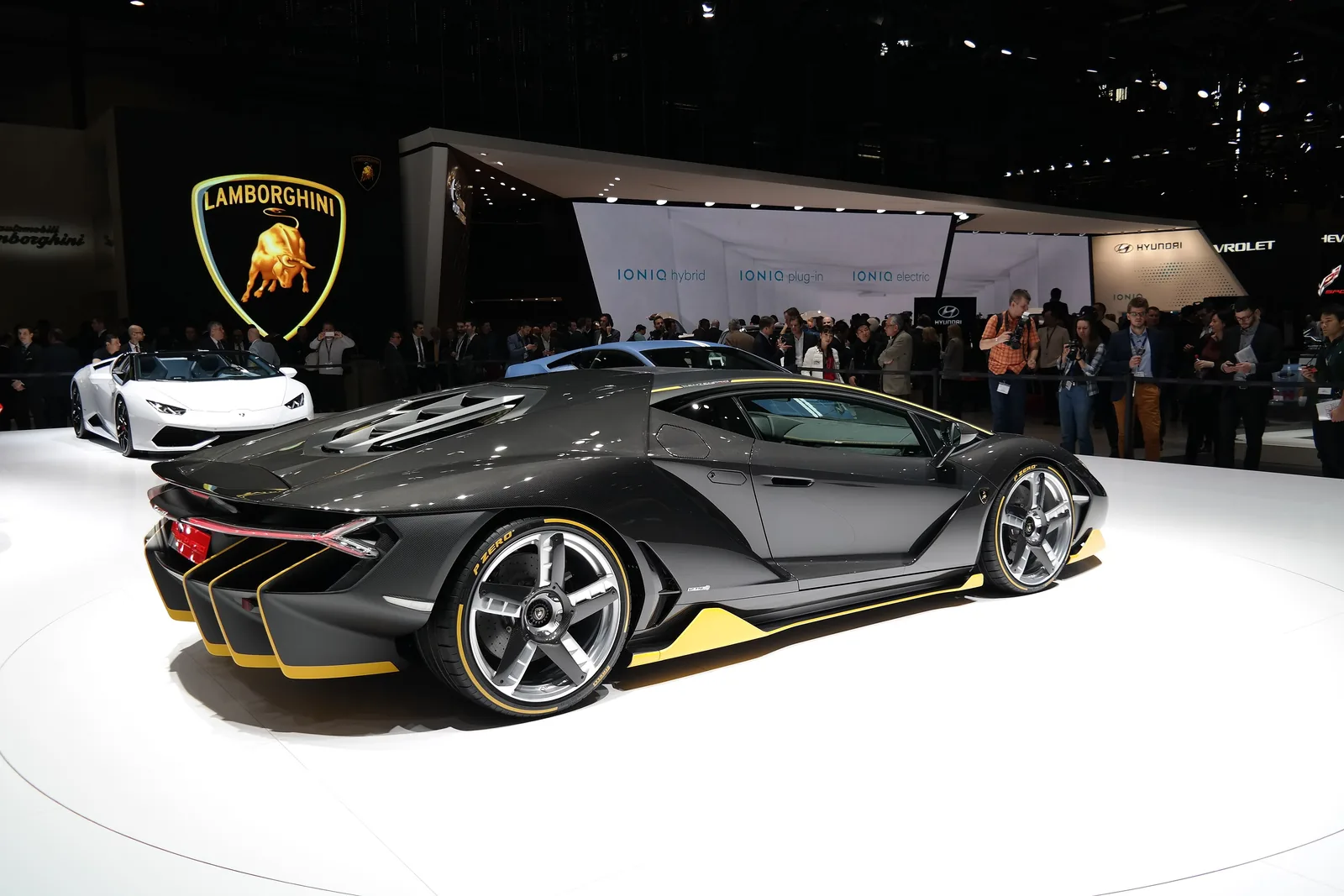
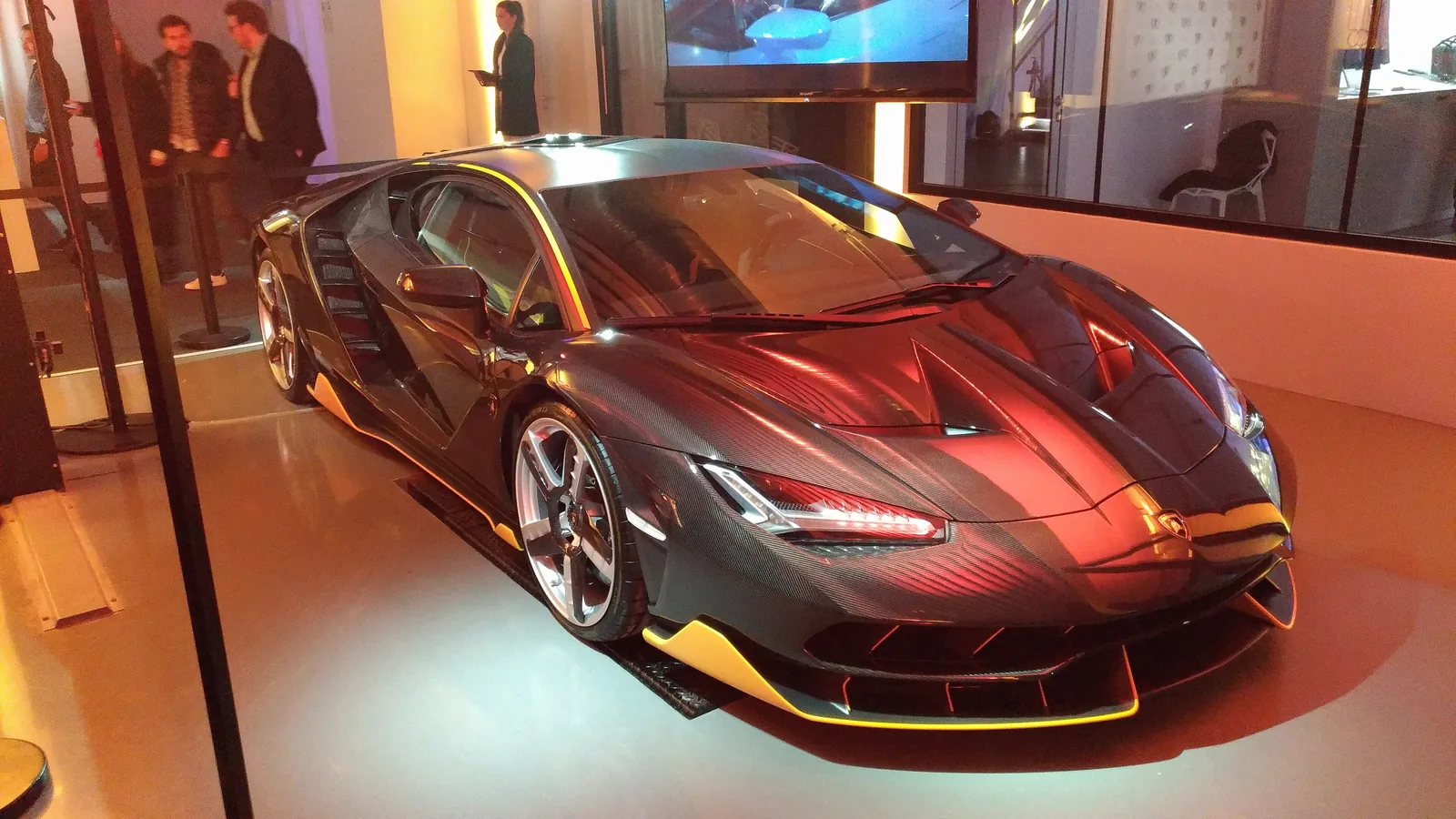
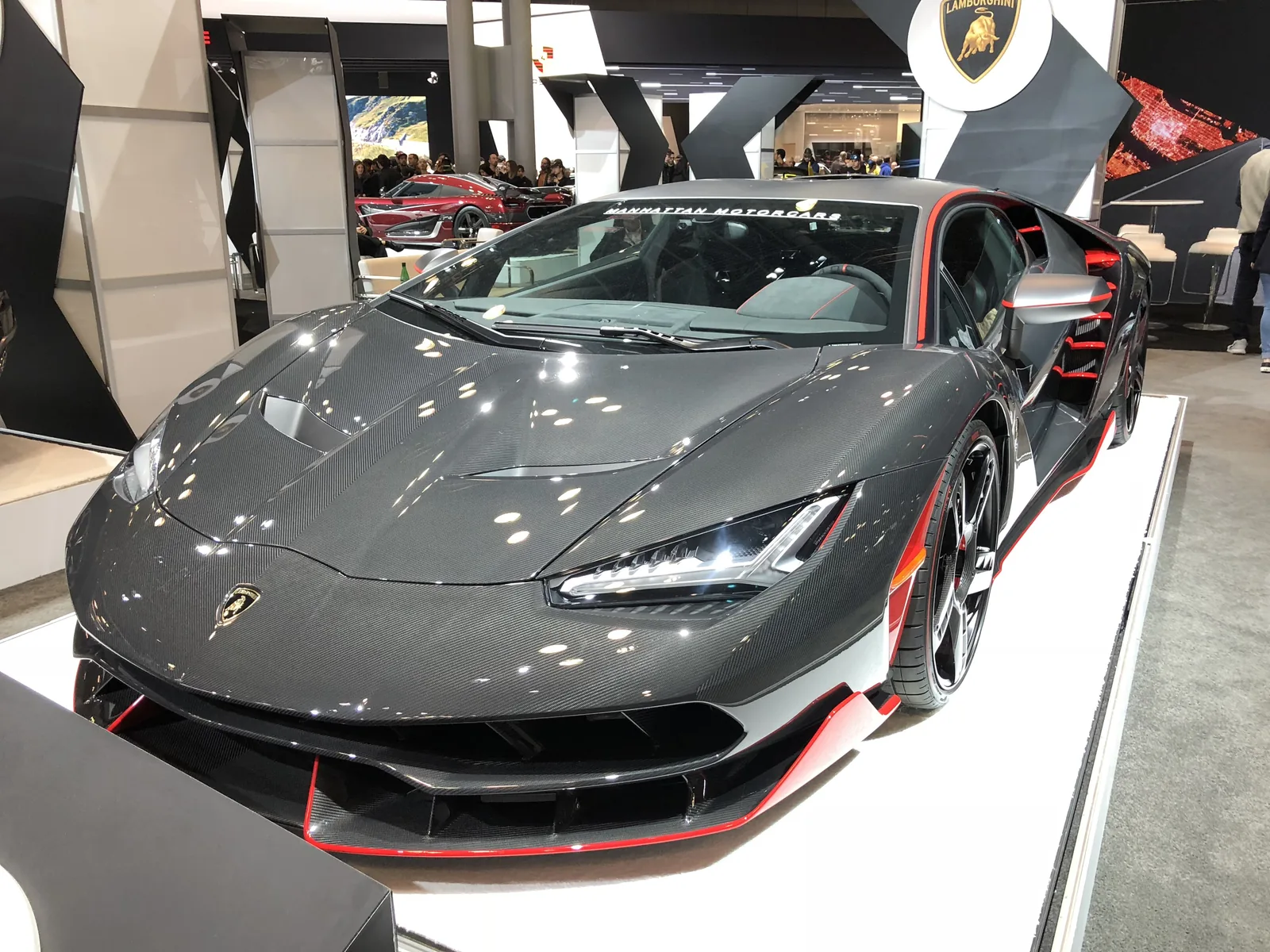
Underneath, the Centenario is built on a carbon fibre monocoque derived from the Aventador SV, with aluminium front and rear subframes carrying the suspension and powertrain. Everything visible above it is specific to the Centenario: a longer, lower nose with a twin-deck splitter, exposed carbon body panels, redesigned side intakes, and the largest rear diffuser Lamborghini had ever fitted to a production car at the time. The bodywork was developed to generate 227 kg of downforce at 280 km/h without a fixed high-mounted wing.
Rear-Wheel Steering and Active Aerodynamics
The Centenario was the first Lamborghini with rear-wheel steering, a system that later reached series production in the Aventador S and the Huracan EVO. Below roughly 100 km/h the rear wheels turn opposite to the fronts to shorten the effective wheelbase; above that speed they turn in the same direction to stabilise high-speed direction changes. It works alongside Lamborghini Dynamic Steering and the pushrod suspension with magnetorheological dampers.
Aerodynamically, the car combines a twin-deck front splitter with an electronically controlled rear wing that extends up to 150 mm and adjusts its angle across a 15-degree range according to speed and drive mode.
Centenario Interior and the 10.1-Inch Touchscreen
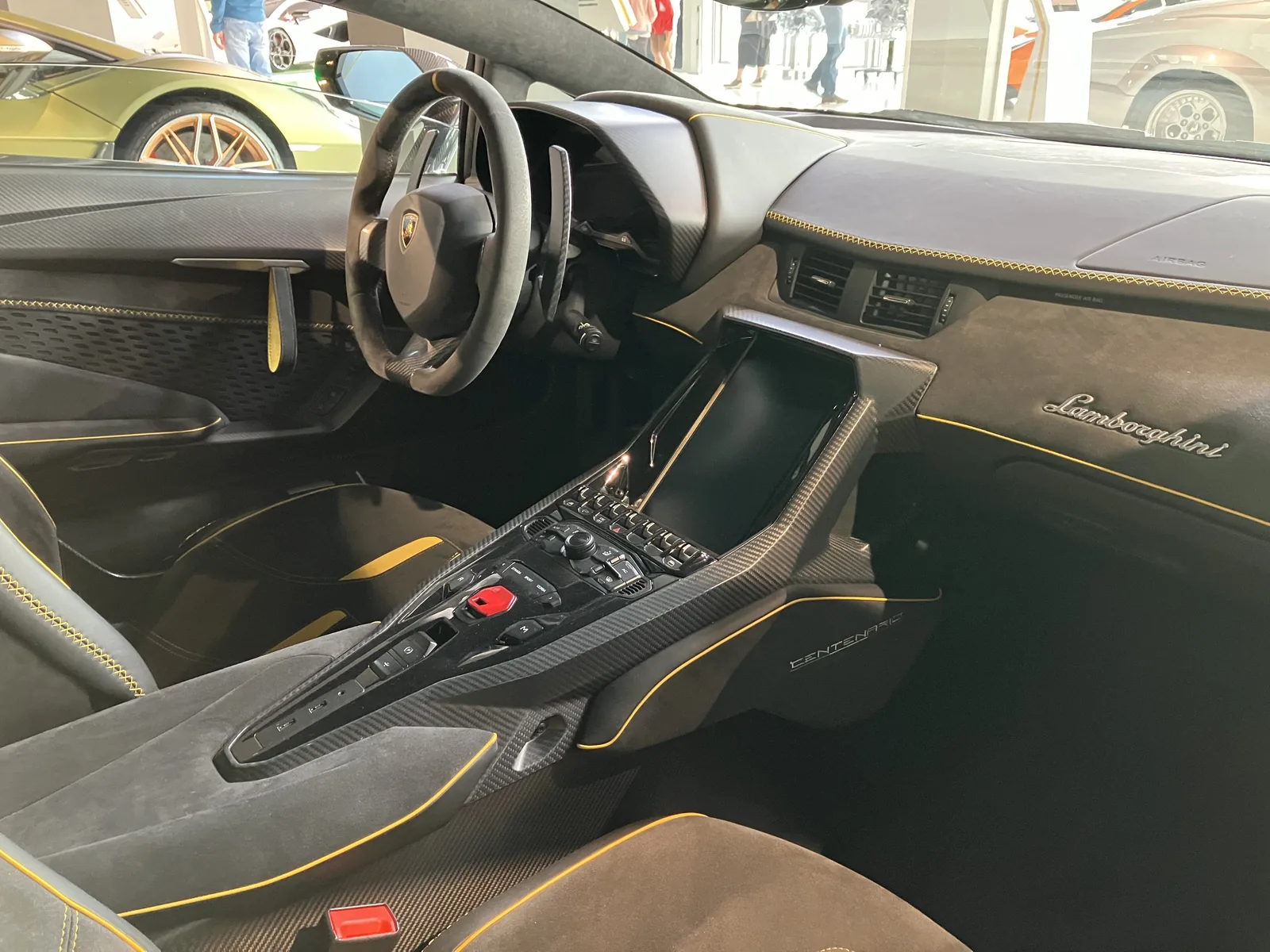
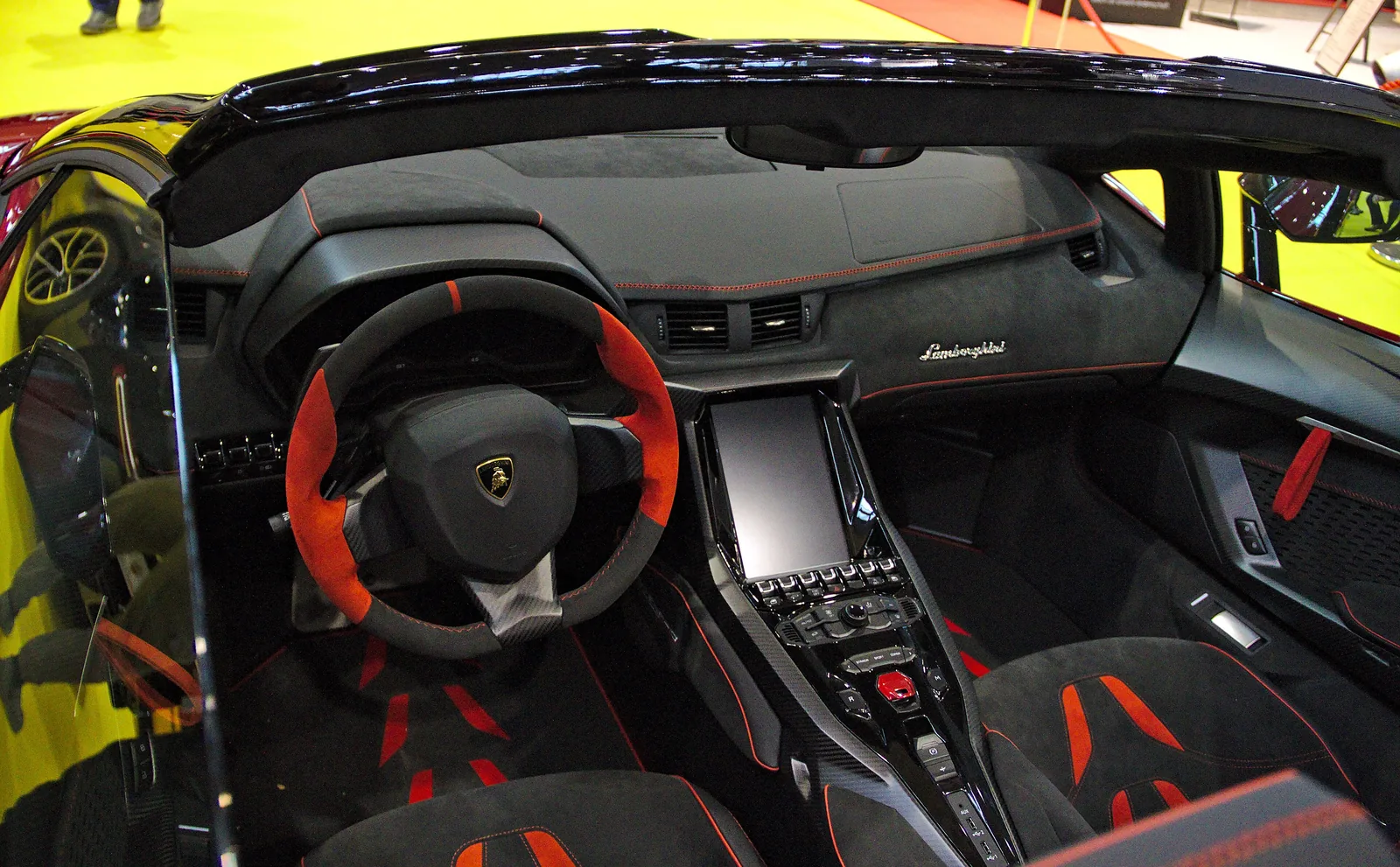
The Centenario introduced Lamborghini's 10.1-inch portrait touchscreen infotainment system, the first in a Lamborghini road car, with connected navigation, Apple CarPlay and an on-board telemetry package that records lap times and driving data. The cabin is trimmed in Alcantara and exposed carbon fibre, with the structural tub left visible along the sills and centre tunnel.
Lamborghini Centenario Roadster: 20 Open-Top Cars
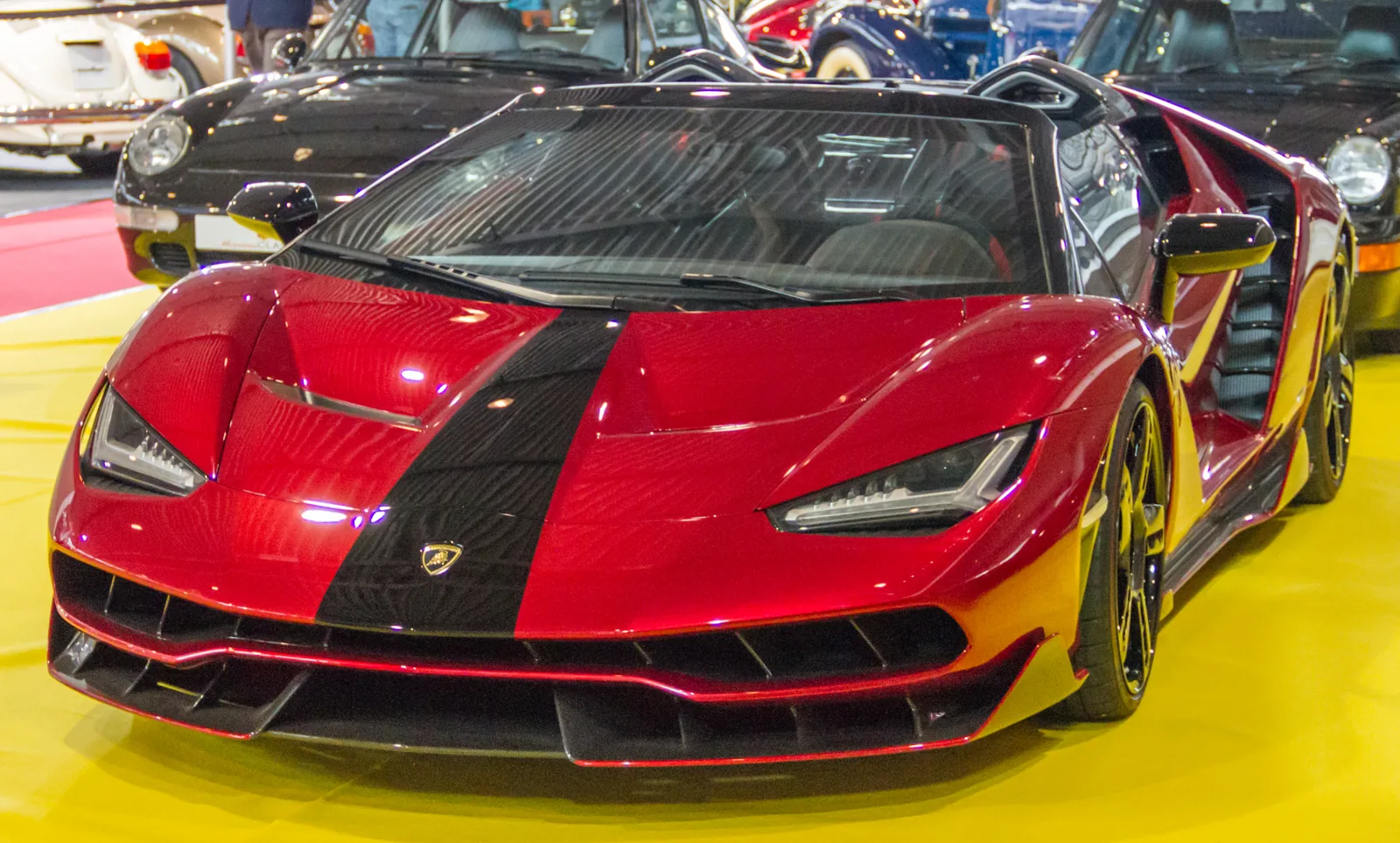
The Centenario Roadster was shown in August 2016 during the Monterey Car Week events at Pebble Beach. It drops the roof panel entirely, adds a reinforced carbon tub, and weighs 1,570 kg dry — 50 kg more than the coupe — while keeping the same 770 PS output, 2.9-second 0–100 km/h claim and 350 km/h top speed. Roadster production ran from 2016 to 2018, one year later than the coupe.
Lamborghini Centenario Price: New vs 2026 Market
New, the coupe was listed at EUR 1,750,000 before taxes and the roadster at approximately EUR 2,000,000 before taxes — roughly USD 1.9 million and USD 2.27 million at 2016 exchange rates. Because the entire run was allocated before the Geneva debut, no Centenario has ever been sold at list price by a dealer to the public.
Public resale evidence is limited by the tiny production run. Documented results include a coupe at USD 2,142,500 and a roadster at USD 2,030,000. Asking prices in 2026 generally sit between USD 2.1 million and USD 3.0 million for the coupe and USD 2.2 million to USD 3.3 million for the roadster; occasional listings above USD 4 million are asks rather than completed sales, and should be treated as such.
How Many Lamborghini Centenarios Were Made?
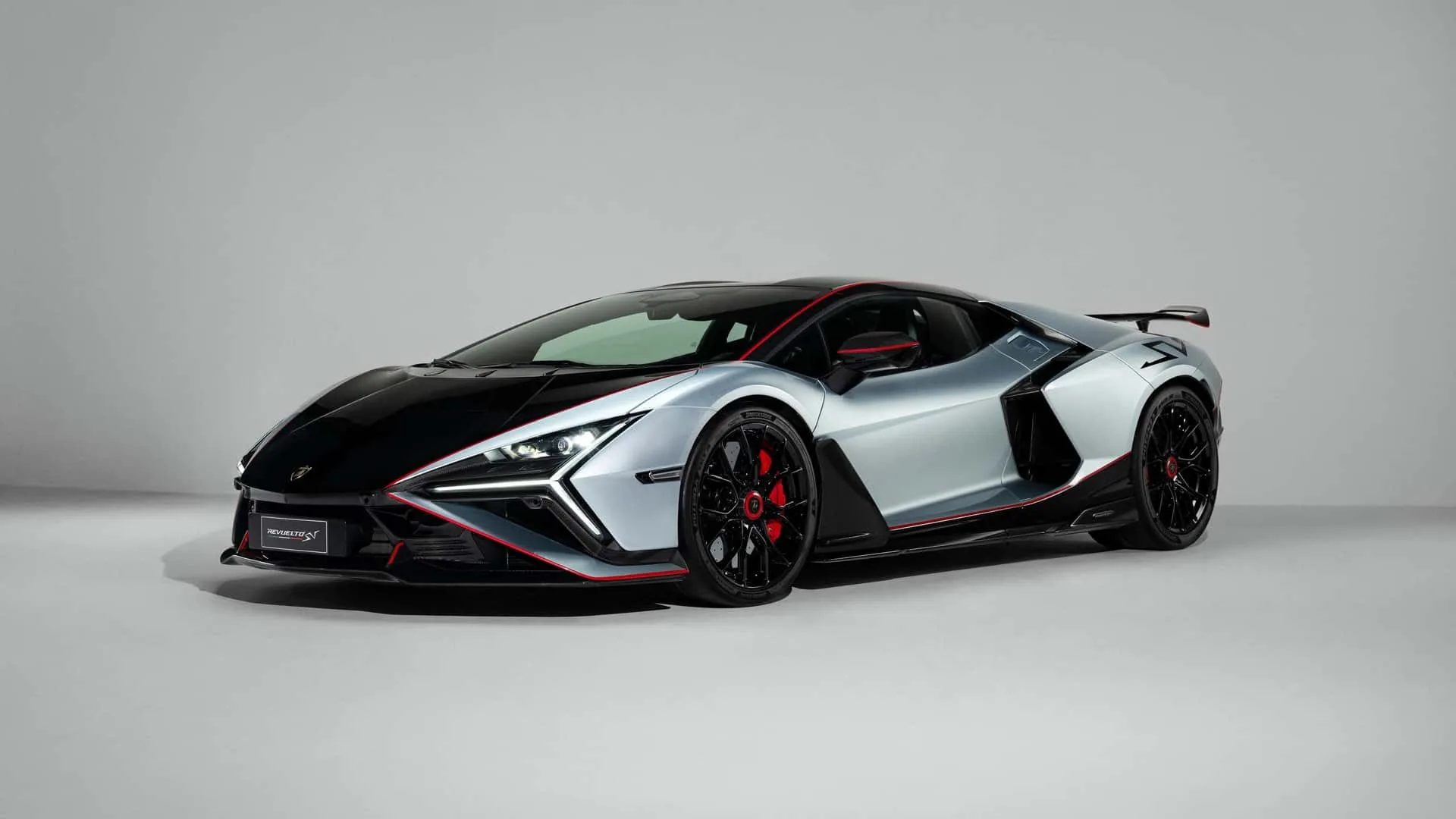
Forty in total: 20 coupes and 20 roadsters. The figure was chosen to reflect the centenary of Ferruccio Lamborghini's birth in 1916. That makes the Centenario rarer than the Sian FKP 37 (82 cars) but more numerous than the Veneno (14 cars), and it puts the model firmly in the same bracket as the brand's other anniversary specials. For the current generation of limited-run V12 Lamborghinis, see our coverage of the Revuelto SV and the Fenomeno Roadster.
| Model | Power | 0–100 km/h | Units |
|---|---|---|---|
| Centenario (2016) | 770 PS, NA V12 | 2.9 s | 40 (20 + 20) |
| Veneno (2013) | 750 PS, NA V12 | 2.9 s | 14 (4 + 9 + 1) |
| Sian FKP 37 (2019) | 819 PS, V12 hybrid | 2.8 s | 82 (63 + 19) |
The Centenario in Transformers: The Last Knight
The Centenario is also the reason a 40-car anniversary Lamborghini has mainstream recognition: it plays the vehicle form of the Autobot Hot Rod in Transformers: The Last Knight (2017). The film used purpose-built replicas rather than customer cars, and the model appears alongside the other hero vehicles in our Movie Cars archive.
Frequently Asked Questions
How much is a Lamborghini Centenario?
The Centenario coupe listed at EUR 1,750,000 before taxes and the roadster at about EUR 2,000,000 before taxes when new. All 40 cars were sold before the public debut, so current values are set by the secondary market: completed public sales include a coupe at USD 2,142,500 and a roadster at USD 2,030,000, with 2026 asking prices generally between USD 2.1 million and USD 3.3 million.
How many Lamborghini Centenarios were built?
Forty cars in total: 20 coupes and 20 roadsters. The number matches the 100th anniversary of Ferruccio Lamborghini's birth, which the model was built to mark. Coupe production ran in 2016 and 2017, roadster production from 2016 to 2018.
How much horsepower does the Lamborghini Centenario have?
770 PS (566 kW / 759 hp) at 8,500 rpm and 690 N-m of torque at 5,500 rpm, from a 6.5-litre naturally aspirated L539 V12. The LP 770-4 name refers to the 770 metric horsepower and four-wheel drive.
How fast is the Lamborghini Centenario?
Lamborghini quotes 0-100 km/h in 2.9 seconds, 0-300 km/h in 23.5 seconds and a top speed of 350 km/h (217 mph).
What is the Lamborghini Centenario in Transformers?
The Centenario is the vehicle form of the Autobot Hot Rod in Transformers: The Last Knight (2017), which is why the model is often searched together with the film.
Was the Centenario based on the Aventador?
Yes. The Centenario uses a carbon fibre monocoque derived from the Aventador SV with aluminium front and rear subframes, the same 6.5-litre V12 family and the 7-speed ISR gearbox, but it is the first Lamborghini with rear-wheel steering and it carries unique bodywork with the largest rear diffuser Lamborghini had fitted at the time.
Why the Centenario Still Matters
The Centenario marks the last stage of Lamborghini's purely naturally aspirated V12 flagship line before electrification: the Sian added a supercapacitor hybrid system in 2019, and the Revuelto replaced the V12 flagship entirely with a plug-in hybrid in 2023. As a 40-car, 770 PS, non-hybrid V12 with rear-wheel steering and a carbon tub, it sits at a technical boundary that Lamborghini will not return to.
Related Reading on Batman Garage
Sources
- Lamborghini Centenario — technical specification and production data
- duPont Registry — Centenario specs, price and photos
- Hyper.luxe — Centenario coupe market values
- Hyper.luxe — Centenario Roadster market values
- Photography: Wikimedia Commons contributors, licensed CC BY 2.0 / CC BY 4.0 / CC BY-SA 4.0 (credited per image).