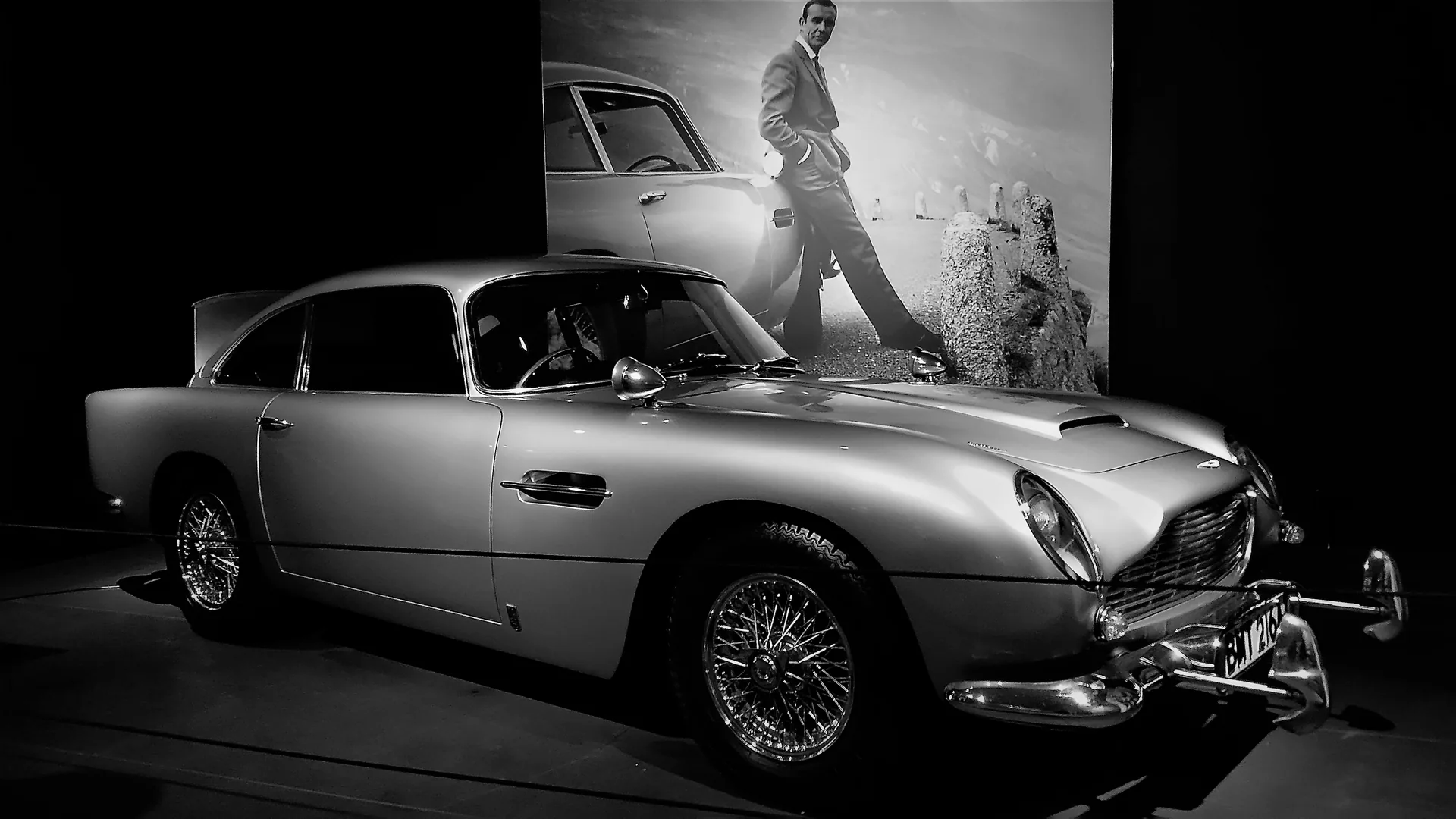
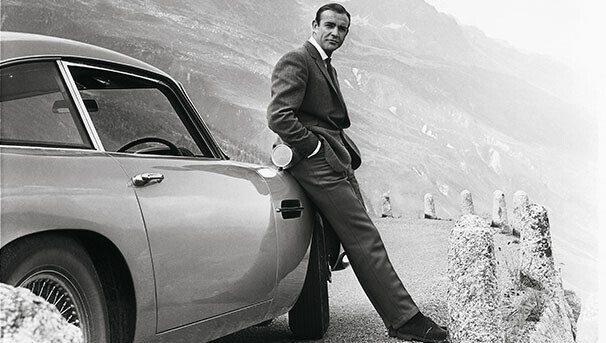
The Aston Martin DB5 became James Bond’s defining car in Goldfinger, which held its world premiere at the Odeon Leicester Square in London on 17 September 1964. The Silver Birch grand tourer paired Aston Martin engineering with special-effects props that established the template for every gadget-equipped Bond car that followed.
Aston Martin DB5 in Goldfinger: Why It Became 007’s Car
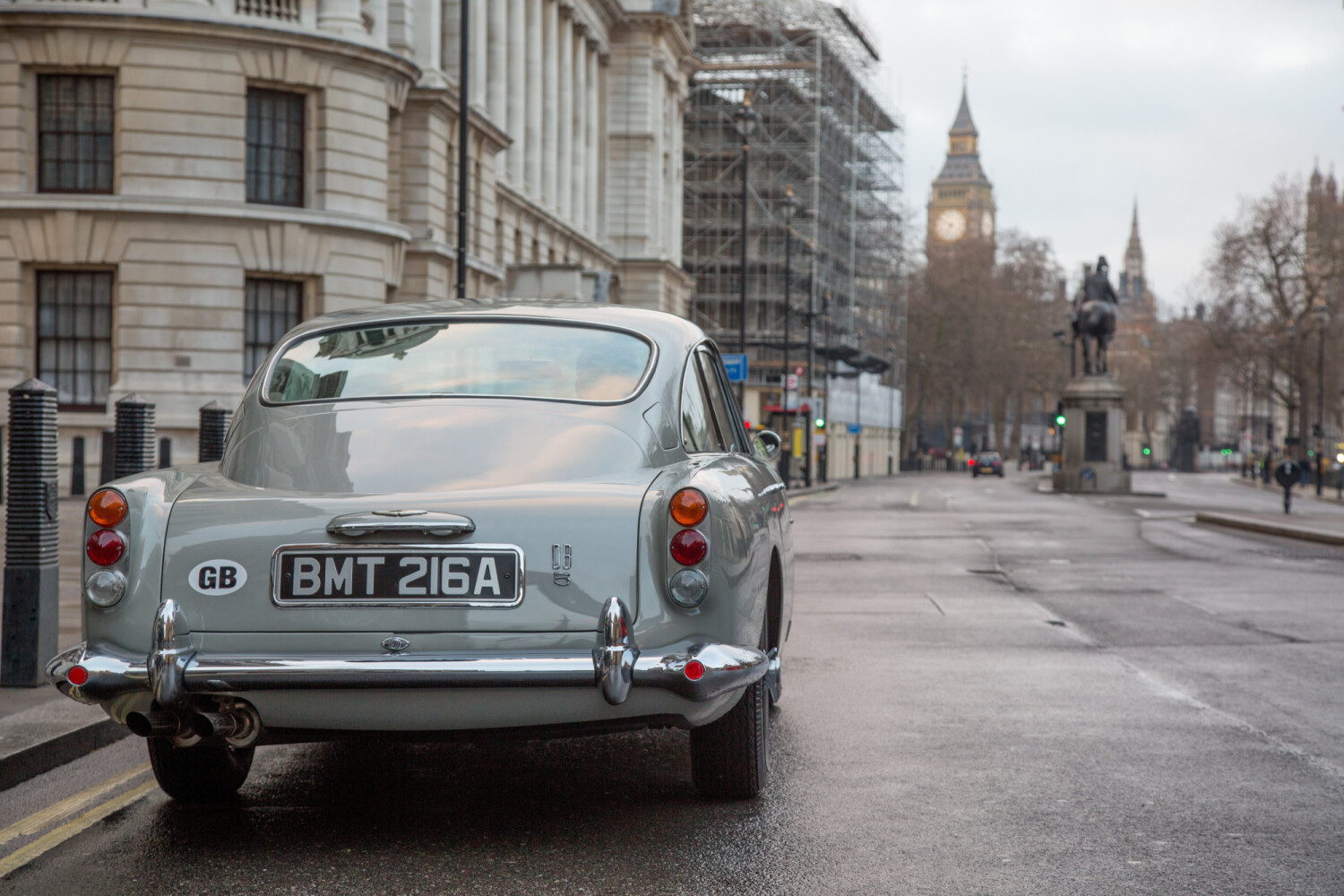
Production designer Ken Adam and effects specialist John Stears secured Aston Martin’s DB5 development prototype for the film. On screen, Q replaces Bond’s Bentley with registration BMT 216A and demonstrates concealed equipment. A second, properly finished DB5 handled the Alpine driving sequences. The combination of restrained Touring styling and an implausibly dense equipment package made the car part of the character rather than simple transport.
Original 1963–1965 Aston Martin DB5 Specs
The production DB5 was built at Newport Pagnell from 1963 to 1965; Aston Martin records 898 original sports saloons. Its 3,995 cc naturally aspirated twin-cam straight-six used three SU carburettors and produced 282 bhp at 5,500 rpm with 288 lb-ft at 3,850 rpm. Factory figures list 0–60 mph in 7.1 seconds and 142 mph. A five-speed ZF manual was fitted, with a three-speed Borg-Warner automatic available.
| Specification | Original DB5 Sports Saloon |
|---|---|
| Production | 1963–1965; 898 saloons |
| Engine | 3,995 cc DOHC inline-six, naturally aspirated |
| Output | 282 bhp at 5,500 rpm; 288 lb-ft at 3,850 rpm |
| Transmission | 5-speed ZF manual; 3-speed automatic optional |
| Performance | 0–60 mph: 7.1 s; top speed: 142 mph |
| Drive / brakes | Rear-wheel drive; Girling discs front and rear |
Aston Martin DB5 Horsepower, 0–60 mph and Top Speed
Published DB5 performance figures differ between sources, which is normal for a car tested in 1963 with no single standardised protocol. The standard engine is a 3,995 cc all-alloy Tadek Marek DOHC straight-six with a 96 × 92 mm bore and stroke, rated at 282 bhp (286 PS / 210 kW) at 5,500 rpm on three SU carburettors, with 288 lb-ft (390 Nm) at 3,850 rpm. The optional Vantage specification substituted three Weber carburettors and revised camshafts for 325 bhp at 5,500 rpm; 007.com quotes 314 bhp at 5,750 rpm for the same engine in GT form, and specialist dealers use the lower figure as well.
Acceleration and top speed spread in the same way. Aston Martin’s own model page gives 0–60 mph in 7.1 seconds and 142 mph, while 007.com lists 8.1 seconds and 142.6 mph and reference overviews cite 8.0 seconds and 145 mph. Vantage cars are quoted at 6.5 seconds and about 150 mph. All of these are period figures for a 1,502 kg car, so the practical conclusion is a low-eight-second car in ordinary use and a mid-140s mph top speed.
| Specification | DB5 Standard | DB5 Vantage |
|---|---|---|
| Power | 282 bhp (286 PS / 210 kW) at 5,500 rpm | 325 bhp (330 PS / 242 kW) at 5,500 rpm |
| Torque | 288 lb-ft (390 Nm) at 3,850 rpm | — |
| Carburettors | Three SU | Three Weber, revised camshafts |
| 0–60 mph | 7.1 s factory; 8.0–8.1 s in independent references | 6.5 s |
| Top speed | 142–145 mph depending on source | approx. 150 mph |
| Kerb weight | 1,502 kg (3,311 lb) | |
| Transmission | ZF 5-speed manual standard; approx. 40 cars with the 4-speed David Brown box, approx. 20 with the Borg-Warner 3-speed automatic | |
| Price when new | £4,175 saloon; £4,490 convertible | |
| Production | 1,059 cars, July 1963 – September 1965, including 123 convertibles, 13 shooting brakes and 65 Vantage coupés | |
Production totals also depend on how bodies are counted. The most commonly cited total is 1,059 original DB5s between July 1963 and September 1965, including 123 convertibles, 13 shooting brakes and 65 Vantage coupés; saloon-only counts range from about 887 to 899 depending on the register consulted. A saloon cost £4,175 including taxes when new.
Goldfinger DB5 Gadgets Explained as Film Props
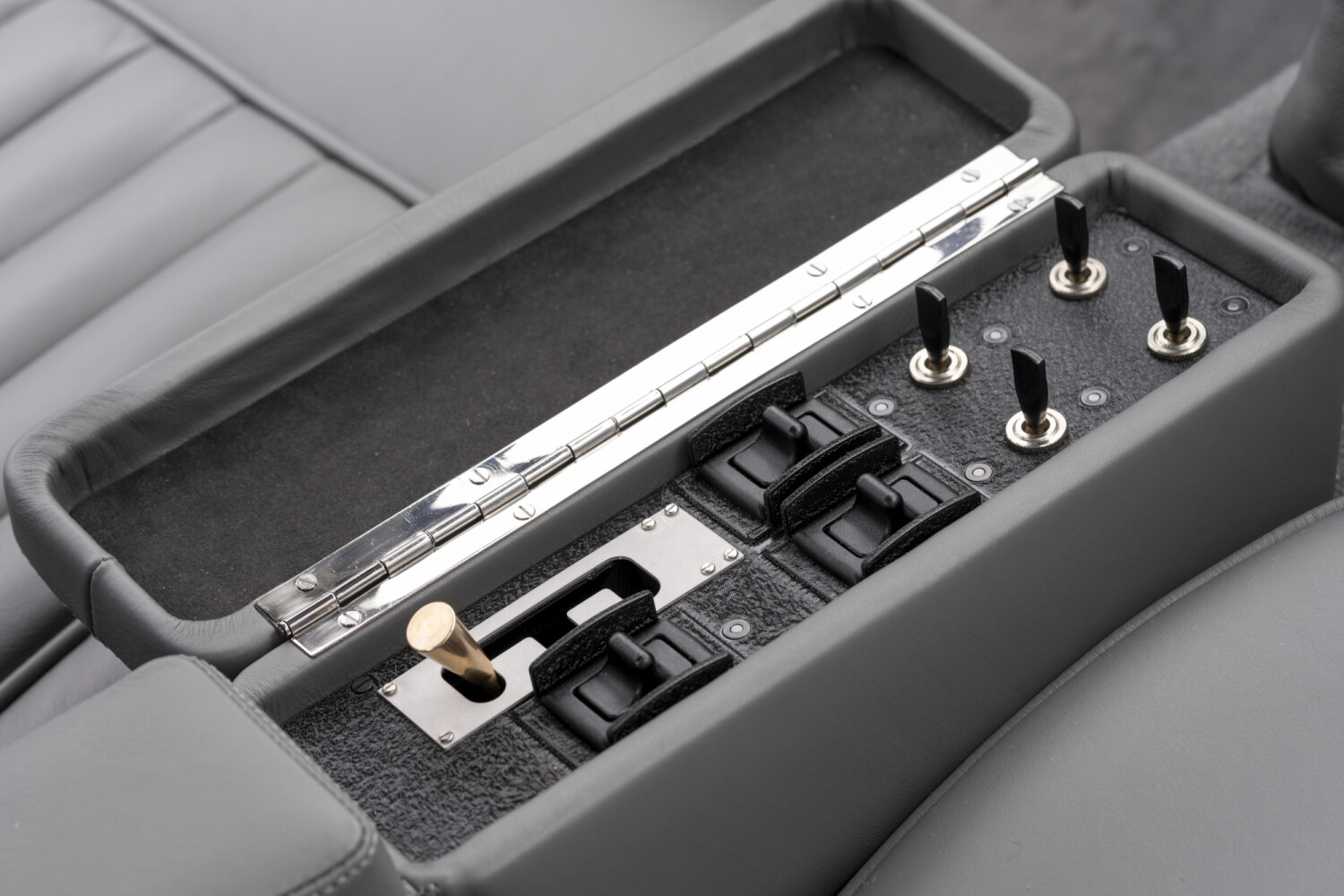
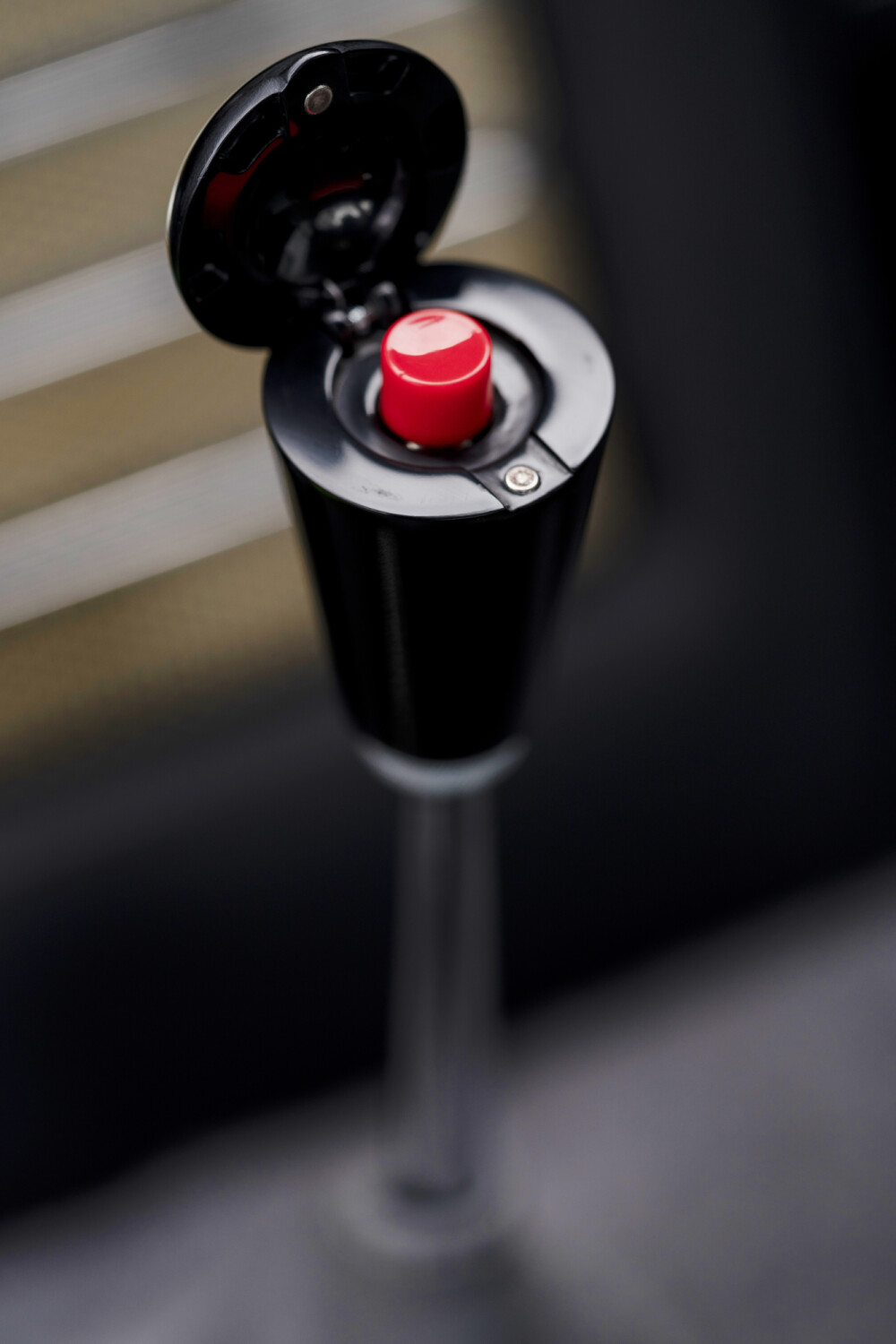
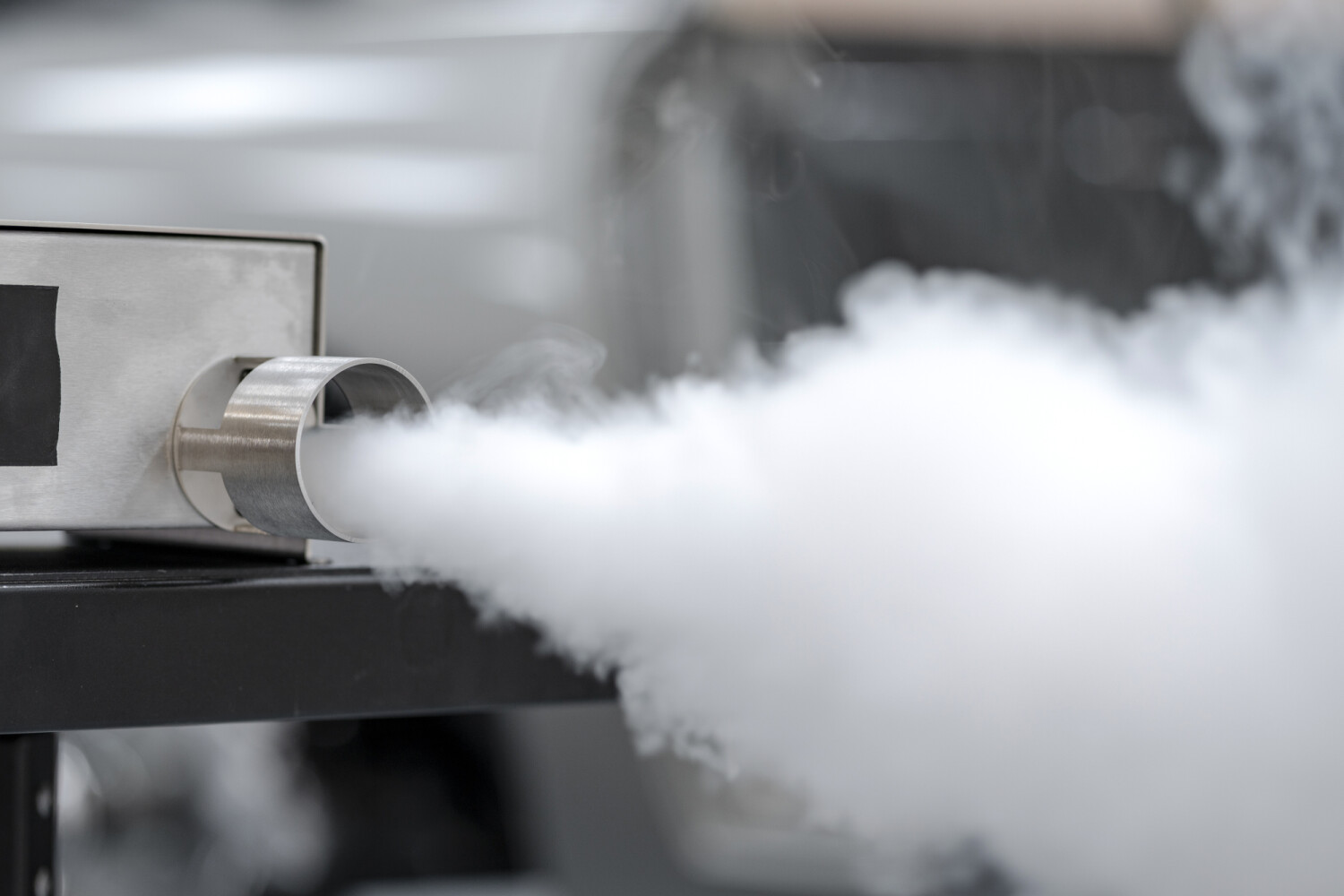
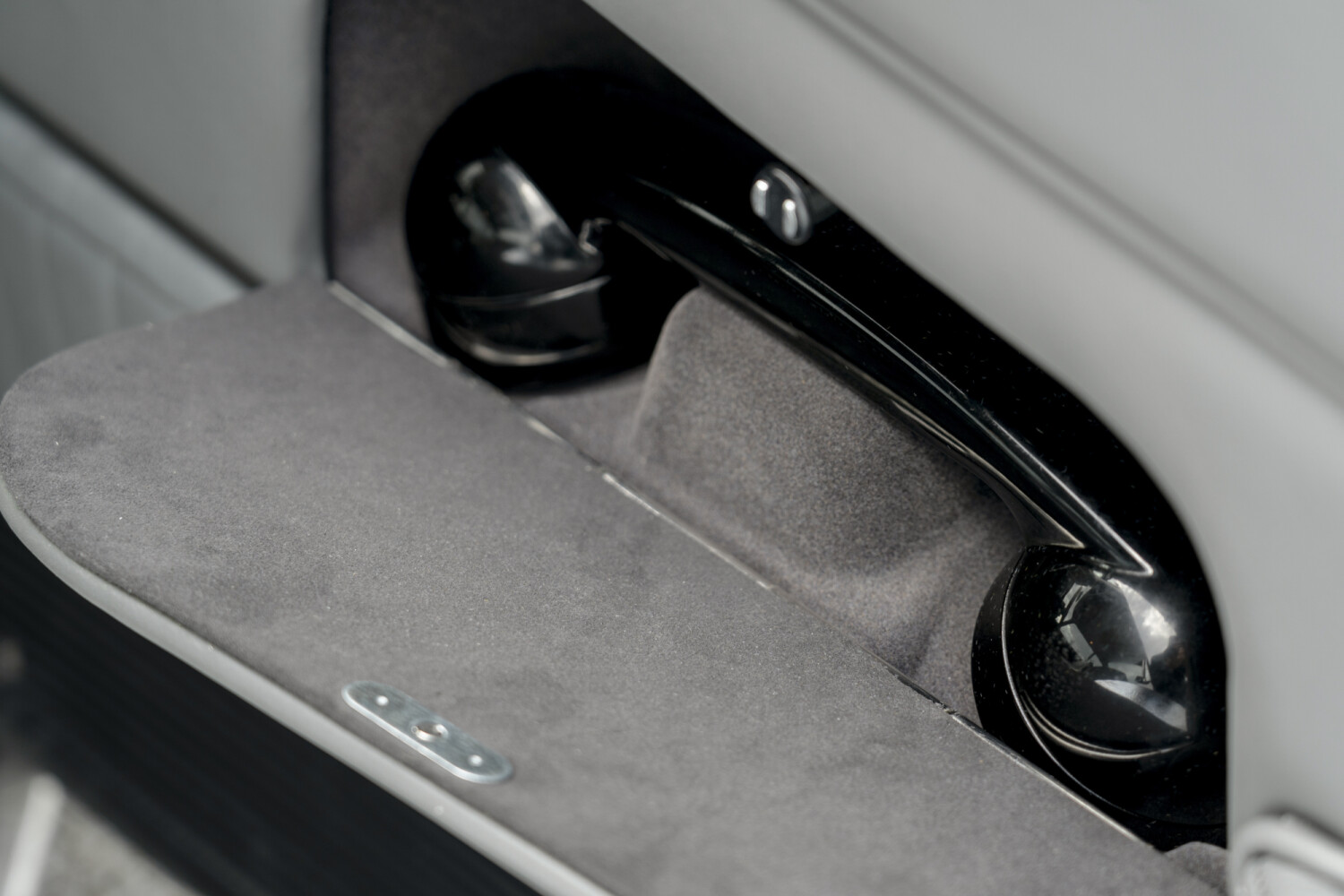
The weapons were cinematic mechanisms, not production-car equipment. Retractable prop gun barrels appeared behind the front indicators; revolving plates rotated among British, French and Swiss identities; a rear shield covered the glass; and practical rigs delivered smoke and simulated oil. The wheel-mounted tyre slasher was an effects device. For the ejector-seat sequence, the prototype’s roof was cut for the stunt; the gear-knob button and cabin controls were props. The tracker display, door telephone and under-seat weapons tray completed Q Branch’s fictional installation.
Which DB5 Cars Were Used to Film Goldfinger?
The primary effects car was chassis DP/216/1, a DB5 development prototype derived from the DB4 Series 5. Aston Martin also supplied a finished road car, FMP 7B, for driving footage. This distinction matters: the heavily modified hero/effects vehicle and the standard road car performed different production roles, while later promotional DB5s expanded the public display fleet.
BMT 216A and BMT 214A: The Goldfinger Registration Plates
BMT 216A is the registration worn by the effects car DP/216/1 in Goldfinger, and it is part of the gadget rather than incidental: the car carried a three-way revolving plate set combining the British BMT 216A, the French 4711-EA-62 and the Swiss LU 6789. The plate was demonstrated in Q’s laboratory but never actually used during the Alpine sequence. The same registration later reappeared on the Silver Birch DB5 used in Skyfall and Spectre, which is why it functions as the franchise’s de facto identifier for the car.
BMT 214A is a different car entirely. It is the registration of the gadget-free DB5 presented as Bond’s personal vehicle in GoldenEye (1995), and the two plates are frequently conflated. A useful rule: 216A is the armed Goldfinger effects car, 214A is the unarmed GoldenEye road car.
The Stolen Goldfinger DB5: DP/216/1 Has Been Missing Since 1997
DP/216/1 was stolen in June 1997 from a private hangar at Boca Raton Airport in Florida, where owner Anthony Pugliese III kept it. The thief cut the hangar door latch and the alarm wiring; a sleeping guard was subsequently dismissed. Pugliese had bought the car in 1986 for $275,000 and was paid its insured value of $3.2 million after a 2006 appraisal placed it around $4 million. He was investigated but never charged.
The car has never been recovered. Christopher A. Marinello of Art Recovery International has pursued it for roughly a decade, and the intelligence he describes places it in a private Middle East collection, possibly in Saudi Arabia, Dubai, Kuwait or Bahrain, with a chassis number said to match. A $100,000 reward is offered in connection with the SPYSCAPE podcast The Most Famous Car in the World. Current value estimates for the car if recovered run from about £18.2 million to roughly $25 million. Recent reporting adds a suspect thread around car thief Chris Gardner, arrested in Switzerland in 2021 and extradited over a separate Talbot-Lago case, in which charges were dropped in 2024 after a witness died. A private investigator believes Gardner hid the Aston and shipped it abroad under a changed identity. Gardner denies involvement.
Goldfinger Continuation vs the Original 282 bhp DB5
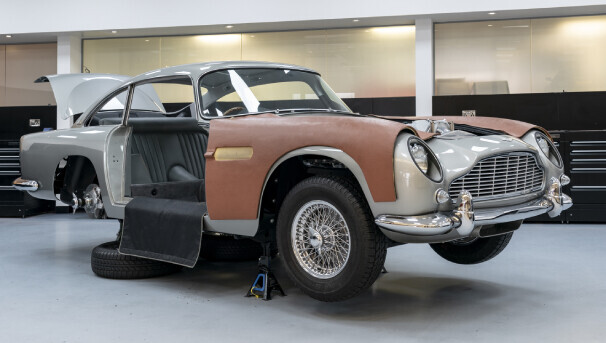
The Goldfinger DB5 Continuation is not a surviving 1960s film car. Aston Martin Works built 25 customer recreations from 2020 at Newport Pagnell, each requiring in excess of 4,000 hours and priced at £2.75 million plus taxes. They use a 4.0-litre straight-six producing about 290 bhp and modern special-effects engineering. Their machine guns, oil slick, tyre slasher and radar are explicitly simulated; the smoke screen and rotating plates operate, subject to legislation. Aston Martin states that the cars are not road legal.
Other James Bond Films Featuring the Aston Martin DB5
The DB5 returned in Thunderball (1965), then reappeared in GoldenEye, Tomorrow Never Dies, Casino Royale, Skyfall, Spectre and No Time To Die. Its roles changed from elegant road car to armed legacy vehicle, but Goldfinger remains the source of the BMT 216A identity and the familiar gadget vocabulary.
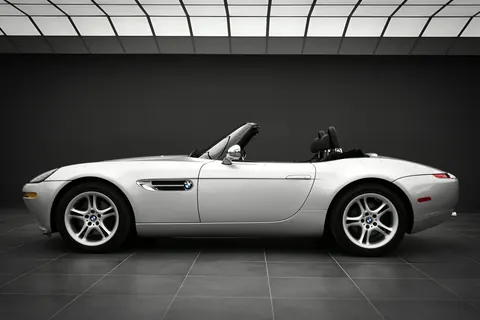
Between those Aston Martin appearances the series ran a three-year product agreement with BMW, which expired after the BMW Z8 in The World Is Not Enough (1999) — the last BMW used as Bond’s car before the marque returned to Aston Martin.
Aston Martin DB5 Price and Collector Context
Ordinary DB5 values vary sharply with originality, history and condition. Recent RM Sotheby’s results range from £376,250 to £567,500, while a 2026 estimate reached £700,000–£900,000. Screen-used Bond provenance sits in a different market: a 1965 promotional Bond DB5 sold for $6.385 million in 2019.
How Much Is an Aston Martin DB5 Worth in 2026?
The DB5 market divides into three clearly separated tiers, and conflating them is the most common valuation error. An ordinary matching-numbers saloon is a half-million-dollar car: a 1965 RHD Silver Birch example made $500,000 at RM Sotheby’s Monterey in 2025. A Goldfinger Continuation, built new by Aston Martin Works but not road legal, achieved $1,072,000 at the same auction house in August 2026 — roughly a third of its £2.75 million list price plus taxes, which is a useful reference point for anyone treating Continuations as an investment. Genuine screen provenance is a different market entirely, in the millions.
| Car | Result | Sale |
|---|---|---|
| 1965 Bond-modified DB5 (DB5/2008/R), one of two built to promote Thunderball | $6.4 million | RM Sotheby’s Monterey, 15 August 2019 (estimate $4–6 m) |
| 1964 Goldfinger / Thunderball film car (DB5/1486/R) | $4.6 million (£2.6 m) | RM London, 2010 |
| No Time To Die DB5 stunt car | £2.92 million | Charity auction, London, 2022 |
| 2020 DB5 Goldfinger Continuation | $1,072,000 | RM Sotheby’s Monterey, 13–15 August 2026 |
| 1965 DB5 saloon, chassis 2151, RHD, Silver Birch, matching numbers | $500,000 | RM Sotheby’s Monterey, 2025 |
For a buyer, the practical implications are that Continuation cars depreciate against their list price, standard saloons track originality and documentation rather than badge appeal, and screen-used cars are priced on provenance paperwork rather than mechanical condition.
Frequently Asked Questions About the James Bond Aston Martin DB5
Was the Aston Martin DB5 in Goldfinger a real production car?
Goldfinger used both a development prototype modified with working effects and a finished road car for driving footage. The underlying DB5 engineering was genuine, but the weapons, ejector seat and tracking equipment were created as cinematic mechanisms.
Which James Bond films feature the Aston Martin DB5?
The DB5 debuted in Goldfinger and returned in Thunderball, GoldenEye, Tomorrow Never Dies, Casino Royale, Skyfall, Spectre and No Time To Die. Its repeated appearances established it as the Bond franchise’s most recognizable car.
How much is an original James Bond DB5 worth?
A normal road-going DB5 and a Bond-associated car belong to different collector markets. Standard examples often sell in the high six figures, while a 1965 promotional Bond DB5 with functioning gadgets sold for $6.385 million in 2019.
Are the Aston Martin DB5 Goldfinger Continuation cars road legal?
No. Aston Martin built 25 customer Goldfinger Continuation cars with recreated special-effects equipment, but the company states that they are not road legal. Their rotating plates, smoke system and simulated weapons are intended for private use and display.
How much horsepower does the Aston Martin DB5 have?
The standard 3,995 cc DOHC straight-six is rated at 282 bhp (286 PS) at 5,500 rpm with 288 lb-ft at 3,850 rpm. The optional Vantage specification, with three Weber carburettors and revised camshafts, is quoted at 325 bhp; 007.com gives 314 bhp at 5,750 rpm for the same engine in GT form.
What is the Aston Martin DB5 0–60 mph time and top speed?
Aston Martin quotes 7.1 seconds and 142 mph. Independent references give 8.0 to 8.1 seconds and 142.6 to 145 mph, and Vantage cars are quoted at 6.5 seconds and about 150 mph. The variation reflects 1960s test practice rather than different cars.
How many Aston Martin DB5s were built?
Approximately 1,059 original DB5s were built at Newport Pagnell between July 1963 and September 1965, including 123 convertibles, 13 shooting brakes and 65 Vantage coupés. Saloon-only counts range from about 887 to 899 depending on the register used.
What is BMT 216A?
BMT 216A is the registration worn by the Goldfinger effects car, chassis DP/216/1. It was one of three plates on a revolving display alongside the French 4711-EA-62 and Swiss LU 6789, and it reappeared on the DB5 used in Skyfall and Spectre. BMT 214A is a separate, gadget-free DB5 that served as Bond’s personal car in GoldenEye.
Has the stolen Goldfinger DB5 ever been found?
No. DP/216/1 was stolen in June 1997 from a hangar at Boca Raton Airport in Florida and remains missing. A recovery effort led by Christopher A. Marinello of Art Recovery International places it in a private Middle East collection, and a $100,000 reward is offered. Estimates of its value if recovered run from about £18.2 million to roughly $25 million.
Sources & Verification
- 007.com — Goldfinger premiere and production details
- 007.com — Aston Martin DB5 film history and gadgets
- Aston Martin — original DB5 specifications
- Aston Martin Media — Goldfinger Continuation engineering
- Wikimedia Commons — hero image, Michel Curi, CC BY 2.0
- RM Sotheby’s — 2026 DB5 auction estimate
- Aston Martin DB5 — engine output, production totals, film cars and registrations
- Nicholas Mee & Co — DB5 variant breakdown and Vantage output
- AstonMartins.com — DP/216/1 and DB5/1486/R film-car records
- Aston Martin Media — Continuation gadget specification and build hours
- RM Sotheby’s — 2020 Goldfinger Continuation, Monterey 2026 result
- RM Sotheby’s — 1965 DB5 saloon, Monterey 2025 result
- CNN — $6.4 million Bond DB5 sale, August 2019
- Esquire — the 1997 theft of DP/216/1 and the current investigation
- Hagerty UK — recovery effort, appraisal and reward
- Autocar — current valuation of the missing car