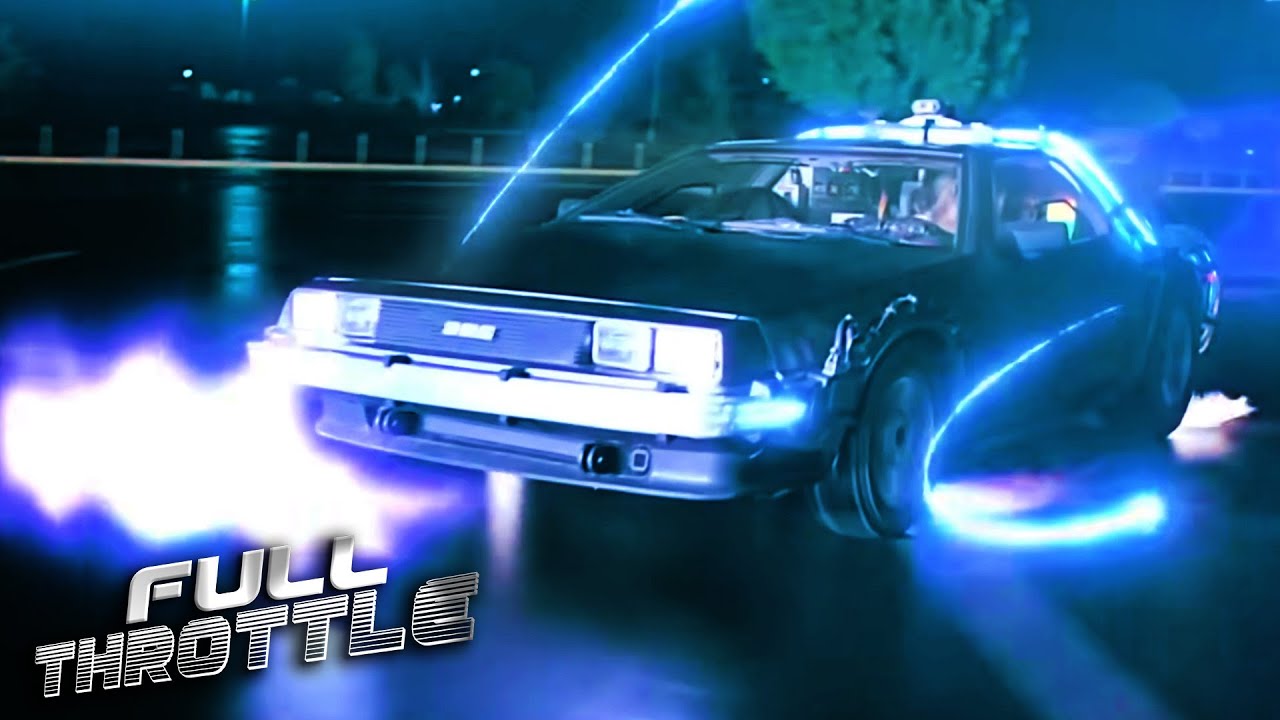
The 1981 DeLorean DMC-12 by DeLorean Motor Company became the time machine in Back to the Future, which debuted in U.S. theaters on July 3, 1985. The film transformed a low-volume stainless-steel coupe into one of cinema’s most recognizable vehicles, while its fictional propulsion equipment remained separate from the production car’s engineering.
DeLorean DMC-12 Back to the Future Debut
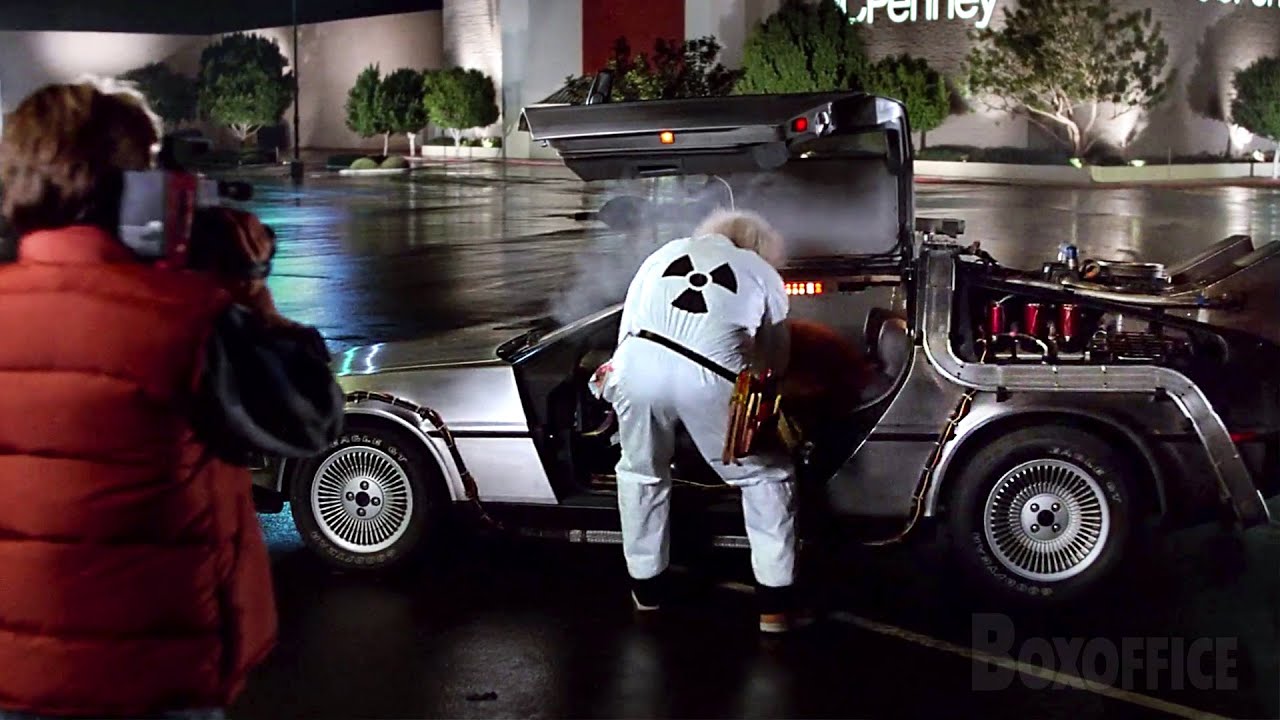
AFI records show that the release moved from June 21 to July 3, 1985. Production notes cited by AFI state that three 1981 DeLoreans were modified for filming, including one opened up to capture interior scenes. The choice was visually effective: the gullwing doors, unpainted body panels and wedge profile already looked unusual without studio hardware.
DeLorean DMC-12 in Back to the Future
DeLorean DMC-12 Production Specs
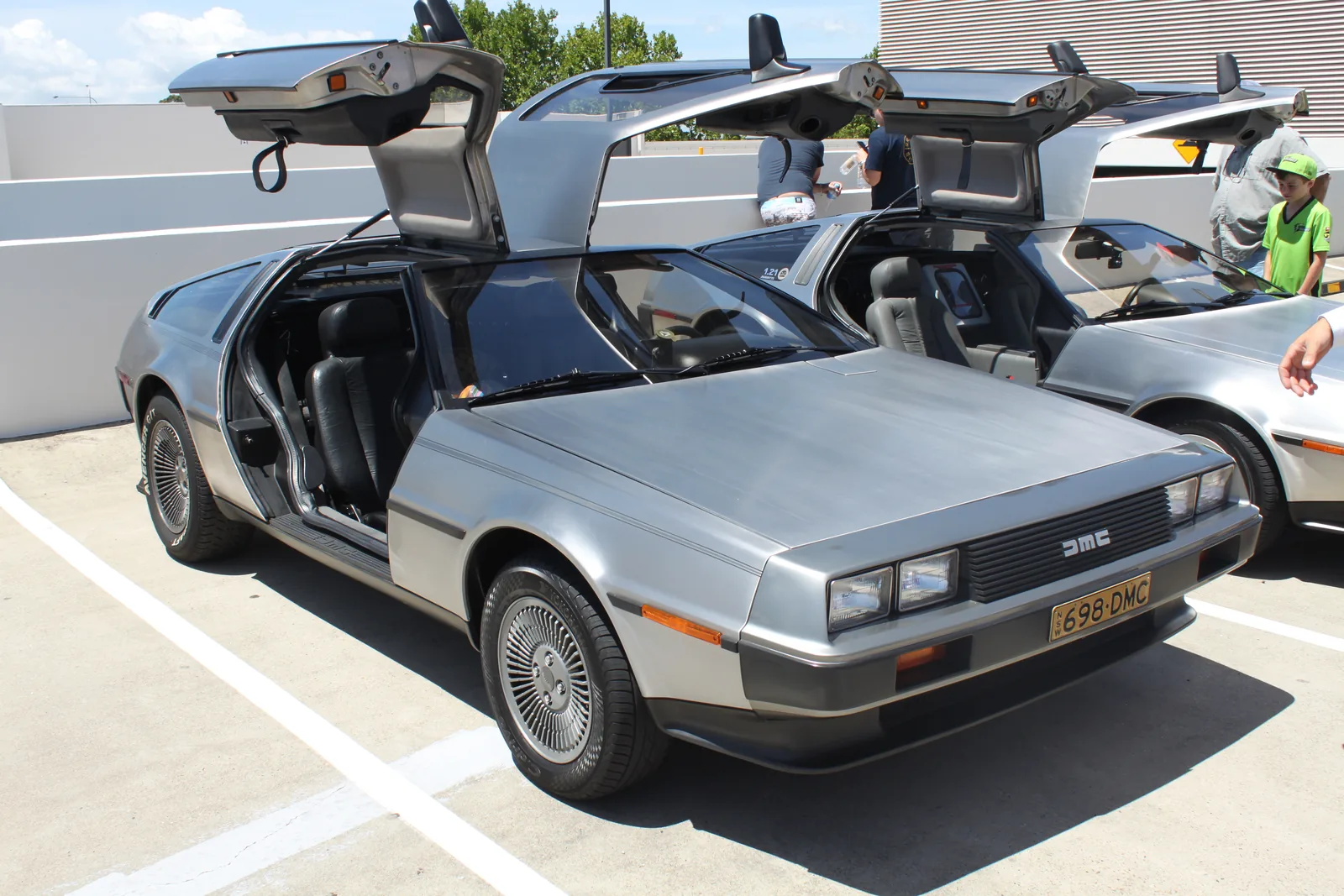
The road car used a rear-mounted 2,849 cc Peugeot-Renault-Volvo V6. U.S.-specification output was 130 hp, sent to the rear wheels through either a five-speed manual or three-speed automatic. Road & Track measured 0–60 mph in 10.5 seconds and a top speed of 110 mph, against factory claims of 8.8 seconds and 130 mph. Approximately 8,975 examples were produced across the 1981 and 1982 model years.
| Specification | Production DMC-12 | Film time machine |
|---|---|---|
| Base vehicle | 1981–1983 DeLorean | Used 1981 DMC-12 props |
| Engine | 2.849-litre PRV V6 | Production powertrain plus nonfunctional set dressing |
| Power | 130 hp, U.S. specification | No time-travel output exists |
| Transmission | 5-speed manual / 3-speed automatic | Role-dependent filming configuration |
| 0–60 mph | 10.5 s measured; 8.8 s claimed | 88 mph activation is fictional |
| Body | Fiberglass structure, stainless outer panels | Added cables, vents, reactor and cabin props |
DeLorean DMC-12 0–60 mph, Top Speed and Horsepower
Independent road testing placed the DMC-12 well behind its own marketing material. Road & Track measured 0–60 mph in 10.5 seconds against DeLorean Motor Company’s claimed 8.8 seconds, and recorded a top speed of 110 mph against a claimed 130 mph. The rear-mounted 2,849 cc PRV V6 produced 130 hp in United States specification; European-market cars, running different emissions equipment, produced 154 hp. Peak torque was 153 lb-ft at 2,750 rpm.
| Measurement | Manufacturer claim | Independent test |
|---|---|---|
| Power (US specification) | 130 hp (97 kW) | — |
| Power (European specification) | 154 hp (115 kW) | — |
| Torque | 153 lb-ft (207 Nm) at 2,750 rpm | — |
| 0–60 mph | 8.8 seconds | 10.5 seconds |
| Top speed | 130 mph | 110 mph |
| Kerb weight | 1,233 kg (2,718 lb) | — |
| Transmission | 5-speed Renault 369-08 manual, or 3-speed automatic ($650 option) | |
| Layout | Rear-mounted 2,849 cc PRV V6, Bosch K-Jetronic injection, rear-wheel drive | |
These figures explain a recurring misconception about the film. The 88 mph threshold was never a performance limit for the car: a standard DMC-12 exceeded it comfortably, and the number was chosen because the crew liked how the digits read on a speedometer. The constraint was regulatory rather than mechanical, because United States speedometers of the period were capped at 85 mph under a 1979 rule, so the production fitted a 95 mph display to photograph the shot.
How the DeLorean DMC-12 Was Built: Giugiaro, Lotus and the Dunmurry Factory
The body was designed by Giorgetto Giugiaro at Italdesign, but the car that reached production was re-engineered by Colin Chapman and Lotus. Lotus replaced the original layout with a rear-engine configuration on an epoxy-coated steel backbone chassis derived from the Esprit platform, carrying a fibreglass underbody. The gullwing doors used torsion bars and gas struts developed with Grumman Aerospace to keep opening effort manageable in confined spaces.
The visible surface is what makes the car photograph the way it does on film. The outer panels are unpainted SAE 304 brushed stainless steel, 0.8 mm thick, supplied by Outokumpu from Sheffield and airfreighted from Manchester to Belfast for assembly at the Dunmurry plant in Northern Ireland. Series production ran from 21 January 1981 to 24 December 1982, with roughly 8,975 cars completed. List prices rose from $25,000 for the 1981 model year to $29,825 for 1982 and $34,000 for 1983. The company entered receivership in February 1982 and filed for bankruptcy on 26 October 1982.
Why the DeLorean Became the Movie Car
The filmmakers originally considered a refrigerator before selecting a car. The DMC-12 provided a practical visual base: its brushed stainless skin read clearly under lighting, its doors produced a dramatic reveal, and its compact rear engine compartment left surfaces on which prop builders could mount the reactor, vents and exposed cabling.
Production DMC-12 vs Film Prop
MotorTrend identifies the A-car as the fully dressed hero vehicle for close-ups, the B-car as the stunt vehicle with a largely standard cabin, and the cutaway C-car as the platform for interior photography. These were modified picture vehicles, not a factory DMC-12 specification or a DeLorean customer option.
88 MPH and the Flux Capacitor Explained
In the story, reaching 88 mph activates time travel through the flux capacitor. Both are fictional mechanisms. A standard DMC-12 can exceed 88 mph, but its U.S. speedometer ended at 85 mph; filmmakers therefore fitted a 95 mph display for the shot. The flux capacitor, time circuits, plutonium reactor and 1.21-gigawatt requirement are narrative devices, not functioning automotive systems.
Time-Machine Interior and Rear Hardware
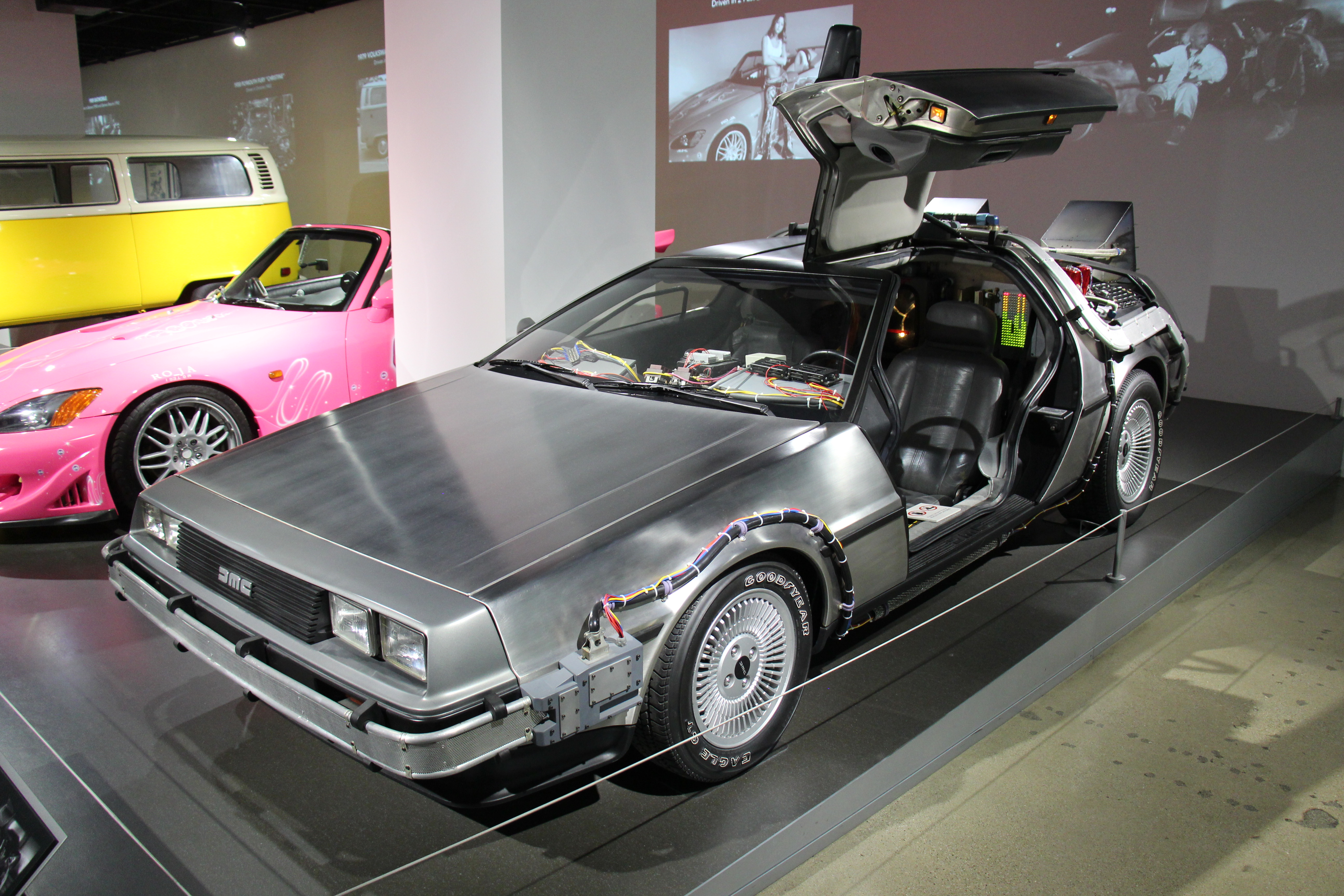
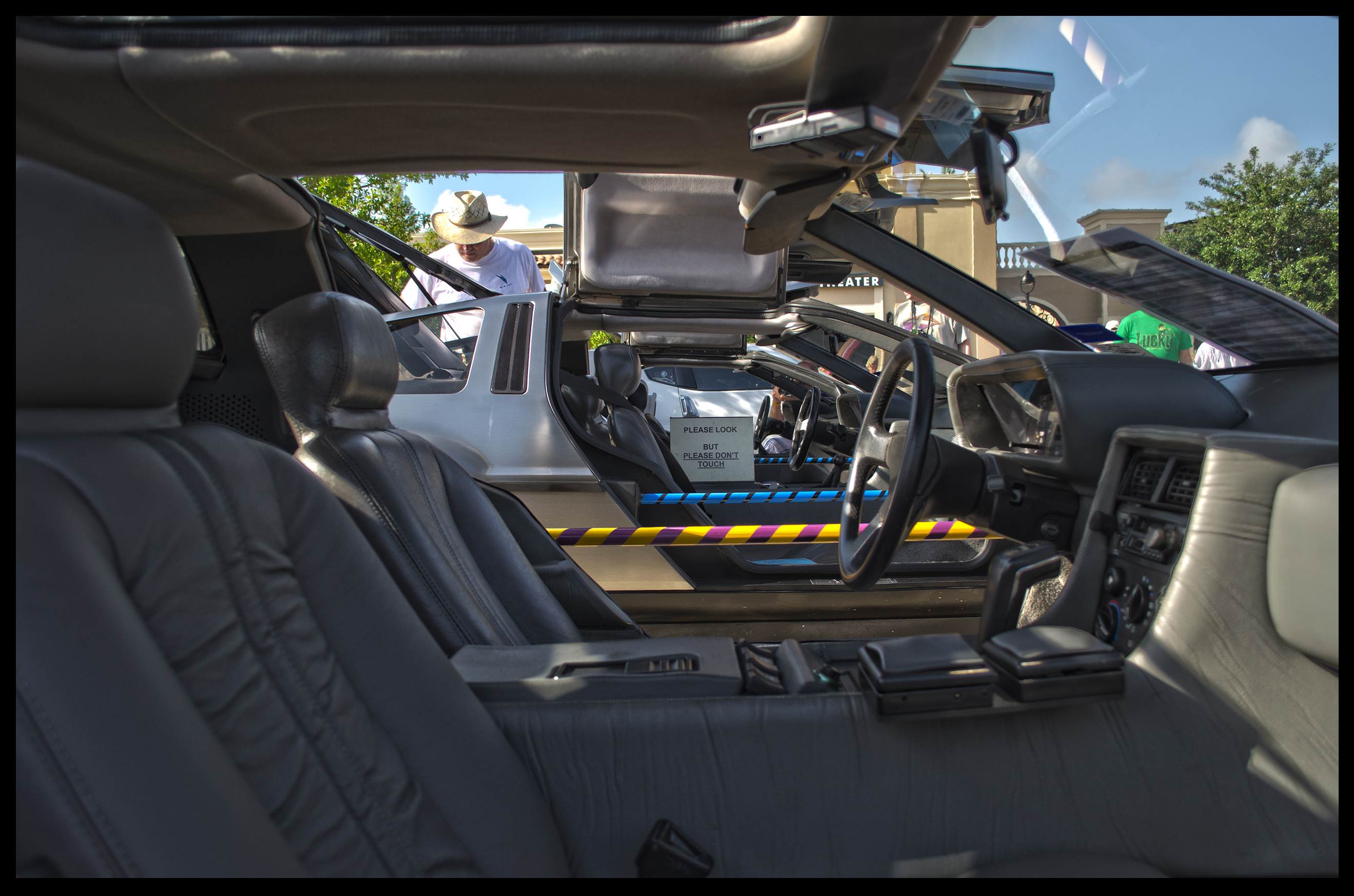
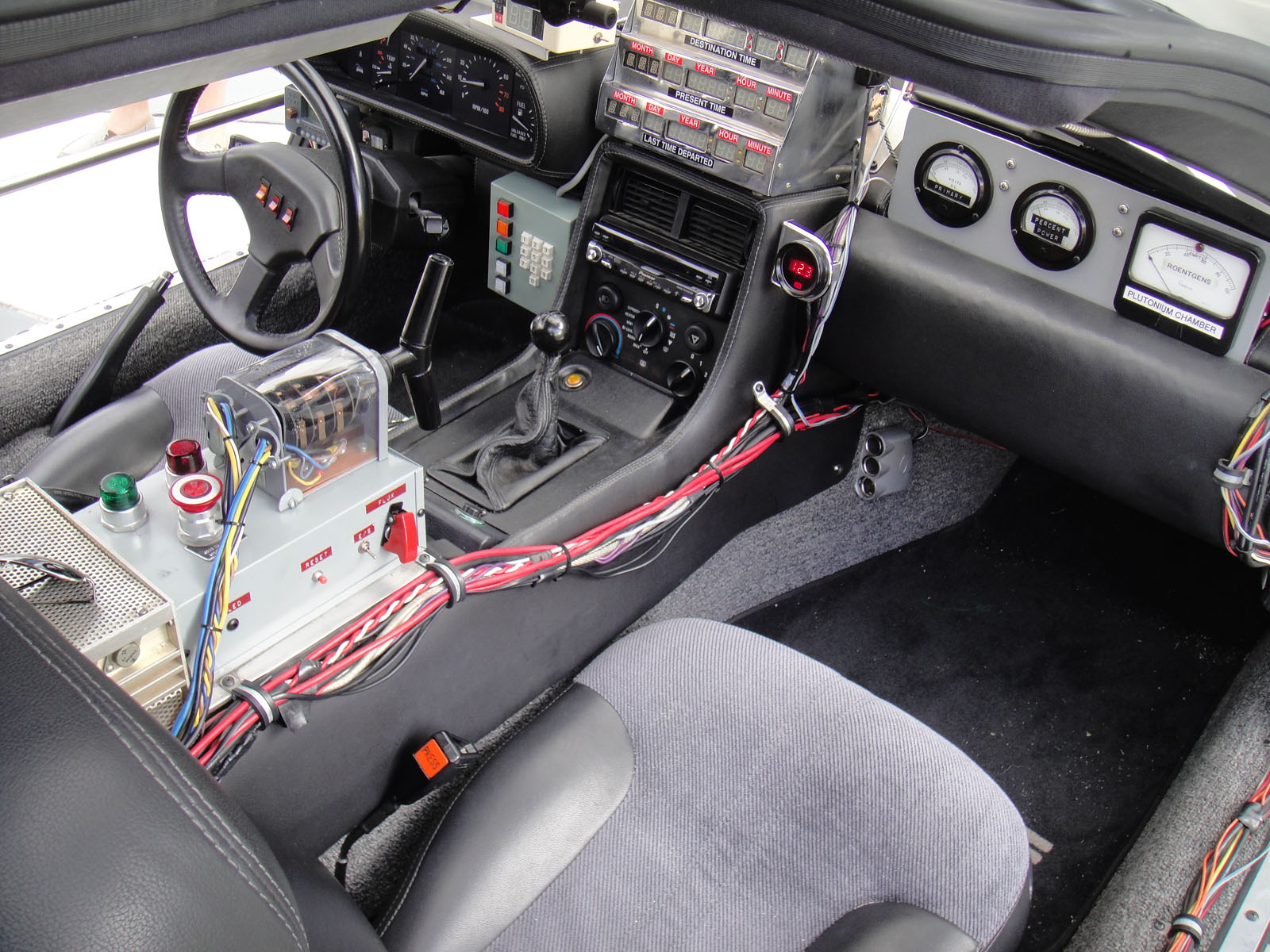
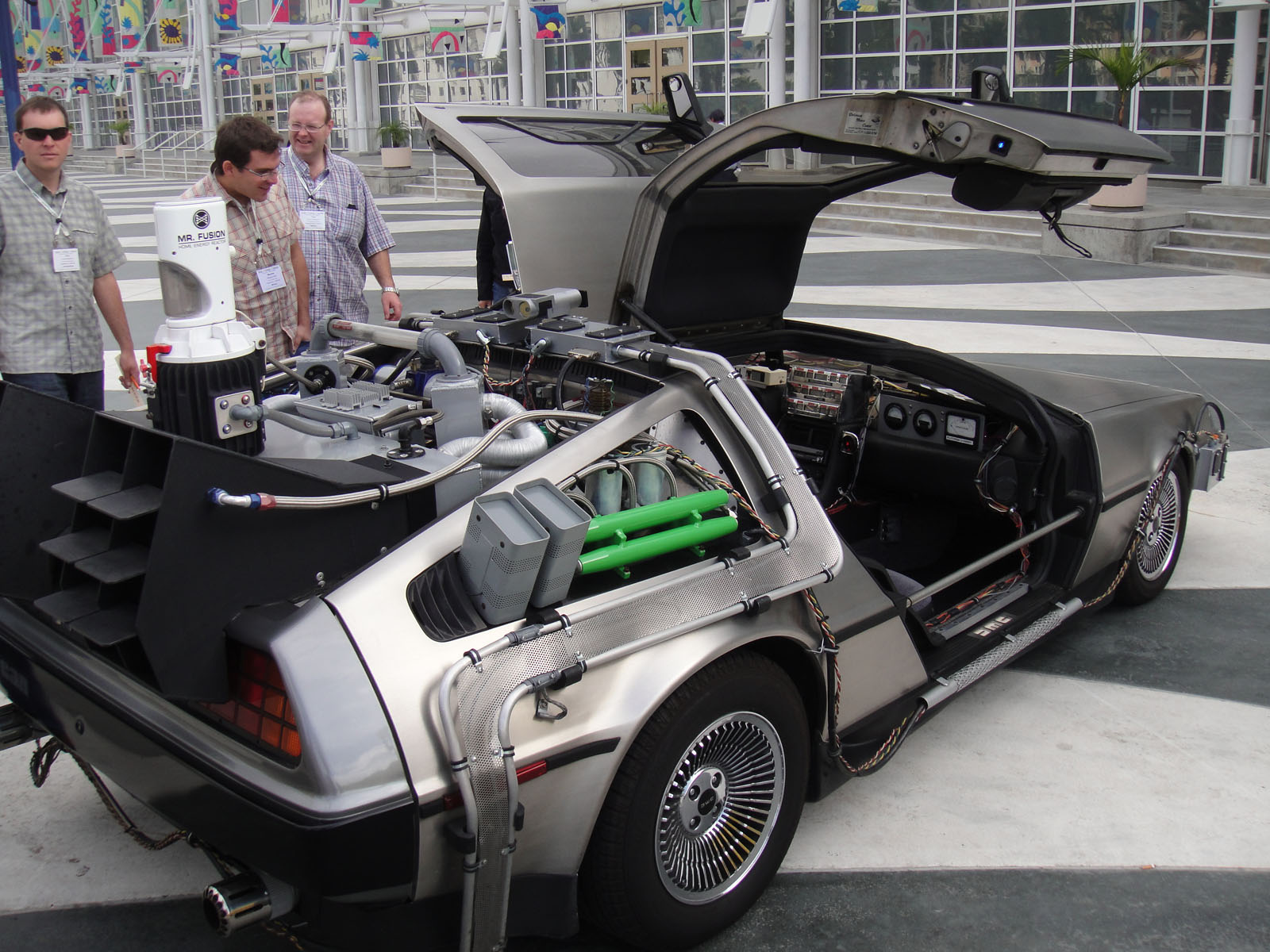
The cabin replaced much of the production-car simplicity with date displays, switches, cabling and the central flux-capacitor enclosure. At the rear, found mechanical and aerospace-looking components created a layered reactor assembly. The visual complexity was deliberate set design: it communicates experimental machinery but does not alter the road car into a real energy or propulsion system.
Where the Original DeLorean Hero Car Is Today
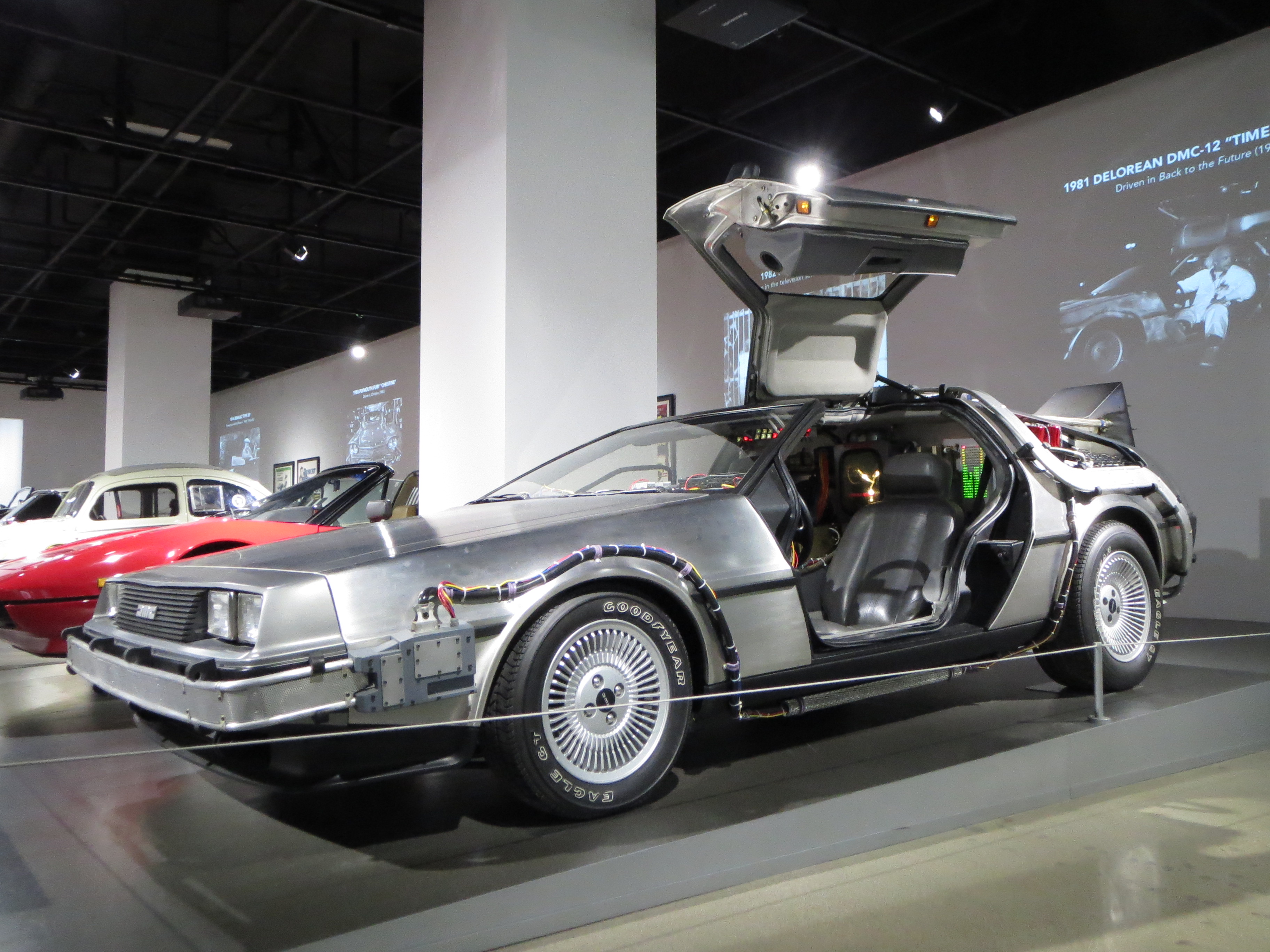
The surviving A-car deteriorated after long outdoor display at Universal Studios Hollywood. A specialist volunteer team restored it, and it later entered permanent display on loan at the Petersen Automotive Museum in Los Angeles. Petersen describes its vehicle as the only example to appear across all three films, making it materially distinct from later replicas and tribute conversions.
The restoration ran through 2012 and 2013 and was carried out by a volunteer specialist team assembled with co-writer Bob Gale, with Joe Walser as project lead. The car remains on permanent loan from Universal and is displayed in the museum’s Hollywood gallery. It was subsequently entered on the National Historic Vehicle Register as its 29th vehicle, which places it in the same federal documentation programme as nationally significant American automobiles.
How Much Does a DeLorean DMC-12 Cost Today?
The DMC-12 has moved from cult curiosity to an established collector vehicle, but the market separates ordinary cars from screen-used ones by an order of magnitude. CLASSIC.COM records an average transaction price of $64,799 across tracked sales, with a high of $243,000 set on 9 November 2021. Recent Bring a Trailer results sit close to that average: a 1981 car sold for $57,925 on 28 August 2026 and a 1982 car for $72,000 on 9 February 2026.
Time-machine cars form a separate market. A screen-used vehicle from Back to the Future Part III sold for $541,200 through Profiles In History in December 2011. Purpose-built replicas trade far below that but well above a standard DMC-12: a detailed replica achieved $159,088 on Bring a Trailer on 18 December 2021. For either category, prop provenance, build documentation and the distinction between a screen-used car and a tribute conversion are the primary value drivers.
Frequently Asked Questions About the Back to the Future DeLorean
Was the Back to the Future DeLorean a real DMC-12?
Yes. The production used 1981 DeLorean DMC-12 cars modified for different filming roles. The stainless-steel body, gullwing doors, rear-mounted PRV V6 and rear-wheel-drive layout came from the production car; the reactor, time circuits and external cabling were film props.
Could a standard DeLorean DMC-12 reach 88 mph?
Yes. A production DMC-12 was tested at 110 mph by Road & Track, although its U.S. speedometer ended at 85 mph. Reaching 88 mph did not activate any special system: the speed threshold and time travel were fictional elements created for the film.
How many DeLoreans were used in Back to the Future?
Production documentation identifies three modified 1981 cars for the first film. They included a detailed hero car, a stunt-oriented car and a cutaway vehicle used to photograph interior scenes. Additional vehicles and specialized builds were used across the sequels.
Where is the original Back to the Future DeLorean today?
The restored A-car is displayed on loan at the Petersen Automotive Museum in Los Angeles. It is regarded as the principal surviving hero vehicle and the only DeLorean documented as appearing in all three films of the trilogy.
How much horsepower does the Back to the Future DeLorean have?
The film cars used unmodified production powertrains, so the answer is the road car’s figure: 130 hp in United States specification and 154 hp in European specification, from a 2,849 cc PRV V6. No performance modifications were made for filming. Even the engine note heard on screen is not a DeLorean; the production dubbed a Porsche 928 V8.
What is the DeLorean DMC-12 0–60 mph time?
Road & Track measured 10.5 seconds for a manual car, against the manufacturer’s claim of 8.8 seconds. Tested top speed was 110 mph against a claimed 130 mph.
How many DeLorean DMC-12s were built?
Approximately 8,975 cars were completed at the Dunmurry plant in Northern Ireland between 21 January 1981 and 24 December 1982. The company entered receivership in February 1982 and filed for bankruptcy that October, ending production after two model years.
How much does a DeLorean DMC-12 cost today?
CLASSIC.COM records an average of $64,799 across tracked sales. Recent Bring a Trailer results include $57,925 in August 2026 and $72,000 in February 2026. Screen-used time-machine cars are valued separately: one from Part III sold for $541,200 in December 2011.
Sources & Verification
- AFI Catalog — film release and production notes
- Petersen Automotive Museum — 1981 DeLorean “Time Machine”
- MotorTrend — film-car roles and 88 mph details
- Hagerty — DMC-12 engineering and production history
- DMC DeLorean — measured performance, production totals and company history
- Outokumpu — SAE 304 stainless body panel supply
- CLASSIC.COM — DMC-12 market averages and high sale
- Bring a Trailer — 1981 DMC-12 sold 28 August 2026
- Bring a Trailer — 1982 DMC-12 sold 9 February 2026
- Motor Authority — screen-used time machine sale, December 2011
- Autoblog — National Historic Vehicle Register entry
- DeLorean time machine — 88 mph, flux capacitor and Mr. Fusion prop origins