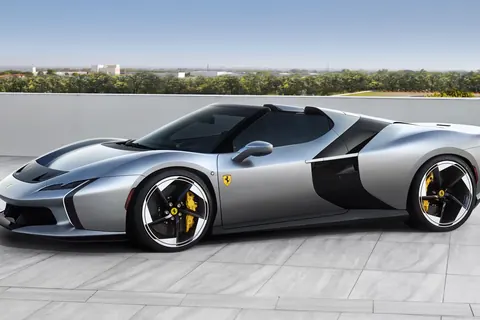
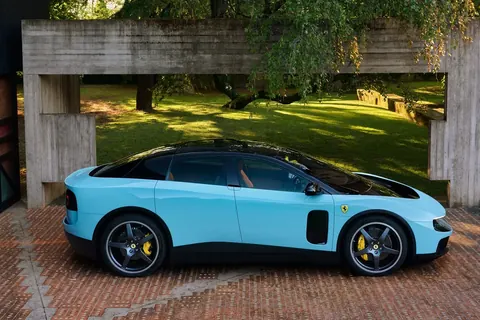
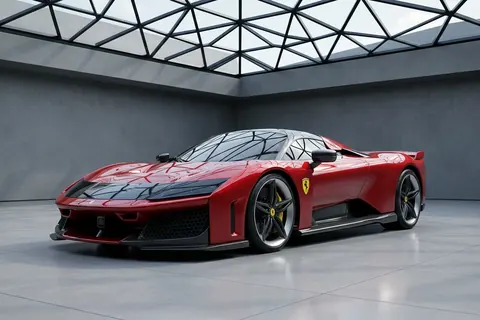
Within seven days, two of Europe's most influential performance brands unveiled their most polarising electric designs to date. The 2027 Mercedes-AMG GT 4-Door Coupé EV was revealed on May 19, 2026, and the Ferrari Luce — the first fully electric Ferrari, styled by Jony Ive's LoveFrom — debuted at the Vela di Calatrava in Rome on May 24, 2026. Ferrari shares fell almost 8% on the day after the Luce reveal, the sharpest single-day decline industry analysts can recall in direct response to a car's appearance.
UPDATE · SEPTEMBER 16, 2026
Four months on, neither company has blinked. Ferrari has not restyled or withdrawn the Luce, and the €550,000 price, 1,035 hp output and Q4 2026 European delivery window announced in Rome all still stand; Mercedes-AMG has likewise left the shield grille on the GT 4-Door untouched and has still not published US pricing. As of September 2026 neither manufacturer has issued a statement addressing the design reaction directly. The first customer Luce deliveries are still ahead, which means the commercial question set out below — whether the design discomfort actually suppresses orders — has produced no public evidence either way.
on reveal day
price
tri-motor
est. start
Ferrari Luce — The First Ferrari Designed By Someone Other Than Ferrari
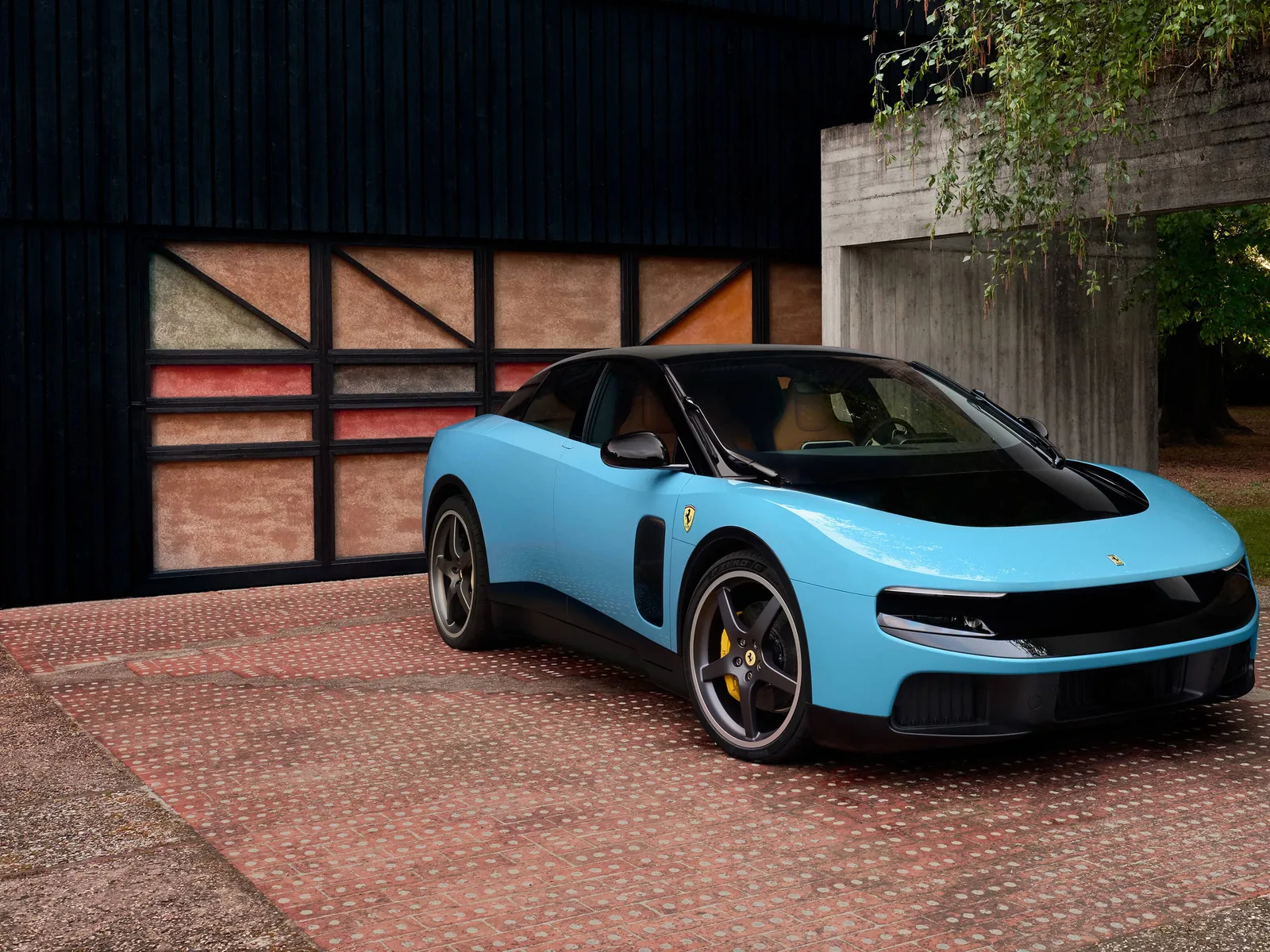
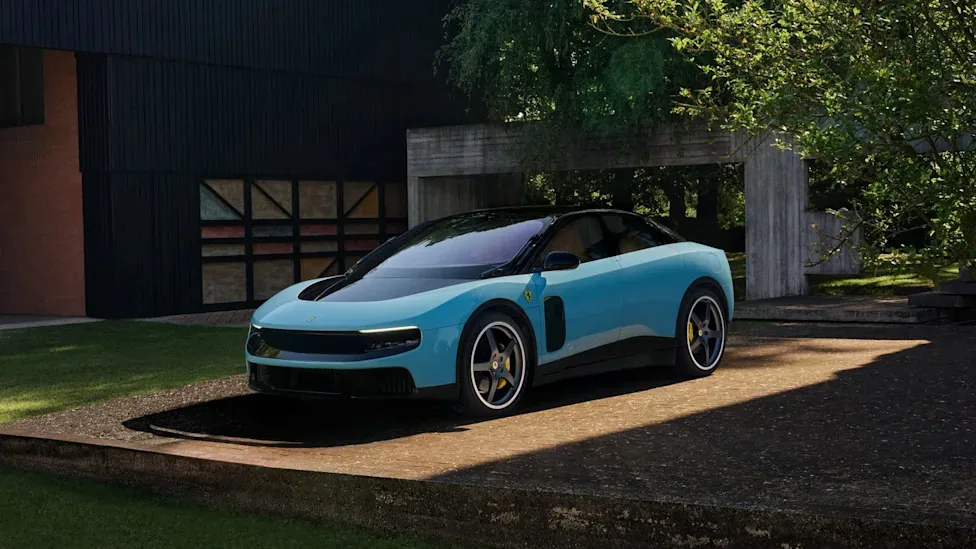
The Luce is a four-door, five-seat electric grand tourer built on a 122 kWh battery and 800 V architecture, with four electric motors producing 1,035 hp combined, a 2.5-second 0–100 km/h time and a 530 km WLTP range. It is priced at €550,000 (about $640,000). None of those numbers were the story. The story was the appearance. Ferrari described the design as "polarising" in its own press materials — a word the company had never previously used to describe one of its own production cars.
For the first time in the brand's history, Ferrari handed the entire exterior and interior to an external design house. LoveFrom — the studio founded by former Apple chief designer Sir Jonathan Ive and industrial designer Marc Newson — worked with Maranello for seven years on the project. The brief was deliberately not to reassure existing Ferrari clients. Speaking to media before the reveal, Ferrari CEO Benedetto Vigna confirmed the Luce was built to expand the brand into the broader EV market rather than to replace any existing combustion or hybrid model.
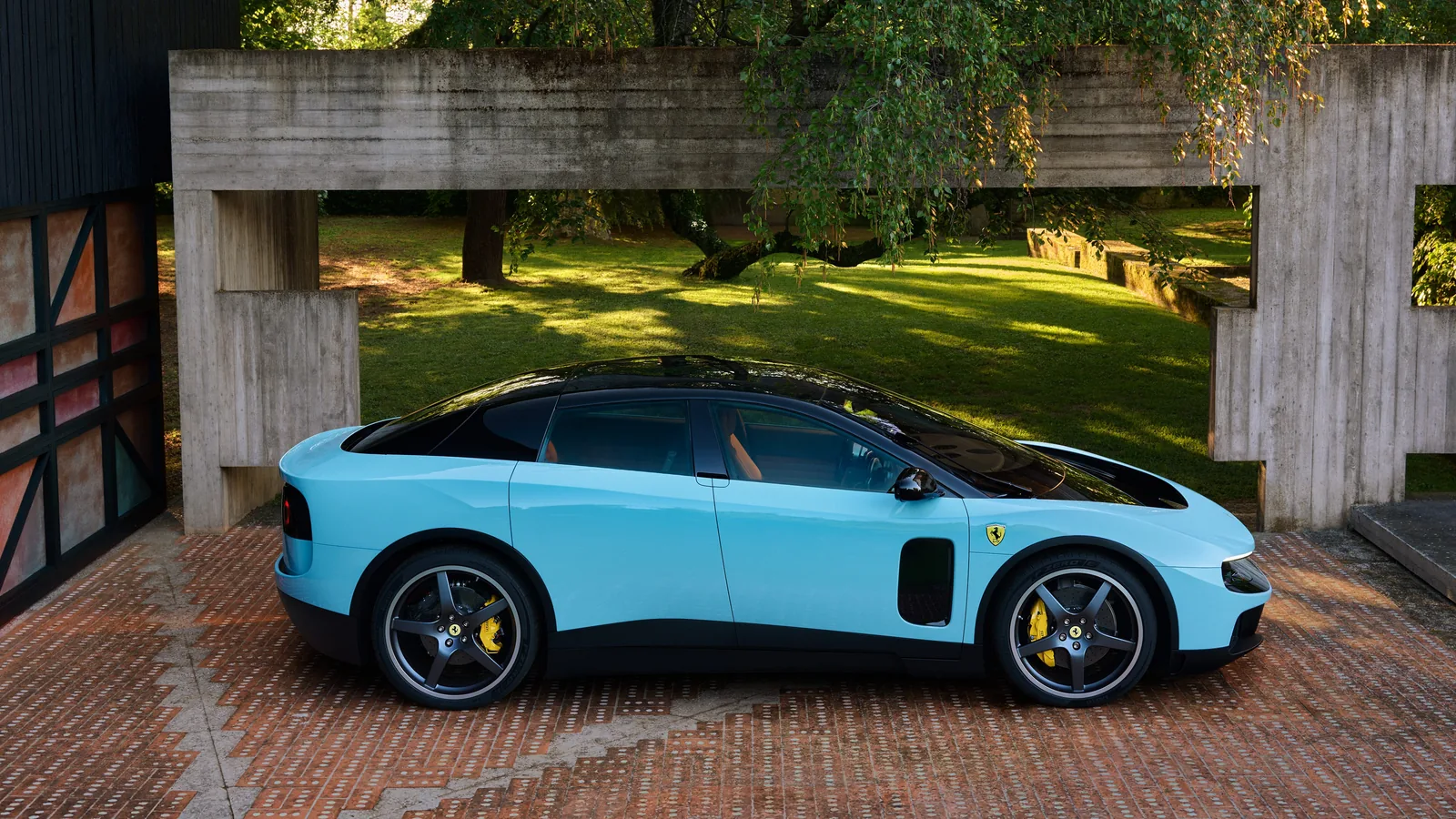
What The Critics Saw
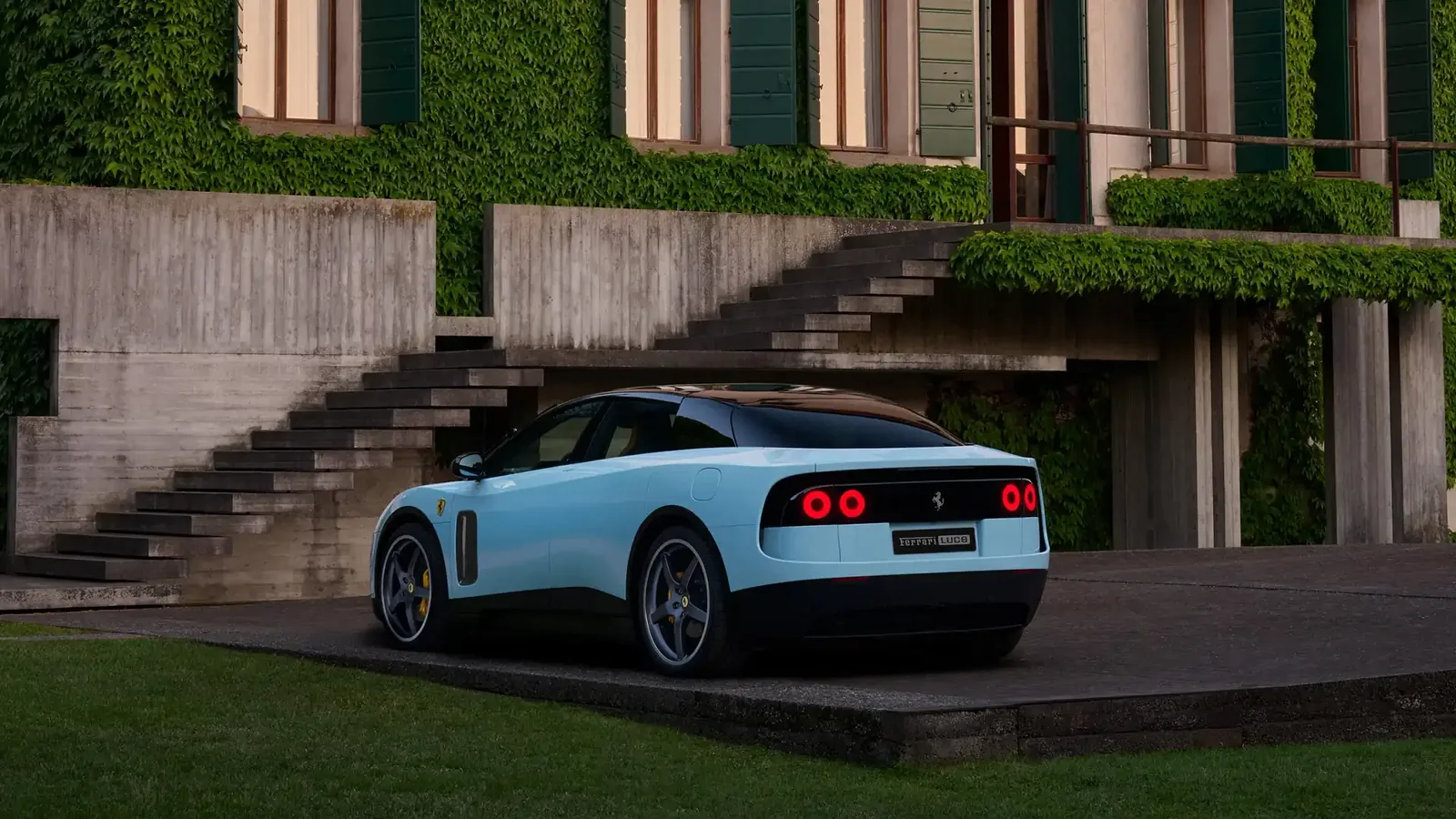
The criticism clustered around four design choices. First, the silhouette: a tall greenhouse, a long horizontal beltline and a five-seat cabin that produced a profile reviewers compared to a 1990s Honda saloon, a Mercedes-Benz EQS and the rumoured Apple Car. Autoweek's headline called it "the brand's most boring shape ever." Second, the front end: the absence of a traditional grille or recognisable Ferrari headlight signature was read by enthusiasts as a deliberate erasure of brand cues. Third, the proportions: a 5,000-pound, four-door silhouette is structurally incompatible with the low-roofline, two-door supercar visual grammar Ferrari has trained the public to associate with the brand for sixty years. Fourth, the rear: the only feature most observers identified as "Ferrari" were the circular taillights, which several Reddit threads in r/cars and r/Ferrari read as a 360 Modena / F40 reference and the rest of the design as unrelated.
"The sharpest response we have observed for a car design — the market has indeed voiced its opinion." — Anthony Dick, Automotive Analyst, Oddo BHF, to CNBC
The Counter-Argument
The design press read the Luce more favourably than the enthusiast press. Wallpaper* framed the launch as "rage bait" produced by the collision of electrification with a fan base that has become "vocal gatekeepers" of brand identity. Spyglass, the design newsletter run by MG Siegler, argued that "Design Twitter" was largely positive while "Tesla Twitter" was hostile, and described the car as something one could imagine on the road in 2030 or 2040. The interior — built around a transverse 21-speaker audio system, optional rear massage seats and what LoveFrom calls a deliberately reduced touchscreen interface — was almost universally praised across the same outlets that criticised the exterior.
Vigna told assembled press the Luce will be "profitable from the launch," a notable claim given the model's R&D burden and Ferrari's relatively small annual output of about 14,000 cars. Production deliveries begin in Q4 2026 in Europe and Q2 2027 in the United States.
Mercedes-AMG GT 4-Door Coupé EV — The Shield Grille And A Different Kind Of Backlash
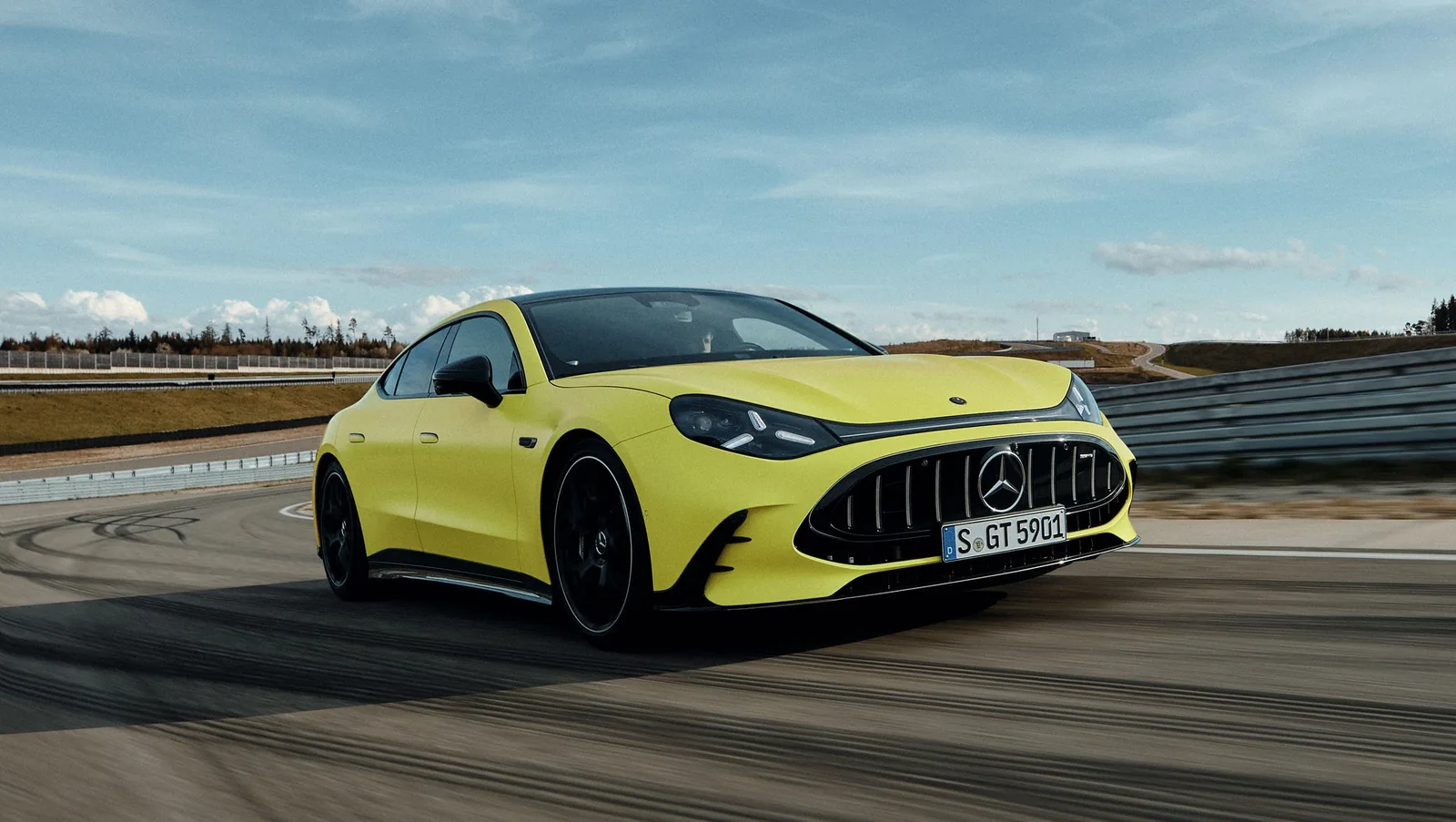
Five days before the Luce, on May 19, 2026, Mercedes-AMG revealed the second-generation GT 4-Door Coupé as an EV-only model on the new 800 V AMG.EA platform. The GT 55 produces 805 hp; the GT 63 reaches 1,153 hp from three axial-flux motors. The 106 kWh battery supports 700 km WLTP range, with peak charging at 600 kW — the highest yet from a Western manufacturer. AMG quotes a 0–60 mph time of 2.0 seconds for the GT 63. The car arrives at European dealers in late 2026 with US deliveries in early 2027; pricing has not been officially announced but Car & Driver expects the model to start "around $150,000."
What The Critics Saw
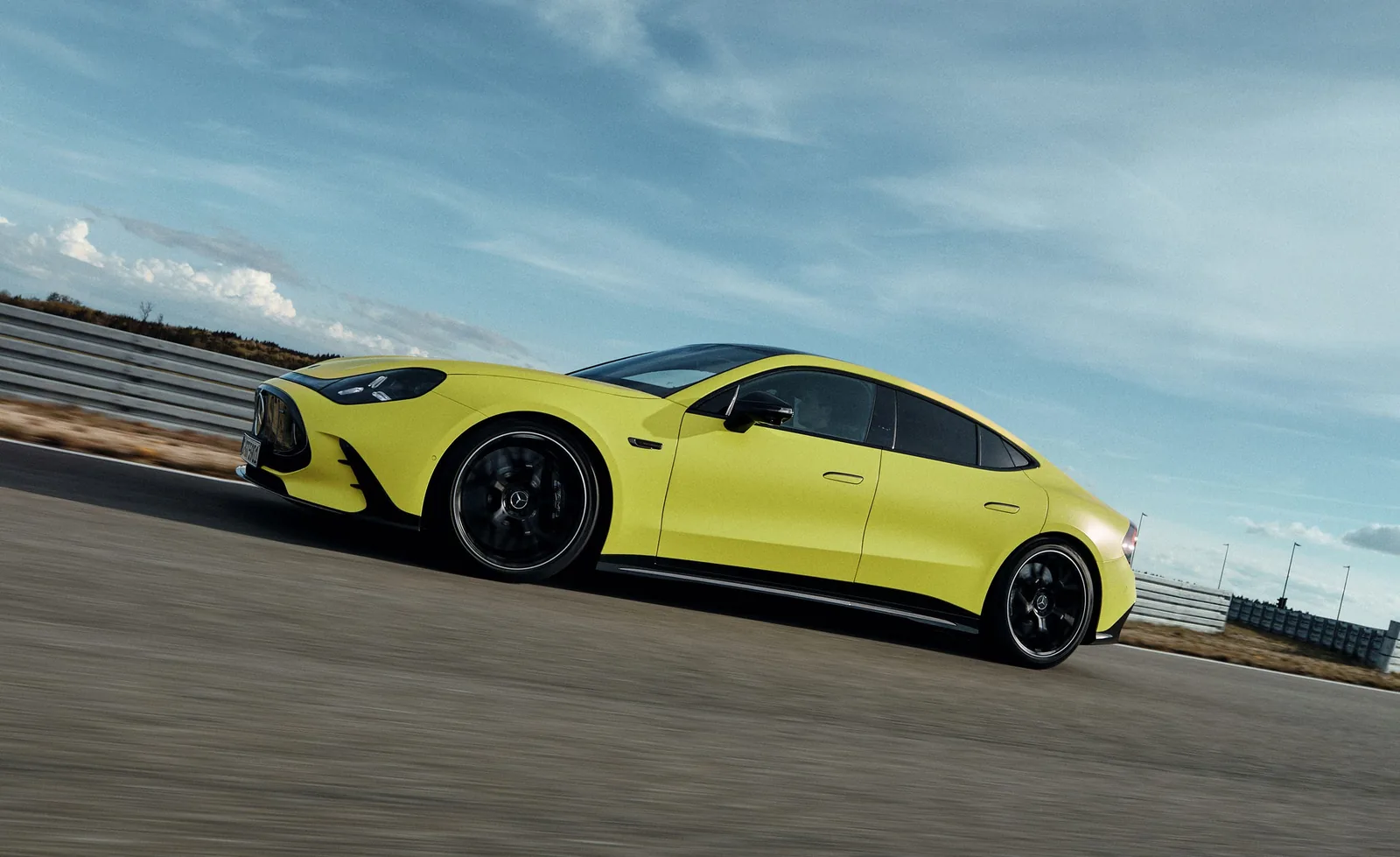
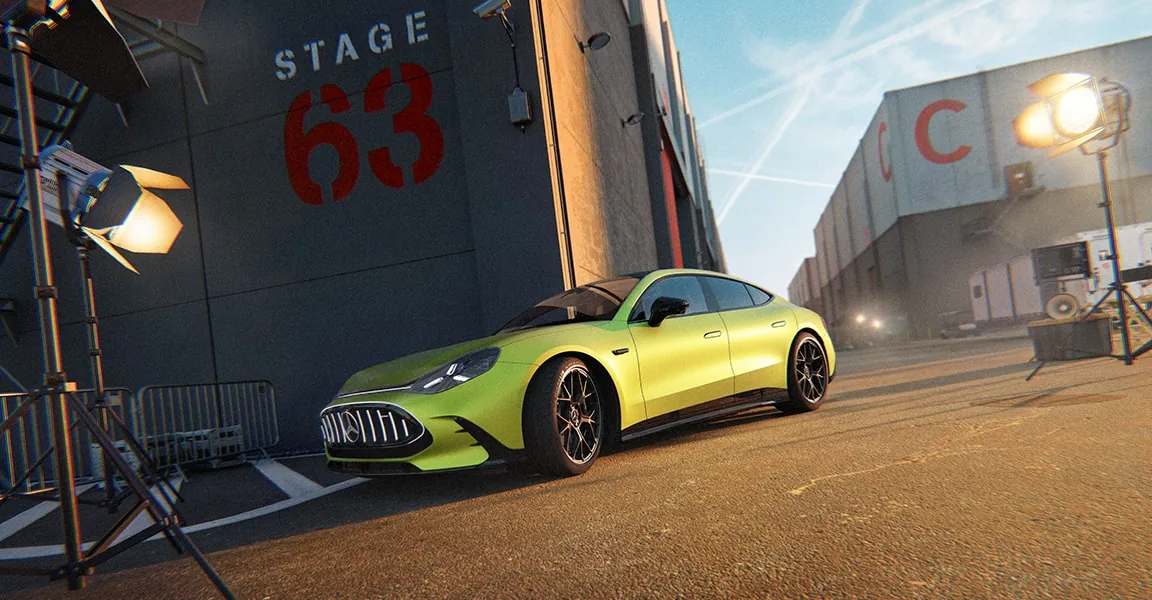
The reaction to the AMG GT 4-Door was less concentrated than the Luce backlash but covered more visual ground. The dominant talking point was the new front fascia: a single shield-shaped grille panel that Reddit threads, Facebook posts and YouTube reviewers repeatedly compared to Aston Martin's signature grille, with reviewers describing the AMG version as less successful in execution. The rear — a wide, slab-sided panel with a single full-width LED strip — received the harshest comments, with multiple threads on r/cars calling the back-end "disappointing" and questioning the relationship to the outgoing model's more sculpted tail. The mass — 2,500 kg — combined with the Coupé naming for a four-door car produced a separate critique about category honesty.
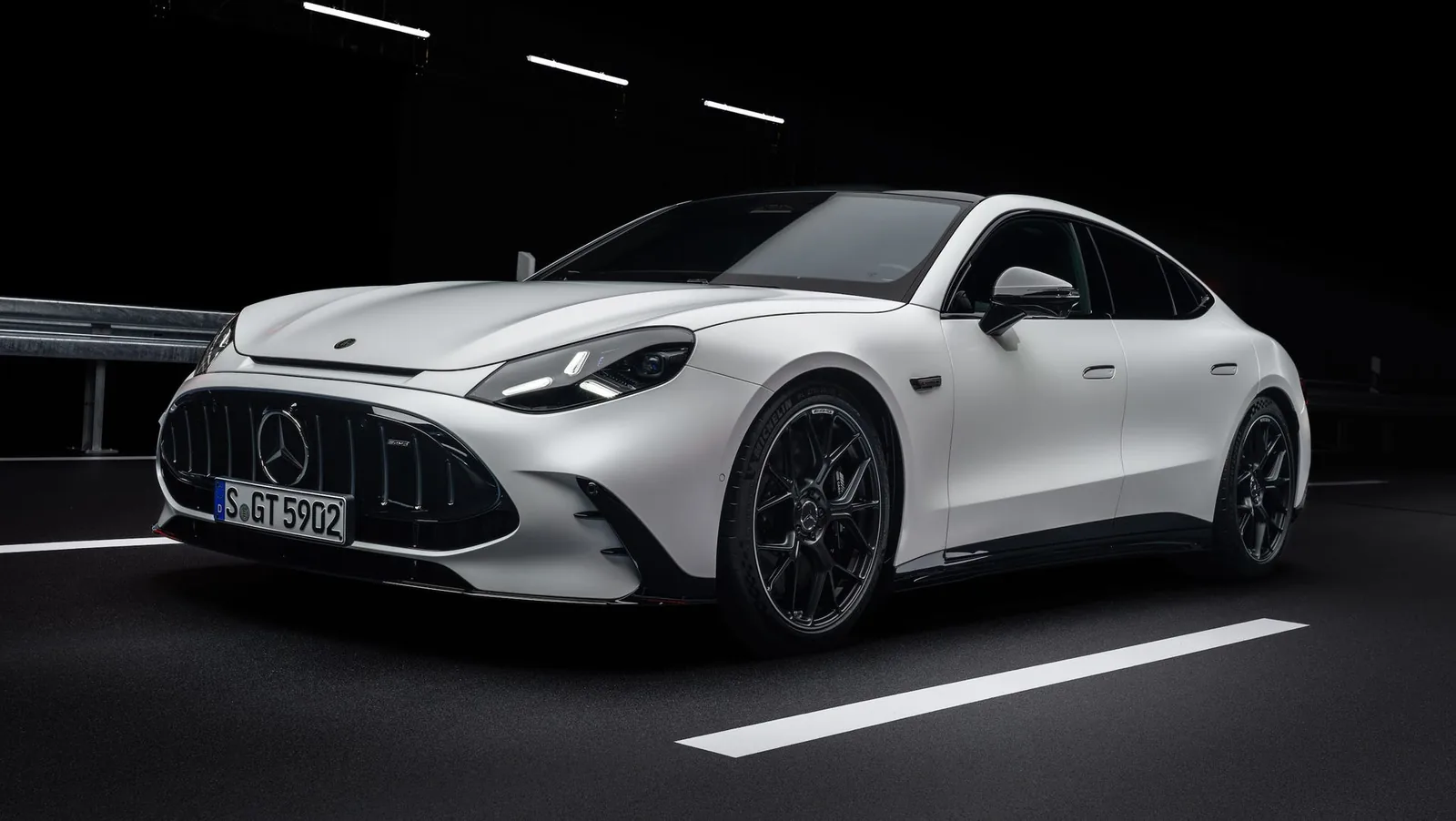
Unlike Ferrari, Mercedes-AMG did not see an immediate stock reaction to the reveal — the GT 4-Door is one model in a much wider lineup at a high-volume manufacturer, and the EV transition strategy was already priced in. The criticism is structural rather than financial: it sits alongside reactions to recent Mercedes EV releases (most notably the EQS) where critics have argued the brand is struggling to translate its long-established formal language into an electric architecture that exposes — rather than rewards — bold proportions.
Why The Two Reactions Happened Now
The Luce and the AMG GT 4-Door arrived during a measurable contraction in the luxury EV segment. Bloomberg and CNBC both noted that Porsche, Maserati and Lotus have all walked back pure-EV roadmaps within the past twelve months. Maserati cancelled the electric MC20 mid-development. Porsche delayed the all-electric Boxster replacement to accommodate a combustion variant. Lotus introduced a hybridised V8 supercar (the Type 135) in direct contradiction of its previously announced electric-only strategy. Ferrari's own shares were down approximately 27% in the year preceding the Luce reveal, reflecting investor caution about both luxury demand and electric performance economics.
Against that backdrop, the design backlash is less about either specific car and more about a broader pattern: in 2026, the luxury performance buyer is being asked to accept an electric architecture that, by physics, produces tall, heavy, packaging-driven cars — precisely the opposite of the low, light, drama-led silhouettes that established the segment. Both Ferrari and AMG attempted to address this with different strategies. Ferrari outsourced the design to a non-automotive studio with a track record in product simplification. AMG retained in-house design but applied a new front-end signature to an existing four-door silhouette. Neither approach was received as a clear win.
Side-By-Side: How The Two Designs Differ Mechanically
| Specification | Ferrari Luce | Mercedes-AMG GT 63 4-Door |
|---|---|---|
| Body | Four-door, five-seat hatch | Four-door coupé |
| Battery | 122 kWh, 800 V | 106 kWh, 800 V |
| Motors | 4 (synchronous PM) | 3 (axial flux) |
| Combined power | 1,035 hp (772 kW) | 1,153 hp (860 kW) |
| Torque | 990 Nm | 2,000 Nm (1,475 lb-ft) |
| 0–100 km/h (0–62 mph) | 2.5 s | 2.0 s |
| Top speed | 310 km/h (193 mph) | 300 km/h (186 mph) limited |
| WLTP range | 530 km (329 mi) | 700 km (435 mi) |
| DC fast charging | 350 kW | 600 kW |
| Kerb weight | ~2,260 kg (4,982 lb) | ~2,500 kg (5,450 lb) |
| Exterior design | LoveFrom (Ive / Newson) | Mercedes-AMG in-house |
| Price | €550,000 / ~$640,000 | ~$150,000 (est.) |
| Reveal | Rome, May 24, 2026 | Affalterbach, May 19, 2026 |
| Deliveries | Q4 2026 (EU) | Late 2026 (EU) |
What This Means For Sales
The two cars sit in different commercial brackets and therefore face different sales risks. The Ferrari Luce is a fixed-volume product within a brand that limits annual output by policy: Ferrari builds fewer than 14,000 cars annually, and the Luce will be one of multiple models in the range. Vigna's claim that the Luce will be profitable from launch suggests Ferrari intends to recover R&D through a controlled order book rather than through volume. The principal commercial risk is reputational: if existing Ferrari clients perceive the Luce as a brand-defining departure rather than a contained experiment, residual values across the wider Ferrari range — including the combustion and hybrid models — could come under pressure. Bloomberg's coverage on May 25 explicitly flagged this risk, citing the year-to-date 27% decline in Ferrari shares.
The AMG GT 4-Door operates in a more competitive segment. The principal direct rival is the Porsche Taycan, which has been on sale since 2019 and recently received a comprehensive mid-cycle update; the secondary rivals include the Lucid Air, the Audi e-tron GT and a growing roster of Chinese flagships including the Denza Z9 GT — whose performance sibling, the 1,582 hp Denza Z, reached Europe at Goodwood in July 2026 — the Xpeng P7+ and the Zeekr 001 FR. Unlike the Luce, the AMG GT 4-Door is expected to be a volume model for AMG, and design reception in this segment historically translates directly to lease take-up and used-market depreciation curves. The shield-grille divergence from the outgoing GT's identity is the single largest commercial unknown.
Where Performance Car Design Is Heading
Read together, the two reveals point to three patterns visible across the luxury EV transition:
1. Outsourced design is now mainstream. The Luce is the highest-profile example to date of a heritage brand handing its exterior to a non-automotive studio. Bentley has previously commissioned Mulliner coachbuilds with outside input, and Aston Martin's Lagonda Vision Concept (2018) relied on a non-traditional design route, but no brand of Ferrari's stature has externalised the entire visual identity of a series-production model. Expect Lotus, Rolls-Royce and other heritage names to consider similar partnerships if the Luce's commercial reception stabilises.
2. EV architecture is forcing new silhouettes. Battery packaging, motor placement, aerodynamic targets (the AMG GT 4-Door achieves a 0.22 drag coefficient; the Luce uses a structural battery as a floor element) and crash-cell requirements all push the same direction: longer wheelbases, taller greenhouses, and shorter overhangs. The 1980s and 1990s supercar silhouette is no longer mechanically obtainable in an electric package. Designers are now being asked to invent visual language that registers as "performance" without the proportions historically associated with it.
3. Brand DNA is being unbundled from product form. Sound design, interior interaction, materials and software are now where brands such as Ferrari are concentrating heritage cues. The Luce's mechanical-vibration-fed sound system — using a real accelerometer in the rear axle to drive a filtered, amplified output rather than a synthetic engine note — is the most visible signal of this shift. AMG's simulated V8 soundtrack on the GT 4-Door performs a similar function with a different technical approach.
The Short Read
Two of Europe's most influential performance brands launched two of the most controversial designs in their recent history within a week. Ferrari lost approximately 8% of its market capitalisation on the trading day after the Luce reveal — the largest single-day design-driven equity reaction analysts can recall. Mercedes-AMG escaped a stock reaction but absorbed a sustained social-media critique focused on the new front-grille and rear-panel choices. Both companies are betting that the electric powertrain economics — range, charging speed, performance — will outweigh the design discomfort by the time deliveries scale in 2027. Whether they are right will be the principal commercial question facing the luxury EV segment over the next eighteen months.
Sources
Bloomberg — Ferrari Rolls Out Five-Seat Fully Electric Car in Brand First (May 25, 2026) · CNBC — Ferrari shares fall after luxury carmaker launches first full EV (May 26, 2026) · Car & Driver — Ferrari Goes Electric: The Luce Is Here · Carscoops — Ferrari’s Luce Is A Four-Door EV Designed By The iPhone Guy · Spyglass — Let There Be Luce · Wallpaper* — The future of the electric sports car? Ferrari Luce EV will tell · Fully Charged — The Ferrari Luce: a car launch experience · Car & Driver — 2027 Mercedes-AMG GT 4-Door Is the Porsche Taycan’s New Nemesis · MotorTrend — 2027 Mercedes-AMG GT 4-Door Coupe EV First Look · InsideEVs — 2027 Mercedes-AMG GT EV Revealed With 1,153 HP, 600 kW Charging · Motor1 — Goodbye, V8: The New Mercedes-AMG GT Is Electric Only