The second-generation Mercedes-AMG GT 4-Door Coupé was unveiled by Mercedes-Benz AG at its global premiere in Los Angeles on May 20, 2026. The new model is the first series-production vehicle on the AMG.EA architecture and the first car in the world to combine an 800-volt electrical system with three series-production axial-flux motors developed in-house following Mercedes-Benz's acquisition of YASA.
UPDATE · SEPTEMBER 16, 2026
The summer 2026 production window quoted at the Los Angeles launch has now passed. Mercedes-AMG scheduled series build for Hall 32 at Sindelfingen over that period but, as of September 2026, has published neither a line-start announcement nor an EPA range figure nor US pricing — the ~$130,000 and ~$150,000–180,000 numbers in the table below are still projections, not list prices. The GT55 remains the variant slated to reach customers first, late in 2026, with the GT63 following in early 2027. No independent road test has appeared either, so the 2.0-second 0–60 mph claim, the 600 kW peak charge rate and the 11-minute 10–80% figure all remain manufacturer numbers. The design backlash that followed the reveal has not prompted any styling revision.
Editor's note: Two variants are confirmed at launch — the GT55 4-Door and the flagship GT63 4-Door. Output figures cited reference Mercedes-AMG's official press materials and align with reports from Car and Driver, Road & Track, Electrek and InsideEVs. Final EPA range, U.S. pricing and on-sale dates are pending official confirmation.
Powertrain — Tri-Motor Axial-Flux Architecture
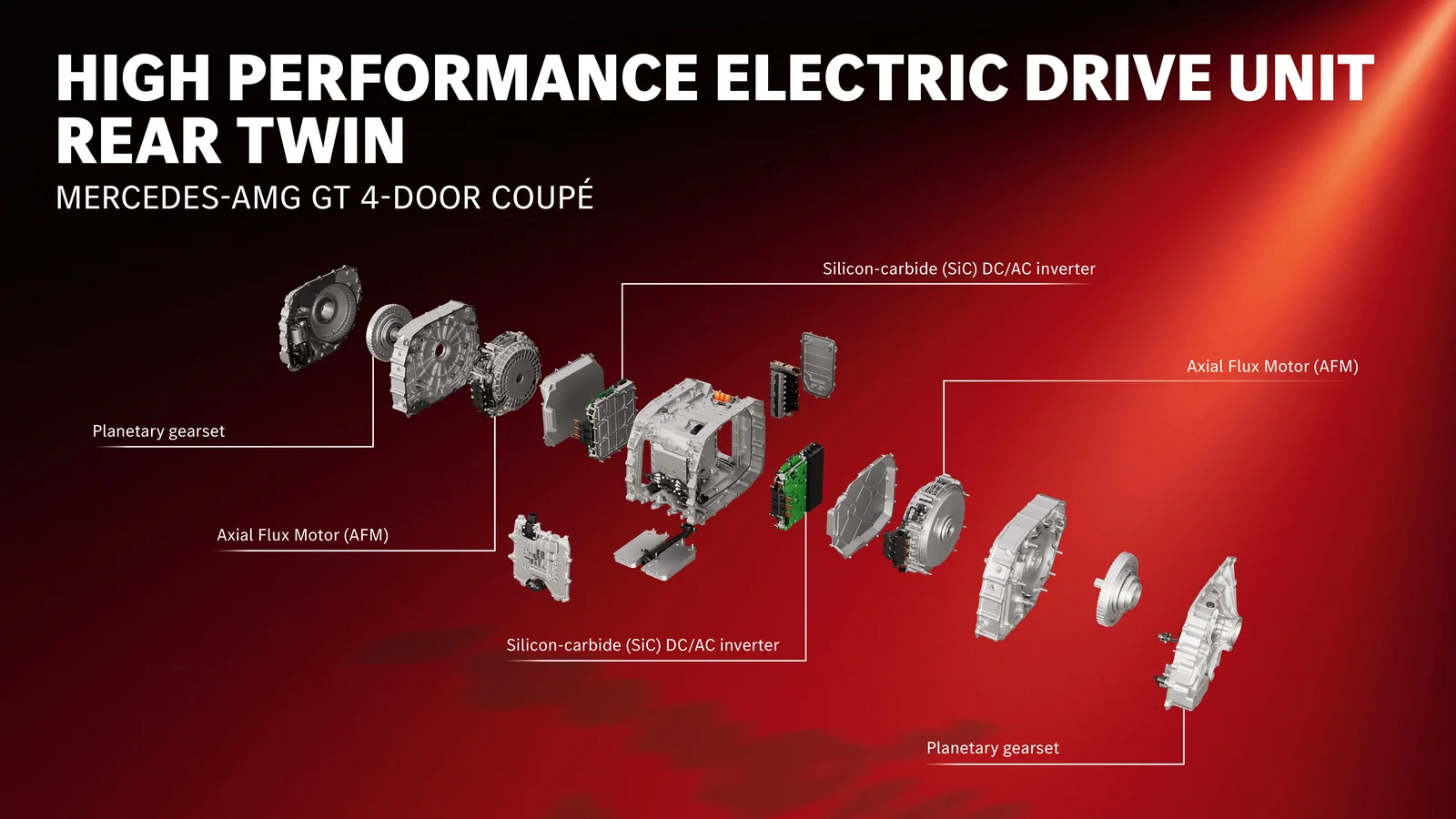
Each example uses three permanent-magnet axial-flux motors arranged as one unit on the front axle and two individual units at the rear. Each rear motor drives a single wheel through a dedicated planetary gearset, eliminating the rear differential and providing pure mechanical torque vectoring at each wheel. The hardware is supplied by YASA, the British axial-flux motor specialist acquired by Mercedes-Benz in 2021; this is the first application of YASA hardware in a series-production vehicle.
The entry-level GT55 4-Door produces 805 hp (600 kW) and 1,328 lb-ft (1,800 Nm) of torque, with a quoted 0–60 mph time of 2.4 seconds. The flagship GT63 4-Door produces 1,153 hp (860 kW) in standard form and 1,169 hp (872 kW) on a brief overboost, with 1,475 lb-ft (2,000 Nm) of torque and a 0–60 mph time of 2.0–2.1 seconds. Top speed is limited to 155 mph (250 km/h) on the GT55 and on the standard GT63, rising to 186 mph (300 km/h) with the optional AMG Performance Package on the GT63.
Battery and 600 kW Charging
The pack is a 106 kWh net unit built from 2,660 cylindrical cells (105 × 26 mm) arranged in 18 modules. Chemistry is NCMA cathode paired with a high-percentage silicon anode, yielding a quoted gravimetric energy density of 298 Wh/kg — among the highest in any production EV at launch. The pack operates at 800 volts and is oil-cooled at both the cell and inverter level.
Peak DC fast-charging is 600 kW. Mercedes-AMG quotes a 10–80% recharge in 11 minutes when matched to a sufficiently capable charger. Combined battery capacity and charging speed give the GT 4-Door one of the longest stage lengths of any current EV: 696–700 km on the WLTP cycle, with EPA range expected at approximately 315 miles.
Chassis, Aero and AMG Active Ride Control
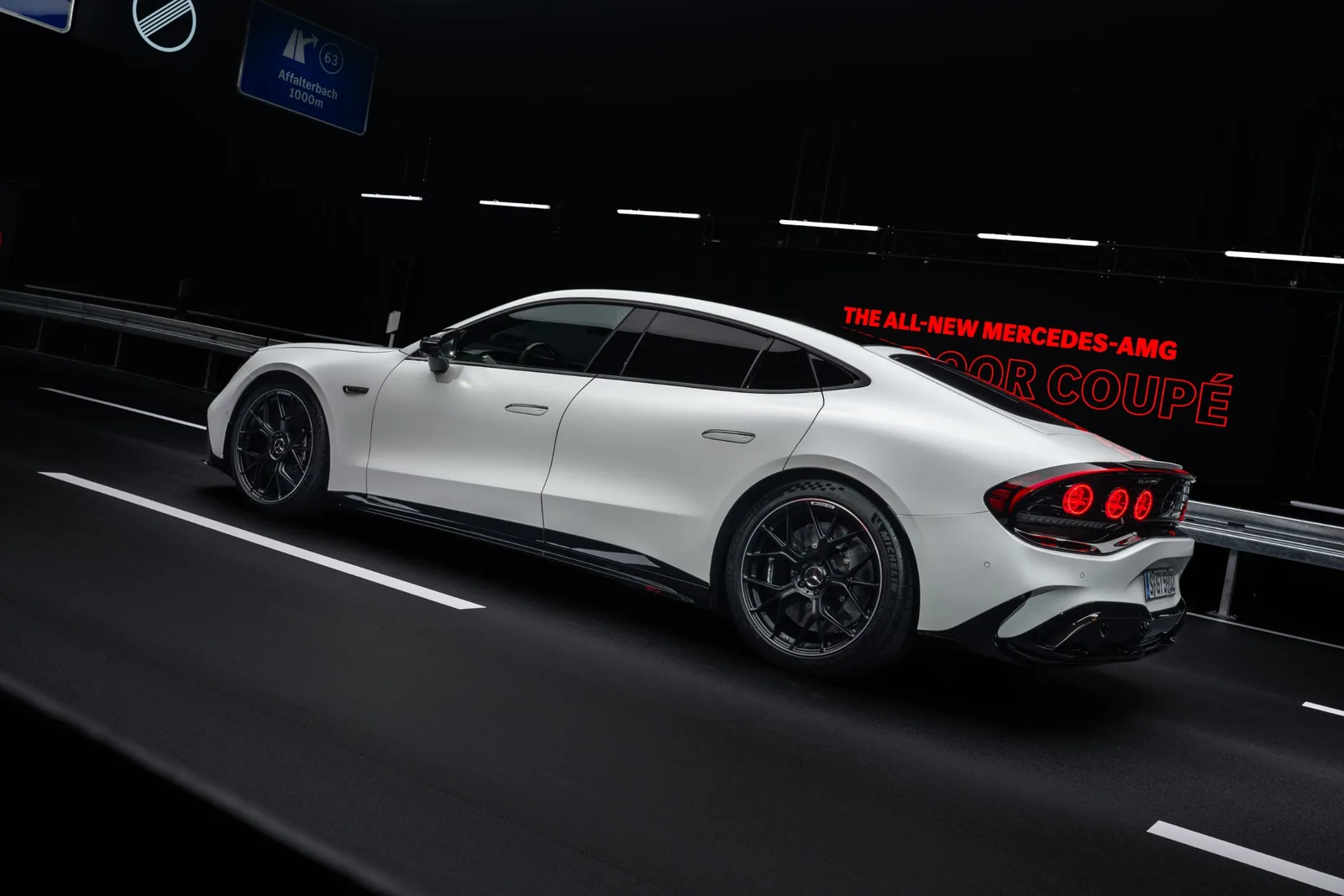
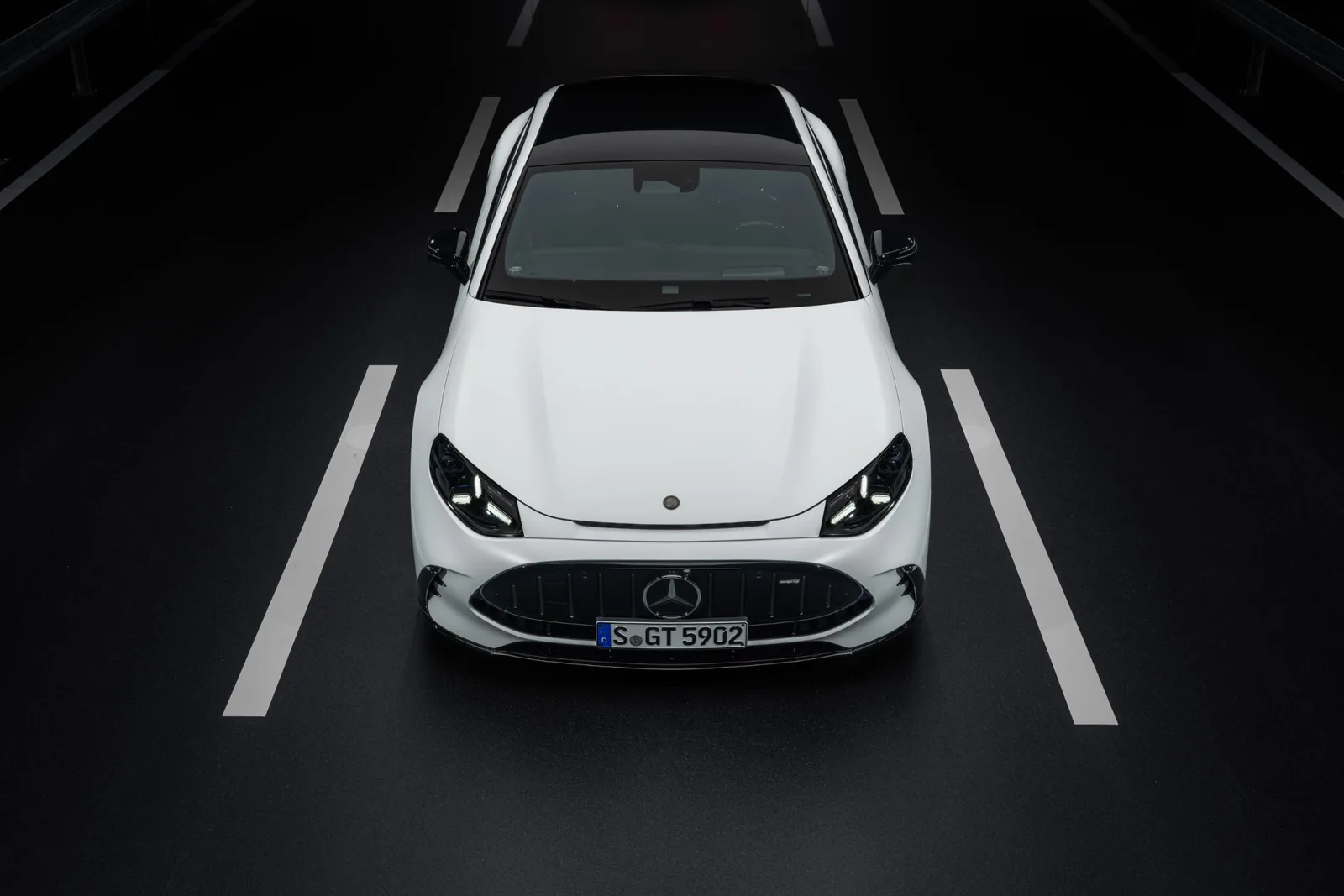
The body measures 5,094 mm in length and 1,411 mm in height — slightly longer and lower than the outgoing combustion-powered GT 4-Door. Drag coefficient is 0.22. Kerb weight is approximately 5,400 lb (~2,450 kg). The boot offers 507 litres of capacity with an additional 62-litre frunk under the bonnet.
The chassis uses multi-link suspension at both ends. The optional AMG Active Ride Control system replaces the conventional anti-roll bars with triple-chamber air springs and hydraulically interconnected dampers, controlling pitch, roll and ride height entirely through fluid flow. Rear-wheel steering with up to 6 degrees of articulation is standard. Carbon-ceramic discs are fitted at the front; steel discs are retained at the rear.
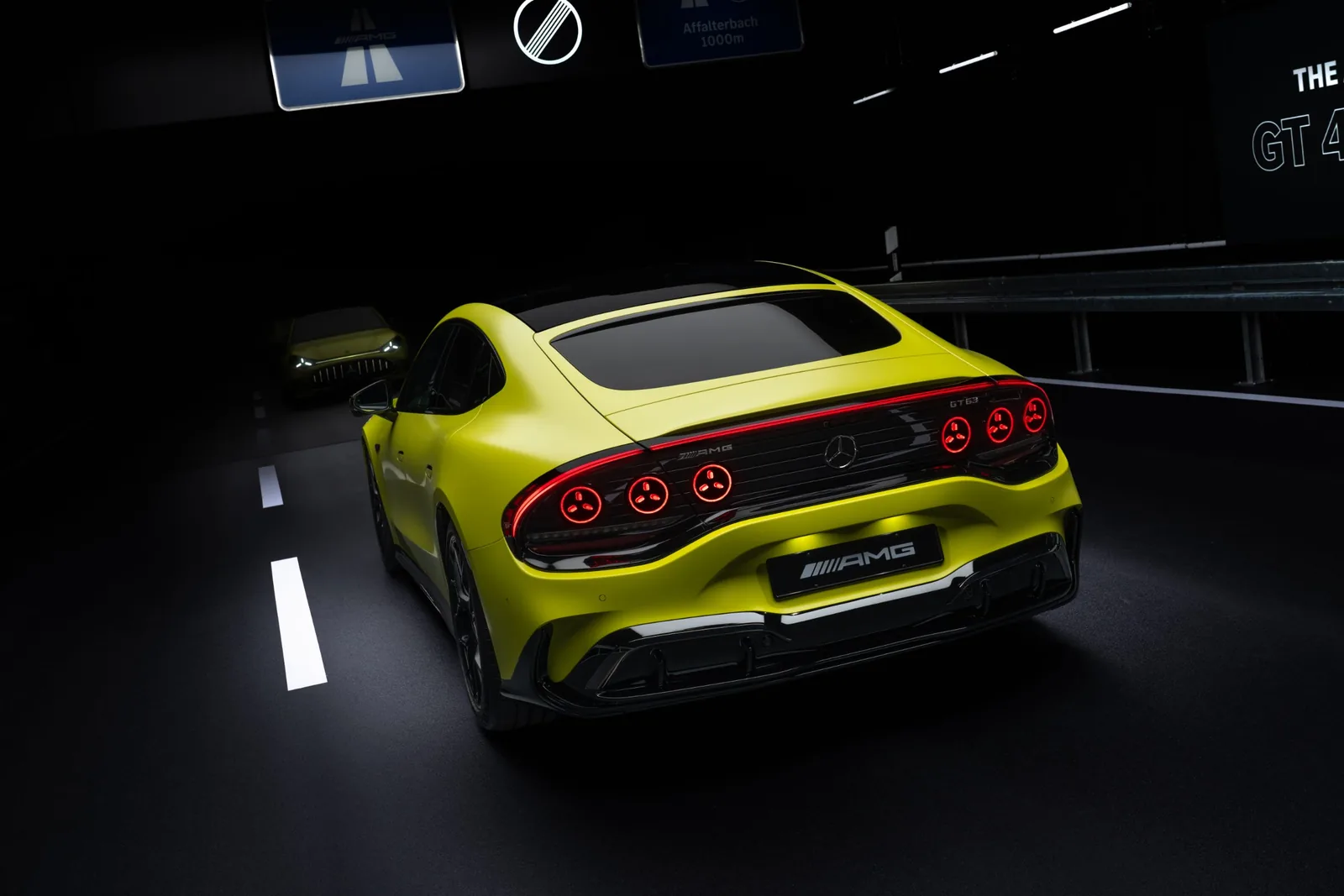
Active aerodynamics include a deployable rear spoiler that extends above 50 mph, two underbody Venturi panels that deploy between 75 and 87 mph to increase low-pressure suction, and nine-stage Airpanel louvres at the front bumper. An optional aerokinetic rear diffuser extends by approximately 8 inches at high speed.
Interior and AMG Race Control Unit
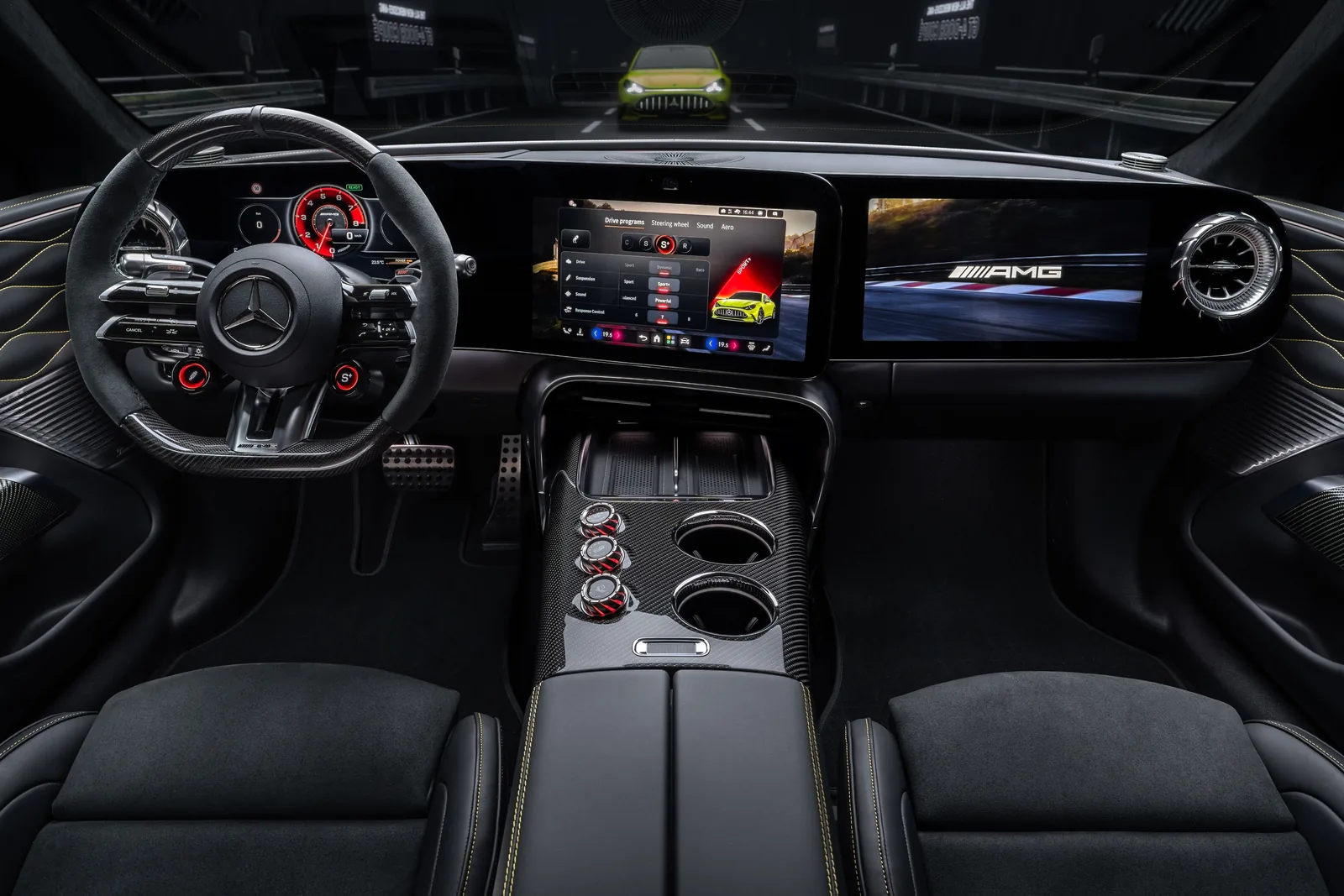
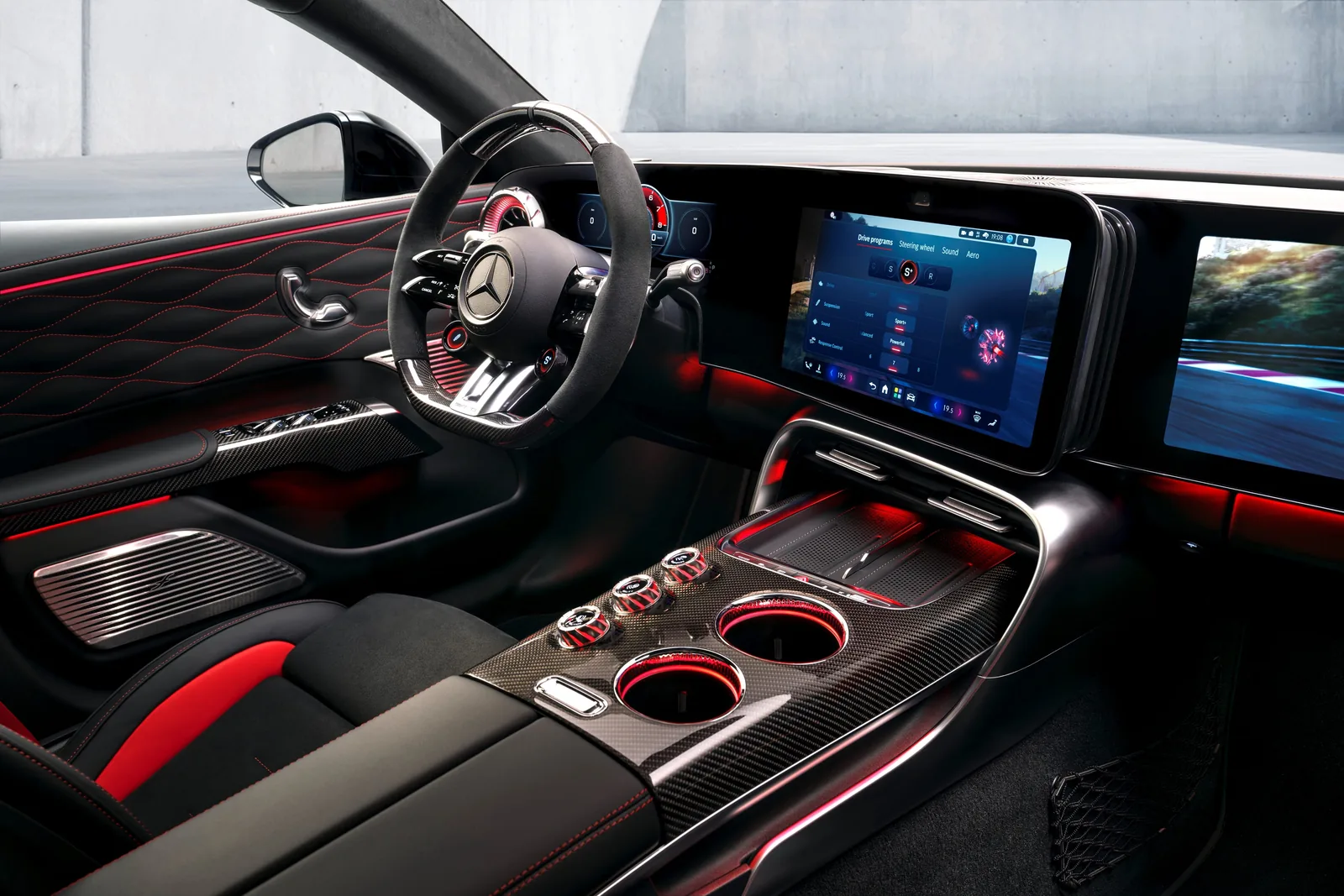
The cabin is organised around a 10.2-inch driver display, a 14-inch central touchscreen and an optional 14-inch passenger display. Below the central screen sits the AMG Race Control Unit: three physical rotary dials with embedded touch surfaces used to select among 9 traction levels and 7 drive modes without diving into menus. AMG Performance seats are standard; a flat-bottom steering wheel with rocker switches for drive-mode access and a pair of round satellite controls is fitted.
The rear cabin is configured as two individual sculpted seats by default, with a three-place bench available as a no-cost option. The panoramic roof uses electrochromic glass that switches between transparent and opaque on command. Ambient lighting follows the active drive mode.
AMGFORCE Synthesised Sound
Sport+ mode activates AMGFORCE, a synthesised soundtrack delivered through the cabin speakers and tactile actuators embedded in the front seats. The system is calibrated to emulate the cadence of the outgoing model's 4.0-litre twin-turbo V8, with engine load, throttle position and motor speed mapped to amplitude and pitch. The intent stated by Mercedes-AMG is to preserve a recognisable AMG sound identity in the absence of an internal-combustion soundtrack; the system can be disabled. It is the opposite approach to the one taken by the Mercedes-AMG ONE, whose noise comes from a genuine Formula 1-derived combustion engine.
Specifications
| Specification | GT55 4-Door | GT63 4-Door |
|---|---|---|
| Layout | Tri-motor AWD (1 front + 2 rear) | Tri-motor AWD (1 front + 2 rear) |
| Motor type | YASA axial-flux, permanent magnet | YASA axial-flux, permanent magnet |
| Peak power | 805 hp (600 kW) | 1,153–1,169 hp (860–872 kW) |
| Peak torque | 1,328 lb-ft (1,800 Nm) | 1,475 lb-ft (2,000 Nm) |
| 0–60 mph | 2.4 s | 2.0–2.1 s |
| Top speed | 155 mph (250 km/h) | 155 mph standard / 186 mph (300 km/h) with AMG Performance Package |
| Battery (net) | 106 kWh | 106 kWh |
| Cells | 2,660 cylindrical (105 × 26 mm), NCMA cathode + silicon anode | 2,660 cylindrical (105 × 26 mm), NCMA cathode + silicon anode |
| Energy density | 298 Wh/kg | 298 Wh/kg |
| Architecture | 800 V AMG.EA | 800 V AMG.EA |
| DC peak charging | 600 kW | 600 kW |
| 10–80% DC charge | ~11 min | ~11 min |
| WLTP range | up to ~700 km | up to 696 km |
| EPA range (expected) | ~315 mi | ~310 mi |
| Length / height | 5,094 mm / 1,411 mm | 5,094 mm / 1,411 mm |
| Drag coefficient | 0.22 | 0.22 |
| Boot / frunk | 507 L / 62 L | 507 L / 62 L |
| Suspension | Multi-link, optional AMG Active Ride Control | Multi-link, optional AMG Active Ride Control |
| Rear-wheel steering | Standard, up to 6° | Standard, up to 6° |
| Brakes | Carbon-ceramic front, steel rear | Carbon-ceramic front, steel rear |
| Drive modes | 7 modes, 9 traction levels | 7 modes, 9 traction levels |
| Reveal | May 20, 2026, Los Angeles | May 20, 2026, Los Angeles |
| Production start | Summer 2026, Sindelfingen Hall 32 | Summer 2026, Sindelfingen Hall 32 |
| On sale | Late 2026 | Early 2027 |
| Estimated price (USD) | ~$130,000 (projected) | ~$150,000–180,000 (projected) |
Mercedes-AMG GT 4-Door EV vs Porsche Taycan Turbo GT
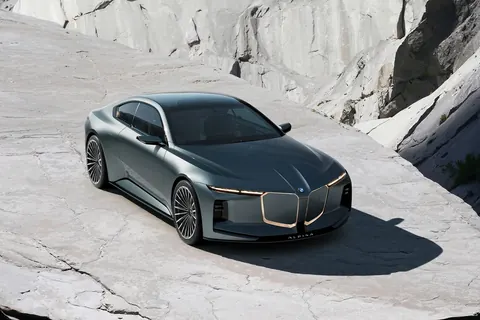
The GT 4-Door enters a segment in which the Porsche Taycan Turbo GT — also an 800 V four-door performance EV — is the current benchmark. The Porsche produces 1,034 hp on overboost from two radial-flux motors, with a quoted 0–60 mph time of 2.1 seconds and a 305 kW peak charge rate. On peak power, charge rate and rear-axle torque vectoring, the GT 4-Door's tri-motor axial-flux architecture moves the segment forward; on driving dynamics and chassis pedigree, the Taycan remains the reference. As of September 2026 no independent comparison test of the two has been published. A third German entrant is also in view: BMW's electric M saloon, previewed by the M Concept Neue Klasse, sits a segment below on price but shares the same engineering problem of making a heavy battery car feel agile.
Release Date and Pricing
Series production was scheduled to start in summer 2026 at the Sindelfingen plant's Hall 32; Mercedes-AMG has not published a line-start confirmation since. The GT55 4-Door is scheduled to reach customers later in 2026; the flagship GT63 4-Door follows in early 2027. Final pricing has not been disclosed by Mercedes-AMG, but the GT63 4-Door is widely projected to start at approximately USD 150,000, positioning it between the outgoing GT63 4-Door Coupé and the previous GT63 S E-Performance plug-in hybrid.
Sources
- Car and Driver — 2027 Mercedes-AMG GT 4-Door EV Revealed
- Road & Track — 2027 Mercedes-AMG GT 4-Door Coupé EV
- Electrek — Mercedes Unveils AMG GT EV: 1,153 hp, 0–60 in 2 s, 11-min Charge, Fake V8 Noise
- InsideEVs — 2027 Mercedes-AMG GT 4-Door Coupé
- MercedesBlog — World Premiere on May 20, 2026
- Autocar India — Reveal: 1,169 hp, 600 kW charging, 700 km range