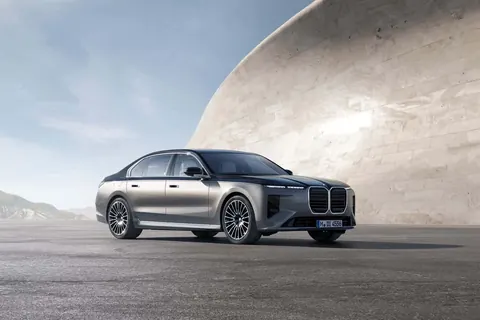
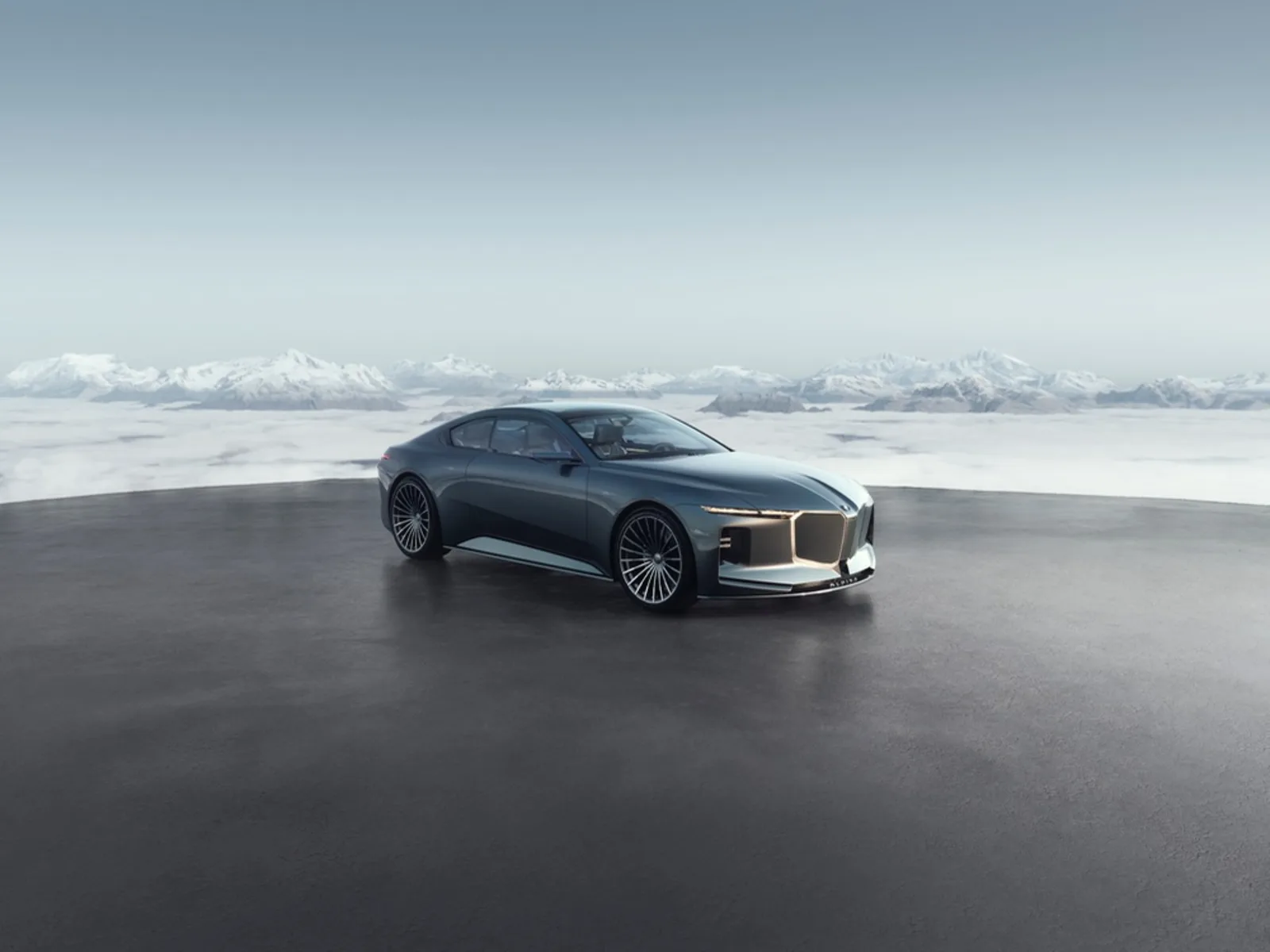
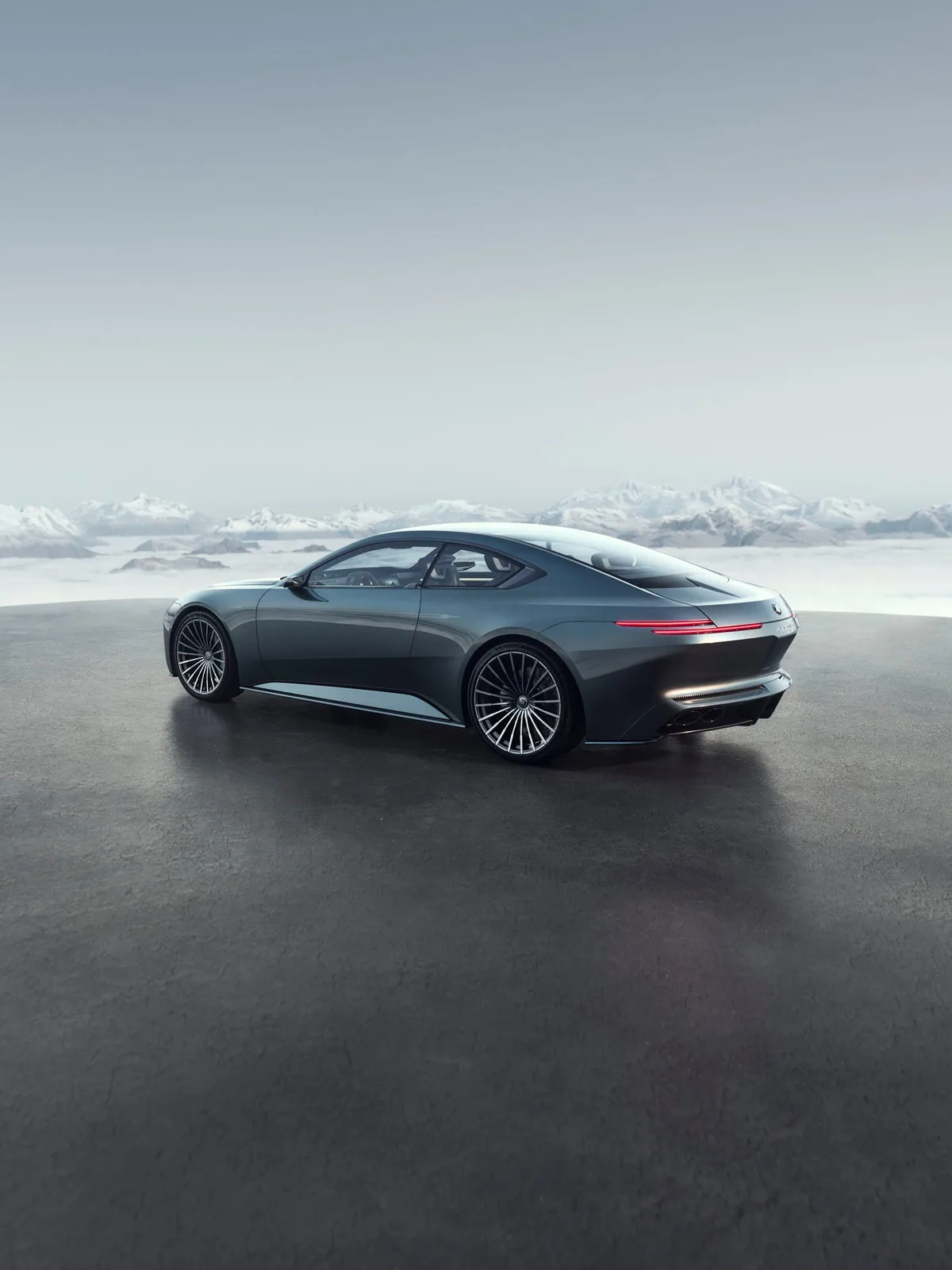
The Vision BMW Alpina is a one-of-one design study unveiled by the BMW Group at the 2026 Concorso d'Eleganza Villa d'Este in Cernobbio, Italy, on May 15, 2026. The concept is the first vehicle revealed under the newly internalised BMW Alpina sub-brand and previews the design language of a series-production model based on the BMW 7 Series, scheduled for 2027.
UPDATE · SEPTEMBER 16, 2026
The concept has done its job; the production car is still ahead. Four months after Villa d'Este, BMW has not revealed the series model the study previews — the first BMW Alpina production car remains scheduled for 2027 and is still described only as "inspired by the BMW 7 Series, but unmistakably BMW Alpina." No output, torque, weight or price figure has been published for either the concept's V8 or the production powertrain, and BMW has not confirmed whether that V8 is the S68 unit used elsewhere in the group. The roughly USD 200,000 figure in the table below is a third-party estimate, not a BMW number.
Editor's note: Vision BMW Alpina is explicitly identified by the manufacturer as a one-of-one design study, not a production model. Specifications listed below reflect what BMW has officially disclosed; figures for the upcoming production model are projections based on the disclosed powertrain choice (V8) and platform (7 Series).
Dimensions and Body
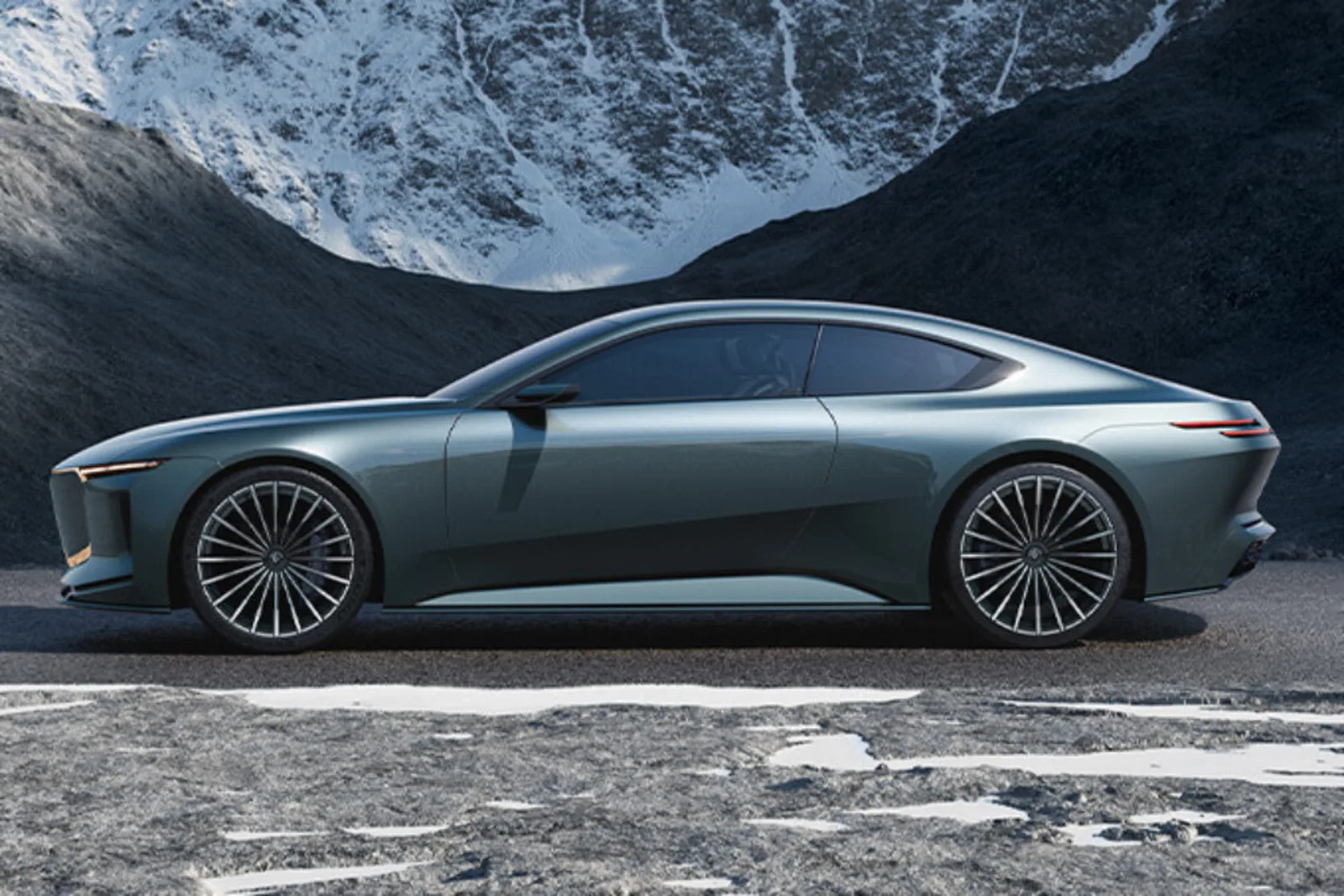
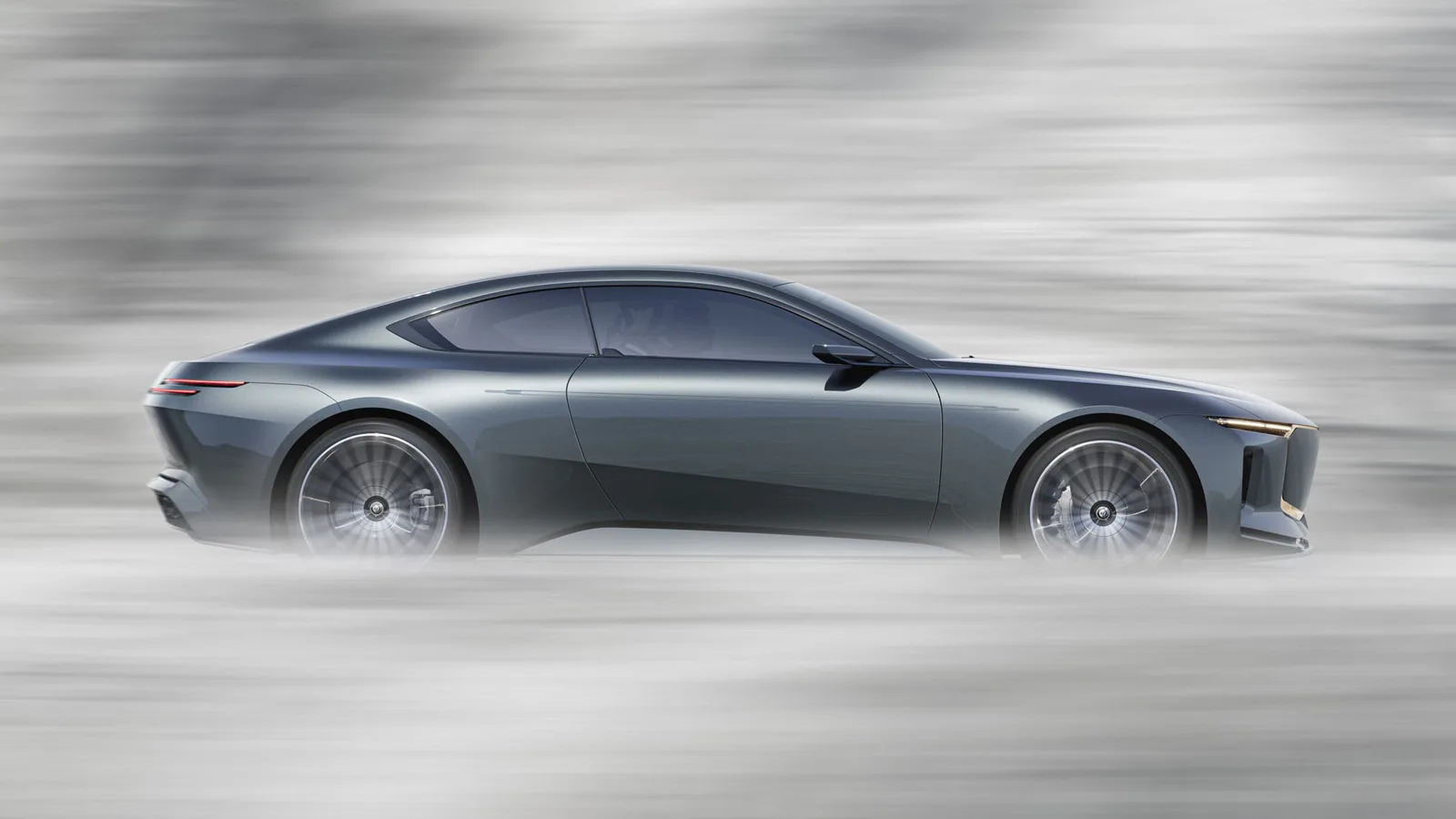
The concept measures 5,200 mm (204.7 in) in length. By comparison, the BMW 8 Series Gran Coupé (G16) measures 5,098 mm, and the BMW 7 Series (G70) measures 5,391 mm. The Vision BMW Alpina therefore sits between the two in absolute length but is configured as a two-door coupé with a 2+2 cabin layout. The body is described as wide, low, and confident, with a long, raked coupé roofline.
The wheel package is staggered: 22-inch front wheels and 23-inch rear wheels, both in the 20-spoke design that has been a constant in Alpina's wheel catalogue since 1971.
Powertrain
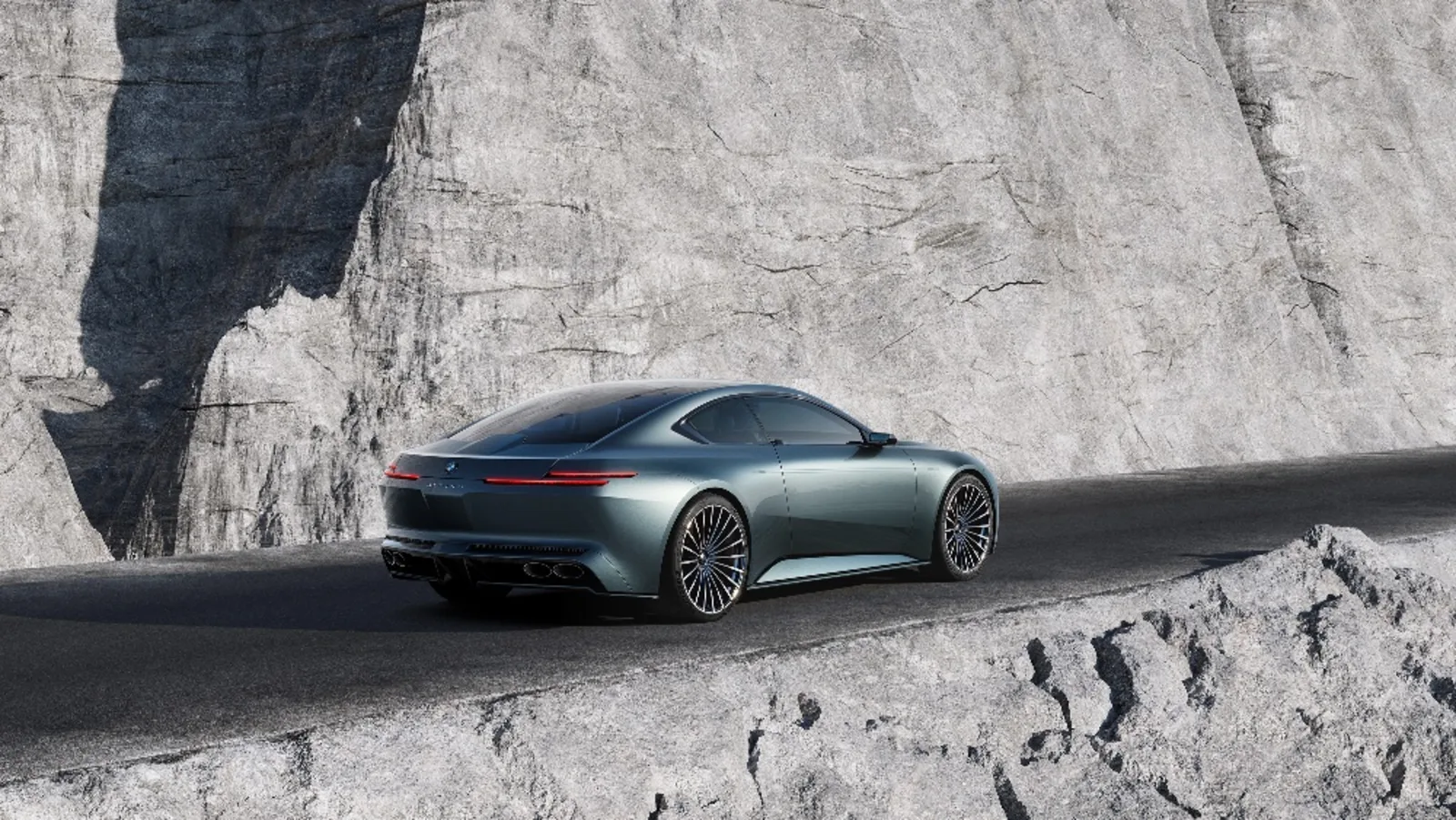
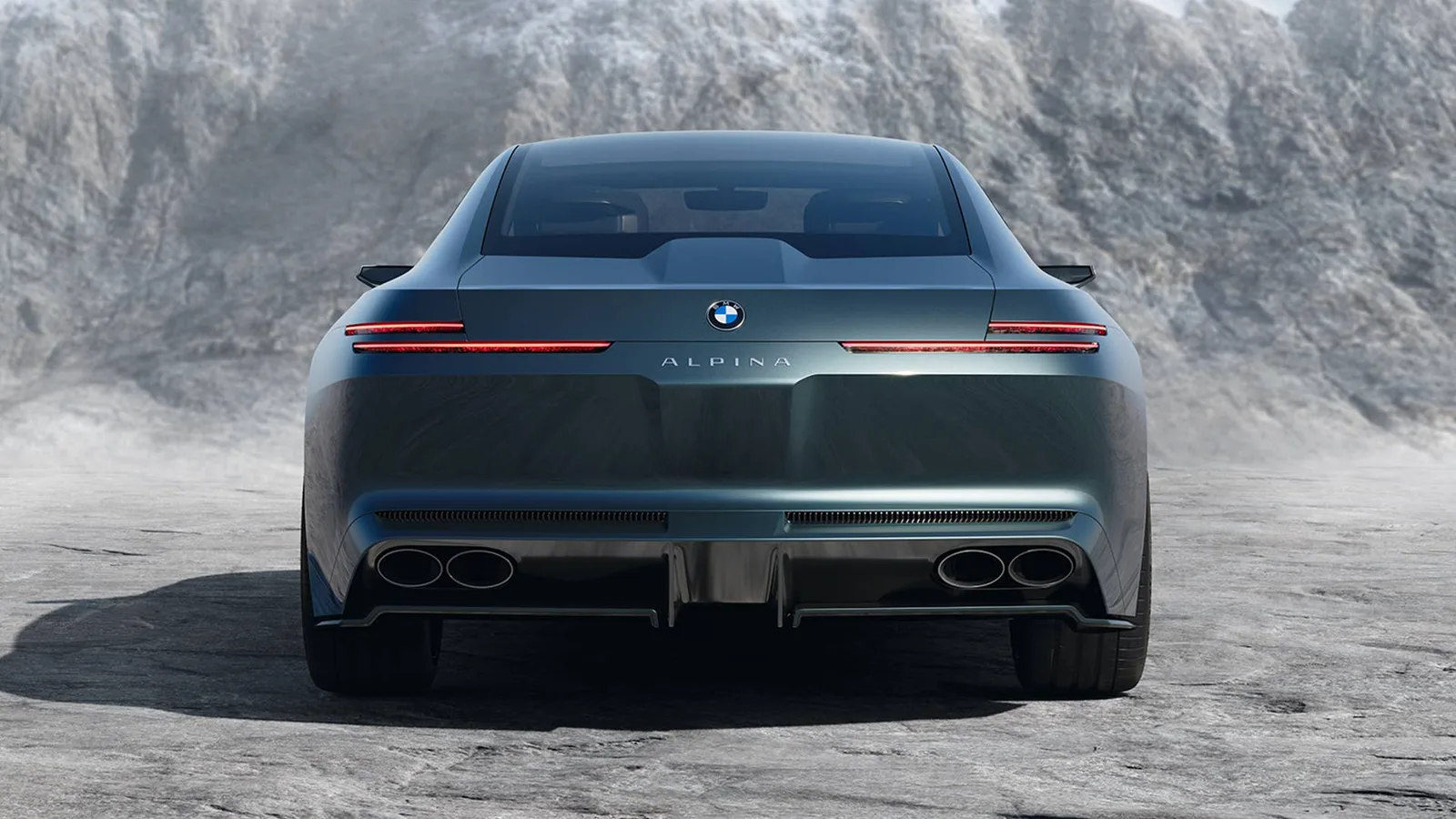
BMW confirms a V8 powertrain for the concept. Specific output figures are not disclosed, but the manufacturer notes the engine is "tuned to produce the characteristic notes of the Alpina exhaust: rich and deep at low speed, sonorous at high revs." The exhaust system retains the elliptical four-pipe layout that has been an Alpina signature for decades.
BMW has not stated whether the powertrain is shared with current M-division V8 hardware, and as of September 2026 it still has not. The reference 4.4-litre twin-turbo V8 (S68/N63 family) used in the M5 and Alpina XB7 produces between 612 and 625 hp in current applications. The production successor to this concept is expected to use a related architecture — notable in a group that is simultaneously pushing an electric performance line, previewed by the BMW M Concept Neue Klasse.
Exterior Design
The exterior is structured around what BMW calls the "speed feature line" — a single crease rising at a six-degree inclination from the lower front corners, running along the body sides and wrapping around the rear. The shark-nose front end is a direct reference to the Alpina B7 coupé of the late 1970s, which was based on the BMW E24 6 Series.
Surface treatment follows a "Second Read" principle: details reveal themselves on closer inspection. Modernised Deco-lines — the painted side stripes that have been part of Alpina's visual language since 1974 — are applied beneath the clear coat rather than over it. Inward-facing return surfaces are finished in a dark metallic tone, referencing the BMW 507, which used chrome only on the inside of its kidney grilles.
Headlight and grille lighting use a warm white tone described as inspired by the first light over the Bavarian Alps. The kidney grille perimeter is softly backlit, revealing a finely scaled Deco-line graphic on its inner surfaces when illuminated. "ALPINA" lettering appears on the lower front apron as a machined and polished metal element.
Rear Design and Exhaust
The rear fascia is dominated by a two-line illuminated taillight motif with the "ALPINA" wordmark centred between the lamps and the BMW roundel above. The lower fascia is split by horizontal slats that emphasise the car's width. Four elliptical exhaust outlets are arranged in two pairs — a configuration retained from earlier Alpina road cars.
The trunk lid is described by BMWBLOG's coverage as "surprisingly small for such a large vehicle," consistent with a coupé bias toward proportion over outright luggage capacity.
Interior Architecture
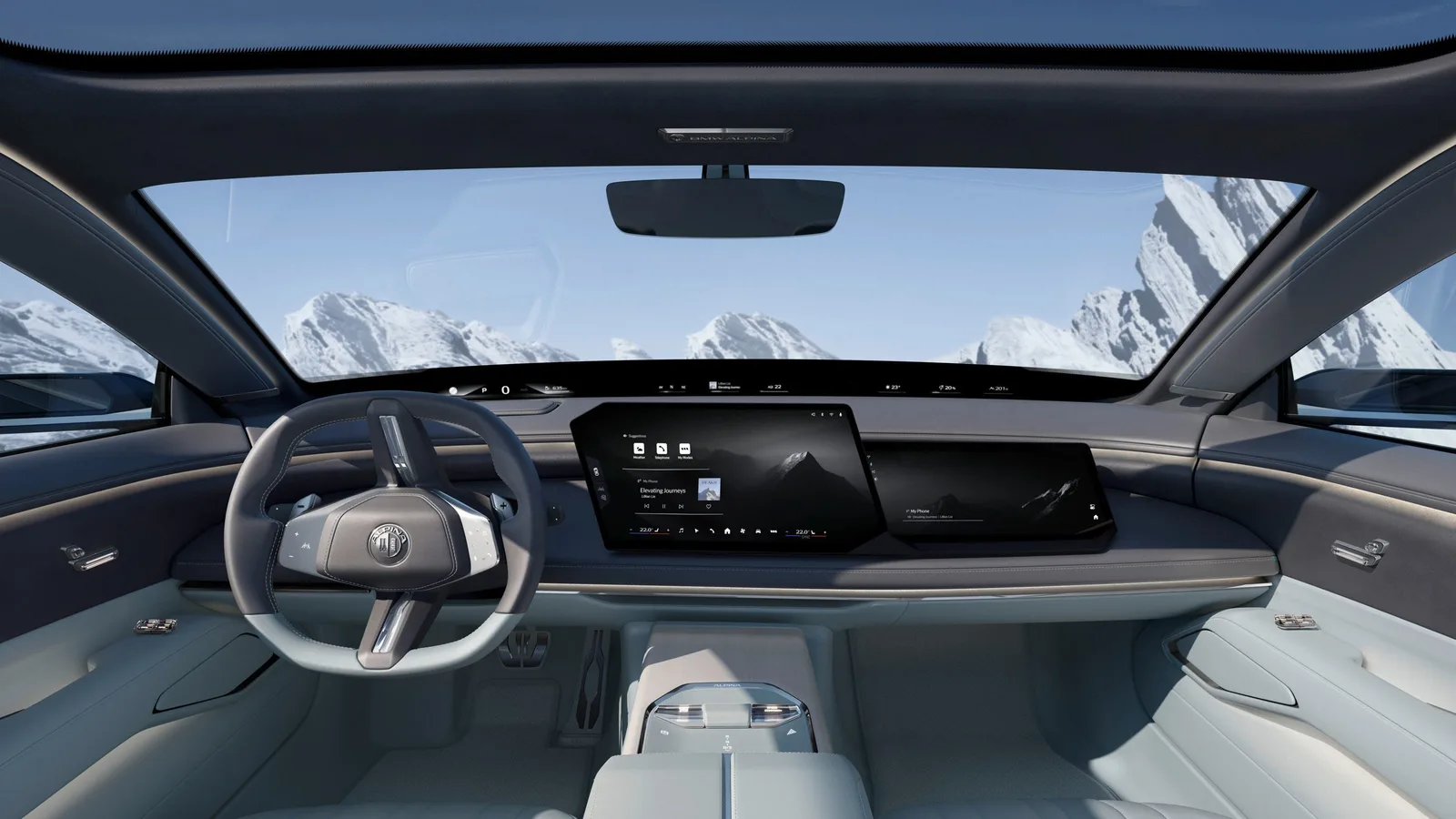
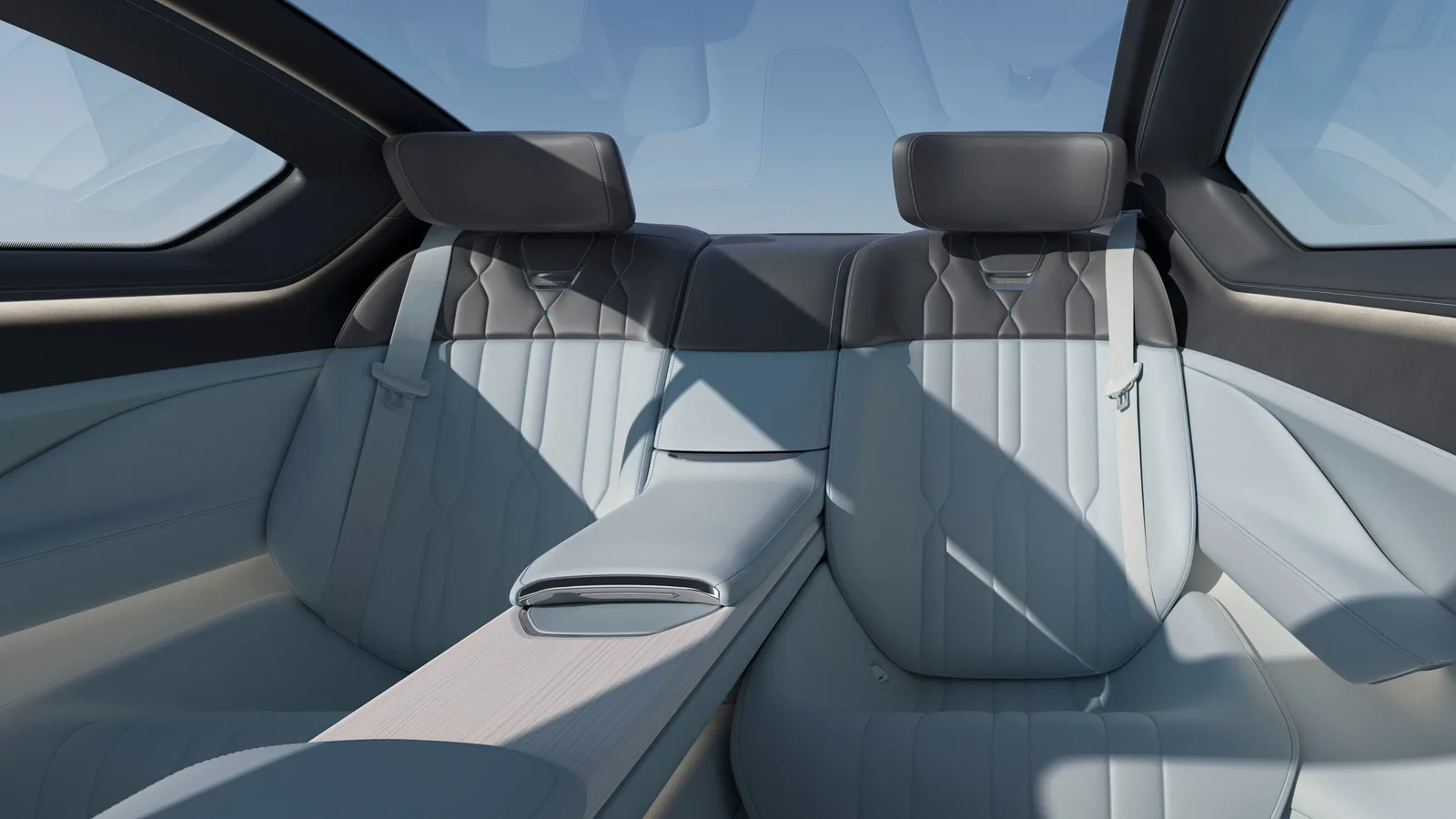
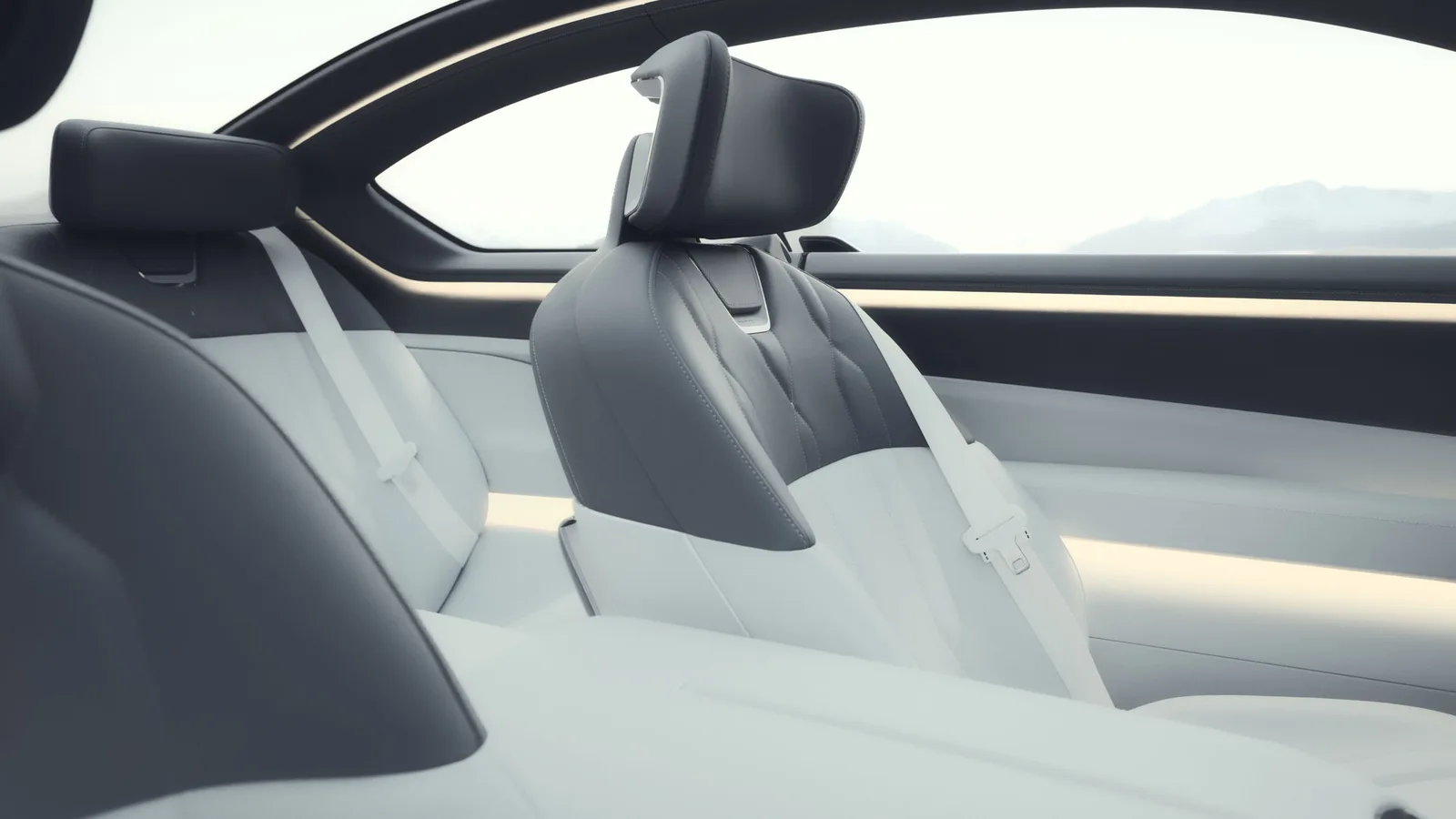
The cabin uses a 2+2 layout with rear seating for two passengers. The interior is structured by architectural volumes — each element designed as a standalone form rather than blended into a continuous surface. The six-degree speed feature line continues through the interior, dividing the upper darker segment from the lighter lower segment.
Upholstery is full-grain leather sourced from producers across the Alpine region. Stitching is inspired by the exterior Deco-lines, with a bridge stitch — derived from historic steering wheel hand-stitching — used sparingly in heritage blue and green. Metal components employ a watchmaking-inspired beveling technique with combined satin and polished finishes. Clear-cut crystal is reserved for the controls that directly shape driving behaviour, underlining the brand's stated emphasis on the driving experience itself.
Rear Cabin and Crystal Glasses
The rear cabin retains the 2+2 configuration with two individual sculpted seats divided by a full-length centre console. Behind the rear console, a glass water bottle sits beside two BMW Alpina crystal glasses that rise on a self-deploying mechanism. Each glass is engraved with 20 Deco-lines — a direct callback to the 20-spoke wheels — and features a six-degree rim profile that mirrors the speed feature line. The glasses are held in place by concealed magnets and softly lit against the open-grain centre console surface.
Comfort+ and Drive Modes
The concept retains the Comfort+ drive mode that has been part of recent Alpina vehicles. BMW describes it as "a setting beyond the standard BMW comfort calibration that delivers a more supple, refined character." The full mode lineup includes Comfort+, Sport, Sport+, and Speed. The Panoramic Vision head-up display changes its colour palette as the driver progresses from Comfort+ to Speed mode, with heritage blue and green introduced with increasing intensity.
Background imagery within the iDrive system is described as an exact rendering of the mountain range visible when looking south from Buchloe, Alpina's birthplace.
| Specification | Vision BMW Alpina (Concept) | First Production Model (2027, projected) |
|---|---|---|
| Body style | Four-seat coupé (2+2) | Inspired by BMW 7 Series |
| Length | 5,200 mm (204.7 in) | ~5,400 mm (7 Series-based) |
| Front wheels | 22-inch, 20-spoke design | TBC |
| Rear wheels | 23-inch, 20-spoke design | TBC |
| Powertrain | V8 (internal combustion) | V8 (likely 4.4 L twin-turbo from BMW M) |
| Exhaust | Elliptical quad outlets | TBC |
| Drive modes | Comfort+, Sport, Sport+, Speed | TBC |
| Infotainment | BMW Panoramic iDrive with passenger screen, Alpina-specific UI | Same architecture, refined |
| Head-up display | BMW Panoramic Vision | BMW Panoramic Vision |
| Materials (interior) | Full-grain Alpine-region leather, clear-cut crystal, satin and polished metal | Bespoke trim package |
| Production status | One-of-one design study | Series production, low volume |
| Reveal date | May 15, 2026 | 2027 (date TBC) |
| Reveal location | Concorso d'Eleganza Villa d'Este, Cernobbio, Italy | TBC |
| Estimated price (production) | n/a — not for sale | ~USD 200,000 (projected) |
Brand Context: Alpina Inside BMW
Alpina was founded in 1965 in Buchloe, Germany, by Burkard Bovensiepen. For most of its history it operated as an independent specialist that engineered and sold low-volume modifications of BMW road cars under its own type approval. BMW acquired the Alpina trademark and operating rights in 2022, and Alpina became an exclusive sub-brand within the BMW Group in 2026.
Oliver Viellechner, head of BMW Alpina, frames the brand's positioning as: "BMW Alpina fills a gap in our portfolio between BMW and Rolls-Royce as we see even more potential in the high-end segment." Design direction is led by Maximilian Missoni, head of BMW Design Midsize & Luxury Cars and BMW Alpina; overall responsibility falls under Adrian van Hooydonk, head of BMW Group Design.
Historical Reference: Alpina B7 Coupé (E24)
The Vision BMW Alpina explicitly references the Alpina B7 Turbo Coupé of the late 1970s, which was based on the BMW E24 6 Series. The E24 B7 Turbo Coupé combined a long bonnet, wide stance, and shark-nose front end with a cabin sized for four adults — the same proportional template the Vision BMW Alpina now revisits in modern form. The B7 marked the point at which Alpina's tuning philosophy was extended into the luxury segment, establishing a template for every subsequent flagship from the company.
Production Roadmap
BMW confirms that the Vision BMW Alpina is a one-of-one design study and will not enter production in its current form. However, the manufacturer has confirmed that the first series-production model of the new BMW Alpina sub-brand will arrive in 2027 and is "inspired by the BMW 7 Series, but unmistakably BMW Alpina." A second-generation X7-based model is also expected.
Pricing for the production car has not been disclosed; third-party estimates place it in the region of USD 200,000, slotting between the current top-end BMW range and Rolls-Royce.
Direct Quotes from BMW
"Alpina has always represented a very specific idea of performance and refinement — where speed and comfort are complementary ambitions. Our role as the new custodians of this brand is to preserve this distinctiveness and shape it for a contemporary context."
— Adrian van Hooydonk, head of BMW Group Design
"In Vision BMW Alpina, we distil every element of the brand to its essence and apply it in a deeply modern and sophisticated way. Every detail reflects substance: in engineering, in materials, and in the story it tells. The statements it makes are subtle and revealed only on a closer read."
— Maximilian Missoni, head of BMW Design Midsize & Luxury Cars and BMW Alpina
Sources
- BMW Group PressClub — Vision BMW Alpina: Speed, Refined (May 15, 2026)
- BMWBLOG — The Vision BMW Alpina Brings Sexy Back
- Motor1 — The First Alpina In The BMW Era Is A Large Luxury Coupe
- Car and Driver — Vision BMW Alpina Concept Shows the Subbrand's Future Is Bright
- HiConsumption — BMW Alpina's First In-House Concept Is a V8-Powered Grand Tourer