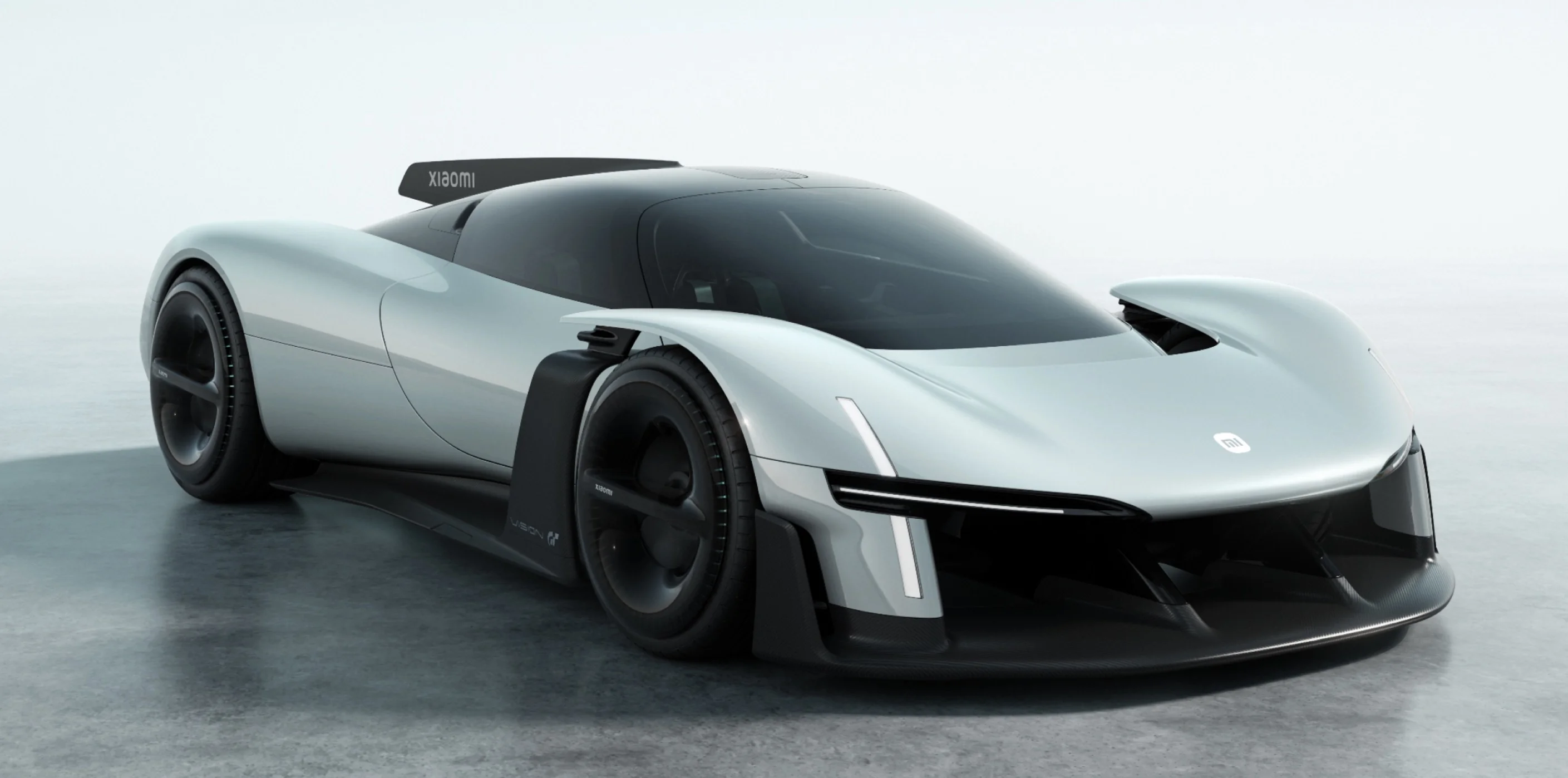
The smartphone company that once made power banks now wants to build a 990-horsepower SUV that looks like a Ferrari Purosangue — and it's launching in Europe in the second half of 2027. At the 2026 Beijing Auto Show, Xiaomi CEO Lei Jun took the wraps off the YU7 GT: a dual-motor performance crossover with 0–100 km/h in 2.95 seconds, a 300 km/h top speed, and a 705 km CLTC range. Production deliveries were scheduled to begin in late May 2026.
UPDATE · SEPTEMBER 16, 2026
The late-May 2026 Chinese delivery window quoted above has now passed and Xiaomi has not announced any delay to it. Everything aimed at Europe, however, is still ahead: the company continues to give the second half of 2027 as its European sales start, homologation and right-hand-drive work are still in progress, and no European price has been published — the ~€60,000 figure below is the Chinese RMB 475,000 estimate converted, not a European list price. Xiaomi has also still not released an official Nürburgring lap time for the YU7 GT, despite the uncamouflaged March 2026 test running, and the halo Vision GT concept remains a virtual car with no production plan attached.
EDITOR'S NOTE
Xiaomi is no longer "the phone company that builds cars." Its SU7 Ultra sedan now holds the production EV lap record at the Nürburgring (7:04.957). The YU7 GT is the same engineering ambition wrapped in an SUV body — one whose silhouette is, frankly, impossible to look at without thinking of Maranello.
Xiaomi YU7 GT vs Ferrari Purosangue — The Resemblance Is Not Subtle
Auto Express was the first to put the comparison in print: "The new Xiaomi YU7 GT might look like a Ferrari Purosangue." Look at the long, low bonnet, the muscular fender flares, the falling roofline, the way the cabin sits pushed rearward over the rear axle — this is a $300,000 Italian V12 SUV reinterpreted by a Chinese tech giant for roughly one-fifth of the money. Xiaomi has not denied the influence; it has not had to.
The Ferrari Purosangue uses a naturally aspirated 6.5-litre V12 producing 725 hp at 7,750 rpm and rockets to 100 km/h in 3.3 seconds. The Xiaomi YU7 GT uses two electric motors producing a combined 990 hp and reaches 100 km/h in 2.95 seconds. The Italian costs over €390,000. The Xiaomi will start at around 475,000 yuan (approximately €60,000). Same silhouette. Different decade.
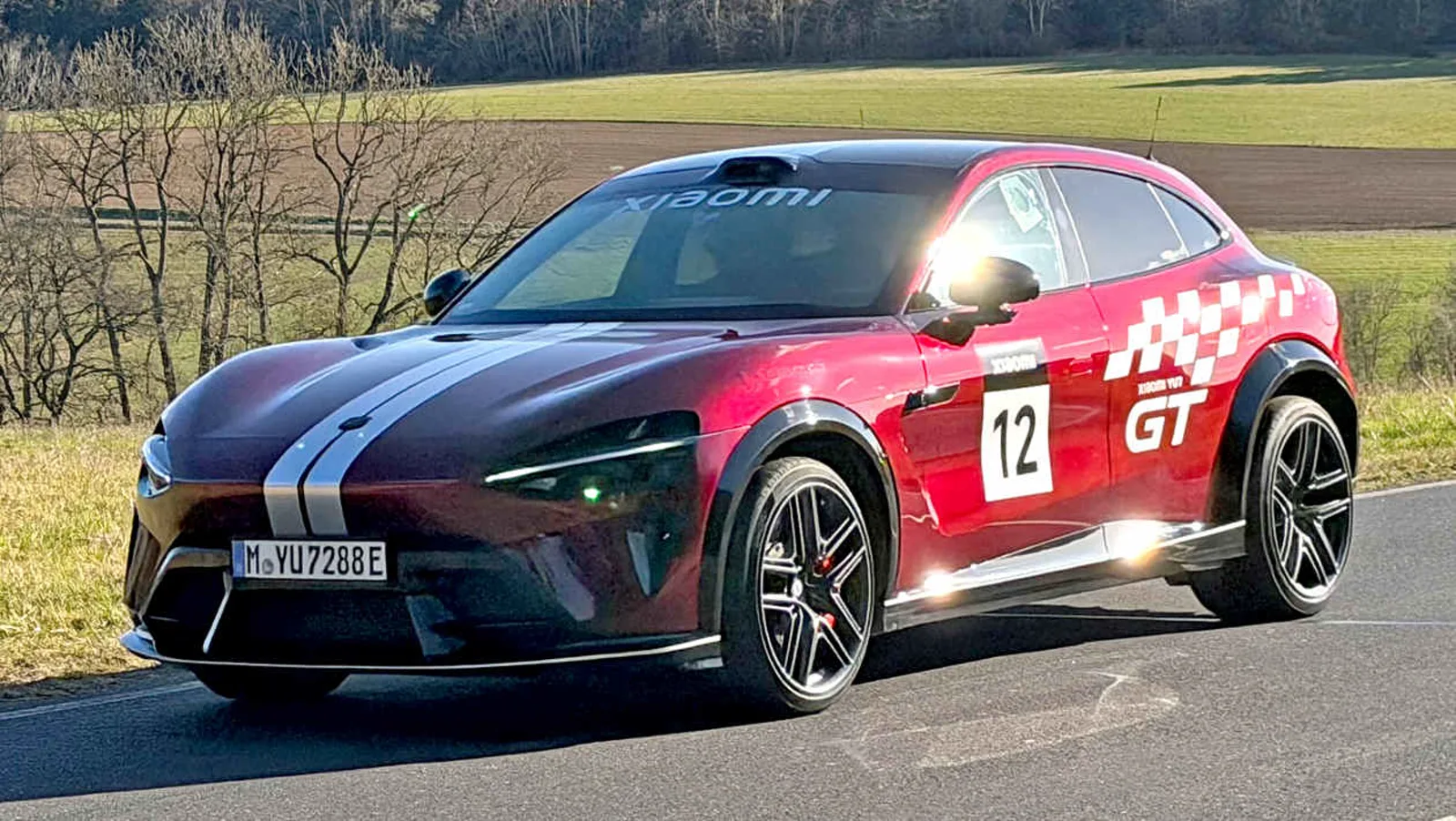
Xiaomi YU7 GT Specs — 738 kW Dual Motor, 0–100 in 2.95s, 300 km/h
The headline numbers are deliberately aimed at Porsche, BMW M and AMG. A 288 kW (386 hp) front motor works alongside a 450 kW (604 hp) rear motor for a combined output of 738 kW — 990 hp. Top speed is 300 km/h (186 mph), putting the YU7 GT in genuine hypercar SUV territory alongside the Lamborghini Urus SE Performante and well above the Porsche Cayenne Turbo GT. The dual-motor configuration uses an 800-volt architecture, the same generation as the SU7 Ultra.
Power is one thing. The chassis is the part that matters more. Xiaomi engineered adaptive air suspension, an active stabilisation system calibrated on the Nürburgring Nordschleife, and a Brembo carbon-ceramic braking system that stops the YU7 GT from 100 to 0 km/h in just 33.9 metres. That is shorter than a Porsche 911 GT3. From a 2,460 kg SUV.
| Specification | Xiaomi YU7 GT | Ferrari Purosangue |
|---|---|---|
| Powertrain | Dual-motor electric AWD | 6.5L NA V12 + AWD |
| Power Output | 990 hp (738 kW) | 725 hp (533 kW) |
| 0–100 km/h | 2.95 s | 3.3 s |
| Top Speed | 300 km/h (186 mph) | 310 km/h (193 mph) |
| Battery / Range | 101.7 kWh / 705 km CLTC | N/A (combustion) |
| Curb Weight | 2,460 kg | 2,180 kg (dry) |
| Length / Wheelbase | 5,015 mm / 3,000 mm | 4,973 mm / 3,018 mm |
| 100–0 km/h Braking | 33.9 m | ~32 m |
| Starting Price | ~€60,000 (RMB 475k est.) | €390,000+ |
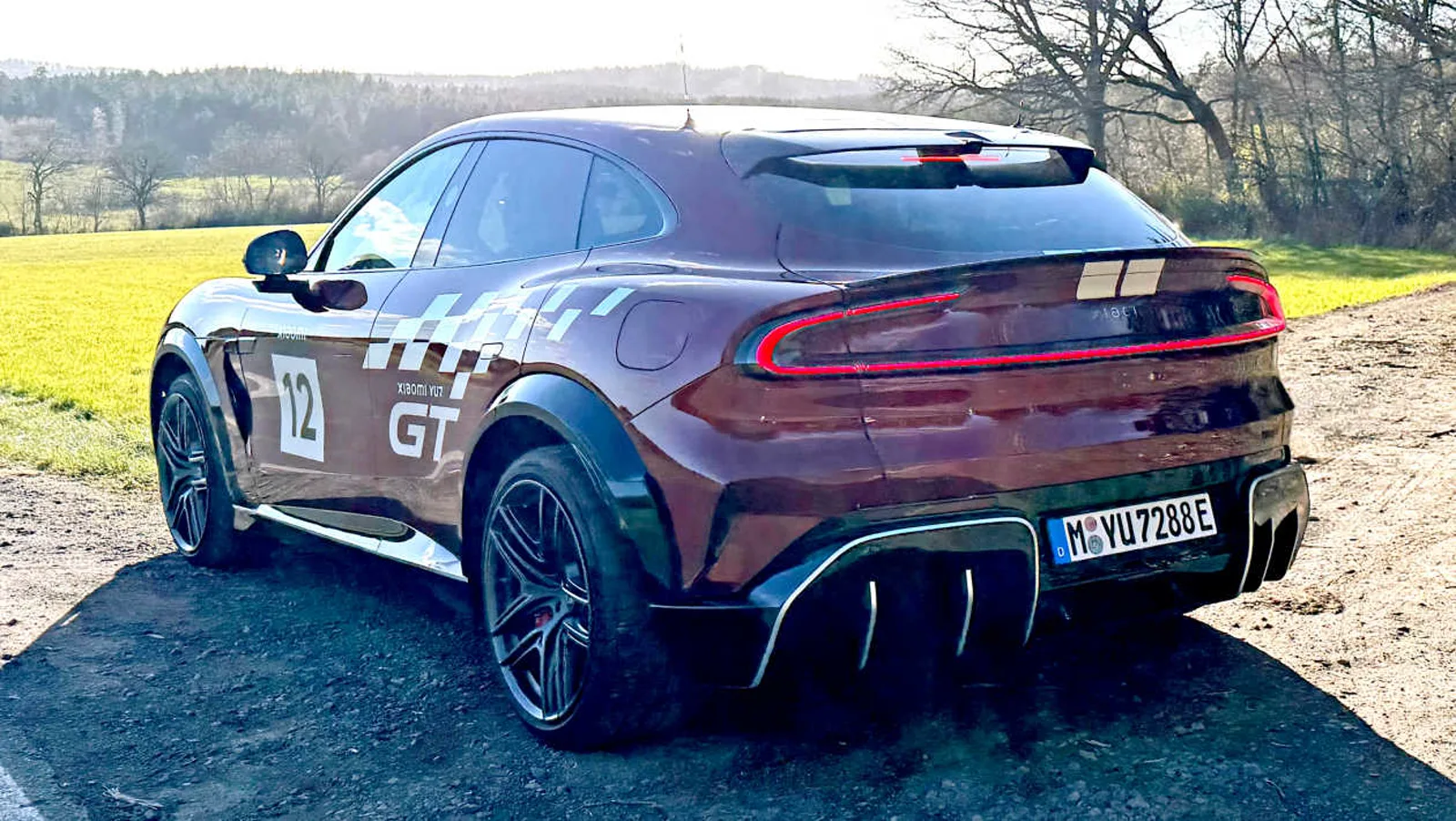

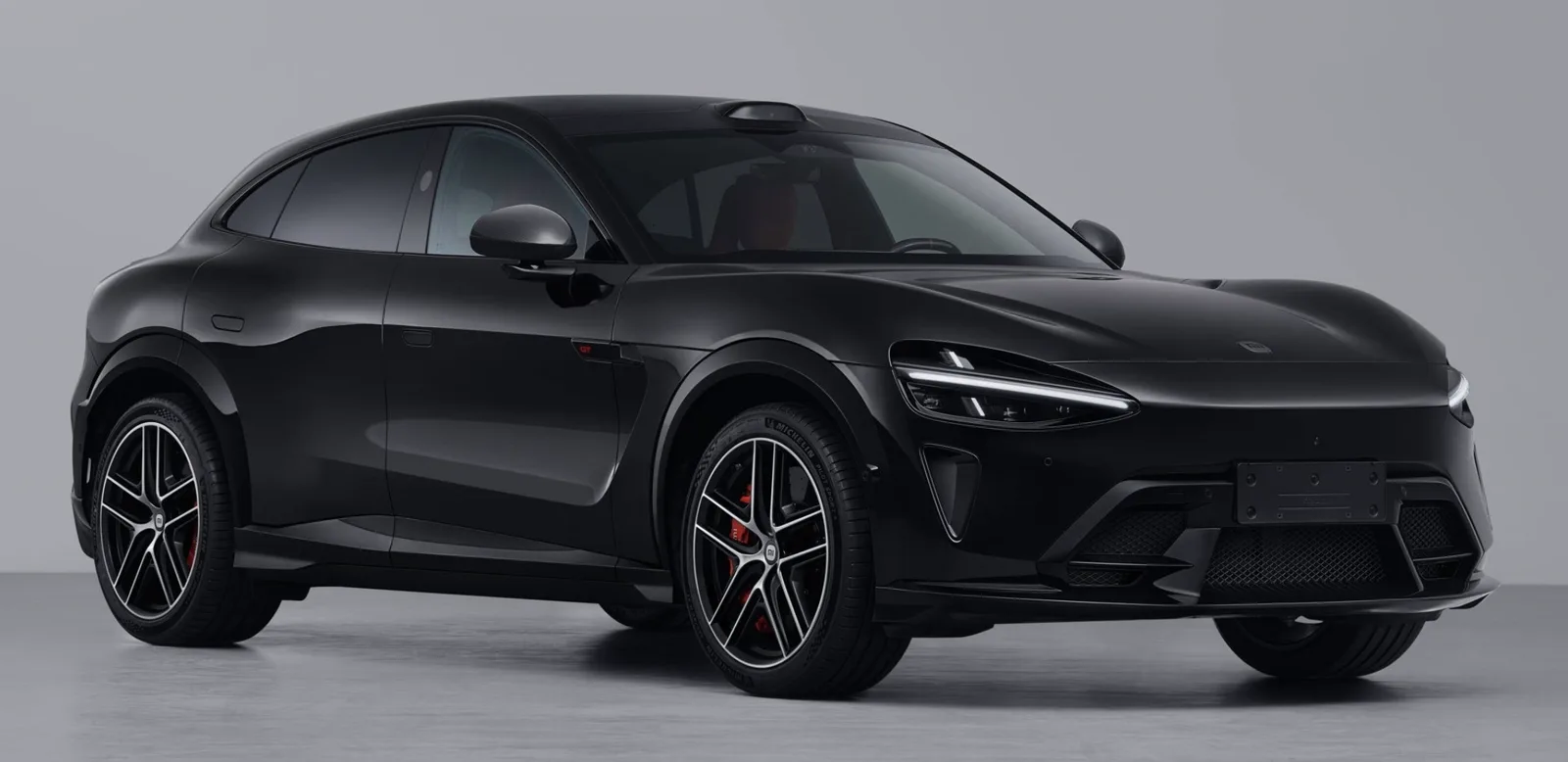
Left: rear three-quarter showing the full-width LED bar and aggressive diffuser. Right: side profile in matt grey — the proportions that started the Purosangue comparisons. Images: Auto Express, XimiTime
The Full YU7 Lineup — Even the Base Car Hits 100 km/h in 5.88s
The GT sits on top of a four-trim YU7 lineup that is, frankly, embarrassing to most legacy automakers' EV ranges. Even the rear-wheel-drive entry car — the cheapest one in China at RMB 253,500 (~€32,000) — produces 235 kW (315 hp) and runs 0–100 in 5.88 seconds with an 835 km CLTC range. The mid-spec YU7 Pro AWD moves to 365 kW (489 hp) and 4.27 s. The YU7 Max AWD, before the GT was even announced, was already running 508 kW (681 hp) and 0–100 in 3.23 s with a 760 km CLTC range. The YU7 launched on 26 June 2025 and collected over 200,000 firm orders in the first three minutes of availability.
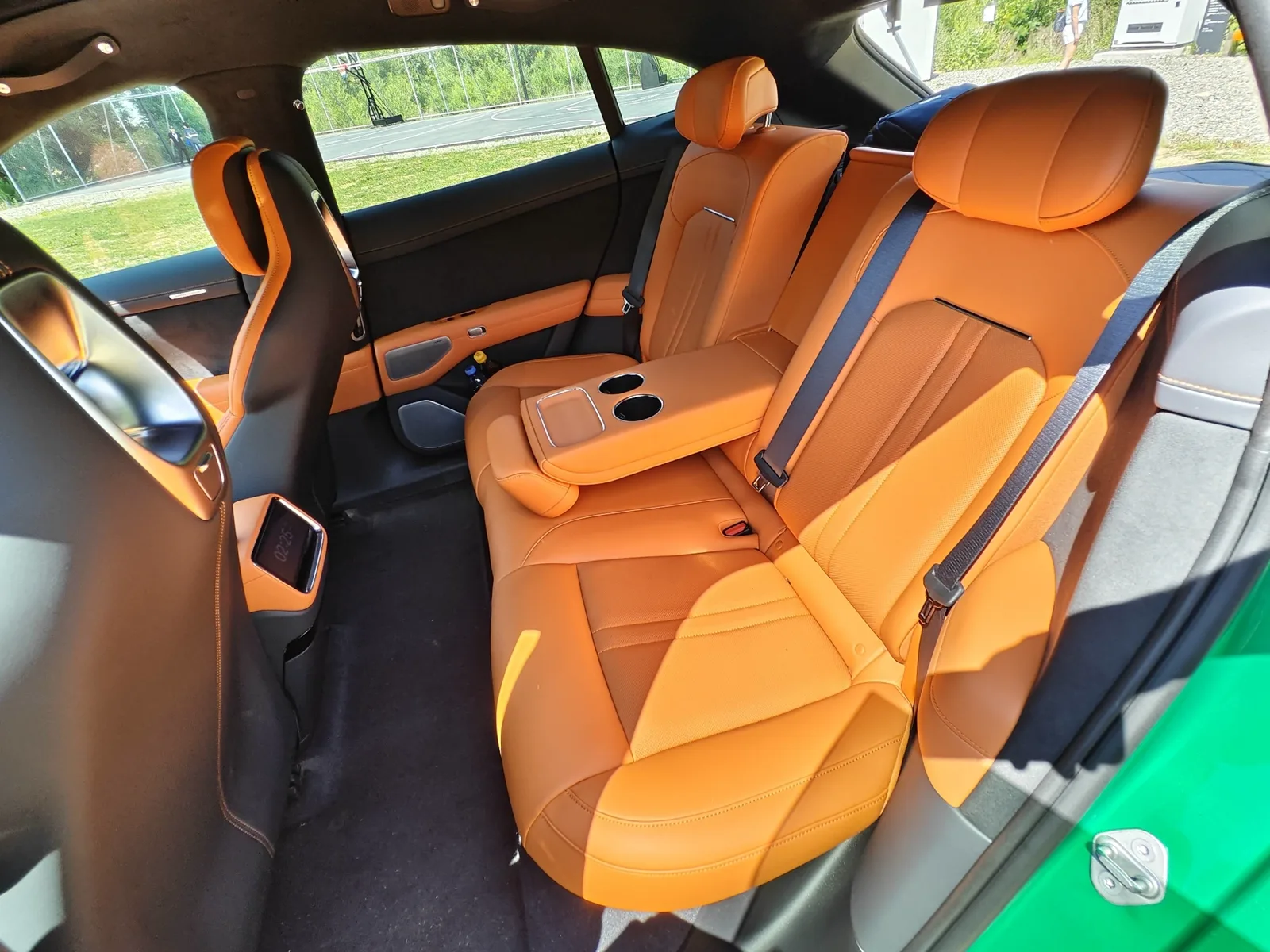
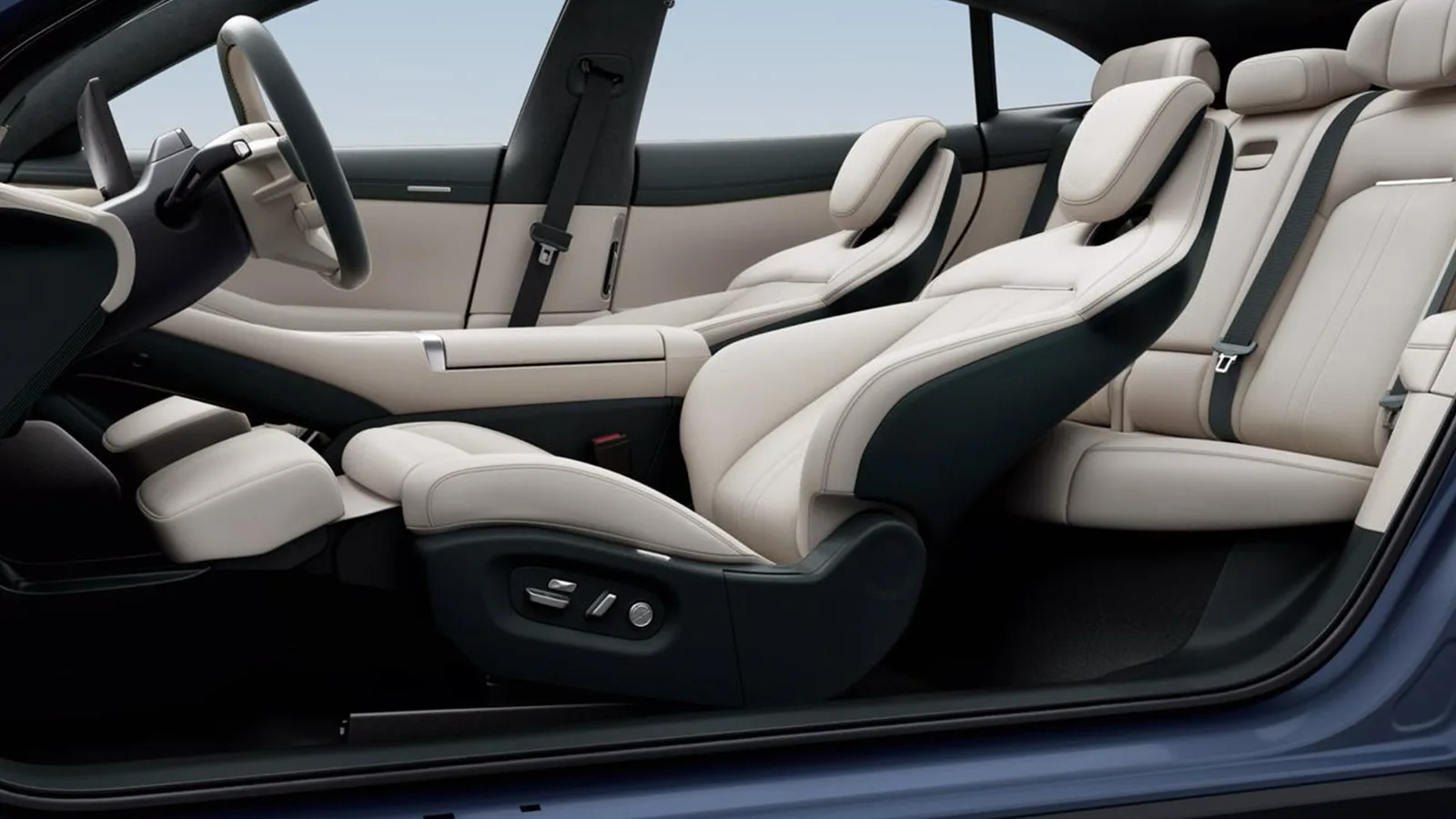
Inside, the YU7 GT pairs Xiaomi HyperOS infotainment with sport bucket seats. The cabin tech is unmatched at this price — a panoramic dashboard display, full Apple/Android compatibility, advanced air purification, and Xiaomi Pilot autonomous driving. Images: ArenaEV, GadgetMatch
Nürburgring DNA — SU7 Ultra Already Holds the EV Sedan Record
Xiaomi's performance credibility is no longer a marketing slide — it is on the leaderboard. In June 2025, the SU7 Ultra production model set a verified Nürburgring Nordschleife lap of 7:04.957, beating the Porsche Taycan Turbo GT with Weissach package and claiming the official production-EV sedan record. A stripped-down SU7 Ultra Prototype lapped the Green Hell in 6:22.091, putting it third on the entire Nordschleife leaderboard.
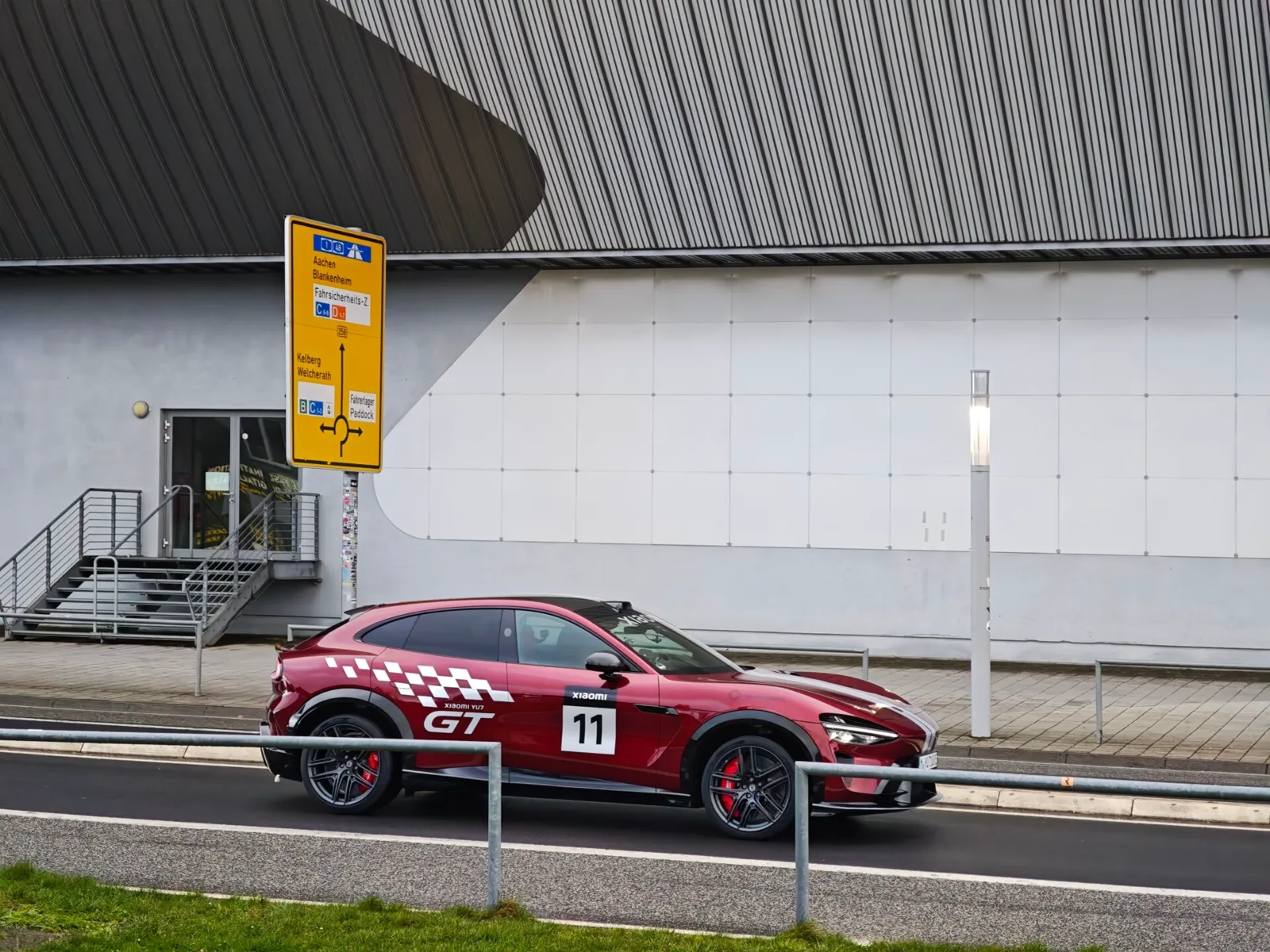
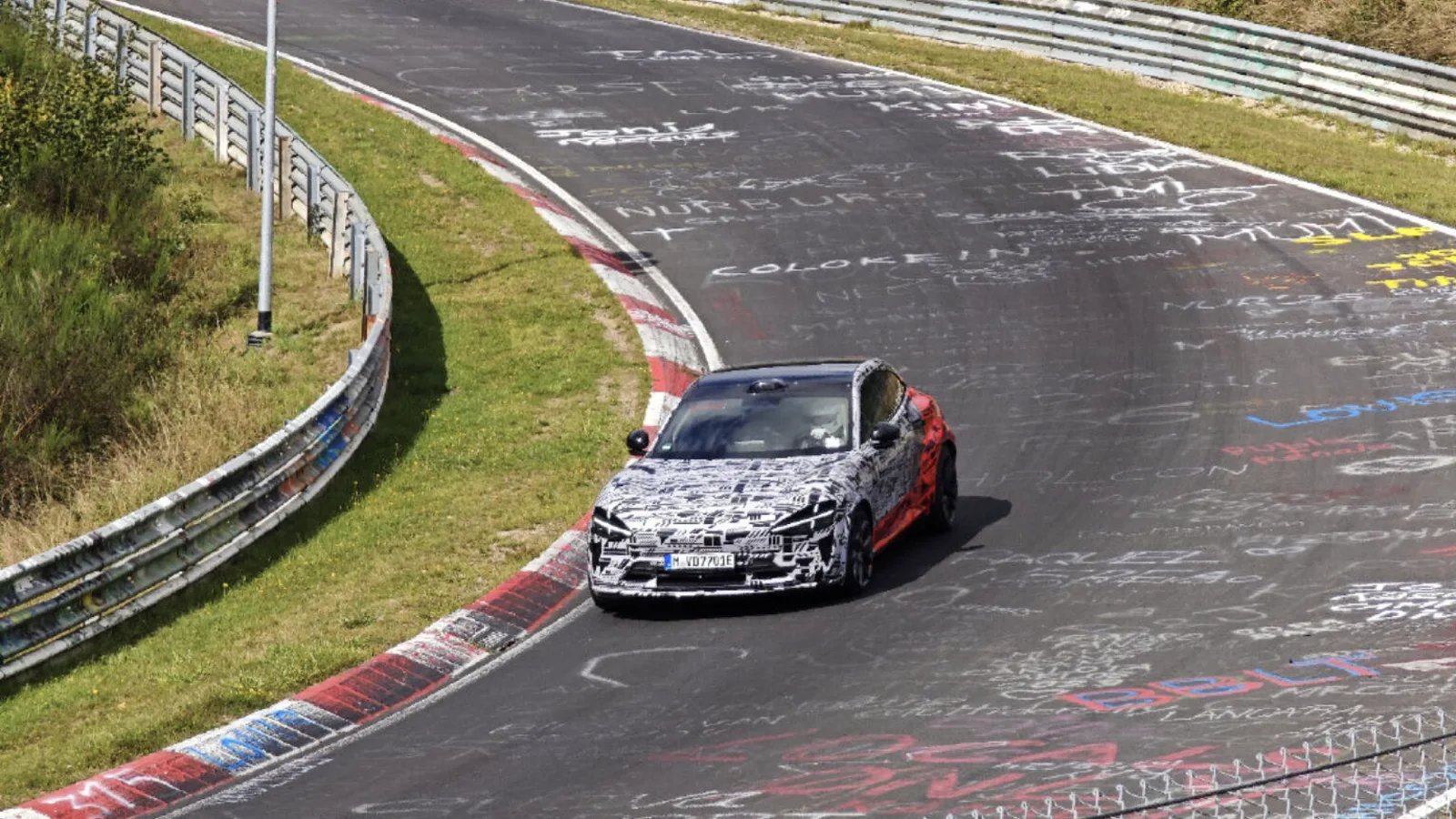
The YU7 GT was spotted uncamouflaged at the Nürburgring on 31 March 2026 in full production aero kit. Xiaomi has not yet posted an official lap time, but with the SU7 Ultra's 1,526 hp tri-motor package already inside the marque's playbook, the GT — with "only" 990 hp — is the next chapter. Expect a Cayenne EV-targeting time before sales open.
Coming to Europe — 2H 2027, Munich R&D, Premium Models First
This is the part that should worry European premium brands. Xiaomi has confirmed it will begin sales in Europe in the second half of 2027, opening with the most developed markets first. The company has already established an R&D centre in Munich — in BMW's home city — and is currently adapting its vehicles to European homologation, including right-hand-drive variants. The strategy mirrors how Apple entered new markets: flagship products first, mass-market later. The YU7 GT is exactly that flagship.
The implications are significant. Lei Jun has signalled four to six new vehicle launches in 2026 alone, with prices ranging from RMB 200,000 (~€25,000) to RMB 550,000 (~€70,000). When that range arrives in Europe in 2027 — with Munich-tuned chassis, BMW-comparable build quality, and 200% of the horsepower at 50% of the price — the established hierarchy of premium European SUVs will be challenged in a way no Chinese brand has managed before — a push already visible at the top of the market, where BYD's Denza brought the 1,582 hp Denza Z to Goodwood in July 2026 with confirmed UK pricing. The YU7 GT is not just a Purosangue lookalike. It is the first Chinese SUV genuinely positioned to outperform Maranello on a track day.
CARS COLLECTOR NOTE
For European supercar collectors watching the Chinese EV wave from a distance, the YU7 GT is the shot across the bow. A 990 hp SUV with Purosangue lines, Nürburgring-tuned suspension, and Brembo carbon ceramics — for the price of a base BMW iX. When this arrives in Europe in 2027, the conversation will not be "can a Chinese brand match BMW?" It will be "can BMW match Xiaomi?"
Xiaomi YU7 GT Price & Release Date
The YU7 GT will be officially launched in late May 2026 at a dedicated Xiaomi event in China. Pricing is expected between RMB 450,000 and RMB 500,000 (approximately €58,000 to €65,000, or $65,800 to $73,200). For context, the standard YU7 RWD starts at RMB 253,500 — meaning the GT roughly doubles the entry price, but doubles the power and adds the carbon-ceramic, air-suspension, Brembo-equipped chassis package. European buyers will need to wait until 2H 2027; expect a price premium of 20–30% for EU-spec cars due to import duties and homologation costs — so realistically, €75,000–€85,000 in Germany.
For a vehicle that genuinely competes on paper with the Porsche Cayenne Turbo GT (€200,000), the BMW XM Label Red (€220,000), and the Lamborghini Urus Performante (€290,000) — the YU7 GT is not just disruptive. It is the price ceiling collapsing.
SHARE THIS ARTICLE
If your collector mates think Chinese cars are still toys, this is the article that changes their mind.