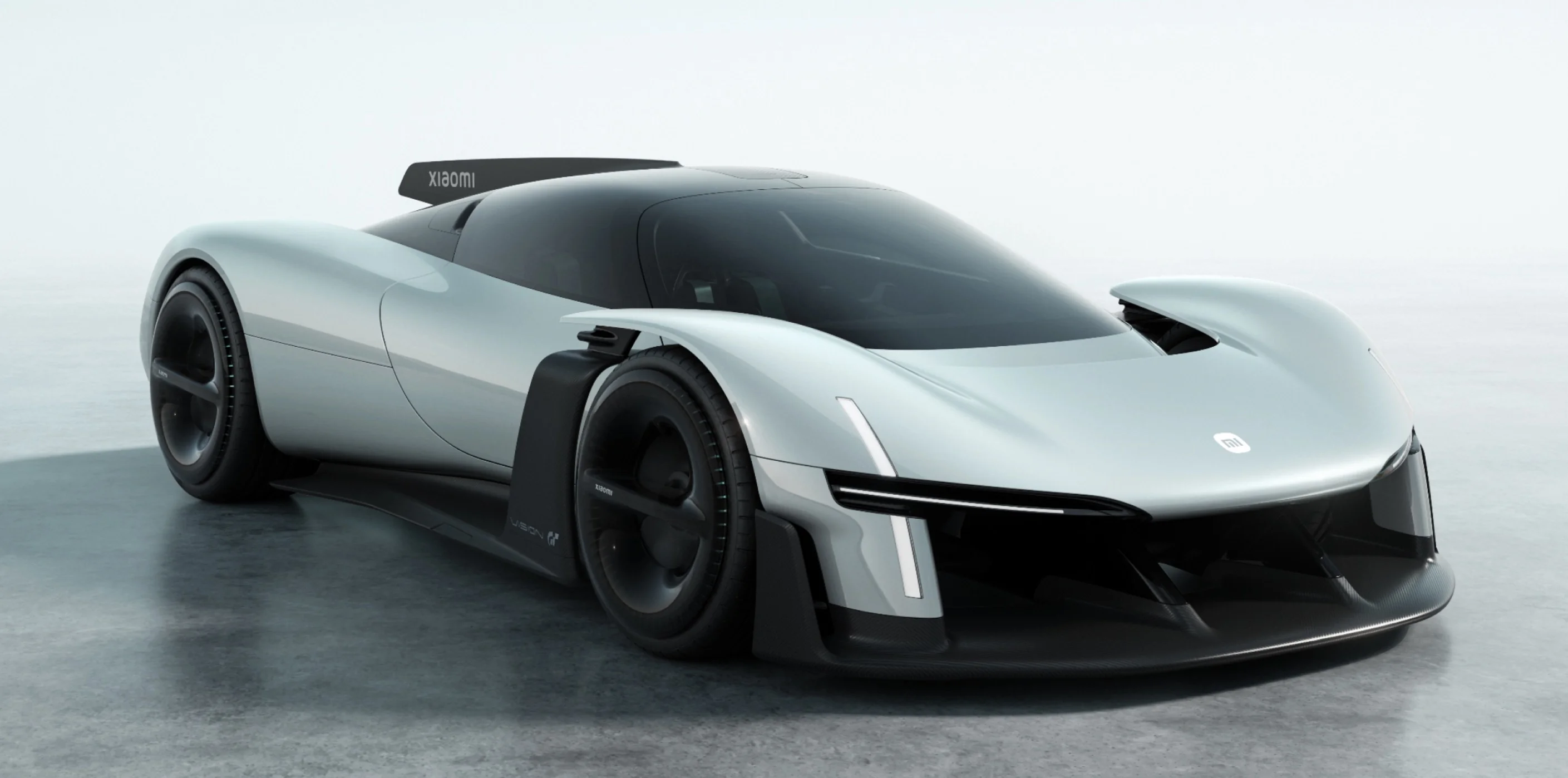
A smartphone company just built something that makes most supercars look slow. At MWC 2026 in Barcelona, Xiaomi pulled the covers off the Vision GT — a fully electric hypercar concept that pushes nearly 1,900 horsepower through a 900-volt silicon carbide platform. It is the first Chinese car ever designed for the Gran Turismo franchise in its 28-year history.
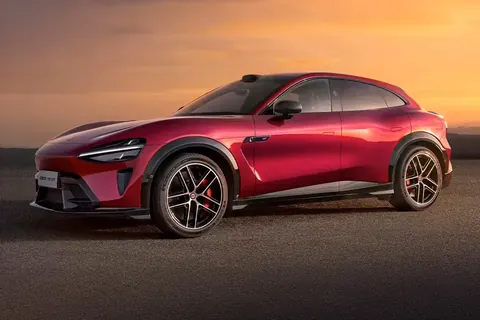
This is not a rendering. Xiaomi built a full-scale physical model and displayed it on the show floor alongside the SU7 Ultra — the production sedan that already holds the Nurburgring lap record for electric vehicles at 7:04.957.
UPDATE · SEPTEMBER 16, 2026
Half a year on, the Vision GT is still exactly what it was at MWC: a Gran Turismo design and a full-scale show model, not a car with a production programme behind it. Xiaomi has announced no road version, no build slot and no price, so the ~1,900 hp output and 350 km/h top speed remain concept claims with no homologated car to measure them against. What has moved is the real business the concept was built to advertise — the road-car range has kept expanding, most visibly with the 990 hp YU7 GT, and Xiaomi still points to the second half of 2027 for its European launch. Until the company says otherwise, treat the Vision GT as brand-building rather than a product roadmap.
Shaped by the Wind
The Vision GT looks like nothing else on the road — or the track. Xiaomi's chief designer Li Tianyuan says the team pursued aerodynamic performance without relying on bolt-on wings or splitters. The result is a machine with a drag coefficient of 0.29, negative 1.2 downforce, and an aerodynamic efficiency score of 4.1. Multiple front air channels, a shark-fin roofline, T-shaped headlights, and an exaggerated rear diffuser with extensive ducting give it the presence of an LMP1 prototype that escaped the pit lane.
Scissor doors open to reveal a cockpit Xiaomi calls a "cocoon-shaped sofa" — a single-seat racing position with a butterfly steering wheel and a panoramic display powered by the HyperVision system. Depending on the driving mode, the screens shift between full track telemetry and relaxed navigation.
The Numbers That Matter
Under the carbon bodywork sits the same 900-volt silicon carbide architecture Xiaomi developed with a $1.4 billion R&D investment. The center-lock wheels hide massive carbon-ceramic rotors designed to handle the kinetic energy of a powertrain in the 1,900 horsepower range — enough for a claimed top speed of 350 km/h. For context, Ferrari's own Vision Gran Turismo concept produces 1,337 hp — more than the road-going Ferrari F80. If Xiaomi's figures hold, this would be one of the most powerful concepts ever created for the program.
Not Just a Concept
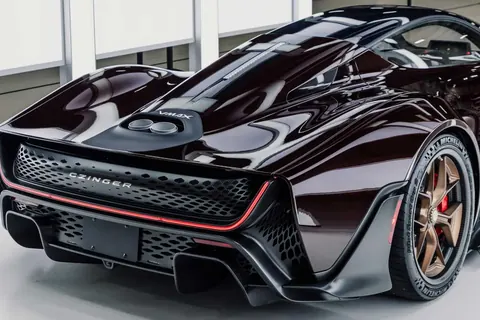
The Vision GT is technically a virtual car designed for Gran Turismo 7 on PlayStation 5. But it represents something very real. Xiaomi delivered over 410,000 electric vehicles in 2025, obliterating its original 300,000-unit target. The SU7 sedan has already outsold the Tesla Model 3 in China. The company is planning four new models in 2026, including two extended-range SUVs. That is a very different position from most concept-car builders: cars like the Czinger 21C reach customers in double-digit numbers, while Xiaomi ships in the hundreds of thousands.
The production SU7 Ultra — with its 1,527 hp tri-motor powertrain, 0-100 km/h in 1.97 seconds, and a Nurburgring record achieved on its very first attempt — already proved Xiaomi can compete with Porsche and Rimac on the world's most demanding circuit.
"2027 will mark our first year of overseas expansion." — Xiaomi, confirming European market entry with an R&D center already established in Munich.
Whether the Vision GT ever touches tarmac is beside the point. A company that made its name selling phones for $200 has just created one of the most extreme automotive concepts of the decade. The old guard should be paying attention.
The Batman Garage Verdict
Let's be honest — Bruce Wayne would add this to his collection without hesitation. A 1,900 hp electric hypercar with scissor doors, a cockpit that looks like it belongs in the Batcave, and technology that rivals anything from Maranello or Stuttgart? That's exactly the kind of machine the Dark Knight parks next to his Aventador.
We sincerely hope Xiaomi takes this beyond the virtual world and puts the Vision GT into series production. The talent is there, the technology is proven, and the automotive world needs more players who aren't afraid to rewrite the rules. If they build it — we want one in the garage.