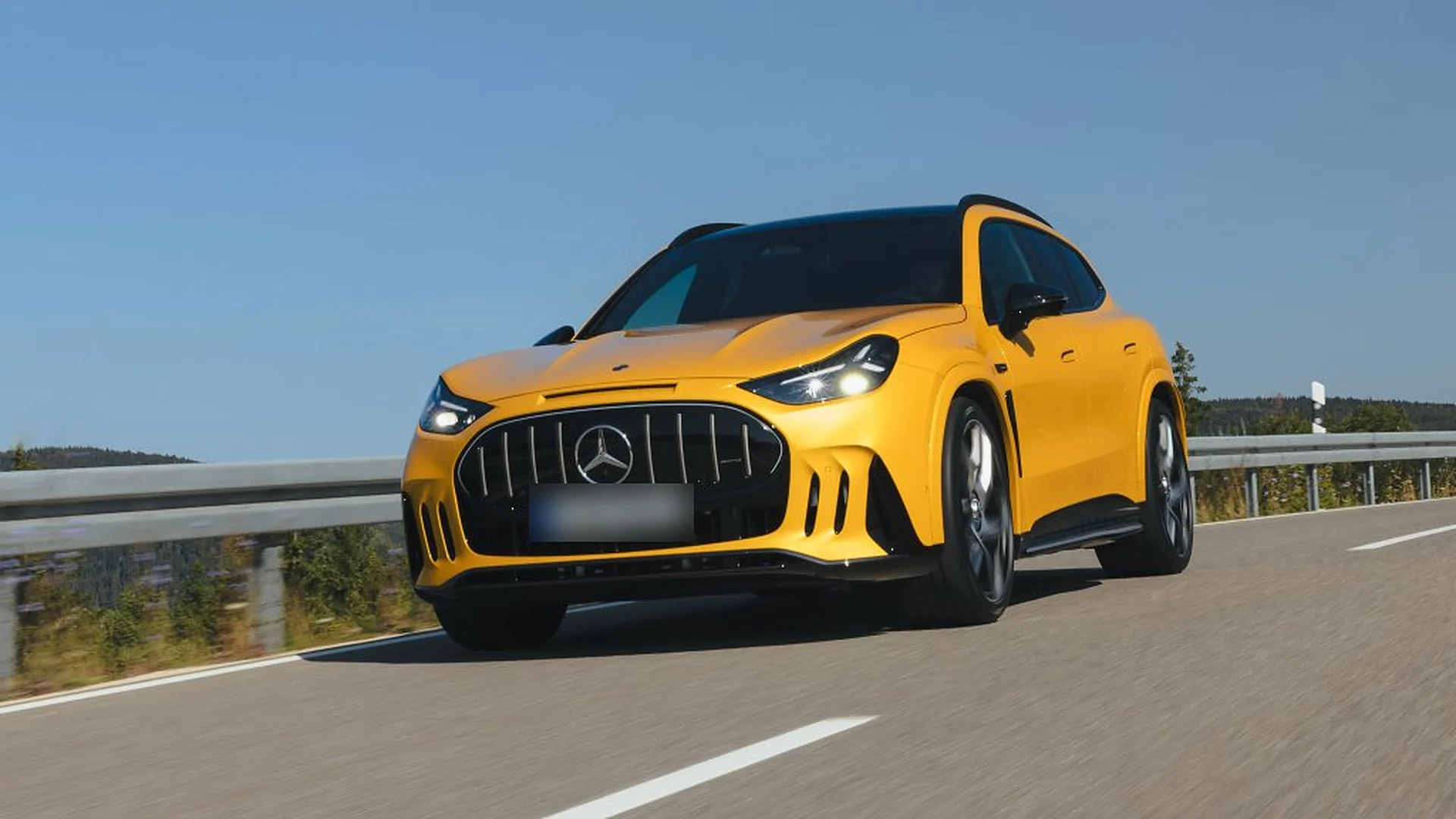
Affalterbach has built its first proper SUV from a blank sheet — and it is electric. Revealed today, the Mercedes-AMG GT SUV is the second car on the dedicated AMG.EA platform after the GT 4-Door Coupé. The top GT 63 has three axial-flux motors, 860 kW (1,169 PS) and 2,000 Nm, hits 100 km/h in 2.7 seconds and charges at up to 710 kW. And yes, it can sound like a V8 (Autocar India, ADAC).
MERCEDES-AMG GT SUV AT A GLANCE
Three versions: GT 53 (544 PS), GT 55 (816 PS), GT 63 (1,169 PS) · 0–100 km/h from 2.7 s · 106 or 128 kWh, 800 V · up to 710 kW DC, 10–80% in about 12 min · up to 700 km WLTP · GT 53 from €113,050 in Germany · GT 55/GT 63 from spring 2027, US in summer 2027
What Is the Mercedes-AMG GT SUV?
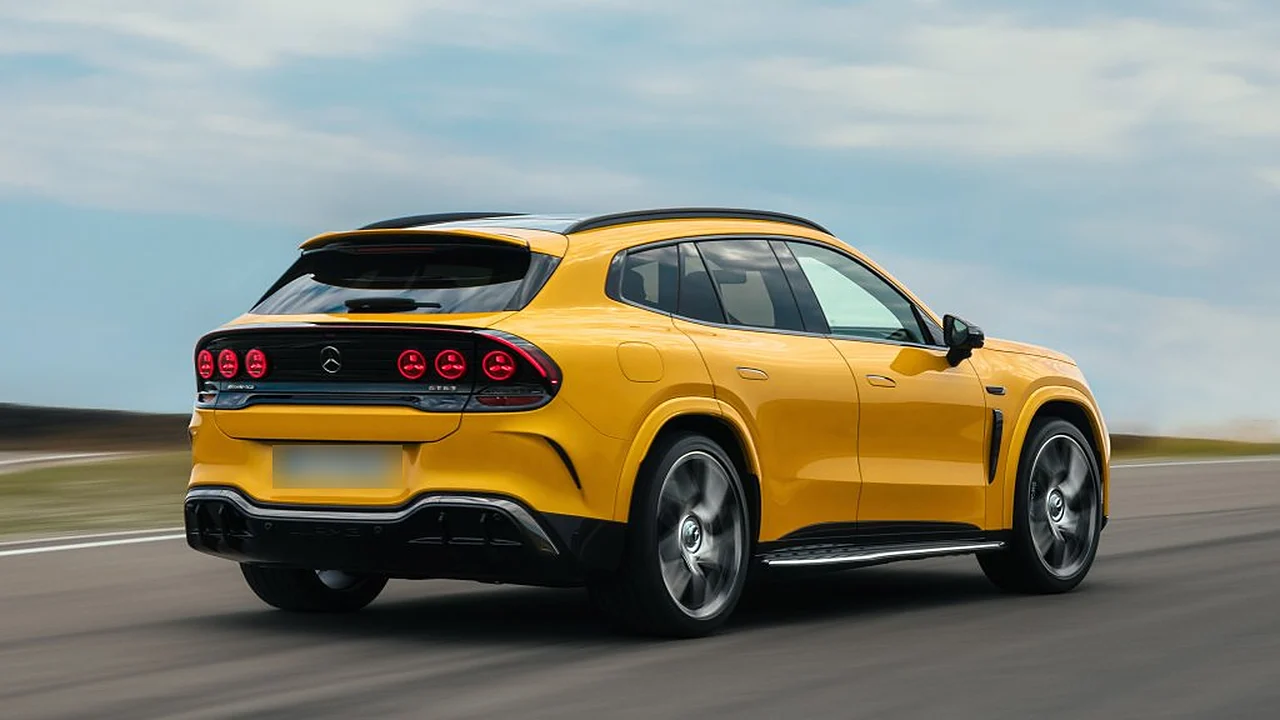
Every AMG SUV so far — the GLE, GLS or G-Class — started life as a Mercedes-Benz and was then sharpened in Affalterbach. The GT SUV is different. Mercedes calls it the first full-size SUV that AMG has developed entirely in-house, with no Mercedes-Benz twin (AutoGuide, Mercedesblog). Internally it is known as X591 (Mercedesblog).
Under the skin it shares the AMG.EA architecture, the 800-volt battery, the axial-flux motors and most of the cabin with the electric AMG GT 4-Door Coupé revealed in May. Production of the GT 53 starts first at Sindelfingen (CarExpert, AutoGuide).
Mercedes-AMG GT SUV Specs: GT 53 vs GT 55 vs GT 63
| AMG GT 53 SUV | AMG GT 55 SUV | AMG GT 63 SUV | |
|---|---|---|---|
| Motors | 2 synchronous (PSM) | 3 axial-flux | 3 axial-flux |
| Peak power | 400 kW / 544 PS (536 hp) | 600 kW / 816 PS (805 hp) | 860 kW / 1,169 PS (1,153 hp) |
| Continuous power | — | 530 kW / 721 PS | 530 kW / 721 PS |
| Torque | 800 Nm | 1,860 Nm | 2,000 Nm |
| 0–100 km/h | 4.2 s | 3.1 s | 2.7 s (0–60 mph 2.4 s) |
| 0–200 km/h | — | 9.9 s | 7.2 s |
| Top speed | 250 km/h | 270 km/h* | 270 km/h* (168 mph) |
| Battery (usable) | 106 kWh | 106 or 128 kWh | 106 or 128 kWh |
| WLTP range | 597–668 km | 525–585 km / 620–700 km | 525–585 km / 620–700 km |
| Max DC charging | 600 kW | 600 / 710 kW | 600 / 710 kW |
| Market launch | First, orders now | Spring 2027 | Spring 2027 |
*With the AMG Driver’s Package. Range figures for the GT 55 and GT 63 are given for the 106 kWh and 128 kWh batteries respectively; the GT 55 and GT 63 share one WLTP range band. Figures from ADAC, Autocar India and AutoGuide; Mercedes describes charging figures as preliminary.
Three Axial-Flux Motors and 2,000 Nm
The GT 55 and GT 63 use the same drive layout as the four-door: two axial-flux motors in a single rear unit, each with its own compact planetary gearbox and liquid-cooled silicon-carbide inverter, plus one axial-flux “booster” at the front. The front motor disconnects under light loads to save energy (AutoGuide). The motors come from YASA, the British specialist owned by Mercedes-Benz (Mercedesblog).
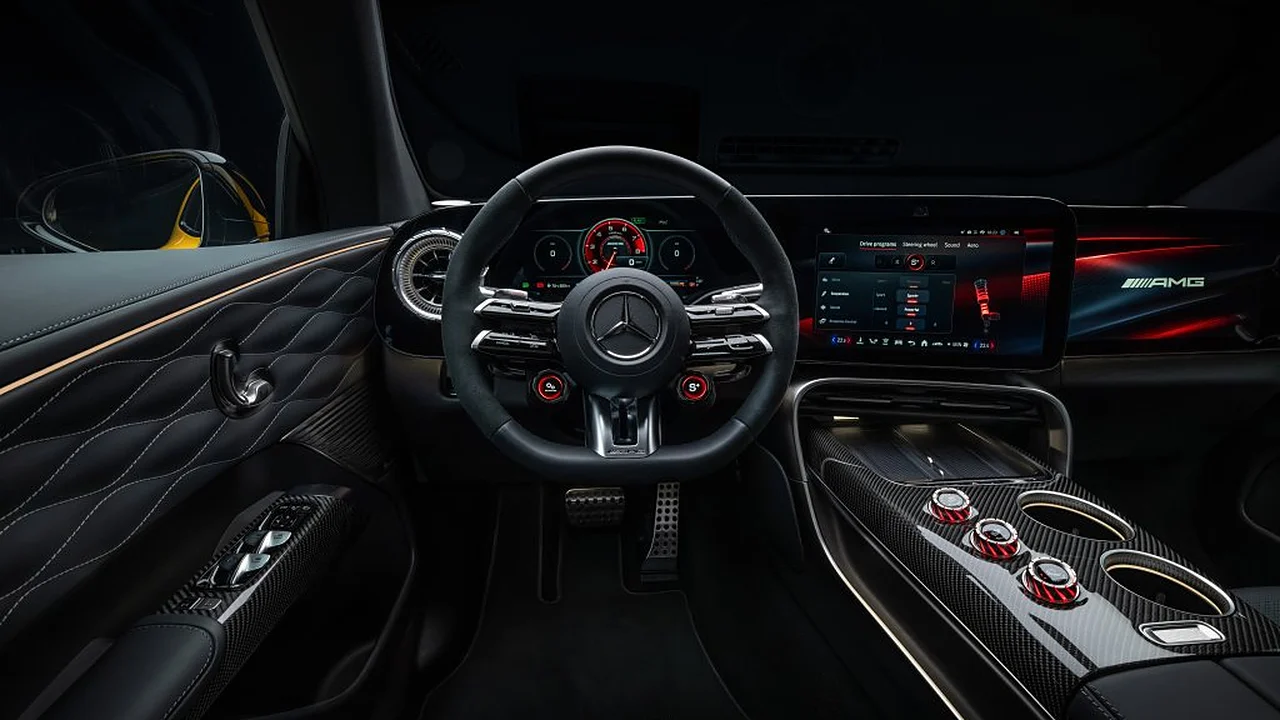
With one motor per rear wheel, AMG can push torque precisely from side to side. In the GT 55 and GT 63, the new AMG Race Engineer unit puts three rotary dials on the centre console: one for motor response, one for nine levels of traction control and an “Agility Control” dial that sets the car from understeer to controlled oversteer (CarExpert).
The GT 53 is simpler: two permanently excited synchronous motors, one per axle, and a two-speed gearbox on the rear axle (AutoGuide).
Battery and Charging: 710 kW and 454 km in 10 Minutes
The 800-volt battery uses cylindrical cells 105 mm high and 26 mm in diameter, with an energy density of more than 298 Wh/kg. Each cell sits in an electrically non-conductive oil that cools it directly — a solution taken from motorsport thinking rather than family SUVs (ADAC).
| 106 kWh (18 modules) | 128 kWh (22 modules) | |
|---|---|---|
| Max DC power | 600 kW | 710 kW |
| 10–80% | approx. 11 min | approx. 12 min |
| Energy in 10 min | up to 70 kWh | up to 83 kWh |
| WLTP range in 10 min | up to 386 km | up to 454 km |
| 10–80% on a 400 kW charger | approx. 14 min | approx. 16 min |
| AC charging | 11 kW | 11 kW |
Sources: ADAC, AutoGuide, CarExpert. On older 400-volt chargers the car switches automatically, and North American cars get the NACS port (AutoGuide). In practice, few public chargers can deliver 600 kW or more today, so the 400 kW figures are the more realistic ones for now.
Chassis: No Anti-Roll Bars, Rear-Wheel Steering as Standard
The GT SUV debuts AMG Active Ride Control+: hydraulic elements replace the mechanical anti-roll bars and control both pitch and roll. It is standard on the GT 63, as are carbon-ceramic brakes (Autocar India, AutoGuide). Rear-axle steering is standard on every version, turning up to 6 degrees opposite to the front wheels at low speed and up to 1 degree in the same direction above about 80 km/h. Front and rear suspension are multi-link designs with forged aluminium links (AutoGuide).
Weight is the SUV tax. Depending on version, the GT SUV weighs roughly 2,525 to 2,715 kg, about 100–150 kg more than the four-door (CarExpert); ADAC quotes up to 2,695 kg for the GT 63 (ADAC). For comparison, the GT 63 4-Door Coupé needs 2.1 s to 100 km/h, the SUV 2.7 s.
Design and Dimensions
| AMG GT SUV | vs. GT 4-Door Coupé | |
|---|---|---|
| Length | 5,084 mm | 10 mm shorter |
| Width | 2,001 mm | 42 mm wider |
| Height | 1,656 mm | 245 mm taller |
| Wheelbase | 3,040 mm | — |
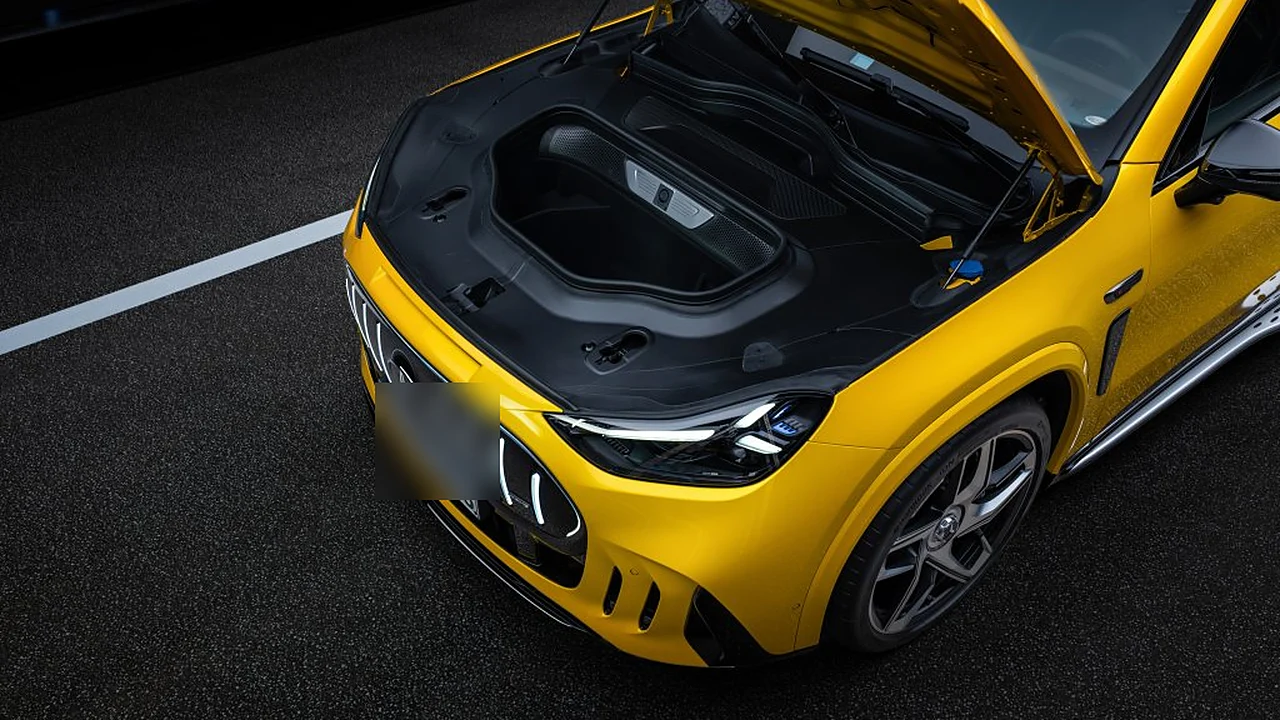
| Boot / frunk | 607 L / 78 L | 415 L / 41 L |
| Drag coefficient | 0.27 (GT 55/63), 0.28 (GT 53) | 0.24 |
Data: CarExpert, Autocar India. The nose carries a gloss-black panel with eight vertical bars and a large star that can be illuminated; it is purely decorative, as the cooling comes through active slats in the bumper that open only when needed. At the back are the six round, turbine-style tail lights of the four-door. The GT 55 and GT 63 get an active rear spoiler that stays flush with the roof up to 150 km/h. Frameless door windows and more than 60 Manufaktur paint colours complete the package (CarExpert, Autocar India).
Interior: Three Screens and a V8 Soundtrack
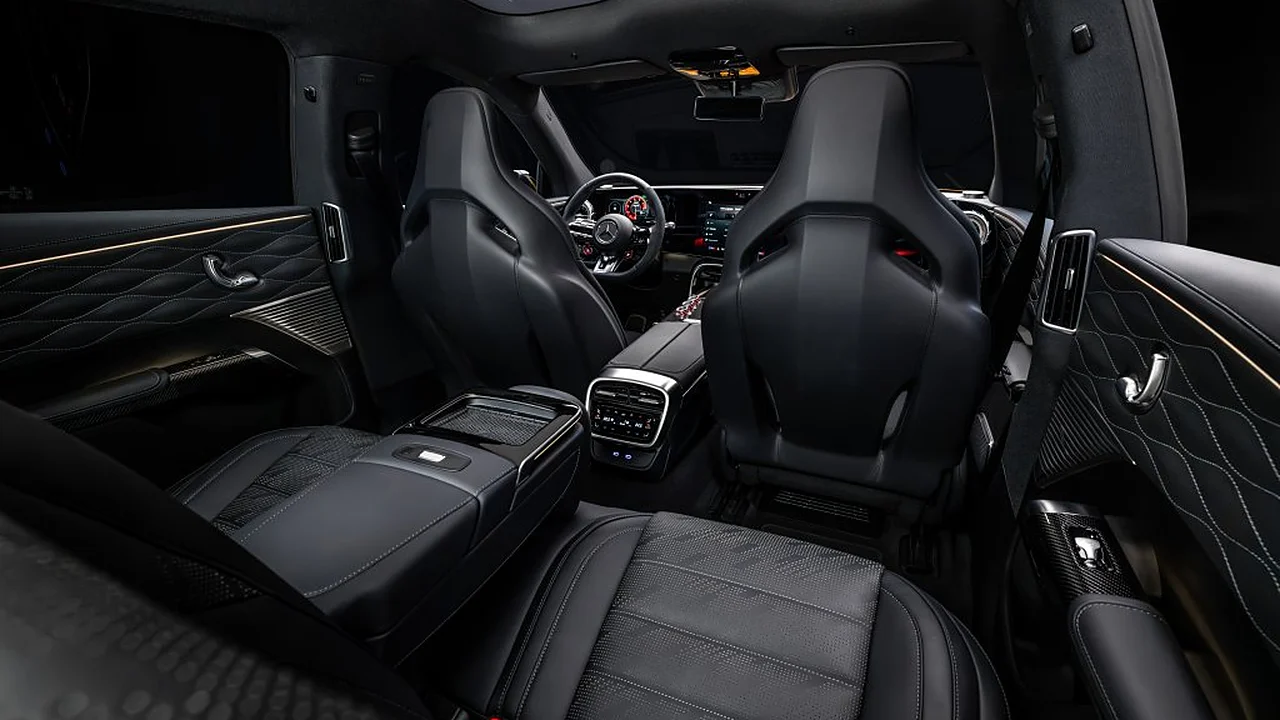
The cabin is mostly carried over from the four-door: a 10.2-inch driver display, a 14-inch central touchscreen angled towards the driver and an optional 14-inch screen for the passenger. MBUX on MB.OS brings AI assistants from ChatGPT, Microsoft Bing and Google Gemini, and AMG apps show real-time power, tyre temperatures and lap telemetry, with the racing line on the head-up display (Autocar India). There are five seats, with a three-seat rear bench (Autocar India).
The most talked-about feature is AMGForce Sport+. It plays a V8 soundtrack — recorded from an AMG GT R with 16 microphones — or a six-cylinder sound in the GT 53, adds simulated gearshifts and can even shake the seats (AutoGuide, CarExpert). Purists will scoff. We suspect many owners will leave it on.
AMG GT 63 SUV vs Porsche Cayenne Turbo Electric
The obvious target is the Porsche super-SUV benchmark revealed in November 2025:
| AMG GT 63 SUV | Porsche Cayenne Turbo Electric | |
|---|---|---|
| Peak power | 860 kW / 1,169 PS | 850 kW / 1,156 PS (overboost) |
| Torque | 2,000 Nm | 1,500 Nm |
| 0–100 km/h | 2.7 s | 2.5 s |
| Top speed | 270 km/h | 260 km/h |
| Battery | 128 kWh (usable) | 113 kWh |
| Max DC charging | 710 kW | 400 kW |
| Price (Germany) | Not announced | from €165,500 |
Cayenne data: GTspirit. On paper the AMG wins on power, torque, battery size and especially charging speed, while the Porsche is quicker off the line. The real test will be on the road — and on the Nordschleife.
Mercedes-AMG GT SUV Price and Release Date
The GT 53 SUV is the first version to go on sale, from €113,050 in Germany (CarExpert, ADAC). The GT 55 and GT 63 follow in Europe in spring 2027 (Autocar India, CarExpert); US cars arrive at dealers in summer 2027 as 2028 models, with prices and EPA range to be announced closer to launch (AutoGuide).
Mercedes has not yet priced the GT 63 SUV. As a guide, the GT 63 4-Door Coupé starts at €196,350 in Germany, and the SUV is expected to cost more — possibly over €200,000 (Mercedesblog). That would put it well above the Cayenne Turbo Electric.
Batman Garage Verdict
AMG has finally built an SUV that is not a Mercedes in a gym kit. The numbers are huge, but the most important one may be 710 kW: if the charging works as promised, it removes the biggest excuse not to buy a fast electric SUV. Whether a fake V8 and shaking seats can replace the real thing is another question — we want to hear it before we judge.
Mercedes-AMG GT SUV — Frequently Asked Questions
How much horsepower does the Mercedes-AMG GT SUV have?
The GT 53 has 400 kW (544 PS, 536 hp), the GT 55 600 kW (816 PS, 805 hp) and the GT 63 860 kW (1,169 PS, 1,153 hp) with 2,000 Nm of torque.
How fast is the AMG GT 63 SUV?
The GT 63 SUV accelerates from 0 to 100 km/h in 2.7 seconds (0-60 mph in 2.4 s) and from 0 to 200 km/h in 7.2 seconds. Top speed is 270 km/h with the AMG Driver's Package.
How much does the Mercedes-AMG GT SUV cost?
The GT 53 SUV starts at €113,050 in Germany. Prices for the GT 55 and GT 63 have not been announced; the GT 63 is expected to cost more than the GT 63 4-Door Coupé, which starts at €196,350.
What is the range of the AMG GT SUV?
WLTP range is 597-668 km for the GT 53 with the 106 kWh battery and up to 700 km for the GT 55 and GT 63 with the 128 kWh battery.
How fast does the AMG GT SUV charge?
Up to 600 kW with the 106 kWh battery and up to 710 kW with the 128 kWh battery. 10-80% takes about 11-12 minutes, and the larger battery can add up to 454 km of WLTP range in 10 minutes. Mercedes calls these figures preliminary.
When does the Mercedes-AMG GT SUV go on sale?
The GT 53 is the first version to go on sale. The GT 55 and GT 63 follow in Europe in spring 2027, and US deliveries start in summer 2027 as 2028 models.
Does the electric AMG GT SUV have a V8 sound?
Yes. The AMGForce Sport+ mode plays a V8 sound recorded from an AMG GT R (a six-cylinder sound in the GT 53), with simulated gearshifts and optional seat vibration.
Sources & Verification
Power, torque, acceleration, range, consumption, charging and the GT 53 price: ADAC (17 October 2026). Variant details, interior, chassis and market timing: Autocar India. US timing, motor and battery engineering, sound system and 0-60 mph: AutoGuide. Dimensions, weight, aero and Race Engineer unit: CarExpert. Codename, YASA motors and price expectations: Mercedesblog. Porsche Cayenne Turbo Electric data: GTspirit. Charging figures are preliminary according to Mercedes. Images: Mercedes-AMG.