Brian O’Conner’s orange Toyota Supra is the mechanical heart of The Fast and the Furious (2001). Presented as a ruined shell and rebuilt by Dominic Toretto’s crew, it becomes the “ten-second car” Brian owes Dom. Japanese performance, extrovert tuner styling and narrative purpose turned it into far more than set dressing.
The orange Supra at a glance
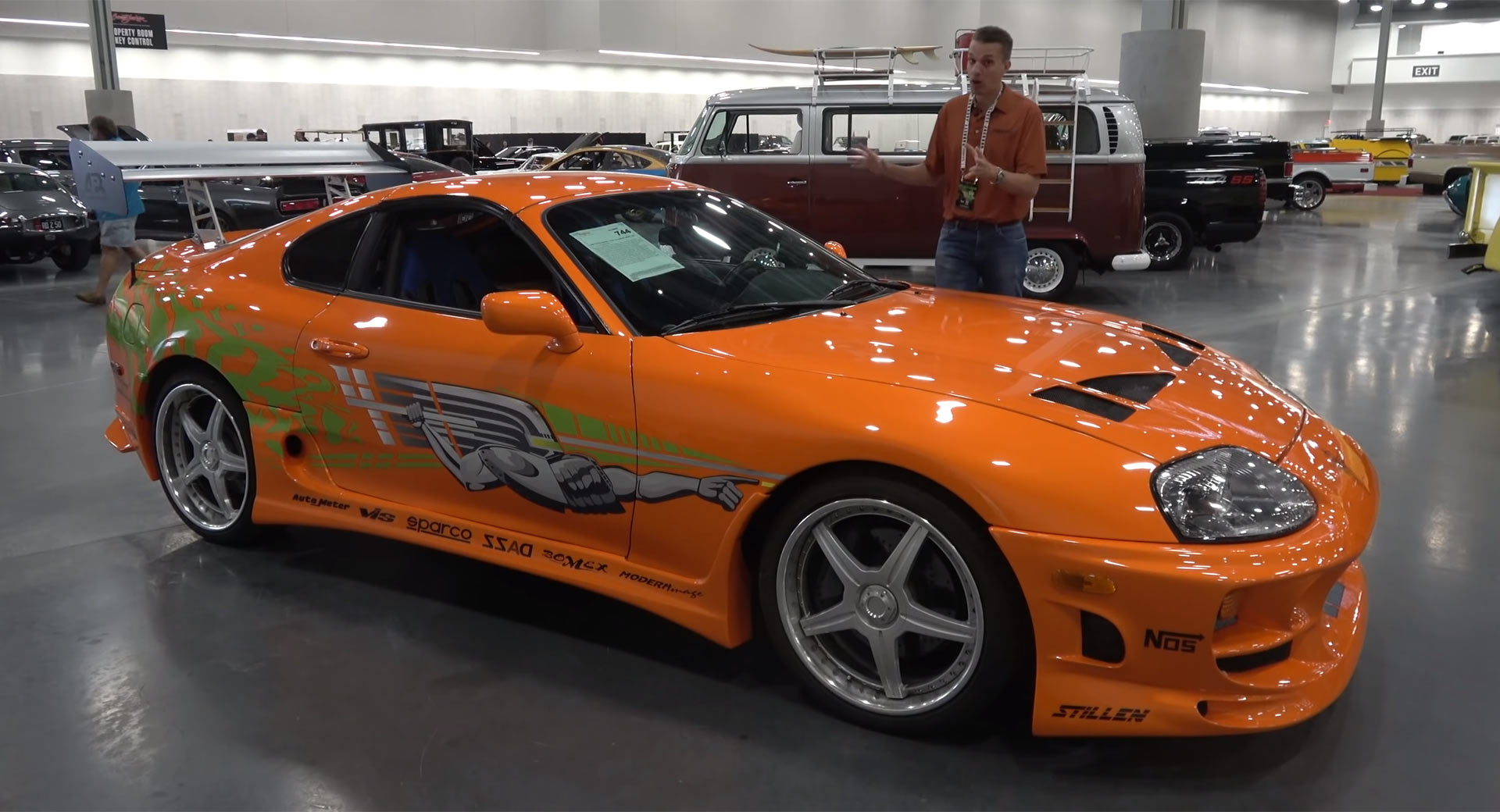
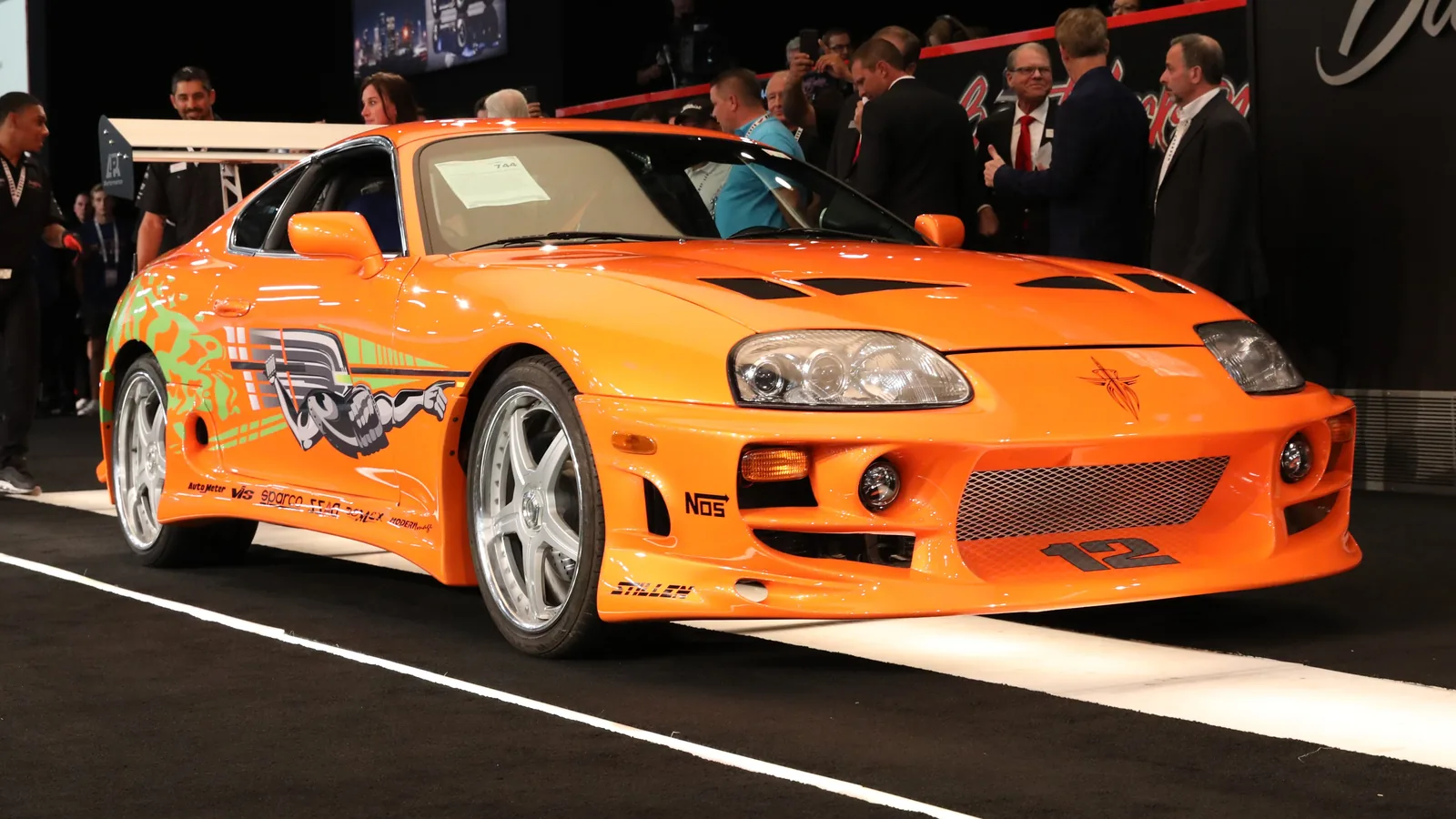
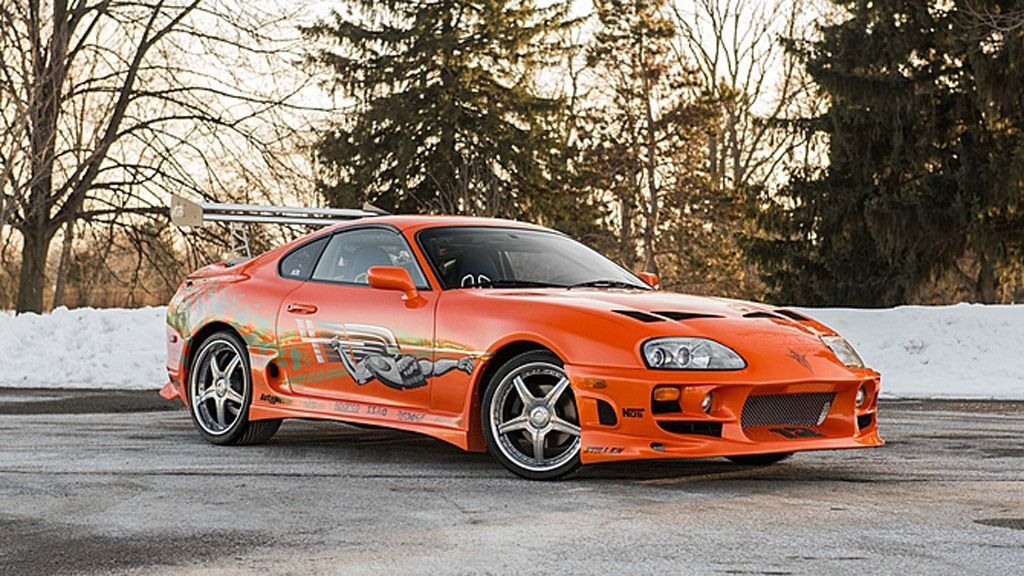
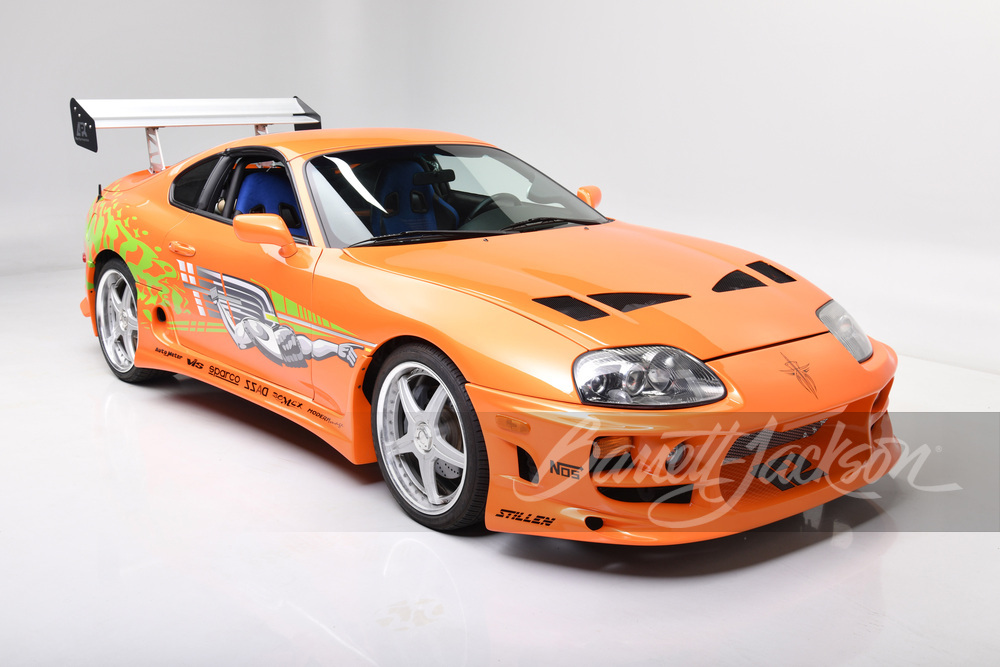
The documented 1994 Supra offered by Barrett-Jackson in 2021 was driven by Paul Walker and used for multiple interior and exterior shots. It was one of several Supras involved in production—not Craig Lieberman’s separately owned, highly modified “Hero 1.” That distinction matters because specifications from the two cars are frequently combined.
Screen-used 1994 Toyota Supra specifications
| Item | Documented specification |
|---|---|
| Model | 1994 Toyota Supra Mk IV (A80), factory Turbo |
| Engine | 2,997 cc 2JZ-GTE inline-six, sequential twin-turbo |
| Factory output | Approximately 320 hp and 315 lb-ft, US specification |
| Transmission | Four-speed automatic |
| Layout | Front-engine, rear-wheel drive |
| Paint | Lamborghini Diablo Candy Orange Pearl |
| Bodywork | Bomex front spoiler and side skirts; TRD-style hood |
| Wing / wheels | APR aluminum biplane wing; 19-inch Dazz Motorsport Racing Hart M5 Tuner |
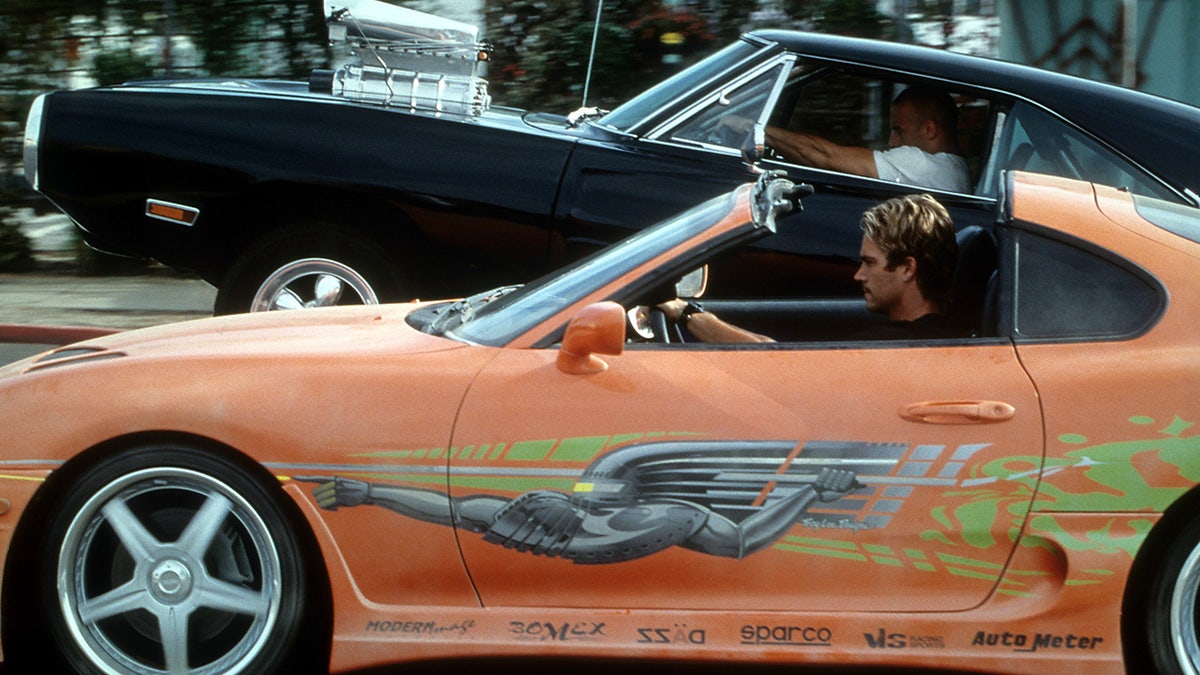
| Graphics | Troy Lee-designed “Nuclear Gladiator” motif |
| Builder | Eddie Paul, The Shark Shop, El Segundo, California |
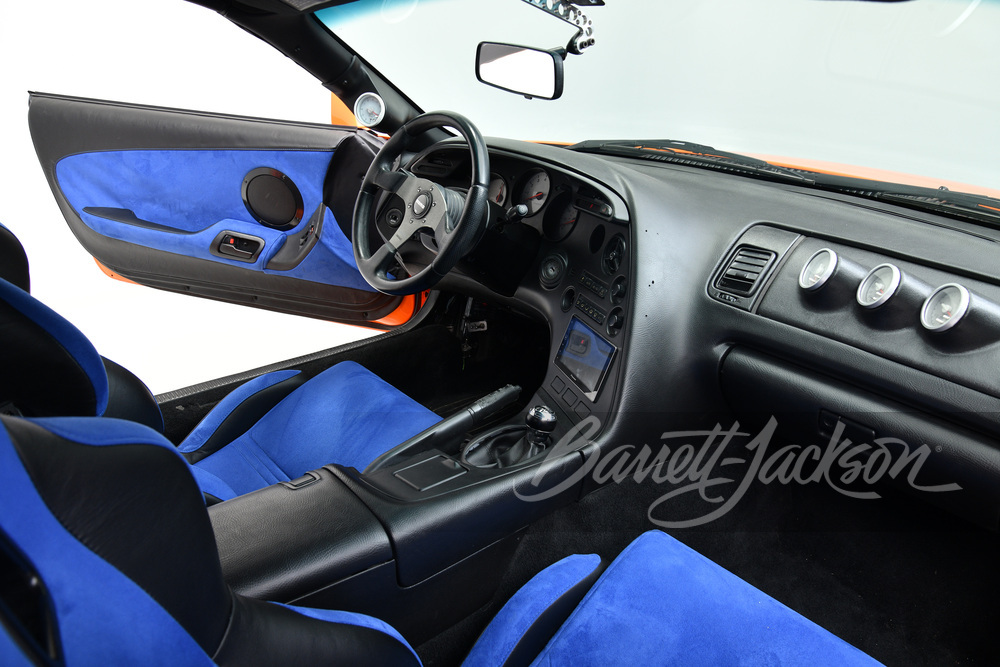
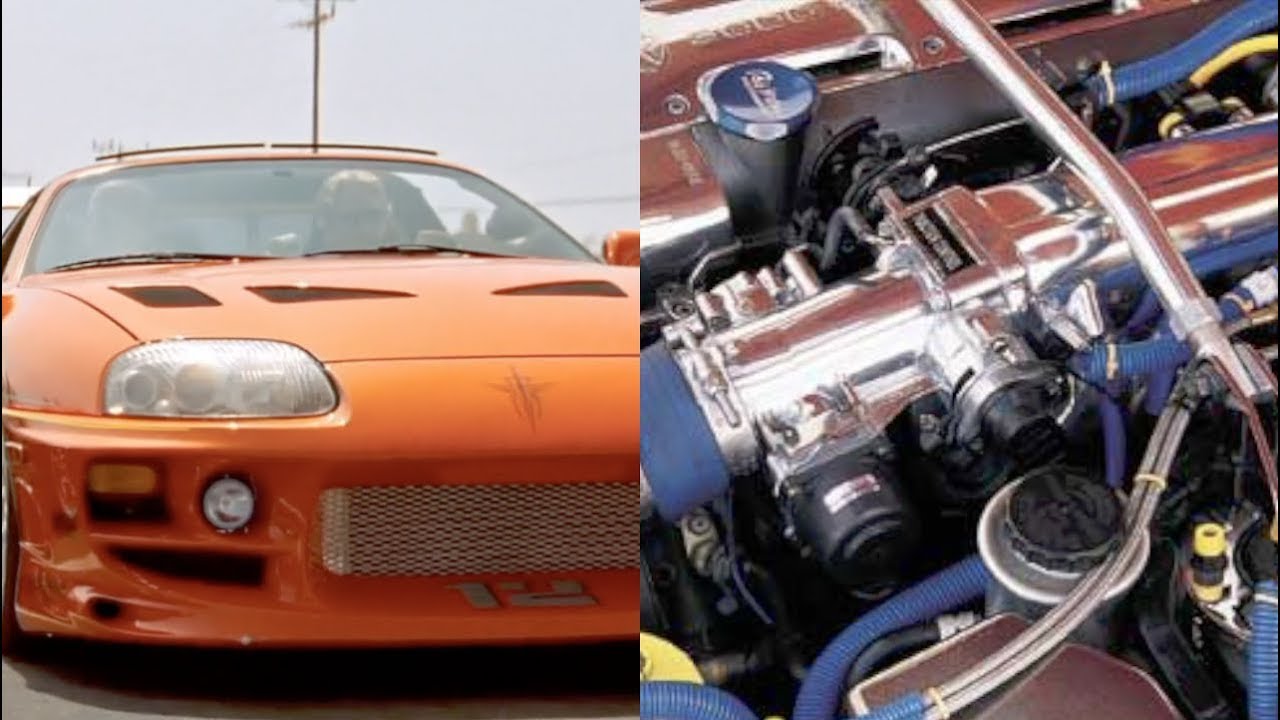
Factory 2JZ-GTE, not a fictional 600-hp build
The movie’s dialogue and workshop montage imply a more extreme machine. In reality, the auctioned car retained a stock drivetrain beneath its visual conversion. Its 2JZ-GTE is the desirable twin-turbocharged, iron-block 3.0-liter straight-six, but there is no basis for assigning this chassis a T-66 single turbo, large nitrous system or 500-plus-horsepower dyno figure.
The transmission is equally important. Although Brian is shown working a manual lever, the documented car has Toyota’s four-speed automatic. Editing, prop work and multiple near-identical cars created an on-screen specification that no single chassis necessarily possessed.
Why Craig Lieberman’s Supra is a different car
Technical adviser Craig Lieberman supplied his personal 1994 Supra as the production’s “Hero 1” reference and principal beauty car. His factory twin-turbo, six-speed manual Targa was already extensively tuned before filming, with GReddy hardware, a Turbonetics T-66 conversion, custom engine work and nitrous. Published accounts place output above 500 hp, with higher figures quoted on nitrous.
The 2021 Barrett-Jackson car is another documented screen-used Supra. The Drive formally corrected an early report that attributed Lieberman’s specifications to it: Hero 1 remained in a private collection, while the auction car had a stock drivetrain. “Paul Walker’s Supra” describes a screen role, not one universal build sheet.
Bomex, APR and Racing Hart defined the look
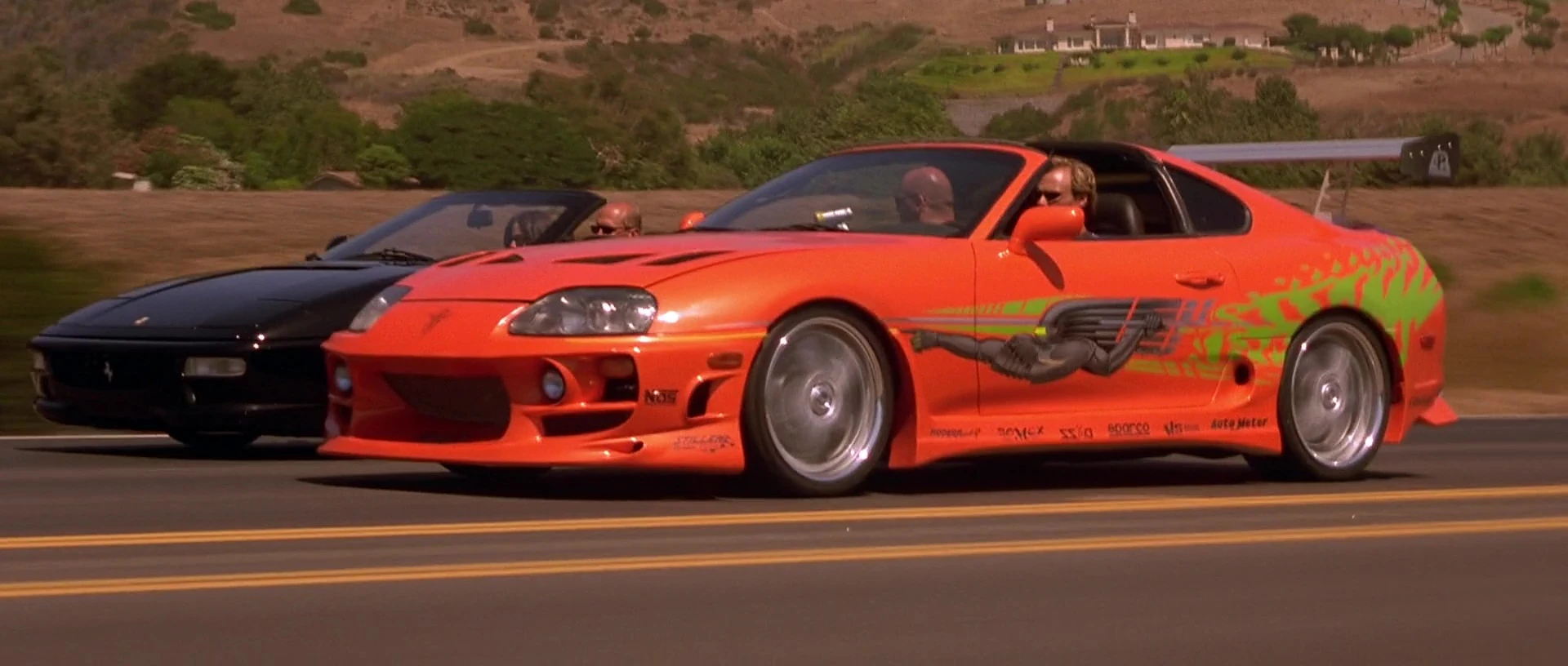
A low Bomex front spoiler and matching side skirts visually stretched the rounded A80 body, while the TRD-style hood added competition cues. The tall APR wing and 19-inch Racing Hart M5 wheels supplied the unmistakable profile. Lamborghini-derived orange paint made the car legible in night scenes; the Nuclear Gladiator graphic and blue accents completed a design rooted in turn-of-the-century import culture.
The Supra’s film role and second life
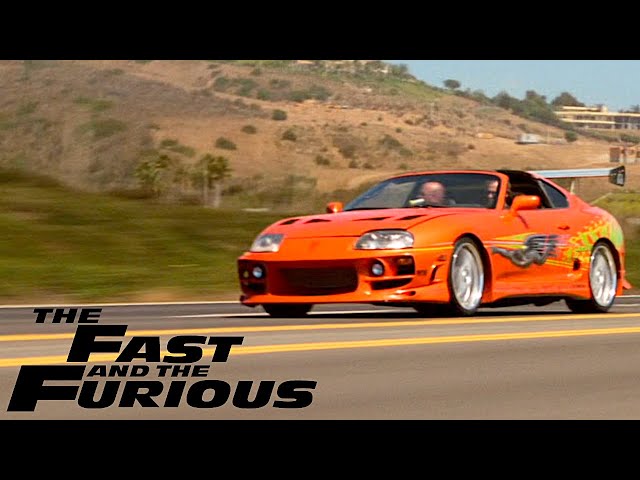
After Brian’s Mitsubishi Eclipse is destroyed, he delivers a damaged Supra to Dom’s garage as repayment. The rebuild presents a compact tuner fantasy: discarded sports car, rapid transformation and giant-killing performance. The crew races a Ferrari, brings the car to Race Wars and uses it in the climactic chase. After Dom’s Charger crashes, Brian hands over the keys and repeats the promise: “I owe you a ten-second car.”
The auctioned chassis returned for 2 Fast 2 Furious (2003) as Slap Jack’s gold Supra, then was restored to its first-film orange appearance. Barrett-Jackson documented its use in interior and exterior footage across both films and noted that extensive records and a Certificate of Authenticity accompanied it.
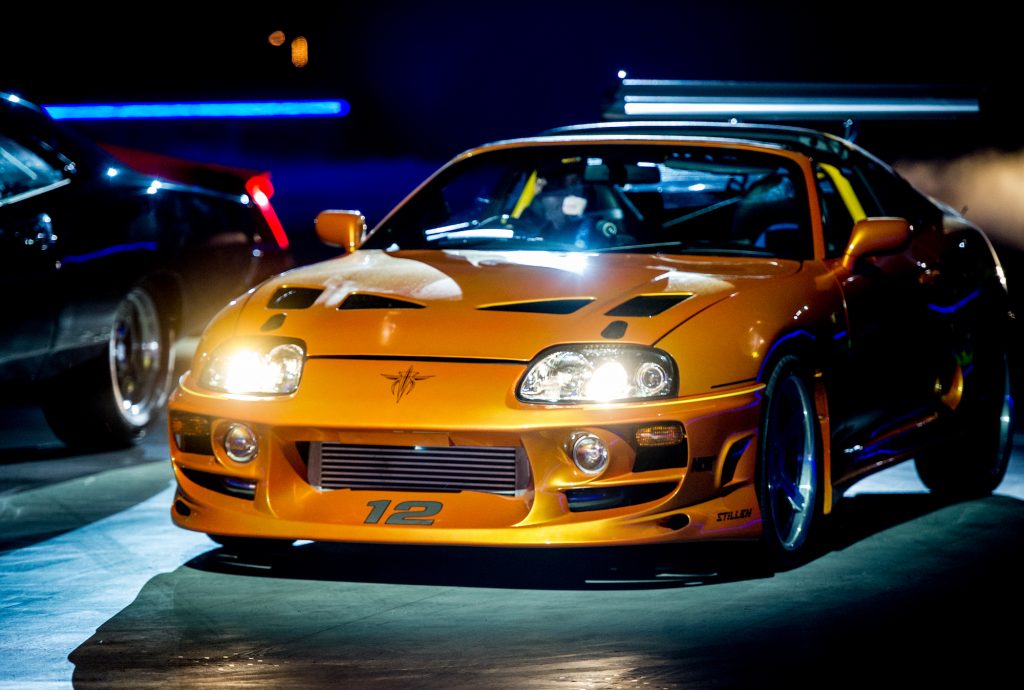
The $550,000 Barrett-Jackson sale
At Barrett-Jackson’s Las Vegas auction in June 2021, the screen-used Supra sold for $550,000. The result reflected provenance, documentation, Paul Walker’s on-screen connection and the franchise’s reach—not simply the value of an automatic A80.
The supplied Car structured data records the same range as an AggregateOffer. On a live page, that markup should remain only when it represents genuine current offers; otherwise the values should be displayed solely as editorial guidance.
Why Brian’s Supra became an icon
The car united the A80’s tuning potential, a peak-period aftermarket aesthetic and a story built around earned trust. It also gave a Japanese performance car the narrative status traditionally reserved for American muscle and European exotics. Orange paint, side graphic, tall wing and five-spoke wheels made the design easy to recognize and reproduce, while Walker’s performance supplied a lasting human connection. Its cultural value now exceeds the importance of any one horsepower claim.
Frequently asked questions
Was Brian O’Conner’s orange Supra really a 1994 model?
Yes. Barrett-Jackson catalogued the screen-used, Paul Walker-driven car sold in 2021 as a 1994 Toyota Supra.
Did the $550,000 Supra have a 2JZ-GTE engine?
Yes. It was a factory Turbo with Toyota’s 3.0-liter 2JZ-GTE and a four-speed automatic.
Was it the 600-hp, six-speed Craig Lieberman Supra?
No. Lieberman’s private Hero 1 was a heavily modified six-speed car. The auction car was a separate screen-used chassis with a stock drivetrain and matching film-spec bodywork.
How much did the Fast and Furious Supra sell for?
The documented screen-used car sold for $550,000 at Barrett-Jackson Las Vegas in June 2021.