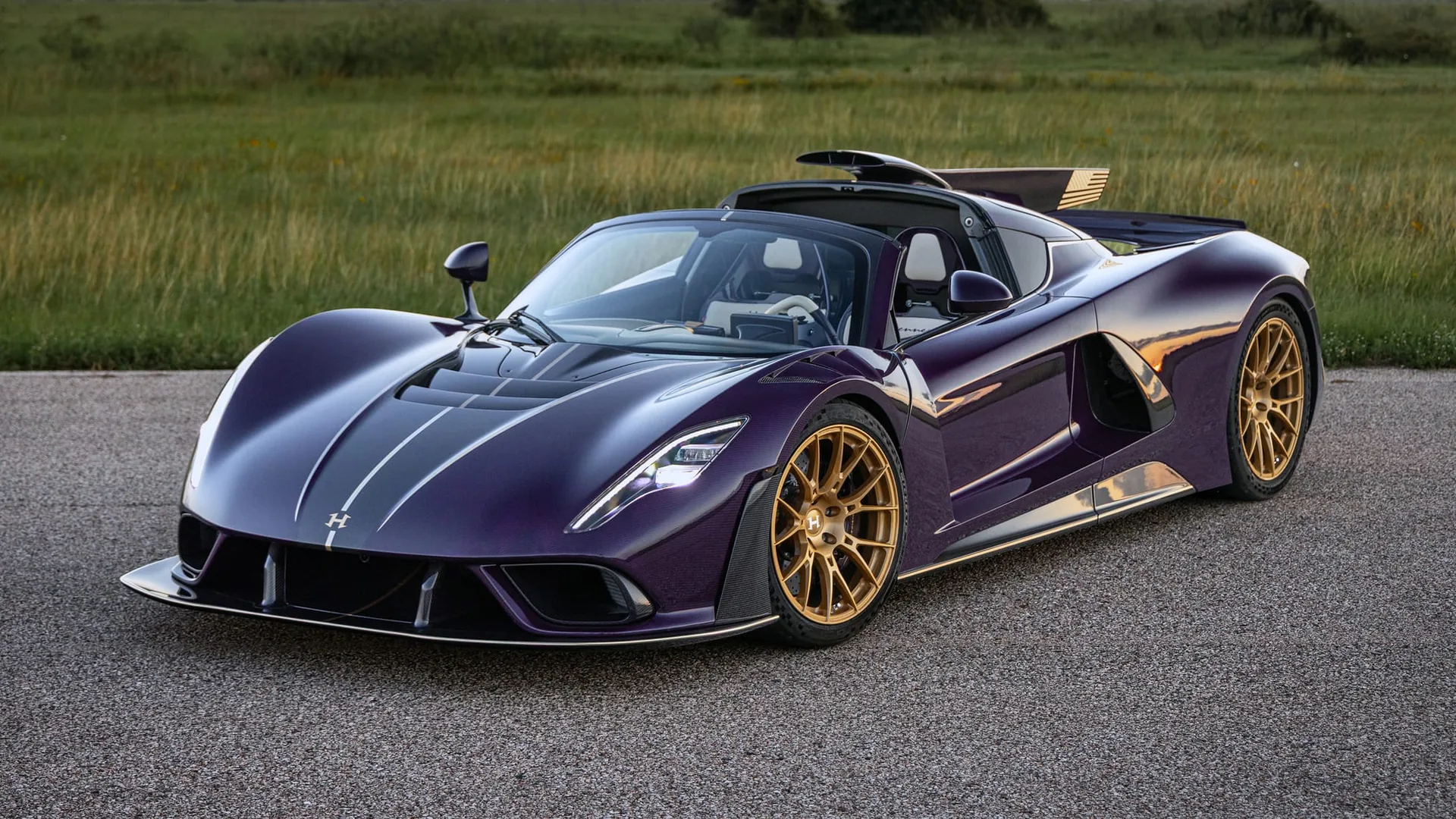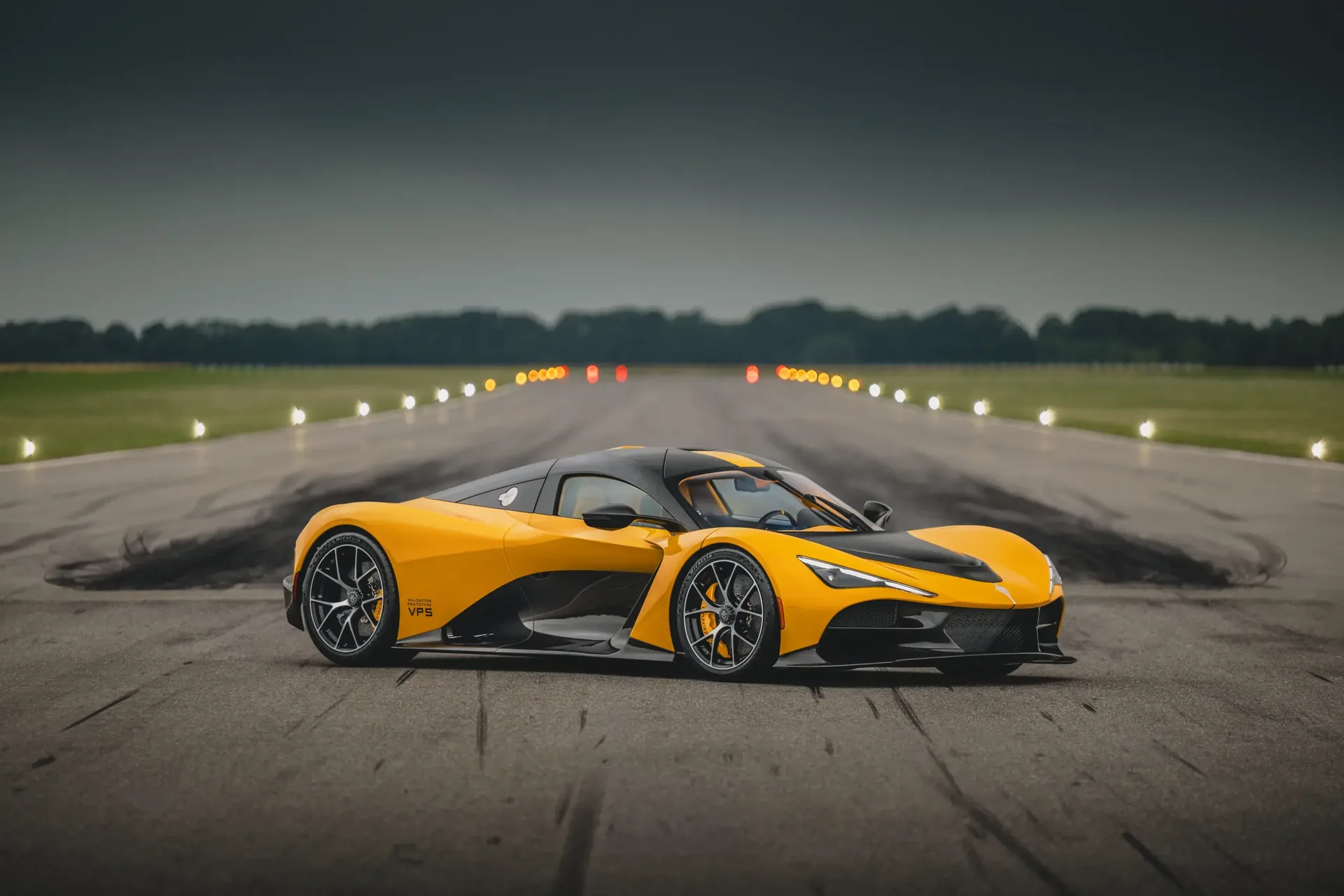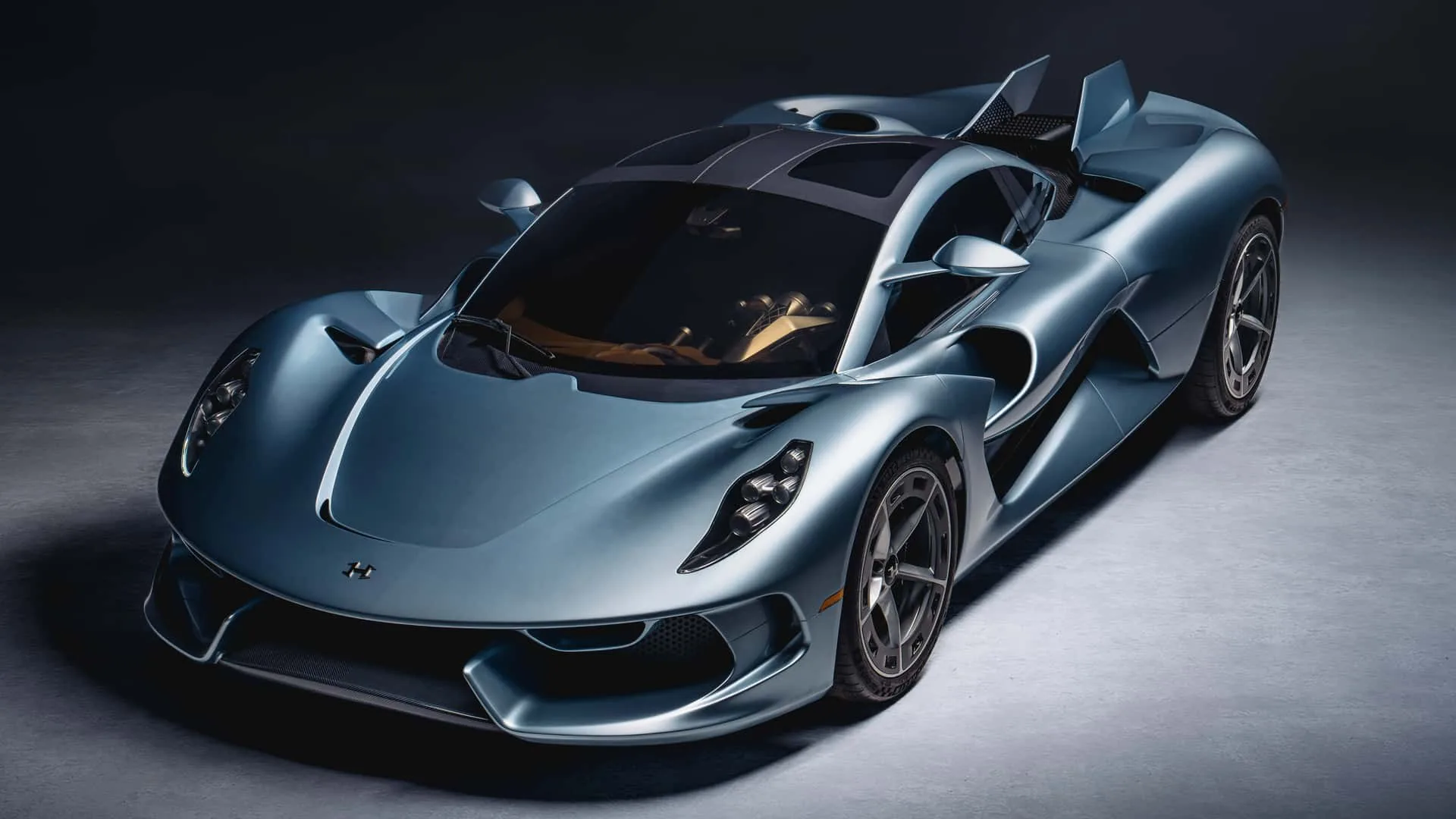
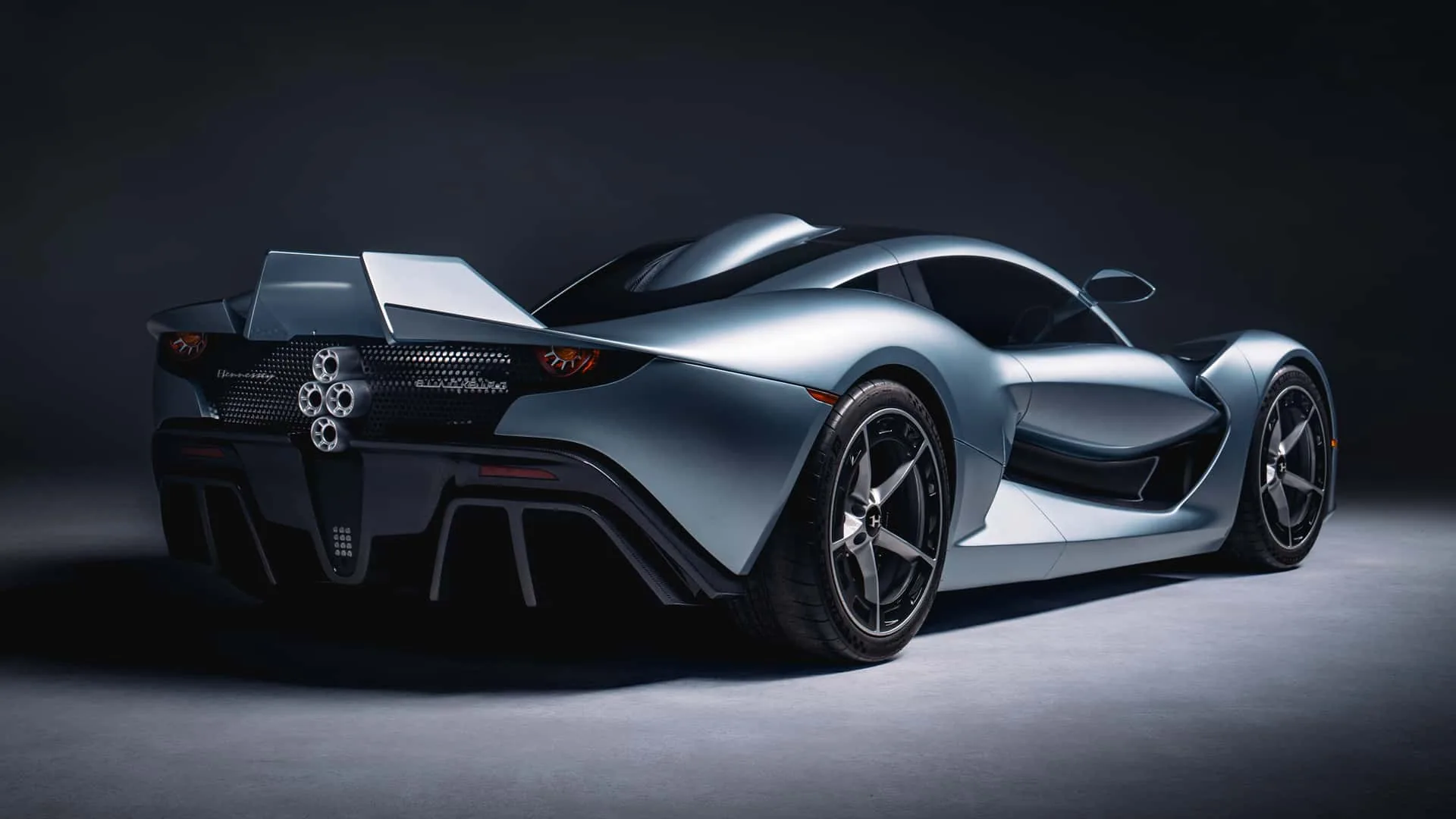
Hennessey Special Vehicles unveiled the all-new Blackbird at Monterey Car Week on August 3, 2026, ending months of speculation around the Texas manufacturer’s “Project Overlord” teaser campaign. Positioned as a spiritual successor to the McLaren F1 rather than a direct replacement for the Venom F5, the Blackbird trades turbocharging, hybrid assistance and touchscreens for a naturally aspirated V8, a six-speed gated manual and five analog dials.
Only 71 units will be built — a nod to the Lockheed SR-71 Blackbird that inspired the car’s aerospace styling and its name. Each will command $2.5 million before taxes, with first customer deliveries planned for 2029 once Venom F5 production winds down in 2028. Hennessey has confirmed the Blackbird has been fully homologated for global markets, airbags included.
6.2L Naturally Aspirated V8 — No Turbos, No Hybrid, 9,000+ RPM
The Blackbird’s powertrain is a bespoke 6.2-litre naturally aspirated V8 co-developed with Ilmor Engineering, the British racing engine specialist responsible for multiple IndyCar and F1 programmes. There is no turbocharging, no supercharging, and no electrification of any kind. Hennessey is targeting 800 to 850 horsepower at redline, with a rev ceiling of more than 9,000 rpm.
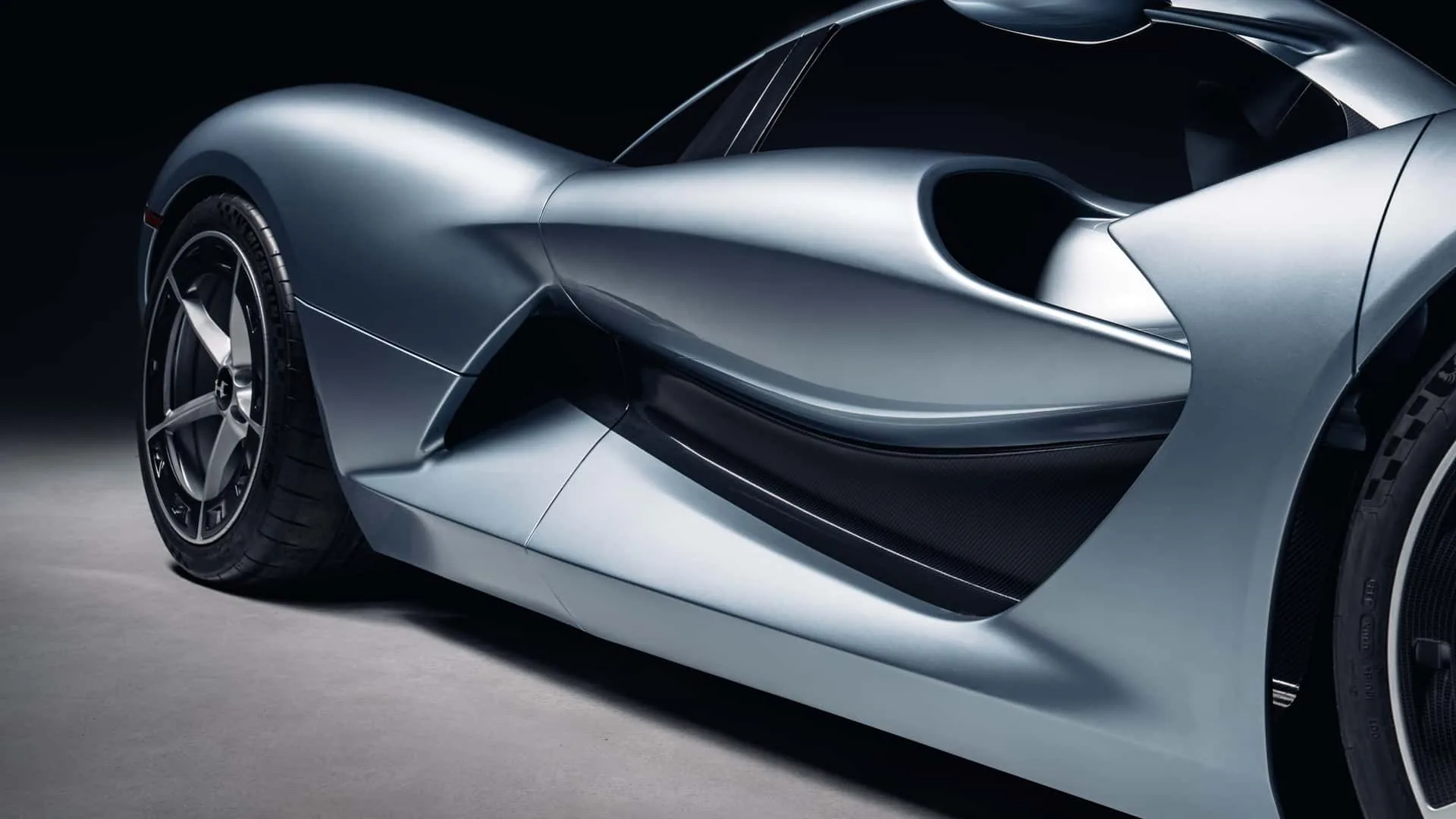
Power is sent to the rear wheels only, through a six-speed manual gearbox with an exposed gated shifter — a configuration not seen on a new global-homologation supercar since the Pagani Zonda F Roadster and the pre-facelift Aston Martin V12 Vantage S. The car is built around a purpose-designed full-carbon monocoque unrelated to the Venom F5 tub, with every body panel formed in carbon fibre.
Under 3,000 lb Kerb Weight, 0–60 in 2.5 s, 220 mph Top Speed
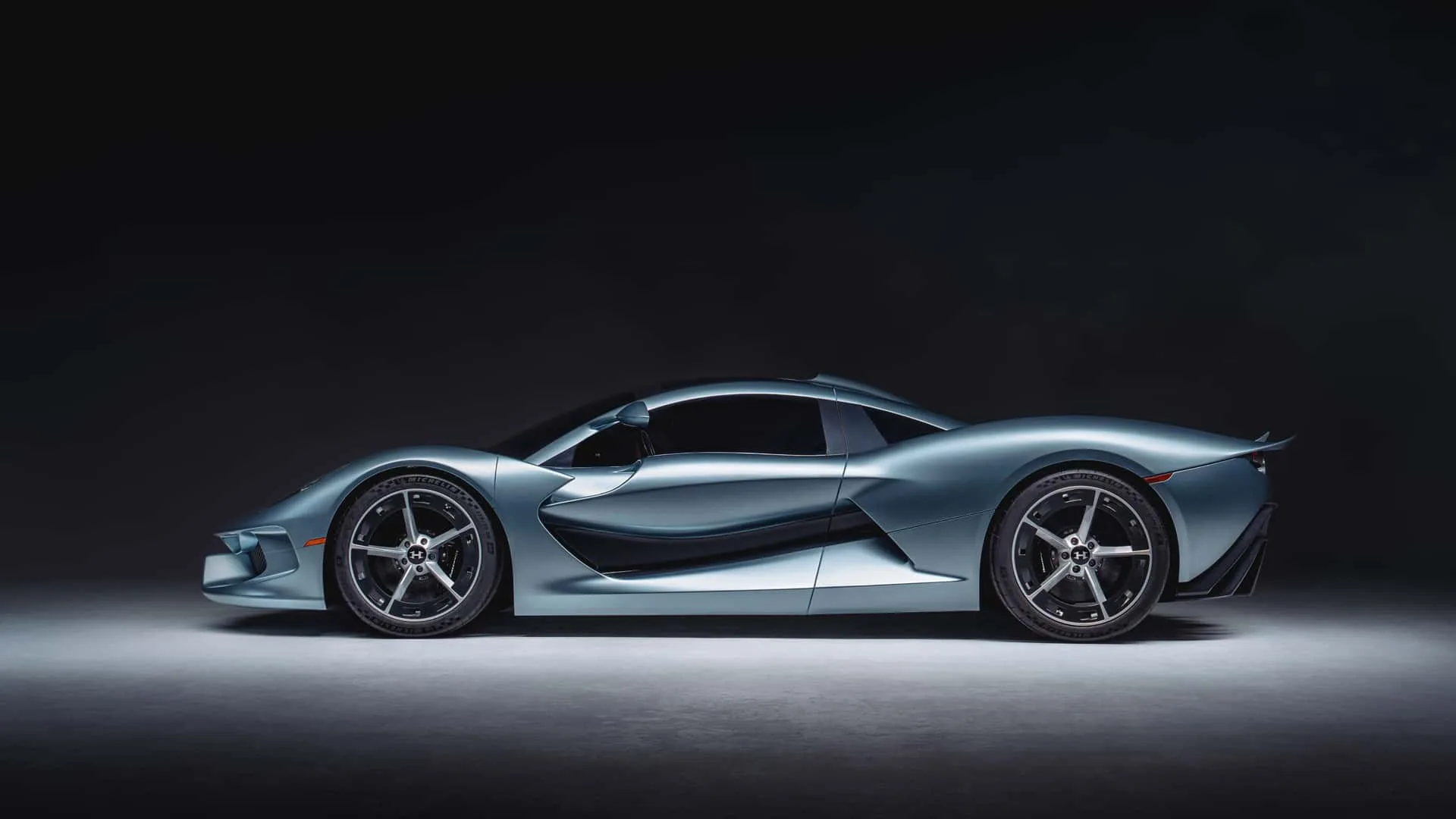

Hennessey’s stated weight target is under 3,000 lb (1,361 kg) dry, roughly 800 lb lighter than a Ferrari SF90 XX and lighter than a base Nissan Sentra. That figure is only achievable because every exterior panel is carbon fibre. With the targeted 800–850 hp, the Blackbird’s power-to-weight ratio approaches one horsepower per kilogram.
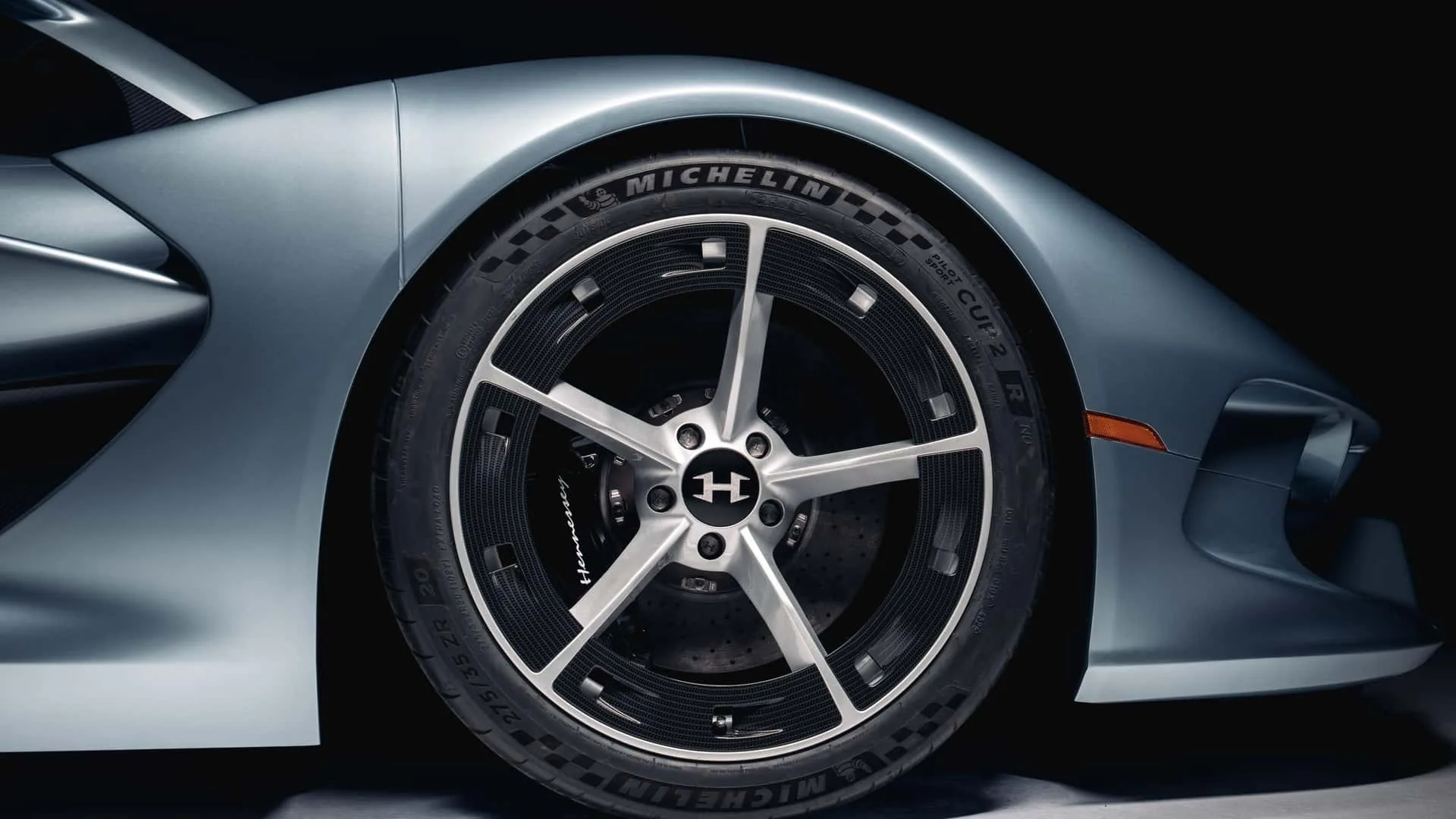
Performance claims read like flagship-hybrid figures despite the analog drivetrain: 0–60 mph in 2.5 seconds and a top speed of 220 mph (354 km/h). Braking hardware includes fixed multi-piston calipers on carbon-ceramic rotors, and rolling stock is a set of two exclusive 20-inch wheel designs shod with Michelin Pilot Sport Cup 2 R semi-slick tyres.
Aerospace Design — SR-71 Blackbird Tail Fins, Roof Scoop, Active Aero
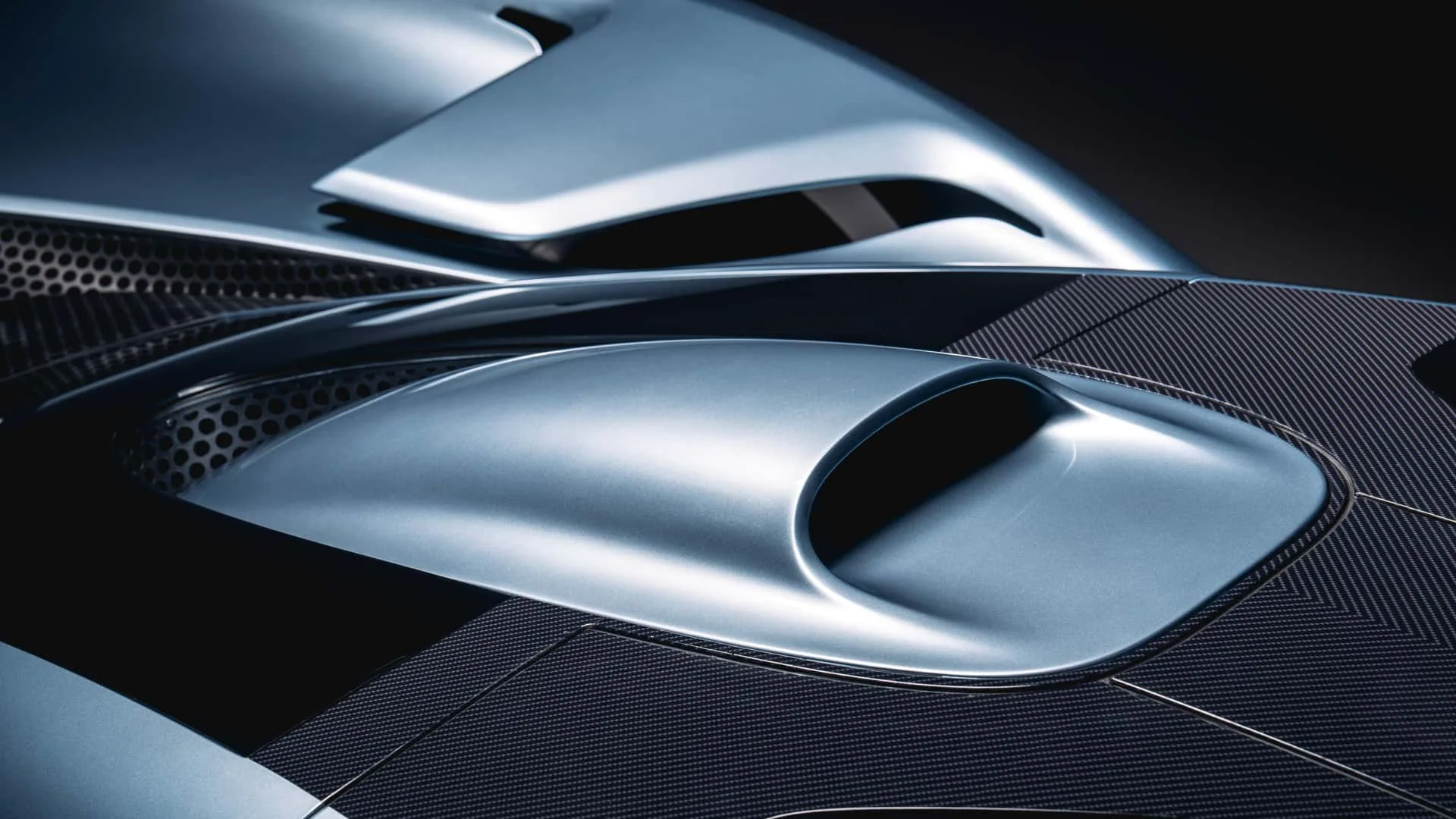
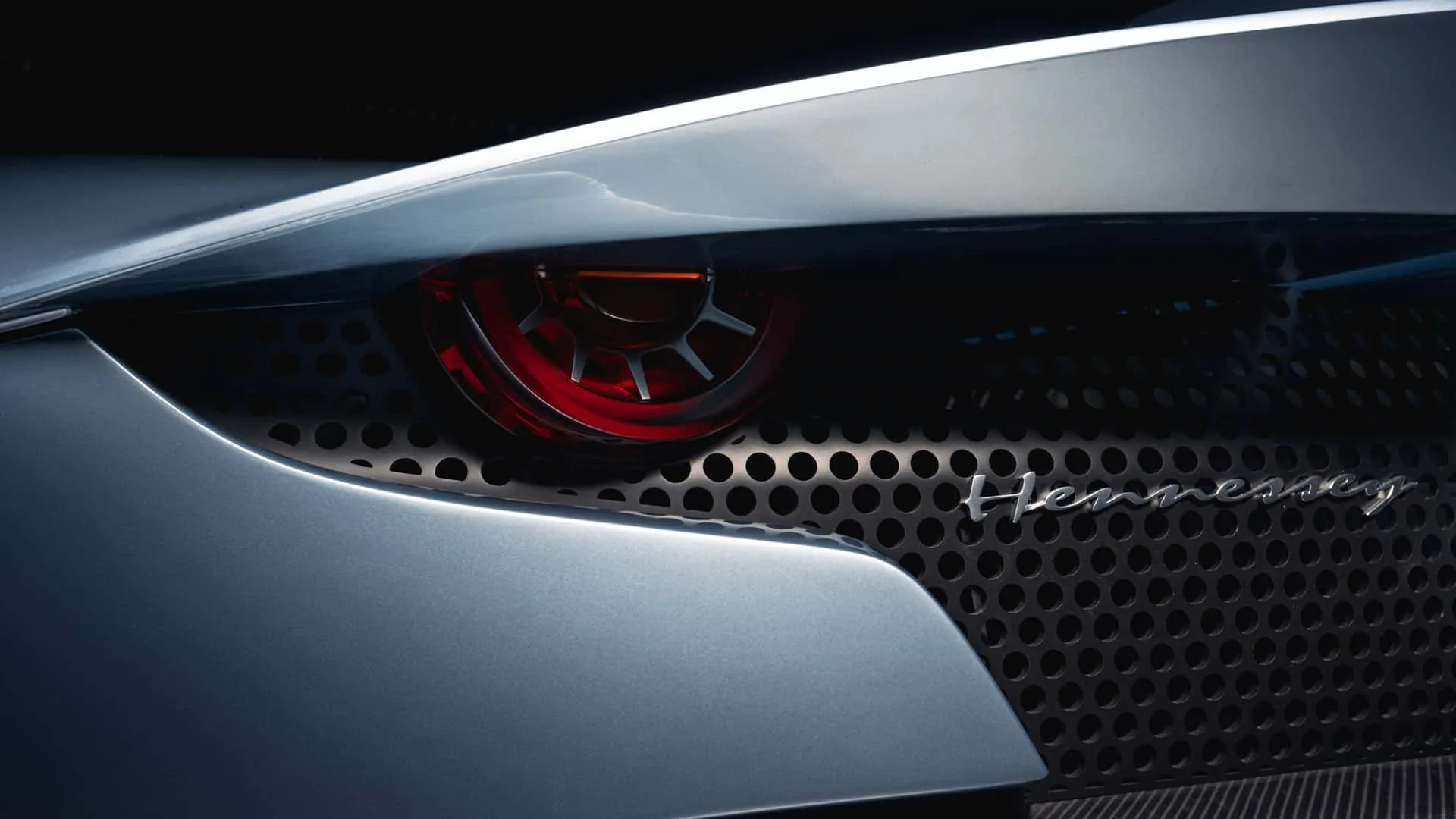
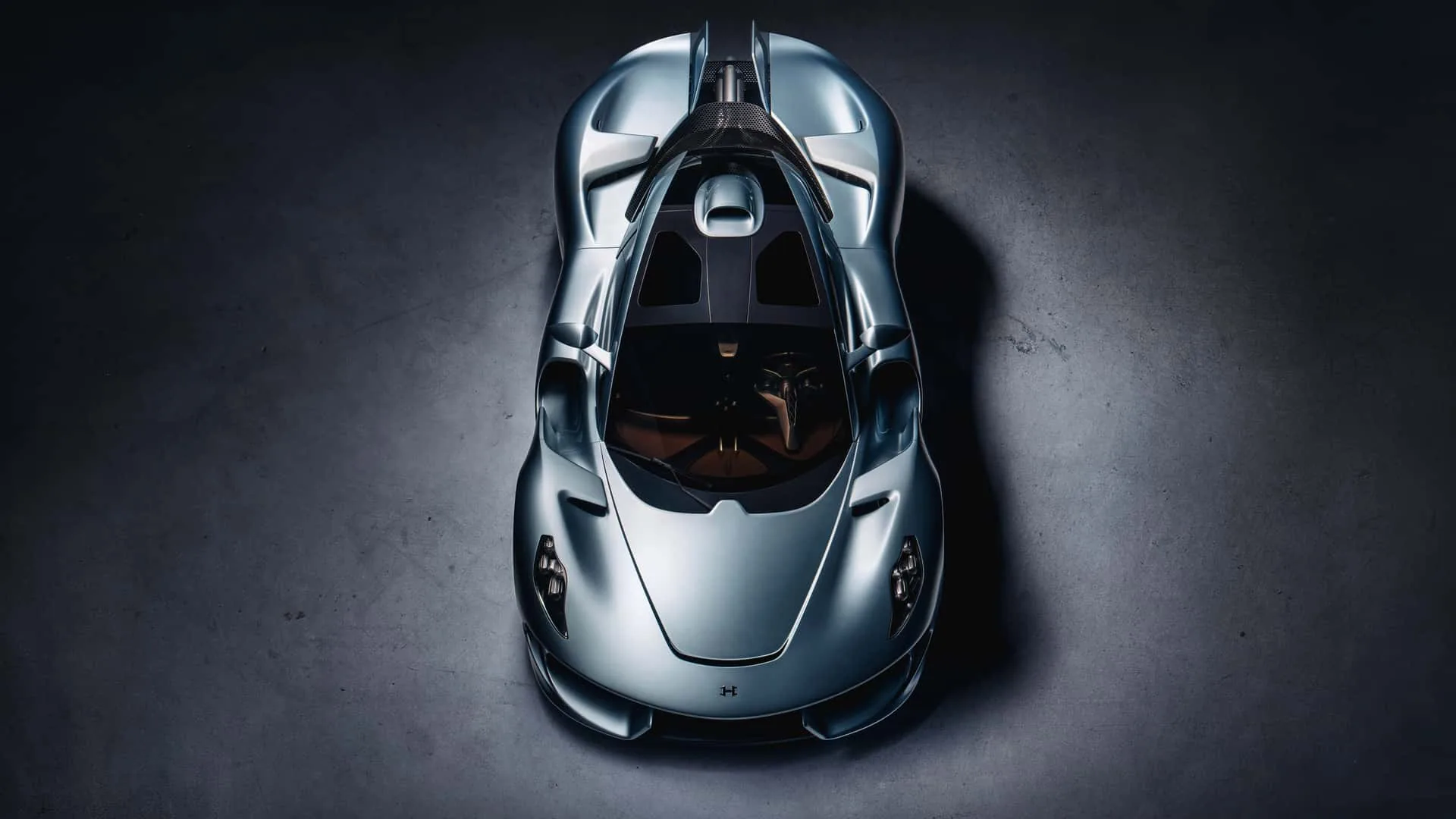
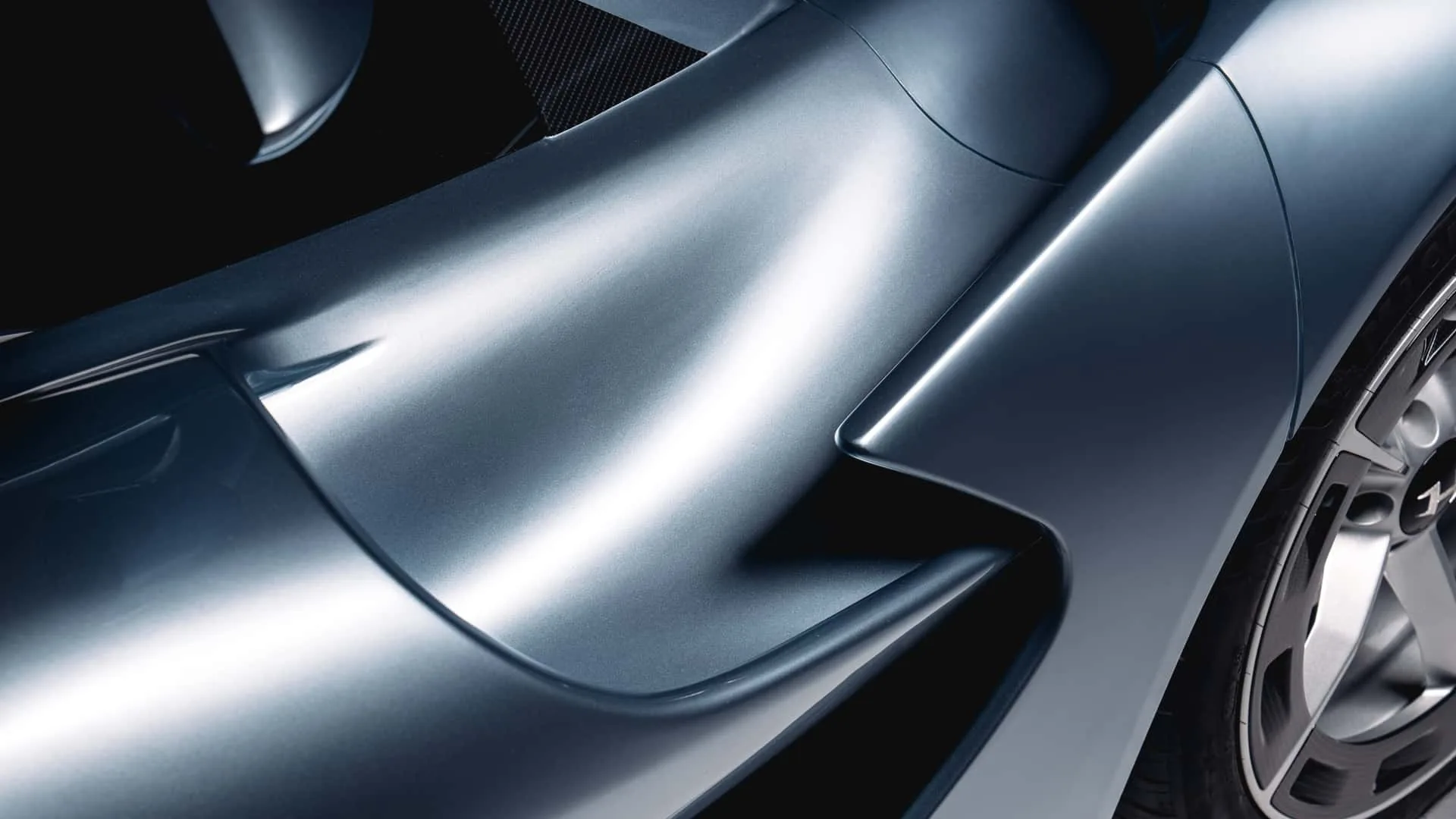
The exterior brief is uncommonly literal: the Blackbird takes its vertical stabilizer tail fins, black-only test livery references and aerospace surfacing directly from the Lockheed SR-71 Blackbird. A prominent roof-mounted intake scoop feeds the naturally aspirated V8, side channels route cooling air to the mid-mounted powertrain, and an active rear aero system with deployable flaps sits above a fully sculpted carbon diffuser. Slim projector headlights and a low nose emphasise the airframe reference over conventional supercar aggression.
Hennessey has also confirmed a McLaren F1-style detail: rear-quarter storage pods integrated into the flanks. Combined with front luggage space for two full-size carry-ons, the Blackbird claims genuine grand-tourer usability rare in modern homologated supercars.
Interior — Five Analog Dials, Zero Screens, Gated Manual Shifter
Inside, the Blackbird is defiantly analog. Hennessey has fitted five analog gauges in the driver’s line of sight, with a 10,000 rpm mechanical tachometer as the visual centrepiece. There is no infotainment screen, no digital instrument cluster, and no head-up display. Ancillary controls are handled by aviation-inspired toggle switches on the centre console.
The interior itself is a two-tone tan-leather and exposed carbon-fibre cabin with fixed sculpted seats. Compared with the Venom F5, Hennessey claims a larger greenhouse for improved outward visibility, an adaptive suspension better able to soak up road imperfections, and lower NVH levels for genuine grand-tourer usability. The three-pedal layout, machined-metal gated shifter and open engine cover are the interior’s defining features.
Full Spec Table — Hennessey Blackbird vs Venom F5-M vs McLaren F1
| Specification | Hennessey Blackbird | Hennessey Venom F5-M (Evo) | McLaren F1 (1992) |
|---|---|---|---|
| Engine | 6.2L naturally aspirated V8 (Ilmor) | 6.6L twin-turbo V8 (Fury) | 6.1L naturally aspirated V12 (BMW) |
| Power | 800–850 hp (target) | 2,031 hp (Evolution spec) | 627 hp |
| Redline | 9,000+ rpm | 8,500 rpm | 7,500 rpm |
| Transmission | 6-speed gated manual | 6-speed open-gate manual | 6-speed manual |
| Drivetrain | RWD | RWD | RWD |
| 0–60 mph | 2.5 s | 2.4 s (claimed) | 3.2 s |
| Top Speed | 220 mph (354 km/h) | 300+ mph (target) | 240 mph |
| Kerb Weight | <3,000 lb (<1,361 kg) dry | 2,998 lb (dry) | 2,509 lb |
| Chassis | Full-carbon monocoque (new tub) | Carbon monocoque (F5) | Carbon monocoque |
| Tyres | Michelin Pilot Sport Cup 2 R, 20″ | Michelin Cup 2 R | Goodyear Eagle F1 GS, 17″ |
| Screens | None — 5 analog dials | Digital cluster + centre display | None — analog gauges |
| Production Volume | 71 units | 30 units (F5-M) | 106 units (all variants) |
| Base Price | $2.5 million | $3.0 million | $970,000 (1992) |
Price, Homologation & 2029 Deliveries
The Blackbird is priced at $2.5 million before taxes, positioning it $500,000 below the Venom F5-M Evolution and roughly on par with the current base Bugatti Tourbillon. All 71 examples have been homologated for global markets, meaning European, Middle Eastern and Asia-Pacific customers can register the car on public roads without individual-vehicle approvals. Airbags are standard.
Production begins after the Venom F5 line concludes in 2028, with the first Blackbird customer deliveries scheduled for 2029. Hennessey has confirmed that Ilmor Engineering will assemble the naturally aspirated V8 to bespoke tolerances, and that the final power figure will land between 800 and 850 hp once emissions and durability sign-off is complete.
Verdict — The Analog Supercar Revival Has Its Flagship
The Blackbird is a deliberate rejection of every dominant supercar trend of the last decade. Where the Ferrari SF90 XX, McLaren W1 and Lamborghini Revúelto compete on hybrid power figures and lap-time capability, Hennessey’s new flagship competes on driver engagement, mechanical purity and rarity. A naturally aspirated V8 revving past 9,000 rpm through a gated manual gearbox, in a car lighter than a Nissan Sentra, is a specification sheet that reads more like 1995 than 2029.
Against the Venom F5, the Blackbird is slower and less powerful — but that isn’t the point. It targets a different customer entirely: the collector who cross-shops the McLaren F1, the Pagani Zonda F Roadster and the Aston Martin One-77, not the Bugatti Tourbillon or the SSC Tuatara. With just 71 build slots and a five-year lead time, the Blackbird will almost certainly be sold out before Monterey Car Week ends on August 16, 2026.
Sources & Verification
Technical figures, pricing, production numbers and launch timing verified against the following primary and secondary sources: Motor1 Hennessey Blackbird reveal coverage (August 3, 2026), Supercar Blondie Blackbird SR-71 announcement, Backfire News Project Overlord teaser, and Hennessey Performance official statements. Weight, output and top-speed figures are manufacturer targets at time of reveal.