Koenigsegg unveiled the CCGT1 at the 2026 Monterey Car Week on August 13, 2026, positioning the new hypercar as a road-legal tribute to the mid-2000s CCGT GT1 racing project that never competed. Based on the CC850 architecture, the CCGT1 is limited to 70 units — all allocated before the public reveal — and marks the debut of the Koenigsegg Sequential Shift (KSS) transmission interface (Carscoops).
The powertrain is a 5.0-litre twin-turbo V8 producing 1,280 hp on pump gasoline and 1,600 hp on E85 biofuel. It drives the rear wheels through Koenigsegg's nine-speed Light Speed Transmission, now paired with a clutch pedal for launches and a center-console ASMR dial (Auto, Sequential, Manual, Reverse) for gear selection. Buyers can alternatively specify the CC850's gated six-speed manual gearbox (Top Gear).
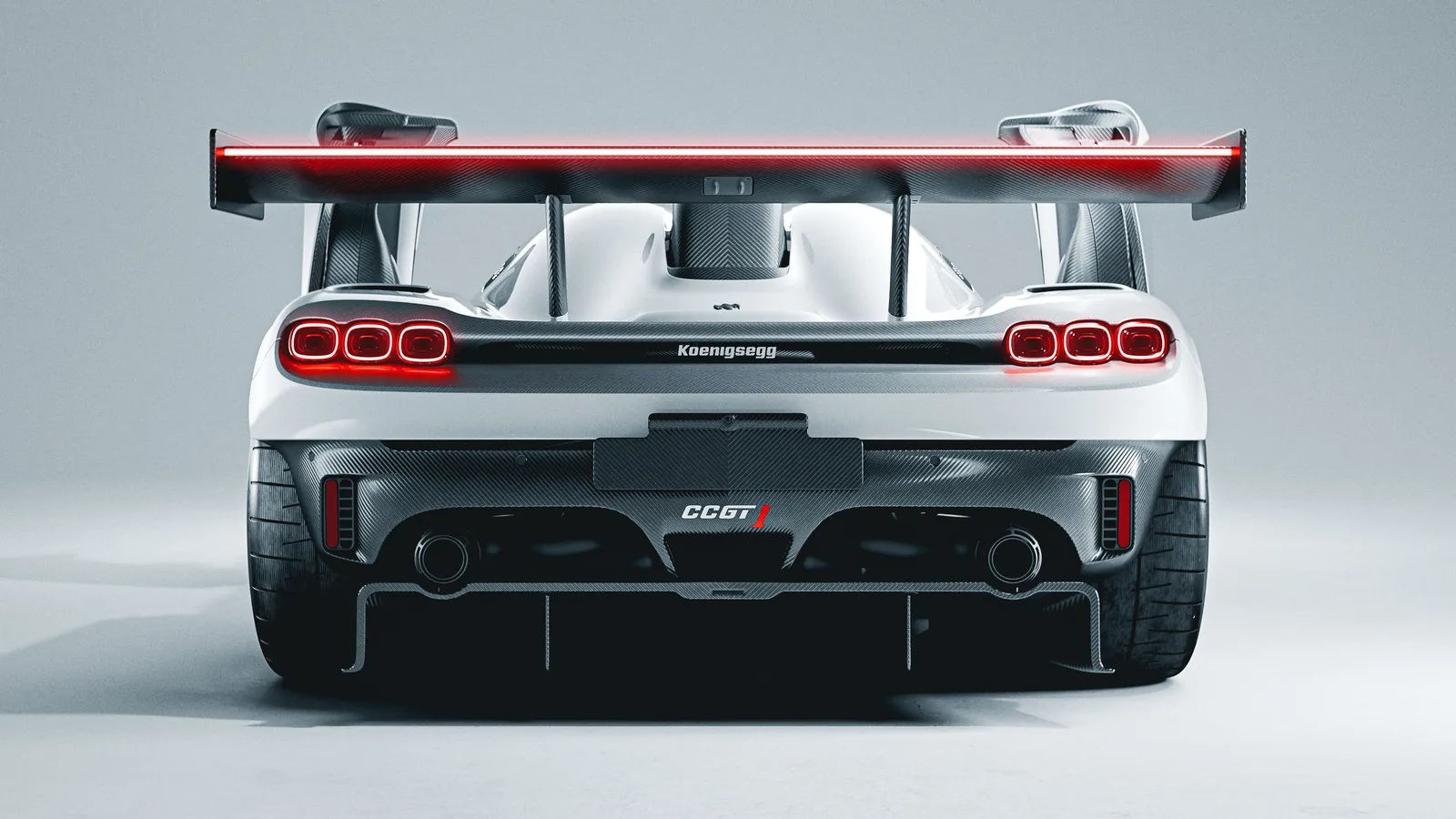
GT1-Inspired Aerodynamics With Active Rear Wing
Nearly every body panel is new versus the CC850, with only the doors and removable roof carrying over. The aerodynamic package is calibrated between the Jesko Attack and Sadair's Spear for outright downforce, generating up to 1,764 lbs (800 kg) of downforce at 155 mph (250 km/h). The oversized rear wing operates through 30 degrees of automatic adjustment and functions in low-drag, high-downforce and air-brake modes. Active front flaps preserve aero balance as rear-wing load rises with speed (Carscoops).
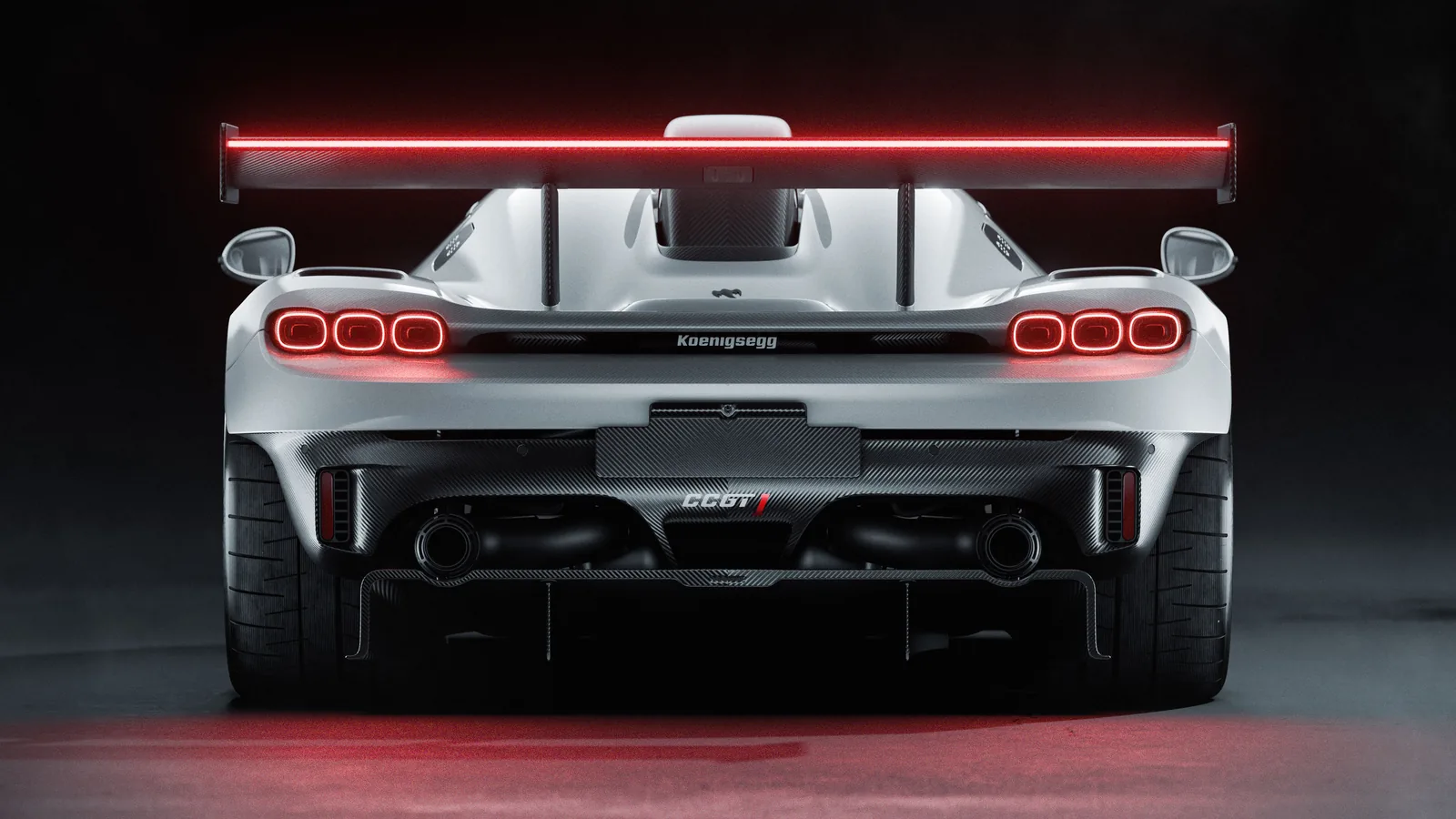
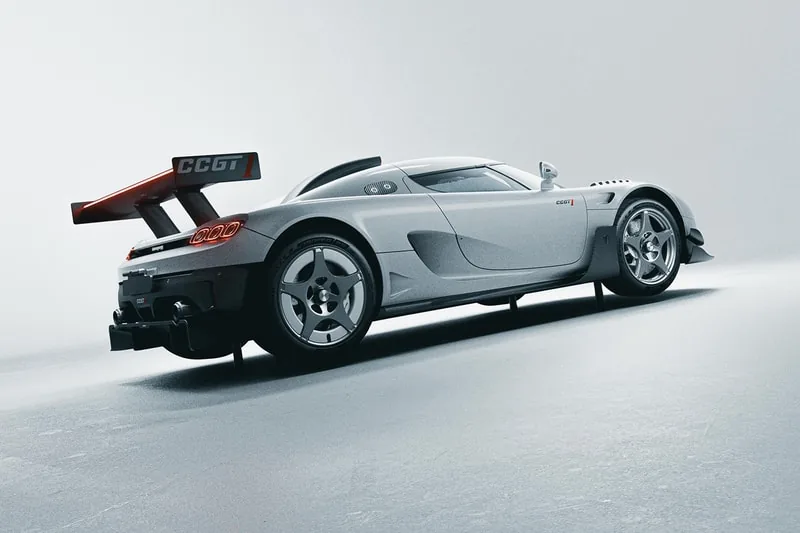
Koenigsegg Sequential Shift (KSS) and Optional Manual
The new KSS interface uses the clutch pedal only for initial takeoff. Every subsequent shift is executed sequentially through the nine-speed Light Speed Transmission with an ignition cut on each pull, mirroring the behaviour of a dedicated racing gearbox. Drivers select between Auto, Sequential, Manual and Reverse modes via the center-console ASMR dial. For customers who prefer the traditional Koenigsegg experience, the CC850's H-pattern six-speed gated manual remains a no-cost alternative (Carscoops).
Ghost Fibre Carbon and Third-Generation Chronocluster
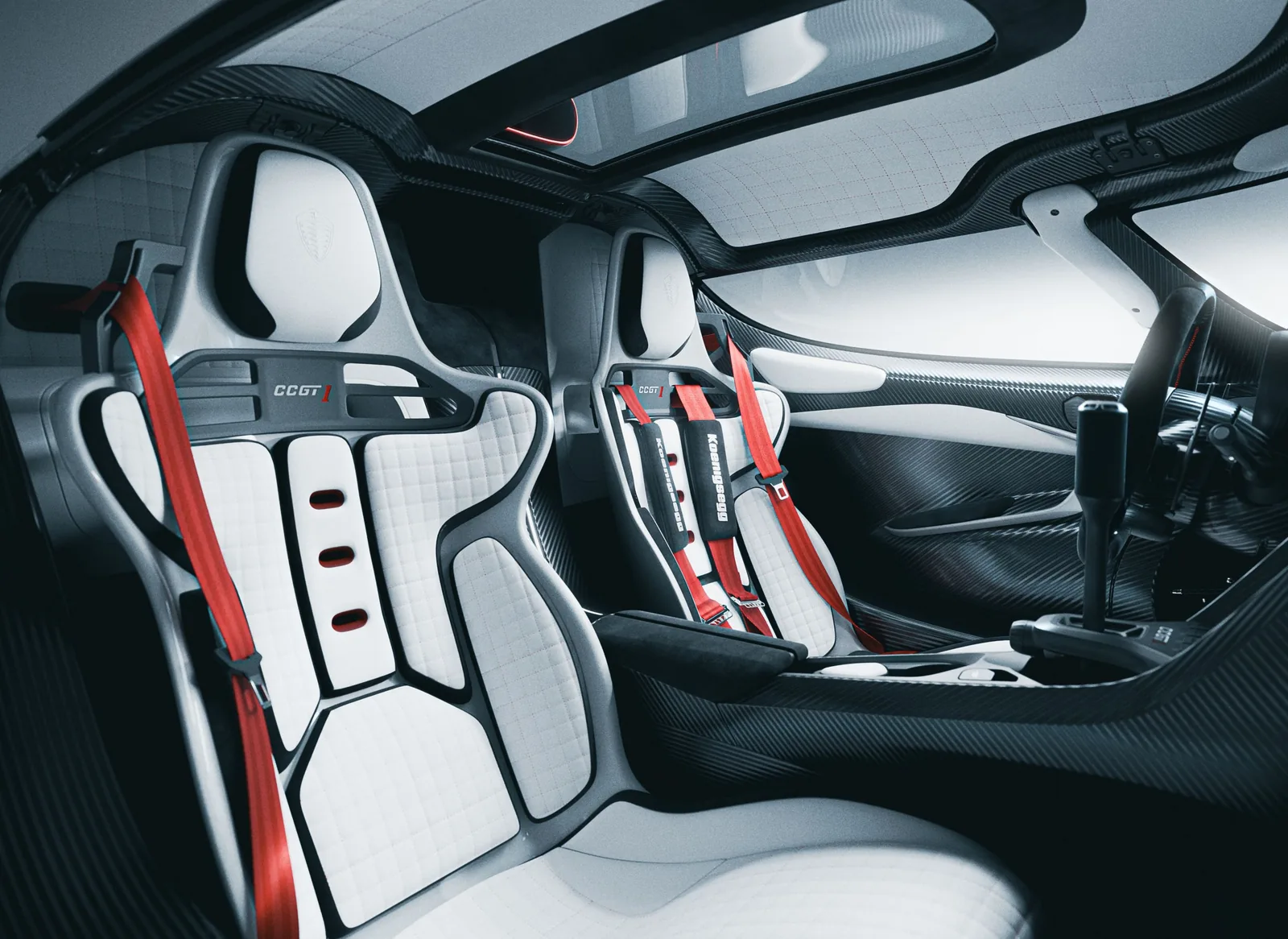
The CCGT1 introduces Ghost Fibre, a proprietary white carbon-fibre weave that Koenigsegg claims is tougher, lighter and quieter than conventional carbon fibre. Inside, the third-generation Chronocluster instrument display provides analog readouts for power use, oil pressure, temperatures, fuel level, engine speed, road speed and boost pressure. An analog G-meter is physically actuated by the accelerations it measures (Hypebeast).

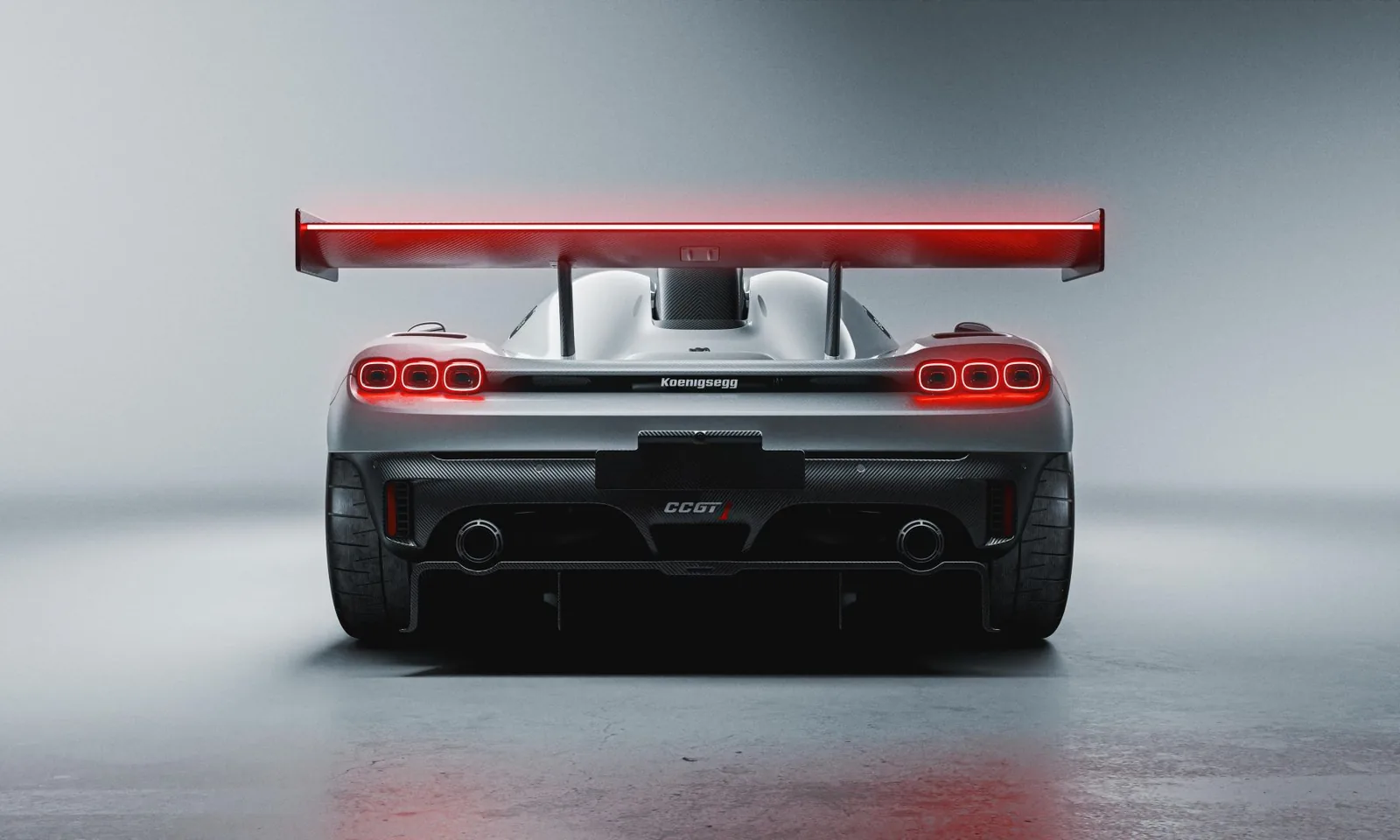
Factory Track Package — a First for Koenigsegg
The CCGT1 is the first Koenigsegg road car to offer a factory-supported Track Package. The optional kit adds a carbon roll cage, HANS-compatible racing seats, a fire-suppression system, integrated data logging, air jacks, a race-tuned exhaust, adjustable suspension calibration, and a second set of wheels shod in track slicks. Koenigsegg states the CCGT1 will set the quickest lap times of any road-legal car it has produced, though no reference circuit or benchmark time has been published (Top Gear).
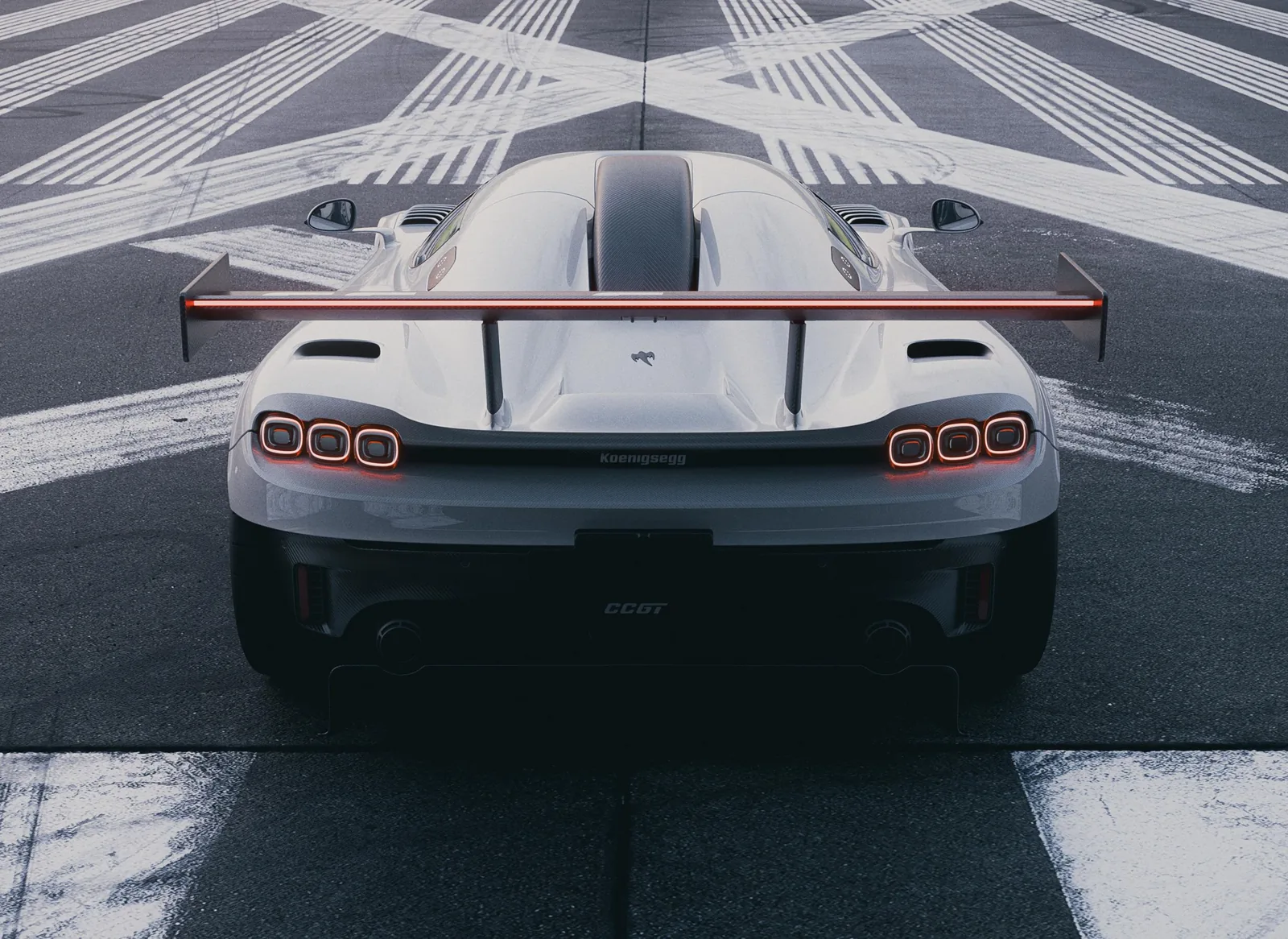
Koenigsegg CCGT1 Specifications
| Engine | 5.0L twin-turbocharged V8, mid-mounted |
|---|---|
| Power (pump gas) | 1,280 hp (954 kW) |
| Power (E85) | 1,600 hp (1,193 kW) |
| Transmission | 9-speed Light Speed Transmission with Sequential Shift (KSS); optional 6-speed gated manual |
| Drive-mode dial | ASMR: Auto, Sequential, Manual, Reverse |
| Downforce | Up to 800 kg (1,764 lbs) at 250 km/h (155 mph) |
| Rear wing | Active, 30° automatic adjustment; low-drag, high-downforce and air-brake modes |
| Body material | Ghost Fibre white carbon fibre (all-new) |
| Instrumentation | Third-generation Chronocluster with analog readouts |
| Track Package | Optional: roll cage, HANS seats, fire system, data logger, slicks, air jacks, race exhaust |
| Production | 70 units — all allocated pre-reveal |
| World premiere | Monterey Car Week, August 13, 2026 |
| Base platform | Koenigsegg CC850 |
CCGT1 vs Original CCGT: The Race Car That Never Raced
The original CCGT was built in 2007 as Koenigsegg's entry into the FIA GT1 championship. It used a naturally aspirated 5.0-litre V8 restricted to the series' 600 hp limit and weighed approximately 2,205 lbs (1,000 kg) with more than 1,323 lbs (600 kg) of downforce. The FIA revised GT1 regulations two months into Koenigsegg's shakedown programme to favour higher-volume production manufacturers, effectively excluding the CCGT. The category itself collapsed shortly afterwards, and the sole CCGT prototype remained with its original owner for years. The new CCGT1 revives the concept as a homologated road car with 2.6 times the power and modern active aerodynamics (Carscoops).
Availability and Delivery
All 70 CCGT1 build slots were allocated to existing Koenigsegg clients before the public premiere on August 13, 2026. Koenigsegg has not disclosed pricing publicly; industry estimates place the CCGT1 in the $4.5–$6.5 million range based on comparable CC850 and Jesko Sadair's Spear allocations. Delivery timelines have not been confirmed. Additional configuration and technical detail is available on the official Koenigsegg CCGT1 page.
Frequently asked questions
How much does the Koenigsegg CCGT1 cost?
Koenigsegg has not disclosed pricing publicly. Industry estimates place the CCGT1 in the $4.5–$6.5 million range based on comparable CC850 and Jesko Sadair's Spear allocations.
How many Koenigsegg CCGT1 units were built?
Just 70 units. All build slots were allocated to existing Koenigsegg clients before the public premiere on August 13, 2026.
What engine does the Koenigsegg CCGT1 use?
A 5.0-litre twin-turbo V8 producing 1,280 hp on pump gasoline and 1,600 hp on E85 biofuel, paired with a nine-speed Light Speed Transmission featuring the new Koenigsegg Sequential Shift (KSS) interface.
Can I still order a Koenigsegg CCGT1?
No. All 70 units were allocated to existing Koenigsegg clients before the car's public reveal, so no open order slots remain.
The same homologation logic produced the Maserati MC12 Stradale, a 630 hp V12 road car built on Ferrari Enzo hardware so Maserati could return to FIA GT racing, while the Ferrari F40 remains the reference point for an analogue twin-turbo supercar without driver aids. Both are documented in full in the Legendary Cars archive.