Why John Wick’s Mustang Needs Two Identities
No: John Wick’s Mustang was not a real Boss 429. The film calls it a 1969 Boss 429; the cars that filmed were modified 1969 Mustang fastbacks with Mach 1 specification, including a documented Chapter 2 survivor, chassis 9T02M168028.
John Wick’s Ford Mustang is both a fictional Boss 429 and a real-world movie construction. In the 2014 film’s gas-station exchange, Iosef Tarasov recognizes the car as a Boss 429 and guesses that it is a 1970; Wick corrects the year to 1969. The story therefore treats the car as a 1969 Ford Mustang Boss 429.
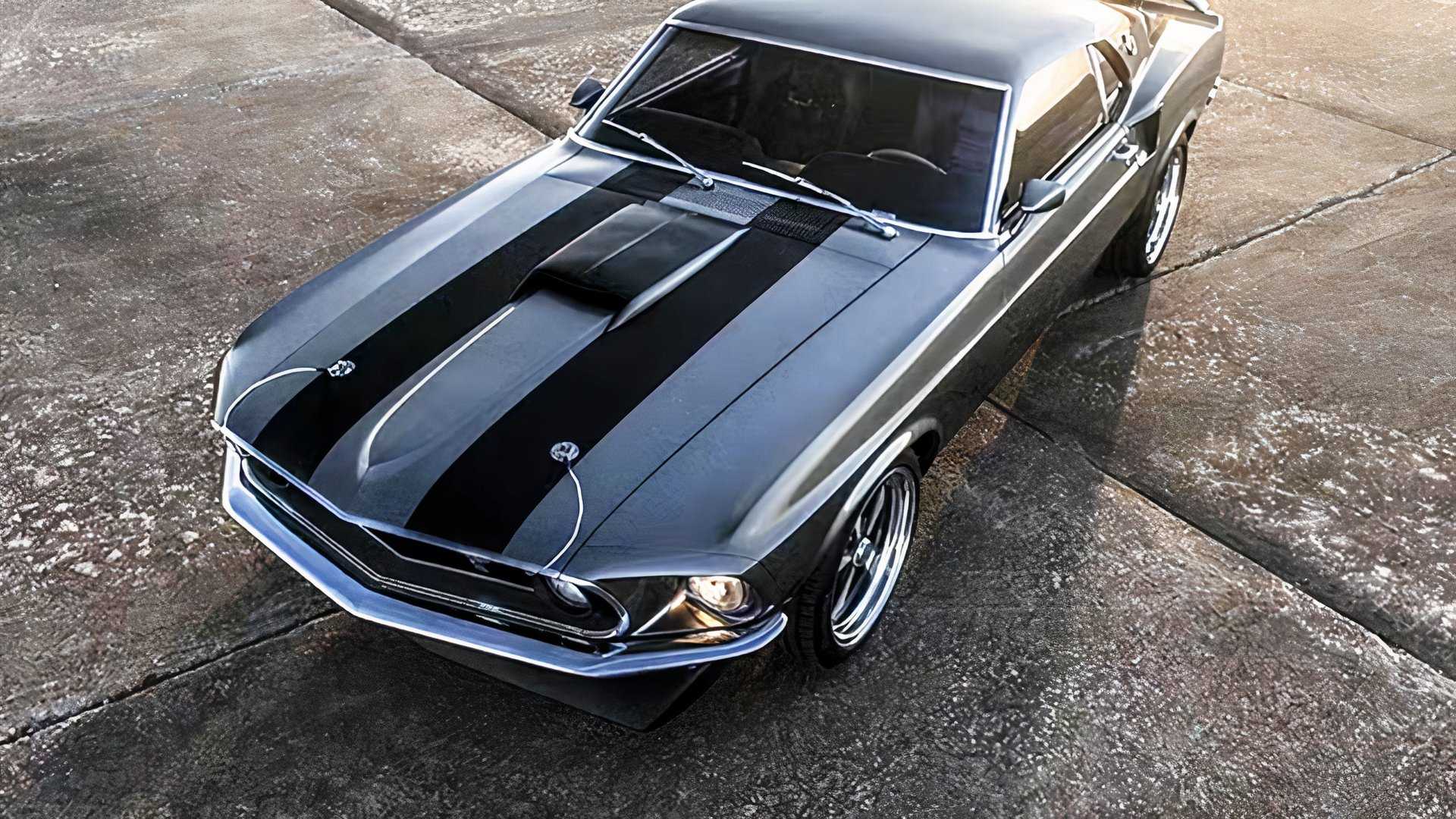
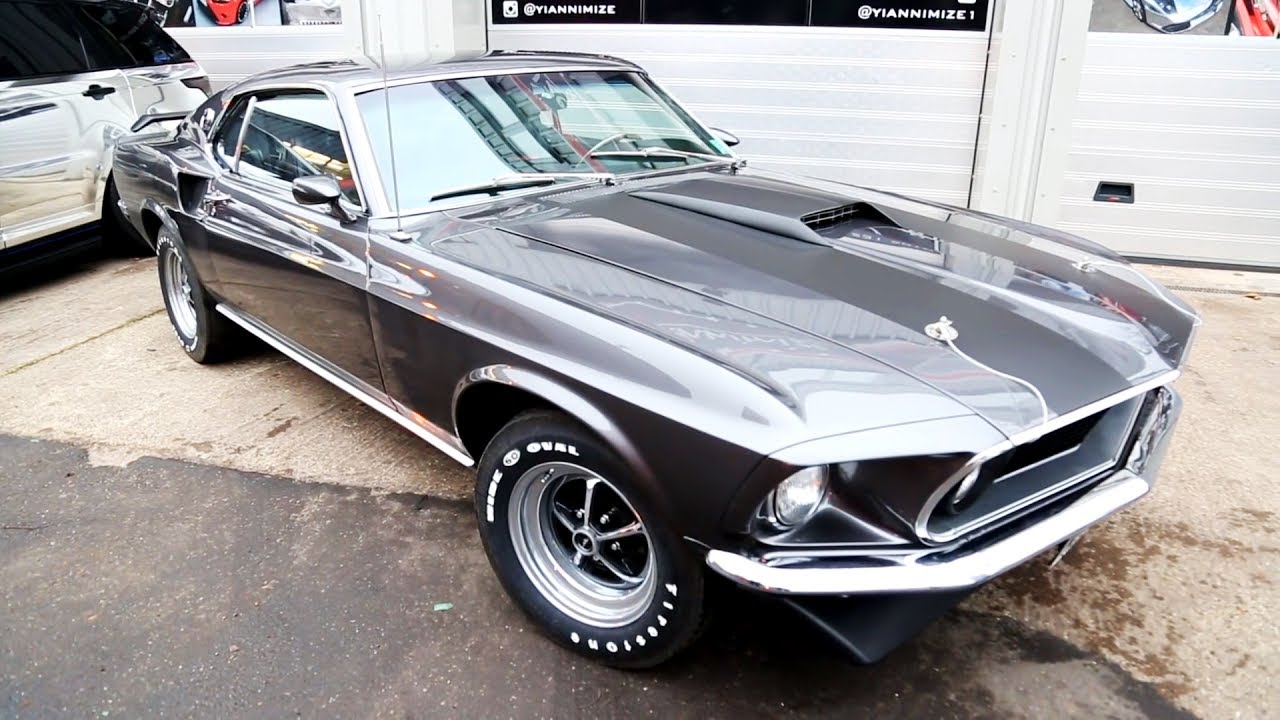
The photographed hardware tells a different story. The screen cars were not genuine Boss 429s. They were 1969 Mustang fastbacks modified to present one consistent character car, with the appearance and cabin details pointing strongly to Mach 1 donors. “Boss 429” is the in-universe identity; “modified Mach 1 stand-in” is the accurate production description.
The Mustang’s Role in John Wick
The Mustang helps ignite the entire plot. Iosef tries to buy it at the gas station, is refused, and later joins the home invasion in which Wick’s puppy is killed and the car is stolen. That attack pulls the retired assassin back into the criminal world.
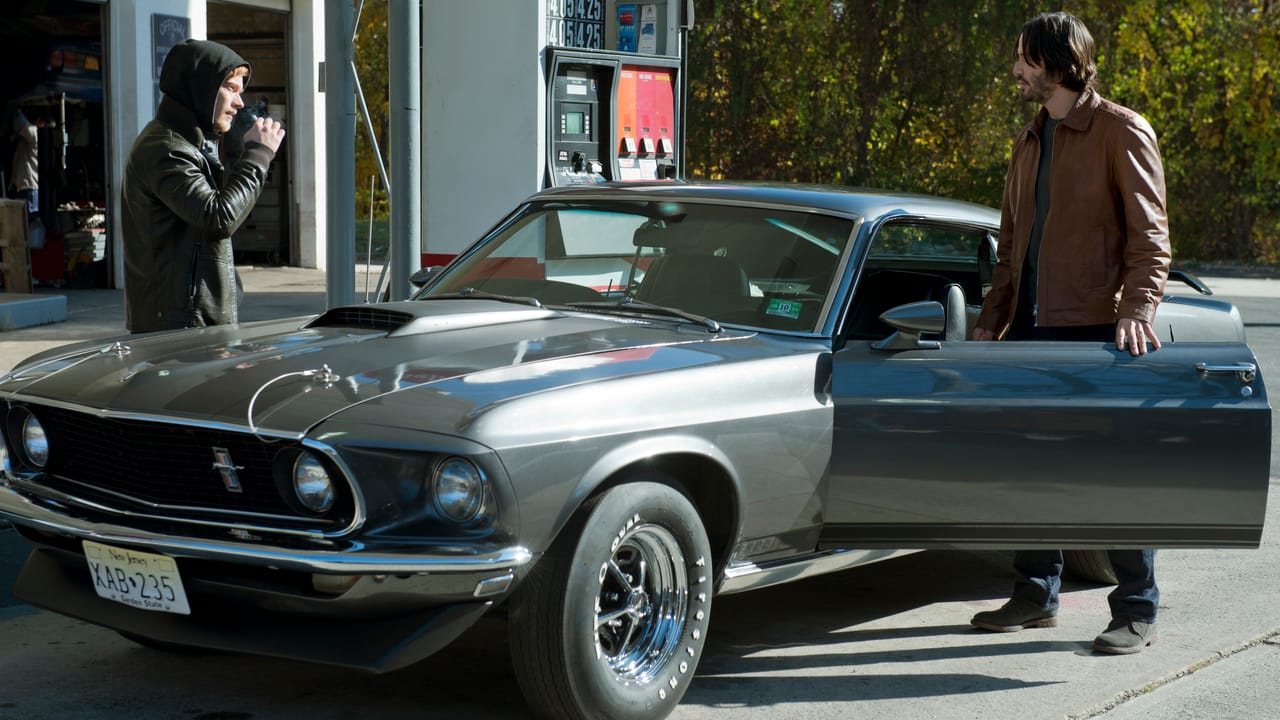
The car returns in the opening of John Wick: Chapter 2 (2017), when Wick retrieves it from Abram Tarasov’s operation. A warehouse pursuit turns the Mustang into a blunt instrument, leaving it heavily damaged. Its role is brief but structurally important: the car represents Wick’s private life, then becomes another object that violence makes impossible to preserve.
What Cars Were Actually Used on Screen?
Contemporary collector-car reporting says the first film used two real Mustang fastbacks, neither a Boss 429, and that the production was instructed not to damage them. Their chin spoiler, hood pins, smaller scoop, deluxe-style interior and Shelby-type steering wheel support the Mach 1 identification, although the familiar Mach 1 graphics were removed.
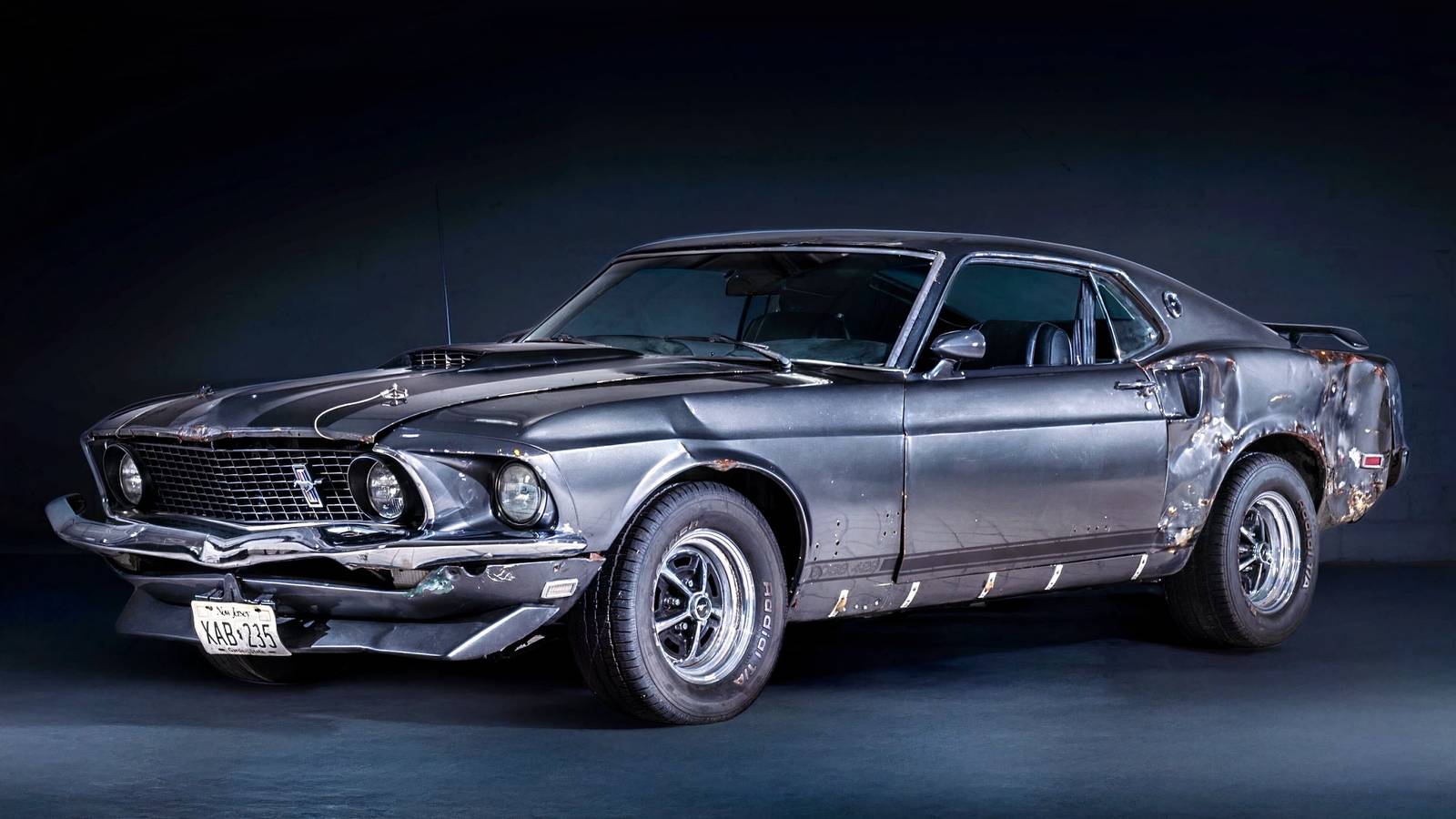
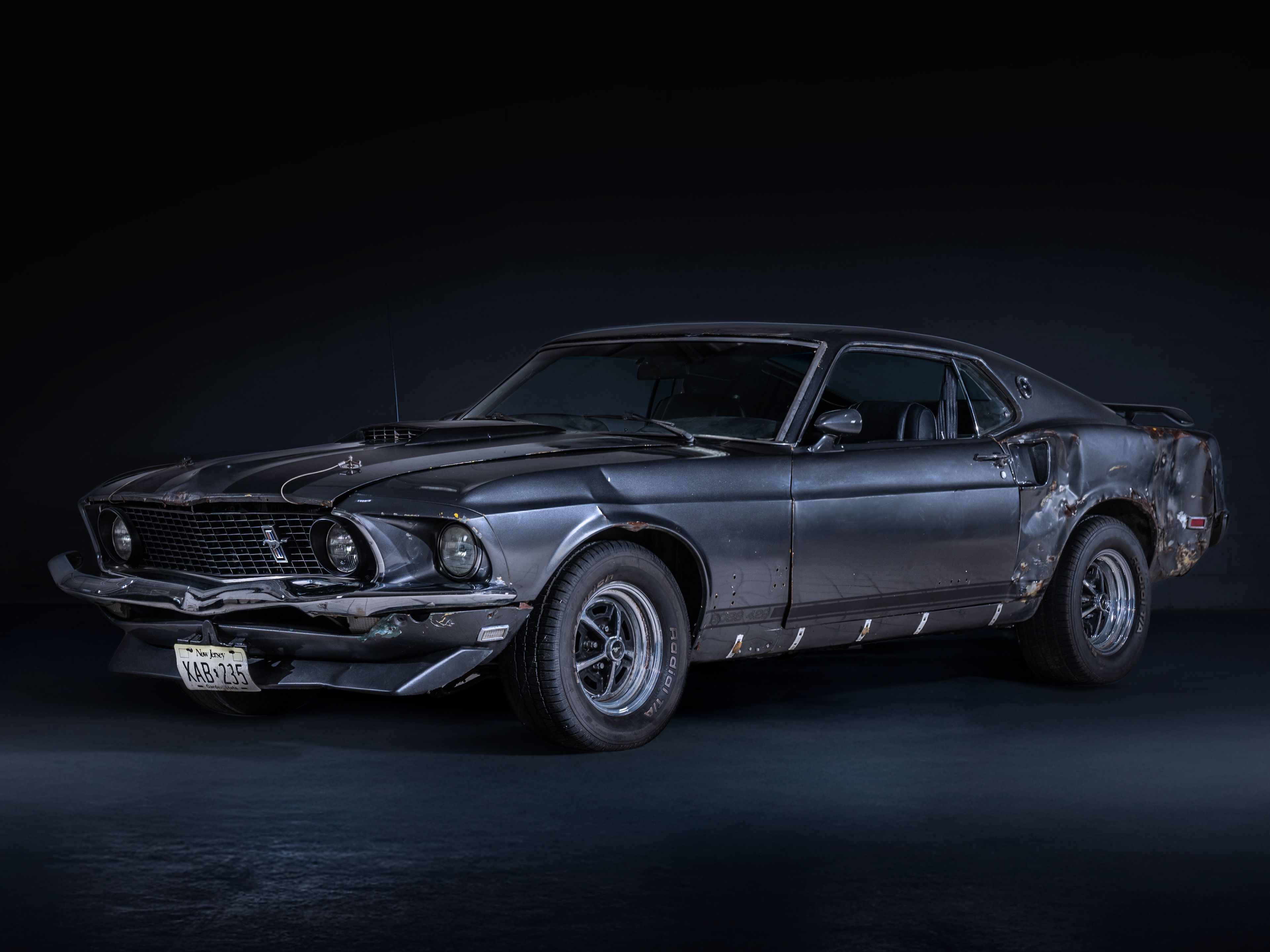
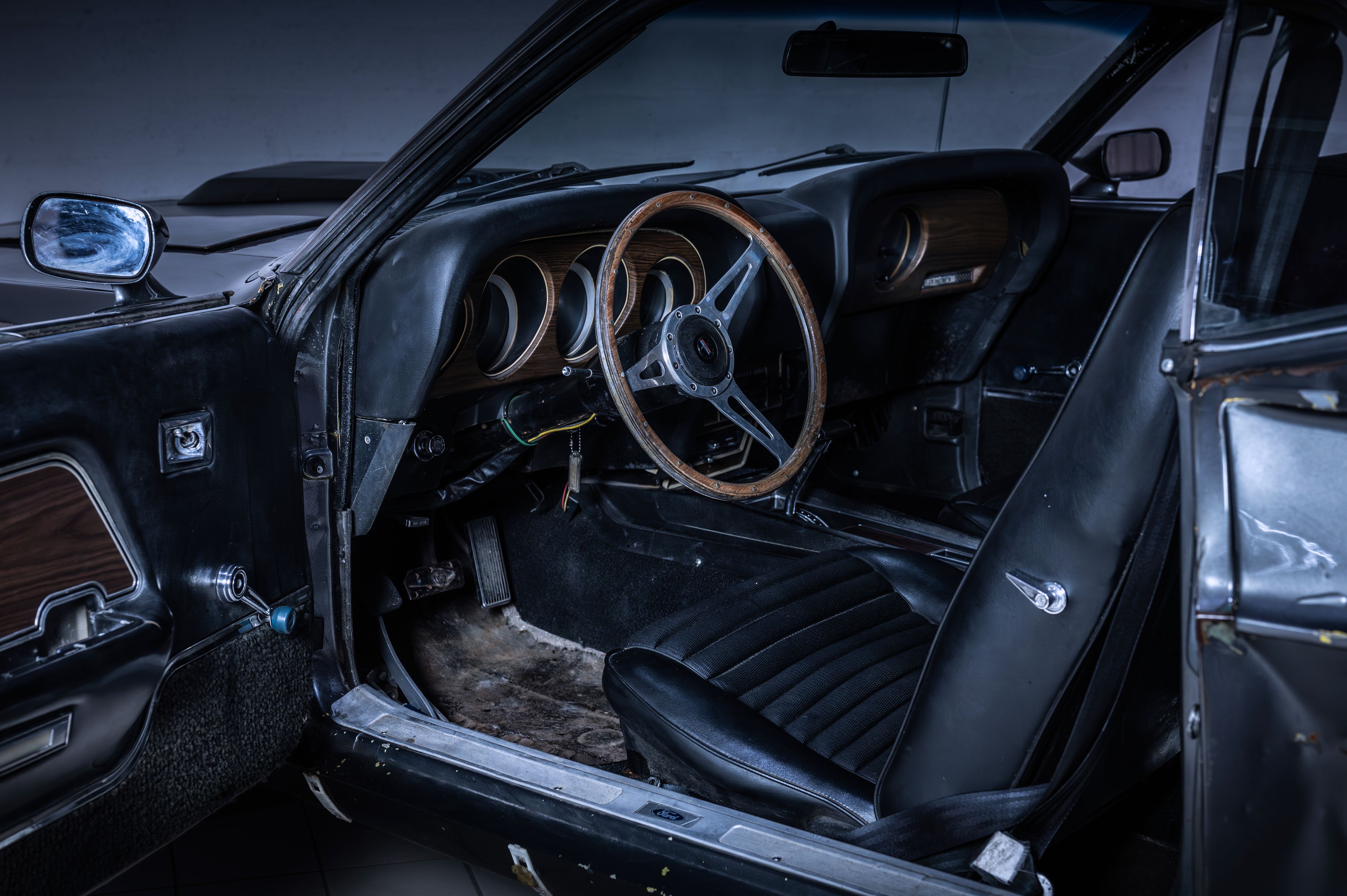
The sequel had a separate stunt fleet. A documented Chapter 2 survivor, chassis 9T02M168028, was number four of five Mustangs prepared for that production. The genuine M-code 1969 Mach 1 was disguised to match Wick’s earlier car and reinforced with an internal roll cage, upgraded suspension, quick-release panels and camera-rig mounting points. Calling these cars “Boss 429 replicas” describes the role they played; it does not mean every donor was a newly fabricated replica body.
Documented Chapter 2 Chassis
| Field | Bonhams lot / production record |
|---|---|
| Chassis | 9T02M168028 |
| Identity | Genuine 1969 Mustang Mach 1, M-code, not a Boss 429 |
| Engine | 351 cu in V8 |
| Transmission | FMX automatic |
| Role | Car four of five prepared for John Wick: Chapter 2 |
| Build plant | Metuchen, 28 January 1969 |
| Documentation | Marti Report; Immersi FX certificate; Bonhams Cars auction record |
The Bonhams record is the hard evidence behind the Mach 1 identification: a real M-code car disguised to match Wick’s first-film silhouette, then reinforced for stunt work. It is not a factory Boss 429 and should not be priced as one.
Boss 429 vs Screen-Used Mach 1 Specifications
| Specification | Production 1969 Boss 429 | Documented Chapter 2 screen car |
|---|---|---|
| Base vehicle | Mustang SportsRoof modified by Kar Kraft | Genuine 1969 Mustang Mach 1, M-code |
| Engine | 429 cu in (7.0-liter) V8, 735-cfm Holley | 351 cu in V8 |
| Factory output | 375 hp; 450 lb-ft | Not reliably published |
| Transmission | Four-speed manual only | Automatic |
| Final drive | 3.91:1 Traction-Lok | Not reliably published |
| Body details | Large functional scoop; restrained trim | Smaller scoop, hood pins, spoilers, dark paint and black stripes |
| Film preparation | None; not used as the stunt donor | Roll cage, reinforcement, upgraded suspension, quick-release panels |
| Production | 859 for the 1969 model year | Number four of five prepared for Chapter 2 |
The automatic selector visible on screen is one of the clearest reasons the movie car cannot be a factory Boss 429: every production Boss 429 used a four-speed manual.
The Movie Car’s Distinctive Design
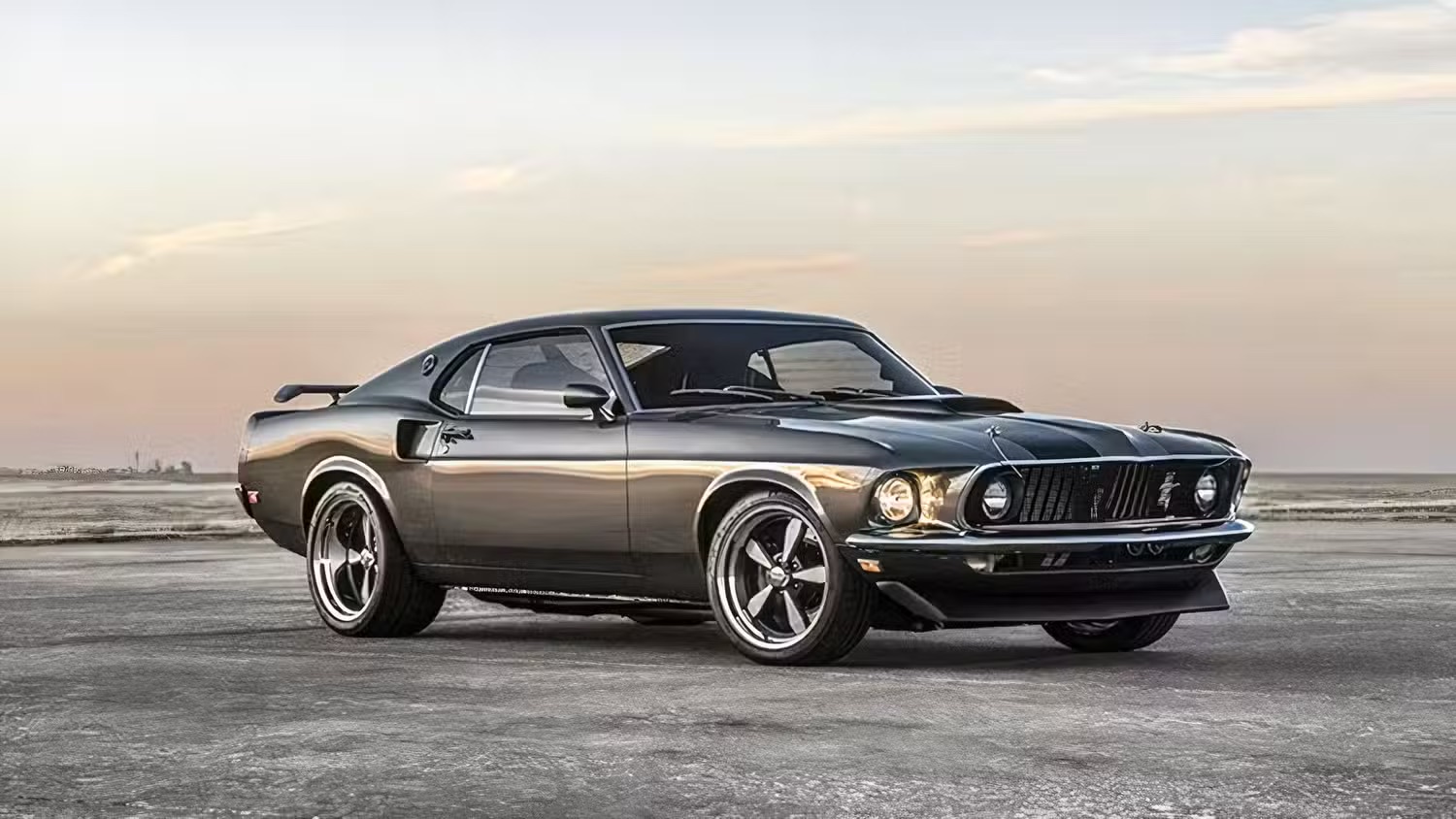
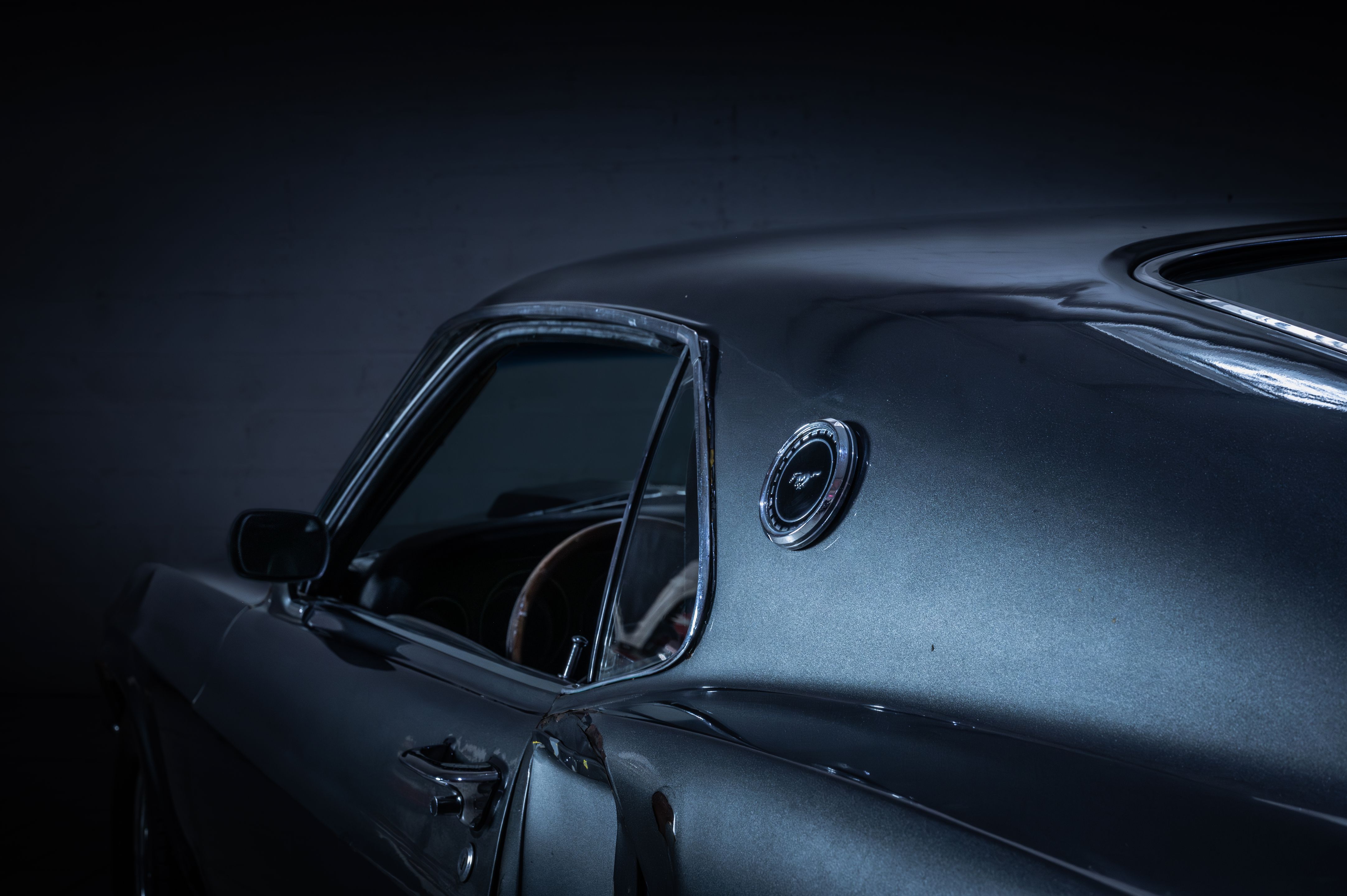
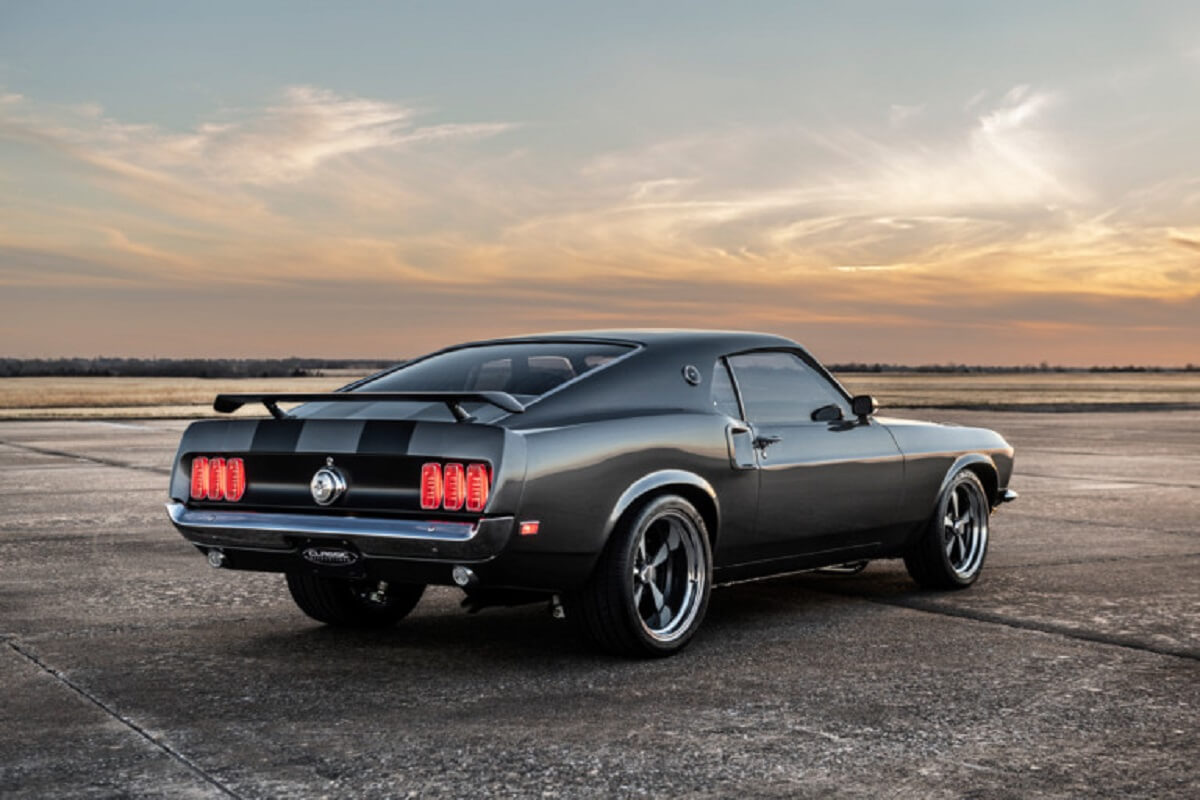
The finished screen design is a hybrid rather than a factory-correct restoration. A dark metallic gray body, twin black stripes, Magnum 500-style wheels, hood pins, front chin spoiler and rear wing create the low, severe profile associated with Wick. The smaller Mach 1-style scoop is especially revealing because the real Boss 429 used a much larger functional opening.
Inside, high-back seats and a Shelby-style wood-rim steering wheel continue the mixture of Mustang parts. The result is visually coherent but intentionally detached from any single 1969 order sheet.
Why the Real Boss 429 Is So Significant
Ford created the Boss 429 to homologate its new 429-cubic-inch engine for NASCAR. Kar Kraft adapted Mustang bodies to accept the enormous V8, including relocating the shock towers. The road engine used aluminum cylinder heads, a high-rise aluminum intake and a 735-cfm Holley carburetor, with power officially rated at 375 hp and torque at 450 lb-ft.
Only 859 Boss 429 Mustangs were produced for 1969, followed by a second and final model year in 1970. That scarcity explains why a production would use more available Mustangs as matching stand-ins instead of exposing multiple authentic homologation cars to repeated takes.
Value: Genuine Boss 429 vs Movie Provenance
Public results illustrate how condition changes the market. RM Sotheby’s sold an incomplete 1969 Boss 429 without its engine or transmission for $181,500 in 2021. Bring a Trailer sold a restored Black Jade example for $341,000 in May 2025. Those verified transactions support a transparent $181,500–$341,000 comparison band, but they are market evidence rather than a universal price guide.
A screen-used Mach 1 belongs to a different market. Its value depends on documentation, identifiable screen time, mechanical state and production evidence. A Chapter 2 car may be less rare mechanically than a Boss 429 while carrying provenance no ordinary Mach 1 can reproduce.
Frequently Asked Questions About John Wick’s Mustang
Is John Wick’s Mustang a real Boss 429?
Within the story, yes: the gas-station dialogue identifies it as a 1969 Boss 429. The physical screen cars were not factory Boss 429s; they were modified Mustang fastbacks associated with Mach 1 specification.
What engine was in the John Wick Mustang?
The fictional car implies the Boss 429’s 429-cubic-inch V8. The documented Chapter 2 M-code Mach 1 survivor has a 351-cubic-inch V8, so the screen-used specification should not be presented as a 429.
Was John Wick’s Mustang manual or automatic?
A genuine 1969 Boss 429 was four-speed manual only. Wick’s screen car is shown with an automatic, and the authenticated Chapter 2 example is catalogued as automatic.
How many Mustangs were used for filming?
Reliable reporting identifies two Mustang fastbacks for the first film. The documented Chapter 2 stunt-car record identifies a separate five-car production fleet; the figures should not be combined or assigned to the wrong movie.
For two more American screen icons, see the 1972 Ford Gran Torino Sport from Clint Eastwood’s Gran Torino and KITT, the 1982 Trans Am from Knight Rider.
Sources & Verification
- Hagerty Media — first-film car identity, two fastbacks and design details
- Hagerty Media — story role, production context and factory output
- The Classic Valuer / Bonhams lot record — documented Chapter 2 Mach 1
- Car and Driver — Boss 429 engineering and model history
- Bring a Trailer — $341,000 sale and specification
- RM Sotheby’s — production figure, specification and $181,500 sale