YANGWANG U9 PRICE
Official China list ¥1,800,000 (~€234,000 / ~$269,000). Europe is not on sale; Batman Garage estimates ~€300,000 including VAT. The United States is not on sale; estimate ~$270,000 at China FX. The U9 Xtreme is limited to 30 units and is not publicly sold.
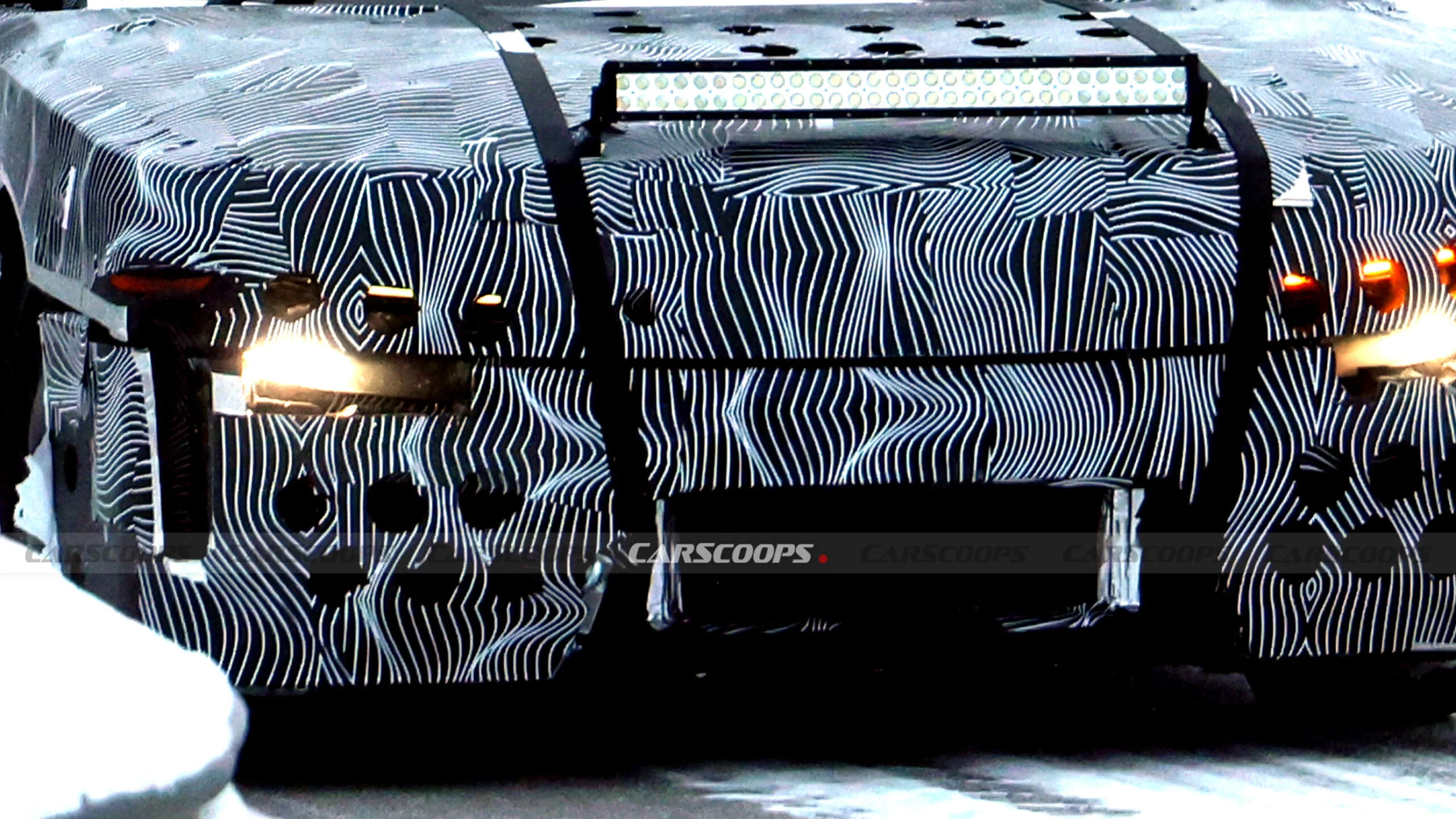
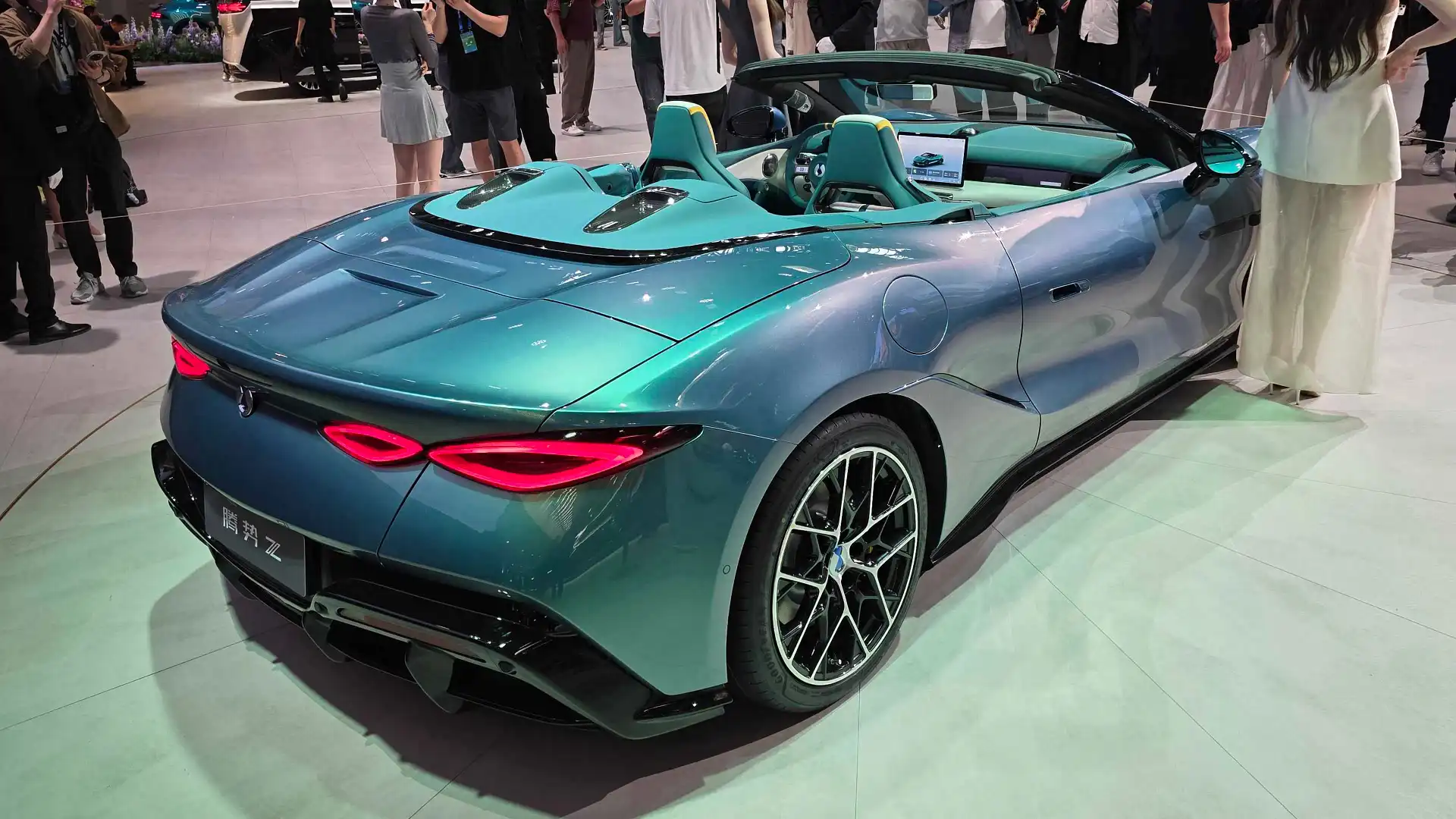
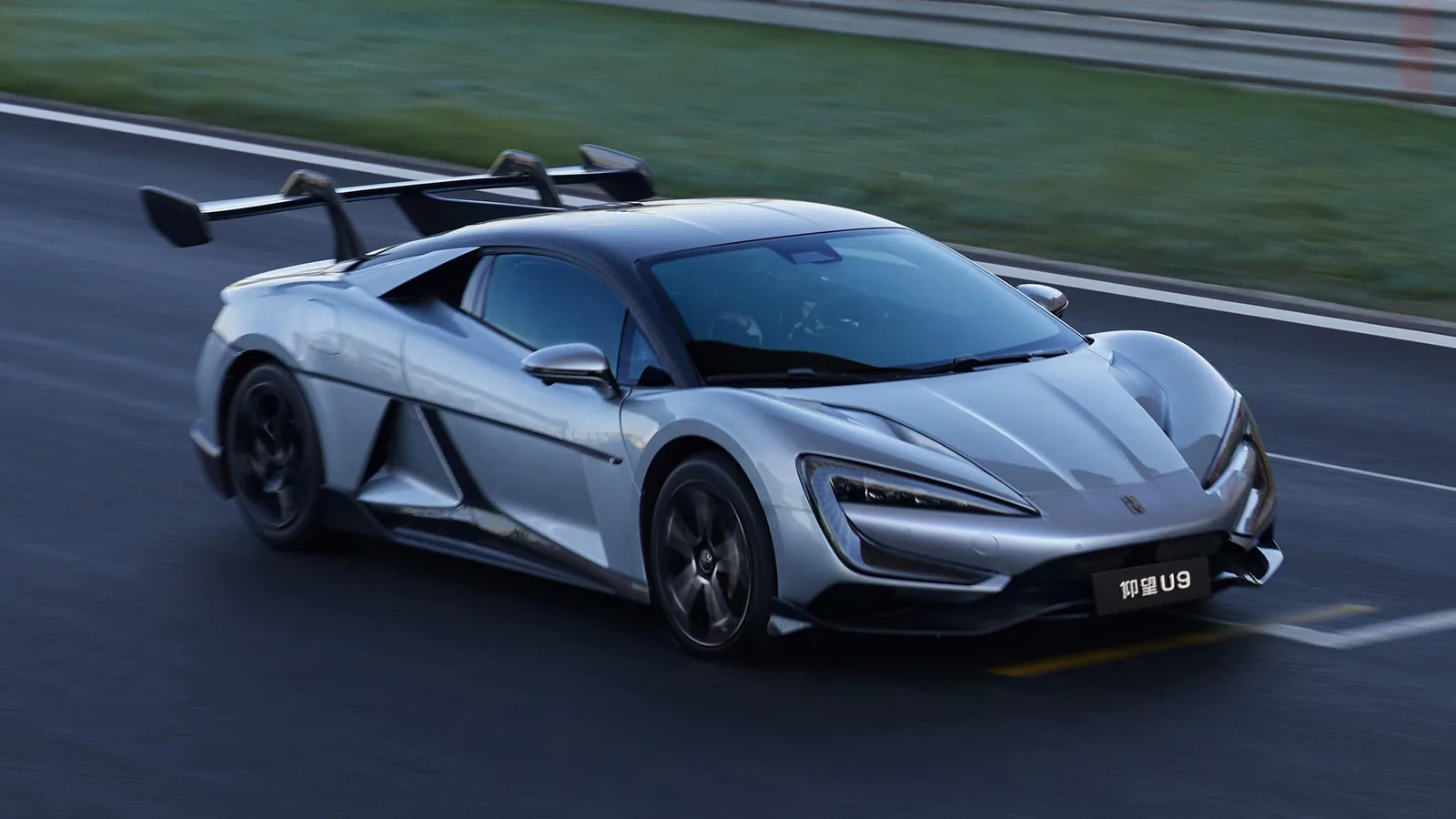
The Yangwang U9 is a battery-electric two-seat hypercar developed by BYD under its luxury sub-brand Yangwang. It uses a quad-motor architecture in which each wheel is driven by an independent 240 kW (322 hp) permanent-magnet synchronous motor, for a combined system output of 960 kW (1,287 hp) and 1,680 Nm of torque. The standard production model accelerates from 0 to 100 km/h in 2.36 seconds and reaches a top speed of 309.19 km/h. The official China list is ¥1,800,000 (~€234,000 / ~$269,000). Europe and the United States are not on sale; Batman Garage estimates approximately €300,000 including VAT in Europe and approximately $270,000 in the US at China FX.
TECHNICAL OVERVIEW
The U9 is the second model from Yangwang after the U8 off-road SUV. It serves as a technology showcase for two BYD platforms: the e⁴ Platform (four independent drive motors with per-wheel torque vectoring) and the DiSus-X Intelligent Body Control System (active hydraulic suspension with 75 mm of travel that can lift the entire body, drive on three wheels, or vault the car off the ground).
Powertrain — Quad-Motor e⁴ Platform
The U9 carries one electric motor at each corner. Each motor is rated at 240 kW with a maximum rotational speed of 21,000 rpm. Because the motors operate independently, the e⁴ platform can apply different torque values to each wheel in real time. This enables both performance functions (high-speed torque vectoring through corners, three-wheel limp-home capability when one motor is disabled) and stability functions (yaw correction, individual wheel braking through regenerative load).
The standard U9 is paired with an 80 kWh Blade LFP battery from BYD's FinDreams subsidiary. CLTC range is 465 km. Charging is handled by a dual-plug ultra-fast architecture with a peak input of 500 kW, which BYD quotes as a 30 to 80 percent state-of-charge in approximately ten minutes. The Blade battery's prismatic LFP cells contribute to thermal stability under sustained track loads, and the U9 includes a dedicated cooling circuit that BYD says doubles the maximum cooling capacity compared to its earlier prototypes.
Yangwang U9 Specifications
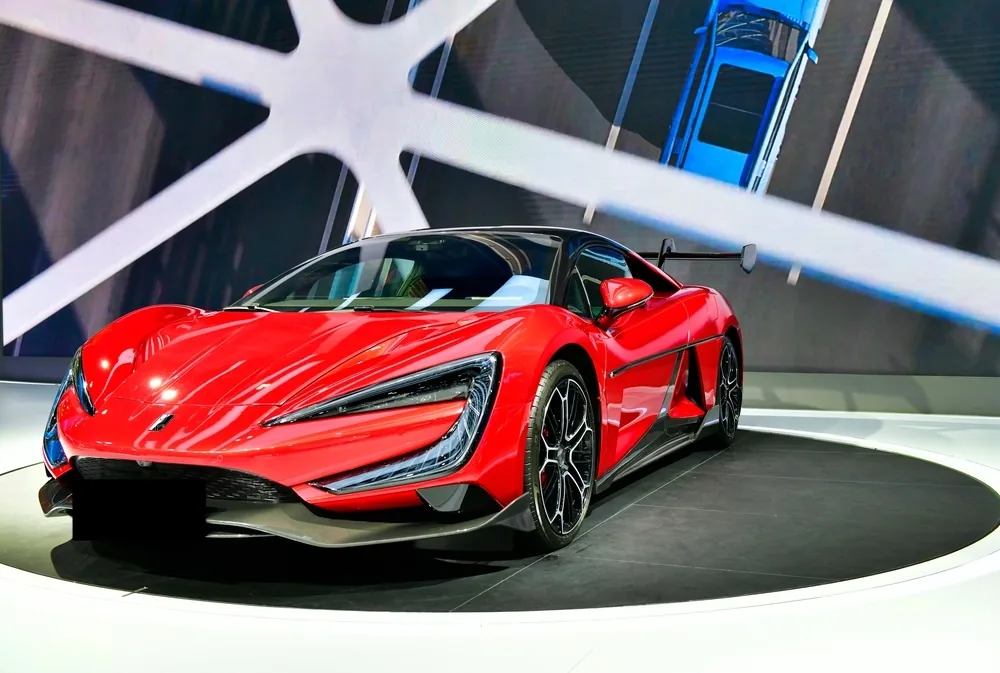
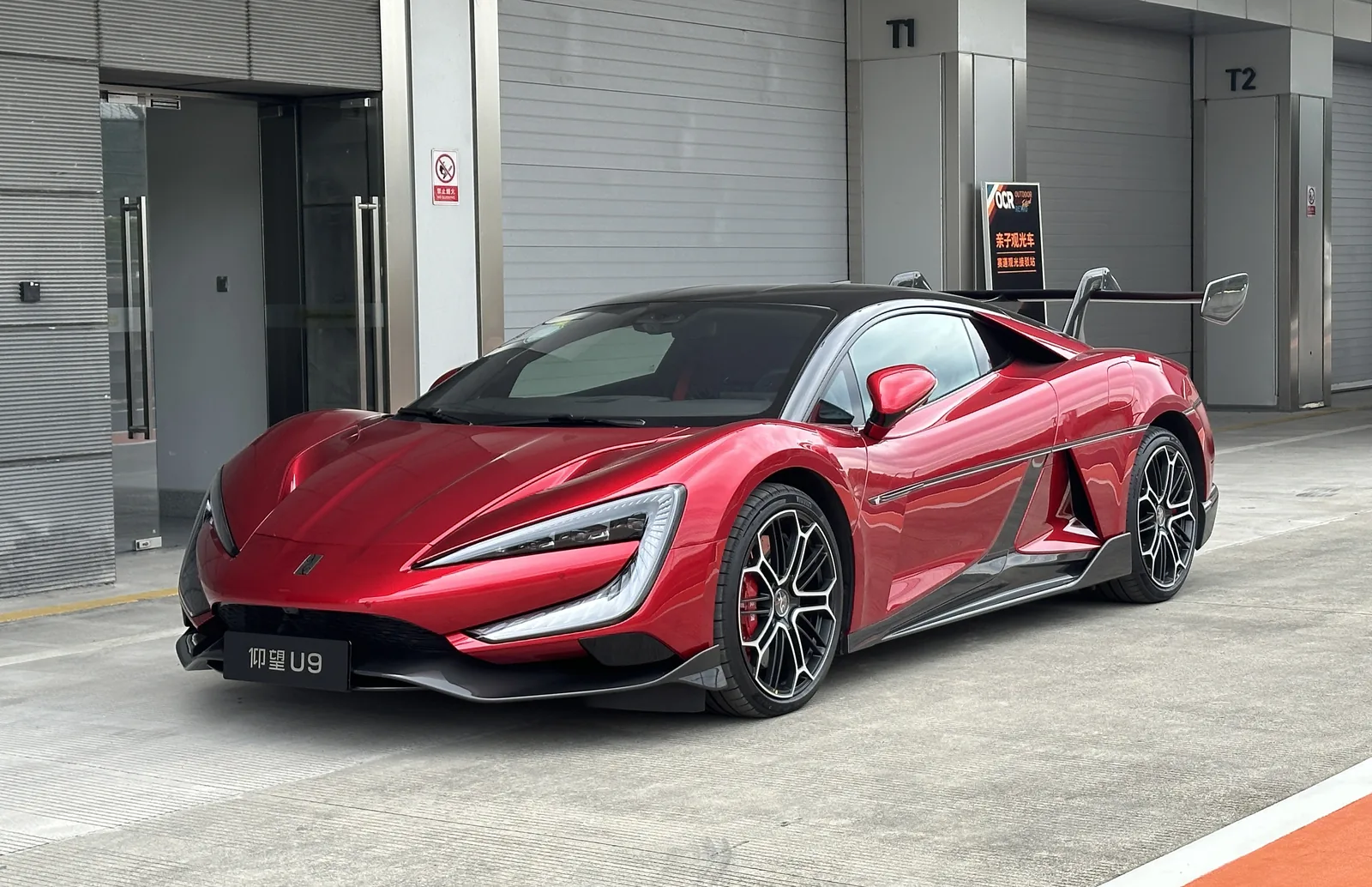
Headline performance figures position the standard U9 between Western flagship EVs and Chinese tech-driven hypercars. The vehicle uses a bespoke aluminium-and-carbon-fibre platform and rides on bespoke summer Pirelli P Zero tyres. Curb weight is approximately 2,475 kg, of which the battery and quad-motor drivetrain account for the majority. The body measures 4.97 m long, 2.03 m wide, 1.29 m high, with a 2.90 m wheelbase.
| Specification | Yangwang U9 (Standard) | Yangwang U9 Xtreme |
|---|---|---|
| Drivetrain | 4× PMSM electric motors | 4× TZ240XYA upgraded motors |
| Power per Motor | 240 kW (322 hp) | 555 kW each |
| Total Power | 960 kW (1,287 hp) | 2,220 kW (2,978 hp) |
| Total Torque | 1,680 Nm | ~2,800 Nm (estimated) |
| Max Motor Speed | 21,000 rpm | 30,000 rpm |
| Voltage Architecture | 800 V | 1,200 V (first in series production) |
| 0–100 km/h | 2.36 s | ~1.9 s (estimated) |
| Top Speed | 309.19 km/h | 496.22 km/h (world record) |
| ¼ Mile (0–402 m) | 9.78 s | N/A published |
| Battery | 80 kWh Blade LFP | 80 kWh Blade LFP |
| CLTC Range | 465 km | ~380–420 km (estimated) |
| Charging Peak | 500 kW (dual plug) | 500 kW (dual plug) |
| Curb Weight | ~2,475 kg | N/A published |
| Length / Width / Height | 4,966 / 2,029 / 1,295 mm | Same body |
| Wheelbase | 2,900 mm | 2,900 mm |
| Nürburgring Lap | 7:17.9 (Nov 2024, uncertified) | 6:59.157 (Aug 22, 2025) |
| Production / Price | ¥1,800,000 China (~€234k / ~$269k) · EU ~€300,000 incl. VAT est. · US ~$270k est. | 30 units globally · not publicly sold |
DiSus-X Intelligent Body Control — Active Suspension and the "Jumping" Function
The DiSus-X system replaces conventional shock absorbers with high-pressure hydraulic actuators at each corner. Each actuator can extend or compress through approximately 75 mm of travel and adjust force in milliseconds based on inputs from cameras, accelerometers and steering-rate sensors. In normal driving the system behaves as adaptive damping; when an obstacle is detected (a pothole, a speed bump), the actuators preload to absorb the impact before the wheel reaches it. The system also enables three demonstrated functions that are unusual for a production car:
- Three-wheel driving — the U9 can lift one wheel off the ground (for example, in the case of a tyre failure) and continue driving on the remaining three with active torque distribution.
- Body-attitude trim — pitch, roll and ride height can be set independently, allowing the car to lean into corners or pre-load the chassis on launches.
- Vertical jump — synchronized actuator extension launches the entire vehicle off the ground. BYD has demonstrated this function in promotional video and used it as a self-extraction routine in case of total tyre failure.
Yangwang U9 Xtreme — 2,978 HP, 496 km/h, Sub-7-Minute Nürburgring
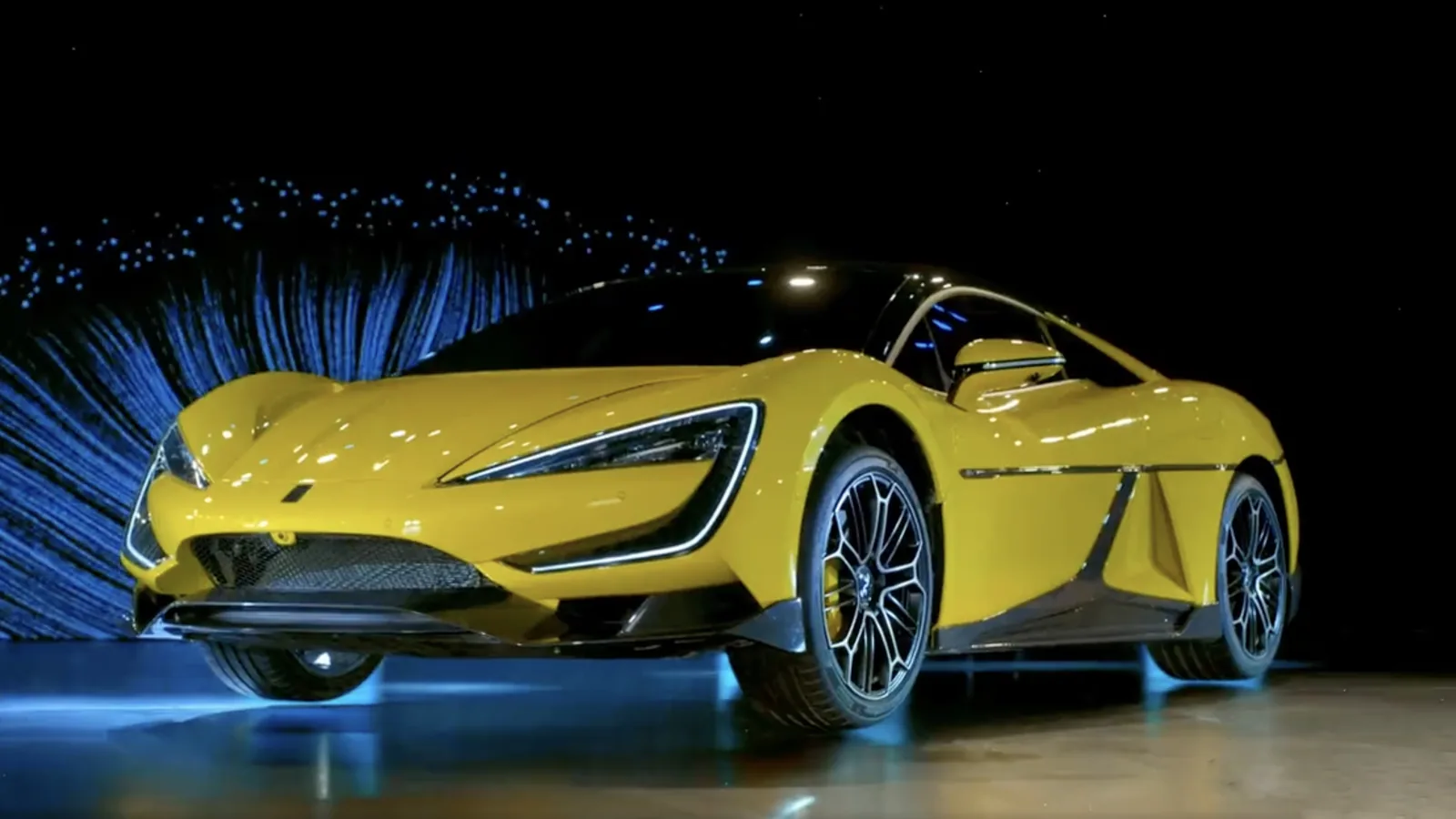
In September 2025, Yangwang officially unveiled the U9 Xtreme, a track-focused variant limited to 30 units globally. The Xtreme upgrades each motor to 555 kW (TZ240XYA specification) and adopts a 1,200-volt ultra-high-voltage architecture — the first such system in series production. Combined output is approximately 2,978 hp, with each motor rotating up to 30,000 rpm. Power-to-weight ratio is quoted at 1,200 hp per tonne.
On 14 September 2025, the U9 Xtreme reached 496.22 km/h at ATP Automotive Testing Papenburg, Germany, becoming the fastest road-legal production car in the world. The driver was German performance specialist Marc Basseng. Yangwang has stated that the run was tyre-limited; the GitiSport e·GTR² PRO semi-slicks fitted at Papenburg are rated to 500 km/h, and the car was reportedly still accelerating at the time of the recorded peak. The standard U9 Xtreme is electronically capped at 350 km/h for road use.
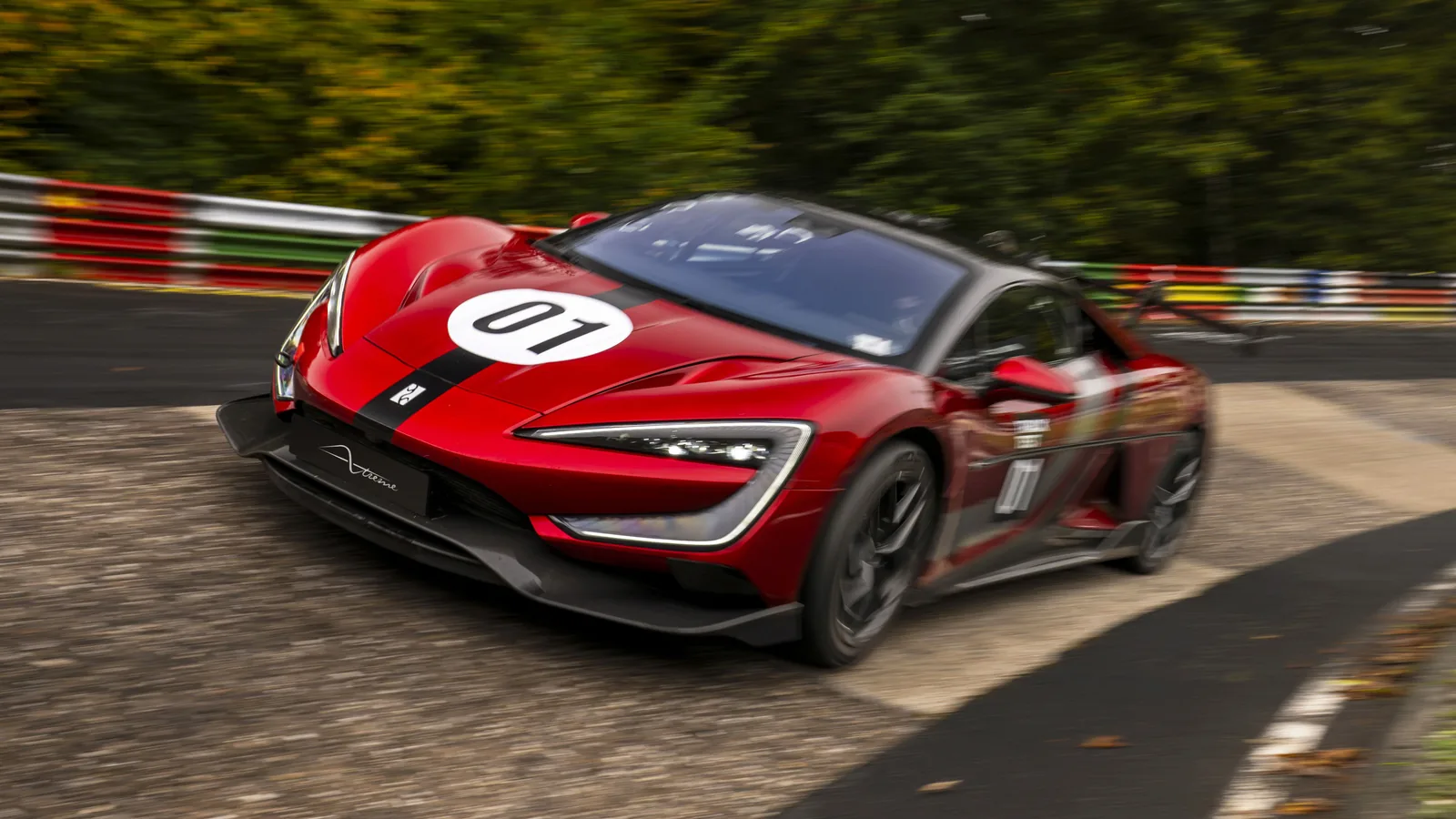
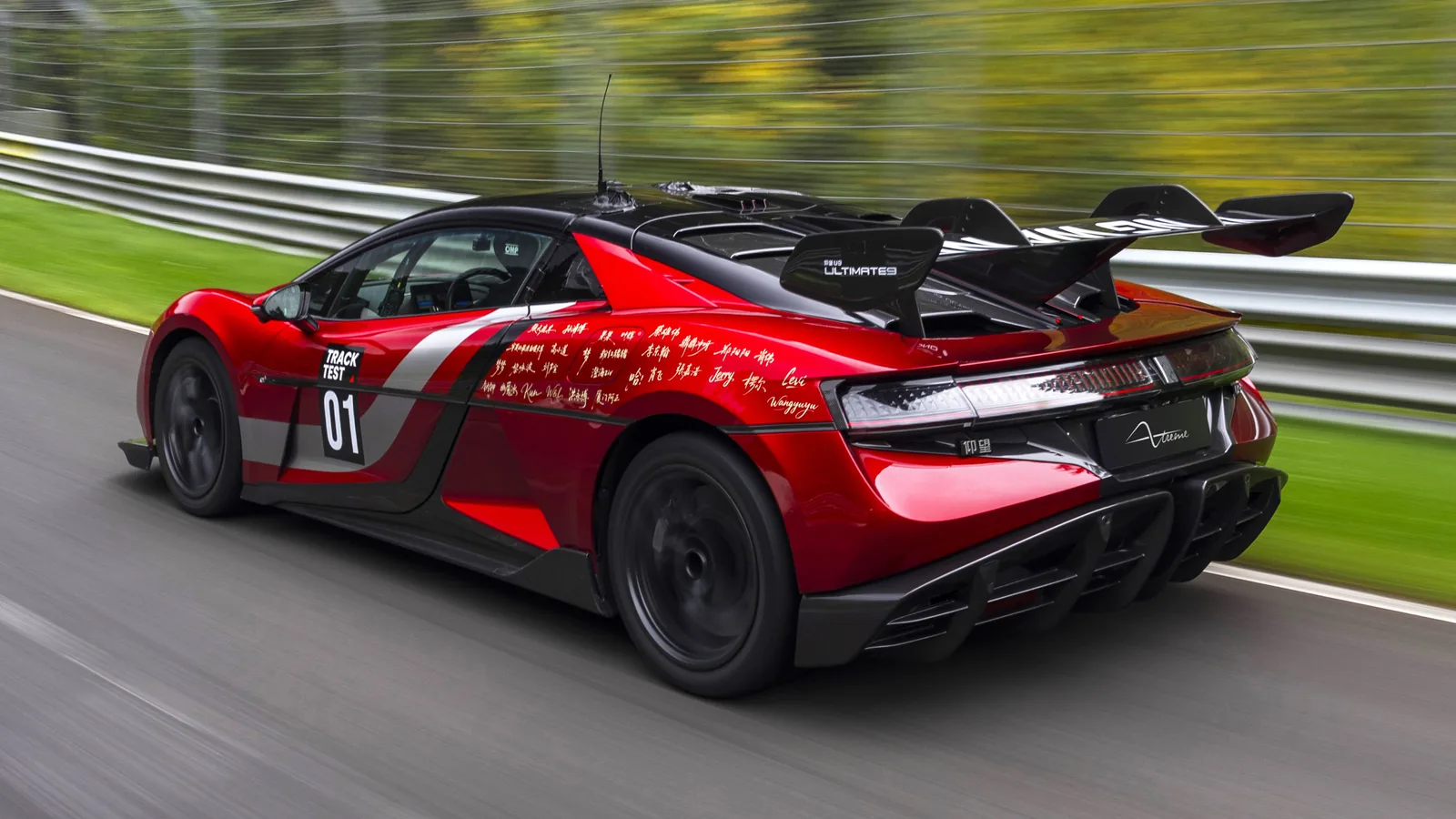
On 22 August 2025, the U9 Xtreme set a Nürburgring Nordschleife lap of 6 minutes, 59.157 seconds, becoming the first electric production car to break the seven-minute barrier and the fastest electric production car around the circuit. The driver was Moritz Kranz, a German GT specialist with approximately 10,000 Nordschleife laps. Track-specific hardware for the lap included a redesigned cooling system, a titanium-alloy carbon-ceramic braking system, and the GitiSport e·GTR² PRO semi-slicks co-developed with Giti.
Aerodynamics, Cabin and Interface
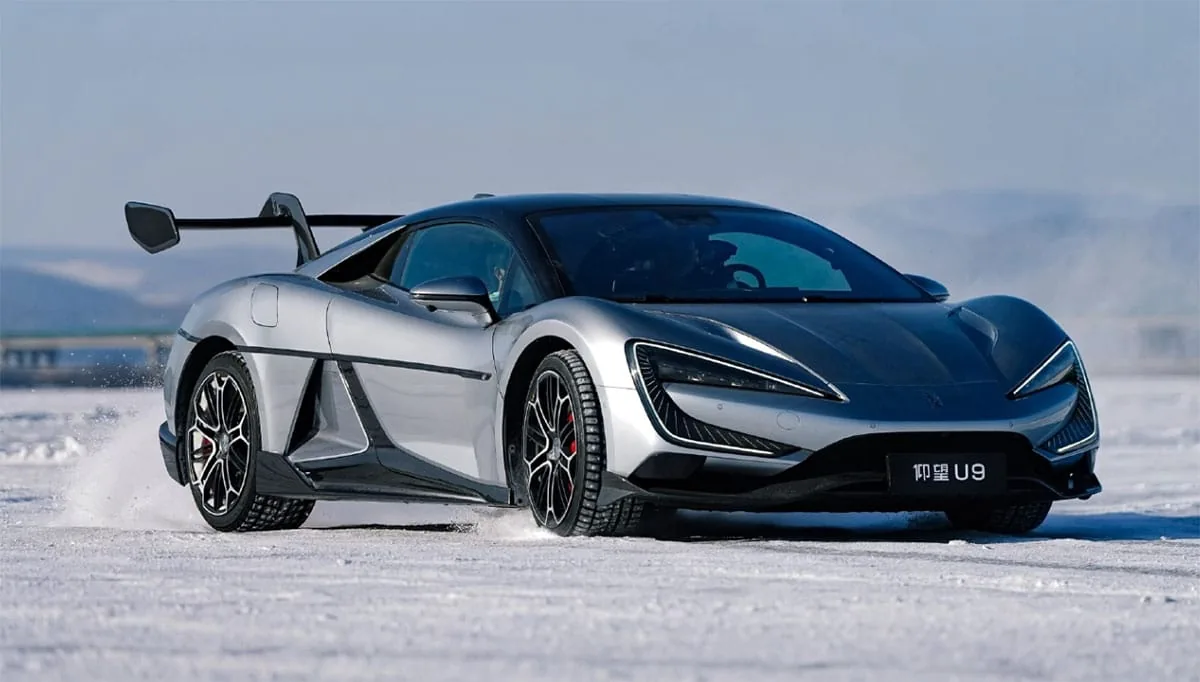
The U9 carries 12 active and passive aerodynamic elements, including a fixed rear wing, an active rear flap, an underbody diffuser, and movable front-axle vanes. The drag coefficient is not officially published. Doors are electrically actuated wing/dihedral type — they pivot upward and forward. Inside, two 14-way electrically adjustable bucket seats face a digital instrument cluster and central touchscreen running BYD's DiLink 150 platform on a custom 4 nm 5G chip. The factory-fitted audio is Dynaudio Evidence. A dedicated track-driving mode includes telemetry overlays for nearly 30 Chinese racetracks pre-loaded into the navigation system.
Market Position and Production Status
The standard Yangwang U9 launched in China in February 2024 at ¥1,680,000. Yangwang raised the official list to ¥1,800,000 in October 2025 — approximately €234,000 / $269,000 at September 2026 FX. Europe and the United States are not on sale. Batman Garage estimates a European landed figure of approximately €300,000 including VAT, and a US figure of approximately $270,000 at China FX. Neither figure is an official MSRP. Customer deliveries began in summer 2024. As of January 2025, BYD reported the 100-unit delivery milestone for the U9. The car competes in the EV hypercar segment, with direct competitors including the Rimac Nevera (1,914 hp), the Tesla Model S Plaid (1,020 hp), and the Lucid Air Sapphire (1,234 hp). At its China list, the U9 undercuts the Nevera by a wide margin.
The U9 Xtreme is a separate, limited-production record car and is not offered for public retail sale. Yangwang has confirmed 30 units globally and indicated any allocation price would be a multiple of the standard U9 — independent estimates place it in the USD 500,000 to 700,000 range. The Xtreme has been used as a development platform for BYD's 1,200-volt ultra-high-voltage architecture, which is expected to migrate into other Yangwang and BYD performance models in subsequent generations.
Engineering Significance
The Yangwang U9 represents the first time a Chinese manufacturer has fielded a production halo car capable of competing on technical metrics — peak power, lap time, top speed — with the established European hypercar makers. The technologies it introduces (the e⁴ quad-motor platform, DiSus-X active hydraulic suspension, 1,200-volt architecture in the Xtreme, sub-seven-minute electric Nordschleife lap) are platform-level capabilities that are expected to flow into BYD's broader product portfolio over the following model generations. The U9 is, in that sense, a development vehicle as much as a finished product.
Sources
- Yangwang — Official U9 page (¥1,800,000 list)
- CnEVPost — Yangwang U9 list raised to RMB 1.8 million (October 2025)
- BYD — Yangwang U9 Launch Press Release (February 2024, ¥1,680,000)
- BYD — U9 Xtreme Nürburgring Record (October 2025)
- Yangwang U9 — Wikipedia
- InsideEVs — U9 Quad-Motor Specs and Comparison
- Electrek — Yangwang U9 Launch Coverage
- Top Gear — U9 Xtreme Nordschleife Record
- Auto.cz — U9 Press Drive Report (Zhengzhou test circuit)