ASTON MARTIN VALEN PRICE
~US$2,000,000 (~£1.5M before options) · all 150 units pre-sold · deliveries from Q2 2027
Aston Martin revealed the Valen at The Quail, A Motorsports Gathering on August 14, 2026, positioning the front-engined coupe as the most powerful front-engined production car ever built. The 5.2-litre twin-turbocharged V12 delivers 838 hp (850 PS) and 738 lb-ft (1,000 Nm) of torque without any hybrid assistance, propelling the coupe from 0–60 mph in 3.0 seconds to an electronically limited 214 mph (344 km/h). Production is capped at 150 units worldwide, all pre-sold ahead of the Monterey Car Week debut.
The Valen is the third car in Aston Martin's bespoke front-engined V12 series, following the Valour manual coupe and the Valiant track-focused special. The name derives from the Latin word for “strong”. Development is a joint effort between Q by Aston Martin and Aston Martin’s new Special Vehicle Operations (SVO) department, with the coupe pricing from approximately $2 million (£1.5 million before options).
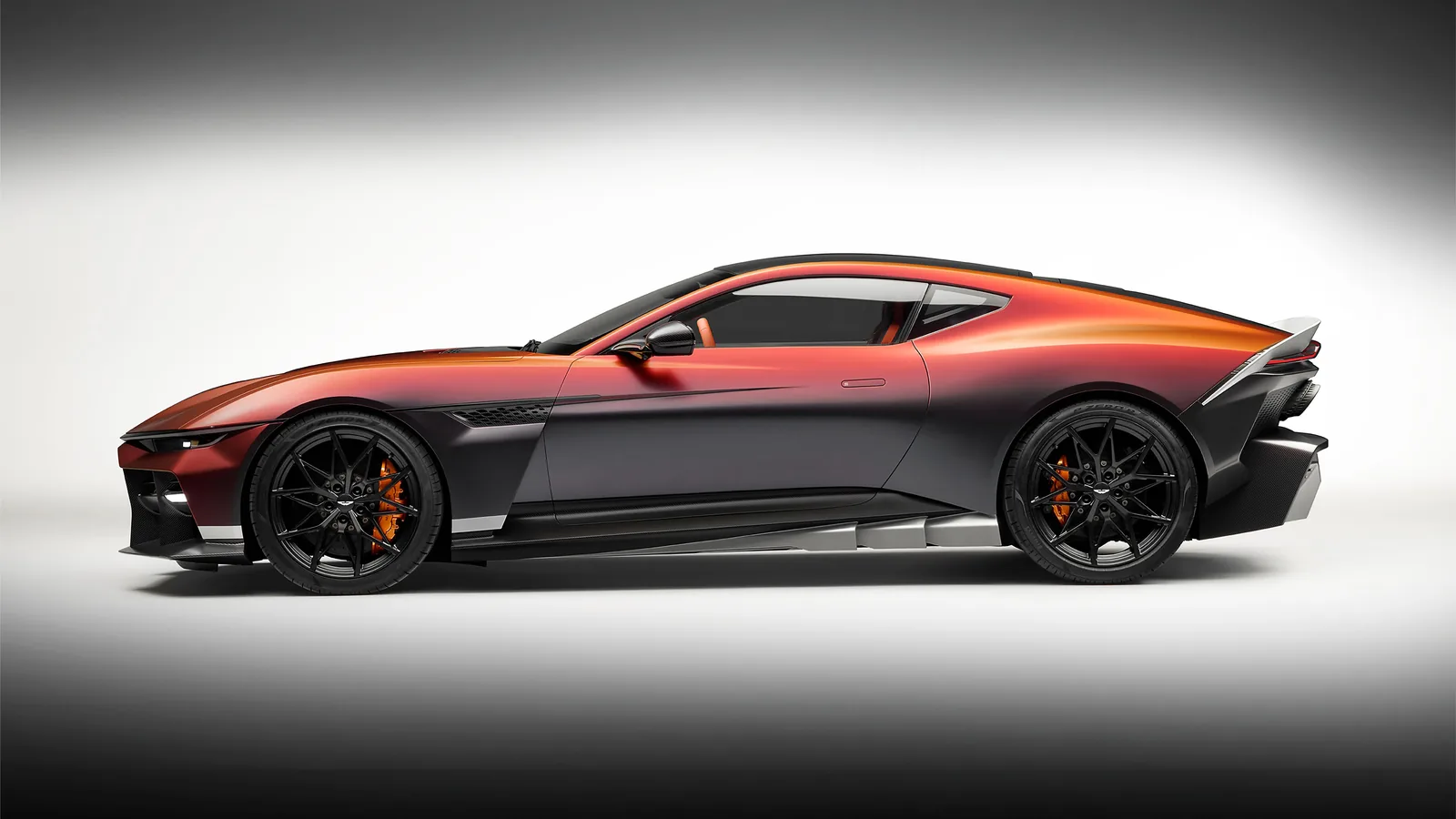
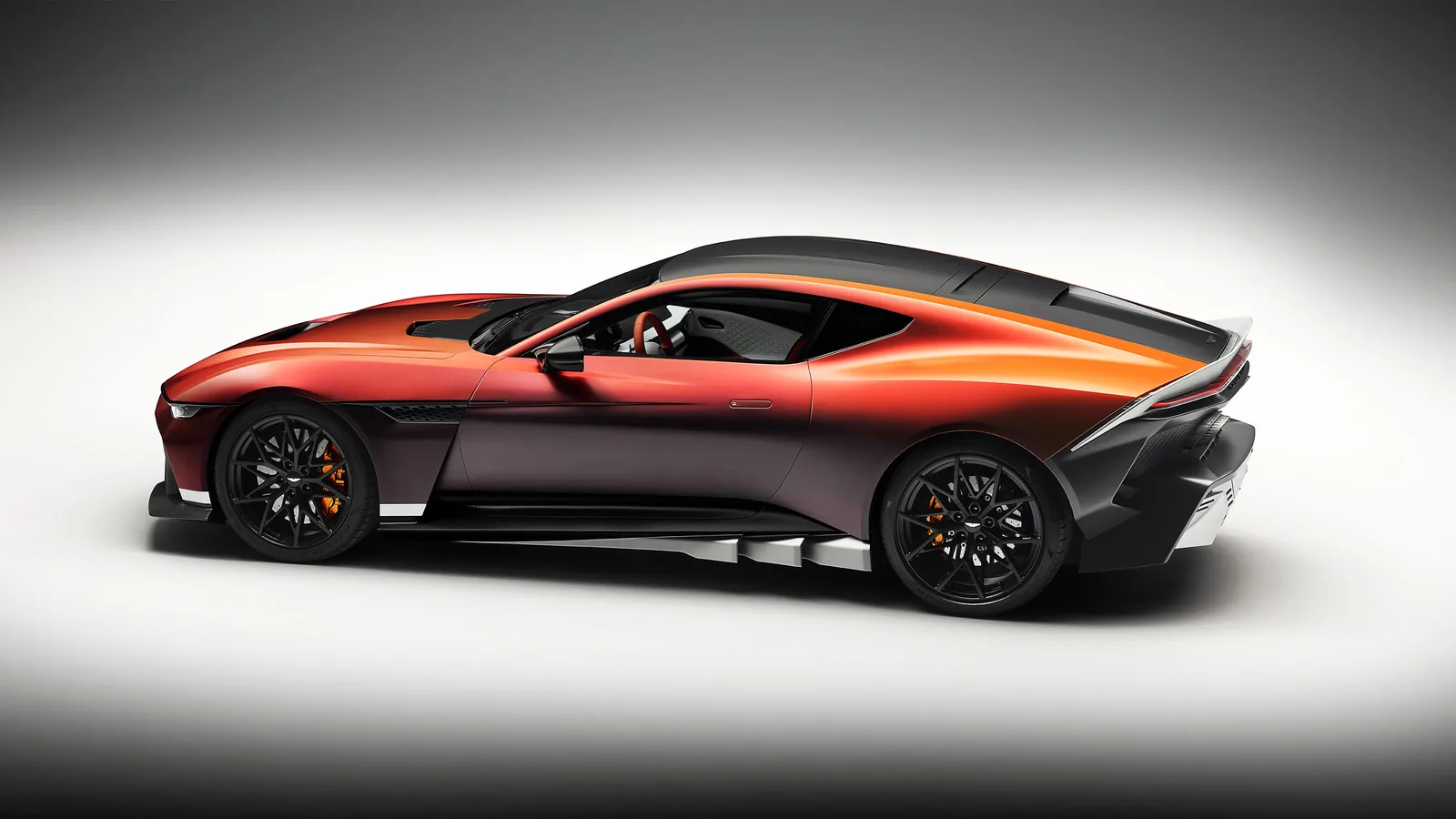
Aston Martin Valen Confirmed Specifications
Every figure below is confirmed by Aston Martin in the August 14, 2026 press materials or by tier-one launch coverage published on the same day.
| Parameter | Aston Martin Valen (2028) |
|---|---|
| Engine | 5.2 L twin-turbocharged V12, non-hybrid |
| Peak power | 838 hp / 850 PS / 625 kW |
| Peak torque | 738 lb-ft (1,000 Nm) from 2,500 rpm to 5,000 rpm |
| Transmission | 8-speed ZF automatic transaxle |
| Drivetrain | Rear-wheel drive with electronic limited-slip differential |
| 0–60 mph | 3.0 s |
| 0–62 mph (0–100 km/h) | 3.1 s |
| Top speed | 214 mph (344 km/h), electronically limited |
| Weight reduction vs V12 platform | -110 kg (up to -243 lb with lightweight pack) |
| Estimated curb weight | ~1,666 kg (~3,675 lb) with fluids |
| Weight distribution | 53 : 47 (front : rear) |
| Body | Full carbon-fibre panels over aluminium structure |
| Wheels (standard) | 21-inch magnesium, forged |
| Tyres | Pirelli P Zero R, 275/35 ZR21 front, 325/30 ZR21 rear |
| Brakes | Carbon-ceramic, 410 mm front / 360 mm rear (Ansa) |
| Dampers | Bilstein DTX semi-active |
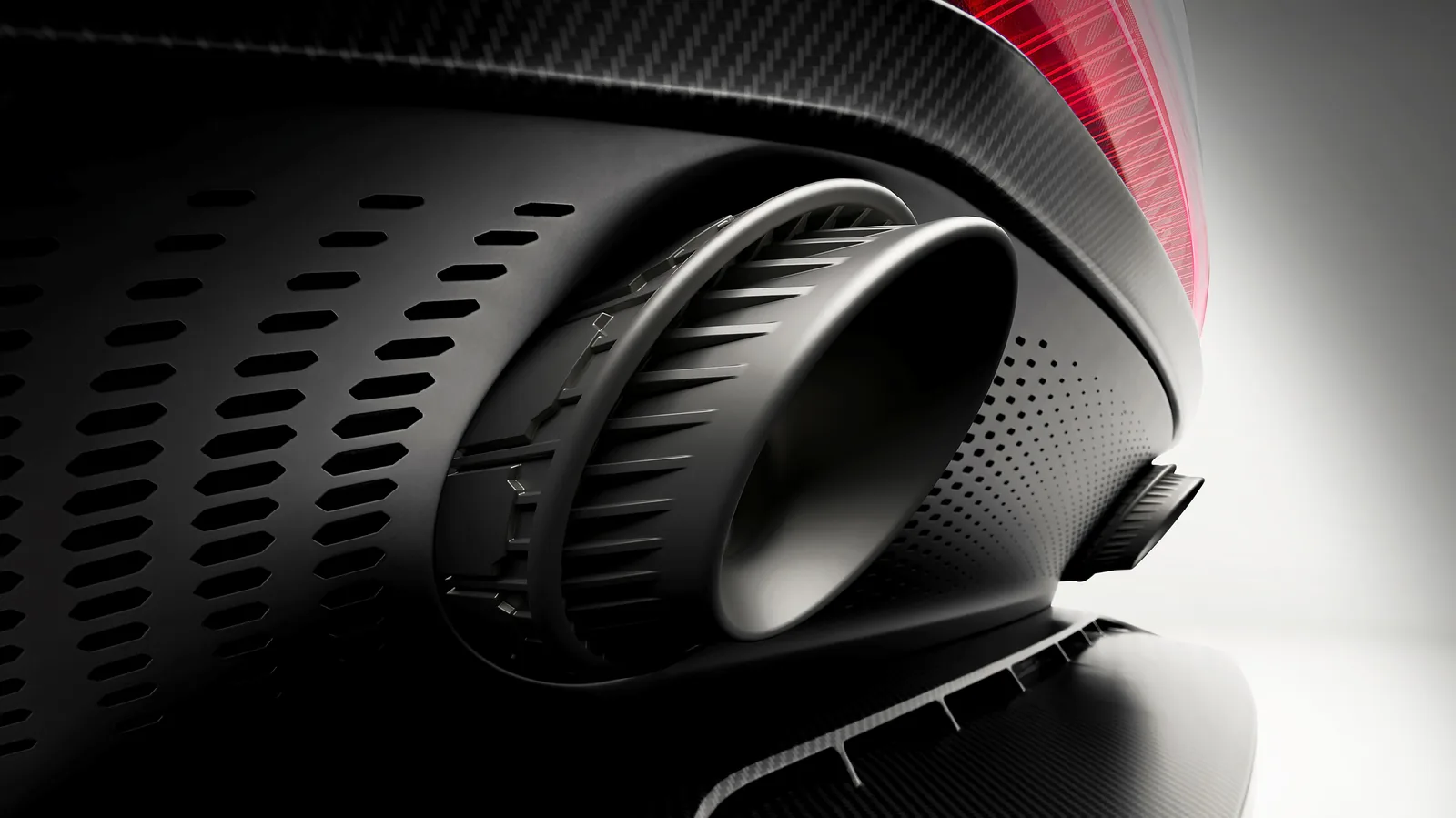
| Exhaust | Titanium quad-tip, 3D-printed tailpipes, 50% louder than Vanquish |
| Drive modes | Wet, Sport, Sport+, Track, Individual |
| Boot capacity | 170 litres |
| Production run | 150 units worldwide, all pre-sold |
| Starting price | ~US$2,000,000 (£1.5 million before options) |
| First deliveries | Q2 2027 (2028 model year) |
V12 Powertrain: The Most Powerful Non-Hybrid Front-Engine V12 in Production
The Valen keeps the same 5.2-litre twin-turbocharged V12 that Aston Martin uses across the Vanquish, Valour and Valiant, but pushes output further than any of those cars. Combustion output climbs to 838 hp (850 PS) — 14 hp more than the current Vanquish and 104 hp more than the Valiant — and torque holds at a flat 1,000 Nm plateau from 2,500 rpm all the way to 5,000 rpm.
Crucially, no hybrid assistance is fitted. Every horsepower comes from the internal-combustion engine alone. That positions the Valen as the most powerful front-engined non-hybrid production car in the world at launch, and the most powerful V12 Aston Martin has ever put on sale in a road-going front-engined coupe.
The engine is paired to an 8-speed ZF rear-transaxle automatic gearbox, running Vantage GT4 shift strategies for faster gear changes. Drive is exclusively to the rear wheels through an electronic limited-slip differential, and a carbon-fibre prop shaft carries torque from front-mounted engine to rear-mounted gearbox. Aston Martin quotes a 53:47 front-to-rear weight distribution.
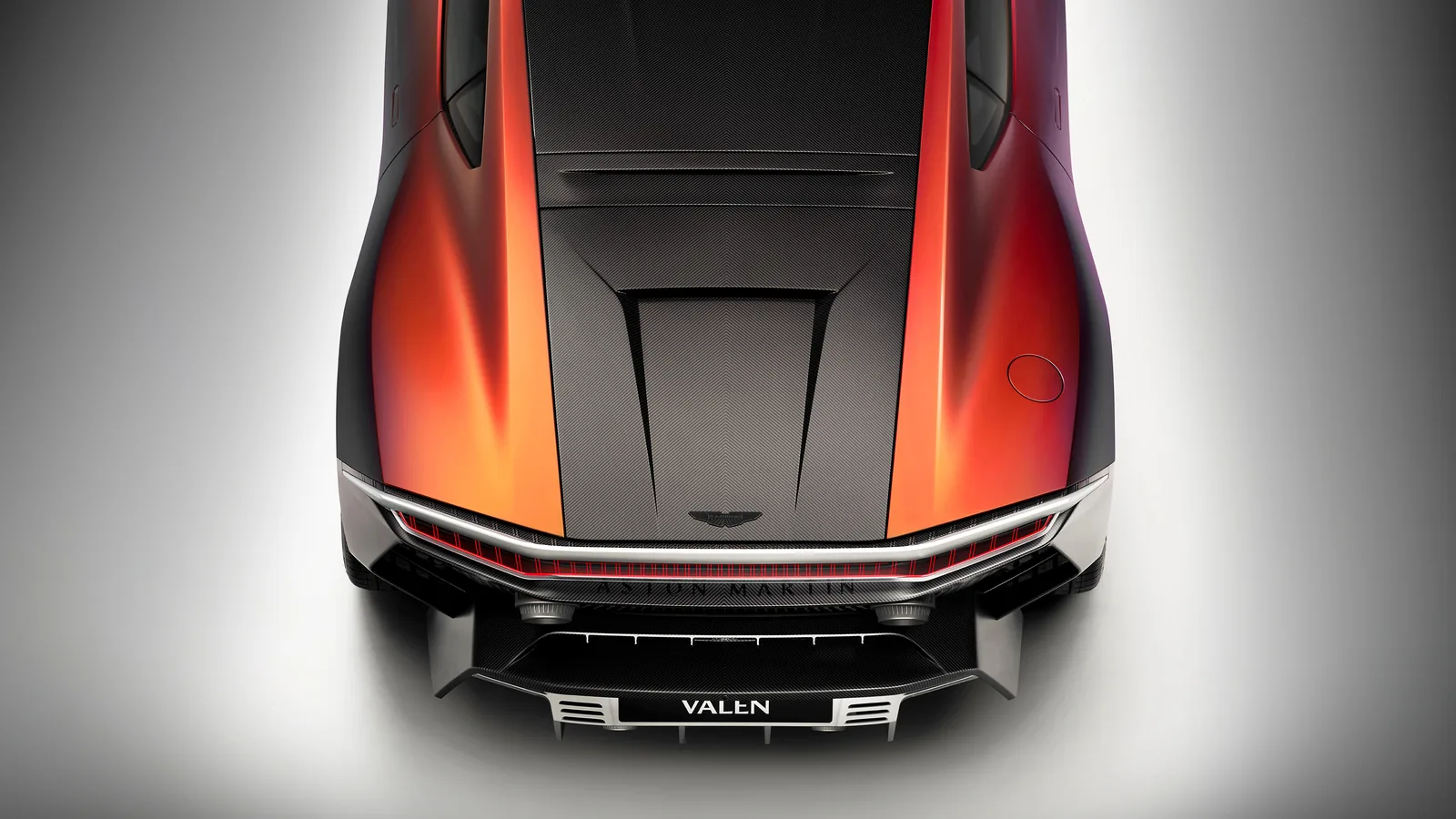
Aerodynamics: No Rear Window, Camera-Only Rear View
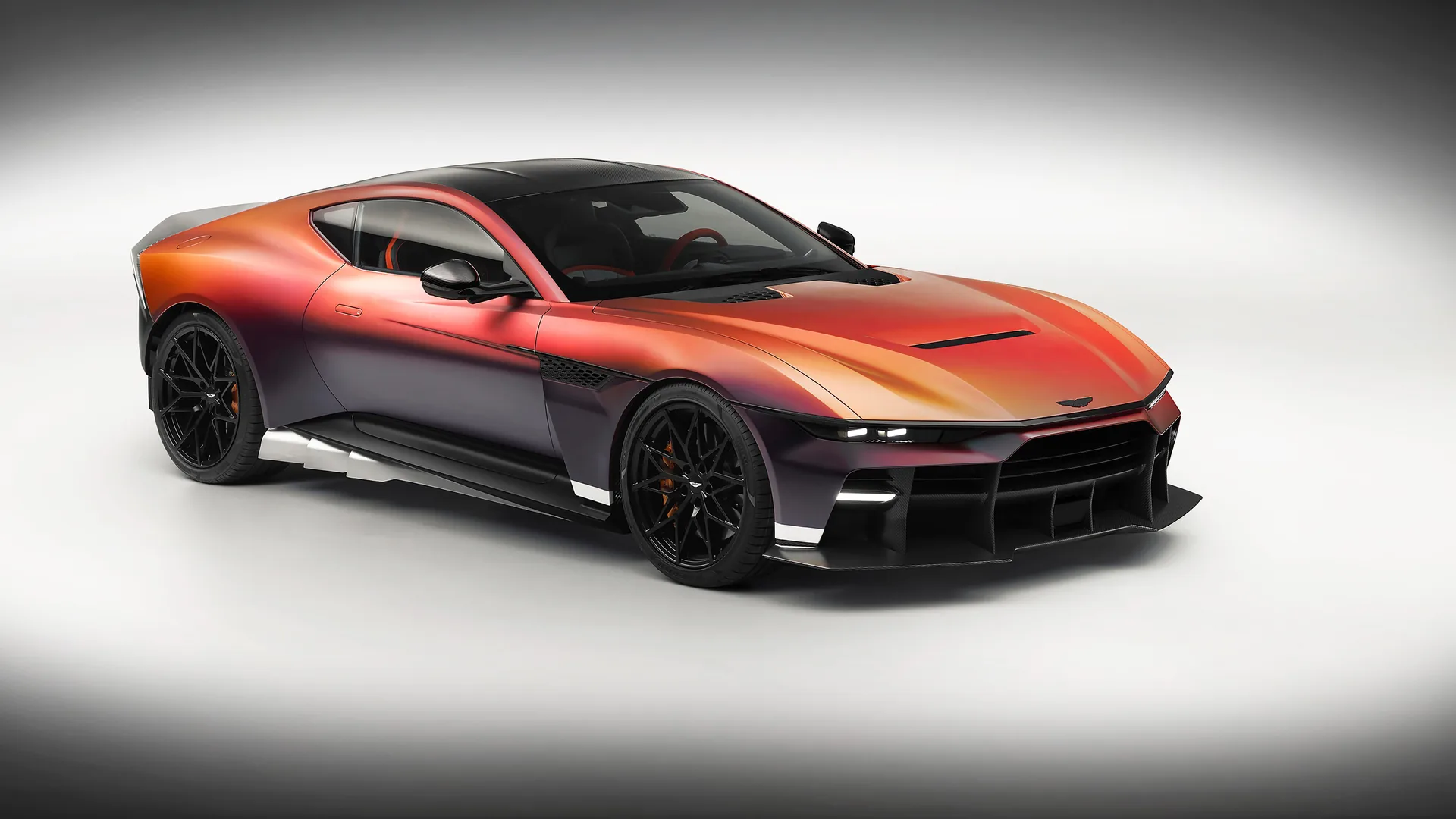
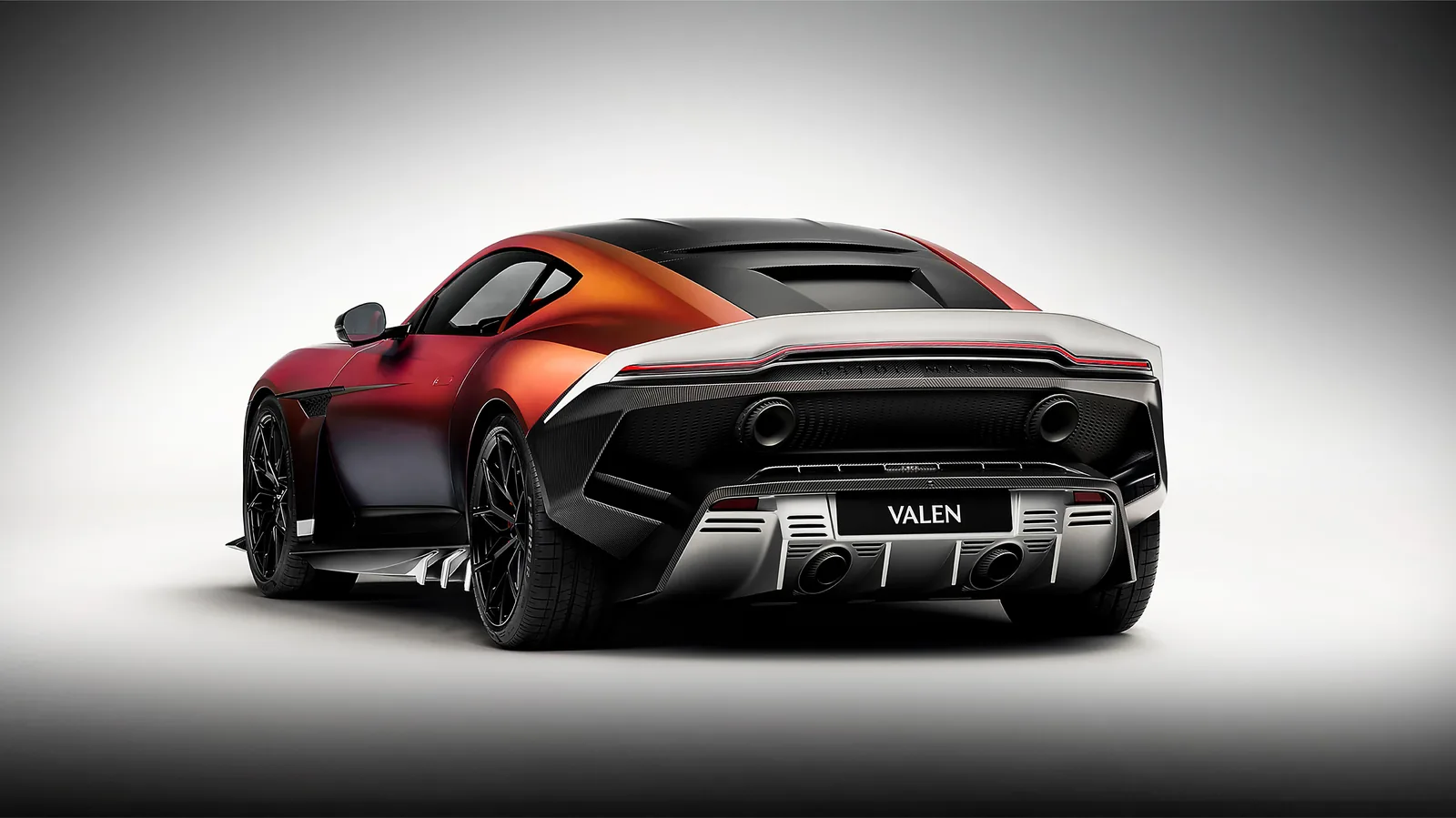
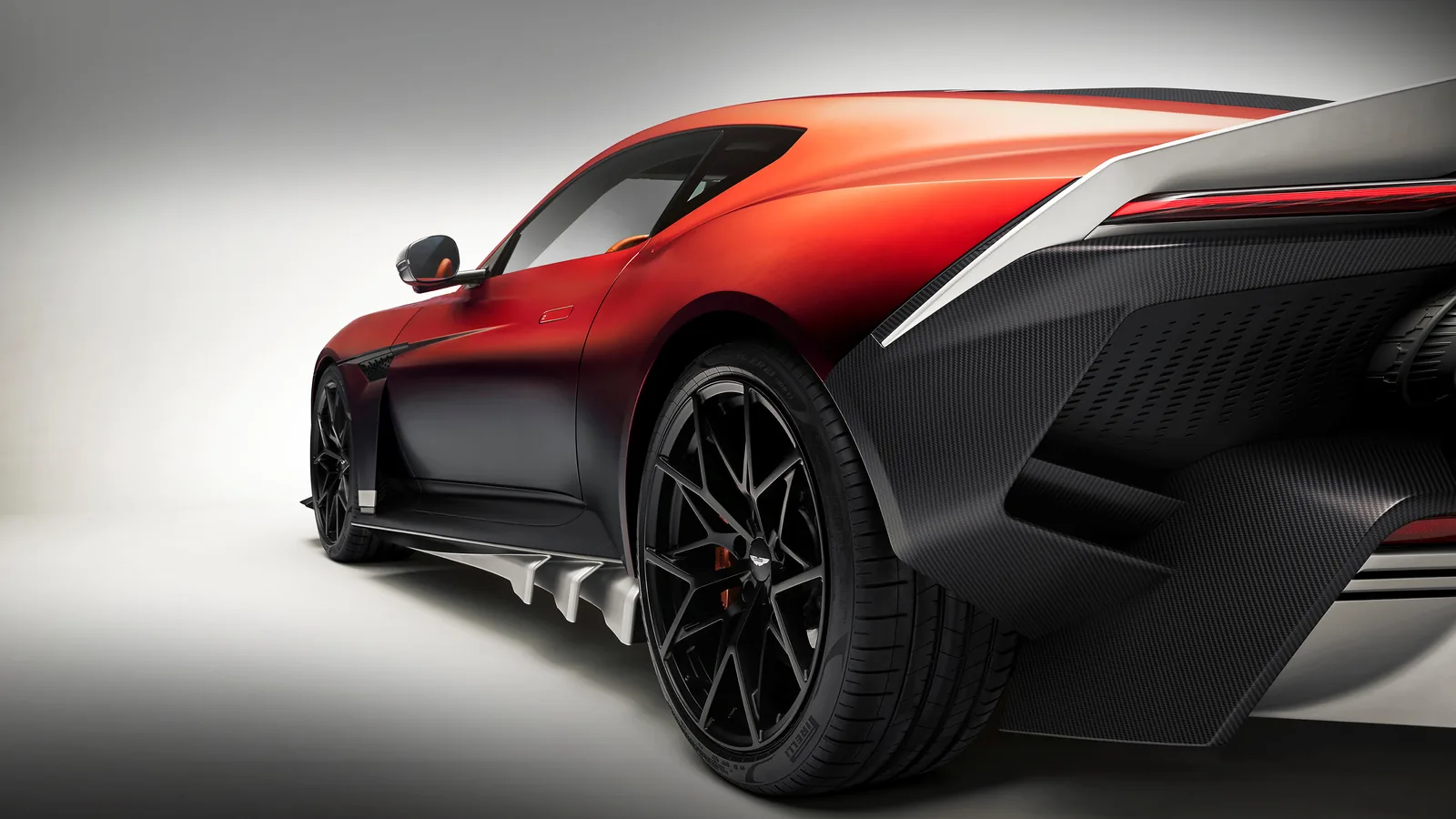
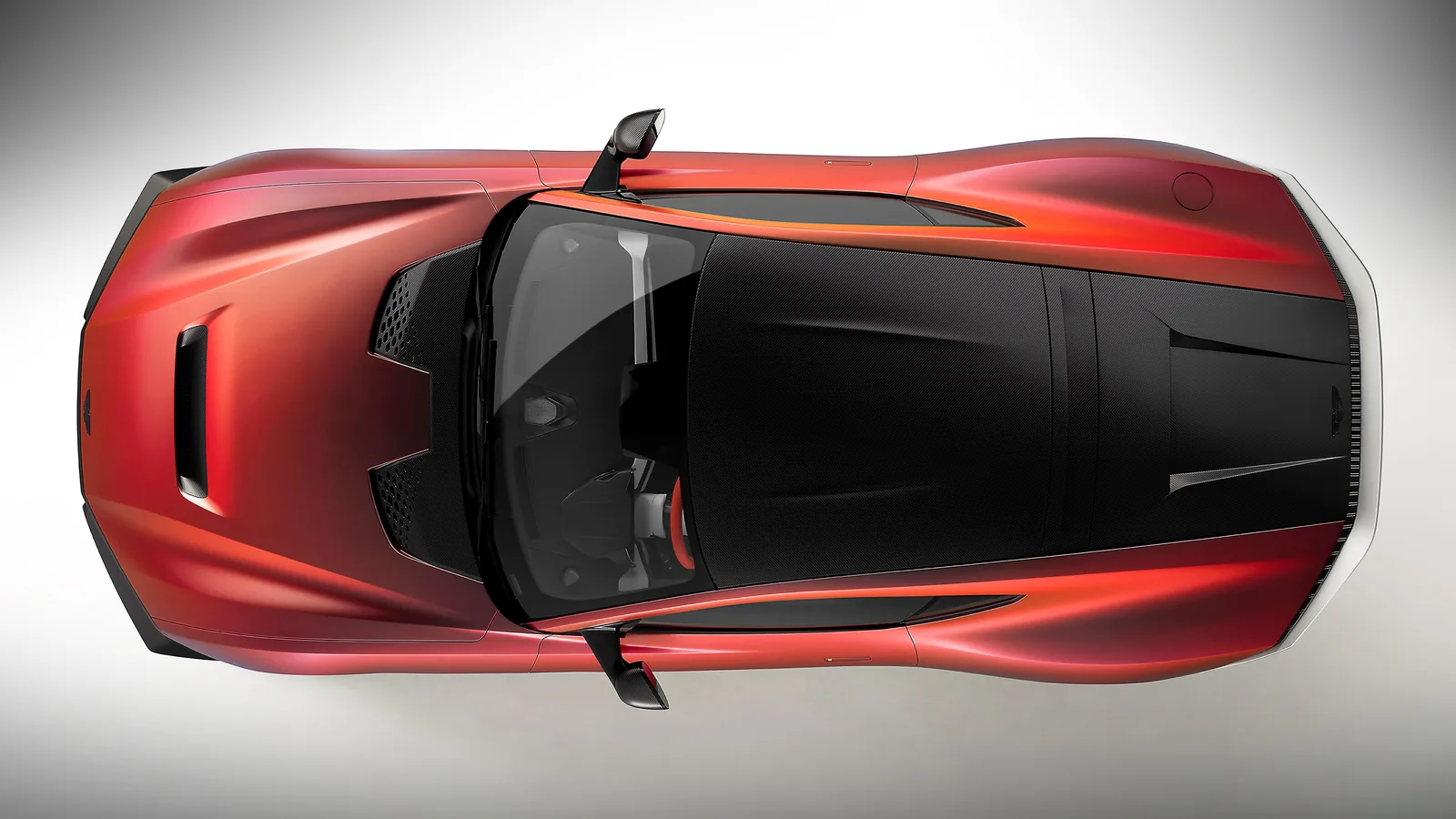
The Valen’s most striking styling signature is the complete deletion of the rear window. In its place, a pair of aerodynamic buttresses run from the roofline to the tail, and rear visibility is handled by an integrated camera and cockpit display. The move frees Aston Martin’s Q design team to shape the roof and rear deck as one continuous aerodynamic surface, and adds structural rigidity to the passenger cell.
Under the skin, the Valen runs a solid-mounted rear subframe (rather than the isolated mount used on the standard Vanquish platform) and model-specific springs with helper springs at the rear. Semi-active Bilstein DTX dampers are fitted at all four corners. Aston Martin quotes a 110 kg weight saving over the core V12 platform, with an optional lightweight pack that trims a further 16.9 kg. The company has not disclosed an official kerb weight, but external sources place the figure close to 1,666 kg (3,675 lb) with fluids.
Braking, Wheels and Tyres
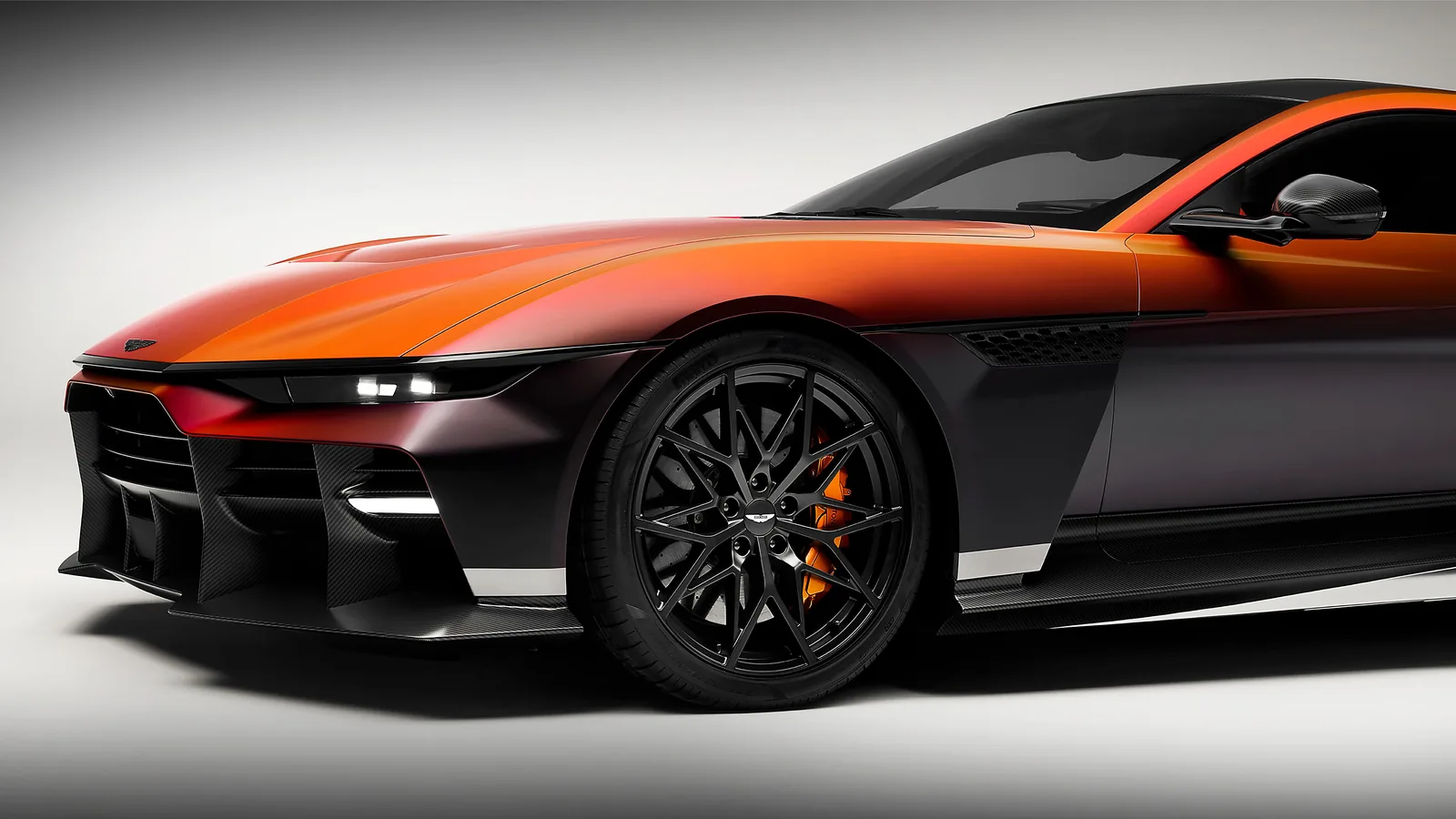
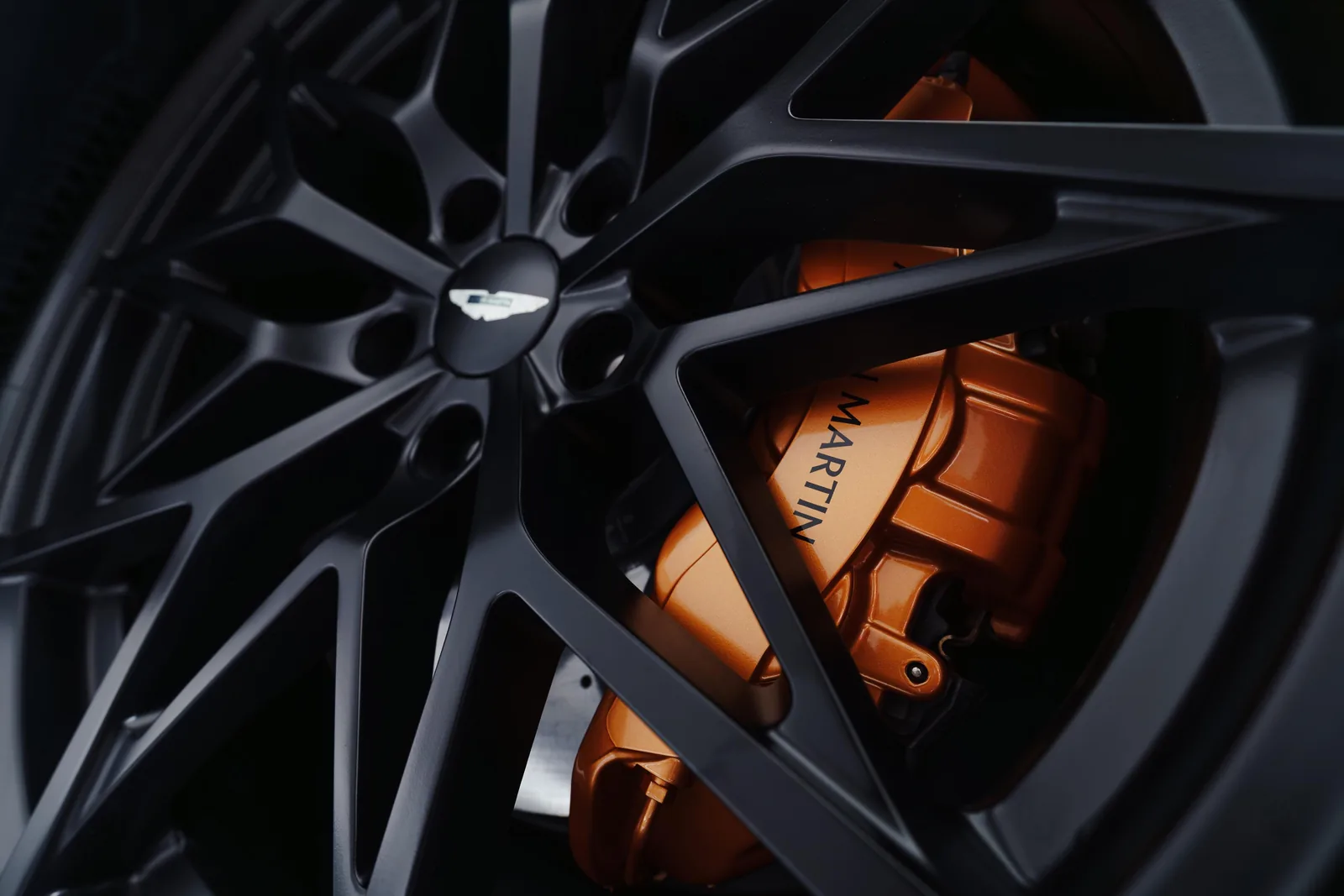
Carbon-ceramic discs are fitted at every corner: 410 mm front and 360 mm rear according to launch specifications reported by Ansa. Wheels are 21-inch forged magnesium as standard, saving unsprung mass compared to conventional forged aluminium. Tyres are Pirelli P Zero R in 275/35 ZR21 up front and 325/30 ZR21 at the rear, with an optional Pirelli P Zero Winter 2 fitment for cold-climate customers.
The suspension geometry, damper valving and rear-subframe mounting have all been reworked from the Vanquish baseline. That, combined with the deleted rear window and the fixed integrated wing, delivers a chassis feel Aston Martin describes as “the most connected front-engine road car we have ever built”.
Interior: Q Ultra Materials and 3D-Printed Vents
The cabin is executed by Q by Aston Martin as a single custom commission for each of the 150 owners. Standard fitment is a pair of Sports Plus seats trimmed in semi-aniline leather with Alcantara inserts; buyers can option carbon-fibre Performance seats for the fixed-hip driving position preferred on track. Five interior split configurations are offered: Monotone, Duotone, Light Duotone, Tritone and Driver Focused.
The dashboard follows the current Aston Martin family design language but adds 3D-printed climate vents as a Valen signature. Switchgear is a minimalist mix of machined aluminium and Alcantara. Boot capacity is quoted at 170 litres, and Aston Martin offers a bespoke luggage set matched to the cabin trim.
Design: The Deleted Rear Window and Andromeda Red Paint
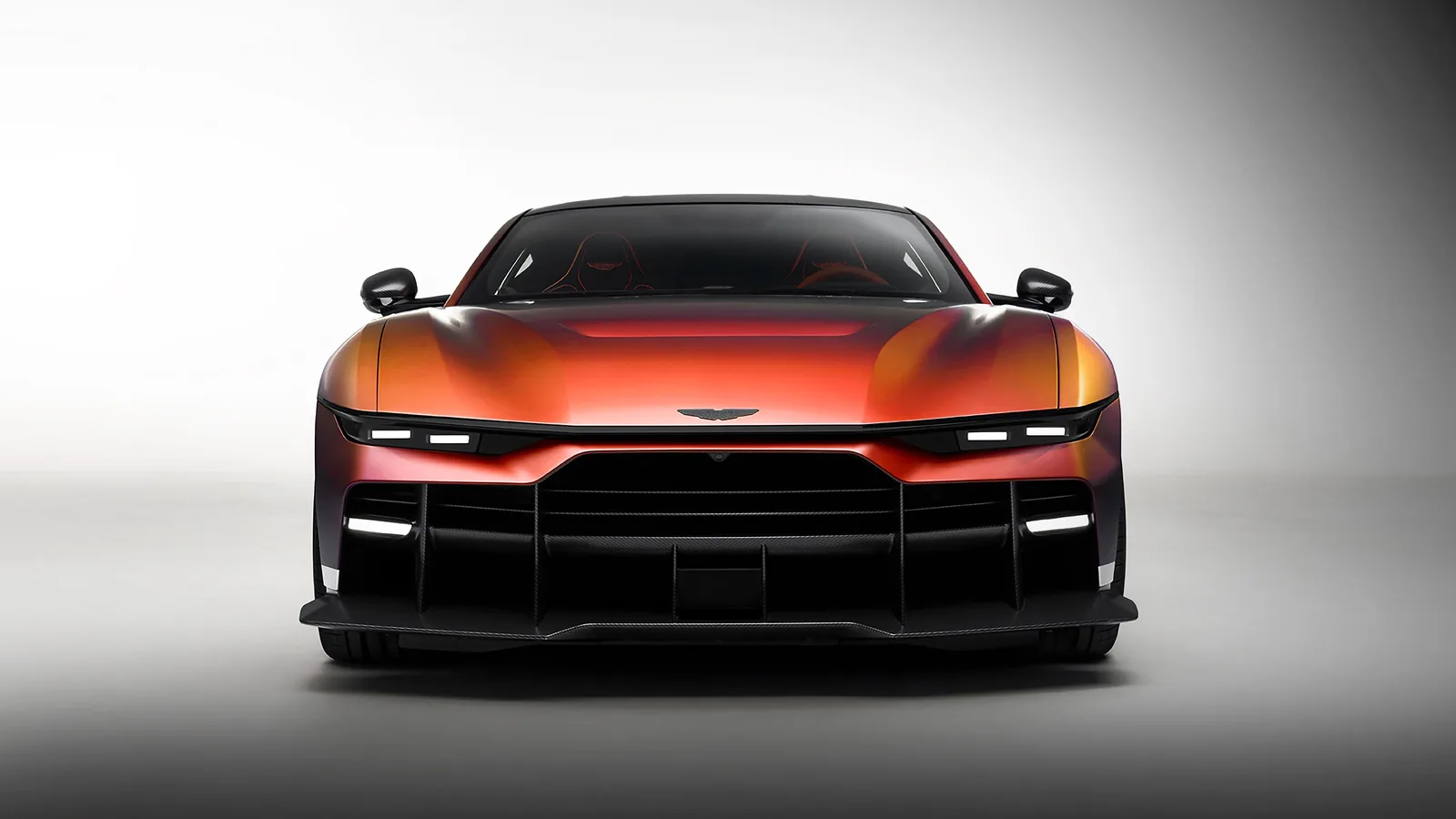
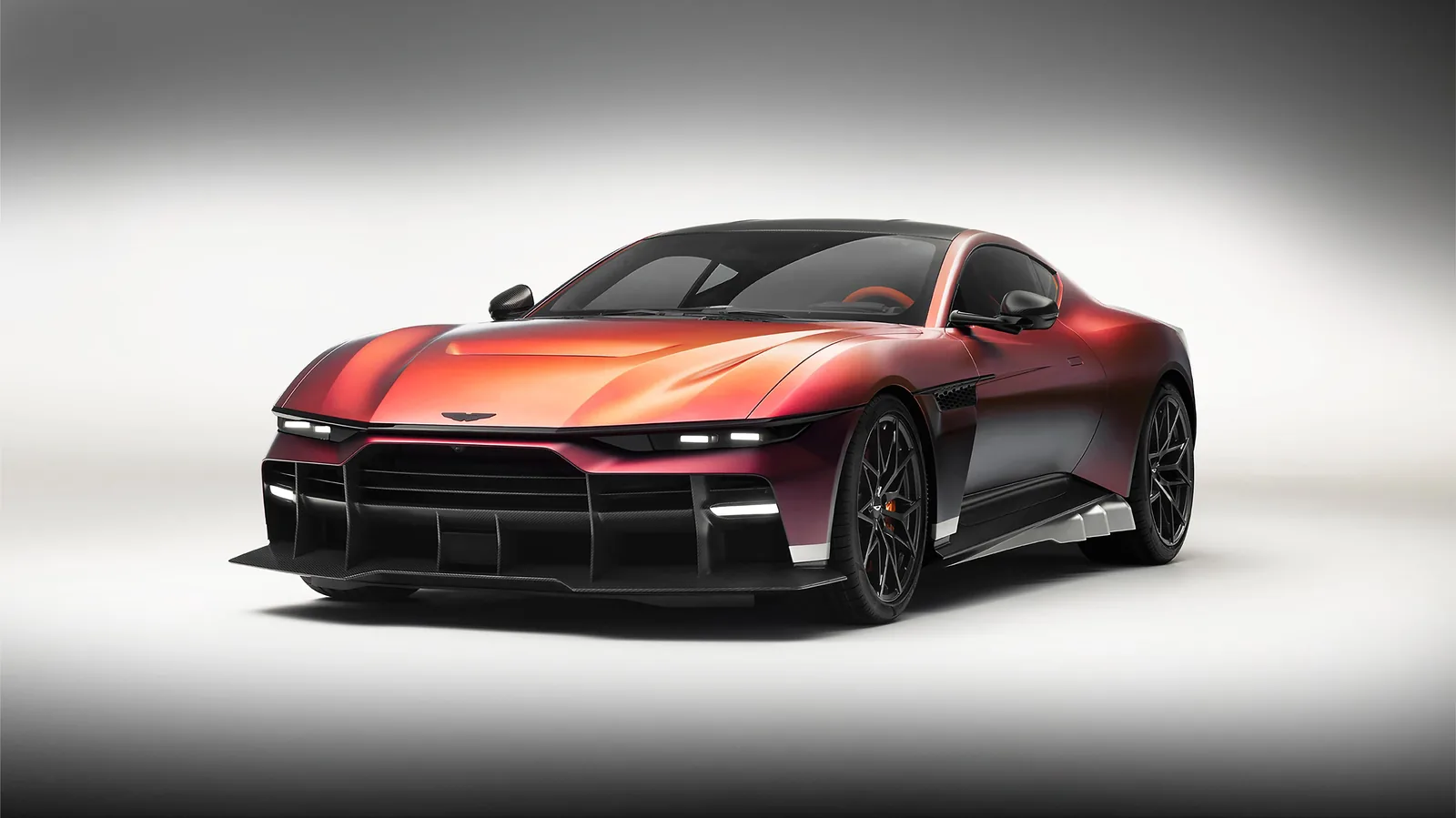
The Valen’s show car finish is Satin Andromeda Red, a colour-shifting paint developed inside Q’s Ultra programme specifically for this model. The finish moves through scarlet, burgundy, copper and gold under different lighting angles. On the aerodynamic side, the Valen inherits Aston Martin’s current front-lamp signature but adds a full-width lower carbon splitter and lower front intakes shaped by CFD.
Adrian Hallmark, Aston Martin’s CEO, summarised the car at the debut: “The dramatic design is backed up by equally dramatic performance.” Q by Aston Martin and the new SVO department will handle each build as a personal commission, with a bespoke Q Ultra colour, trim and hardware specification available for every buyer.
Price, Production and Deliveries
Aston Martin has confirmed a production run of exactly 150 units worldwide, every one already spoken for ahead of the public reveal. The starting price is quoted at approximately US$2 million (equivalent to £1.5 million before Q Ultra options; some sources cite a lower entry point close to US$1.7 million from Robb Report). The final list price is expected to climb toward £2 million with bespoke options fitted.
First customer deliveries are scheduled for Q2 2027, with the coupe carrying a 2028 model-year designation. Every Valen will be right-hand-drive or left-hand-drive to order, and each build passes through Q by Aston Martin’s bespoke commissioning process alongside Aston Martin’s new SVO department.
Valen vs Vanquish: What Changes
The Valen shares its 5.2-litre twin-turbocharged V12 and its 8-speed ZF rear-transaxle gearbox with the current Vanquish, but adds fresh calibrations, a fixed rear wing setup, lighter body panels and a solid-mounted rear subframe. Every headline dimension moves in the direction of extra performance.
| Attribute | Aston Martin Vanquish (2026) | Aston Martin Valen (2028) |
|---|---|---|
| Peak power | 824 hp @ 6,500 rpm | 838 hp / 850 PS |
| Peak torque | 738 lb-ft (1,000 Nm) | 738 lb-ft (1,000 Nm) held 2,500–5,000 rpm |
| Transmission | 8-speed ZF automatic transaxle | 8-speed ZF automatic transaxle (GT4 strategy) |
| 0–62 mph | 3.3 s | 3.1 s |
| Top speed | 214 mph | 214 mph (electronically limited) |
| Body | Carbon panels over aluminium structure | Full carbon panels, -110 kg vs core platform |
| Rear window | Yes | Deleted – camera system only |
| Wheels | 21-inch forged aluminium | 21-inch forged magnesium |
| Rear subframe | Isolated mounts | Solid-mounted |
| Production | Series | 150 units limited (all pre-sold) |
| Price | US$489,700 (base) | ~US$2,000,000 (before options) |
Monterey Car Week 2026 Context
The Valen’s public reveal at The Quail on August 14, 2026 sits inside one of the busiest Monterey Car Week programmes in the modern supercar era. On the same day and at the same event, Lamborghini presented the Revuelto SV V12-hybrid, McLaren revealed the McL 6GT manual coupe, Bugatti showed the Destrier, and Hennessey brought the Venom-derived Blackbird.
On the naturally aspirated / lightly assisted V12 axis, the Valen competes most directly with the incoming Ferrari 12Cilindri Manuale and the existing Aston Martin Valour and Valiant customer cars. Against the Lamborghini Revuelto SV, the Valen trades hybrid all-wheel drive for a lighter, rear-drive, non-hybrid V12 layout with a titanium exhaust as the acoustic signature.
Related reading: Lamborghini Revuelto SV · McLaren McL 6GT · Ferrari 12Cilindri Manuale · Bugatti Destrier
Frequently Asked Questions
How much does the Aston Martin Valen cost?
Reported pricing sits at approximately US$2 million before options and taxes. All 150 units have already been pre-sold to existing Aston Martin clients, so the Valen is not available at retail. Full transaction terms remain private between Aston Martin and each commissioning owner.
How many Aston Martin Valen units will be produced?
Aston Martin has confirmed a strictly limited run of 150 units worldwide. Every car in the run was pre-allocated before the public reveal, and Aston Martin has stated it will not extend the production volume beyond that figure.
What engine powers the Aston Martin Valen?
The Valen uses a 5.2-litre twin-turbocharged V12, front-mid mounted, producing 838 HP (625 kW). It is the most powerful non-hybrid front-engine V12 currently in production and drives the rear wheels through an 8-speed transmission with a mechanical limited-slip differential.
What are the Aston Martin Valen’s 0–60 mph and top speed?
Aston Martin quotes 3.0 seconds from 0–60 mph and a top speed of 214 mph (344 km/h). These figures place the Valen at the top of the current V12 grand-tourer coupe segment and among the fastest naturally-front-engined production cars ever built.
When was the Aston Martin Valen revealed?
The Valen was revealed publicly during Monterey Car Week 2026. Deliveries to the 150 pre-selected clients begin in Q2 2027, with early build slots reserved for long-standing Aston Martin Q collectors.
Why does the Aston Martin Valen have no rear window?
Aston Martin deleted the rear window to enable a longer, uninterrupted roof line and a body-coloured rear buttress inspired by 1960s GT racers. Rearward vision is provided by a digital camera feed into the cabin. This is a first for an Aston Martin production model.
How is the Aston Martin Valen different from the Vanquish?
The Valen builds on the current Vanquish V12 platform with a raised power figure of 838 HP (versus the Vanquish’s 824 HP), unique bespoke bodywork with a deleted rear window, Q Ultra interior materials, 3D-printed cabin vents, and a 150-unit limited run. Every exterior panel aft of the A-pillar is Valen-specific.
Where does the Valen sit in Aston Martin’s current line-up?
The Valen sits above the Vanquish and DB12 as a Q-programme limited-run flagship coupe. It is positioned as a modern front-engine V12 grand tourer for collectors, distinct from the mid-engine Valhalla hybrid supercar and the outgoing Valkyrie hypercar.